
Custom embroidered patches: Everything UK Buyers Need to Know
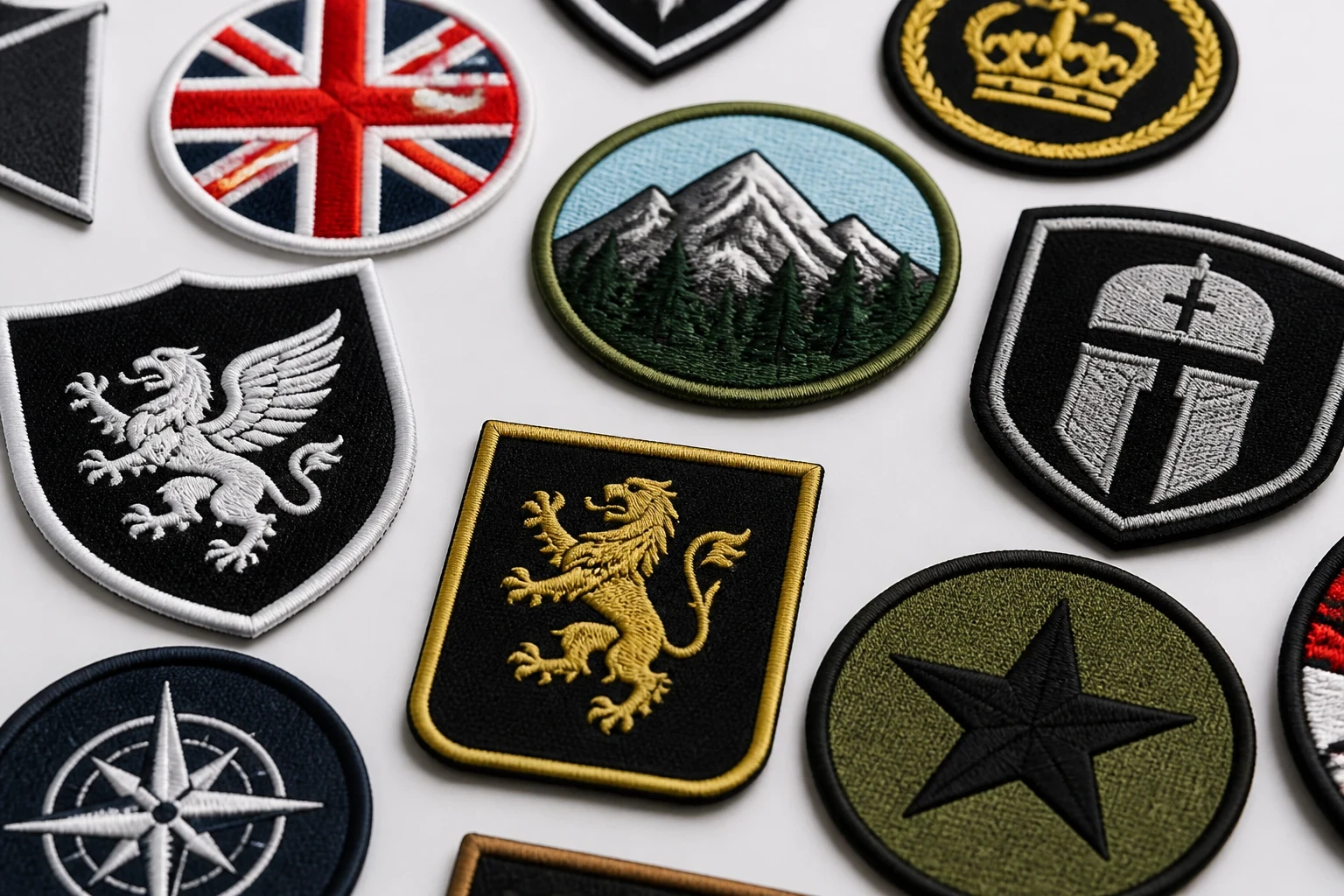
Custom embroidered patches are fabric badges made with stitched thread over a backing material, usually with a sewn, iron-on or Velcro finish. They suit UK teams, clubs, uniforms, jackets and brand merchandise because they add visible texture and can be ordered from five pieces per design. The Customized Patches provides a free digital mockup, usually within 12 hours, before production.
Key takeaways
- Custom embroidered patches use stitched thread for a textured, traditional finish, but very fine detail and photographic shading may need woven or printed production.
- The Customized Patches accepts a 5-piece minimum per design, so small UK club, school, team and business runs are possible.
- A free digital mockup is usually supplied within 12 hours, and production begins only after the customer approves the design.
- Choose sew-on, iron-on or Velcro backing according to the garment, washing routine and whether the patch needs to be removed.
Custom embroidered patches are stitched fabric badges made for clothing, equipment and merchandise. In the UK, buyers commonly use them on football and rugby kit, school blazers, cadet uniforms, hospitality polos, biker jackets, workwear and branded bags. The right result depends on the artwork, finished size, thread coverage, edge and backing rather than the word “embroidered” alone.
The Customized Patches makes these patches from five pieces per design. You receive a free digital mockup usually within 12 hours, and we produce only after you approve it. That approval stage is where practical issues such as tiny lettering, a nylon shell, a curved hat or the wrong iron-on backing should be caught.
What are custom embroidered patches?
An embroidered patch starts with a fabric base, usually twill or a similar stable material. A machine stitches thread across selected areas to create the logo, lettering, crest or symbol. The edge is then finished, often with a raised merrowed border or a clean heat-cut edge, and the back is prepared for sewing, heat application or hook-and-loop attachment.
The stitching gives the badge a tactile surface. A football club crest with a bold outline feels different from a flat printed badge, and that difference is often the reason a customer chooses embroidery. It also means the design has limits: narrow gaps can close, small letters can lose clarity and a large area of solid stitching can make a patch heavier or stiffer.
This is not a reason to avoid embroidery. It is a reason to design for the process. A merrowed crest with two or three strong thread colours may read better on a blazer than a detailed image containing ten small shades. If the artwork needs gradients, a tiny slogan or a photographic face, printed patches may be the more accurate choice.
Why UK teams, clubs and businesses choose embroidered patches
Embroidery is familiar. A school badge on a wool blazer, a hospitality logo on a polo or a club crest on a coach jacket all look like established pieces of clothing rather than temporary decoration. That visual language matters for teams and organisations that want members to look connected without ordering a complete new uniform.
Patches also make stock easier to manage. A business can keep a run of branded badges and apply them to new workwear, bags or jackets as staff join. A club can order a modest quantity for volunteers, then reorder the same approved design rather than printing a new garment for every person. For more planning around quantities, see Bulk Custom Patches in the UK: When 250, 500, or 1,000 Pieces Makes Sense.
- Football, rugby, hockey and cricket clubs can add crests to jackets, kit bags and supporter clothing.
- Schools, universities, scouts and cadet groups can use badges on blazers, fleeces, shirts and outerwear.
- Hospitality teams can apply a small logo to polos, aprons or jackets without replacing the whole garment.
- Biker and motorcycle clubs can combine a large back design with smaller chest or sleeve identifiers.
- Businesses can use patches on workwear, caps, backpacks and event clothing.
- Bands, festivals and streetwear brands can turn a logo into a collectible sewn item.
The garment still matters. A patch that works on a cotton twill jacket may not behave the same way on a thin nylon shell or a stretchy performance top. Before ordering, send a photograph of the garment or name the fabric and intended position. It helps us recommend a backing and size that suit the actual use.
Choosing the right embroidered patch specification
Most quote problems are specification problems. The customer knows the badge should be “about palm size”, but the hat, sleeve or chest panel needs a more exact measurement. Measure the available area in inches and allow for the border. A 3-inch-wide patch may fit a jacket chest comfortably but look crowded on a cap front.
Size, shape and proportion
State the finished width and height, or give one measurement for a round or irregular shape. If the artwork is a long rectangle, do not force it into a square to save space. The proportions of the logo should stay recognisable. For jackets, our guide to Custom Patches for Jackets in the UK: Size, Backing, and Stitch covers chest, sleeve and back placement.
Consider the viewing distance. A sleeve badge is seen close up, while a large back patch may need bold lettering that can be read across a car park or pitch. Tiny internal text often needs to be removed, enlarged or converted into a simpler line. A mockup shows the relationship between the artwork and the finished dimensions, but it cannot make unreadable text physically stitchable.
Thread coverage and base fabric
A standard embroidered patch may combine stitched artwork with visible twill in open areas. Full embroidery covers more of the surface and gives a denser appearance, but it can increase stiffness and cost. A lightly stitched design may be more comfortable on a thin polo; a fully filled crest can suit a heavy wool coach jacket.
There is a useful trade-off here. Printed is flatter; that is the point. Woven is also flatter and can hold fine lines through a tight weave. Embroidered is chosen for raised thread, familiar badge character and visible texture. Compare the alternatives in The Difference Between custom embroidered patches and printed patches, Explained before treating one method as suitable for every logo.
Colours, lettering and digitising
Supply brand colours where possible, but expect thread to be a close physical match rather than a screen-perfect reproduction. Thread has its own sheen and changes slightly under different light. If a colour is critical, mention it in the brief and review it on the mockup.
Digitising converts the artwork into stitch instructions. It decides stitch direction, density, underlay, borders and how small features are handled. Two files made from the same logo can produce different results if they are digitised poorly. Our guide to Embroidery Digitizing for Custom Patches: What UK Buyers Should Approve explains the details worth checking.
| Specification | Best suited to | Main benefit | Watch point |
|---|---|---|---|
| Raised embroidered detail | Club crests, bold logos and traditional badges | Tactile finish with visible thread texture | Very small text and gradients may lose clarity |
| Woven construction | Fine lines, small lettering and flatter branded labels | More detail in a smooth, low-profile surface | Less raised texture than embroidery |
| Printed surface | Photographs, gradients and highly detailed artwork | Flat colour reproduction and fine image detail | Does not have the stitched badge appearance |
| PVC moulded design | Outdoor, airsoft and tactical equipment | Easy-clean surface with a distinct rubber-like feel | Less suitable for a classic woven or school badge look |
| Chenille texture | Varsity jackets, large letters and statement graphics | Deep, soft pile with a bold collegiate appearance | Not ideal for small detailed logos |
For raised lettering, a 3D embroidered patches option may be worth considering, but puff stitching needs sufficiently large shapes and clear spacing. A thin slogan will not become better simply because it is raised. For a soft varsity finish, compare chenille patches instead.
Selecting the backing: sew-on, iron-on or Velcro
Backing is not a cosmetic choice. It controls how the patch is attached and how it behaves after washing, movement and repeated use. A sew-on badge is normally the safest option for a permanent patch. Iron-on is convenient on suitable heat-safe fabrics. Velcro is useful if the wearer needs to remove or swap the badge.
Sew-on backing
Sew-on is a strong everyday option for jackets, heavy uniforms, bags and biker vests. It works particularly well on nylon shells where heat may damage the fabric or coating. Stitch around the border with a suitable thread, or ask a tailor or alteration service to fit it. On a thick wool coaches jacket, sewing usually avoids the uncertainty of applying heat to a textured surface.
Not sure whether thread, woven detail or ink will hold your logo best? Send the artwork and the garment position for a free digital mockup, usually within 12 hours, so you can compare the finished direction before production.
GET A FREE MOCKUPIron-on backing
Iron-on backing contains adhesive activated by heat and pressure. It can be practical for a school badge or a cotton jacket, but it is not suitable for every fabric. Waterproof nylon, coated fabrics, elastic materials and some synthetic shells can scorch, distort or fail to bond. Even on a suitable garment, an iron-on patch can peel after a dryer cycle if the temperature, pressure or application time is wrong.
For regular washing, a sewn border is often a sensible extra safeguard. Read Iron-On Patches: Application, Durability, and When They Fail and Sew-On vs Iron-On vs Velcro: Which Patch Backing Lasts Longest? before choosing based only on convenience.
Velcro or hook-and-loop backing
Velcro patches need a matching loop panel on the garment or kit. They are common on tactical clothing, event crew equipment, airsoft kit and removable role identifiers. The loop panel should be securely sewn to the garment; a patch cannot grip bare fabric without it. This option adds flexibility but also adds thickness and may catch on loose clothing.
State clearly that Velcro is required when requesting a quote. We show the intended backing on the mockup so there is less chance of receiving a sew-on badge for a panel system. The Velcro (Hook-and-Loop) Patches: Complete UK Guide gives more detail on panel sizing and use.
| Backing | Good choice for | Advantages | Limitations |
|---|---|---|---|
| Sew-on | Biker jackets, uniforms, bags, wool and nylon garments | Permanent, versatile and suitable for many fabrics | Needs stitching and takes longer to apply |
| Iron-on | Heat-safe cotton jackets, shirts and some school garments | Quick application without a sewing machine | Can peel, scorch or fail after heat and washing |
| Velcro | Tactical kit, removable identifiers and role patches | Patch can be changed or removed | Needs a matching loop panel and adds thickness |
| Adhesive | Short-term display, packaging or event use | Fast temporary attachment | Usually less suitable for repeated washing or hard wear |
Edges, borders and finishing details
The edge frames the artwork and protects the perimeter. A merrowed edge is a raised, wrapped thread border that suits traditional round, shield and rectangle badges. It adds a clear outline and a little extra height. It also needs enough room around the artwork, so do not draw lettering right up to the outside line.
Heat-cut edges are cleaner for detailed shapes and sharp corners. They can suit a logo with several points or an irregular silhouette. Laser-cut finishing is useful for precise outlines and fine shapes, depending on the material and design. The best edge is the one that supports the shape rather than making the badge look crowded. See Merrowed vs Heat-Cut vs Laser-Cut Patches: Which Edge Should You Spec? for a closer comparison.
A border also affects perceived size. A thick border on a 2.5-inch patch can leave less room for the central logo than expected. Ask for the finished outer measurement, not simply the artwork measurement. This is particularly relevant for chest patches, cap fronts and small sleeve identifiers.
How much do custom embroidered patches cost in the UK?
There is no single price for custom embroidered patches. A quote normally depends on finished size, quantity, stitch coverage, number of colours, edge, backing, shape and delivery requirements. A small run of five complex patches may cost more per patch than 250 straightforward badges because setup and handling are spread across fewer pieces.
The Customized Patches has a 5-piece minimum per design. That is useful for a new business testing staff branding, a school society ordering a small first run or a club needing a handful of committee badges. If you need several versions, each different artwork is normally treated as its own design for quantity purposes.
- A small, simple badge usually has fewer stitch and digitising demands than a large full-back crest.
- High stitch coverage takes more machine time and may use more thread.
- A special shape or detailed border can require more finishing work.
- Iron-on and Velcro backings can change the specification and cost.
- Larger quantities normally reduce the average price per patch, but only if the design remains the same.
- Urgent delivery should be discussed before approval rather than assumed from the artwork date.
For a useful UK estimate, send the artwork, finished size in inches, quantity per design, backing, garment type and delivery postcode or event date. A vague request for “a badge like this” creates avoidable follow-up. The How Much Do Custom Patches Cost? UK Pricing Breakdown by Type and Quantity guide explains the main pricing variables in more detail.
Ordering custom embroidered patches from a UK manufacturer
Start with the use rather than the production method. Tell us if the patch is for a football jacket, a school blazer, a nylon rescue shell, a hospitality polo, a biker vest or a Velcro panel. The same crest may need different backing or dimensions for each garment.
- Send the artwork, preferably as a vector file, but include the clearest PNG or JPG available if that is what you have.
- State the finished width and height in inches, or give the measurements of the available garment area.
- Confirm the quantity for each individual design. The minimum is five pieces per design.
- Choose sew-on, iron-on or Velcro backing, and mention any fabric or coating that may affect application.
- Review the free digital mockup, usually sent within 12 hours.
- Check spelling, colours, proportions, border, backing and delivery details.
- Approve the mockup. Production starts only after approval.
- Apply the patches carefully and follow the garment and patch care instructions.
The approval step is not a formality. It is your chance to spot a missing accent, a club year that should be removed, a border that is too wide or a patch that will cover a pocket opening. Once approved, changes may require a revised file, so take a few minutes to check the design at the intended size.
For a full start-to-finish explanation, read How to Order Custom Patches in the UK (From Mockup to Doorstep). Customers outside major cities can also use our UK city pages for delivery information across the United Kingdom.
Lead times, delivery and approval
The free digital mockup is usually supplied within 12 hours, but the production period begins after approval, not when the first artwork is emailed. Production time varies with quantity, size, stitch coverage, backing and the current order schedule. A run of small, simple sew-on patches is not the same job as a large batch with dense embroidery and individual Velcro backs.
Tell us about a match, trade show, school term or launch date at the first quote stage. UK-wide delivery should be planned around the actual date the patches need to be in hand, with time allowed for fitting them to garments. If a parcel is going to a club secretary, venue or workplace, provide the correct recipient details and opening hours.
Do not put an unapproved design into production simply to save a day. A spelling error repeated across 500 patches is much more expensive than a short approval delay. How Long Do Custom Patches Take? UK Turnaround from Mockup to Delivery covers the stages that affect the timetable.
Care and application advice for finished patches
A well-made patch can still fail if it is fitted or washed incorrectly. For sew-on patches, use a strong thread and secure the border at regular intervals, including corners on a rectangular badge. Do not sew through a zip, pocket opening or seam unless that position has been checked.
Name sew-on, iron-on or Velcro on the quote and tell us the garment material. We show the correct back on a free digital mockup, usually within 12 hours, and production starts only after you approve the design.
GET A FREE MOCKUPFor iron-on patches, test the garment and follow the application temperature and pressure guidance. A household iron may not apply even pressure across a curved sleeve. Avoid putting a newly applied patch through a hot dryer until the adhesive has fully set. If the garment is valuable or waterproof, sewing is usually the safer route.
Wash the garment according to its label. Turn it inside out where practical, use a moderate wash and avoid harsh rubbing directly over the patch. Do not pull loose threads. Our guide, How to Wash and Care for Custom Patches (UK Jackets, Hats, and Uniforms), covers common care questions for clothing and accessories.
Which patch type should you choose instead?
Embroidered patches are not automatically the best answer. They are a strong fit for bold logos, traditional crests, uniforms and garments where texture matters. A different construction may suit a particular artwork or working environment better.
- Choose woven patches for small lettering and fine lines in a smooth, low-profile badge.
- Choose printed patches for photographic detail, gradients and artwork that needs a flat surface.
- Choose PVC patches for outdoor, airsoft and tactical equipment where a wipe-clean rubber-like surface is useful.
- Choose leather patches for a heritage look on hats, caps, bags and selected jackets.
- Choose chenille patches for large varsity letters and soft pile on letterman-style garments.
- Choose biker and motorcycle club patches when the layout involves large back panels, rockers or multiple jacket badges.
The correct comparison is based on the artwork and garment, not on which method sounds most premium. Printed is flatter; that is useful on a detailed brand graphic. Woven is cleaner for small type. Embroidery gives the thread texture many teams and clubs specifically want.
Common mistakes UK buyers can avoid
The first mistake is sending a logo without saying where it will go. A badge for a cap front needs a different size and curvature consideration from one for the back of a biker jacket. The second is choosing iron-on for a coated nylon shell because it was used successfully on a cotton hoodie.
Another common problem is retaining every detail from a screen logo. Small registration marks, thin outlines and long taglines may look clear at 10 inches on a monitor but close up in thread. A production-ready mockup should show what is being simplified, not hide it.
- Do not confirm size using only the artwork file; measure the available space on the garment.
- Do not assume one backing suits every item in a uniform order.
- Do not approve a mockup without checking spelling and small text at the intended size.
- Do not put a patch through a dryer or hot wash without checking the backing and garment care instructions.
- Do not compare prices until quantity, size, coverage and backing are specified.
- Do not leave an event deadline until after production has started.
A practical brief to send with your quote request
A short, complete brief gets a more useful answer than a long message with no measurements. Include the design file, the number of pieces, the finished size, the intended garment, backing, colours and deadline. If you are unsure about any of these, say so; that is information we can work with.
- Design name: for example, first-team crest or staff polo logo.
- Quantity: state the number for each separate design.
- Size: give width and height in inches, including the finished outer edge.
- Shape: round, shield, rectangle, custom outline or another form.
- Construction: embroidered, woven, printed, PVC, leather or undecided.
- Backing: sew-on, iron-on, Velcro or temporary adhesive.
- Garment: wool coach jacket, nylon shell, polo, blazer, cap, bag or equipment panel.
- Colour information: brand references, thread preferences or colours that must remain distinct.
- Deadline and UK delivery address: include an event date if relevant.
The Customized Patches can then prepare the most suitable direction and send the free digital mockup, usually within 12 hours. We produce only after approval, so the quote and artwork review remain the point to ask questions rather than accepting a guess.
Frequently asked questions about custom embroidered patches
A good patch order is usually straightforward once the finished size, garment and backing are clear. The questions below cover the points that most often affect a UK quote.
Frequently asked questions
What is the minimum order for custom embroidered patches?
The Customized Patches has a minimum order of 5 pieces per design. If you need different logos, names or versions, tell us how many pieces are required for each design so the quotation reflects the separate artwork.
How quickly can I receive a mockup for custom embroidered patches?
The Customized Patches usually sends a free digital mockup within 12 hours. Production does not start until you approve the mockup, so check the size, spelling, colours, border and backing before confirming the order.
Are embroidered patches suitable for nylon jackets?
They can be, but the backing needs care. Sew-on is often the safest option for nylon shells because high heat may damage a coating or distort the fabric. Iron-on should only be considered after checking the garment manufacturer's heat guidance.
Should I choose sew-on, iron-on or Velcro backing?
Choose sew-on for a permanent attachment, iron-on for a suitable heat-safe garment where quick application matters, and Velcro for removable badges on a matching hook-and-loop panel. State the garment type and intended use when requesting a quote.
Can custom embroidered patches include small text?
They can include small text within practical limits, but very fine lettering may close or lose clarity in thread. Increasing the finished size, simplifying the lettering or choosing woven or printed production may produce a clearer result. The mockup should show the text at the intended size.
How should I care for custom embroidered patches after application?
Follow the garment's care label, avoid harsh rubbing over the badge and use a moderate wash where possible. Turn the garment inside out and avoid a hot dryer, particularly with iron-on patches. Sew-on patches should be checked periodically for loose edge stitching.
Ready to produce custom patches for your UK team or brand?
GET A FREE MOCKUP