




I can vouch for the quality this genuine patch maker delivers. The prices were extremely cheap, but the customization and customer service exceeded my expectations. 100% recommended.
★★★★★
Heat-seal backing on UK-made embroidered, woven or printed patches, from 5 pieces per design with a free 12-hour mockup. We will also tell you when iron-on is the wrong answer for your garment — which is more often than most suppliers admit.
Get a Free Mockup
The honest answer for most people searching this is: it depends entirely on the fabric, and roughly half the time the answer is no.
Iron-on (heat-seal) is a backing, not a patch type. We can put it on custom embroidered, woven or printed patches, made in the UK from 5 pieces per design with a free mockup inside 12 hours. It bonds well to cotton, denim and poly-cotton, and it should not be used on waterproof shells, nylon, leather, hi-vis or anything stretchy.
This is the table we would talk you through on the phone. Where it says no, we are not upselling you — a patch that lifts off in the wash costs us a remake and costs you the garment.
| Fabric | Iron-on? | Why |
|---|---|---|
| Cotton and cotton drill | Yes | The ideal surface. Holds through normal domestic washing. |
| Denim | Yes | Excellent bond. Heavyweight denim may need a longer press. |
| Poly-cotton blends | Usually | Fine at typical blend ratios. Press at the lower end of the temperature range. |
| Canvas and cotton duck | Usually | Bonds well, but bag panels are often too thick to press evenly — sew-on is safer. |
| Polyester and performance fabric | Risky | Scorches easily and the bond is unreliable. Sew-on is the better call. |
| Nylon | No | Melts at the temperature the adhesive needs. |
| Waterproof and coated shells | No | Heat damages the membrane and the coating rejects the adhesive. You also risk puncturing the waterproofing. |
| Hi-vis workwear | No | Coated surfaces reject heat-seal film, and heat can affect the retroreflective banding. |
| Leather and faux leather | No | Heat marks and shrinks it permanently. Sew-on only. |
| Fleece, knitwear and anything stretchy | No | The patch stays rigid while the fabric moves, so the edges lift. |
Iron-on is a backing, so the question is whether the patch body can survive the heat and whether the film can grip it.
Not sure which backing your garment needs? Send the artwork and tell us what it is going on. We will specify the backing on the free mockup and say so plainly if iron-on is a bad idea.
Get a free mockup| Backing | Best on | Upside | Catch |
|---|---|---|---|
| Iron-on (heat-seal) | Cotton, denim, poly-cotton | Fast, no sewing, neat finish | Not permanent under heavy wear; fails on coated, technical and stretch fabrics |
| Sew-on | Everything, including leather and technical shells | The most durable option, and the only one we recommend for workwear and club colours | Needs stitching, by hand or machine |
| Hook-and-loop (Velcro) | Tactical, outdoor and uniform panels | Removable before a wash; swap patches on one garment | Needs a loop panel on the garment; adds bulk |
| Adhesive | Short-term and event use | Instant | Temporary — not a laundry-proof fix |
Iron-on backing does not carry a separate charge — it is one of the backing options on the quote. The figure is driven by patch type, finished size, quantity and colour complexity, with quantity moving the per-unit price most. The minimum is 5 patches per design, where most UK suppliers start at 50 or 100.
Send artwork, a finished size and a quantity and you get a price back with a free digital mockup, usually within 12 hours. Nothing goes into production until you approve it in writing.
Submit your design, approve a free digital mockup (usually within 12 hours), then we manufacture and ship UK-wide in 7–12 business days after written approval.
Upload your logo or artwork, and choose type, size, quantity (5-piece minimum per design), and backing.
We send a free digital mockup, usually within 12 hours. Production starts only after you approve it in writing.
Production plus UK-wide shipping typically takes 7–12 business days after approval, with free UK shipping included.
Free delivery reaches every UK postcode after you approve the mockup — England, Scotland, Wales and Northern Ireland, with BT postcodes included rather than excluded. These city pages set out the postcode districts we cover, who tends to order locally, and how long the parcel spends in transit.
Comments from recent quote customers. Independent Google reviews are on our Google listing.
Get a Free MockupYes. Iron-on is a backing option on custom embroidered, woven and printed patches. Choose it on the quote and we apply the heat-seal film during manufacture. The minimum is 5 patches per design and the mockup is free.
No. Properly applied to cotton or denim an iron-on patch survives normal washing for a long time, but the bond degrades with heat, heavy wear and repeated washing. If the patch must last the life of the garment — workwear, club colours, uniforms — have it sewn on as well.
Nylon, waterproof and coated shells, hi-vis workwear, leather and faux leather, and anything stretchy such as fleece or knitwear. Polyester and performance fabrics are risky because they scorch at the temperature the adhesive needs. For all of these we recommend sew-on.
Medium-high, roughly 150–180°C, with steam switched off. Press firmly through a thin cotton cloth for 30–45 seconds, then press the reverse side for another 20–30 seconds and let it cool fully before wearing.
No. PVC and leather cannot take heat-seal backing, and chenille is too thick and textured for it to hold. Those come with sew-on, or hook-and-loop in the case of PVC.
Yes — 5 patches per design is our minimum, where most suppliers ask for 50 or 100. A second size or colourway counts as a second design.
On cotton or denim, usually, if it was applied properly and left to cool. Wash inside out at 30°C and avoid the tumble dryer. Edges lifting after a few washes is the normal failure mode, and stitching the edge prevents it.
Typical production plus free UK delivery is 7–12 business days from written mockup approval. The free digital mockup usually comes back within 12 hours of your enquiry.
Practical UK reading before you approve a mockup — type, backing, and ordering, with a free 12-hour proof on every quote.
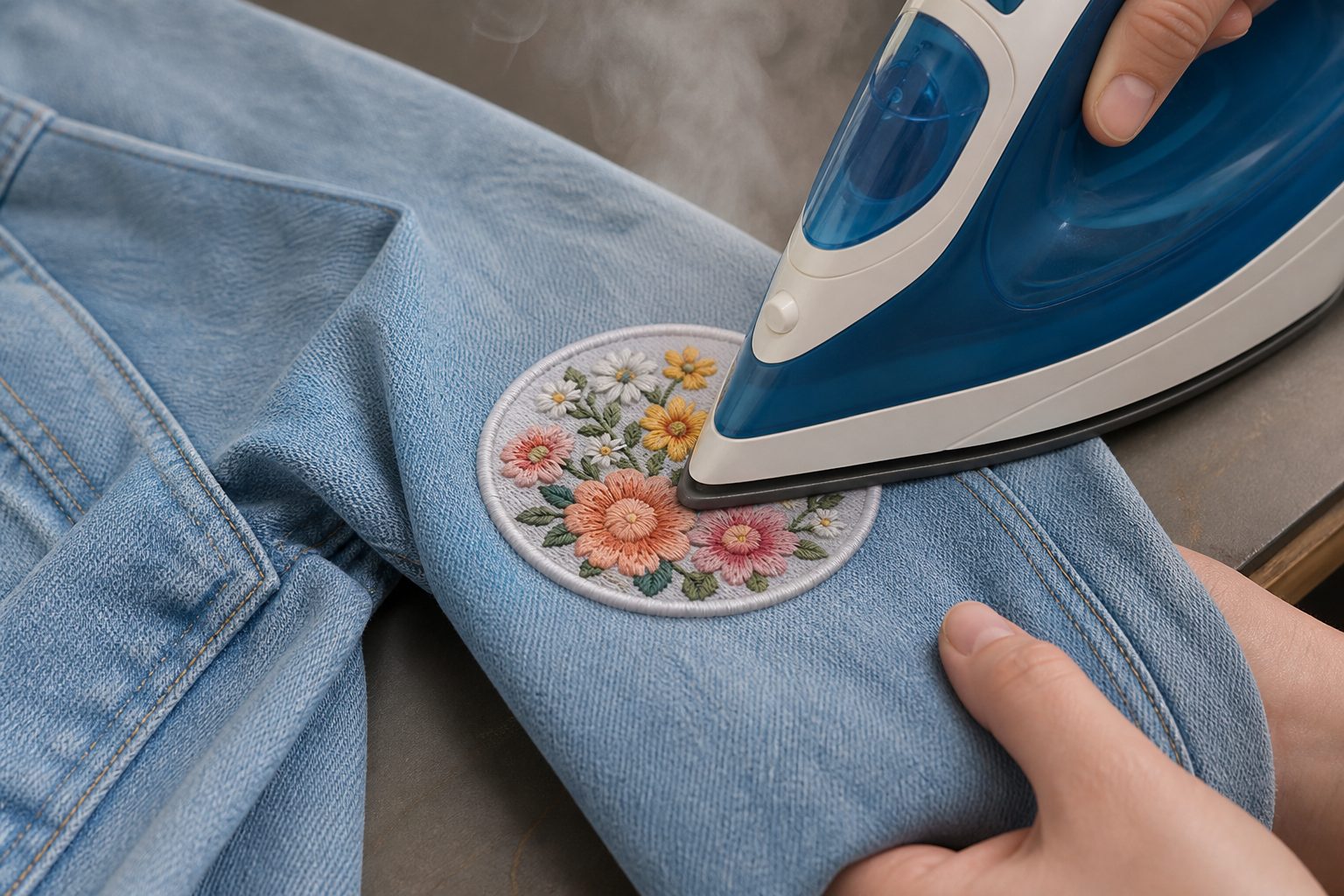
Full UK guide to iron-on patch backing: temperature, fabrics that reject adhesive, when to sew the edge, and how to spec it on your free mockup.
Read article →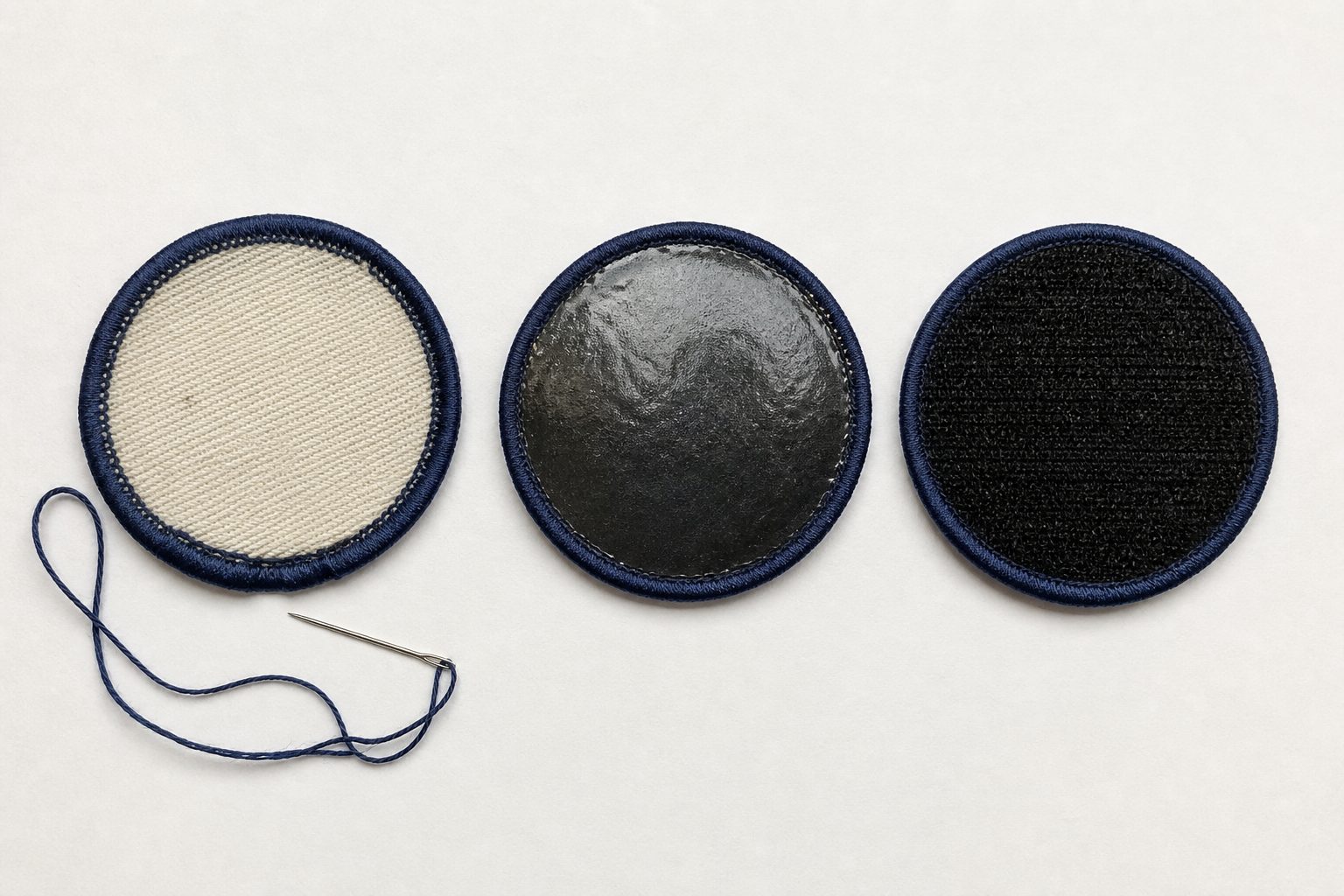
UK comparison of sew-on, iron-on, and Velcro patch backing: durability, fabrics that fail, and how to spec the back on your free mockup.
Read article →
Sew-on usually wins for lasting attachment. Compare backings by garment, understand heat and waterproofing risks, and specify patches that suit their intended use.
Read article →