
Why sports teams Are Choosing custom embroidered patches
Sports teams choose custom embroidered patches because they give shirts, jackets, bags and kit a durable club identity without changing the whole garment. Thread adds texture and a traditional crest appearance, while sew-on, iron-on and Velcro backings suit different kit. The Customized Patches supplies UK orders from 5 pieces and provides a free digital mockup usually within 12 hours.
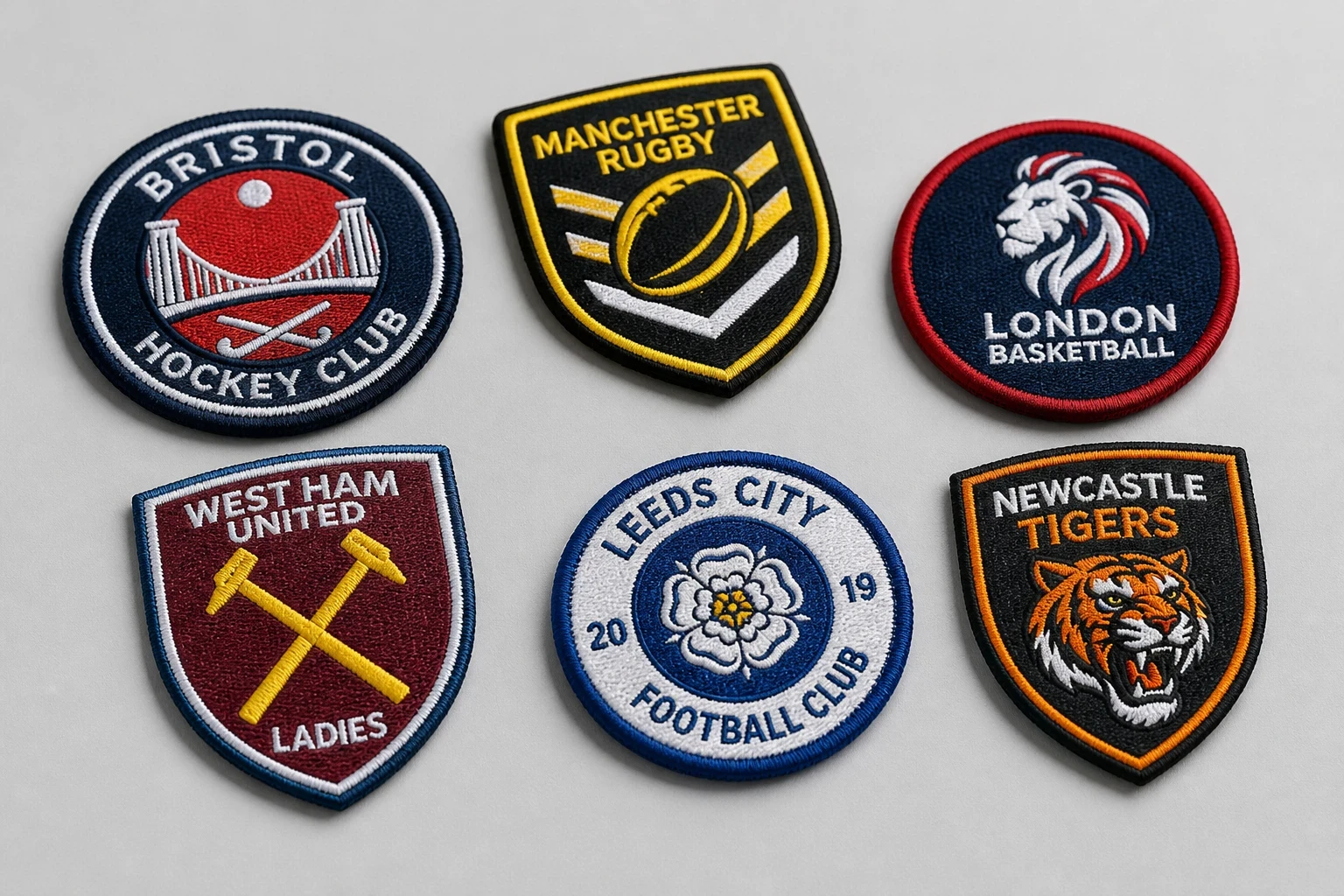
Key takeaways
- Custom embroidered patches give sports kit a tactile club crest that can move between jackets, bags and selected garments.
- A 5-piece minimum per design suits small squads, trial groups, coaches and replacement orders without committing to a full season's stock.
- Thread works especially well for bold names, initials and crests, while printed patches are flatter and better for photographs, gradients and very fine detail.
- The Customized Patches provides a free digital mockup usually within 12 hours and produces only after the customer approves the design.
Sports teams choose custom embroidered patches because they turn a club crest, squad name or achievement into a physical part of the kit. They work on jackets, kit bags, caps and selected shirts, and they can be ordered in small runs rather than only for a large league-wide rollout. The thread gives the badge texture and a familiar club-wear appearance.
For a United Kingdom team, the best choice depends on the garment, washing routine, artwork and budget. Embroidery is not automatically right for every logo: printed is flatter, and that is the point, while woven can handle small lettering more cleanly. The useful question is not simply which patch looks best on a screen, but which construction will behave properly on the actual kit.
Why custom embroidered patches suit team identity
A stitched badge gives a sports team something more substantial than a temporary transfer. Players see the crest on a changing-room jacket, coaches wear it on a polo or wool coach jacket, and supporters can attach the same design to a bag or casual overshirt. That consistency matters when a club has several kit suppliers or changes its playing strip from one season to the next.
The raised thread also catches light differently from a flat print. A simple shield, ball, animal, initials or crossed-stick design can look clear and traditional in embroidery. Merrowed crests with a stitched outer edge are particularly familiar on blazers, club jackets and older-style teamwear. The finish is visible from a short distance, which is useful on touchline coats and kit bags rather than only in close-up photographs.
That does not mean every crest should be copied stitch for stitch. Tiny sponsor text, narrow gaps and detailed mascots can close up when converted into thread. A production-ready version may need a heavier letter, a simplified border or fewer small colour changes. The aim is to preserve the identity of the artwork at the finished size, not to force every pixel into embroidery.
The small-order advantage for clubs
The Customized Patches has a 5-piece minimum per design. That is useful for a five-person rowing crew, a new junior squad, a coaching group, a tournament side or a club testing a new crest. It also gives a team a sensible way to replace lost or damaged badges without buying hundreds of pieces.
Larger orders can reduce the unit cost, but a low minimum avoids unnecessary stock. A club can order a small first batch, check the size on real garments and then reorder once the committee is happy. This is often safer than guessing at a large quantity from a digital logo alone.
What makes an embroidered sports patch work
The first specification is size. A chest crest may be around 3 to 4 inches wide, while a large jacket back design could be 8 to 12 inches across, depending on the garment. A bag badge can be smaller, but the lettering still needs enough height to remain readable after stitching and washing.
Measure the usable area rather than the whole garment. A patch that fits on a flat sample may cross a jacket seam, pocket opening or curved shoulder once applied. Nylon shells can also pucker under a heavy badge, especially if the fabric is thin. Send a photograph of the garment and note the intended placement so the design can be judged in context.
Border, shape and edge finish
A clean outer border helps separate a crest from a dark tracksuit or a busy jacket. Merrowed borders have a rounded, raised appearance and suit traditional shields, circles and simple rectangular badges. Heat-cut edges give more freedom for irregular shapes and tighter corners. The correct choice depends on the silhouette and the level of detail.
An unusually detailed outline can become awkward at small sizes. For example, a club badge with several narrow points may look sharp in vector artwork but lose definition after an edge is added. A mockup should show the whole patch, not just the centre artwork, so the committee can approve the border and proportions as one item.
Thread colours and lettering
Strong contrast normally gives the most reliable result. White thread on royal blue, gold on black, or red on white is easier to read than several similar shades placed beside one another. Thread has a physical direction and sheen, so two colours that appear close on a monitor may look more distinct or less distinct on the finished badge.
Names and numbers need room. A long club name squeezed into a narrow arc is a common failure. It may be technically stitchable but uncomfortable to read on a moving player or a hanging kit bag. Short initials, a location, a season or a squad label often work better than a full sentence.
| Patch option | Best suited to | Main strength | Trade-off to consider |
|---|---|---|---|
| Embroidered | Bold crests, initials, team names and traditional clubwear | Raised thread and familiar badge appearance | Very fine text, gradients and photographic detail may need simplifying |
| Woven | Small lettering, thin lines and flatter badges | Fine detail with a smooth, low-profile surface | Less raised texture than embroidery and a different visual character |
| Printed | Photographic artwork, gradients and highly detailed illustrations | Flat surface and broad colour freedom | Can look less traditional and may show wear differently at exposed edges |
| PVC | Outdoor, wet-weather and tactical-style equipment | Rubbery surface that is easy to wipe clean | Not the right look for every formal club, blazer or heritage crest |
| Chenille | Varsity jackets, large letters and bold school or team motifs | High-pile texture with a strong letterman appearance | Usually less suitable for tiny details and compact crests |
If a team is unsure, compare the embroidered patches range with woven patches and printed patches before approving artwork. The difference is easier to judge when the same crest is considered in each construction, at the intended finished size.
Not sure whether thread or ink will hold your logo? Get a free digital mockup in 12 hours and compare both before you produce.
Choosing the right backing for team kit
Backing controls how a patch is attached and how easily it can be moved. Sew-on is the dependable choice for a permanent club crest. It suits heavier jackets, wool coaches, bags and garments that will be worn for several seasons. A sewing machine can help, but a strong hand stitch around the border is also practical for one-off applications.
Iron-on is convenient for suitable cotton or polyester fabrics, but it is not universal. Heat, pressure and the garment surface all matter. A nylon shell may be damaged by the application temperature, and a patch that looks secure at first can peel after a dryer cycle or repeated washing. For valuable kit, sewing around an iron-on patch adds useful security.
When Velcro is the better team solution
Velcro suits teams that need removable identifiers. A coach may use one jacket for several squads, a cadet unit may change role tabs, or an event team may need to remove a temporary sponsor badge. The hook side and loop panel need to match, and the receiving garment must have enough panel area to support the patch without lifting at the corners.
Do not assume every Velcro patch can be fixed directly to any fabric. A rough loop panel is normally required on the garment. If a club is adding a panel to a nylon shell, check that the panel can be stitched without compromising a lining, waterproof layer or seam. Our guide to Velcro (Hook-and-Loop) Patches: Complete UK Guide covers the practical details.
If you are still choosing type, size, or backing, send the artwork and the garment. Free digital mockup in 12 hours — 5-piece minimum per design. We do not produce until you approve.
GET A FREE MOCKUPBacking mistakes seen on real garments
One recurring problem is specifying iron-on for a jacket that cannot safely accept heat. Another is ordering sew-on badges for a curved cap without considering access for a needle. A third is fitting a stiff badge to a thin performance top, where the patch can change the drape and rub against the wearer.
Tell our team what the garment is made from and how it will be used. A badge for a wool coaches jacket needs a different conversation from one for a lightweight nylon rain shell. The sew-on, iron-on and Velcro guide is useful when the team is choosing an attachment method.
Embroidered patches versus printed team badges
Embroidered patches are chosen for texture, tradition and a strong clubwear feel. They are a natural fit for crest shapes, simple mascots, initials, anniversary years and bold lettering. They also suit teams that want the badge to look like a separate piece that can move from a jacket to a bag.
Printed patches are flatter; that is the point. They can reproduce gradients, small tonal changes, fine illustrations and photographic artwork without asking thread to imitate every detail. A sports brand with a detailed mountain graphic, a sponsor with a subtle fade, or a team using a long illustrated mascot may get a cleaner result from print.
Woven construction sits between the two for some designs. It has a flatter face than embroidery and can hold small lettering through a dense weave, but it does not have the raised stitch texture that many clubs expect from a traditional badge. Custom embroidered patches vs printed patches: Which Is Right for Your Project? gives a fuller comparison.
| Question | Embroidered answer | Printed answer |
|---|---|---|
| Does the badge need raised texture? | Yes, embroidery adds visible thread and relief. | No, print has a flatter face. |
| Does the artwork use gradients or photographic detail? | It may need simplification. | Print is usually the more direct route. |
| Is the design a traditional crest? | Often a strong fit for bold outlines and thread. | Possible, but the result has a different character. |
| Will it go on a thin performance shirt? | Check weight, flexibility and rubbing. | A flatter option may be more comfortable. |
| Does the club want a detachable badge? | Specify Velcro backing. | The same backing decision still applies. |
Where teams use custom embroidered patches
The obvious location is a club jacket, but the order usually serves more than one garment. A football squad may put the crest on travel coats and kit bags, while a rugby club may use it on a heavy outer layer for winter fixtures. Cricket, hockey, netball, rowing, athletics and martial arts clubs can use the same principle, provided the patch size suits the surface.
- Club jackets and tracksuits for players, coaches and volunteers.
- Kit bags, holdalls and equipment cases where a stitched badge helps identify ownership.
- School blazers and sixth-form sportswear, subject to the school's uniform policy.
- Tournament or tour jackets carrying a destination, year or squad name.
- Caps and beanies with a simplified crest that does not rely on tiny text.
- Supporter garments, including denim jackets and overshirts.
- Removable Velcro identifiers for coaches, officials, cadet units and event staff.
- Anniversary or achievement badges for league wins, tours and milestone seasons.
A patch can also solve a practical branding problem. If a club changes its supplier, an embroidered badge can be applied to compatible outerwear instead of replacing every jacket. It will not hide every old mark, and placement must be checked carefully, but it may extend the useful life of garments that are still sound.
For varsity-style lettering, look at chenille patches. For waterproof kit, airsoft equipment or outdoor use, PVC patches may make more sense. A motorcycle club's back panel has different size and border requirements again, covered in the guide to biker and motorcycle club patches.
Artwork preparation and approval
Send the highest-quality artwork available, ideally a vector logo or a clear original file. A low-resolution screenshot can still help identify the design, but it should not be treated as a final production file. Include the correct spelling, preferred colours, approximate size and the garment photograph if placement is unusual.
The digitising stage translates artwork into stitch instructions. It determines stitch direction, density, underlay, small-detail treatment and the order in which colours are sewn. This is why an image that looks fine on a computer may need changes at 3 inches wide. Read Embroidery Digitizing for Custom Patches: What UK Buyers Should Approve before signing off a detailed crest.
What to check on the mockup
- The patch width and height are shown in inches or clearly proportioned to the garment.
- The club name, town, year and sponsor wording are spelt correctly.
- The border is the right colour, thickness and shape.
- Small lines and lettering have been simplified where necessary without changing the crest's identity.
- The backing matches the garment and the way the team will use it.
- The mockup shows the full patch, not an artwork crop that hides the outer edge.
- The quantity is stated as the number of pieces per design.
The Customized Patches provides a free digital mockup usually within 12 hours. Production begins only after approval, so the club can raise questions about size, thread colour, backing or spelling before anything is made. This approval stage is especially useful when a committee, school or sponsor needs to check the design.
Ordering quantities, costs and lead times in the UK
Start with the number of garments that will actually receive the patch, then add a sensible allowance for replacements. The minimum is 5 pieces per design. A five-piece run may suit a small team, but a full club order could include separate quantities for senior, junior, coaching and supporter groups.
Price is affected by size, stitch coverage, number of colours, backing, edge treatment and quantity. A large solid-filled back patch uses more material and production time than a small two-colour chest crest. A complicated shape can also cost more than a simple circle even if both have the same approximate area.
Lead time starts after artwork and specifications are agreed, not necessarily when an initial enquiry is sent. It also depends on the quantity and production schedule. If the patches are needed for a cup final, tour or presentation evening, allow time for the mockup, approval, production, delivery and application. The guide How Long Do Custom Patches Take? UK Turnaround from Mockup to Delivery explains the stages.
Name sew-on, iron-on or Velcro on the quote. We show the correct backing on a free 12-hour mockup so production matches the garment. The Customized Patches ships across the United Kingdom, and the order is produced only after the final design has been approved.
How to care for a sports team patch
Care starts with the garment, not only the patch. Follow the washing label, turn decorated clothing inside out where practical and avoid unnecessarily high heat. A dryer cycle can be hard on adhesive backings, and repeated tumble drying may shorten the life of the surrounding fabric as well.
Ready to spec the run? Open the quote form for a free 12-hour mockup and UK-wide shipping after approval.
GET A FREE MOCKUPSew-on patches should be checked at the edge after heavy use. If a corner begins to lift, repair it before the opening catches on a bag zip or changing-room bench. Iron-on patches should not be repeatedly reheated as a quick fix without checking the fabric underneath. For more detail, see How to Wash and Care for Custom Patches.
A nylon rain jacket deserves extra care. High heat can distort the shell, damage a coating or affect adhesive. On a waterproof garment, sewing may leave needle holes, so the garment manufacturer or a specialist repairer should be consulted before fixing a permanent badge. Velcro can be the more flexible answer when the jacket already has a suitable panel.
A sensible specification for different UK teams
A Sunday football side might choose a 3.5-inch embroidered chest crest with a merrowed border and sew-on backing for travel jackets. A school rugby team could use a simpler shield on blazers, while a university rowing club may want a larger back design with the boat name and year. Each order uses the same basic decision process, but the garment changes the answer.
A hospitality sports brand may prefer a small badge on polo shirts and a more detailed version on staff jackets. A cricket club with white jumpers may need strong thread contrast and careful placement so the badge does not interfere with an existing manufacturer logo. A cadet or outdoor group may favour Velcro on a durable shell rather than a permanent badge.
| Team situation | Practical starting specification | Reason to review before ordering |
|---|---|---|
| Small amateur football squad | 3 to 4 inch crest, sew-on or iron-on depending on jacket fabric | Check the jacket material and allow for replacement pieces |
| School blazer | Compact embroidered shield with sew-on backing | Confirm uniform policy and avoid covering existing badges |
| Outdoor or touring team | Sew-on badge or Velcro on a robust outer layer | Nylon, waterproof coatings and seams may limit application |
| University club | Crest plus short club name or year | Keep long wording readable at the chosen size |
| Coach and staff group | Removable Velcro identifier or simple chest crest | Check whether one garment will serve several teams |
If the team is choosing a more unusual material, compare 3D embroidered patches for raised lettering, leather patches for a heritage look, or the broader embroidered patches hub for standard options. The right patch is the one that fits the clothing, artwork and use pattern together.
Questions to settle before sending the quote
A clear enquiry saves time on both sides. State the design, quantity, size, garment, backing and deadline in the first message. If the order has more than one design, list the quantity for each design because the 5-piece minimum applies per design.
- What is the finished patch width and height in inches?
- Is the patch going on cotton, polyester, nylon, wool, denim, canvas or a Velcro panel?
- Will it be washed often, exposed to rain or removed regularly?
- Does the artwork contain small text, gradients or fine linework?
- Is a traditional raised embroidered appearance required, or would a flat printed or woven patch be clearer?
- Does the team need one design or several squad-specific designs?
- What is the delivery address in the United Kingdom and what is the required event date?
These details let the production team flag likely problems before the mockup is prepared. It is easier to alter a crest on screen than to discover that a badge crosses a zip, cannot take heat or is too small for a sponsor name after production.
Final guidance for sports teams
Custom embroidered patches are a strong option for teams that want a tactile crest, flexible garment use and a club identity that is not tied to one season's playing shirt. They are especially effective with bold artwork, clear lettering and sensible sizing. They are less suitable when the design depends on photographic detail, subtle gradients or very fine text.
Choose the garment first, then the backing, size and construction. Send the actual artwork and explain how the badge will be used. The Customized Patches offers a free digital mockup usually within 12 hours, has a 5-piece minimum per design, and produces only after approval. That gives a UK club a practical checkpoint before it commits to the finished order.
For more planning help, read Custom embroidered patches Best Practices for sports teams, review Common Mistakes to Avoid When Ordering custom embroidered patches or see the full Custom embroidered patches: Everything UK Buyers Need to Know guide.
Frequently asked questions
What are custom embroidered patches used for by sports teams?
Teams use custom embroidered patches on club jackets, tracksuits, kit bags, caps, school blazers, coachwear and supporter garments. They can display a crest, initials, squad name, tour destination, season or achievement. Sew-on, iron-on and Velcro options allow the same type of badge to suit permanent, temporary or removable use.
What is the minimum order for custom embroidered patches?
The Customized Patches has a minimum of 5 pieces per design. This suits small sports squads, coaching groups, trial orders and replacement badges. If a club orders two different designs, each design must meet the 5-piece minimum rather than combining the quantities into one design.
How quickly can a UK sports team receive a mockup?
The Customized Patches usually provides a free digital mockup within 12 hours. The team can check the size, spelling, thread colours, border and backing before production. Patches are produced only after the customer approves the final design, while the full delivery time depends on quantity, specifications and the production schedule.
Are embroidered or printed patches better for a team crest?
Embroidered patches are usually better for bold crests, initials and a raised traditional appearance. Printed patches are flatter and can be better for gradients, photographs and highly detailed illustrations. The right choice depends on the artwork, garment, desired texture and how the badge will be washed and worn.
Can custom embroidered patches go on a nylon sports jacket?
They can, but the backing and application method need checking first. Nylon may not tolerate the heat required for iron-on application, and sewing can affect a waterproof layer or leave needle holes. Sew-on or Velcro may be more suitable, depending on the jacket construction. A garment photograph helps the production team recommend the safer specification.
Which backing should a sports team choose: sew-on, iron-on or Velcro?
Choose sew-on for a permanent, durable badge on jackets, wool coaches and bags. Choose iron-on only when the fabric accepts heat and the patch will be applied correctly; an iron-on patch can peel after a dryer cycle. Choose Velcro when the badge must be removed or changed, provided the garment has a suitable loop panel.
Ready to produce custom patches for your UK team or brand?
GET A FREE MOCKUP