
Custom embroidered patches Best Practices for sports teams
The best custom embroidered patches for sports teams use a simple, high-contrast design, a size suited to the garment, and backing chosen for real use. Sew-on is the safest long-term option, while Velcro suits changing kit. The Customized Patches has a 5-piece minimum per design and usually supplies a free digital mockup within 12 hours.
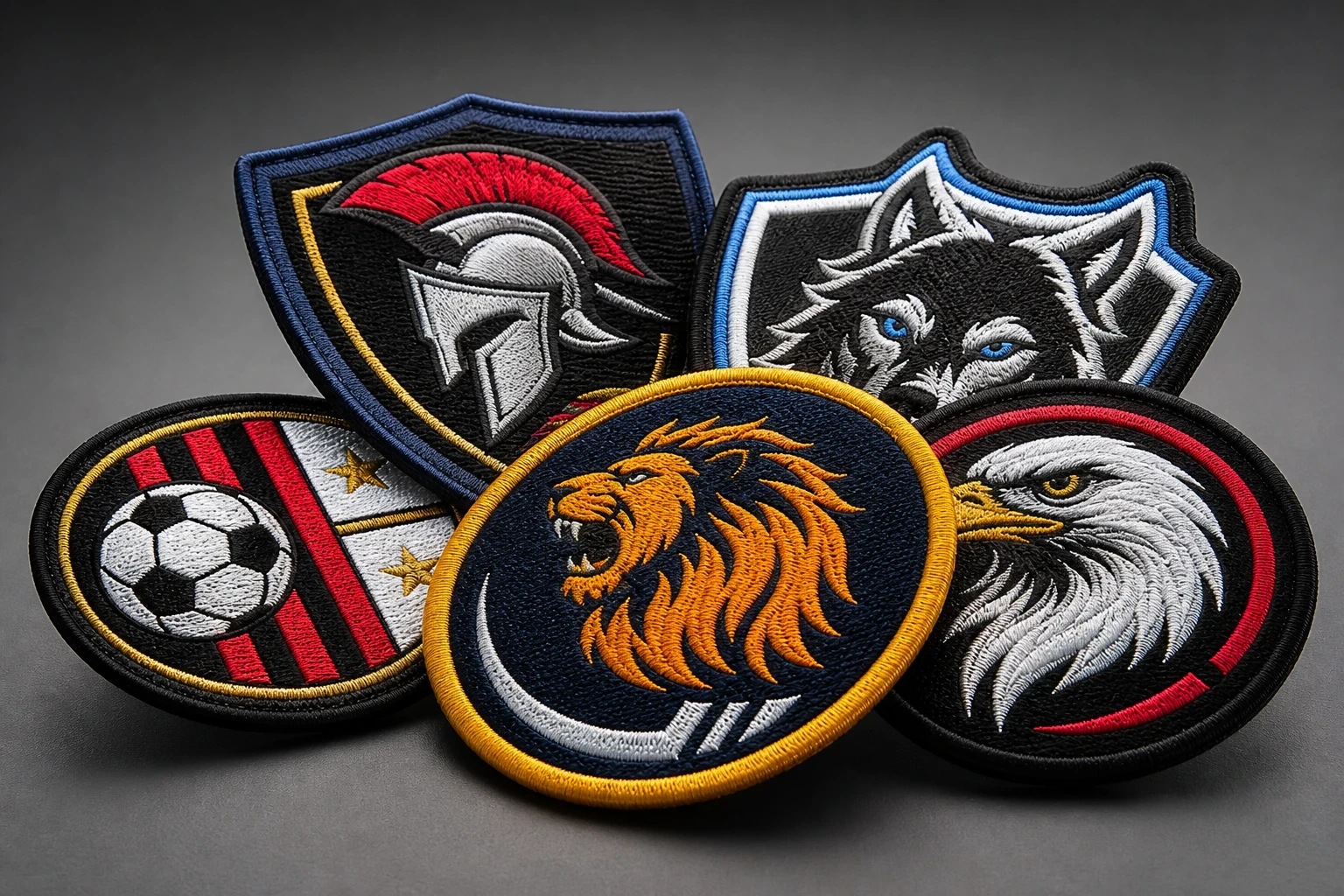
Key takeaways
- Use a bold, simplified badge design: very fine text and tiny detail can close up in embroidery.
- Specify the garment before choosing the backing; nylon shells, wool coaches, polos and Velcro panels need different solutions.
- Sew-on backing generally gives the most dependable long-term result, while iron-on is quicker but can peel after a dryer cycle.
- The Customized Patches accepts 5 pieces per design, supplies a free digital mockup usually within 12 hours, and produces only after approval.
Custom embroidered patches work best for sports teams when the badge has clear shapes, readable lettering and a backing suited to the actual kit. Sew-on patches are usually the dependable choice for jackets and bags, while Velcro is useful for changing identifiers. The right size matters just as much as the artwork.
The Customized Patches supplies UK teams, clubs, schools and businesses from a 5-piece minimum per design. Send the crest, tell us where it will go and describe the garment. A free digital mockup is usually supplied within 12 hours, and we produce only after you approve the final details.
Start with the garment, not just the crest
A badge on a football tracksuit has a different job from a badge on a waxed cotton jacket. The surface, stretch, washing routine and position all affect the result. A chest patch on a polyester polo needs to sit comfortably against the body. A large patch on a wool coaches jacket needs enough edge and stitching to stay flat as the fabric moves.
Ask the team manager to collect the real garments before ordering. A photograph is useful, but the fabric tells us more. Nylon shells can be slippery and heat-sensitive. Fleece can swallow a small border. Heavy canvas kit bags accept a substantial sew-on patch, whereas a thin running top may need a lighter construction.
Common sports garments and sensible placements
- Football and rugby polos: a chest patch around 3 to 4 inches wide often balances visibility with comfort, but measure the panel first.
- Tracksuit jackets: use the chest or upper sleeve, keeping clear of zips, seams, sponsor marks and reflective strips.
- Wool coaches jackets: sew-on backing is usually safer than relying on adhesive alone, especially if the jacket is worn outdoors.
- Nylon shells: avoid placing a hot iron directly on the shell unless the garment maker permits it; sew-on or a properly specified removable backing may be better.
- Kit bags and backpacks: a larger patch can work well, but check curved pockets, webbing and reinforced seams before fixing it.
- Velcro panels: order the loop-compatible arrangement required by the garment and say clearly if the patch must be removed between matches.
If the patch is for a jacket, our guide to Custom Patches for Jackets in the UK: Size, Backing, and Stitch covers placement and construction in more detail. For kit bags, see Custom Patches for Bags, Backpacks, and Luggage in the UK.
Build a crest that stitches cleanly
Embroidery is made from thread, not a tiny printed photograph. Lines need room to form, letters need a sensible height and the colour blocks need enough contrast to remain visible from the touchline. A football club crest with a broad shield, a simple ball and a short name usually translates well. A detailed municipal emblem with miniature text may need simplification.
Do not judge the design only on a large monitor. View it at the finished size, then imagine it on a moving sleeve or a dark kit bag. The mockup is where we flag cramped lettering, weak contrast and a border that is too narrow for the shape.
Artwork checks before quotation
- Check every word, initial and date. A stitch-out cannot correct a spelling error that was approved in the artwork.
- Use a clear outer border to contain the design and give the edge a defined finish.
- Keep small lettering short. A team name that needs to wrap around a badge may require a larger patch or fewer words.
- Use contrast rather than relying on a subtle shade difference, especially for navy, black, maroon and dark green kits.
- Decide if the crest needs full embroidery or if a flatter method would communicate the detail better.
- Send the cleanest available file, but do not assume a vector file will remove every production decision.
The digitising stage converts artwork into stitch instructions. It controls stitch direction, density, borders and how adjoining colours meet. Our guide to Embroidery Digitizing for Custom Patches: What UK Buyers Should Approve explains the checks worth making before approval.
Choose size, thread coverage and edge together
There is no universal sports patch size. A sleeve badge, left-chest crest and large back emblem all have different proportions. Measure the usable area in inches, allowing space around seams and fasteners. A patch that looks impressive on a quotation screen may crowd a small polo or sit awkwardly beside a sponsor logo.
| Use | Typical starting point | What to check | Practical trade-off |
|---|---|---|---|
| Left chest on polo or tracksuit | About 3 to 4 inches wide | Pocket, zip, sponsor logo and wearer comfort | Large enough to read, but not so heavy that it pulls the fabric |
| Sleeve badge | About 2.5 to 3.5 inches wide | Sleeve width, seams and arm movement | A compact shape sits better than a wide badge on a narrow sleeve |
| Kit bag or backpack | About 3.5 to 6 inches wide | Pocket curves, webbing and abrasion | More room for lettering, but more stitching and weight |
| Club jacket back | Measured against the back panel | Collar, vents, seams and existing marks | A larger statement patch is visible, but needs secure application |
| Removable Velcro identifier | Matched to the existing panel | Loop panel dimensions and hook direction | Convenient for squad changes, but not suitable for every fabric |
Coverage is another decision. Full embroidery gives the traditional raised thread appearance and works well for bold crests. Partial embroidery can leave a fabric background visible and may reduce weight. Printed is flatter; that is the point. It can show gradients, photographs and very fine continuous detail that thread cannot reproduce as cleanly.
For a detailed team sponsor mark or a badge with very small writing, compare printed patches and woven patches before committing. For a raised varsity feel, chenille patches may suit a school or university team better than standard embroidery. The correct choice is the one that remains legible and practical on the garment.
Edges that suit team badges
A merrowed edge is the rounded, wrapped border often seen on traditional club and military-style badges. It gives a familiar finished rim, but it needs enough room around the artwork. Heat-cut edges follow sharper or more irregular shapes with less bulk. Laser-cut edges can suit precise silhouettes, depending on the material and construction.
A shield, circle or rectangle is normally straightforward. A crest with many points, narrow flags or a detailed animal outline needs a careful edge decision. See Merrowed vs Heat-Cut vs Laser-Cut Patches: Which Edge Should You Spec? before approving a complex outline.
Select backing for the way the team actually plays
Backing is often treated as a small tick box. It should be part of the main specification. A patch that will stay on one club jacket for several seasons has different needs from an identifier moved between training tops every week.
Not sure whether full embroidery, a flatter print or a different edge will suit the team crest? Send the artwork and garment details for a free digital mockup, usually within 12 hours, so you can compare the finished direction before production.
GET A FREE MOCKUP| Backing | Best suited to | Advantages | Things to consider |
|---|---|---|---|
| Sew-on | Jackets, bags, heavy polos and long-term club kit | Strong, repairable and suitable for many fabrics | Takes longer to apply and needs a suitable thread and needle |
| Iron-on | Some cotton or stable fabric applications | Quick application when the garment permits heat | Can peel after a dryer cycle or fail on nylon, waterproof and heavily textured fabrics |
| Hook-and-loop or Velcro | Removable squad, role or event patches | Can be changed without replacing the garment | Needs a matching loop panel and can catch on other materials |
| Adhesive | Temporary display or low-wash use | Fast and simple for short-term placement | Not normally the first choice for repeated washing, rain or heavy abrasion |
Iron-on is not automatically wrong, but it is often specified without checking the fabric. It is common to see iron-on patches peel after a dryer cycle, particularly where the application temperature was too low, the surface was textured or the garment had been washed against the care instructions. Nylon shells and coated rainwear deserve extra caution.
For a patch that must survive a season of wet sidelines, kit bags and regular washing, sew-on is usually the safer recommendation. It can be repaired. If the team needs to swap names, positions or competition marks, a Velcro panel makes more sense. Our guide to Sew-On vs Iron-On vs Velcro: Which Patch Backing Lasts Longest? sets out the decision in more detail.
Use the mockup to catch expensive mistakes
A mockup is not decoration. It is the point at which the club can check the spelling, colours, dimensions, edge, backing and position together. Ask two people to review it: the person who owns the artwork and the person who knows the garment. Those roles are often different.
- Confirm the club name, initials, founding year and any sponsor wording.
- Check that the border is visible against the chosen garment colour.
- Compare the finished width and height with the real chest, sleeve, bag or back panel.
- Make sure the backing matches the application plan, especially for a Velcro panel.
- Check that the crest is not too dense for the selected size.
- Confirm quantity per design; The Customized Patches has a 5-piece minimum per design.
- Save the approved version so a later repeat order uses the same reference.
The free digital mockup is usually supplied within 12 hours. It is a planning image rather than a physical sample, so colours can appear differently on screens, but it gives the team a clear opportunity to correct details. Production starts only after approval, which prevents an unconfirmed change from reaching the stitch file.
Order custom embroidered patches in sensible quantities
Start with the number of finished garments, not a vague estimate of how many players might join later. Count players, coaches, substitutes, kit managers and spare items separately. If the first run is only for a trial squad, say so. The 5-piece minimum per design makes a small pilot possible, while larger team runs may offer a more practical unit price.
Keep identical artwork and specifications together. If the first team wants a red border and the academy wants a gold border, those are separate designs even if the central crest is similar. List each version, quantity, finished size, backing and garment so the quote reflects the job accurately.
What to include in the quote request
- The artwork file, preferably with the clearest available version of the crest.
- The finished patch width and height in inches, or a photograph showing the available area.
- The garment or item receiving the badge: polo, tracksuit, nylon shell, wool jacket, kit bag or Velcro panel.
- The preferred backing: sew-on, iron-on, Velcro or another specified option.
- The quantity for each design, with separate counts for colour or wording changes.
- The required delivery address in the United Kingdom and any event date that affects planning.
- The name of the person authorised to approve the mockup.
Turnaround depends on the artwork, quantity, construction and delivery requirements. Do not book a team photo or presentation ceremony around an assumed production date before the mockup is approved. For more planning detail, read How Long Do Custom Patches Take? UK Turnaround from Mockup to Delivery.
Plan application and care before match day
Application is part of the specification. A sew-on patch should be positioned on a flat section, pinned or temporarily secured, then stitched around the border with even tension. Do not stitch across a zip, elastic cuff or pocket opening. On a curved kit bag, check that the patch does not fold into the seam when the bag is full.
For iron-on patches, follow the garment and patch instructions rather than guessing with a hot domestic iron. Protect the patch with a pressing cloth, use the stated temperature and allow the bond to cool before testing it. Never assume a waterproof nylon shell can accept the same heat as a cotton polo.
Washing and storage
- Follow the garment care label first; the garment may have a lower temperature limit than the patch.
- Turn jackets, polos and kit bags inside out where practical before washing.
- Avoid unnecessary tumble drying, particularly for iron-on applications.
- Do not pull loose threads from the embroidery; trim them carefully if required.
- Store spare patches flat and dry, away from direct heat and damp kit rooms.
- Inspect the edge after heavy use so a small repair can be made before the border unravels.
For detailed maintenance advice, see How to Wash and Care for Custom Patches (UK Jackets, Hats, and Uniforms). Teams that want a removable badge should also read the guide to Velcro (Hook-and-Loop) Patches: Complete UK Guide.
Know when another patch type is the better choice
Embroidery is not the answer to every crest. It is a strong fit for traditional club identity, bold lettering, mascots, badges and logos where visible thread texture is part of the look. It can be less suitable for photographic detail, very small continuous lettering or designs with smooth tonal gradients.
Name the quantity, garment, backing and required date in your quote request. We will show the proposed construction on a free digital mockup, usually within 12 hours, and production begins only after the team approves it.
GET A FREE MOCKUP| Patch type | Good fit for sports teams | Main trade-off |
|---|---|---|
| Embroidered | Traditional crests, club names, mascots and bold symbols | Fine detail and gradients need simplifying |
| Woven | Small lettering, neat linework and a flatter badge | Less raised texture than embroidery |
| Printed | Photographic elements, gradients and very fine artwork | Flatter appearance and different wear characteristics |
| Chenille | Varsity, school, university and letterman-style clothing | Large textured shapes are stronger than tiny detail |
| PVC | Outdoor, tactical, airsoft and rain-exposed equipment | Rubbery appearance rather than traditional thread |
| Leather | Heritage club jackets, caps and premium casual teamwear | Less suitable for complex multi-colour crests |
A team may sensibly use more than one format. For example, embroidered chest crests can sit on club jackets while printed sponsor patches go on a detailed event garment. Compare the options in Custom embroidered patches vs printed patches: Which Is Right for Your Project? rather than choosing solely by habit.
Examples from real UK team orders
A local football club ordering 18 chest badges often benefits from a simple 3.5-inch shield, a merrowed border and sew-on backing. The main risk is not the embroidery; it is placing the patch too close to the tracksuit zip or over an existing sponsor panel. Measuring one sample jacket before approval prevents a whole run of awkward placements.
A school rugby side may prefer a larger back badge on wool coaches jackets. The wool surface gives a traditional appearance, but the patch should be stitched securely and kept clear of vents and seams. If pupils will wash the jackets at home, provide clear care instructions rather than assuming everyone will use the same method.
A cadet unit or outdoor club may need removable role patches on a compatible Velcro panel. In that case, the important question is not only the crest design. The quote should state the panel dimensions, hook-and-loop arrangement, patch shape and whether the identifier will be exchanged often.
A hospitality team wearing black polos may need a neat chest logo with a strong border and restrained thread coverage. Heavy, oversized patches can feel uncomfortable under an apron or jacket. A smaller embroidered badge, or a woven alternative for very fine lettering, may do the job better.
A practical approval checklist
Before approving the order, read the specification aloud. This catches errors that are easy to miss in a busy email thread. The person approving should be able to explain where the patch goes, how it is applied and what quantity belongs to each version.
- The artwork spelling and dates are correct.
- The patch width and height are stated in inches.
- The design has been checked at finished size, not only on a large screen.
- The thread and background colours contrast with the garment.
- The edge style suits the outline and available border space.
- The backing suits the fabric, washing routine and need for removal.
- The quantity is at least 5 pieces per design.
- The delivery address is in the United Kingdom and the required date is realistic.
- The digital mockup has been approved by the authorised contact.
- Any changes after approval have been confirmed before production.
This process keeps a straightforward team order straightforward. If you need a second opinion on the artwork or backing, send the details with the quote request. Our team can point out a likely problem before it becomes a garment problem.
Frequently asked questions about team patches
The best specification is the one that reflects the team’s clothing, washing routine and intended service. These answers cover the questions UK clubs and organisations ask most often.
Frequently asked questions
What are the best custom embroidered patches for sports teams?
Choose a simple, high-contrast design, a size that fits the garment and a backing suited to use. Sew-on is usually best for long-term jackets and bags. Velcro suits removable identifiers, while printed or woven patches may handle very fine detail better.
What is the minimum order for custom embroidered patches?
The Customized Patches has a 5-piece minimum per design. A different colourway, wording version or crest variation may count as a separate design, so list each version and quantity in the quote request.
How quickly can a UK sports team receive a mockup?
The Customized Patches usually supplies a free digital mockup within 12 hours. The timing can depend on receiving usable artwork and clear specifications. Production starts only after the team approves the mockup and final details.
Should a football club choose sew-on or iron-on backing?
Sew-on is generally the safer long-term choice for football jackets, tracksuits and kit bags, particularly where items are washed often or exposed to rain and abrasion. Iron-on can be convenient on suitable stable fabrics, but it may peel after a dryer cycle or fail on nylon and coated materials.
Can custom embroidered patches go on nylon sports jackets?
They can, but the backing and application method need care. Nylon may be heat-sensitive, slippery or coated, so sew-on backing is often preferable to direct ironing. Check the garment care instructions and tell the manufacturer the exact fabric before approval.
Are embroidered patches suitable for small lettering on a team crest?
Only if the lettering remains readable at the finished size. Very small words can close up in thread. Simplifying the wording, increasing the patch size or choosing a woven or printed patch may give a clearer result.
Ready to produce custom patches for your UK team or brand?
GET A FREE MOCKUP