
How varsity chenille patches UK Can Strengthen Your Brand Identity
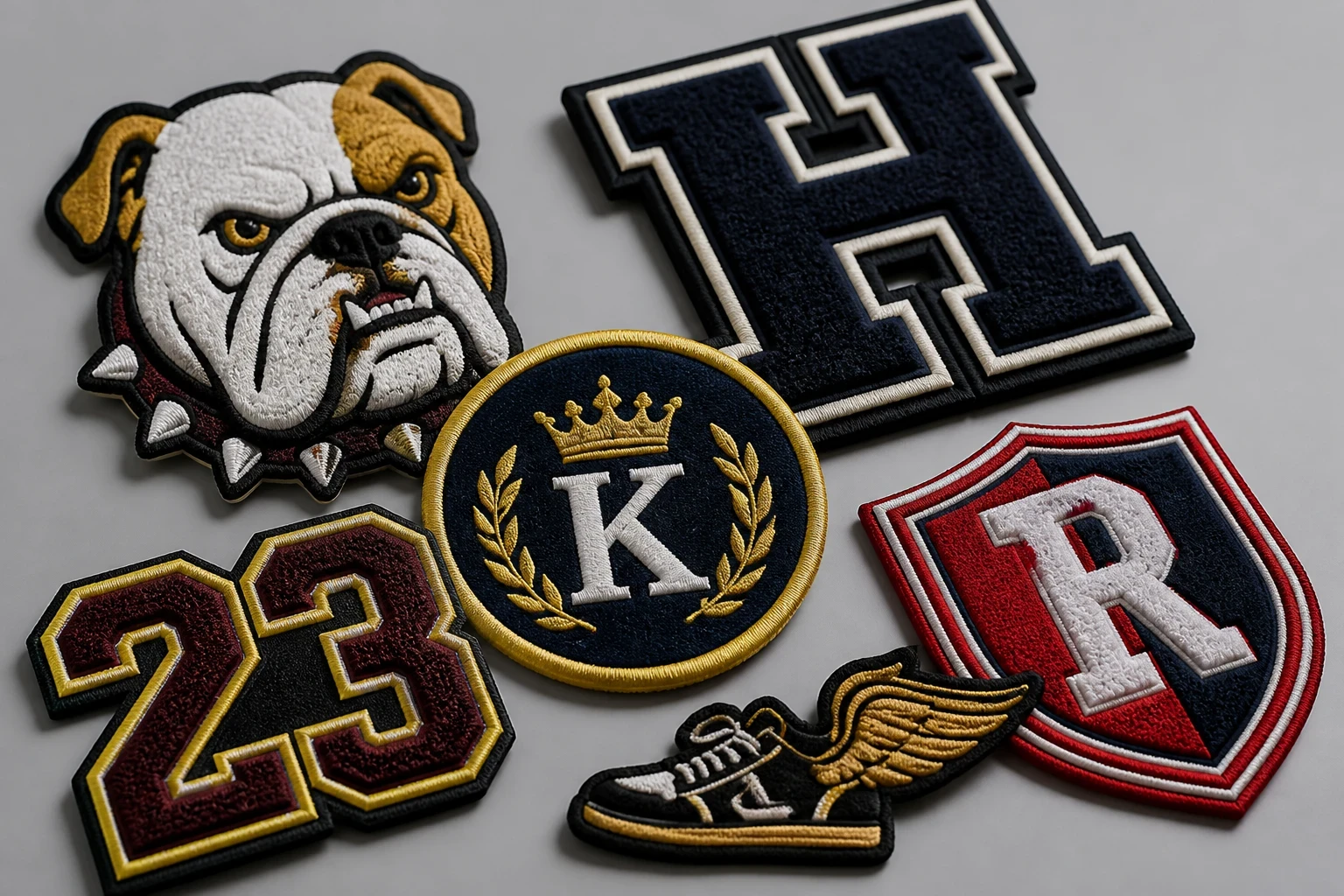
Varsity chenille patches UK strengthen brand identity by turning a logo, letter or mascot into a tactile garment feature that people can recognise at a distance. Their raised chenille pile suits varsity jackets, wool coaches, school blazers and clubwear. The Customized Patches provides a free digital mockup usually within 12 hours, with a 5-piece minimum per design.
Key takeaways
- A raised chenille pile gives a logo or letter a physical presence that flat print cannot reproduce.
- A clear shape, limited colour palette and sensible size usually build stronger recognition than a crowded design.
- The garment and fixing method matter: nylon shells, wool coaches, Velcro panels and school blazers need different solutions.
- The Customized Patches has a 5-piece minimum per design and provides a free digital mockup usually within 12 hours before production.
Varsity chenille patches UK can strengthen a brand identity by making a logo, letter or mascot look physical, distinctive and easy to spot on clothing. The raised yarn surface works particularly well on varsity jackets, wool coaches, school blazers, teamwear and club garments where a flat printed mark may feel too ordinary.
For a UK team, business or club, the benefit is not simply decoration. A well-sized patch gives people a repeated visual cue: the same letter on a squad jacket, the same crest on a school blazer, or the same mascot on staff outerwear. The Customized Patches supplies across the United Kingdom, has a 5-piece minimum per design, and produces only after the artwork and specifications have been approved.
Why varsity chenille patches UK make a brand more recognisable
Brand recognition depends on repeatable features. A strong colour pair, a particular initial, a recognisable outline or a short name can become familiar long before somebody reads every stitch. Chenille helps because its looped, raised pile catches light differently from the surrounding fabric. A letter on a dark wool jacket can be seen from across a changing room or sports hall without relying on small printed detail.
That physical quality also changes how the garment is perceived. A school blazer with a chenille house letter feels like part of the uniform rather than a temporary transfer. A football club jacket with a raised crest looks like shared kit. A hospitality team wearing matching patches on wool overshirts can create a consistent front-of-house look without ordering a completely new garment range.
Recognition comes from restraint, not decoration
The most effective varsity designs usually have one main message. That may be a large initial, a short team name, a mascot or a simple crest. Trying to reproduce a detailed website logo, a long slogan and several tiny icons in a 3-inch patch normally weakens the result. The pile needs room to show its shape.
- Use one dominant letter or symbol where the patch must be recognised quickly.
- Keep the main outline broad enough to remain clear against the garment.
- Limit the colour palette so the patch belongs to the wider brand system.
- Repeat the same shape and colours across jackets, bags and display garments.
- Use a border or merrowed edge to separate the patch from dark, textured or patterned fabric.
A useful test is to view the artwork as a small thumbnail on your phone. If the main letter or mascot disappears at that size, it may not work at the planned physical dimensions. A free mockup gives a more practical view, but the first design decision should still be based on what people need to recognise.
Choosing the right chenille specification for your garment
Chenille is not a single setting that suits every garment. The patch size, border, backing, fixing method and colour contrast all affect the finished result. A patch for a wool coaches jacket can be designed around a large raised letter, while a badge for a nylon shell may need a stronger edge and a fixing method that copes with a smoother, more mobile surface.
Start with the garment rather than choosing a backing in isolation. Send a photo of the actual jacket, blazer, polo, bag or panel if possible. A football club may use a polyester tracksuit for training and a wool-style jacket for presentation days; the same patch may need different placement or attachment advice for each.
| Specification | What it changes | Typical UK use | Point to check |
|---|---|---|---|
| Patch size | Controls visibility, weight and how much artwork can be shown | Large initials on varsity jackets; smaller crests on polos | Measure the clear area in inches, including space around seams |
| Chenille pile | Creates the raised, soft visual texture associated with varsity lettering | School, college, club and lifestyle jackets | Very fine details may need simplifying |
| Merrowed border | Frames the design and gives the edge a finished appearance | Crests, initials and shaped badges | Check that the border does not close small gaps |
| Sew-on backing | Provides a permanent attachment when stitched correctly | Wool coaches, heavy jackets, biker vests and work garments | Allow access for stitching and consider garment lining |
| Iron-on backing | Allows quick application with heat and pressure | Suitable garments with a compatible, heat-tolerant surface | It can peel after a dryer cycle or poor application |
| Velcro backing | Allows the patch to be removed or swapped | Tactical clothing, bags and Velcro panels | The garment must already have a matching loop panel |
Sew-on is usually the safer long-term choice for garments that are washed often, stretched or worn outdoors. Iron-on can be convenient, but it is not a universal answer. Nylon shells may react poorly to heat, and a patch that appears secure on day one can lift at the corners after repeated washing or a tumble-dryer cycle. Velcro is practical for changeable identifiers, but it adds bulk and only works where the panel is already present.
Size, colour and edge decisions
For a chest or upper-body patch, many buyers begin by measuring an area around 3 to 4 inches wide, then adjust to the garment and artwork. A large back design may need 8 to 12 inches or more, but the correct size is the one that sits comfortably within the panel. A patch should not cross a zip, fold heavily over a seam or cover a pocket opening.
Colour contrast is equally practical. Yellow chenille on navy can read clearly; a close blue-on-black combination may lose its edge under indoor lighting. If the brand palette uses subtle colours, a contrasting border can preserve recognition without changing the main logo colours. The design should be judged against the garment colour, not only against a white screen.
Chenille compared with other patch surfaces
Chenille is chosen for its raised, collegiate character, but it is not automatically the best surface for every logo. Printed is flatter; that is the point. It can reproduce gradients, photographs and very fine artwork more directly. Woven can show small lettering with a neat, level surface, while conventional embroidery offers familiar thread definition and a wide range of practical applications.
The sensible comparison is based on the job the patch must do. A hospitality company may want a neat name mark on a polo, where embroidered patches are easier to read and less bulky. A fashion label may want the raised hand-feel of chenille patches on a wool jacket. A cycling club carrying a detailed sponsor panel may prefer printed patches because the artwork has more tonal variation.
| Patch type | Best suited to | Strength | Trade-off |
|---|---|---|---|
| Varsity chenille | Large letters, mascots, school and club identity | Raised pile with a strong tactile and visual presence | Small lettering and intricate detail may need simplifying |
| Embroidered | Crests, workwear, team badges and general branding | Thread detail and familiar traditional finish | Can look busy if a small design contains too many elements |
| Woven | Fine text, compact logos and flat badges | Cleaner detail at smaller sizes | Less texture and height than chenille |
| Printed | Gradients, photographs and detailed artwork | Flat surface with broad image reproduction | Does not provide the raised yarn effect |
| PVC | Outdoor, utility and modern sports applications | Raised moulded surface and easy cleaning | A harder, more technical appearance than chenille |
| Leather | Premium lifestyle, motorcycle and heritage garments | Solid material character and understated branding | Fine multi-colour artwork is not its main advantage |
A mixed order can make sense. For example, a club might use chenille for the main jacket letter, embroidery for the detailed crest and woven patches for smaller staff caps. A brand does not need every mark to use the same construction; it needs the colour, shape and hierarchy to feel related. The difference between varsity chenille patches UK and embroidered patches guide covers that choice in more detail.
Not sure whether the patch needs a large chenille letter, a merrowed crest or a simpler embroidered version? Send the artwork and garment details for a free digital mockup usually within 12 hours, then compare the proposed size and colour before you produce.
GET A FREE MOCKUPWhere UK teams, schools and businesses use the patches
The classic use is the varsity jacket, but UK buyers often apply the idea to garments that are already part of their identity. A school may use house initials on blazers or leavers' jackets. A university society may use a large back emblem and a smaller front mark. A football or rugby club may place a mascot on presentation jackets while keeping the official crest elsewhere.
- Football, rugby, hockey and athletics teams needing a shared off-field identity.
- Schools and colleges creating house, year-group, society or alumni garments.
- Cadet units using removable identifiers on Velcro panels or permanent badges on outerwear.
- Hospitality businesses adding a distinctive mark to wool coaches, overshirts or staff jackets.
- Independent clothing brands using initials or mascots as a recognisable product detail.
- Biker and motorcycle clubs applying large back designs and smaller front identifiers.
- Music, dance and youth organisations making a small run for members, volunteers or performers.
I have seen the same basic mistake across very different orders: the buyer chooses a patch in isolation and only checks the garment afterwards. A badge that looks balanced on a white artwork sheet can feel oversized on a fitted polo or disappear into a black fleece. For a biker vest, the back panel may have existing club colours and stitching to work around. For a cadet shirt, a removable Velcro panel may be more useful than a permanent iron-on.
For garments with a clear purpose, placement should support the wearer. A club crest should not sit where a backpack strap rubs across it. A hospitality patch should not catch on an apron tie. A school blazer badge should leave enough room for the blazer's existing pocket, buttons and house details. These small checks protect both the garment and the identity system.
Preparing artwork that works in raised chenille
A production-ready file does not have to be complicated. A clear vector logo is helpful, but a high-resolution PNG can also give the production team a sound starting point. Include the intended colours, approximate dimensions in inches, the garment colour and any instructions about the border or backing. If there are several versions, label them rather than sending a folder of unexplained alternatives.
Simplify the parts that will not survive at patch size
Chenille pile is excellent for bold shapes and letters. It is less suited to tiny gaps, narrow strokes and complex line drawings. A thin outline around a mascot may close up. Small words may become unreadable. A detailed shield can lose its internal divisions. That is not a failure of the maker; it is a scale problem that should be solved in the artwork.
- Identify the one element people must recognise first.
- Remove decorative lines that do not add meaning at the planned size.
- Check the shortest letters and narrowest spaces in the design.
- Decide whether the border should be part of the identity or simply a separation edge.
- View the artwork on the intended garment colour rather than on a white page.
- Ask for a mockup before approving any change to the final construction.
Do not rely on a font name alone. A typeface that looks excellent on screen may have narrow counters or delicate serifs that do not translate well to raised yarn. If the patch uses initials, ask for the actual letters to be shown in the mockup. The artwork guide for varsity chenille patches UK explains the common file and layout checks in more detail.
Ordering varsity chenille patches UK without avoidable delays
A smooth order starts with complete information. Send the artwork, required quantity, finished size, garment type, preferred backing and delivery postcode together. If you only know the approximate size, say so. It is easier to recommend a workable proportion from a photograph than to correct an oversized patch after production.
- Tell us what the patch represents and where it will be worn.
- Send the clearest logo or artwork available, including any colour references.
- Give the desired finished size in inches or provide the area to be covered.
- Confirm the quantity for each separate design; the minimum is 5 pieces per design.
- Choose sew-on, iron-on or Velcro backing according to the garment and use.
- Request the free digital mockup, usually supplied within 12 hours.
- Check the wording, colours, proportions, border and backing on the mockup.
- Approve the final specification before production begins.
The mockup is not an automatic production approval. It is the point where you can spot a letter that is too narrow, a border that needs more contrast or a patch that sits too close to a pocket. The Customized Patches produces only after approval, so this is the time to ask questions rather than hope a change can be made later.
Lead time depends on the design, quantity, backing and order schedule, so a fixed promise would be misleading. Build in time for artwork changes, approval and UK delivery, particularly if the patches are for a school presentation, club launch, tournament or clothing release. If there is a date, include it in the first message so our team can discuss the practical options.
Care, attachment and common failure points
A good patch can still fail if the application does not match the garment. Iron-on that peels after a dryer cycle is usually a reminder that heat, pressure, fabric and washing conditions all matter. Some synthetic fabrics cannot take the required heat. Some garments have coatings that prevent adhesion. If the patch will be washed frequently or worn hard, sew-on attachment deserves serious consideration.
Sewing through a lined jacket also needs planning. A professional alteration service or experienced maker may be needed to avoid catching the lining, pocket bag or waterproof layer. On a wool coaches jacket, stitches can usually be concealed or placed carefully around the edge. On a nylon shell, stitching may affect water resistance and should be considered before the placement is final.
- Follow the garment manufacturer's washing instructions.
- Avoid assuming that every iron-on patch belongs in a tumble dryer.
- Check the corners and border after washing rather than waiting for a complete lift.
- Do not iron directly over chenille pile without suitable protection and instructions.
- Use Velcro where the patch genuinely needs to be removed, not simply because it sounds flexible.
- Store spare patches flat and dry, away from direct heat.
A patch can also wear through at the wrong placement. Backpack straps, seat belts and repeated rubbing on a counter can flatten the pile over time. That is a normal trade-off for a tactile surface, not a reason to avoid it. The right question is whether the planned garment gives the patch enough protection for its expected use.
Cost, quantity and value for a UK order
Patch pricing depends on more than width. The number of colours, construction, backing, border, artwork complexity, quantity and delivery requirements all affect the quote. A simple large letter may be straightforward even at a generous size, while a compact crest with several internal shapes may require more artwork preparation.
Name sew-on, iron-on or Velcro on the quote and include a photograph of the garment. The Customized Patches can show the correct backing and placement on a free digital mockup usually within 12 hours; production starts only after you approve it.
GET A FREE MOCKUPThe 5-piece minimum per design is useful for a small club, business test or first clothing run. It also means that several different names or initials should be counted separately if each one changes the design. Five A patches and five B patches are two designs, not one ten-piece design. State the breakdown clearly so the quotation reflects the actual order.
| Project detail | Why it affects the quote or result | Practical advice |
|---|---|---|
| One repeated design | The same artwork can be produced across the quantity | Useful for teams, staff groups and club membership |
| Several initials or names | Each variation may need separate artwork and production setup | List every variation and quantity from the start |
| Large back patch | Uses more material and can require more handling | Measure the back panel and check comfort when seated |
| Small detailed crest | Fine detail is harder to retain at compact dimensions | Consider woven or embroidered construction if detail is essential |
| Removable Velcro patch | Adds a hook-and-loop component and requires a compatible garment panel | Send a photograph of the existing panel |
| Iron-on patch | Application depends on heat tolerance and care conditions | Confirm the fabric before selecting this option |
Value comes from using the construction where it adds something. If a flat, detailed sponsor logo is needed, a woven patch or printed patch may give a better result than forcing it into chenille. If the main requirement is a bold, tactile letter that makes a jacket feel like part of a group, varsity chenille can justify its place even if another surface costs less.
A practical decision guide for your brand
Choose varsity chenille if your identity is built around bold initials, mascots, short names or a collegiate look, and the garment has enough room to show the raised pile. It is a strong fit for school and university clothing, team jackets, club merchandise and lifestyle outerwear. It can also work for a business that wants its staff jacket to feel distinctive rather than like another standard uniform.
Choose embroidery or woven construction if small text, a detailed crest or a flatter finish matters more than height. Choose print if gradients or photographic detail carry the message. Choose PVC for a harder outdoor or utility look, or leather patches for a solid heritage finish. For motorcycle clothing, review the biker and motorcycle club patches hub and consider the existing back panel, seams and stitching.
The best brand identity is consistent without being rigid. One main chenille patch can become the hero mark, with smaller embroidered or woven items supporting it on caps, polos and bags. The result feels planned because the colours and core symbol repeat, while each garment uses a construction that suits its job.
Final checks before you approve
Before approval, look at the complete garment rather than the patch alone. Check the size on the person who will wear it, the contrast against the fabric, the distance from seams and the position of existing branding. Confirm the spelling of every word, especially if several versions are being made for houses, teams or departments.
- Is the main letter, mascot or crest recognisable at a glance?
- Does the planned size fit the garment in inches without crossing a seam or zip?
- Are the colours clear against the actual garment?
- Has small detail been simplified where needed?
- Is the backing suitable for nylon, wool, polyester, denim or the chosen fabric?
- Have all separate designs reached the 5-piece minimum?
- Has the free digital mockup been checked and approved?
- Is the delivery date realistic for the event or launch?
If those answers are clear, the patch is doing more than filling space on a jacket. It is giving the group a repeatable mark that can appear in photographs, at matches, in school corridors, behind a bar or across a clothing collection. That is the practical value of varsity chenille patches UK: the identity becomes something people can see, feel and remember.
For further planning, see 10 Questions to Ask Before Ordering varsity chenille patches UK, Varsity chenille patches UK Checklist: What to Confirm Before You Order and How Much Do varsity chenille patches UK Cost in the UK?. Customers outside the main cities can also review the UK city pages for location-focused ordering information.
Frequently asked questions
What are varsity chenille patches UK used for?
Varsity chenille patches UK are used for school and university jackets, sports teams, clubs, branded outerwear, hospitality clothing, biker vests and lifestyle garments. They are particularly suitable for bold initials, mascots, short names and simple crests because the raised chenille pile gives the design a visible, tactile finish.
What is the minimum order for varsity chenille patches?
The minimum is 5 pieces per design. If you order different initials, names or artwork variations, each variation may count as a separate design. Send the complete quantity breakdown with your artwork so the quotation reflects the actual production requirements.
How quickly can I see a mockup?
The Customized Patches provides a free digital mockup usually within 12 hours. The mockup lets you review the proposed artwork, colours, size, border, backing and placement. Production begins only after you approve the final details.
Are chenille patches better than embroidered patches for a brand?
Neither is better for every project. Chenille suits bold, raised lettering and a collegiate feel, while embroidery is often better for detailed crests, small text and a flatter thread-led finish. Compare the garment, viewing distance, artwork detail and washing routine before choosing.
Can varsity chenille patches go on nylon shells or school blazers?
They can be used on different garments, but the backing and attachment need to match the fabric. Nylon shells may not tolerate the heat required for iron-on application, so sew-on or another suitable method may be preferable. School blazers commonly need careful placement and stitching around the lining, pocket and existing badge.
Should I choose sew-on, iron-on or Velcro backing?
Choose sew-on for a permanent, hard-wearing attachment, especially on jackets that are washed or worn frequently. Choose iron-on only when the fabric is heat-tolerant and the care routine is suitable. Choose Velcro when the patch must be removed or changed and the garment has a matching loop panel. Include the garment details with your quote so the backing can be assessed properly.
Ready to produce custom patches for your UK team or brand?
GET A FREE MOCKUP