
How Much Do varsity chenille patches UK Cost in the UK?
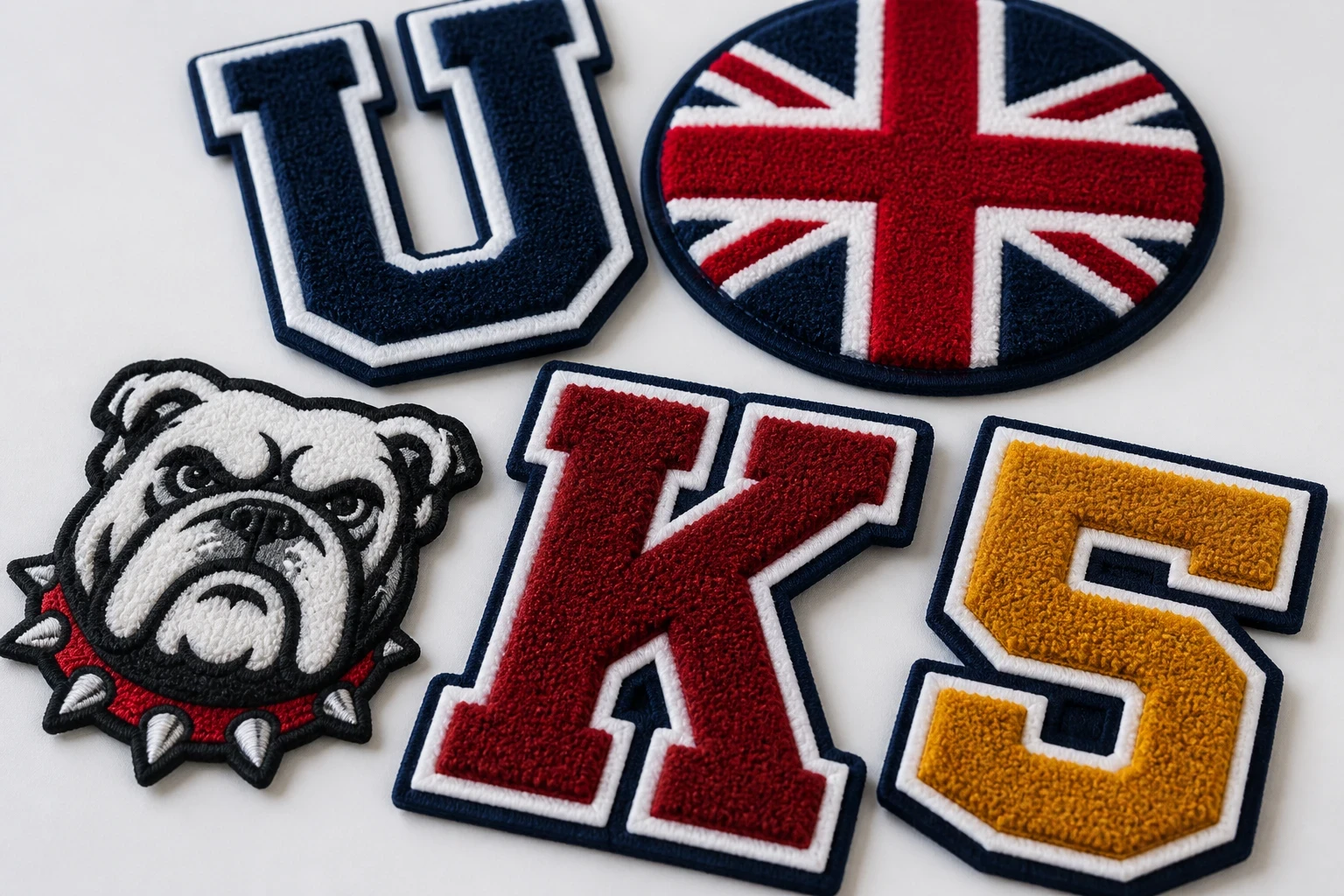
Varsity chenille patches UK commonly cost more than flat embroidered patches because they use raised chenille yarn, a felt base, and a merrowed edge. Your price depends on size, quantity, lettering, colours, backing, and artwork. The Customized Patches has a 5-piece minimum, provides a free digital mockup usually within 12 hours, and produces only after approval.
Key takeaways
- Varsity chenille patches UK cost more than simple flat patches because they use raised yarn, felt, an edge finish, and more production handling.
- Size, order quantity, lettering, number of colours, backing, and artwork preparation have the greatest effect on a UK quote.
- The Customized Patches accepts a 5-piece minimum per design and sends a free digital mockup usually within 12 hours.
- Production starts only after you approve the mockup, so the final patch can be checked against the garment and intended use.
Varsity chenille patches UK usually cost more than a basic flat embroidered patch because they combine a felt ground, raised chenille yarn, a stitched border, and extra finishing. The exact price depends on the patch size, order quantity, lettering, colours, backing, and artwork. A small simple badge for five garments will quote differently from a large school crest for 80 wool jackets.
The Customized Patches supplies UK teams, schools, clubs, brands, and businesses with a 5-piece minimum per design. You receive a free digital mockup usually within 12 hours, and production begins only after you approve it. That approval step matters: it gives you a chance to check the spelling, proportions, edge, colours, and backing before anything is made.
What makes varsity chenille patches UK cost more?
Chenille is not simply an embroidered patch with a fluffy surface. The raised yarn creates a soft, looped pile, normally set against felt or another textile base. A border is then added to protect the edge and give the patch the familiar letterman-jacket appearance. Each extra construction step affects handling time and price.
The design also matters. A single block letter with one border is straightforward. A detailed club crest with a mascot, narrow text, several yarn colours, an outer felt shape, and a merrowed crest edge needs more decisions during sampling and production. Small detail can be lost in chenille, so a sensible quote may include a recommendation to simplify the artwork rather than promise that every tiny line will reproduce perfectly.
- Patch area: a 4-inch letter normally uses less material and handling than a 10-inch back patch.
- Shape: standard circles, shields, and letters are easier to price than irregular outlines with several borders.
- Yarn colours: every additional colour may add production handling, especially if it creates separate sections.
- Lettering: large varsity letters suit chenille well; small words may need flat embroidery or a mixed construction.
- Border finish: a merrowed edge gives a traditional raised outline, while a simpler stitched edge can suit some designs.
- Backing: sew-on, iron-on, adhesive, and Velcro each have different use cases and finishing requirements.
- Quantity: the unit cost often improves when the same approved design is made in a larger run.
- Artwork: clean production-ready artwork reduces redraws and avoids confusion during approval.
The main price bands to discuss with a UK patch maker
It is risky to publish one universal price for varsity chenille patches UK because two patches with the same width can require very different work. A simple 4-inch letter is not comparable with a 4-inch crest containing tiny lettering and four yarn colours. The table below is best used as a quoting guide, not as a fixed tariff.
| Patch specification | Typical use | What usually keeps the cost lower | What can increase the quote |
|---|---|---|---|
| Small letter or simple badge, around 3–5 inches | School blazer, team jacket, hospitality polo, club merchandise | One or two colours, clear shape, sew-on backing, repeat quantity | Fine lettering, multiple borders, unusual outline, urgent deadline |
| Medium crest or mascot, around 5–8 inches | Football club, cadet unit, workwear jacket, college society | Limited colours, bold artwork, one main felt base, 10 or more pieces | Detailed mascot, several yarn sections, mixed embroidery, Velcro backing |
| Large back patch, around 8–12 inches | Wool coaches jacket, varsity jacket, biker or motorcycle club garment | Strong block artwork, repeat run, simple lettering, standard backing | Large coverage, multiple borders, dense detail, special garment placement |
| Mixed chenille and embroidery | Brand badge, school crest, premium teamwear, textured logo | Chenille reserved for large lettering and embroidery used for detail | Many small embroidered elements, colour matching, complex registration |
For a proper GBP quote, send the artwork, intended size in inches, quantity, backing preference, and deadline. A photograph of the garment helps too. Nylon shells, wool coaches, school blazers, thick fleece, and Velcro panels all present different attachment questions, and the backing should match the garment rather than being chosen from a generic list.
How size, quantity, and lettering change the quote
Size is one of the clearest cost factors. Larger varsity chenille patches use more base material and yarn, but the difference is not always a simple price-per-inch calculation. A wide letter may be easy to produce, while a smaller patch with a dense crest can require more controlled work.
Quantity also changes the calculation. The Customized Patches has a 5-piece minimum per design. If a school needs five different letters, ask whether each letter counts as its own design; in most cases, a different letter or artwork requires its own setup and approval. If a football club needs 40 identical sleeve badges, that repeat run is easier to plan than 40 unrelated designs.
Large lettering is usually the safest chenille detail
Chenille works well for bold initials, team names, graduation years, mascots, and simple symbols. It is tactile and easy to recognise from a few metres away. It is less suited to tiny legal text, narrow outlines, thin script, or a detailed photographic image.
A useful solution is a hybrid patch. Put the main letter or name in raised chenille and use flat embroidery for the smaller crest detail. Printed patches are flatter; that is the point. If a brand needs a smooth gradient, small text, or a detailed illustration, a printed patch may be a better technical choice even if it has less texture.
When a flatter alternative may be better value
A flat embroidered patch can give a sharper result for compact logos, outlines, and bold text that needs to sit neatly on a polo or shirt. A woven patch can reproduce fine lettering with a flatter face, while a 3D embroidered patch can add raised foam to selected areas without using a full chenille construction.
That does not make chenille the wrong option. It means the texture should earn its place. Use raised yarn for a retro sports look, a traditional school identity, a large initial, or a tactile club badge. Choose the flatter route if the main requirement is small detail, a low profile, or a clean corporate mark.
Backing and garment choice can prevent an expensive mistake
Backing is part of the price discussion, but it is also a practical decision. Sew-on backing is often the dependable choice for heavy wool coaches jackets, thick varsity jackets, biker vests, and garments that will be washed repeatedly. It takes longer to attach, but it does not rely on an adhesive bond.
Not sure whether chenille, thread, or ink will hold your logo best? Send the artwork and garment details for a free digital mockup usually within 12 hours, so you can compare the construction before production.
GET A FREE MOCKUPIron-on backing is convenient for many cotton or cotton-blend garments, but it needs heat, pressure, and a suitable surface. Nylon shells can be damaged or distorted by heat. An iron-on patch that looks secure on day one may peel after a dryer cycle if the garment, temperature, or application method is unsuitable.
| Backing | Good fit | Watch for |
|---|---|---|
| Sew-on | Wool coaches, varsity jackets, denim, biker vests, workwear | Requires stitching and a stable edge; often the safest long-term attachment |
| Iron-on | Suitable cotton or blended garments where heat can be applied safely | Nylon shells, coatings, seams, and repeated hot drying can cause problems |
| Velcro | Removable team identifiers, tactical-style garments, club panels | The garment must already have a compatible loop panel or one must be added |
| Adhesive | Short-term display, packaging, samples, or light-use applications | Not normally the first choice for heavy washing or rough outdoor use |
For a removable patch, tell us about the Velcro panel rather than simply requesting Velcro. The hook side and loop side need to match, and the patch dimensions should leave enough room for the panel. The Chenille patches Sizing and Backing Options Explained guide covers the practical measurements in more detail.
A merrowed crest edge can suit a traditional school or club badge, but it may add visual weight around a compact design. On a narrow sleeve, a simple stitched border may sit more neatly. This is the sort of choice that is easier to judge on a mockup than from a product name alone.
What is included in a useful quote?
A useful quote should describe more than the number of patches and the total in pounds. It should record the approved dimensions, the number of pieces, the construction, the colours, the edge, the backing, the delivery destination, and any artwork preparation. If one of those details is missing, two quotes may appear different while describing different products.
- The exact patch width and height in inches, including any border.
- The approved artwork and whether the design is chenille, embroidered, or mixed.
- The number of yarn, felt, and thread colours requested.
- The edge style, such as a stitched border or merrowed edge.
- The backing and any special requirement for a Velcro panel.
- The quantity per design, with the 5-piece minimum clearly understood.
- The delivery address within the United Kingdom and the required arrival date.
- Any artwork redraw, sample, or special packaging requirement agreed before production.
The Customized Patches sends a free digital mockup usually within 12 hours. The mockup is not production approval by itself: you need to check it and confirm that it is correct. We produce only after approval, which helps prevent a misspelt club name, reversed colour, wrong patch orientation, or backing error from reaching the sewing stage.
Ordering varsity chenille patches UK: lead times and approval
The fastest part of the process is often the first visual check. Send the artwork, size, quantity, garment type, backing preference, and deadline together. A clear brief reduces the number of questions and lets our team identify problems before a price is finalised.
After you receive the mockup, inspect the text at its intended size. Look at the border, the spacing around letters, the shape of the crest, and the position of any small embroidery. For a jacket order, place the mockup over a photograph of the front, sleeve, or back area if you are unsure about scale.
- Send the artwork and explain what the patch will be attached to.
- Confirm the finished size in inches, quantity per design, and delivery postcode.
- Choose the construction, border, colours, and backing.
- Review the free digital mockup usually within 12 hours.
- Request any changes before approval, especially spelling or size changes.
- Approve the final mockup in writing.
- Production starts after approval, followed by UK delivery according to the agreed quote.
A five-piece order may suit a small club committee, a sample run, or a team testing a new jacket. Larger orders can make the unit price more efficient, but only if the design remains the same. Changing the name, year, mascot, or colour arrangement can create separate designs rather than one repeat batch.
For wider context, compare the construction options in Varsity chenille patches UK vs embroidered patches: Which Is Right for Your Project?. It is particularly useful for organisations choosing between a raised jacket badge and a flatter patch for polos, bags, or uniforms.
Examples from common UK orders
A school may order raised initials for blazers or leavers' jackets. The school needs to confirm whether every pupil receives the same letter, whether names are separate designs, and whether the blazer fabric can accept the chosen backing. A simple large initial can be a strong chenille application; tiny house details may be better handled in flat thread.
A football club often wants a crest, squad identifier, or season year on a tracksuit, coach jacket, or kit bag. The crest may combine chenille for the main shield with embroidery for small words. If the kit is regularly washed, sew-on attachment may be more reliable than iron-on, particularly on a textured or water-resistant shell.
Cadet units and outdoor groups need to think about abrasion, washing, and removal. A robust-looking patch is not automatically suitable for every nylon shell. Ask for the correct backing and check whether a removable Velcro panel is already present. The answer can affect the total more than one extra yarn colour.
Hospitality businesses sometimes use patches on aprons, overshirts, wool jackets, or branded outerwear. Chenille gives a warmer, collegiate feel, while a flat embroidered badge may be easier to read on a compact chest position. Biker and motorcycle club garments often need larger back patches and secure sewing, so the garment and placement should be discussed before the artwork is finalised. See the biker and motorcycle club patches product hub for that use case.
Name sew-on, iron-on, or Velcro on the quote and include a photograph of the garment. We show the correct back on a free digital mockup usually within 12 hours, and production starts only after you approve the details.
GET A FREE MOCKUPQuestions to ask before accepting a price
Ask if the quoted size includes the border. Ask whether the price is for one design or several variations. Ask which backing is included, whether a mockup is supplied, and whether production waits for written approval. These questions are plain, but they prevent most misunderstandings.
You should also check the delivery basis for your UK address and the expected production schedule after approval. A quote for five small sew-on letters is not a like-for-like comparison with a quote for five large Velcro-backed crests. If the construction is unclear, request a visual specification rather than comparing totals alone.
- Is the 5-piece minimum applied per design?
- Are the dimensions stated in inches, including the border?
- Does the price include a digital mockup and artwork preparation?
- Is the patch chenille throughout, embroidered throughout, or a combination?
- Which backing is included, and is it suitable for the stated garment?
- Are delivery charges to the UK address included or shown separately?
- Does production begin only after the mockup has been approved?
- What changes would create a new design or affect the final quote?
How to keep the cost sensible without losing the varsity look
Start with the garment and viewing distance, not the effect you saw on a large jacket photograph. If the badge will sit on a sleeve, measure the usable width first. If it will go on the back of a wool coach jacket, decide how much of the panel should be covered before adding borders and extra lettering.
- Keep the main chenille feature bold and readable.
- Remove tiny decorative lines that will disappear at the finished size.
- Use a smaller number of deliberate colours rather than adding shades without a purpose.
- Order one repeated design where possible instead of many unrelated variations.
- Use embroidery for small detail and chenille for the large visual feature.
- Choose sew-on for garments that will be washed hard or exposed to abrasion.
- Confirm the backing before the mockup is approved, not after production begins.
If texture is not essential, compare embroidered patches with chenille before deciding. If a rubberised finish suits an outdoor brand, PVC patches may be worth considering. For a premium garment label, leather patches can work better than raised yarn. The right choice is the one that matches the garment, logo, maintenance, and budget.
Final answer: what should you budget for?
Budget for a tailored quote rather than a single advertised unit price. Small, simple designs in a repeat run will normally be easier to price than large, detailed one-off crests. The most useful information to send is the artwork, finished size, quantity, colours, backing, garment, and delivery postcode.
The Customized Patches makes varsity chenille patches UK for teams, brands, clubs, schools, and businesses across the United Kingdom. The order starts at 5 pieces per design. You receive a free digital mockup usually within 12 hours, and we produce only after you approve the artwork and specification.
For more design guidance, read How to Choose the Right varsity chenille patches UK for Your Brand or review the Common Mistakes to Avoid When Ordering varsity chenille patches UK guide before sending a final brief.
Frequently asked questions
How much do varsity chenille patches UK cost?
There is no single price because size, quantity, lettering, colours, border, backing, artwork, and delivery all affect the quote. A small simple letter is normally less involved than a large detailed crest. The Customized Patches can quote accurately from artwork, measurements, quantity, garment type, and backing preference.
What is the minimum order for varsity chenille patches?
The minimum order is 5 pieces per design. Different letters, names, years, or crest variations may count as separate designs because each one needs its own artwork approval and production specification.
How quickly can I see a varsity chenille patch mockup?
The Customized Patches provides a free digital mockup usually within 12 hours. Send clear artwork, the intended size, garment details, backing preference, and quantity together to help our team prepare a useful visual.
Do you produce varsity chenille patches before approval?
No. Production starts only after you approve the mockup and specification. Check the spelling, dimensions, colours, border, patch orientation, and backing before approval so the finished order matches the intended garment.
Are chenille patches suitable for nylon jackets?
They can be, but the backing and attachment method need checking. Nylon shells may not suit high heat, so iron-on backing can be unsuitable. Sew-on or a properly planned Velcro panel may be more appropriate, depending on the garment and use.
Are varsity chenille patches better than embroidered patches?
Neither is better for every job. Chenille gives a raised, soft, traditional varsity appearance and suits large letters or bold badges. Flat embroidery is usually better for small detail, compact logos, and lower-profile garments. The free mockup lets you compare the visual result before production.
Ready to produce custom patches for your UK team or brand?
GET A FREE MOCKUP