
10 Questions to Ask Before Ordering varsity chenille patches UK
Before ordering varsity chenille patches UK, confirm the finished size, chenille and border colours, lettering scale, backing, garment type, quantity, delivery date and artwork approval process. The Customized Patches supplies a free digital mockup usually within 12 hours, has a 5-piece minimum per design, and produces only after approval.
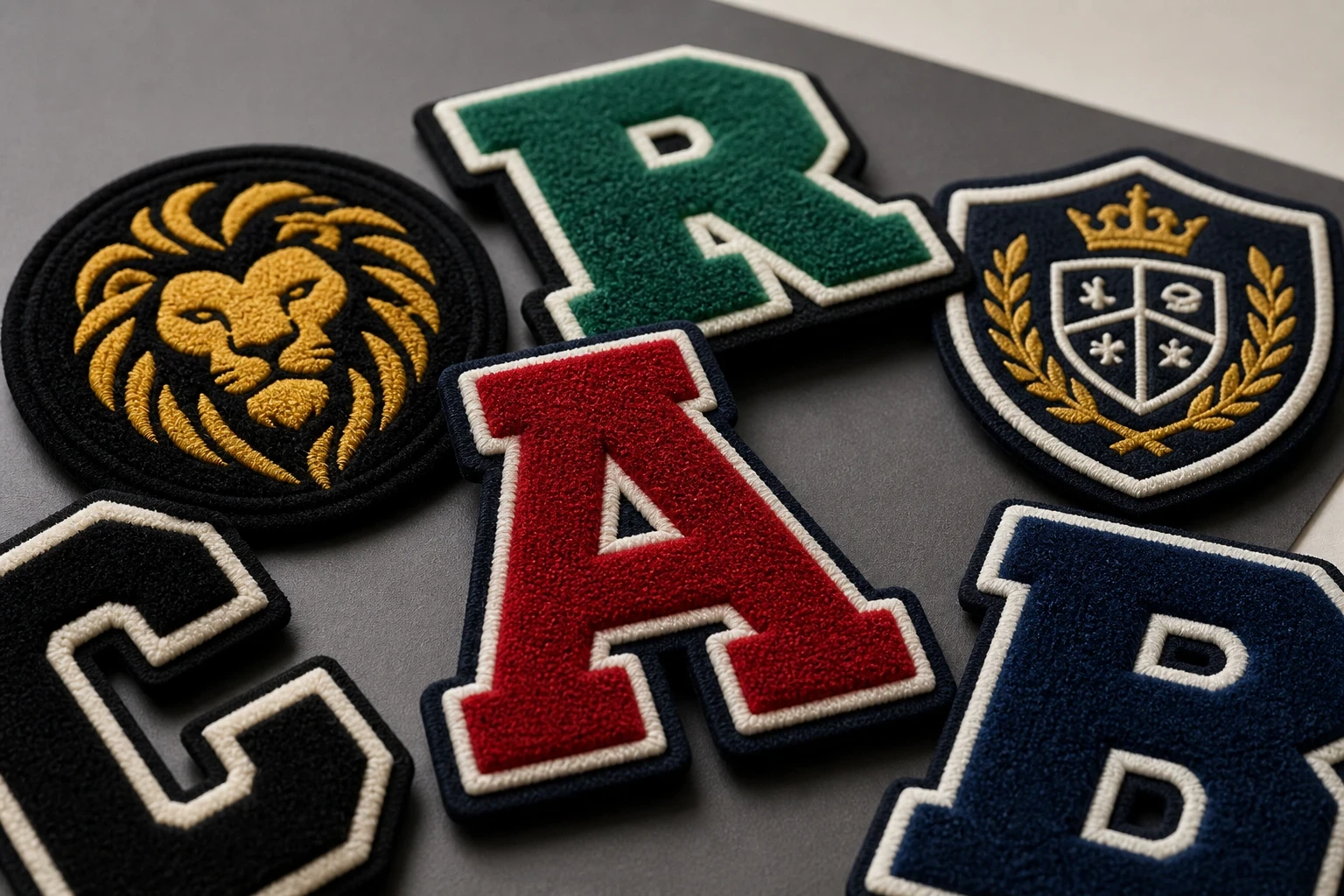
Key takeaways
- The 5-piece minimum applies to each design, not simply the total number of patches across unrelated designs.
- A free digital mockup is usually supplied within 12 hours, and production starts only after you approve it.
- Chenille gives a raised, tactile varsity finish, but very small lettering and fine detail need simplifying.
- Backing must match the garment: sew-on is dependable for heavy jackets, while Velcro suits removable panels.
The ten questions below help you check the parts that cause most ordering problems: finished size, chenille colours, lettering, backing, garment fit, quantity, price, timing, artwork and approval. The Customized Patches supplies a free digital mockup usually within 12 hours, has a 5-piece minimum per design, and produces only after approval.
That matters for a school blazer, a football club's travel jacket or a branded wool coaches jacket. A patch can look right on a screen and still be too large for a sleeve, too detailed for chenille yarn or fitted with the wrong back for a nylon shell.
1. Are varsity chenille patches UK the right finish for the garment?
Chenille is chosen for its raised, soft pile and traditional varsity appearance. It suits large initials, mascots, block letters, club names and simple crests particularly well. The surface catches light differently from flat embroidery, so the patch has a physical presence rather than looking like printed fabric.
It is not the answer for every logo. Very fine lines, tiny sponsor wording and detailed photographic artwork usually need a different construction. A woven patch can hold small lettering more neatly, while a printed patch is flatter and can reproduce gradients or fine illustrations. Printed is flatter; that is the point.
What should you compare?
| Patch type | Surface and detail | Good fit | Main trade-off |
|---|---|---|---|
| Chenille | Raised yarn pile with bold shapes | Varsity jackets, school teams, club initials and mascots | Small detail and tiny text need simplifying |
| Embroidered | Thread coverage with stitched detail | Football crests, workwear, uniforms and general branding | Can look busier at small sizes |
| Woven | Flat woven face with sharper small detail | Fine lettering, labels and compact logos | Lacks the deep varsity pile |
| Printed | Flat ink surface with flexible artwork | Gradients, illustrations and photographic elements | Does not provide raised texture |
| PVC | Moulded rubber-like surface | Outdoor kit, technical clothing and bold marks | Different look from traditional collegiate chenille |
If you want a fuller comparison, see varsity chenille patches UK vs embroidered patches: Which Is Right for Your Project?. The useful test is not which material sounds best; it is whether the surface, detail level and attachment method suit the garment and how it will be used.
2. What finished size will work on the garment?
Ask for the finished width and height in inches, not only a vague instruction such as “make it prominent”. A large back design may work at 10 or 12 inches wide, whereas a sleeve badge, chest mark or school blazer crest may need to stay closer to 3 or 4 inches. The available panel decides the practical limit.
Measure around pockets, zip lines, seams and curved areas. A patch that fits an empty jacket back may not fit between the chest pocket and collar. Remember the border when measuring: the merrowed edge is part of the finished footprint, not an invisible extra.
Why size changes the artwork
A design with three large initials may work beautifully at 8 inches wide but become cramped at 3 inches. The same applies to a football crest with a narrow scroll or a cadet unit badge with a small motto. Size and artwork must be considered together, rather than approved separately.
- Measure the flat area where the patch will sit.
- Keep a margin from seams, pockets and fasteners.
- Read every word at the real proposed size.
- Send a photograph of the garment if the panel is curved or obstructed.
- Ask for a mockup showing the patch in proportion to the jacket or uniform.
The guide Chenille patches Sizing and Backing Options Explained covers practical dimensions and attachment choices. A digital preview cannot reproduce the exact pile height, but it can expose a patch that is visibly too wide or a line of text that has no breathing room.
3. Can the lettering be read in chenille?
Chenille lettering normally works best when it is bold, separated and given enough height. A short team name such as NORTH or RAVENS is easier to build clearly than a long club title squeezed into a narrow arc. Do not judge the artwork only at laptop size; zoom out until it is roughly the size of the finished patch.
Ask whether small text should be removed, enlarged or converted to a simpler border. A merrowed crest can look smart, but an intricate inner outline may disappear once yarn, border and background colours sit together. We would rather flag that at artwork stage than send a team a badge nobody can read.
What happens with small logos?
There are three sensible routes: enlarge the patch, simplify the mark or choose another construction. Embroidered patches can provide more stitched definition for some crests, while 3D embroidered patches add height to selected areas but still need suitable line weight. A patch maker should explain the compromise rather than silently redraw the identity.
For a hospitality polo, the chest logo may need a clean embroidered treatment rather than a large varsity badge. For a wool coaches jacket, a bold chenille back or left-chest initial can be exactly right. The garment, viewing distance and brand rules all affect the answer.
4. Which colours and border should I specify?
List the background, chenille yarn, lettering, outline and edge colours separately. “Blue and white” is not enough for a school order if the school has a particular navy, royal blue or sky blue. If colour matching matters, send a brand reference, artwork file or physical colour reference and state which areas are most important.
Chenille has texture, and texture affects how a colour appears compared with a flat screen swatch. Dark yarn on a dark background can lose separation. A contrasting merrowed border usually helps the shape read, but it also changes the overall balance and final footprint.
Should every detail use a separate colour?
Not necessarily. More colours can make a design clearer, but they can also make a small patch look crowded. Two strong colours plus a defined border often give a cleaner varsity result than six near-identical shades. For brand work, ask which colour must remain exact and where a close production match is acceptable.
Send the colour information with the first quotation. Changing colours after approval can affect the production plan, and a new colour request may require a revised mockup. The How to Design Artwork for varsity chenille patches UK That Production-Ready guide gives more preparation advice.
Not sure whether chenille, thread or ink will hold your logo at the intended size? Send the artwork and garment details to The Customized Patches for a free digital mockup usually within 12 hours, so you can compare the visual treatment before production.
GET A FREE MOCKUP5. Which backing suits the garment and washing routine?
The backing is not a minor add-on. Sew-on is the dependable choice for heavy wool jackets, leather, denim and garments that will be worn hard. Iron-on is convenient for suitable cotton or uniform fabrics, but an iron-on patch that looks secure on day one can peel after a dryer cycle if the heat, pressure or fabric is unsuitable.
Velcro is useful for removable unit identifiers, security clothing, event teams and garments with an existing hook-and-loop panel. It adds thickness and may require a separate loop panel on the garment. A nylon shell can be heat-sensitive or coated, so do not assume iron-on is safe simply because the surface is smooth.
| Backing | Useful for | Check before ordering |
|---|---|---|
| Sew-on | Wool coaches jackets, denim, leather, heavy outerwear and long-term use | Allow time for stitching and check the garment can take a needle |
| Iron-on | Suitable cotton garments and straightforward home application | Fabric heat tolerance, wash instructions and whether extra sewing is sensible |
| Velcro | Removable patches, tactical clothing, event kit and unit identifiers | Whether the garment already has the loop side and whether extra thickness is acceptable |
Name the backing on the quote, not just in a later email. If the same patch will be used on a wool jacket and a nylon shell, it may be better to discuss two attachment versions. The Common Mistakes to Avoid When Ordering varsity chenille patches UK guide includes further checks.
6. Does the patch need a special shape or edge?
Ask whether the design should be a standard shape, a custom cut shape or a letter form. Shields, arches, circles and rectangles are straightforward starting points, while mascot silhouettes and irregular outlines need careful border planning. A thick merrowed edge can make an irregular shape look finished, but it must follow the artwork cleanly.
Consider how the edge will sit on a curved sleeve or chest. A long narrow patch may wrinkle if it is forced around a tight curve. A backing that extends beyond the design can also alter the appearance, so the mockup should show the intended outer edge rather than only the internal artwork.
What should I ask about a merrowed border?
Ask for the border colour, approximate border width and whether it follows the outside contour. On a crest, the border can separate the patch from a dark jacket. On a small patch, an overly heavy edge can reduce the space available for letters. There is no universal best border; it depends on scale and contrast.
A product such as a biker and motorcycle club patch often needs a strong outline and readable curved lettering for a large back panel. That requirement differs from a neat blazer badge or a small hospitality logo. Explain the viewing distance and application area before the shape is finalised.
7. How many pieces do I need per design?
The minimum is 5 pieces per design. If a school wants five large house patches and five different house patches, those are separate designs and should be listed separately. The same principle applies to a club ordering five player initials, five captain badges and five staff badges.
Quantity affects the unit price because artwork preparation and setup are spread across the order. It can be sensible to order a few spares for replacements, especially for school blazers, work jackets and active club kit. It is less sensible to order hundreds before checking a first approved sample or pilot batch if the application is new.
What should be listed on a quote request?
- The number of pieces for each distinct design.
- The finished width and height in inches.
- The full colour and border specification.
- The backing required for each garment type.
- The artwork file and any wording that must remain unchanged.
- The delivery postcode and date the patches are needed.
A clear quantity breakdown prevents a quote from being based on the wrong total. It also helps identify whether a single master design or several personalised versions are involved. UK-wide delivery should be discussed alongside the deadline, particularly if the patches are needed for a new term, tournament or launch event.
8. What will affect the UK price?
There is no useful single price for every varsity chenille patch. Size, shape, number of colours, lettering, border, backing, quantity and artwork complexity all matter. A large back patch with several elements will not be priced like a small one-colour chest initial, even if both are described as chenille.
Ask for the price in pounds sterling and confirm what it covers. Check whether artwork preparation, the selected backing, the quantity per design, VAT where applicable, and UK delivery are included or listed separately. A low-looking unit figure can become misleading if the specification changes after the first quote.
For a broader costing discussion, read How Much Do varsity chenille patches UK Cost in the UK?. The most helpful quote is not simply the lowest number; it is one that records the exact patch being priced, so you can compare like with like.
9. How long will the mockup and production take?
Start with the date the patches must be on the garments, then allow time for artwork questions, approval, production and UK-wide delivery. The free digital mockup is usually supplied within 12 hours, but that is the design-preview stage rather than a promise that finished patches will arrive in 12 hours.
Busy periods can affect production capacity, especially before the school year, university events, league seasons and Christmas gifting. Share the real deadline at quotation stage. A clear date gives our team a chance to explain what is practical instead of discovering the deadline after approval.
What pauses an order?
- Waiting for a usable logo or higher-resolution artwork.
- Unconfirmed size, backing or colour information.
- Changes requested after the mockup has been approved.
- A quantity that does not match the number of distinct designs.
- An incomplete delivery address or an unconfirmed deadline.
Need a deadline checked before you commit? Name sew-on, iron-on or Velcro on the quote and send the garment details. We can show the proposed back on a free digital mockup usually within 12 hours, then confirm production after your approval.
GET A FREE MOCKUPThe Customized Patches produces only after approval. That gives the buyer a clear checkpoint to confirm wording, colours, proportions, backing and quantity. Approval should be treated as a specification sign-off, not as a casual indication that the general idea looks acceptable.
10. What exactly will I approve before production?
The approval should show the design, finished dimensions, colours, border, wording, backing and quantity. If the patch will sit on a specific garment, ask for a placement visual or provide a photograph with measurements. A clean digital proof is much easier to check than a long email describing what someone thinks the patch will look like.
Read the lettering character by character. Check apostrophes, initials, dates, club names and sponsor wording. Look at the patch from a distance as well as close up. Many avoidable errors are not manufacturing failures; they are small details that were never checked at the intended size.
A practical approval checklist
- Confirm that every word, number and abbreviation is correct.
- Confirm the finished width and height in inches.
- Check the chenille, background, border and lettering colours.
- Confirm the shape and edge treatment.
- Confirm sew-on, iron-on or Velcro backing.
- Check the quantity for each design against the 5-piece minimum.
- Confirm the delivery postcode and required date.
- Approve in writing only when all production details are correct.
If you are ordering for a school, club or business, send the approved proof to the person applying the patches as well as the person placing the order. The person sewing a crest onto a blazer may need different information from the buyer choosing the colour. Keeping one approved version avoids several people working from different attachments.
A final decision guide for UK teams, schools and businesses
Choose chenille when you want a raised, traditional varsity feel and your design can use bold lettering, simple shapes and clear colour blocks. It works particularly well on wool coaches jackets, heavy team outerwear, school garments and large club panels. It is less suitable when a logo depends on tiny text, fine linework or smooth photographic shading.
Choose a different construction when the garment, artwork or maintenance routine points elsewhere. A PVC patch may suit technical outdoor clothing, a leather patch can complement workwear or lifestyle products, and flat embroidered patches may suit a detailed club crest. The right answer is the one that stays readable, attaches properly and represents the brand at its real viewing distance.
The ten questions in one line each
- Is chenille suitable for the garment and visual style?
- What finished size fits the available panel?
- Will the lettering remain readable?
- Which colours and border should be specified?
- Which backing matches the fabric and washing routine?
- Does the shape need a custom cut or merrowed edge?
- How many pieces are needed per separate design?
- What is included in the GBP quote?
- Can the mockup, production and delivery meet the real deadline?
- What exactly will be approved before production?
For the full ordering sequence, use A Step-by-Step Guide to Ordering varsity chenille patches UK. If you already have the artwork, send it with the garment type, dimensions, quantity and delivery date. That gives our team enough information to make the first mockup useful rather than generic.
Where to go next
The Customized Patches serves UK customers from teams and cadet units to hospitality businesses, schools, colleges and independent brands. Orders can be delivered across the United Kingdom, with the specification agreed before production rather than guessed from a small image attachment.
If you are still comparing finishes, start with the embroidered patches hub. If your main question is location and delivery, see the UK city pages. For an initial discussion, use the free mockup quote and include the ten details above where possible.
Frequently asked questions
What is the minimum order for varsity chenille patches UK?
The minimum order is 5 pieces per design. Different artwork, wording, colours or personalised initials may count as separate designs, so list each version and its quantity when requesting a quote.
How quickly can I receive a mockup?
The Customized Patches usually supplies a free digital mockup within 12 hours. This is a preview stage, not the finished-patch delivery time. Production starts only after you approve the design and specification.
Are chenille patches suitable for school blazers?
They can be suitable for school blazers if the size, shape and attachment method are appropriate. Sew-on is often considered for long-term use, while the blazer fabric, care instructions and school application process should be checked before choosing iron-on.
Can chenille patches go on nylon jackets?
They may do, but the backing needs care. Nylon shells can be heat-sensitive or coated, so iron-on should not be assumed suitable. Sew-on or a removable Velcro system may be more appropriate, depending on the garment construction.
Is chenille better than embroidery for a club crest?
Neither is automatically better. Chenille gives a raised varsity surface and suits bold, simple crests. Embroidery can provide more stitched definition for smaller details. Compare the artwork, finished size, garment and viewing distance before choosing.
What must I send for a quote from The Customized Patches?
Send the artwork, patch type, finished size in inches, colours, shape, backing, quantity per design, garment type, delivery postcode and required date. A photograph of the application area is useful for curved panels, pockets and existing Velcro.
Ready to produce custom patches for your UK team or brand?
GET A FREE MOCKUP