
Top 10 Uses for varsity chenille patches UK in 2026
Varsity chenille patches UK are best used on school and university clothing, sports team jackets, club garments, branded workwear, event merchandise and casual fashion. Their raised yarn gives bold lettering and crests a tactile finish. The Customized Patches offers a free digital mockup usually within 12 hours, with a 5-piece minimum per design.
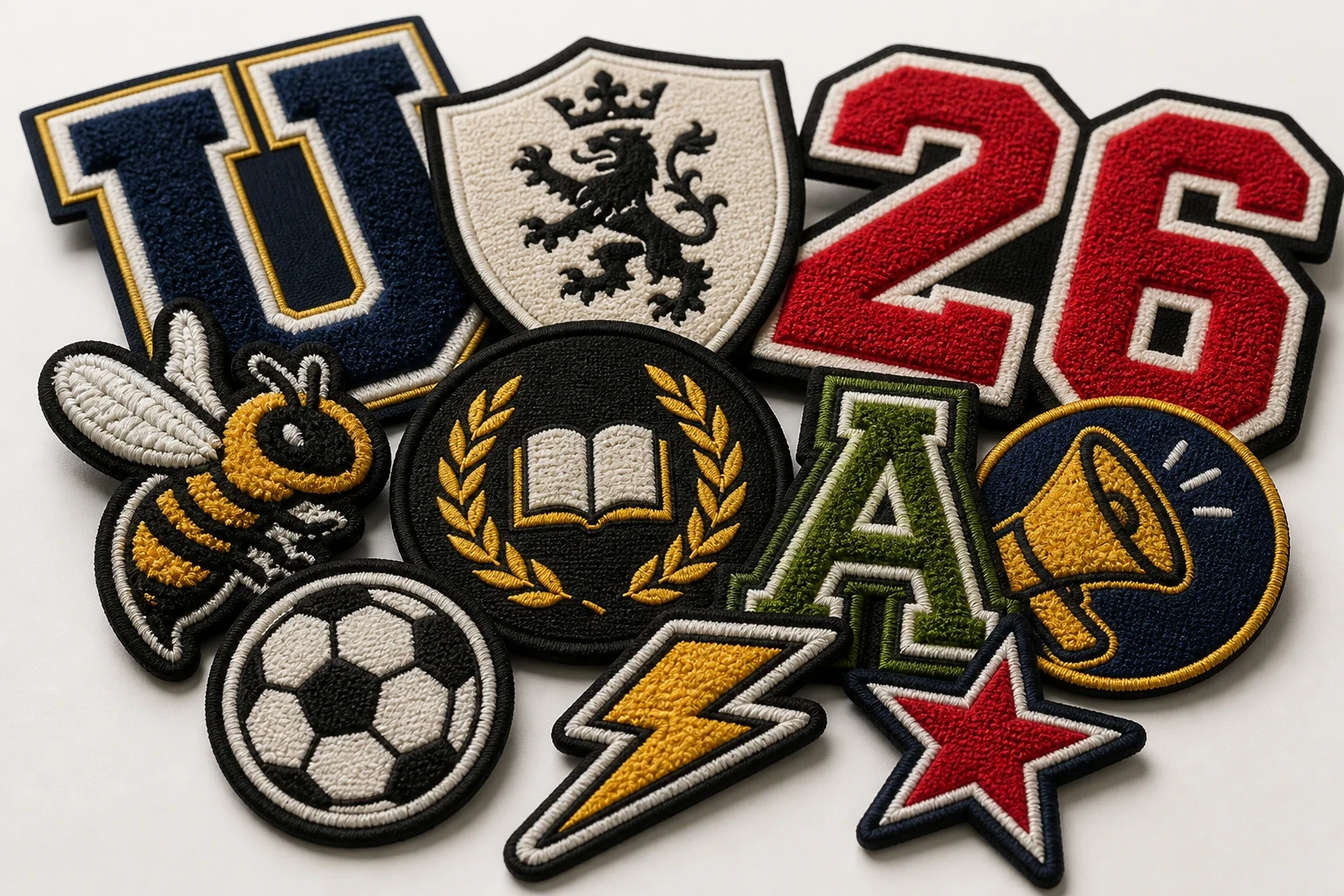
Key takeaways
- Varsity chenille patches UK suit large, simple letters, numbers, mascots and crests better than tiny detailed artwork.
- A sew-on finish is usually the safest choice for wool coaches, heavy jackets and garments that will be washed regularly.
- Iron-on backing is convenient but can peel after a dryer cycle or on slippery nylon shells; stitching gives a more dependable result.
- The Customized Patches has a 5-piece minimum per design and sends a free digital mockup usually within 12 hours before production.
Varsity chenille patches UK are most useful on school and university clothing, sports team jackets, club garments, hoodies, event merchandise and branded casualwear. The raised yarn makes large initials, numbers, mascots and simple crests stand out more than a flat print. For many UK buyers, the right use is a garment where texture matters as much as colour.
The Customized Patches produces these patches for customers across the United Kingdom, with a 5-piece minimum per design. You receive a free digital mockup usually within 12 hours, and we produce only after you approve the artwork, size, colours and backing. That approval stage is useful because chenille needs slightly different artwork decisions from a normal embroidered badge.
What makes varsity chenille patches different?
Chenille uses a soft, looped yarn that creates a raised surface. It is the familiar letterman-style finish seen on American varsity jackets, but the same approach works on British school clothing, university societies, football clubs and fashion pieces. The visual effect is strongest when the design has a clear outline, a limited colour palette and enough space for the yarn to show.
They are not the best answer for every logo. A detailed skyline, a long telephone number or very small sponsor text may lose clarity in a high-pile yarn. In those cases, embroidered patches or woven patches may hold fine lines and small lettering more cleanly. Printed is flatter; that is the point, and it can be the better choice for photographic artwork or a smooth corporate mark.
The main specification decisions
| Decision | Good starting point | Why it matters |
|---|---|---|
| Shape | Shield, rectangle, circle or varsity letter | Simple shapes give the border and raised yarn room to read clearly. |
| Size | Around 3 to 5 inches wide for a jacket chest or back | A larger patch makes lettering and mascot details easier to see. |
| Border | Contrasting merrowed or stitched edge | The border protects the edge and separates the patch from the garment. |
| Backing | Sew-on for heavy or frequently washed clothing | Stitching is more dependable than adhesive alone on wool, nylon and thick outerwear. |
| Artwork | Bold shapes, short words and limited colours | Fine detail can disappear into the yarn surface. |
A 3-inch patch may be enough for a simple chest emblem, while a large back design may need 8 inches or more depending on the garment and artwork. Measure the usable panel rather than guessing from the full garment width. A school blazer pocket, a football jacket chest and the back of a wool coach all offer different amounts of clear space.
1. School and university blazers
School blazers remain one of the clearest uses for varsity chenille patches UK. A house letter, year group, prefect badge or society emblem can be made into a visible piece of uniform without copying the fine detail of a formal embroidered crest. The raised surface feels more like a keepsake, which suits leavers, sports houses and annual school events.
Check the blazer fabric and the school’s uniform policy first. Wool and wool-blend jackets generally suit a sewn badge, while an iron-on finish can struggle on a textured blazer. If the patch is being fitted to a sleeve or breast pocket, keep the design compact and avoid placing a heavy badge where it will interfere with the armhole or pocket opening.
For schools ordering several house designs, keep the outer shape and size consistent. Change the house colour or central letter rather than redesigning every badge from scratch. This makes the set look intentional and makes it easier to check quantities before production. Our guide to Chenille patches Best Practices for schools and colleges covers the practical uniform points in more detail.
2. University societies and student groups
University societies often want something more characterful than a small printed logo. A debating society, rowing club, student radio station or cultural group can use a chenille letter, shield or mascot on a varsity jacket, hoodie or tote-style garment. The patch becomes part of the group’s identity and can be worn after the event has finished.
The 5-piece minimum per design is useful for a committee ordering a small first batch, although each member should agree on the same artwork before the quote is confirmed. A patch with the society initials may be more practical than a full name, especially if the group name is long. Use a separate small embroidered detail if you need a date or committee title.
Student clothing is washed regularly and may be borrowed, shared or worn outdoors. Sew-on is normally the safer backing for a wool jacket or heavy hoodie. Iron-on can work on a suitable cotton-rich garment when applied correctly, but it should not be described as immune to peeling, particularly if the garment goes through a hot dryer.
3. Football, rugby and other sports teams
Sports teams use chenille for squad initials, captain letters, championship years, mascots and supporter jackets. It is especially effective on football and rugby travel jackets, club hoodies and wool coaches worn on the touchline. A large number on the back or sleeve reads clearly from a distance, which is one reason the letterman style has lasted.
Team managers should separate the playing kit from the presentation garment. Chenille is usually better on a jacket or hoodie than on a thin, stretchy match shirt. Nylon shells can be slippery and may require careful sewing or a suitable backing; adhesive alone is a weak choice if the item will be pulled on and off in wet weather.
For a season design, decide whether every player receives the same crest or whether names and numbers are individual. Individual names normally mean separate artwork and may affect the price and production plan. If you need a small run, plan the list early and check every spelling before approval. A single incorrect name is expensive to discover after production.
4. American football and varsity jackets
The classic use is still the varsity jacket itself. Large felt-like letters across the chest, a mascot on the back and a small year or position detail on the sleeve create the traditional team look. UK American football clubs, university sports teams and school athletics groups can use this format without filling the jacket with unrelated small marks.
Wool coaches and wool-blend varsity jackets usually benefit from sewn backing because the fabric has weight and a visible nap. The patch should be positioned on a flat panel, away from seams, press studs and ribbed cuffs. If the jacket has a leather sleeve, do not assume the same attachment method suits both sides; the leather panel may need a different production and fitting decision.
A common mistake is designing a back patch with too many words. From our team, we would usually recommend one dominant word, a strong central symbol and a short supporting line. If you need a very fine mascot illustration, compare the chenille version with 3D embroidered patches before choosing.
5. Club and association clothing
Motoring clubs, hiking groups, music clubs, martial arts organisations and local associations can use chenille patches to mark membership. A simple crest on a jacket sleeve or chest works as a shared identifier without requiring every member to wear a full uniform. This is particularly useful for clubs that meet at events, shows and competitions around the UK.
Biker and motorcycle clubs need to consider the garment first. A heavy cotton vest, denim cut, leather vest or waxed jacket will put more strain on the attachment than a light sweatshirt. Large back pieces may need a sewn finish around the edge and, depending on the garment, additional stitching through the body of the patch. See biker and motorcycle club patches for more suitable formats and placement considerations.
Not sure whether chenille, flat embroidery or print will hold your logo best? Send the artwork and garment details for a free digital mockup usually within 12 hours, then compare the finish before production.
GET A FREE MOCKUPA merrowed crest gives a tidy raised edge, but a thick border can make a small badge feel crowded. Leave enough room between the central emblem and the edge. If your club crest contains a coat of arms, animal, motto and founding date, consider a simplified chenille version for clothing and keep the detailed version as a separate embroidered patch.
6. Brand merchandise and streetwear
Independent clothing brands use varsity chenille patches UK for limited drops, caps, sweatshirts, work jackets and heavyweight overshirts. The raised yarn gives a garment a physical feature that a standard printed logo cannot provide. It works particularly well for large initials, a mascot, a short slogan or a deliberately old-school badge.
The trade-off is surface detail. A screen print can show a thin line and a smooth gradient; chenille cannot reproduce every small transition with the same clarity. That is not a production fault. It is a material choice. If the brand depends on a fine wordmark, compare with printed patches or woven patches and use chenille for the larger campaign symbol.
For a clothing label, request a mockup on the actual garment colour rather than reviewing the patch in isolation. Navy yarn on black fabric may lose contrast, while cream on burgundy can look much clearer. Check the size against the seam, pocket and zip, not only against a blank artboard.
7. Hospitality and staff clothing
Hotels, cafés, bars and event companies can use a small chenille badge on overshirts, fleece layers or staff jackets to add a recognisable house mark. It can be a good fit for a venue with a strong retro identity, a brewery with a mascot or a restaurant group running a special anniversary collection.
Hospitality clothing has a practical problem: frequent washing. A decorative badge must not obstruct a pocket, catch on equipment or make a polo uncomfortable. Chenille is usually more suitable for an outer layer than a lightweight polo. If you need a flat logo on a hospitality polo, embroidered patches or a direct embroidery approach may be easier to maintain.
Ask how the garments will be washed before selecting the backing. An iron-on patch that looks secure during fitting may peel after a dryer cycle, especially if the fabric is coated or flexible. Sew-on backing takes longer to fit but is the more sensible option for staff jackets expected to last through a busy season.
8. Cadet units, youth organisations and uniformed groups
Cadet units, youth organisations and marching groups can use chenille for unit letters, achievement badges, camp editions and informal team clothing. The material gives a clear distinction between everyday uniform insignia and a commemorative garment such as a hoodie or expedition jacket. It can also make a small unit run feel like a proper issue rather than a generic promotional item.
Uniform rules must come first. A decorative patch should not be placed where it could be mistaken for an official rank, qualification or service insignia. For non-uniform clothing, use a clear unit name or approved emblem and check the size against the garment’s existing badges.
Young people’s clothing is often treated roughly, so backing and stitching deserve attention. Velcro panels are useful when a badge must be removed for washing or different activities, but the hook side can catch on knitwear and loose fabric. Sew-on remains the straightforward option for a permanent jacket patch.
9. Events, reunions and commemorative clothing
A reunion, tournament, centenary, festival or charity challenge can have a chenille patch designed around the event date. Participants can attach it to a jacket or hoodie after the day, which gives the merchandise a longer life than a disposable printed item. A bold year, initials and one simple symbol usually produce the clearest result.
Event organisers should allow time for artwork approval and garment delivery, particularly if the event is in Scotland, Wales, Northern Ireland or a remote part of England. UK-wide shipping is available, but the production schedule still depends on the approved design, quantity, patch size and backing. Do not wait until the week before the event if the patches need to be sewn on.
For a commemorative run, consider ordering a few extra pieces for late registrations, damaged garments and archive storage. The 5-piece minimum per design makes a small event order possible, while a larger run can keep the unit cost more practical. Put the exact date and spelling in the proof rather than relying on an email description.
10. Workwear, trades and local business clothing
Small businesses can use chenille on team jackets, branded overshirts and staff outerwear when they want a friendlier identity than a formal corporate badge. A joinery company might use a bold initial, a brewery might use a mascot, and a local sports retailer might use a large shop emblem on a coach jacket. This approach is more suited to a visible brand mark than a long list of services.
Think about the working environment. A patch fitted to a warehouse jacket, delivery coat or outdoor shell will meet rain, abrasion and repeated washing. Nylon shells can be awkward because adhesive does not always bond reliably to their finish. Sewing may leave visible needle marks, so test the proposed position on a spare garment or approve the placement with the uniform supplier.
If the business needs a hard-wearing badge with a flatter profile, compare PVC patches or leather patches. PVC handles a different visual brief and can suit outdoor equipment, while leather gives a more understated mark on workwear or bags. The correct material depends on the garment, handling and brand style, not simply on the logo.
How to choose size, backing and placement
Start with the garment rather than the artwork. Lay the jacket, hoodie or blazer flat and measure the clear panel between seams, pockets, zips and existing badges. Take a paper printout of the proposed patch at actual size and pin it in place. This quick check often reveals that a 5-inch design is too wide for a chest panel or that a back patch needs to move below a yoke seam.
- Choose sew-on backing for wool coaches, denim, leather, heavy jackets and garments that will be washed regularly.
- Choose iron-on only when the fabric is suitable, the care instructions allow it and the buyer accepts that adhesive can lose grip with heat, flexing or repeated washing.
- Choose Velcro when the patch must be removed, swapped or washed separately; check that the garment has a suitable loop panel.
- Use a merrowed edge when you want a defined border around a shield, letter or simple crest.
- Avoid tiny text, narrow gaps and intricate linework that may be hidden by the raised chenille yarn.
Backing is not a small afterthought. A patch can be made perfectly and still fail in use if the adhesive is asked to hold onto a coated nylon shell or a stretchy fleece. Our guide Chenille patches Sizing and Backing Options Explained covers the decision in more detail, including why the same backing may not suit every garment in a mixed order.
Chenille compared with other patch materials
There is no single best patch material for every UK project. Chenille is chosen for its height, softness and varsity character. Flat embroidery is more flexible for detailed crests, woven is useful for fine small lettering, print is flatter and better for image-like artwork, PVC is practical for a modern outdoor look, and leather is suitable for a restrained mark on bags or jackets.
Name sew-on, iron-on or Velcro on the quote and tell us what garment the patch will go on. We will show the proposed back and placement on a free digital mockup usually within 12 hours; production starts only after approval.
GET A FREE MOCKUP| Patch type | Best suited to | Main advantage | Main trade-off |
|---|---|---|---|
| Chenille | Varsity jackets, schools, teams and club clothing | Raised yarn and strong traditional character | Small detail and fine text are limited |
| Flat embroidery | Uniforms, workwear, logos and crests | Good general-purpose detail and familiar finish | Less tactile than chenille |
| Woven | Small lettering and detailed flat artwork | Fine lines can remain clean at smaller sizes | Does not have the raised varsity texture |
| Printed | Gradients, photographs and very fine artwork | Smooth, flat reproduction | Can feel less substantial and may show wear differently |
| PVC | Outdoor clothing, bags and modern club gear | Distinctive moulded surface and practical profile | Not the right look for traditional school or letterman designs |
| Leather | Biker garments, bags and understated workwear | Natural, simple and durable appearance | Less suitable for colourful detailed crests |
If you are deciding between two finishes, ask for both versions on the mockup. A brand may look better in flat embroidery on a polo and chenille on a heavyweight jacket. A football club may use chenille for its supporters’ coats but a flat embroidered crest for technical training tops. Splitting the application by garment is often more sensible than forcing one material across everything.
Artwork and ordering details for UK buyers
Send the clearest artwork available, ideally a vector file or a high-resolution image with the intended colours identified. Include the finished width or height in inches, the garment type, the preferred position, quantity and backing. If the order contains several designs, list each design separately so the 5-piece minimum can be checked per design rather than across the whole basket.
The Customized Patches sends a free digital mockup usually within 12 hours. The mockup is not just a picture for approval; it is where we check the patch proportions, colour contrast, border, lettering and placement against the intended garment. We produce only after approval, so mark any change clearly before giving the go-ahead.
- Confirm the final patch dimensions in inches.
- Confirm the patch shape and border colour.
- Check every letter, number, date and name.
- State whether the patch is sew-on, iron-on or intended for a Velcro panel.
- Tell us if the garment is wool, denim, leather, nylon, fleece or a stretch fabric.
- Confirm the quantity for each separate design.
- Allow time for production, delivery and fitting rather than only the patch manufacture.
For a fuller checklist, read 10 Questions to Ask Before Ordering chenille patches and A Step-by-Step Guide to Ordering chenille patches. Those checks are especially useful for committee orders, school approvals and brand launches where several people need to sign off the same design.
Common problems to avoid
The most common failure is not the yarn. It is a mismatch between the patch and the garment. An iron-on badge may look secure on a clean cotton sweatshirt but peel after a dryer cycle. A large badge may sit neatly on a jacket in a photograph but buckle across a curved shoulder. A detailed crest may be readable on a screen but crowded once converted into raised chenille.
Another issue is ordering one design for several incompatible garments. A patch for a wool coach, nylon shell, school blazer and stretch polo may need different attachment advice. If the order is mixed, tell us the garment breakdown. We can then discuss whether one backing is sensible or whether separate versions are the safer route.
- Do not approve a proof without checking the physical size against the garment.
- Do not assume iron-on is suitable for coated, waterproof or highly stretchy fabric.
- Do not put small sponsor text into a large chenille mascot if it will be difficult to read.
- Do not count several colourways as one design when each will need separate production.
- Do not leave spelling, dates and names to be checked after production.
- Do not judge the patch only on a white digital background; review contrast against the actual garment colour.
Are varsity chenille patches right for your project?
Choose chenille when the patch should feel raised, traditional and immediately visible. It is a strong match for varsity jackets, school clothing, sports team outerwear, club garments, event pieces and bold brand merchandise. It is less suitable when the artwork depends on tiny text, realistic shading, photographic detail or a very flat corporate finish.
The best decision normally comes from three questions: what garment will carry the patch, how will that garment be washed and handled, and what detail must remain readable at the finished size? Answer those before choosing the material. If the result is still uncertain, compare options through Varsity chenille patches UK vs embroidered patches: Which Is Right for Your Project?.
For a UK order, The Customized Patches can review the artwork, advise on dimensions and backing, and prepare a free digital mockup usually within 12 hours. The minimum is 5 pieces per design. Once the mockup and specifications are approved, production can proceed with the agreed design rather than an assumption made from a small image.
Frequently asked questions
What are varsity chenille patches UK used for?
They are used on school blazers, university society clothing, sports team jackets, varsity jackets, club garments, branded workwear, event merchandise and casual fashion. They are especially suitable for bold letters, numbers, mascots and simple crests where a raised yarn finish is wanted.
What is the minimum order for varsity chenille patches UK?
The Customized Patches has a 5-piece minimum per design. Different colourways, names or artwork versions may count as separate designs, so list each version when requesting a quote.
How quickly can I see a mockup?
The Customized Patches usually provides a free digital mockup within 12 hours. Production begins only after you approve the mockup and confirm the size, colours, backing, quantity and artwork details.
Are chenille patches suitable for nylon jackets?
They can be used on nylon jackets, but the backing and attachment method need care. Nylon shells can be slippery or coated, so iron-on adhesive may not be dependable. A sewn finish is often safer, subject to the garment construction and the desired placement.
Should I choose sew-on, iron-on or Velcro backing?
Sew-on is usually the dependable choice for wool, denim, leather, heavy jackets and frequently washed clothing. Iron-on is convenient on suitable fabrics but can peel after heat or repeated washing. Velcro is useful when the patch must be removed or swapped, provided the garment has a suitable loop panel.
Can small lettering be used on varsity chenille patches UK?
Small lettering can be possible, but it may not read clearly because chenille has a raised, looped surface. Keep words short and use a larger finished size where possible. For very fine text or detailed logos, compare woven, printed or flat embroidered patches before approving the chenille version.
Ready to produce custom patches for your UK team or brand?
GET A FREE MOCKUP