
The Complete Guide to Varsity chenille patches UK in 2026
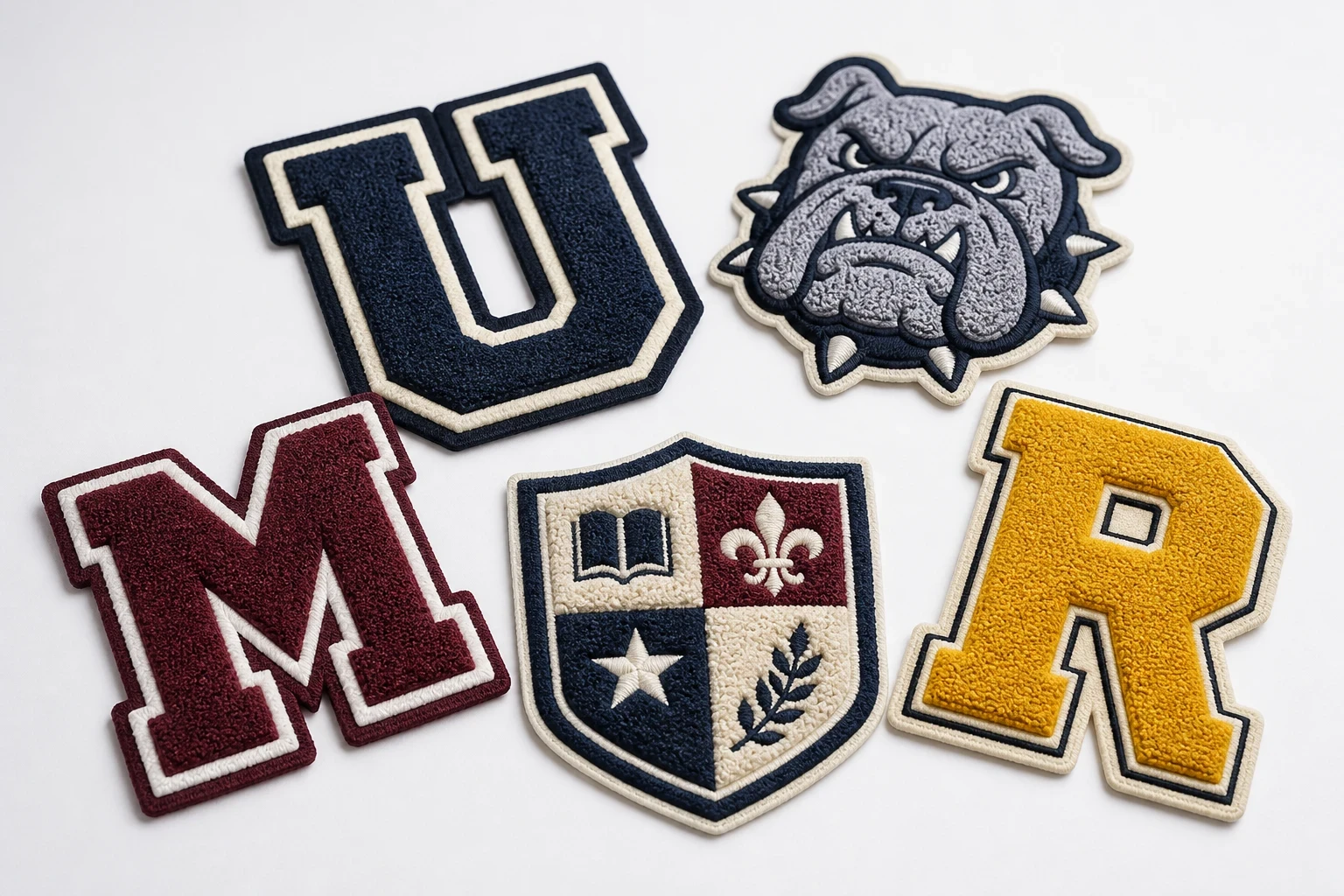
Varsity chenille patches UK are raised, tufted patches made with chenille yarn, usually paired with a felt base and bold lettering. They suit school jackets, university societies, sports teams, clubs and branded workwear. The Customized Patches has a 5-piece minimum per design and provides a free digital mockup, usually within 12 hours, before production.
Key takeaways
- Varsity chenille patches use raised chenille yarn for a soft, collegiate texture, so they work best with bold shapes and readable lettering rather than fine detail.
- A 5-piece minimum applies per design at The Customized Patches, and a free digital mockup is usually supplied within 12 hours before anything is produced.
- Sew-on backing is the dependable choice for wool coaches jackets, school blazers and long-term use; iron-on and Velcro solve different fitting and removal requirements.
- The garment, finished size, letter height, border, colours and backing should all be confirmed before production to avoid cramped lettering or an unsuitable attachment method.
Varsity chenille patches UK buyers usually want are raised, soft-textured badges made for bold lettering, school crests, sports numbers and club initials. They are particularly suited to wool coaches jackets, varsity jackets, school blazers, hoodies and teamwear because the chenille surface gives a substantial collegiate look without needing a complicated picture. The Customized Patches supplies UK customers with a 5-piece minimum per design, sends a free digital mockup usually within 12 hours, and produces only after approval.
The practical answer is to keep the design clear, measure the garment before choosing a size, and select the backing around how the item will be used. Sew-on is normally the safest long-term option for a wool jacket or blazer. Iron-on is convenient on suitable fabric, while Velcro is useful for interchangeable team, cadet or security-style panels.
What makes varsity chenille patches different?
Chenille is a tufted yarn with a brushed, looped surface. On a varsity patch, it is commonly used for large letters, numbers and simple shapes, with a felt base and an outer border giving the patch structure. Run a finger across a finished letter and you feel the pile. That texture is the reason these patches stand out on a jacket rather than looking like a flat printed transfer.
The traditional look is not the same as a fully embroidered badge. A varsity letter may be mostly chenille with a felt or embroidered outline, whereas a detailed club crest may need flat embroidery, woven detail or a printed section. A small motto in a narrow typeface can become difficult to read once converted into yarn. That is a design limitation, not a fault in the patch.
The term varsity is often used for the style rather than a single construction method. A supplier may recommend chenille for the large initial and flat embroidery for a small date or motto. That combination can be more legible and more faithful to the artwork than forcing every mark into the same raised texture.
Typical UK uses
- School and sixth-form leavers' jackets with a large initial, year or house symbol.
- University society clothing, American football teams, rowing clubs and student event jackets.
- Football, rugby, cricket and netball teams that want a bold chest or sleeve badge.
- Cadet units and youth organisations using initials, ranks or unit symbols on suitable outerwear.
- Hospitality teams and independent brands using a large front emblem on wool, denim or heavyweight workwear.
- Biker, music and streetwear projects where a tactile letter or emblem is part of the garment design.
For a club ordering a group of jackets, consistency matters more than adding every possible detail. A well-spaced two-letter design usually looks stronger than a crowded crest reduced to three inches wide. If the brief needs fine lines or a photographic reference, compare the result with embroidered patches and woven patches before deciding.
Choosing the right varsity patch specification
The patch should be specified as a finished object, not just as an artwork file. The production notes need to cover the width and height, felt base, yarn colours, border, lettering, attachment method and intended garment. A PNG showing a logo on a screen does not tell a maker whether the patch is for a nylon shell, a wool coaches jacket or a cotton hoodie.
Start with the space available. Measure between seams and around pockets, then check the measurement with the garment lying flat. On a sleeve, the patch may need to be narrower than the same design on a back panel. A chest badge that looks comfortable at 4 inches wide can feel crowded beside a zip, while a large back letter may need to be 8 to 11 inches wide to look intentional.
Size, letter height and spacing
- Small chest initials often need enough height for each letter to remain recognisable. Avoid reducing a complex three-letter monogram until the internal gaps disappear.
- Large back letters allow a stronger chenille pile and more generous spacing. They can be paired with a small flat-embroidered name or year.
- Sleeve patches should be checked against the sleeve circumference. A rigid, wide badge can crease or catch when the wearer bends an arm.
- A circular crest may need a wider border than a block letter because the border protects the edge and gives the shape a clean finish.
- Leave breathing room around lettering. A border touching the outer strokes can make the patch look heavier than the same design shown on a digital screen.
Colours and contrast
Chenille yarn has a physical pile, so colour is judged both by the thread shade and by the direction of the surface. A dark navy letter on black felt will not have enough contrast, even if the colours match a brand guide. White, cream, gold, royal blue, scarlet and black are common choices for varsity styling, but the right combination depends on the jacket.
Send a reference such as a Pantone value, brand colour, school crest or a photograph of existing teamwear. Screen colours vary, so the digital mockup is a layout and colour approval tool rather than a replacement for physical thread samples. If exact colour matching is critical, say so at quote stage.
| Specification | Common varsity choice | What to check before approval | Main trade-off |
|---|---|---|---|
| Patch size | Approximately 3 to 11 inches, depending on placement | Measure the flat garment area and avoid seams, pockets and zips | Larger patches show the design better but add weight and may be less flexible |
| Lettering | Bold block capitals, initials, numbers or short names | Check letter height, gaps, spelling and readability at finished size | Simple lettering reads well; narrow fonts lose clarity |
| Base | Felt in a contrasting or matching colour | Confirm the base will sit comfortably against the garment | Felt gives body but is less light and flexible than a thin printed option |
| Surface | Raised chenille yarn, sometimes combined with flat embroidery | Confirm which areas are raised and which details are flat | The tactile finish is distinctive, but tiny artwork cannot be reproduced in the same way |
| Border | Embroidered or merrowed edge in a contrasting colour | Check that the border does not close up internal spaces | A bold border protects the edge but can make a small patch look busier |
| Backing | Sew-on, iron-on or hook-and-loop Velcro | Match the backing to fabric, washing and removal requirements | Convenience, permanence and garment compatibility are different priorities |
For a closer look at measurements and attachment choices, use Chenille patches Sizing and Backing Options Explained. The useful point is simple: a backing decision made after production is too late. It needs to be included in the quote and shown on the mockup where relevant.
Which backing works on jackets, blazers and teamwear?
Backing is the part most likely to cause trouble after delivery because the correct choice depends on the fabric and how the garment is treated. A school blazer, a nylon shell and a cotton hoodie do not behave alike under heat, stitching or repeated washing. The patch design can be perfect and still fail if the attachment method does not suit the garment.
Sew-on backing
Sew-on is the dependable option for wool coaches jackets, thick denim, varsity jackets and school blazers. The stitching passes through the border or a suitable edge, anchoring the patch mechanically rather than relying on adhesive. It takes longer to fit, but it is usually the sensible choice for a garment expected to last through regular wear.
A merrowed crest with a firm edge can be sewn neatly by hand or machine if the garment allows it. On a lined jacket, the sewer needs to consider access and avoid catching the lining. For club orders, it is worth agreeing who will attach the badges before choosing the backing; a supplier can provide the patch, but fitting a large batch may need a local alterations service.
Iron-on backing
Iron-on backing is convenient on suitable cotton, polycotton and some stable fabrics. It is not a universal answer for nylon shells, waterproof coatings, delicate wool or garments that cannot tolerate heat. A household iron can also apply uneven pressure, especially over a seam or a thick chenille surface.
A familiar failure is an iron-on patch that peels after a dryer cycle. That can happen because the temperature was wrong, the press time was too short, the garment had a finish that resisted adhesion, or the edge was exposed to repeated abrasion. Follow the supplied application instructions and consider sewing around the border for hard-wearing team garments.
Velcro and removable panels
Hook-and-loop backing is useful where the badge needs to be removed or exchanged. Cadet units, event teams, security-style garments and clubs with different role patches may prefer a fixed loop panel on the garment and hook backing on the patch. The panel must be positioned accurately, and the garment needs enough structure to support the patch without sagging.
Not sure whether a raised chenille letter or a flatter embroidered version will hold your logo better? Send the artwork and garment details for a free digital mockup, usually within 12 hours, so you can compare the layout before production.
GET A FREE MOCKUPVelcro is not always the best finish for a classic varsity jacket. It can add thickness, collect lint and make the patch sit further away from the fabric. Use it because the patch needs to come off, not simply because it sounds flexible.
| Garment or use | Usually suitable backing | Reason | Caution |
|---|---|---|---|
| Wool coaches jacket | Sew-on | Handles weight and repeated wear well | Avoid stitching through a lining without planning access |
| School blazer | Sew-on, or carefully applied iron-on with stitching | Provides a stable, long-term attachment | Check school rules and avoid damage to a delicate blazer |
| Cotton hoodie | Iron-on or sew-on | Generally accessible and stable | Stretch can cause an unsupported patch to wrinkle |
| Nylon shell | Sew-on or suitable Velcro panel | Avoids relying on heat-sensitive or coated fabric | Do not assume iron-on adhesive will bond to the shell |
| Interchangeable team panel | Velcro | Allows badges to be swapped | The loop panel must be securely fitted and correctly sized |
Varsity chenille patches UK design advice for real garments
The best artwork for chenille is usually more decisive than detailed. A large initial, a short word, a year or a simple mascot can be read across a sports hall or from the other side of a changing room. Thin script, tiny stars and intricate heraldic details may look good on a computer but turn into crowded shapes once translated into yarn and felt.
Start with the part that must be recognised first. If that is a school initial, give it the largest area and strongest contrast. If it is a club crest, simplify the internal marks and use a clear outer shape. If the patch is for a business, decide whether customers need to read the company name or recognise the symbol; trying to give both equal space can make the badge too busy.
Artwork files and production notes
- Supply vector artwork such as AI, EPS, PDF or SVG where available. A high-resolution PNG can also help with the initial quotation.
- Convert fonts to outlines or identify the typeface and provide a clean reference. Font substitutions can change the width of a word.
- Mark the intended finished size in inches, even if the artwork is supplied at a different scale.
- List the colours separately for felt, chenille yarn, flat embroidery and border. Do not rely on an image alone.
- Tell the maker if any element must remain raised, flat, printed or cut from felt.
- Provide a photograph of the actual jacket, blazer or polo if placement and scale are uncertain.
Avoidable problems most often come from small text, low contrast and unclear size instructions. A football club may send a crest designed for a match programme and ask for it as a 3-inch chest patch. The response should be a practical adjustment, not a promise that every line will reproduce unchanged.
If the artwork has a lot of fine detail, compare printed patches or 3D embroidered patches as alternatives. Printed is flatter; that is the point. It can preserve gradients, small lettering and photographic detail where a raised varsity construction would need simplification.
Chenille compared with embroidered, woven, printed and PVC patches
There is no single best patch material for every UK project. Chenille wins on texture and bold collegiate lettering. Flat embroidery is more versatile for crests and moderate detail. Woven patches handle small text more cleanly than thick embroidery in some designs, printed patches keep artwork flat and detailed, and PVC brings a moulded rubber feel suited to outdoor or technical applications.
The garment often settles the question. A wool varsity jacket benefits from the body and texture of chenille. A lightweight nylon shell may be better with a lighter embroidered or PVC option. A hospitality polo may need a neat embroidered chest logo rather than a large raised badge that catches on aprons and equipment.
| Patch type | Best suited to | Strengths | Limitations |
|---|---|---|---|
| Chenille | Varsity letters, large initials, school and sports jackets | Raised texture, bold presence and traditional collegiate appearance | Fine detail and very small lettering need simplification |
| Flat embroidered | Club crests, uniforms, workwear and general branding | Flexible design range, familiar finish and strong logo reproduction | Very small detail can still close up; surface is less textured than chenille |
| Woven | Small text, flatter badges and detailed linework | Fine woven definition and a relatively smooth surface | Does not provide the raised chenille pile or heavy varsity feel |
| Printed | Gradients, photographs, tiny details and flat branding | Preserves complex artwork and remains lightweight | Flatter appearance and different durability expectations from a raised yarn patch |
| PVC | Outdoor clubs, technical clothing and bold rubber-like logos | Water-resistant feel, strong shape and easy cleaning | Less suitable for a traditional wool varsity appearance |
| Leather | Premium-looking jackets, workwear and restrained branding | Natural material character and a clean, solid mark | Not the right surface for a soft chenille or collegiate texture |
For a direct material comparison, read The Difference Between chenille patches and embroidered patches, Explained. If you are fitting a motorcycle garment, the weight, edge and backing deserve particular attention; see biker and motorcycle club patches for a more relevant starting point.
Ordering quantities, costs and UK lead times
The Customized Patches has a 5-piece minimum per design. That means five identical varsity chenille patches can be ordered as one design, while a separate colourway, name or crest is normally treated as another design. If a school wants five house initials, send the full breakdown clearly so the quotation reflects the actual artwork versions.
The final price depends on finished size, stitch and chenille coverage, number of colours, border, backing, artwork complexity and quantity. A large raised back patch uses more material than a small chest initial. Multiple designs can also require separate setup work. It is better to request a quotation with the complete specification than to compare a headline price based on an unspecified patch.
What to include in a quote request
- The design file or a clear image of the logo.
- Quantity for each individual design, remembering the 5-piece minimum per design.
- Finished width and height in inches, or a photograph showing the intended placement.
- Chenille, felt, border and any flat embroidery colour requirements.
- Backing preference: sew-on, iron-on or Velcro.
- Garment type, such as wool jacket, nylon shell, blazer, hoodie, polo or denim vest.
- Required delivery location anywhere in the United Kingdom and the date the patches are needed.
The free digital mockup is usually supplied within 12 hours, subject to receiving enough information to prepare it. The mockup should be checked for spelling, proportion, orientation, colours, border and backing. Production begins only after approval, so a quick reply to the mockup helps keep the order moving, while a late change can require the layout to be prepared again.
Lead time is affected by the number of designs, quantity, construction, artwork approval and the delivery address. Do not plan around the day the quote is requested. Plan around the day the mockup is approved, then allow time for production and UK-wide shipping. If the patches are for a freshers' week, tournament, school presentation or launch event, say that at the first enquiry.
How to check the mockup before production
A mockup is not just a visual courtesy. It is the point where an order moves from an idea to an agreed specification. Open it on a large screen if possible, then compare the design with the actual garment. A badge that looks balanced on a white page may be too large for a narrow chest panel or too dark against a black jacket.
- Check every letter, number and word against the supplied artwork. Varsity initials are often short, but a single wrong letter changes the identity of the garment.
- Confirm the finished width and height in inches, including the border rather than measuring only the central letter.
- Check that the chenille areas, felt areas and flat embroidered details are shown in the intended locations.
- Compare the colours with your school, club or brand reference. Look for enough contrast between the letter, base and edge.
- Review the backing and ask whether the stated method suits the material of the garment.
- Look at the placement photograph or measurement notes. Consider pockets, zips, seams, sleeve curves and lining access.
- Send a clear approval or a list of changes. Production should not begin while the layout is still uncertain.
Approval should be specific. A message such as “looks good” can be understood as approval of the whole design, but it is safer to write “approved: 6-inch wide, cream chenille, navy felt, sew-on backing, as shown”. That creates a useful record for both the buyer and the production team.
Care, attachment and common failures
Chenille patches are made for garments, but they still need sensible care. Excessive heat, harsh washing, tumble drying and rough abrasion can affect the yarn, felt or adhesive. The care routine should follow the garment label and the attachment instructions supplied with the patch. A large patch can also hold moisture for longer than the surrounding fabric, so allow the garment to dry properly.
Name sew-on, iron-on or Velcro on the quote and include a photograph of the garment. We can show the proposed backing and layout on a free digital mockup, usually within 12 hours, before your 5-piece-minimum order is produced.
GET A FREE MOCKUPSew-on patches should be checked around the entire perimeter after fitting. If a few stitches have loosened, repair them before the edge starts lifting. Iron-on patches should be pressed on a clean, firm surface with the correct protective layer and pressure. Do not drag the iron across a raised chenille surface, and do not assume a domestic dryer is suitable simply because the patch initially bonded.
Mistakes worth preventing
- Ordering a wide patch for a sleeve without measuring the sleeve circumference.
- Putting a raised chenille patch on a lightweight nylon shell without checking weight and attachment.
- Using a narrow script font for a design that needs to be read at a distance.
- Choosing iron-on backing for a coated, heat-sensitive or heavily washed garment.
- Approving colours from a phone screen without checking the contrast against the actual jacket.
- Assuming five different names count as one design when each needs a separate layout.
- Sending artwork without saying whether the border, initials or year should be chenille, felt or flat embroidery.
- Starting production before spelling, size and backing have been checked.
A patch is part of the garment, so the garment should be treated as part of the brief. The same varsity letter may need sew-on backing for a wool jacket, a smaller size for a polo shirt and Velcro for a removable cadet panel. That is why photographs and measurements are more useful than a logo file alone.
Where UK teams, schools and businesses can use varsity patches
Schools and colleges often use chenille for leavers' jackets, house teams, music groups and society clothing. A year number or large initial gives each garment a personal feel, while a smaller school crest can keep the design connected to the institution. Before ordering, check uniform policy, placement rules and whether the garment supplier has any restrictions on heat or stitching.
Sports clubs use varsity patches on presentation jackets, coaches' outerwear and travel kit. Football and rugby badges often need to survive frequent handling, while rowing and athletics groups may prefer a simple initial or event mark. A patch can identify the team without covering the whole jacket, but the correct backing is vital if the garment is washed often.
Small UK brands use chenille to make a product feel like a club item rather than ordinary promotional clothing. A large initial on a heavyweight overshirt, a limited-run number patch or a soft emblem on a work jacket can all work well. The drawback is that chenille takes up visual space, so a restrained logo may be better than a full company name.
Hospitality businesses can use a raised patch on jackets, aprons or staff overshirts, but the working environment should guide the choice. A patch that catches on equipment or becomes difficult to clean is not a good uniform solution. For a flatter logo on a polo or shirt, compare embroidered patches before settling on a varsity construction.
A straightforward UK ordering checklist
Before requesting a quote, write down the design names and quantities. This prevents a common problem where the buyer has one main crest, three house initials and a separate year mark but describes everything as “one patch”. Each design should be counted clearly against the 5-piece minimum.
- Design name and quantity for each version.
- Artwork file and any brand, school or club colour references.
- Finished patch width and height in inches.
- Intended garment and placement: chest, sleeve, front, back, pocket or panel.
- Chenille, felt, border and flat-detail requirements.
- Backing method and whether the patch must be removable.
- The date required and the UK delivery address.
- The name of the person who will approve the digital mockup.
The Customized Patches can then prepare the quote and mockup around the real use rather than making assumptions from a small image. The free digital mockup is usually sent within 12 hours. Check it carefully, request any changes in one clear reply where possible, and remember that production starts only after approval.
Final guidance for choosing varsity chenille patches UK
Choose varsity chenille patches UK buyers can actually use on the intended garment, not simply the style that looks best in a catalogue image. Bold lettering, measured proportions, strong contrast and the correct backing will do more for the finished result than adding extra detail. A raised patch should feel deliberate and comfortable on the jacket.
If you need a classic school, university or team look, chenille is a strong option. If the design relies on fine text, gradients or a small detailed crest, compare embroidered, woven or printed construction instead. The sensible route is to send the artwork, garment details and quantity, review the free mockup usually within 12 hours, and approve only when every production detail is correct.
For further ordering checks, read 10 Questions to Ask Before Ordering chenille patches and A Step-by-Step Guide to Ordering chenille patches. Customers across England, Scotland, Wales and Northern Ireland can also use the UK city pages for location-specific information and UK-wide shipping guidance.
Frequently asked questions
What are varsity chenille patches UK teams usually used for?
Varsity chenille patches UK teams commonly use include raised school initials, university society badges, sports numbers, club crests and short brand marks. They work particularly well on wool coaches jackets, varsity jackets, hoodies, school blazers and heavyweight teamwear. Bold artwork is normally more successful than tiny lettering or intricate detail.
What is the minimum order for varsity chenille patches?
The Customized Patches has a 5-piece minimum per design. Five identical patches count as one design. A different colourway, name, initial or layout may count as a separate design, so include the full breakdown in the quotation request. This helps confirm the quantity and price accurately before production.
How quickly can I see a varsity chenille patch mockup?
The Customized Patches provides a free digital mockup usually within 12 hours, provided the artwork, size, quantity and garment information are clear. Check the spelling, dimensions, colours, border, placement and backing. Production starts only after the mockup and specifications have been approved.
Is sew-on or iron-on backing better for a varsity patch?
Sew-on backing is usually better for wool jackets, school blazers, thick denim and garments receiving regular wear. Iron-on backing is convenient on suitable stable fabrics but may not bond to nylon shells, coated materials or heat-sensitive garments. Velcro is preferable when the patch needs to be removed or exchanged.
Can small lettering be used on varsity chenille patches UK buyers order?
Small lettering can be used, but it needs enough height and spacing to remain readable after conversion into chenille yarn. Narrow scripts, long words and tightly packed mottos are risky on a small patch. A production mockup can show whether the text should be enlarged, simplified, made flat embroidered or moved to another patch type.
How should I compare chenille with embroidered patches?
Choose chenille for a raised, soft varsity texture and bold initials or numbers. Choose embroidered patches for a more flexible logo treatment, moderate detail and general workwear use. Printed patches are flatter but can preserve gradients and very small details. The garment, artwork and care requirements should decide the material.
Ready to produce custom patches for your UK team or brand?
GET A FREE MOCKUP