
Are varsity chenille patches UK Right for Your Project? A Decision Guide
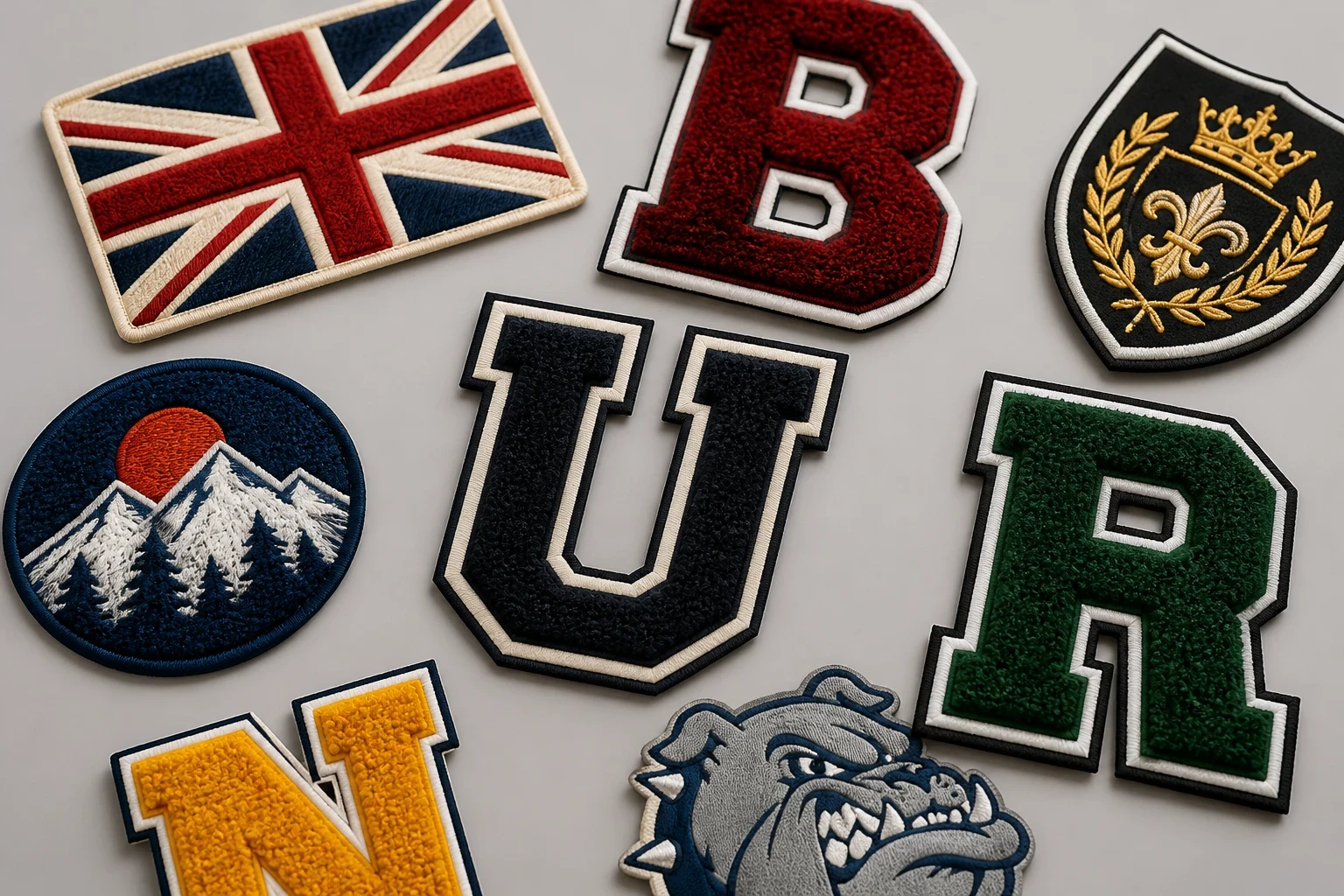
Varsity chenille patches UK are a strong choice for bold letters, school crests, team marks and retro clothing where texture matters. They suit wool coaches, varsity jackets, hoodies and sturdy outerwear, but are less suitable for tiny detail, long text or a very flat logo. The Customized Patches requires five pieces per design, supplies a free digital mockup usually within 12 hours, and produces only after approval.
Key takeaways
- Choose varsity chenille patches UK for bold, tactile lettering and simple crests rather than fine illustrations or small text.
- A five-piece minimum applies to each design, so combine sizes or colourways only after checking whether they count as separate designs.
- The Customized Patches usually sends a free digital mockup within 12 hours and produces only after approval.
- Sew-on, iron-on and Velcro backings suit different garments; nylon shells, wool coaches, blazers and removable kit need different decisions.
Varsity chenille patches UK are right for your project if you want a bold, raised patch that can be read from a few feet away and felt as well as seen. They work particularly well for school blazers, varsity jackets, football and rugby teamwear, club hoodies, wool coaches and branded outerwear. They are less suitable for tiny text, intricate line drawings or a logo that needs to look completely flat.
The decision usually comes down to four things: the artwork, the garment, the way the patch will be attached and how often it will be worn or washed. At The Customized Patches, the minimum is five pieces per design. We usually send a free digital mockup within 12 hours, and we produce only after you have approved the artwork, size, colours and backing.
What gives varsity chenille patches their distinctive look?
Chenille is made with a soft, tufted yarn that creates a raised surface. The effect is closer to a small piece of traditional letterman clothing than to a flat printed label. A merrowed edge can frame the shape neatly, while felt, yarn and border colours give the patch its familiar school or team identity.
That texture is the main reason people choose this style. A large initial on a wool coach jacket has presence without needing a complicated design. A football club crest with a simple shield, clear initials and two or three strong colours can look excellent. The same method is not ideal for a detailed building illustration with tiny windows, ten lines of wording or a photographic logo.
- Raised yarn catches light differently from the surrounding garment.
- Bold lettering stays legible at a useful jacket or chest size.
- A felt base gives the design a solid background rather than a thin embroidered outline.
- The finished patch feels substantial, which suits heritage clubs, schools and team collections.
- The surface is more textured than printed or woven work, so small detail may need simplifying.
If you are comparing construction methods, our guide to chenille patches explains the material more closely. For a flatter result, embroidered patches or woven patches may be a better starting point.
Are varsity chenille patches UK suitable for your artwork?
Start with the part of the design people must recognise first. Is it a large letter, mascot, club name, year, number or crest? If that feature can be drawn with clear shapes and a limited colour palette, chenille is worth considering. If the design only works because of fine shading, hairline outlines or very small type, ask for a comparison before committing.
Good artwork choices
- One to three large initials on a school or college jacket.
- A team name in bold block lettering across a 4 to 10 inch patch.
- A simple shield with a mascot, year and short club name.
- A brand mark designed around strong shapes rather than fine gradients.
- A back patch with a clear border and enough space between letters.
Artwork that needs a second look
- Long wording that has to fit into a small chest patch.
- Thin script fonts, narrow counters or closely packed letters.
- Detailed maps, faces, landscapes or illustrations with many small parts.
- Colour gradients that need smooth photographic transitions.
- Logos with several small symbols that will merge at the finished size.
A designer can often simplify a mark without losing its identity. For example, a football club may keep the shield, ball and founding year but remove a fine inner line. A hospitality brand may use its large monogram as chenille and keep the full wordmark on a separate flat label. Our guide on how to design artwork for varsity chenille patches UK that production-ready covers the practical checks before quotation.
Match the patch to the garment, not just the logo
The garment changes the answer. A thick wool coaches jacket or varsity jacket can carry a larger raised patch without looking unbalanced. A school blazer can take a neat crest or house letter, but the patch should not cover the pocket, button line or structured seam. A heavy hoodie can work well for a club run, while a lightweight performance top may need a lighter construction.
Nylon shells need special care. Heat can mark or distort some nylon fabrics, so an iron-on backing should not be assumed suitable just because it is convenient. A sew-on finish is often the safer route for a nylon windbreaker, and the garment should be checked before any heat is applied. We have also seen iron-on patches peel after a dryer cycle, particularly where the fabric flexes or the temperature is too high.
| Garment or placement | Usually suitable backing | Production point to check | Typical chenille use |
|---|---|---|---|
| Wool varsity jacket or coaches jacket | Sew-on or suitable iron-on | Check the weave, lining and seams before fixing | Large initial, team name or back crest |
| Cotton hoodie or sweatshirt | Sew-on or iron-on | Confirm the fabric can take heat and allow for stretch | Club logo, event mark or year patch |
| School blazer | Sew-on | Keep the patch clear of pocket and button positions | House letter, school crest or society badge |
| Nylon shell or rain jacket | Usually sew-on | Avoid untested heat; consider lining and waterproof finish | Outdoor team or staff mark |
| Velcro panel on kit or tactical clothing | Hook or loop Velcro backing | Measure the panel and confirm the orientation | Removable team, role or unit identifier |
| Biker vest or heavy denim | Sew-on | Allow for curved seams and a firm border | Club back patch or chest badge |
For removable kit, Velcro is useful because a player, marshal or event team can change the identifier without unpicking stitching. For biker and motorcycle club clothing, a firm sew-on patch is more usual; see our guide to biker and motorcycle club patches for placement and layout considerations. The correct choice is the one that suits the actual garment, not the one that sounds easiest on a quote.
Chenille, embroidery, woven or printed: which construction fits?
There is no universal winner. Printed is flatter; that is the point. It can reproduce gradients, small illustrations and fine lettering more directly. Woven patches are also flat and tidy, with a smooth surface that can suit compact text. Embroidery adds thread texture and a familiar stitched appearance, while chenille creates the most obvious raised varsity effect.
Not sure whether the raised yarn will suit your logo or garment? Send the artwork and a garment photograph for a free digital mockup, usually within 12 hours, so you can compare the size, colours and backing before production.
GET A FREE MOCKUP| Patch type | Best for | Main limitation | Good UK project example |
|---|---|---|---|
| Chenille | Bold initials, school crests, team marks and retro jackets | Small detail and long wording need simplifying | University society jacket or football club hoodie |
| Embroidered | Logos needing stitched detail, borders and mixed lettering | Very fine detail can still be limited at small sizes | Hospitality polo, workwear or club badge |
| Woven | Small flat lettering and clean detailed marks | Does not provide the raised tufted chenille surface | Brand label or compact event emblem |
| Printed | Gradients, illustrations, photographs and fine lines | Flatter appearance and different tactile character | Art merchandise or detailed campaign graphic |
| PVC | Weather-resistant, bold moulded shapes and outdoor kit | Rubber-like appearance is not right for every heritage design | Outdoor club or practical equipment panel |
| Leather | Minimal marks, premium-looking labels and natural material styling | Less suited to bright multi-colour varsity lettering | Small brand label on a bag or jacket |
The useful question is not which patch looks most impressive in isolation. Ask what the wearer should notice, how close the viewer will stand, whether the garment is washed frequently and whether the patch must match an existing club or brand system. Compare the difference between varsity chenille patches UK and embroidered patches before settling on a method.
A quick decision test
- Choose chenille if the design is bold, tactile and meant to be noticed on a jacket or sweatshirt.
- Choose embroidery if thread detail and a traditional stitched logo matter more than a thick pile.
- Choose woven if the patch must remain flat while carrying compact lettering.
- Choose printed if the artwork depends on gradients, fine illustration or a photographic appearance.
- Choose PVC if the item is outdoor equipment and a moulded, wipe-clean surface suits the brand.
A mixed order can also be sensible. A school may use chenille house letters on blazers and embroidered staff badges on polos. A brand may use a chenille monogram on a limited jacket run but printed labels for detailed packaging or artwork merchandise.
Size, border and colour decisions that affect the result
Size should be measured on the garment in inches, not guessed from a screen preview. A chest badge may be around 3 to 4 inches wide, a large back design may be 8 to 12 inches or more, and a sleeve mark often needs a narrower proportion. These are starting points rather than fixed rules: the wearer, garment cut and logo shape all matter.
Borders are functional as well as decorative. A border separates the patch from a dark jacket, gives the edge a finished frame and helps protect the design shape. A narrow border can disappear on a small patch, while an oversized border can reduce the space available for lettering. The mockup should show the proposed border clearly.
- Check that neighbouring yarn colours have enough contrast under indoor and outdoor light.
- Avoid placing a dark letter on a dark felt base unless the contrast is intentional and strong.
- Keep small counters open in letters such as A, B, R and P.
- Use a photograph of the real garment if the jacket, blazer or hoodie colour is unusual.
- Confirm whether each colourway or size is treated as a separate design for the five-piece minimum.
The free digital mockup usually arrives within 12 hours, giving you a chance to spot a crowded letter, weak contrast or poor placement before anything is made. The Customized Patches produces only after approval, so the approval stage is where you should check the spelling, dimensions, backing, border and colour names rather than relying on a rough verbal description.
Quantity, pricing and lead-time questions for UK orders
The Customized Patches has a five-piece minimum per design. That suits a small school committee, a start-up clothing run, a club committee or a first sample order, but the quantity still needs planning. Five identical chest patches is one design. Five large back patches and five smaller sleeve patches may be different specifications, so list them separately when asking for a quote.
Price is affected by the finished size, shape, number of colours, backing, stitch or yarn detail and quantity. A simple 3-inch letter is not priced in the same way as a 12-inch back crest with several colour sections. If a quotation needs to stay within a budget, reducing unnecessary detail or standardising several garments may help more than choosing a smaller patch that makes the wording unreadable.
What to include in your quote request
- The artwork file, preferably with a clear high-resolution version.
- The number of pieces for each design.
- The finished width and height in inches, or a photograph showing the proposed placement.
- The garment type, such as wool coach jacket, school blazer, cotton hoodie, nylon shell or denim vest.
- The preferred backing: sew-on, iron-on or Velcro.
- The required delivery date and UK delivery address.
- Any colour references, spelling details or production notes.
UK-wide shipping can be arranged, but your deadline should allow time for artwork checks, mockup approval, production and delivery. A school wanting patches for a new term should not leave approval until the week before pupils need their blazers. A team ordering before a tournament should allow for collecting sizes, confirming names and checking that the backing matches the kit.
The step-by-step guide to ordering varsity chenille patches UK shows the information we normally need. If you are comparing costs, see how much varsity chenille patches UK cost in the UK, then request a quote based on your actual size and quantity rather than a generic estimate.
Common project examples
For a university society, a large chenille initial on a wool varsity jacket can give every member the same visual anchor while leaving room for individual embroidery elsewhere. Keep the initial broad and the border clear. A narrow letter may look fine in a file but lose its shape once the yarn and edge are produced.
For a football or rugby club, a chest crest or season patch can work well if the badge is simplified for the finished size. Long sponsor wording often belongs on a separate printed or embroidered application. Players may also need removable Velcro identifiers for training staff, officials or tournament roles.
For a cadet unit or outdoor group, garment choice becomes more important. A patch for a sturdy jacket or equipment panel may be practical, but a nylon shell can react badly to heat. Ask for sew-on or Velcro where appropriate, and check that the patch does not obstruct a pocket, zip or safety feature.
Name sew-on, iron-on or Velcro on the quote and include the garment type. We will show the proposed backing, size and layout on a free digital mockup, usually within 12 hours; production starts only after you approve it.
GET A FREE MOCKUPFor hospitality polos, chenille is sometimes too thick or informal for the uniform. An embroidered badge can sit more neatly over the chest and tolerate a wider range of logo detail. For a staff bomber jacket or a limited brand release, however, a raised chenille monogram can be exactly the feature that makes the garment feel intentional.
For a biker vest, the back area allows a strong central design and a surrounding layout, but curved seams and existing patches need measuring. A patch that crowds the collar, armhole or lower edge will not look balanced. Sew-on remains the sensible default for heavy denim and leather-style garments.
When should you choose another patch style?
Choose another construction if your priority is a smooth, highly detailed image rather than raised texture. A printed patch can carry fine artwork and gradients; that flatter finish is useful for art brands and detailed campaign graphics. Woven work can be a better fit for compact wording, while PVC suits outdoor equipment where a moulded surface is part of the look.
You may also need another option if the garment is very light, stretchy or heat-sensitive. A large tufted patch can pull on fine fabric, and an iron-on backing can fail if the surface is unsuitable. Sometimes the correct answer is a smaller embroidered badge on the shirt and a larger chenille patch on the jacket.
- Use printed patches for detailed illustrations, gradients and photographic-style artwork.
- Use 3D embroidered patches if you want raised areas but a more stitched appearance than chenille.
- Use PVC patches for bold outdoor marks and a rubber-like, wipe-clean surface.
- Use leather patches for restrained branding on bags, jackets or heritage products.
- Use embroidered patches for a versatile stitched badge across workwear, clubs and uniforms.
A comparison mockup is often quicker than debating the file on a screen. We can show the same logo as chenille and embroidery, or compare a flat printed interpretation with a raised version. That gives the team, school committee or brand owner something concrete to approve.
Final decision checklist for varsity chenille patches UK
Before ordering, look at the garment laid flat and mark the available area with masking tape. Measure the tape in inches, take a clear photograph and place the artwork beside it. This simple step catches many problems, including a back patch that is too close to the collar, a crest that covers a blazer pocket or a sleeve badge that is too wide for the arm.
- Is the main design bold enough to benefit from chenille texture?
- Can every word be read at the intended finished size?
- Have you checked the garment material, seams, lining and washing routine?
- Is sew-on, iron-on or Velcro the right attachment for that garment?
- Have you allowed at least five pieces for each design?
- Have you stated each size and colourway separately?
- Have you allowed time for a free mockup, approval, production and UK shipping?
- Will the border and background contrast with the garment?
- Have you checked spelling, dates, initials and club names?
- Has the final mockup been approved before production?
If the answers are mostly yes, varsity chenille patches UK are likely to suit the project. They are particularly strong for school and college identity, team jackets, club clothing and bold brand pieces. If the design is detailed, the fabric is delicate or the required finish is flat, ask for an embroidered, woven or printed comparison instead.
For more preparation, read the varsity chenille patches UK checklist and the guide to varsity chenille patches UK for small businesses. The Customized Patches can then review the artwork, garment and quantity before production is approved.
Frequently asked questions
What are varsity chenille patches UK best used for?
They are best used for bold initials, school crests, team names, club badges and retro branding on varsity jackets, wool coaches, hoodies, school blazers and sturdy outerwear. Their raised yarn gives a tactile look, but tiny text and intricate illustrations may need simplifying.
What is the minimum order for varsity chenille patches in the UK?
The minimum order is five pieces per design. Tell us about each size, colourway and backing separately, as a different specification may need to be treated as a separate design for quotation.
How quickly can I see a mockup?
The Customized Patches usually provides a free digital mockup within 12 hours. The mockup should be checked for spelling, size, colours, border, placement and backing. Production begins only after approval.
Are chenille patches suitable for nylon jackets?
They can be suitable, but nylon needs care because heat may mark or distort some shells. Sew-on is often the safer backing for nylon. Do not assume an iron-on backing is suitable without checking the fabric and following the attachment instructions.
Are varsity chenille patches UK better than embroidered patches?
Neither is better for every project. Chenille is more raised and tactile, making it strong for bold varsity lettering and simple crests. Embroidery is often more flexible for stitched detail, compact logos and workwear. Compare the finished size, garment and artwork before choosing.
Can I order sew-on, iron-on or Velcro chenille patches?
Yes, the backing should be selected according to the garment and use. Sew-on is a dependable permanent option, iron-on can suit suitable heat-tolerant fabrics, and Velcro is useful for removable kit panels. State the garment type and backing preference when requesting a quote.
Ready to produce custom patches for your UK team or brand?
GET A FREE MOCKUP