
Are custom embroidered patches Right for Your Project? A Decision Guide
Custom embroidered patches are right for projects that need a traditional stitched appearance, visible texture and a practical identity mark for garments, bags or uniforms. They suit football clubs, schools, cadet units, brands and workwear, but printed or woven patches may be better for very fine detail, gradients or a flatter finish.
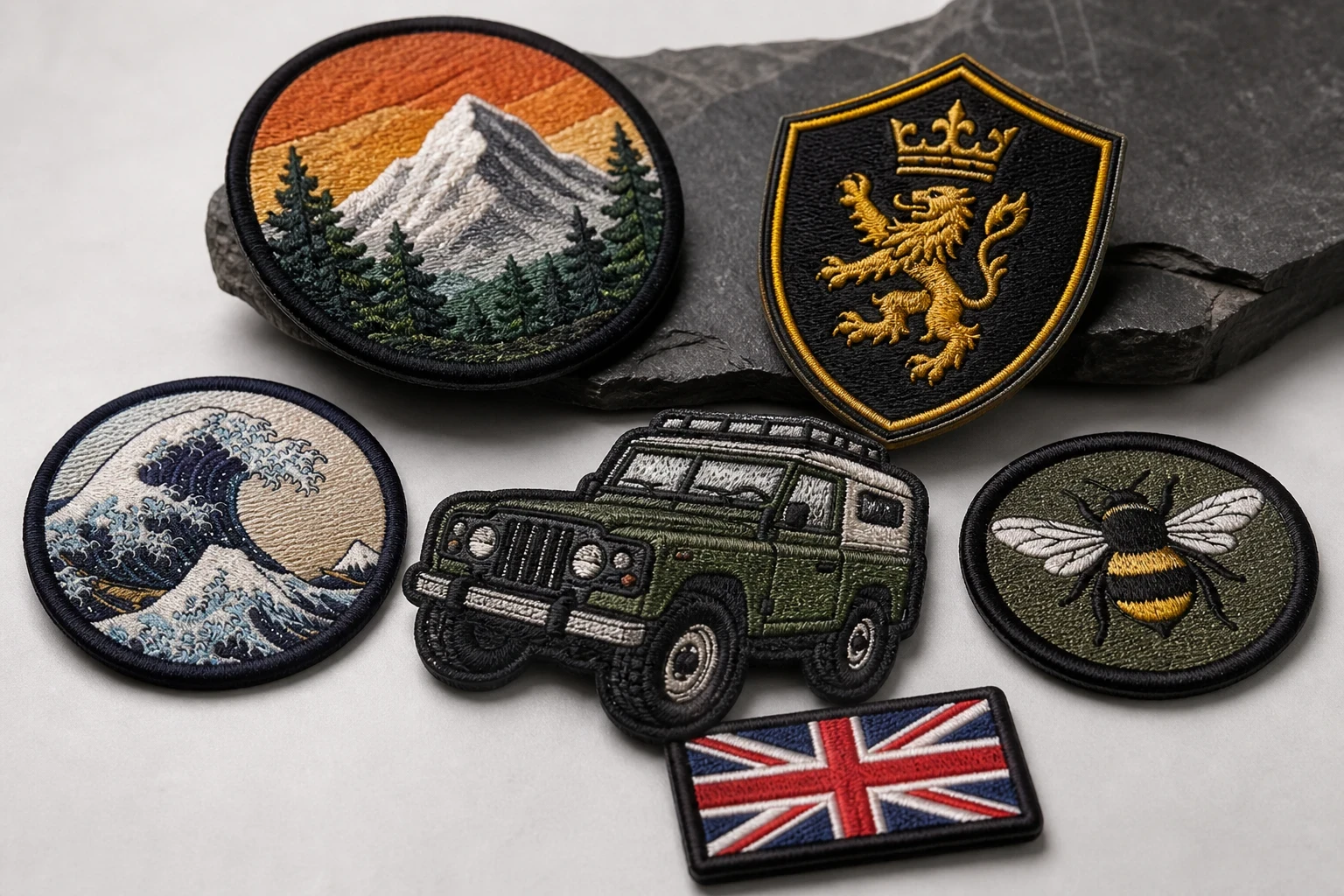
Key takeaways
- Choose custom embroidered patches when texture, a traditional stitched finish and strong visual identity matter more than photographic detail.
- Printed patches are flatter and handle gradients, small text and artwork with many colours more freely; that is the point of choosing print.
- There is a 5-piece minimum per design at The Customized Patches, with UK-wide delivery available.
- A free digital mockup is usually supplied within 12 hours, and production starts only after the artwork and specification are approved.
Custom embroidered patches are right for your project if you want visible stitching, a raised textile surface and a familiar club, uniform or workwear finish. They work particularly well on football shirts, school blazers, biker vests, jackets, bags and branded polos. They are less suitable when your design depends on photographic detail, smooth gradients or very small text.
The choice is not simply about which patch looks best on a screen. The garment, washing routine, application area, artwork and quantity all affect the result. At The Customized Patches, there is a 5-piece minimum per design, a free digital mockup usually within 12 hours, and production begins only after you approve the design and specification.
What makes custom embroidered patches different?
An embroidered patch is made with thread stitched into a fabric base, normally with a stitched border around the outside. The thread gives the design texture and catches light differently from the base cloth. That is why a stitched crest can feel more substantial than a printed mark, even when both are the same physical size.
This finish has a long association with teams, schools, uniforms, outdoor clothing and clubs. A football club badge on a training jacket, a cadet unit emblem on a shirt sleeve and a merrowed crest on a biker vest all benefit from that established look. For a hospitality polo or a tradesperson's work jacket, the patch can also make a plain garment feel like part of a defined uniform.
The texture is also the main limitation. Thread has a stitch width and cannot reproduce every thin line or colour transition. A logo that looks crisp at 1,000 pixels wide may need simplified lettering, thicker outlines or fewer colours when it becomes a 3-inch patch. That is not a failure of the product; it is a production decision that needs checking before manufacture.
The strongest reasons to choose embroidery
- You want a tactile surface that can be felt as well as seen.
- Your logo uses solid blocks of colour, bold outlines and readable lettering.
- The patch will sit on a jacket, blazer, polo, bag or uniform rather than a very smooth technical panel.
- You want a traditional club, school, military-inspired or workwear appearance.
- You need a small run, because the 5-piece minimum per design allows testing or a small team order.
- You want a patch that can be sewn on securely and repaired or replaced without reprinting the whole garment.
When should you choose another patch type?
Embroidery is not automatically the best option. Printed is flatter; that is the point. If your artwork contains a sunset gradient, a detailed illustration, a photograph, a long sentence or dozens of subtle shades, a printed patch may preserve the design more accurately. It can also be useful when you want the patch surface to resemble the original artwork rather than a stitched interpretation.
Woven patches use a tighter, flatter weave and can hold smaller lettering than standard embroidery in many designs. They suit labels, neat brand marks and artwork where the surface needs to remain relatively smooth. Compare that with woven patches if your design is detailed but still needs a fabric-based finish.
PVC is a different proposition altogether. It is flexible, wipe-clean and often selected for outdoor equipment, airsoft clothing and tactical bags. A PVC patch can be more practical than thread when mud, rain and repeated wiping are part of the job. For a heritage brand, school crest or club badge, though, the rubbery surface may not give the look you want.
Chenille has a deep, woolly pile and a varsity feel, making it suitable for large letters and bold athletic graphics. Leather can give a restrained, stamped appearance on caps, aprons and premium bags. The right choice depends on the message your garment needs to send, not just the number of colours in the artwork.
| Patch type | Best for | Main strength | Main trade-off |
|---|---|---|---|
| Embroidered | Clubs, uniforms, jackets, polos and traditional crests | Raised thread texture and familiar stitched appearance | Very fine detail and gradients may need simplifying |
| Printed | Illustrations, photographs, gradients and detailed artwork | Accurate colour transitions and a flat surface | Less tactile and can show wear differently from stitched thread |
| Woven | Small lettering, labels and flatter logos | Fine detail in a compact fabric surface | Less raised texture than embroidery |
| PVC | Outdoor gear, airsoft, tactical kit and wipe-clean applications | Flexible, weather-resistant and easy to wipe | Rubber-like appearance may not suit heritage or formal garments |
| Chenille | Varsity jackets, sports letters and bold mascots | Deep pile and strong collegiate character | Not suited to tiny detail or long fine lettering |
| Leather | Caps, aprons, bags and understated brand marks | Stamped, natural and premium-looking surface | Limited colour and artwork effects compared with print |
If you are comparing two finishes for the same logo, request both as mockups rather than judging from a product photograph. A stitched border, backing colour and final dimensions can change the balance of the design. The difference between custom embroidered patches and printed patches is easier to understand when the artwork is shown at its proposed production size.
Match the patch to the artwork, not the other way round
Start by identifying the parts of the design that must remain readable. On a football club crest, that might be the club name, founding year and central emblem. On a hospitality polo, it could be a short company name and a simple symbol. On a biker vest, the top and bottom rocker text may need generous spacing so the words do not close up in thread.
Small lettering is the most common point of trouble. A line that is clear on a laptop can become a row of thread when reduced to 2.5 inches. We may recommend removing a slogan, increasing letter height, thickening an outline or changing the patch shape. It is better to make that call during the mockup stage than receive a technically correct patch that nobody can read.
Gradients also need a decision. Thread can use colour changes and shading, but it does not behave like ink on a screen. If your brand uses a smooth blue-to-purple transition, you may prefer a printed patch, or you may approve a simplified two-colour version that reads strongly from a few feet away. The artwork guide for production-ready custom embroidered patches covers the practical checks in more detail.
Common artwork problems
- A thin black keyline disappears because it is narrower than a practical stitch.
- White text is placed over a pale background and loses contrast once stitched.
- A circular crest is supplied without enough room for the outer border or lettering.
- A school badge includes a long motto that is too small for the chosen width.
- A logo has many close colours that look different on a monitor but merge in thread.
- A transparent PNG is mistaken for finished production artwork, even though the actual patch edge and backing still need specifying.
Digitising converts artwork into stitch instructions. It decides stitch direction, density, underlay and colour order. You do not need to prepare those settings yourself, but you should review the finished mockup and ask how small text, gaps and borders will be handled. Approval is the point at which the visual interpretation becomes the production reference.
Consider the garment and where the patch will sit
A patch can be perfectly made and still be wrong for the garment. Nylon shells are slippery and can be awkward for some iron-on applications. Stretch sports fabric needs careful placement so the patch does not pull the material into a ripple. Wool coaches' jackets can take a substantial sew-on crest, but the stitching method needs to respect the pile and lining.
Velcro panels are useful when a wearer changes role, name or unit. They are common on tactical bags, event teams and some operational clothing. If the garment already has hook-and-loop, a compatible Velcro patch may be more practical than a permanent sew-on badge.
Caps and curved sleeves create another consideration. A wide, rigid patch can wrinkle when forced around a tight curve. Measure the usable area in inches and include photographs of the garment if the placement is unusual. A 3-inch chest patch may be comfortable on a jacket but too wide for a narrow shirt pocket.
Not sure whether thread, print or the backing will suit your garment? Send the artwork and a photograph of the application area. We will prepare a free digital mockup usually within 12 hours so you can compare the result before production.
GET A FREE MOCKUP| Application | What usually works | What to check first |
|---|---|---|
| Football or rugby training top | Medium embroidered crest with sew-on or suitable heat backing | Fabric stretch, washing temperature and whether the crest will be pulled during play |
| School blazer | Embroidered crest with sew-on backing | Blazer weave, lining access, badge position and school colour match |
| Nylon outdoor jacket | Sew-on patch or carefully selected removable backing | Heat sensitivity, waterproofing and whether stitching can be sealed or covered |
| Wool coaches' jacket | Sew-on embroidered or chenille patch | Pile, lining, stitch access and patch weight |
| Biker vest | Large embroidered back patch with merrowed edge, plus smaller front patches | Available back width, rocker text, leather or denim surface and stitch access |
| Workwear polo | Small-to-medium embroidered chest patch | Frequent washing, colour contrast, pocket placement and comfort |
| Removable team or event kit | Velcro-backed embroidered patch | Panel size, hook-and-loop compatibility and repeated removal |
For jackets, the backing and edge deserve as much attention as the artwork. Read the guide to custom patches for jackets in the UK before choosing a large back piece. For a motorcycle club project, the biker and motorcycle club patches hub gives a more relevant starting point than a general product page.
Choose the backing for the way the item will be used
Sew-on is usually the dependable choice for garments that will be worn and washed repeatedly. It is particularly sensible for school blazers, heavy jackets, football kit bags and biker vests. The finish takes more time to apply, but the patch is not relying on adhesive alone.
Iron-on is convenient on suitable cotton or stable fabric, especially when a club has many garments to decorate. It is not universal. Heat-sensitive nylon, coated rainwear and some synthetic blends can mark, shrink or lose their finish. An iron-on that peels after a dryer cycle is a familiar failure, usually caused by the wrong fabric, too little heat, poor pressure, repeated high-temperature drying or an unsuitable application method.
Velcro is the practical answer when the patch must be removed. It is less discreet and adds thickness, so it may not suit a slim polo or school blazer. If the item already has a panel, however, it can save time and allow one jacket to carry different names, event roles or team identifiers.
| Backing | Use it when | Watch for |
|---|---|---|
| Sew-on | The patch needs a permanent, durable attachment | You need access to the garment and someone able to stitch around the border |
| Iron-on | The base fabric accepts heat and the application instructions can be followed | Nylon shells, coated fabrics, tumble dryers and high-stretch garments |
| Velcro | The patch must be swapped or removed regularly | Panel compatibility, extra thickness and a less permanent appearance |
The backing should be written on the quote, not left as an assumption. A clear specification might say: 3.5-inch embroidered crest, merrowed edge, black base, sew-on backing, 25 pieces. That leaves less room for a production or fitting misunderstanding. The guide to sew-on, iron-on and Velcro backing explains the practical differences.
Think about washing, weather and everyday wear
Most patch problems begin with the garment care routine rather than the embroidery itself. A football club may wash shirts after every match. A restaurant may wash polos at commercial temperatures. A biker may expose a vest to rain, road dust and repeated handling. Those uses should influence the attachment method, edge and garment choice.
Sew-on patches are generally easier to trust on frequently washed workwear because the thread physically holds the badge to the fabric. Iron-on can work well when correctly applied, but adhesive is affected by heat, moisture, flexing and washing. We recommend following the garment and patch care instructions rather than treating all fabrics as identical.
Do not put a patch straight into a hot tumble dryer without checking its care requirements. High heat can affect adhesive and may distort the base garment. Washing inside out, using a moderate temperature where appropriate and avoiding aggressive ironing over the patch can help preserve the finish. The guide on how to wash and care for custom patches covers jackets, hats and uniforms in more detail.
Outdoor use can also change the recommendation. Embroidery gives a strong textile look, but it is not a waterproof seal. If the patch will be wiped clean on an equipment bag or exposed to mud at an airsoft site, compare it with PVC patches for airsoft and tactical gear. The best patch is the one that fits the actual conditions, not the one that wins a product comparison in isolation.
Quantity, budget and the 5-piece minimum
The quantity changes the cost per patch because artwork preparation, digitising and setup are spread across the order. A school society ordering 10 badges has a different unit cost from a business ordering 500 staff patches. That does not mean you need a large order to start: The Customized Patches has a 5-piece minimum per design.
A small run can be useful for checking the size and application on real clothing, equipping a committee, testing a new brand mark or producing a limited club intake. If you have several designs, the minimum applies per design, so list each crest, role badge or colourway clearly when asking for a quote.
The main price variables are patch dimensions, stitch coverage, number of colours, edge style, backing, number of designs and quantity. A large fully filled back patch takes more material and production time than a small chest badge. A complicated crest may require more digitising attention than a simple one-colour wordmark even when both occupy a similar area.
- Give the finished width and height in inches, or provide a reference garment for scale.
- State the quantity for each design rather than only the total number of patches.
- Name the backing: sew-on, iron-on or Velcro.
- Confirm whether the patch will be washed often, worn outdoors or attached to a heat-sensitive fabric.
- Ask for a quote that separates any setup or digitising cost from the patch unit price.
- Keep the approved mockup with your order record so repeat batches can match the original.
If you are planning 250, 500 or 1,000 units, bulk ordering may improve the unit economics, but only order that quantity when the design and garment programme are settled. The bulk custom patches in the UK guide explains when larger runs make sense. For a general pricing framework, see How Much Do custom embroidered patches Cost in the UK?.
How the UK ordering process works
A useful quote request contains more than a logo attachment. Tell us what the patch is for, the approximate finished size, the garment or bag, the backing, the quantity per design and the date you need it. A photograph of the placement area is helpful for curved sleeves, pockets, caps, bags and unusual materials.
- Send the artwork, preferred size, quantity and garment details.
- We review the design for stitchability, readability, edge options and backing suitability.
- You receive a free digital mockup usually within 12 hours.
- Check the wording, colours, proportions, dimensions, border and backing on the mockup.
- Request any amendments and approve the final specification in writing.
- Production starts only after approval, then the finished order is dispatched for UK-wide delivery.
The mockup is not just a sales image. It is where the practical choices become visible. You can see if the school motto is too small, if the border needs more contrast, if a cap patch is too wide or if the backing you selected suits the garment. A clear approval protects both sides because production follows the confirmed version.
Lead time depends on the design, quantity, backing and current production schedule. Avoid promising a date to your team before the artwork has been approved. If the patches are for a tournament, launch, wedding, festival or staff uniform rollout, send the event date with the first enquiry so the production plan can be checked properly.
For a fuller walk-through, read A Step-by-Step Guide to Ordering custom embroidered patches. It is also worth checking what to confirm before you order if several people in your organisation need to sign off the design.
Have the artwork but still need to settle size or backing? Name the garment and application method on your quote. We will show the proposed result on a free digital mockup usually within 12 hours, and production will only begin after you approve it.
GET A FREE MOCKUPReal project examples: where the decision changes
For a football club, custom embroidered patches are often a good fit for staff jackets, kit bags, committee clothing and presentation wear. A bold crest reads well in thread, and a sew-on finish can be practical for heavier outerwear. Match shirts may need a separate decision because stretch, sponsor marks and frequent washing can favour a flatter or lighter decoration.
Cadet units and youth groups often need clear identifiers on shirts, fleeces or bags. A stitched emblem gives the garment a defined uniform appearance, but names and small role text need checking at the proposed size. Custom patches for scouts, cadets and youth groups covers those placement and ordering considerations.
For hospitality polos, embroidery can look tidy on the chest and withstand normal staff use when correctly applied. Keep the design simple enough to read across a counter. A logo with a very fine line drawing may be better as a printed or woven mark, particularly if the polo fabric is thin and the patch would feel bulky.
A biker vest often needs a stronger visual statement. Large back pieces, top and bottom rockers, front chest patches and a merrowed border can work well, but the layout must be measured against the vest rather than copied from a screen preview. Leather, denim thickness, lining and stitch access all matter.
For a small business, a patch can turn a plain jacket, apron, cap or bag into a recognisable item without decorating every surface. A simple mark with one or two strong colours is usually easier to reproduce consistently. If you are testing the idea, the 5-piece minimum per design means you can check the result on real products before committing to a larger run.
A simple decision checklist
Choose custom embroidered patches when most of the following statements are true. You want a stitched or traditional appearance, your artwork has bold shapes, the garment can support the patch, and the patch will be viewed as a badge rather than as a detailed reproduction of an image.
- The design remains readable at the actual finished size.
- You value raised texture and a textile surface.
- The patch is going on a jacket, blazer, polo, bag, vest or uniform.
- You can accept some artwork simplification for thread.
- The patch will be sewn on or the garment is suitable for iron-on application.
- You need at least 5 pieces of one design.
- You want to approve a visual mockup before anything is produced.
Choose printed instead if photographic detail, a smooth gradient or a flat surface is the priority. Choose woven when the design is detailed but still benefits from a compact fabric finish. Choose PVC when wiping clean and outdoor practicality matter more than a traditional badge appearance. There is no virtue in selecting embroidery for a logo that clearly needs another process.
If you remain unsure, ask for a comparison based on your artwork rather than a generic explanation. The production team can usually identify the risk quickly: small type, a weak contrast pair, a curved placement, heat-sensitive nylon or an edge that will dominate the design. That early conversation can prevent an expensive batch of patches that does not suit the garment.
Final answer: are custom embroidered patches right for your project?
They are probably right if your project needs a recognisable, tactile badge for a club, school, team, business, uniform or jacket, and the artwork can be simplified into clear stitched shapes. The strongest results come from choosing the patch size and backing alongside the garment, not treating those as final details.
They may not be right if the design depends on photographic detail, fine gradients, tiny wording or a wipe-clean rubber surface. Printed, woven or PVC alternatives can be more suitable, and printed being flatter is not a disadvantage when a flat finish is the actual brief.
The Customized Patches supplies UK customers with a 5-piece minimum per design, a free digital mockup usually within 12 hours and production only after approval. Send the artwork, garment details, size and intended quantity, then make the decision from the proposed patch rather than from guesswork.
Frequently asked questions
Are custom embroidered patches suitable for football clubs and sports teams?
Yes. Custom embroidered patches suit football clubs and other sports teams when the crest has bold shapes, readable text and enough contrast. They work well on jackets, kit bags, polos and presentation clothing. For stretchy match shirts or designs with fine detail, compare the fabric and artwork with printed or woven options before ordering. The minimum is 5 pieces per design.
What is the minimum order for custom embroidered patches in the UK?
The Customized Patches has a 5-piece minimum per design. If you need three different badges, such as a club crest, staff role and sponsor mark, each design should be listed separately in the quote. Small runs are useful for samples, committee clothing, new businesses and teams that are still testing size or placement.
How quickly can I see a custom embroidered patch mockup?
The Customized Patches usually provides a free digital mockup within 12 hours. The mockup should show the proposed artwork, size, colours, edge and backing clearly enough for approval. Production starts only after you approve the design and specification, so send any deadline with your first enquiry.
Is sew-on or iron-on better for a jacket?
Sew-on is generally the safer choice for a jacket that will be worn and washed regularly, especially a heavy wool, denim or biker jacket. Iron-on can be convenient on suitable stable fabric, but nylon shells, coated rainwear and tumble drying can cause problems. Velcro is better when the patch must be removed or changed.
Can embroidered patches reproduce small text and gradients?
They can reproduce some small text and shading, but there are practical limits because thread has a physical stitch width. Text may need to be enlarged or simplified, while gradients may need fewer colour steps. If exact fine detail is essential, printed or woven patches may be better. A digital mockup should be reviewed at the proposed finished size.
How do I order custom embroidered patches from The Customized Patches?
Send your artwork, quantity per design, finished size, garment or bag details and preferred backing. The Customized Patches will review the requirements and usually send a free digital mockup within 12 hours. Check the design carefully, request amendments if needed and approve it. Production begins only after approval, followed by UK-wide delivery.
Ready to produce custom patches for your UK team or brand?
GET A FREE MOCKUP