
How Much Do custom embroidered patches Cost in the UK?
In the UK, custom embroidered patches commonly cost more per piece for small orders and detailed designs, and less per piece as quantity increases. Size, stitch coverage, thread colours, edge, backing, digitising and delivery all affect the quote. The Customized Patches has a 5-piece minimum, with a free digital mockup usually supplied within 12 hours before production.
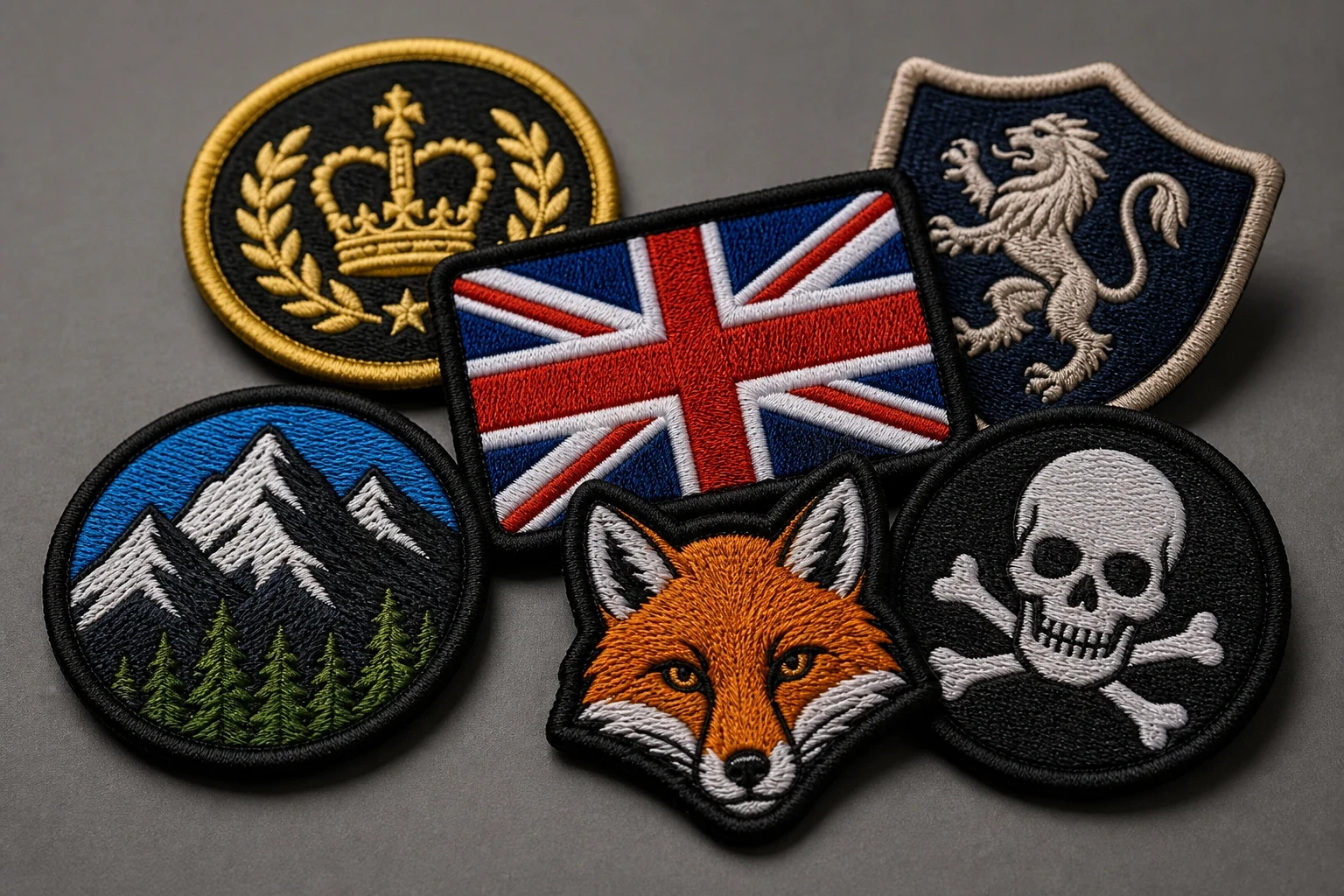
Key takeaways
- The five main price factors are patch quantity, finished size, stitch coverage, backing and finishing.
- The Customized Patches accepts a minimum order of 5 pieces per design, so small UK teams do not need to order hundreds.
- A free digital mockup is usually supplied within 12 hours, and production begins only after the customer approves it.
- A simple sew-on crest usually costs less than a large, heavily filled patch with metallic thread, a merrowed edge and Velcro backing.
Custom embroidered patches in the UK often cost from a few pounds per patch for larger, straightforward runs, while small orders and detailed designs cost more per piece. The final price depends on quantity, finished size, stitch coverage, backing, edge, digitising, delivery and any special thread or finish.
The Customized Patches has a 5-piece minimum per design. You receive a free digital mockup, usually within 12 hours, and production starts only after you approve the design. That gives a football club, school, cadet unit, hospitality team or small business a chance to check the real specification before money is committed to production.
What do custom embroidered patches cost in the UK?
There is no single UK price because a 2-inch name badge with a clean border is a different manufacturing job from a 10-inch biker back patch packed with lettering and fill. A supplier quoting before seeing the artwork can only give a starting estimate. The useful question is not simply “what is the price per patch?” It is “what specification and quantity does that price cover?”
For planning only: a small run of simple patches costs more per piece, 25 to 99 pieces usually brings the unit price down, and 100 or more lowers it further. We do not publish a tariff, and a large, dense or heavily finished patch costs more than a small simple one. Quotes typically start from £60. VAT, delivery and artwork requirements should be checked on the actual quote.
| Order size per design | Typical planning position | Why the unit price changes | Good fit |
|---|---|---|---|
| 5–24 pieces | Highest cost per patch | Fixed preparation and digitising are spread over fewer pieces | Small clubs, trial runs, staff samples and one-off events |
| 25–99 pieces | Middle quantity band | Preparation is spread over more patches, but the batch is still modest | Football squads, schools, societies and small businesses |
| 100–249 pieces | Lower unit cost in many cases | The same approved setup supports a longer run | Uniform programmes, brands, hospitality groups and events |
| 250–1,000+ pieces | Often the strongest unit economics | Large production runs reduce the effect of one-off setup on each patch | Retail stock, national teams, franchise groups and repeat campaigns |
The table is best used as a budgeting guide, not as a substitute for a quote. If you need 12 patches for a rugby tour, ordering 100 simply to chase a lower unit price may leave you with stock you cannot use. If the patch will be used again next season, however, a larger batch can make sense. Our guide to bulk custom patches in the UK looks at the point where 250, 500 or 1,000 pieces become practical.
Which specification changes the quote?
The artwork is only the starting point. Production staff need to turn it into a patch with a defined width, height, edge, backing and thread plan. Two logos with the same dimensions can have very different costs if one is mostly open twill and the other is almost entirely covered in dense stitching.
Size and stitch coverage
Size affects material, sewing time and the amount of thread used. A 3-inch circular crest may be economical for a polo shirt, whereas a 12-inch back patch needs a different conversation about readability, weight and placement. Dense satin stitches and filled areas take longer than a simple outline, particularly around small lettering.
This is where artwork can create an avoidable cost. A club badge designed for a website may contain tiny text, gradients and thin lines that do not translate cleanly into thread. Simplifying a line or removing a very small word can produce a clearer patch and sometimes reduce the stitch count. It is not about stripping character from the design; it is about deciding what must remain visible at the finished size.
Backing, edge and thread
Sew-on is generally the straightforward choice for a permanent patch on a denim jacket, wool coach jacket, canvas bag or heavy uniform. Iron-on adds a heat-activated adhesive layer, while Velcro adds hook or loop material and is useful for removable morale patches, tactical equipment and kit that needs regular washing or reassignment.
A merrowed crest has a raised overlocked border and a traditional badge appearance. A heat-cut edge follows more detailed outlines and can suit lettering or sharp shapes. Laser-cut finishing may be useful for technical shapes, while a plain stitched border can keep a small patch visually clean. The edge is part of the quote, not a decorative afterthought.
| Specification | Effect on cost | Practical trade-off | Common UK use |
|---|---|---|---|
| Sew-on backing | Usually the simplest backing | Needs stitching by hand or machine, but suits heavy garments | Denim, wool, work jackets, bags and club kit |
| Iron-on backing | Adds adhesive and application requirements | Fast to apply, but heat and washing can cause failure on some fabrics | T-shirts, polos and occasional-use clothing |
| Velcro backing | Adds hook-and-loop components | Removable and practical, but thicker and usually dearer | Morale patches, uniforms, airsoft and tactical gear |
| Merrowed edge | Adds a raised stitched border | Traditional finish, but not ideal for every sharp or irregular shape | Crests, motorcycle club patches and traditional badges |
| High stitch coverage | Increases thread and machine time | Rich surface texture, but can make the patch heavier and less flexible | Large logos, heraldic badges and statement patches |
If you are comparing construction options, our embroidered patches hub covers the main specifications. For a smoother surface with fine lettering, woven patches may be the better fit. For photographic detail or a deliberately flat finish, printed patches are worth considering. Printed is flatter; that is the point, not a defect.
Why quantity has such a strong effect on patch price
A patch order includes preparation before the first finished piece exists. Artwork may need digitising, a thread plan must be set, the outline must be checked and the production file has to be prepared. Those tasks do not disappear when you order only five pieces, so a small batch carries more of that preparation cost per item.
This is why a five-piece minimum is useful rather than meaningless. It lets a small organisation test a badge, outfit a a committee or make a first run without ordering 50 or 100 unwanted patches. The minimum applies per design, so confirm the count if you have a main crest, a sponsor version and separate names.
A simple quantity example
Imagine a school society needs 8 identical 3-inch sew-on patches for blazers. The order is small, but the design is uncomplicated and the patches are all the same. A team ordering 40 of that identical patch may pay less per piece because the same approved production setup is spread across the larger quantity.
Now imagine 40 patches split across four different designs. Each design needs its own artwork check and production file, so the saving may not match 40 identical pieces. Send the quantity beside each design when asking for a quote. “40 patches” is not enough information if there are four separate badges.
Not sure whether thread, woven detail or ink will suit the logo? Send the artwork and garment details for a free digital mockup, usually within 12 hours, so you can compare the finish before production.
GET A FREE MOCKUP- Count each artwork separately, including left-chest, sleeve and back versions.
- Say if the dimensions differ between garments or if one logo is being resized.
- Ask whether the quote includes digitising, the selected backing, edge, delivery and VAT.
- Do not assume a lower unit price means the same stitch coverage or backing.
- Keep a small spare quantity in mind if the patches will be fitted to a changing team.
Embroidered, woven, printed and other patch types
Price should follow the job, not a preference for one material. Embroidery gives a raised thread surface and a familiar uniform or club-badge appearance. It works particularly well for bold lettering, simple crests and logos that benefit from visible texture.
Woven construction creates a flatter face and can hold smaller lettering more neatly. Printed patches can reproduce gradients, photographs and fine colour changes without trying to represent them as separate stitched areas. Neither is automatically better. A hospitality brand that wants a smooth, understated chest badge may prefer print, while a rugby club may want the tactile surface of embroidery.
| Patch type | Surface and detail | Typical cost consideration | Best suited to |
|---|---|---|---|
| Embroidered | Raised thread with visible stitch texture | Cost rises with size, stitch density and specialist thread | Clubs, uniforms, workwear, jackets and bold logos |
| Woven | Flat, tight weave with fine small detail | Can be efficient for detailed small badges, depending on shape and quantity | Brand marks, labels, names and fine lettering |
| Printed | Flat image or inked surface | Useful where gradients and photographic detail matter | Events, artwork-led brands and image-heavy designs |
| PVC | Raised or recessed moulded rubber-like surface | Tooling and mould complexity affect the quote | Outdoor, airsoft, tactical and wet-use kit |
| Chenille | Soft, looped and highly textured yarn | Larger fibres and special construction make it a different product | Varsity jackets, letterman designs and streetwear |
You can compare custom embroidered patches vs printed patches before deciding. For raised varsity texture, see chenille patches. If the patch will be exposed to rain, abrasion or kit washing, PVC patches may suit the use better than thread.
Garment and use case can change the sensible choice
The cheapest patch is not the cheapest outcome if it fails on the garment. A heat-activated backing that survives a cotton shirt may not behave well on a nylon shell. A patch that looks good on a flat product photograph can pucker on a curved cap or sit awkwardly across the seam of a wool coaches jacket.
It is common to see this in different orders. Football clubs often need a bold crest that stays readable on shirts, tracksuit tops or bags. Cadet units may need removable Velcro panels. Hospitality teams usually care about a neat chest badge on polos and jackets. Biker and motorcycle club patches may need larger lettering, a merrowed border and a backing that suits leather or heavy denim.
Examples from common UK orders
- Football club: a 3 to 4-inch embroidered crest with a firm border can work well on a tracksuit, jacket or kit bag. Check whether the sponsor mark is part of the same design or a separate order.
- Cadet unit: a removable Velcro morale patch needs the correct hook or loop side to match the panel. A sew-on backing is not a replacement for Velcro simply because it costs less.
- Hospitality polo: fine text may look cleaner as woven or printed construction if the badge is small. Dense embroidery can make a tiny name or slogan hard to read.
- School blazer: confirm the blazer fabric and placement before selecting iron-on. A sew-on patch is often the safer long-term route for wool garments.
- Biker vest: large back patches often need careful sizing, readable lettering and an edge that suits leather or denim. See the guide to biker and motorcycle club patches.
- Nylon shell: test the backing and attachment method. High heat can mark or distort some shells, while stitching may require attention to the lining and seam.
Some common failures are easy to prevent. Iron-on patches can peel after a dryer cycle, especially when the temperature, pressure or fabric is unsuitable. A patch placed across a pocket flap can catch and lift. A merrowed border can look too heavy around a very small detailed crest. The correct specification starts with the garment, not just the artwork.
What should be included in a UK patch quote?
A useful quote should let you compare like with like. It should state the number of pieces per design, the finished size, the patch type, backing, edge, thread or print treatment, artwork preparation, delivery and any applicable VAT. If a supplier says only “embroidered patch, £X”, you cannot tell if the price includes the features you need.
Send the information in one message where possible. Include the artwork, desired size in inches, quantity per design, garment or equipment, backing preference, postcode and target date. If you are unsure, say so. A production desk can often recommend a practical starting specification, but the final choice should be confirmed in the mockup and quote.
| Quote detail to confirm | Why it matters |
|---|---|
| Quantity per artwork | Shows how setup and production are being calculated |
| Finished width and height in inches | Determines available space, readability and material use |
| Embroidered, woven, printed, PVC or chenille | Changes the production method and surface appearance |
| Sew-on, iron-on, adhesive or Velcro backing | Changes application, thickness, durability and price |
| Merrowed, heat-cut or laser-cut edge | Affects the outline, shape and finishing work |
| Digitising or artwork charge | Shows whether production preparation is included |
| Delivery to a UK postcode and VAT position | Prevents the final invoice from being higher than expected |
| Mockup and approval stage | Confirms that production will follow the agreed design |
The free mockup is particularly useful when several people need to approve a club crest or company logo. A committee can check the spelling, a brand manager can compare colours, and the person supplying the jackets can confirm that the dimensions fit. Production should not begin until the approved version is clear.
How the order works from artwork to delivery
Start with the job rather than assuming the most familiar finish. Tell us what the patch will be attached to, how often it will be washed, whether it must be removable and what size the wearer or user needs. A photograph of the garment can be more useful than a long description, particularly for nylon shells, curved hats and Velcro panels.
- Send your artwork, quantity per design, desired size and delivery postcode.
- Tell us whether the patch is for a blazer, polo, football kit, denim jacket, workwear, bag, hat, nylon shell or Velcro panel.
- Choose a starting construction and backing, or ask for guidance if you are comparing embroidery with woven or printed options.
- Review the free digital mockup, usually sent within 12 hours.
- Check spelling, logo proportions, thread colours, border, size, backing and placement.
- Request any changes before approving the mockup and quote.
- Production begins only after approval, followed by delivery to the agreed UK address.
The mockup is a digital representation, not a photograph of a finished patch. Thread texture, exact colour under different lighting and the feel of the edge are physical details, but the mockup should make the main production decisions visible. If tiny lettering is marginal on screen, ask how it will be handled at the finished size before approval.
For more ordering detail, read How to Order Custom Patches in the UK. If you are checking delivery planning rather than price, How Long Do Custom Patches Take? explains the stages from mockup to UK delivery.
Name sew-on, iron-on or Velcro on the quote and tell us what garment the patch will meet. We show the proposed backing on a free digital mockup, usually within 12 hours, and produce only after your approval.
GET A FREE MOCKUPWays to control the cost without making a poor patch
Cost control is usually about removing uncertainty, not choosing the lowest specification blindly. A clean 3-inch badge with sensible lettering can look more professional than an overfilled design that tries to preserve every tiny detail. Agree the size and use before asking for a large quantity.
- Order one consistent design in a sensible quantity rather than splitting the batch into many minor versions.
- Use a size that matches the garment. A very small patch may need less detail, while a very large patch may add weight and production time.
- Reduce unnecessary thread colours if the logo remains recognisable with a simpler palette.
- Ask whether tiny text should be removed, enlarged or changed to woven or printed construction.
- Choose sew-on when permanence matters and avoid paying for Velcro that will never be used.
- Do not select iron-on purely on price for wool, coated fabric, nylon or garments that go through frequent hot washing.
- Approve the mockup carefully so an avoidable spelling or colour correction does not delay a repeat order.
- If the design will be reordered, keep the approved artwork and specification for consistency.
A lower-cost alternative can be the right answer. Printed is flatter; that is the point when a brand needs a smooth surface or photographic colour. Woven can preserve small lettering without the raised face of embroidery. PVC can handle a different sort of outdoor use. The correct comparison is cost against the way the patch will be worn, washed and handled.
Questions to ask before approving the price
Before you approve, make sure the quote reflects the item you think you are buying. Ask whether the quantity is per design, whether the size is the finished outer measurement and which side of the Velcro is included. Ask how an edge will affect an irregular shape and whether the artwork needs simplifying for thread.
It is also worth checking the practical parts: estimated production time after approval, delivery to your UK postcode, VAT, replacement policy for a manufacturing error and the file kept for future repeats. Our guide, 10 Questions to Ask Before Ordering custom embroidered patches, gives a fuller checklist for clubs, brands and businesses.
- Is the quoted price for 5 pieces of one design, or can several designs be mixed?
- Is digitising included, and will the production file be kept for future orders?
- Does the price include the backing and edge shown on the mockup?
- Will the patch be suitable for the named garment or equipment?
- Are delivery, VAT and any artwork correction charges shown separately?
- What happens if the final approved design contains lettering that is too small to stitch clearly?
- Can the same colours, size and backing be repeated on a later order?
A clear answer to these points is more valuable than a headline unit price. It gives your treasurer, purchasing manager, club committee or customer a quote that can be checked against the actual goods received.
Final buying advice for UK teams, brands and clubs
For a small UK order, start with the garment and the finished size, then choose the construction. Five simple sew-on crests can be a sensible first run. For a large uniform programme, focus on repeatability, approved colours, a saved production file and a backing that survives the working environment.
The Customized Patches serves customers across the United Kingdom, from local football clubs and schools to brands, hospitality businesses, cadet groups and motorcycle clubs. The practical route is straightforward: send the artwork and requirements, receive a free digital mockup usually within 12 hours, check the specification, and approve it before production begins.
If you know the patch must be embroidered, visit the embroidered patches product hub. If you are still comparing materials, the guides for leather patches, 3D embroidered patches and custom patches for workwear and uniforms can help you narrow the choice.
Frequently asked questions
How much do custom embroidered patches cost in the UK?
The price depends on quantity, size, stitch coverage, backing, edge, digitising and delivery. As a broad planning guide, 5 to 24 simple patches may cost more per piece than a run of 100 or more. A precise quote needs the artwork, finished size, quantity per design and backing.
What is the minimum order for custom embroidered patches?
The Customized Patches has a 5-piece minimum per design. If you have two different logos, the minimum normally applies to each design separately. Confirm the quantity beside each artwork when requesting a quote.
Do I receive a mockup before production?
Yes. The Customized Patches usually provides a free digital mockup within 12 hours. Check the size, spelling, colours, edge and backing, then request changes if needed. Production starts only after you approve the mockup.
Are embroidered patches cheaper than printed patches?
Not always. The lower-cost option depends on quantity, size and artwork. Embroidery adds thread and stitch time but provides a raised, traditional badge surface. Printed patches are flatter and can handle gradients or photographic detail more directly. Compare both against the garment and the intended use.
Does Velcro make custom embroidered patches more expensive?
Velcro usually adds material and assembly compared with a basic sew-on backing, so it can increase the quote. It is useful when a patch must be removed, replaced or transferred between panels. Choose it for a real requirement rather than as a default upgrade.
What causes embroidered patch prices to rise?
The main causes are a small quantity, a larger finished size, dense stitch coverage, tiny lettering, many thread colours, specialist thread, a complex edge, Velcro backing and urgent delivery requirements. Sending clear artwork and confirming the garment early helps avoid unsuitable specifications and rework.
Ready to produce custom patches for your UK team or brand?
GET A FREE MOCKUP