
Sublimation printed patches UK Trends to Watch in 2026
Sublimation printed patches UK buyers are using in 2026 for full-colour logos, gradients, photographs and detailed artwork that would be difficult to reproduce with thread. They offer a flatter printed surface and flexible design, with a 5-piece minimum per design. The Customized Patches provides a free digital mockup usually within 12 hours and produces only after approval.
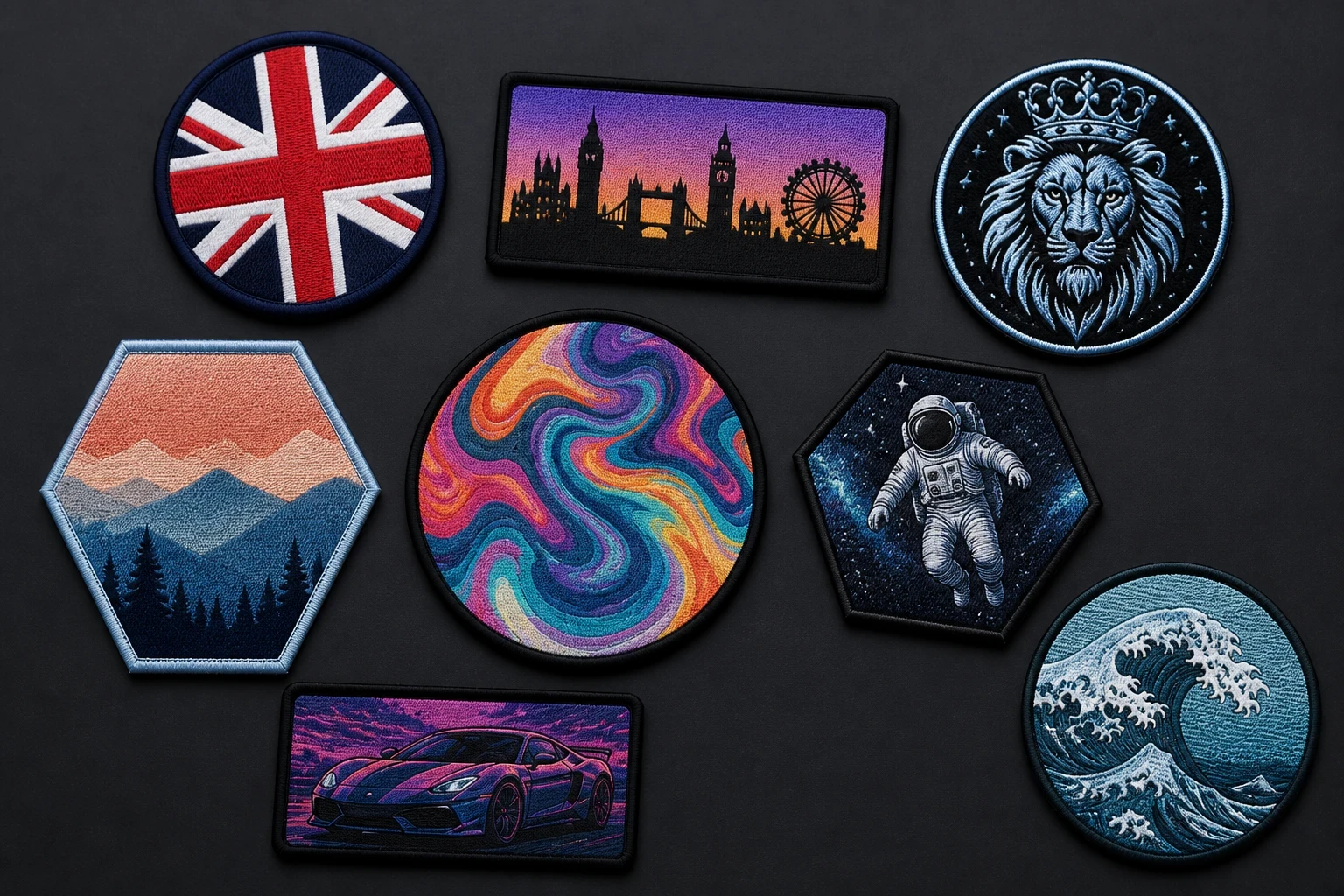
Key takeaways
- Sublimation printed patches UK customers are choosing in 2026 for photographs, gradients, shaded illustrations and detailed logos.
- Printed is flatter than embroidery, and that is the point; the surface suits lightweight garments and artwork with many colour changes.
- A 5-piece minimum applies per design, and production starts only after artwork and the digital mockup have been approved.
- The Customized Patches usually sends a free digital mockup within 12 hours, so teams can check size, placement and backing before ordering.
Sublimation printed patches UK customers are watching in 2026 are becoming a practical choice for full-colour logos, photographs, gradients and artwork with fine shading. They suit football shirts, nylon shells, hospitality polos, school blazers, branded workwear and Velcro panels where a flatter patch is preferable to raised stitching.
The Customized Patches supplies these patches across the United Kingdom with a 5-piece minimum per design. A free digital mockup is usually sent within 12 hours, and we produce only after approval, so the quoted size, colours, shape and backing can be checked before anything goes into production.
Why sublimation printed patches UK buyers are considering in 2026
The main reason is artwork. A printed patch can show a sunset, a shaded mascot, a small photograph, a map outline or a logo with several tones without converting every colour change into a separate thread decision. This gives designers more freedom, particularly for limited-run clothing and event merchandise where the patch needs to look like the original artwork.
The other reason is surface profile. Printed is flatter; that is the point. On a football shirt or lightweight polo, a low-profile patch can sit more comfortably than a heavily stitched crest. On a nylon shell, it can also avoid adding unnecessary bulk. If the brief calls for a raised border, tactile lettering or a classic club badge, embroidered patches may still be the better material.
This is not a claim that printed patches replace every other construction. A biker club may want a bold merrowed crest with a heavy edge. A school may prefer a traditional embroidered badge on a blazer. A streetwear label might use print for a photographic back patch and 3D embroidered patches for a smaller raised wordmark. The right choice follows the garment, artwork and handling conditions.
The 2026 design trends showing up on patch orders
Photographic and illustrated artwork
Photographic artwork is appearing on club merchandise, outdoor event clothing and brand campaigns. Examples include a local landmark, a race-day image, a pet illustration, a landscape-style mountain scene, or a product photograph used as a small promotional badge. Printed colour lets the artwork keep its shading instead of reducing it to a few solid thread fills.
Small artwork still needs sensible preparation. A photograph with a dark subject on a dark background may lose its focal point once reduced to a two-inch patch. We normally ask for the original high-resolution file, then check the visible detail at the requested size. Our guide to Sublimation printed patches UK Best Practices for brands with photorealistic designs covers contrast, cropping and file preparation in more detail.
Soft gradients and controlled colour palettes
Gradients are useful for sunset graphics, water, smoke, neon effects and shaded animals. They also suit brands that have moved away from a flat two-colour mark for a seasonal collection. The practical check is contrast at the edge: a pale blue fading into a white background can disappear, even if it looks clear on a bright monitor.
We are also seeing restrained palettes rather than colour for its own sake. A club may use navy, cream and one orange accent. A hospitality group may use a muted green badge that matches aprons and overshirts. A controlled palette makes the patch easier to match with garments and reduces surprises between the screen proof and the finished item.
Small batches for testing and events
A five-piece minimum per design gives smaller UK teams a way to test a badge before committing to a large run. This works for a new club crest, a staff trial, a pop-up collection, a charity event or a one-off tournament. It is also useful where several departments need different names or graphics, provided each distinct design meets the minimum.
Small-batch ordering does not remove the need to decide carefully. If the same logo will be used on 50 jackets later, keep the approved artwork, finished dimensions and backing details on file. A second order is easier when the original specification is clear.
Printed, embroidered, woven or PVC: which patch suits the brief?
The material should be chosen before the artwork is finalised. A detailed print file may not translate well into thick thread. Equally, a simple badge can look stronger with stitched texture than with a flat ink surface. Below is the comparison we use at the quoting stage.
| Patch type | Best suited to | Surface and detail | Common garment uses | Main trade-off |
|---|---|---|---|---|
| Sublimation printed | Photographs, gradients, fine illustrations and many-colour logos | Flat printed face with flexible colour reproduction | Football shirts, polos, lightweight jackets, event clothing | Less raised texture than embroidery; very small text still needs checking |
| Embroidered | Traditional crests, bold lettering and tactile badges | Thread texture with raised areas and possible merrowed edging | School blazers, club jackets, uniforms and workwear | Fine shading and photographic detail need simplifying |
| Woven | Small lettering, tidy linework and flatter logos | Fine woven surface with a clean, even appearance | Caps, fashion labels, shirts and bags | Less suitable for photographic tones or heavy raised texture |
| PVC | Outdoor, utility and bold graphic applications | Rubbery, moulded surface with strong block shapes | Work jackets, tactical bags, outdoor clothing and Velcro panels | Photographic detail and soft gradients are not its strength |
For a closer material decision, compare printed patches with woven patches and PVC patches. The useful question is not which type sounds most premium. Ask what the garment will endure, how the artwork should feel, and whether the wearer needs a thin, flexible badge or a visibly textured one.
A football club ordering a photographic sponsor badge may choose print for the clean colour fields. A cadet unit with a simple emblem may choose embroidery for its traditional appearance. A biker vest may need a dense embroidered back piece with a merrowed border, while a removable equipment panel may call for Velcro. These are different jobs, even if each is described as a custom patch.
Artwork specifications that matter before approval
A patch can only reproduce the information present in the supplied file. A low-resolution screenshot, compressed social-media image or photograph copied from a website may look acceptable on a phone but break up at the finished size. Vector artwork is helpful for logos, while a high-resolution raster file can work well for photographs and textured illustrations.
Not sure whether thread or ink will hold your logo on the garment? Send the artwork and the intended use for a free digital mockup usually within 12 hours, then compare the printed and embroidered options before production.
GET A FREE MOCKUP- Send the original logo or highest-resolution artwork available, rather than a screenshot from a website.
- State the finished width and height in inches, including whether the shape should follow the artwork or use a fixed outline.
- Identify text that must remain readable and check it at the actual proposed patch size.
- Tell us if the patch will be placed on a dark garment, a pale garment or both.
- Keep important lettering and faces away from the cut edge so the border does not crowd them.
- Mention any colour reference supplied by your brand, club, school or business.
The edge needs attention too. A clean printed face can still look wrong if the cut shape clips a thin outline or leaves an awkward border around a circular crest. For a formal badge, a simple outer shape often reads better than trying to follow every tiny point in the artwork.
If the logo includes very small wording, decide what matters most. A two-inch badge cannot make a long slogan as readable as a larger chest mark. We can show a practical version on the mockup, but the final decision belongs to the customer. See How to Design Artwork for printed patches That Production-Ready for a fuller artwork checklist.
Backing choices for UK garments and equipment
Backing is a use decision, not merely a finishing detail. Sew-on is usually the safest choice for a patch that will be washed often or attached to a substantial garment. Iron-on is convenient for many flat cotton surfaces, but application temperature, pressure and fabric composition all affect the result.
A nylon shell can be damaged by excessive heat, so an iron-on instruction that suits a cotton sweatshirt may be unsuitable for a lightweight rain jacket. Wool coaches' jackets also need care because heat can mark or flatten the fabric. We ask about the garment before recommending a backing rather than assuming every patch will be applied in the same way.
| Backing | Useful for | Points to check |
|---|---|---|
| Sew-on | Blazers, jackets, uniforms, bags and frequently washed garments | Allow time for stitching and check the patch position before sewing |
| Iron-on | Suitable cotton garments and simple home application | Confirm fabric tolerance; heat and a dryer cycle can cause an iron-on patch to peel |
| Velcro | Removable badges, equipment panels, uniforms and tactical-style clothing | Specify hook or loop side and confirm the garment already has a compatible panel |
| Adhesive | Short-term display, packaging or temporary positioning | Usually not the first choice for repeated washing or heavy use |
It is common to see iron-on patches peel after a dryer cycle, especially where the application was too cool or the garment was repeatedly tumble-dried. That does not mean iron-on is always wrong; it means the care instructions and fabric need to match the backing. For removable club badges, Velcro may be more useful than a permanent attachment.
The Printed patches Sizing and Backing Options Explained guide covers dimensions, attachment methods and placement. If you are ordering for a school blazer, ask whether the school expects a sewn badge. If you are supplying a branded nylon shell, tell us the shell material before the quote is finalised.
Where these patches are being used across the United Kingdom
Football and rugby teams use printed patches for sponsor marks, tournament details and kit graphics where a flat finish suits the shirt. Clubs often order a small batch for coaches and committee members first, then decide whether the same design should go onto jackets, kit bags or presentation clothing.
Hospitality businesses use them on polos, overshirts and event uniforms, particularly for seasonal graphics or a partner logo. A detailed food illustration or venue photograph can be easier to reproduce in print than as thread. The patch still needs to sit comfortably on the garment and remain legible from normal working distance.
Schools, cadet units and youth organisations tend to have stricter placement rules. A patch may need to sit on a sleeve, pocket or shoulder with the same size on every garment. The best order notes include the garment type, placement, finished size and backing for each group rather than only attaching a logo file.
Brands and small businesses are using small quantities for launches, market stalls, staff uniforms and packaging. A five-piece minimum per design makes a short trial possible, while a larger repeat order can follow once the team has checked how the patch looks on the actual clothing. For club-specific examples, see Top 10 Uses for sublimation printed patches UK in 2026.
Ordering sublimation printed patches UK customers can approve with confidence
Start with four details: the artwork, finished size, quantity and garment. Then add the backing, preferred shape, required date and delivery address in the United Kingdom. This gives our team enough information to quote accurately instead of guessing from an image alone.
- Send the artwork and explain what the patch represents, such as a football crest, staff badge, product label or event design.
- Confirm the quantity for each design. The minimum is 5 pieces per design, so different artwork cannot normally be combined to create one five-piece total.
- State the finished size in inches and identify any wording that must remain readable.
- Choose sew-on, iron-on, Velcro or another requested backing based on the garment and how it will be used.
- Review the free digital mockup, usually supplied within 12 hours, and check colours, dimensions, outline, placement and backing.
- Approve the specification in writing. We produce only after approval, so changes can be made before manufacturing begins.
- Allow for production and UK-wide delivery when setting the date for a match, launch, event or uniform issue.
The approval stage is where most avoidable errors are caught. It is much easier to spot a missing word, a border that is too narrow or a Velcro side that has been selected incorrectly on a digital proof than after the patches have been made. Keep the approved mockup with the purchase order so your team and supplier are working from the same version.
Pricing depends on size, quantity, shape, backing, artwork and the production method. A small five-piece order will not be priced in the same way as a larger run, and complex finishing can alter the quote. For a fuller cost explanation, read How Much Do sublimation printed patches UK Cost in the UK?.
Do not choose a delivery date before the artwork is settled. If a club changes its crest, a brand changes its colour palette or a school adds a line of text after approval, the order may need to be reviewed again. A clear brief at the start is usually the quickest route to a dependable production schedule.
Care, durability and honest expectations
A printed patch is designed for normal garment use, but no patch is immune to poor application, harsh washing or unsuitable fabric. Follow the garment and backing care instructions. Avoid treating an iron-on patch as permanent on a jacket that is repeatedly tumble-dried, and do not apply high heat to nylon without checking the fabric first.
Name sew-on, iron-on or Velcro on the quote and tell us which garment will carry the patch. We show the proposed size, shape and backing on a free digital mockup usually within 12 hours, and production starts only after you approve it.
GET A FREE MOCKUPThe printed face should be judged against the job it was chosen for. It is a good fit where colour detail and a low profile matter. It is not the same visual product as a thick embroidered crest, and it will not provide the same raised thread texture. That difference is a design feature for some orders and a reason to choose embroidery for others.
For biker jackets, heavy wool outerwear and garments that receive hard abrasion, discuss the use before choosing the construction. A dense embroidered or leather patch option may be more suitable for a traditional motorcycle-club look. A removable kit badge may need Velcro, while a sponsor graphic on a team shirt may benefit from the flatter printed finish.
What to expect from UK production and delivery
UK-wide delivery planning starts with approval, not with the first email. The usual first step is a free digital mockup, normally within 12 hours. Once the customer confirms the design, size, backing and quantity, the order can be prepared for production. The required date should be stated early, particularly before a football season, school term, trade show or Christmas collection.
We quote from the details supplied. A simple circular badge at two inches with sew-on backing is a different job from a shaped photographic patch with Velcro and several colour areas. If you need several designs, list each one separately with its quantity. The five-piece minimum applies per design.
Before approval, check the spelling, date, club name, sponsor mark, outline and attachment method. After approval, production proceeds to the agreed specification. This is why the mockup matters: it turns a general idea into a record of what will be made.
The practical 2026 verdict
The strongest use for sublimation printed patches UK customers are ordering in 2026 is artwork that needs colour freedom without a raised surface. Photographs, gradients, shaded illustrations, detailed logos and short-run event designs are all sensible examples. A flat finish is often useful on shirts and polos, where a heavy badge can feel out of place.
Do not select print simply because the artwork looks detailed. If the garment is a school blazer and the badge must match a traditional uniform, embroidery may be the more appropriate choice. If the patch needs a rubberised outdoor finish, consider PVC. If it must be removed and replaced, specify Velcro. The best result comes from matching construction to use.
The Customized Patches can help compare the options from the actual artwork and garment details. Send the file, finished size, quantity and backing preference. We will provide a free digital mockup usually within 12 hours, apply the 5-piece minimum per design, and produce only after approval.
Further guides for choosing and ordering patches
If you are still comparing materials, the guide to Sublimation printed patches UK vs embroidered patches: Which Is Right for Your Project? explains the visual and practical differences. For a broader starting point, Sublimation printed patches UK: Everything UK Buyers Need to Know covers the basic construction, ordering points and common uses.
It is also worth reading Common Mistakes to Avoid When Ordering sublimation printed patches UK before sending artwork. It covers issues such as unclear sizing, unsuitable backing and approving a design without checking the finished garment. Customers outside major cities can also view our UK city pages for regional delivery information.
Frequently asked questions
What are sublimation printed patches UK buyers using in 2026?
They are using them for full-colour club crests, photographs, gradients, detailed illustrations, sponsor marks, event clothing, hospitality uniforms and branded merchandise. The flat printed face suits lightweight shirts and polos, as well as designs that would be difficult to reproduce with thread.
What is the minimum order for sublimation printed patches UK customers can place?
The minimum is 5 pieces per design. If you have three different logos, each design must meet the five-piece minimum rather than combining them into one total of five patches.
How quickly can I see a mockup?
The Customized Patches usually provides a free digital mockup within 12 hours. The mockup should be checked for size, colours, shape, wording and backing. Production starts only after the customer approves the specification.
Are printed patches better than embroidered patches for football shirts?
They can be a good fit where a flatter, lighter-looking surface and full-colour artwork are wanted. Embroidery may be preferable for a traditional raised crest or bold stitched lettering. The shirt fabric, artwork and desired appearance should decide the construction.
Can sublimation printed patches go on nylon jackets or wool coaches?
They can be supplied for these garments, but the backing and application method need checking first. Nylon may not tolerate the heat used for some iron-on applications, while wool can be marked by excessive heat. Sew-on or another suitable attachment method may be safer.
Should I choose sew-on, iron-on or Velcro backing?
Choose sew-on for a dependable permanent attachment on many jackets, blazers and uniforms. Choose iron-on only when the garment and care routine suit heat application. Choose Velcro for removable badges or existing hook-and-loop panels. State the garment and intended use when requesting a quote.
Ready to produce custom patches for your UK team or brand?
GET A FREE MOCKUP