
Sublimation printed patches UK Best Practices for brands with photorealistic designs
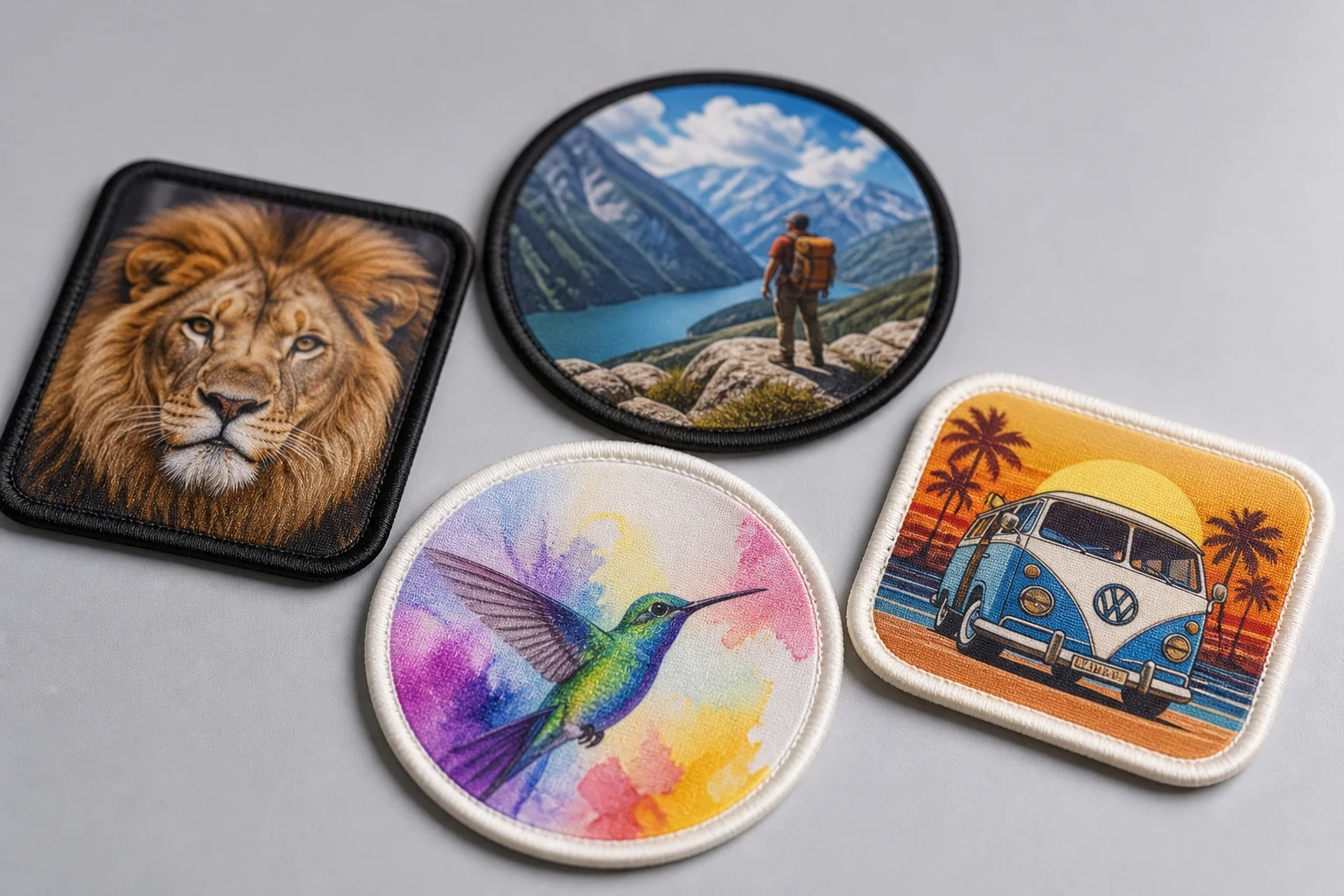
Sublimation printed patches UK are fabric patches made by transferring detailed, full-colour artwork into a printable patch surface. They suit photographs, gradients, fine shading and complex logos better than traditional embroidery. The Customized Patches provides a free digital mockup usually within 12 hours, has a 5-piece minimum per design, and produces only after approval.
Key takeaways
- Sublimation printed patches UK are best suited to photographic images, gradients, shadows and artwork with many colours.
- A larger patch, normally around 3 to 4 inches wide for a detailed chest or sleeve design, gives fine features more room to remain visible.
- The Customized Patches has a 5-piece minimum per design and sends a free digital mockup usually within 12 hours.
- Production begins only after artwork approval, so check the colours, wording, size, shape and backing before confirming.
Sublimation printed patches UK are the sensible starting point for brands that need photographs, gradients, shadows or many small colour changes on a patch. They keep the artwork flat and detailed instead of converting every feature into thread. For a photographic logo, product image or illustrated landscape, that difference is the main reason to choose print.
The Customized Patches supplies UK teams, brands, clubs and businesses with a free digital mockup usually within 12 hours. The minimum is 5 pieces per design, and production starts only after you approve the artwork, size, backing and other specifications.
What makes sublimation printed patches UK suitable for photorealistic artwork?
Traditional embroidery builds an image from stitches. That gives a raised, tactile finish, but it also means that a dark-to-light gradient, a small reflection or a realistic face has to be simplified. Sublimation printing places the artwork onto a printable fabric patch surface, so the image can contain much finer tonal changes and a wider range of colours.
That does not make printed patches better for every brief. Printed is flatter; that is the point. A football club crest with bold lettering may benefit from a merrowed edge and dense thread, while a hospitality brand using a photographic cocktail, a mountain scene or a detailed mascot may need the smoother image area of print.
Good uses for the printed surface
- Photorealistic product images for clothing, events and promotional ranges.
- Illustrations with smooth shading, highlights and multiple colour zones.
- Brand marks containing small tonal differences that would merge in embroidery.
- Limited-run event patches where the artwork changes from one campaign to the next.
- Club or team designs that combine a photograph with a date, sponsor mark or venue detail.
A printed surface can also help a small brand keep one visual identity across jackets, bags and workwear without redrawing the artwork for thread. If the design is a simple two-colour badge, compare it with embroidered patches or woven patches before deciding. The right method depends on the image, the garment and the finish you want people to feel.
Artwork preparation: protect the detail before production
The best patch starts with the best file available. Send the original logo, not a screenshot pulled from social media. A low-resolution image may look acceptable on a phone but show soft edges, broken lettering or compression blocks once it is enlarged for a patch.
Keep the important subject away from the outer edge. Photographs often contain hair, smoke, foliage or dark shadows that can be cropped safely, but a logo name or a face should not sit against the border. If the artwork needs a white keyline, coloured border or dark background, state that clearly rather than expecting the production team to guess.
File and colour checks
- Use the highest-resolution PNG, JPG, PDF or vector file you have.
- Check the spelling and punctuation at the proposed finished size.
- Avoid placing very fine pale lines over a pale background.
- Tell us if a colour must stay close to a brand reference, such as a Pantone value or approved digital swatch.
- Supply the artwork without unnecessary filters, outlines or background removal unless those changes are part of the finished design.
- Ask for a crop that gives the main subject enough breathing room inside the border.
Colours seen on a backlit monitor are not the same as colours on fabric. Bright neon shades, very subtle greys and near-black details deserve particular attention. A mockup cannot replace every physical colour variable, but it gives you a useful approval stage to spot an incorrect crop, an unreadable line of text or a border that is too narrow.
For more preparation detail, see How to Design Artwork for printed patches That Production-Ready. It is also worth reading Printed patches Sizing and Backing Options Explained before you send a final specification.
Choose the size, shape and border around the garment
Photorealistic designs normally need more physical room than a simple badge. A 2-inch patch can work for a compact symbol, but a detailed animal face, vehicle or product photograph may lose recognisable features at that width. Many chest and sleeve designs are easier to read at around 3 to 4 inches wide, although the correct measurement depends on the garment and the artwork.
Measure the available area on the actual garment. A patch for a football training top may need to sit clear of a sponsor logo. A patch for a wool coaches jacket may need enough space to avoid a seam. A school blazer has a different visual scale again, particularly if the design sits beside an existing school crest.
Shape and edge choices
- A rectangular or square patch suits photographs, product panels and artwork with a deliberate frame.
- A circular patch gives a club or event image a traditional badge shape, but it may crop wide photographs.
- A custom-cut outline can follow an animal, vehicle or mascot, though complex edges need checking at the approved size.
- A merrowed edge gives a traditional raised border and works well for many classic crests.
- A printed edge or clean cut may suit a modern photographic design where a heavy border would cover important detail.
There is a balance between detail and scale. Increasing the patch by half an inch can make a surprising difference to small lettering, eyes and fine linework. It can also change where the patch sits on a garment, so approve the dimensions with a ruler rather than judging only from a digital image.
| Project requirement | Practical starting point | Reason | Main trade-off |
|---|---|---|---|
| Photographic chest badge | About 3 to 4 inches wide | Gives faces, products and shadows more room | Takes more space on a polo or jacket |
| Small sleeve identifier | About 2 to 3 inches wide | Fits common sleeve areas without dominating the garment | Tiny text and fine highlights may need removing |
| Large back design | About 8 to 12 inches wide, subject to garment | Allows a detailed image to remain recognisable from a distance | Costs more and needs a suitable flat application area |
| Compact club badge | About 2 to 3 inches wide | Works for a simple mark, date or short name | A dense photograph may become visually crowded |
A border is not just decoration. It separates the artwork from the garment and helps the patch read at a distance. On a dark nylon shell, a pale border may be useful; on a pale polo, a dark outline can prevent the image from disappearing. The mockup should show the proposed border and not only the artwork floating on a white screen.
Backing and garment compatibility matter more than most buyers expect
The front gets most of the attention, but the backing decides how the patch behaves on the garment. Sew-on is the dependable choice for many jackets, wool coaches and heavy workwear. Iron-on is convenient for a clean, permanent-looking application, but heat, fabric construction and washing conditions all affect the result.
Not sure whether printed detail or raised thread will suit the garment? Send the artwork and intended size for a free digital mockup, usually within 12 hours, so you can compare the finished direction before production.
GET A FREE MOCKUPVelcro is useful for uniforms, removable identifiers and kit that needs regular replacement. A Velcro-backed patch can move between compatible panels, which suits some cadet units and operational teams. It is not the right answer for every polo or school blazer, where a sewn patch may look neater and sit closer to the fabric.
Examples from real garment types
- Nylon shells can be sensitive to direct heat, so do not assume an iron-on application is suitable without checking the garment instructions.
- Wool coaches jackets usually benefit from sew-on application, particularly if the patch is large or will be handled often.
- Velcro panels need the loop side already attached to the garment and enough panel area for the patch to sit flat.
- Hospitality polos can suit sew-on or carefully applied iron-on patches, but the patch should not interfere with the shirt placket or washing routine.
- School blazers need a position that looks balanced beside existing badges and does not cover the blazer pocket or school crest.
The familiar failure is an iron-on patch that peels after a dryer cycle. It may have been pressed at the wrong temperature, applied to a difficult fabric or washed in conditions that weaken the adhesive. Sew-on is less convenient at the start, but often the safer specification for a garment that will be washed repeatedly or worn outdoors.
If you are comparing finishes, Sublimation printed patches UK vs embroidered patches: Which Is Right for Your Project? sets out the practical differences. For specialist applications, PVC patches and leather patches may also be worth considering, although neither reproduces a photographic image in the same way as a printed patch.
Printed versus embroidered: choose the finish, not just the artwork
Brands sometimes ask for a printed patch because the image is detailed, then worry that the flatter surface will look less premium. That concern is understandable, but a flat finish is not a defect if the brief calls for a clean photographic panel. A raised thread finish can be attractive while also interrupting a realistic image.
A football club might use embroidered patches for a traditional crest on match jackets and sublimation printed patches for a commemorative image or anniversary badge. A biker group may prefer a heavily stitched back patch with a bold merrowed border, while a motorsport supplier may need printed gradients for a vehicle image. Different patches in the same clothing range can be correct.
| Feature | Sublimation printed patch | Embroidered patch | Woven patch |
|---|---|---|---|
| Photographs and gradients | Strong fit for detailed tonal artwork | Usually simplified into stitch areas | Better for fine flat lines than realistic shading |
| Surface feel | Flat and smooth | Raised and textured | Flat with a fine woven texture |
| Small lettering | Can work if the patch is large enough and the type is clear | Needs suitable letter height and stitch spacing | Often useful for small flat lettering |
| Classic club appearance | Modern image-led finish | Traditional badge appearance | Clean, detailed badge appearance |
| Best starting artwork | High-resolution image or full-colour illustration | Simplified vector or stitch-ready design | Clean line artwork with controlled detail |
The decision should include the garment and audience. A textured embroidered badge can suit a biker vest or a heritage sports jacket. A smooth printed badge may suit a branded technical jacket, a product launch uniform or a run of event staff polos. See The Difference Between printed patches and embroidered patches, Explained for another comparison.
Ordering sublimation printed patches UK: quantity, quote and approval
Start the quote with the information that changes the result: artwork, finished width and height, shape, quantity, garment type and backing. If you need several designs, list each design separately. The 5-piece minimum applies per design, so five versions of one badge are different from one each of five unrelated badges.
Tell us if you are ordering for a team, a club, a brand launch, a school or business uniforms. A football club may need matching chest patches across several sizes of kit. A small brand may need five test pieces before committing to a larger run. A hospitality company may need the same logo positioned consistently on different garments.
What to check on the free mockup
- Finished width and height, including the border.
- The exact crop of the photograph or illustration.
- Spelling, dates, names and sponsor marks.
- The visibility of small text at the actual proposed size.
- The backing and how it suits the named garment.
- The shape and edge treatment.
- Any colour or contrast changes requested before approval.
The Customized Patches sends a free digital mockup usually within 12 hours. Treat it as a production checkpoint, not a formality. Put the image beside the garment, measure the proposed size, and ask questions while changes are still straightforward. Production takes place only after approval, so the approved version needs to be the version you actually want.
For pricing context, read How Much Do sublimation printed patches UK Cost in the UK?. The price can depend on dimensions, quantity, shape, border, backing and the number of separate designs, so a specific quote is more useful than a broad figure.
Washing, application and day-to-day care
A good patch can still fail if it is applied or washed carelessly. Follow the garment and backing instructions, use the correct application method, and avoid treating an iron-on patch as suitable for every fabric. If the garment is valuable, test the application on a spare item or choose sew-on rather than taking a risk with heat.
For regular washing, turn garments inside out where practical and use the care temperature recommended for the clothing. Avoid harsh scrubbing across the patch. A dryer cycle, high heat or repeated industrial laundering can put more strain on adhesive-backed patches than ordinary occasional wear.
Common signs that the specification needs changing
- The patch is too small for the amount of text or photographic detail.
- The chosen backing does not suit the fabric or washing routine.
- The border is so narrow that the design blends into the garment.
- The patch is being placed across a seam, pocket edge or curved section.
- The buyer expects a raised embroidered texture from a printed finish.
- The artwork contains tiny details that are visible on screen but not at the finished size.
These points are worth settling before an order is approved. It is easier to alter the size, crop or backing on a mockup than to solve the same issue after patches have been made and attached to a full order of uniforms.
Name sew-on, iron-on or Velcro on the quote and include the garment type. We will show the proposed back on a free digital mockup, usually within 12 hours, and produce only after you approve the details.
GET A FREE MOCKUPUK examples: from football clubs to small brands
A football club might use a printed commemorative patch showing a stadium photograph, season dates and a sponsor logo. The design needs enough width for the stadium detail, a border that stands out against the training top, and a backing that survives the club's washing routine. A simple crest for everyday kit could still be better as embroidery.
Cadet units often need identifiers that can be removed or replaced, making Velcro useful where compatible panels already exist. Biker and motorcycle club patches usually need a strong, traditional badge presence; a detailed back patch may be printed, embroidered or a combination depending on the image and the expected texture. Our biker and motorcycle club patches hub covers that type of brief.
Hospitality businesses may choose a printed patch for a chef, bar or event concept that uses a product photograph or illustrated menu theme. A school may need a cleaner, less photographic design for a blazer, while a small clothing brand may use a realistic product image on a removable jacket patch. UK-wide shipping makes these projects practical for customers in London, Manchester, Birmingham, Glasgow, Cardiff, Belfast and smaller towns alike; our UK city pages provide location information.
The common thread is not the sector. It is the artwork and the garment. A production desk can recommend the right finish more accurately once it can see both.
Mistakes to avoid before you approve the order
The most expensive mistake is not always the patch price. It can be ordering the wrong size for a garment, approving text that is too small, or choosing iron-on for a fabric that cannot take the required heat. These issues are avoidable when the quote includes a clear specification rather than just an image attachment.
- Do not approve from a phone preview alone; check the proposed size against a ruler.
- Do not assume a social-media image is high enough resolution for a detailed patch.
- Do not leave the backing unspecified if the patch will be used on nylon, wool or a Velcro panel.
- Do not mix several designs into one quantity if each design must meet the 5-piece minimum.
- Do not expect a printed patch to have the raised texture of embroidery.
- Do not approve a mockup without checking spelling, crop, border and garment position.
- Do not put a patch across a zip, seam or pocket opening without considering how it will sit.
Our guide to Common Mistakes to Avoid When Ordering sublimation printed patches UK covers the checks in more detail. You can also compare the wider range of printed patches before settling on a particular size or application.
A sensible final specification for a photorealistic patch
A useful order description might read: one custom rectangular patch, 3.5 inches wide by 2.5 inches high, full-colour photographic artwork, dark merrowed border, sew-on backing, 20 pieces, for navy cotton jackets. That tells the production team what the image is, how large it should be, how it should be edged, how it will be attached and how many are needed.
If the patch is for a nylon shell, say so. If it must fit a Velcro panel, give the panel dimensions. If the image contains small wording, send the wording as text as well as inside the image. These details reduce back-and-forth and make the mockup more useful.
The Customized Patches can quote orders for teams, brands, clubs and businesses across the United Kingdom. The minimum is 5 pieces per design. You receive a free digital mockup usually within 12 hours, and production starts only after the final artwork and specification have been approved.
For a broader starting point, read Sublimation printed patches UK: Everything UK Buyers Need to Know. If the artwork is simpler and you are considering other finishes, the embroidered patches product hub gives you another route to compare.
Frequently asked questions
What are sublimation printed patches UK best used for?
Sublimation printed patches UK are best for photographs, gradients, full-colour illustrations, shadows and artwork with many small tonal changes. They are often suitable for branded jackets, event clothing, product launches, club commemorative designs and business uniforms. They are flatter than embroidered patches, which helps the image remain clear.
What is the minimum order for a sublimation printed patch?
The Customized Patches has a minimum of 5 pieces per design. If you need three different designs, each design must meet the 5-piece minimum. The quantity, number of designs, patch size, shape and backing can all affect the quotation.
How quickly can I see a mockup?
The Customized Patches usually sends a free digital mockup within 12 hours. The mockup lets you check the crop, colours, wording, size, border and backing. Production begins only after you approve the final version, so changes should be requested during the mockup stage.
Are sublimation printed patches suitable for nylon shells?
They can be, but the backing and application method need checking against the nylon shell and its care instructions. Nylon can be sensitive to heat, so an iron-on backing should not be selected automatically. Sew-on may be the safer choice for some nylon jackets, while a compatible Velcro panel may suit removable use.
Should I choose a printed or embroidered patch for a brand logo?
Choose a printed patch if the logo contains a photograph, gradient, realistic shading or many fine colour changes. Choose embroidery if you want raised texture, visible thread and a traditional crest appearance. A simple logo can work well in either format, so compare the finish with the garment and the intended audience.
Can I order sublimation printed patches for a school, club or business in the UK?
Yes. The Customized Patches supplies teams, schools, clubs, brands and businesses across the United Kingdom. Send the artwork, intended patch size, garment type, backing preference and quantity. The free digital mockup usually arrives within 12 hours, and production takes place only after approval.
Ready to produce custom patches for your UK team or brand?
GET A FREE MOCKUP