
Sublimation printed patches UK Sizing and Backing Options Explained
Sublimation printed patches UK are best sized from the garment area and the smallest detail in the artwork. Common choices range from 2 to 4 inches, with sew-on, iron-on and hook-and-loop backing available for different garments. The Customized Patches provides a free digital mockup usually within 12 hours, with a 5-piece minimum per design.
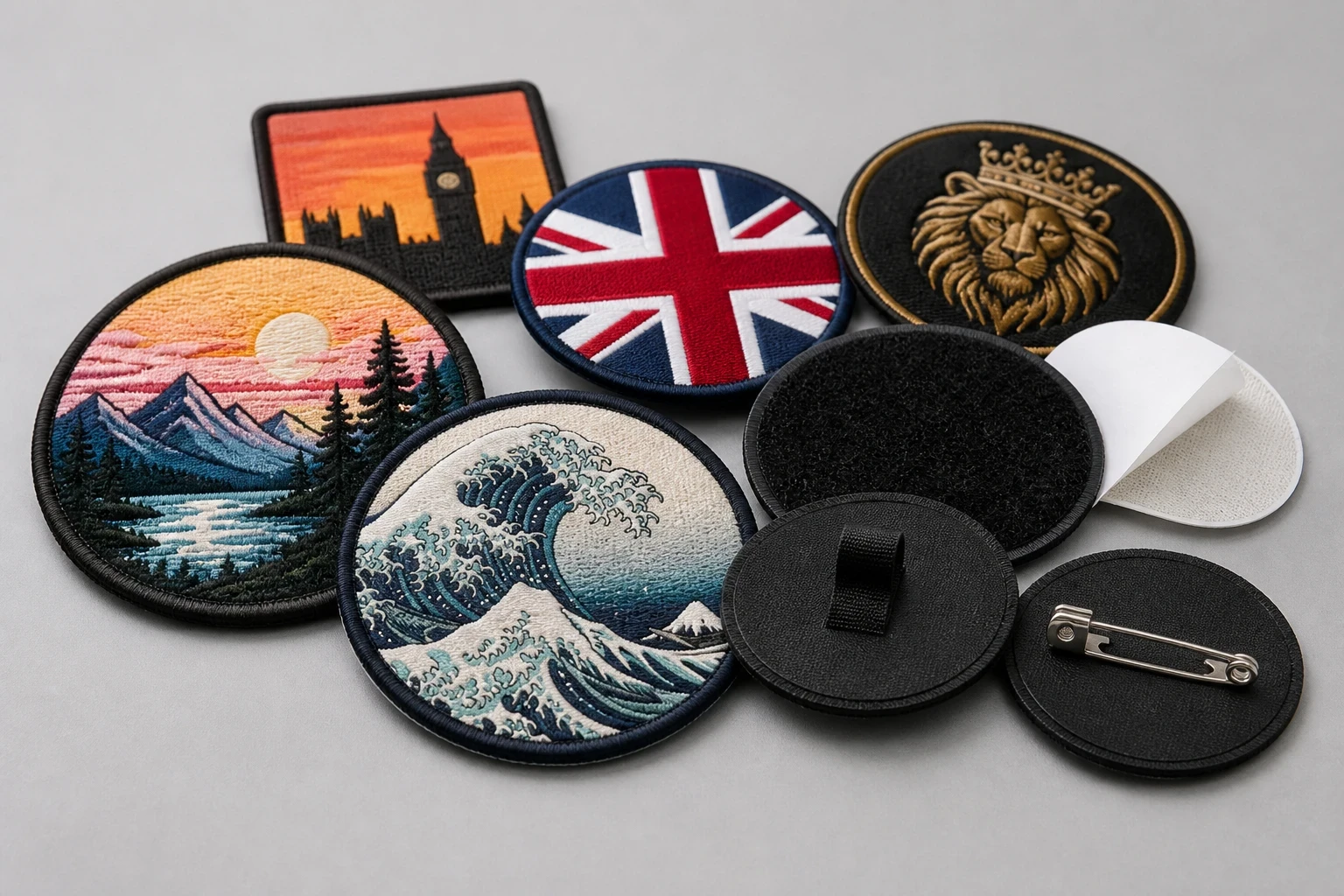
Key takeaways
- Choose the patch size from the available garment space and the smallest important artwork detail, not from the logo file alone.
- Around 2 inches suits smaller chest or sleeve applications, while 3 to 4 inches gives more room for club names, photographs and detailed branding.
- Sew-on, iron-on and hook-and-loop backing suit different garments; nylon shells, wool coaches and removable Velcro panels need different decisions.
- The Customized Patches has a 5-piece minimum per design and normally sends a free digital mockup within 12 hours before production.
Sublimation printed patches UK are usually sized between about 2 and 4 inches, but the right measurement depends on the garment area, the patch shape and the smallest detail in the artwork. A 2-inch chest badge may suit a simple football crest, while a 4-inch back or sleeve patch gives a detailed club emblem enough room to stay readable.
Backing is just as practical a decision. Sew-on suits permanent use, iron-on can be convenient on suitable cotton and polyester garments, and hook-and-loop works for removable panels. The Customized Patches has a 5-piece minimum per design and normally supplies a free digital mockup within 12 hours; production starts only after you approve it.
What makes sublimation printed patches different?
Sublimation printing puts the design into a polyester-based patch surface rather than building the picture from rows of thread. That makes it useful for gradients, small colour changes, photographs, illustrated scenery and logos with more detail than a conventional embroidered badge can comfortably show.
The finish is flatter than embroidery. That is the point. A printed patch can sit neatly on a hospitality polo, branded overshirt or sports jacket without adding a raised stitched texture. If your design relies on a traditional merrowed crest, heavy border or visible thread relief, embroidered patches may be the better match.
A sublimation patch is not the answer for every garment. Typical enquiries cover football clubs wanting clean photographic sponsor marks, cadet units needing clear small insignia, hospitality teams wanting discreet name badges, biker groups looking at large back panels, and schools ordering badges for blazers. Each use has a different balance of size, backing and wear.
Where the printed surface earns its place
- Photorealistic images, landscapes and illustrated artwork can be reproduced without trying to translate every colour into thread.
- Fine colour transitions work well for sunset backgrounds, shaded products, food illustrations and detailed brand graphics.
- A flatter patch can be more comfortable beneath a coat or against a bag strap.
- Small runs are practical because the minimum is 5 pieces per design rather than a large production commitment.
- The same approved artwork can be used for a team batch, a staff uniform order or a small promotional run.
The surface still needs a sensible file. Very small white type over a busy photograph can lose contrast, and a thin outline may not look as strong at 2 inches as it does on a computer screen. A mockup is the useful checkpoint because it shows the artwork at the proposed patch size rather than at full monitor scale.
How to choose the right patch size in inches
Start with the garment, not the supplier's product gallery. Measure the flat area where the patch will sit and check what happens when the garment is worn. A chest panel can look wider on a table than it does on a fitted polo, while a sleeve patch may need to avoid a seam or move freely at the elbow.
The patch should also have enough space around the design. A logo pressed right to the edge can feel cramped, particularly if it has a border or a shaped outline. If the artwork contains a club name, a long business name or a sponsor line, increasing the width is normally more helpful than reducing the letter height.
| Approximate size | Common UK application | Works well for | Watch for |
|---|---|---|---|
| 1.5–2 inches | Small chest, sleeve or cap placement | Simple symbols, initials, small team marks | Long wording and fine detail may become difficult to read |
| 2.5–3 inches | Football tops, polo shirts, schoolwear and work jackets | Most compact crests, circular club badges and brand marks | Check that the patch does not cover a pocket or zip |
| 3–4 inches | Larger chest, upper sleeve, bag and outerwear placement | Detailed logos, illustrated designs and readable wording | A wider patch can sit awkwardly across curved or narrow sleeves |
| 5 inches and above | Back panels, large bags, biker jackets and statement designs | Large artwork, photographic images and broad club identifiers | Measure the full panel and allow for movement and seams |
Width, height and shape matter
A 3-inch circle is not the same application as a 3-inch-wide rectangle. Always state both dimensions if the patch is not square. For a shield or crest, give the maximum width and height, then note whether the shape needs to follow the artwork or sit inside a standard border.
Long horizontal patches suit chest branding and the front of workwear, but they can become too narrow if the height is reduced to fit a particular panel. Tall designs can work on sleeves and bags. A round badge is often easy to position, although a long club name may need a wider oval to remain comfortable to read.
The smallest detail sets the lower limit
A supplier can reproduce a detailed file, but that does not mean every detail will remain clear at every physical size. Before selecting 2 inches, look at the smallest text, narrowest gap and thinnest line. For example, a school crest with a short motto may be suitable at 2.5 inches, while a full club name and founding date may need 3 or 4 inches.
Do not solve every detail problem by adding more colour. Contrast and spacing usually matter more. We can point out areas that may need a size adjustment or a small artwork change on the mockup. The How to Design Artwork for sublimation printed patches UK That Production-Ready guide covers the file side in more detail.
Backing options for jackets, uniforms and bags
Backing affects fitting, removal, washing and the final feel of the garment. It is not a finishing detail to choose after the size has been agreed. A patch for a nylon shell should be assessed differently from one for a wool coach jacket, a cotton polo or a removable Velcro panel.
| Backing | Best suited to | Advantages | Points to check |
|---|---|---|---|
| Sew-on | Jackets, uniforms, wool garments, bags and long-term clubwear | Reliable permanent attachment; suitable where heat may damage the fabric | Needs stitching through the patch edge; allow access for a needle and thread |
| Iron-on | Suitable cotton, polyester and blended garments with a flat application area | Quick fitting and tidy appearance without visible sewing | Heat, pressure and care instructions matter; it can peel after a dryer cycle if applied poorly |
| Hook-and-loop | Tactical clothing, club panels, bags and garments needing removable identifiers | Patch can be swapped, removed or stored separately | The garment needs a matching loop panel; loose edges can catch on other fabrics |
| Adhesive or temporary fitting | Short-term display, sampling or positioning before sewing | Useful for testing placement | Not normally the right permanent solution for regular washing or hard wear |
Sew-on is the safe default for many outerwear and club applications. It suits a wool coaches jacket, a heavy cotton overshirt, a canvas bag and garments that may see frequent washing. It also avoids putting heat near coated nylon, elastic panels or delicate trims.
The stitch line should follow the edge rather than cutting across the printed image. On a shaped patch, a tidy border gives the needle a consistent route. A football club may sew a badge onto tops for the season; a biker club may choose the same attachment for a large back panel because the jacket is expected to last for years.
Not sure whether your logo needs a compact 2-inch badge or a wider 3-inch version? Send the artwork and the garment area. We provide a free digital mockup usually within 12 hours so you can compare the scale before production.
GET A FREE MOCKUPIron-on backing
Iron-on backing is convenient, but the garment must accept the heat and pressure needed to bond it. Cotton and many polyester garments can be suitable, while coated nylon shells, waterproof fabrics, waxed jackets and heat-sensitive trims require caution. Always check the garment manufacturer's care guidance first.
The common failure is not usually the patch design. It is application. An iron-on patch that is not pressed evenly, is applied over a seam or is washed before the adhesive has settled can lift at the corners. It is common to see badges peel after a dryer cycle when the wearer assumed iron-on meant indestructible.
Hook-and-loop backing
Hook-and-loop, often called Velcro in everyday UK conversation, is useful when the identity needs to change. A cadet unit may swap name or rank panels, a security team may use different duty identifiers, and a club may keep one jacket with several event badges.
The garment needs the matching loop section in the correct position. If the panel is too small, the patch may overhang and catch on sleeves or bags. Tell us whether the patch is replacing an existing panel or being supplied with a new loop section so the quote reflects the actual requirement.
Matching backing to real UK garments
Garment fabric changes the sensible answer. A school blazer can take a sewn badge neatly through the sleeve or chest area, while a lightweight nylon shell may be damaged by a hot iron. A hospitality polo may look best with a flatter printed patch, but the backing still needs to suit repeated washing and the position of the badge.
- Nylon shells: ask about sew-on or a suitable tested method before choosing heat. Waterproof coatings and linings can react badly to high temperature.
- Wool coaches jackets: sew-on is usually the safer choice. Keep the stitch route clear of bulky seams and check the patch does not pull the wool surface.
- Cotton or polyester polos: iron-on may work if the application area is flat and the care instructions allow it; sew-on remains a dependable option for regular uniform use.
- Football shirts: consider the shirt fabric, sponsor marks and stretch. A smaller, flatter patch may sit better than a heavy badge on a flexible panel.
- School blazers: sew-on usually gives the most traditional result and is easier to maintain than a poorly applied iron-on badge.
- Bags and rucksacks: sew-on is often preferred because the surface may be too textured or thick for even heat.
- Velcro panels: hook-and-loop backing makes sense only if the garment already has, or will receive, the matching loop section.
If the garment is valuable, unusual or difficult to replace, send a clear photograph with the quote request. A close-up of the fabric and the proposed position is more useful than a product name alone. A jacket described simply as a shell could be lined polyester, coated nylon or a technical fabric with very different application limits.
Backing also changes how the patch feels in use. A sew-on badge may have a little more structure at the edge, while hook-and-loop adds thickness because the fastening has two parts. Printed is flatter; that is the point, but the backing remains part of the finished thickness.
Sublimation printed patches UK compared with other patch types
Many orders become easier once the production method is compared with the artwork rather than with a price alone. A simple crest with bold lettering may look excellent as embroidery. A full-colour photograph, gradient illustration or design with many tiny colour changes may be better printed.
| Patch type | Surface and detail | Typical reason to choose it | Possible trade-off |
|---|---|---|---|
| Sublimation printed | Flat, detailed, strong for gradients and images | Photographs, illustrations, complex colour and low-profile branding | Less raised texture than embroidery; small text still needs adequate size |
| Embroidered | Raised thread texture with a traditional badge appearance | Club crests, uniforms, traditional logos and bold lettering | Very fine gradients and photographic detail are harder to reproduce |
| Woven | Flat woven threads with neat fine lettering and linework | Compact text, clean symbols and a refined flat textile finish | Colour transitions and photographic artwork are more limited |
| PVC | Raised rubber-like surface with defined shapes | Outdoor gear, bold marks and designs needing a wipe-clean surface | Not the same soft textile feel as a printed or woven patch |
| Chenille | Deep, tactile yarn surface | Varsity, school and heritage-style lettering | Large texture can obscure fine artwork and small details |
For a traditional club badge, compare embroidered patches and woven patches alongside printed. If the garment is outdoor equipment and needs a raised, wipe-clean finish, PVC patches may be worth considering. A biker jacket with a classic textile identity can also be assessed against biker and motorcycle club patches.
There is no advantage in choosing a more textured product simply because it sounds more substantial. A printed patch can be the correct professional choice for a detailed brand mark on a polo, a bag or a jacket. The finish should support the artwork and garment, not compete with them.
Artwork and colour checks before production
Send the cleanest artwork available, ideally a vector file or a high-resolution image. Include the original logo colours, any preferred border colour and the intended patch shape. If the design contains a photograph, avoid sending a compressed screenshot from a messaging app because small details may already have been lost.
- Check that the logo remains recognisable at the proposed physical size.
- Use sufficient contrast between lettering and its background.
- Keep essential text away from the outer edge and any merrowed or finished border.
- Separate similar colours where a gradient may become too subtle at a small size.
- Mark any details that must remain exact, such as a club date, sponsor wording or registered brand colour.
- State whether the patch should be rectangular, circular, shield-shaped, oval or cut to the artwork.
- Tell the production team if a border is part of the brand or simply a visual guide in the file.
Colour on a screen is not a promise of an exact match on every device. The mockup helps confirm layout, scale and the general colour direction before the run. If a particular brand colour is critical, include the relevant colour reference and say so at the quotation stage.
Printed artwork can show more detail than embroidery, but detail still needs separation. A photorealistic face, for example, needs enough size for eyes and shading to remain distinct. A tiny business logo with a fine serif typeface may be better simplified or enlarged. The Sublimation printed patches UK Best Practices for brands with photorealistic designs guide gives more examples.
Ordering, approval and UK delivery details
A useful quote request includes the artwork, quantity, finished width and height, shape, backing, garment type and intended position. Tell us if the order is split across several garments or if each design has different wording. The 5-piece minimum applies per design, so five identical patches count as one design run; two different designs normally need five of each.
The Customized Patches normally sends a free digital mockup within 12 hours. The mockup is the point to check the patch size, border, spelling, backing and placement. Production starts only after approval, which prevents an unconfirmed size or backing choice from moving into manufacture.
Name sew-on, iron-on or hook-and-loop backing on the quote and tell us what garment it will attach to. We show the proposed size and backing on a free digital mockup usually within 12 hours, and production begins only after you approve it.
GET A FREE MOCKUPLead time depends on the quantity, backing, artwork complexity and the current production schedule. A small repeat order with approved artwork may be straightforward, while a first order with several designs needs more checking. UK-wide shipping is available, including delivery to clubs, schools, businesses and teams across England, Scotland, Wales and Northern Ireland.
Do not leave the backing decision until the parcels arrive. A sew-on order cannot be treated as an iron-on order simply because the garment looks suitable, and a hook-and-loop patch needs its matching garment panel. If you have a deadline for a tournament, launch, event or uniform issue, include the date with the first enquiry.
For a fuller ordering checklist, see 10 Questions to Ask Before Ordering sublimation printed patches UK and A Step-by-Step Guide to Ordering sublimation printed patches UK. If the main uncertainty is product type rather than sizing, Are sublimation printed patches UK Right for Your Project? A Decision Guide is a useful comparison.
Care and common fitting mistakes
The care routine should follow the garment as well as the patch. If an iron-on badge is applied to a polo, use the recommended temperature and avoid placing the iron directly over delicate printed areas unless the application instructions say it is safe. For sewn patches, check the edge after washing and repair a loose stitch before it becomes a larger problem.
- Do not apply an iron-on patch over a seam, pocket edge, zip or heavily textured panel.
- Do not assume a nylon shell can take the same heat as a cotton shirt.
- Do not tumble-dry an iron-on patch at a high setting without checking the garment and adhesive care guidance.
- Do not order a narrow patch with long text before checking a full-size mockup.
- Do not specify hook-and-loop unless the garment has a properly sized loop panel.
- Do not use a low-resolution screenshot as the only artwork file for a detailed design.
- Do not approve a proof without checking spelling, dimensions, backing and the number of different designs.
The most expensive mistake is often not a faulty patch. It is ordering the right artwork in the wrong size for the garment, then finding that the badge covers a pocket, folds around a seam or cannot be applied safely. Measuring first and checking the mockup is a small amount of work compared with replacing a full team order.
Which size and backing should you choose?
For a simple football crest on a shirt or polo, start by checking a 2.5- to 3-inch version. For a hospitality logo with short wording, a flatter 2- to 3-inch printed patch can sit neatly on the chest. For a detailed illustration or a club badge with several lines of text, move towards 3 to 4 inches if the garment has room.
Choose sew-on for a permanent, hard-wearing badge on jackets, bags, wool garments and many uniforms. Choose iron-on only where the fabric and care routine support heat application. Choose hook-and-loop for removable identifiers and modular panels. If none of these choices is obvious, the garment photograph and mockup will usually settle it.
The Customized Patches can quote sublimation printed patches across the United Kingdom for teams, brands, clubs and businesses. The order minimum is 5 pieces per design, a free digital mockup is usually sent within 12 hours, and no production takes place until the approved version is confirmed.
Related guides and product options
If your design is close to the boundary between printed and stitched, compare The Difference Between sublimation printed patches UK and embroidered patches, Explained. For a different tactile finish, see 3D embroidered patches, chenille patches or leather patches.
Teams ordering across the UK can also review the UK city pages for regional delivery information. For a direct quotation and artwork check, use the free mockup quote.
Frequently asked questions
What size are sublimation printed patches UK customers usually ordering?
Many orders fall between 2 and 4 inches, depending on the garment and artwork. Around 2 inches suits a simple chest or sleeve mark, 2.5 to 3 inches works for many crests and logos, and 3 to 4 inches gives detailed artwork or wording more room. The final size should be checked on a mockup.
What backing is best for a nylon jacket?
Sew-on is often the safer option for a nylon shell because high heat can affect coatings, linings and waterproof finishes. Iron-on should only be considered after checking the garment manufacturer's care guidance and testing suitability. Send a close-up garment photograph so the backing can be assessed properly.
Can I order only five sublimation printed patches?
Yes. The Customized Patches has a minimum of 5 pieces per design. If you have two different designs, the minimum normally applies separately, so you would usually order at least five of each design rather than five mixed patches.
How quickly will I receive a mockup?
A free digital mockup is usually supplied within 12 hours. It shows the proposed artwork and sizing for approval. Production starts only after you approve the mockup, so check the spelling, dimensions, shape, border and backing before confirming.
Will iron-on backing stay attached after washing?
It can stay attached when applied correctly to a suitable garment and cared for according to the instructions, but it is not immune to poor application, high heat or dryer cycles. Seams, textured fabric and insufficient pressure can cause lifting. Sew-on is normally the more dependable choice for heavy or repeated use.
Are sublimation printed patches better than embroidered patches?
Neither is automatically better. Printed patches are usually more suitable for gradients, photographs and detailed colour artwork, while embroidery provides raised thread texture and a traditional badge appearance. The right choice depends on the design, garment, desired feel, size and expected wear.
Ready to produce custom patches for your UK team or brand?
GET A FREE MOCKUP