
A Step-by-Step Guide to Ordering sublimation printed patches UK
Ordering sublimation printed patches UK starts with checking the artwork, finished size, quantity, edge and backing. The Customized Patches supplies a free digital mockup, usually within 12 hours, so you can approve the design before production. The minimum order is 5 pieces per design, with UK-wide delivery arranged after approval.
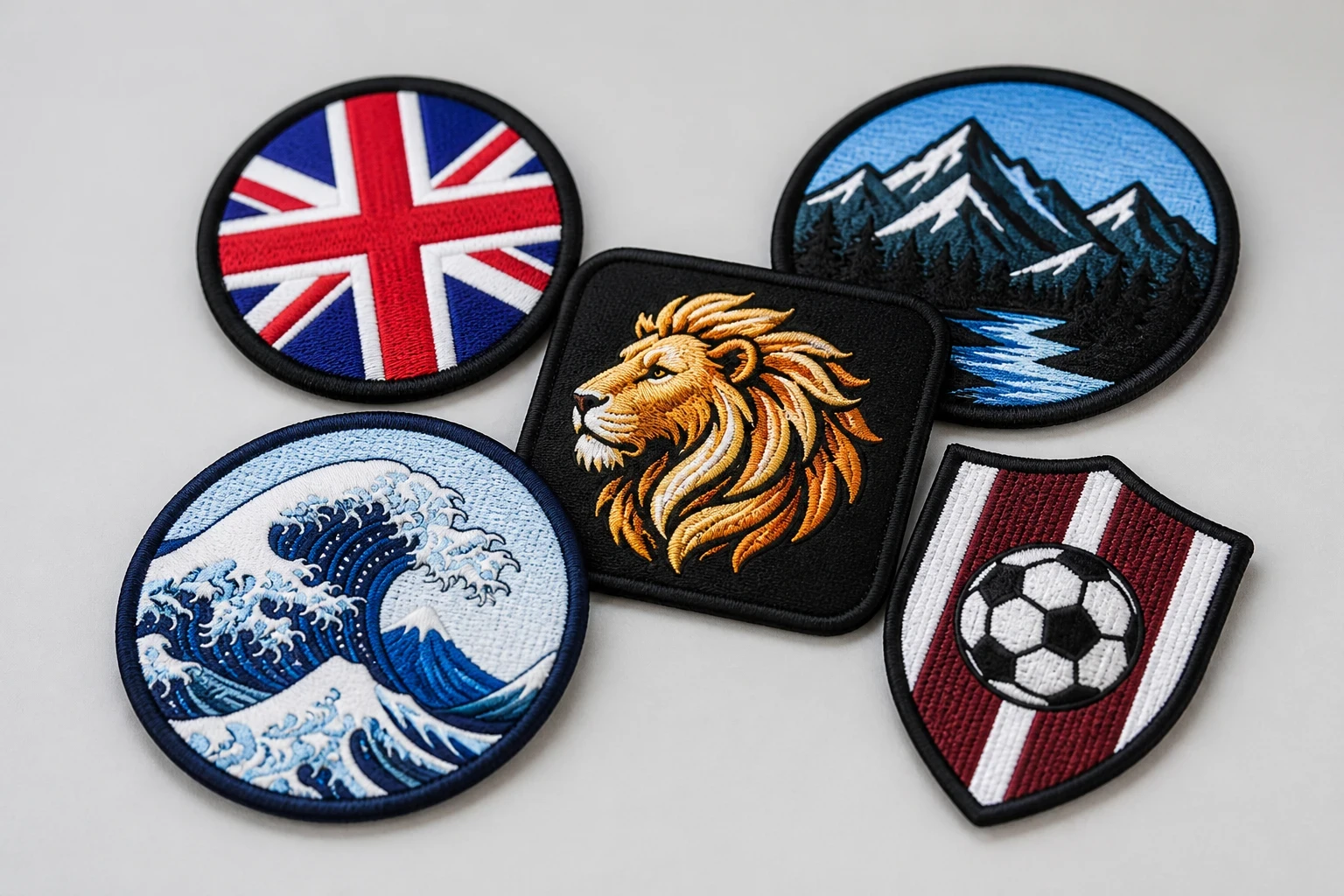
Key takeaways
- Sublimation printed patches UK suit detailed artwork, gradients, photographs and designs that need a flat printed finish.
- The minimum order is 5 pieces per design, which can suit a trial run, club batch or small brand launch.
- A free digital mockup is usually sent within 12 hours, and production begins only after the design and specifications are approved.
- Backing, garment fabric, finished size and washing conditions should be agreed before the quote is accepted.
Sublimation printed patches UK are ordered by confirming the artwork, finished size, quantity, edge, backing and garment before production. The Customized Patches sends a free digital mockup, usually within 12 hours, and makes the patches only after you approve the design.
The minimum order is 5 pieces per design. That works for a small clothing drop, a five-person team, a school blazer project or a club trial, while larger batches can be quoted against the same approved design.
1. Decide whether sublimation printed patches UK fit the job
Sublimation printing is useful where the artwork depends on a photograph, a soft colour blend, a detailed illustration or several close colours. The image is printed onto the patch material rather than rebuilt from separate areas of embroidery thread. That allows the face of the patch to stay flat and keeps fine visual detail readable at a sensible size.
Printed is flatter; that is the point. A football club may want a sponsor panel with a small line of text. A hospitality business may need a photographic food image on a staff overshirt. A streetwear label may prefer a smooth badge that does not add much height beneath a jacket. Sublimation can suit those jobs better than a heavily stitched surface.
It is not the right answer for every garment. A traditional biker back patch, a raised mascot or a thick merrowed crest may call for embroidery, chenille or another construction. Compare the alternatives in the guide to sublimation printed patches UK vs embroidered patches: Which Is Right for Your Project? before fixing the specification.
Check the garment before choosing the finish
- Nylon shells can be affected by heat, so an iron-on backing needs extra care and may not be the safest choice.
- Wool coaches and heavy outerwear often need a sew-on finish or a carefully selected adhesive method.
- Velcro panels require the correct hook or loop component and enough space for the patch to sit without catching on adjacent fabric.
- Polo shirts, football shirts and workwear may suit a flatter patch, but the fabric stretch and washing routine still matter.
- School blazers and bags are often better measured in place, because pockets, seams and badges limit the usable area.
If the brief needs a raised thread effect, review embroidered patches or 3D embroidered patches. For a soft looped surface, chenille patches may be more suitable. The choice should follow the artwork and garment, not just the lowest initial quote.
2. Prepare artwork that can be checked properly
Send the highest-quality artwork available. A vector PDF, AI, SVG or clean PNG gives our team more to work with than a screenshot copied from social media. If the original file is unavailable, send the largest version you have and explain which details cannot change.
Sublimation can reproduce a great deal of detail, but a patch is still a small item viewed at arm's length. Tiny white lettering may merge into a pale background. A low-resolution photograph can show blocky pixels. A thin dark outline can disappear at a narrow border. These are not reasons to reject the job; they are reasons to discuss the finished dimensions before production.
Artwork checks that prevent avoidable corrections
- Check every word, number and date. A typo on a mockup is easy to correct; a typo on finished patches is not.
- Identify the background. Transparent artwork may need a defined patch face or border so the final shape is clear.
- Mark important clear space around a logo. A design that touches the edge can look cramped once the border is added.
- Tell the manufacturer which colours are essential. Screen colours can vary between monitors, so the mockup is the place to assess the overall result.
- State if the patch must match existing embroidery, printed clothing or a brand colour guide.
- Keep photographs and gradients intact if they are part of the design, rather than converting everything into flat colour blocks.
The production team may suggest a larger size or a simplified detail. That is not a change to the brand for its own sake. It is usually a way to protect legibility once the design is reduced to a patch measuring perhaps 2 by 3 inches. The How to Design Artwork for printed patches That Production-Ready guide covers the same preparation issues in more detail.
3. Choose the size, shape and edge
Give the finished dimensions in inches, not just a vague request for a small or large patch. Measure the space on the actual garment. A chest badge on a polo may be around 3 inches wide, while a back panel, sleeve badge or bag label may have more room. The correct size depends on the artwork, placement and distance from which people will read it.
State whether the measurement is the full patch size or the printed area inside the border. This distinction matters. If a crest must be 3 inches wide overall, the design area will be slightly smaller once the edge is included. The mockup should make that relationship visible before approval.
Common shapes and useful questions
- Rectangle or square: practical for names, sponsor marks, photographs and woven-style labels.
- Circle or oval: useful for club badges, school emblems and round brand marks.
- Shield: familiar on football, cadet and school garments, with a strong outline for the eye to follow.
- Custom silhouette: suitable for a mascot, product shape or distinctive logo, but small points and narrow gaps should be checked carefully.
- Long tab: useful on bags, sleeves and Velcro panels where the available space is narrow.
An edge can be a simple cut shape or a stitched-looking border, depending on the construction selected. A merrowed crest has a rounded overlocked edge associated with traditional badges, but that edge changes the visible dimensions and can reduce room for small text. Ask for the edge to be shown on the mockup rather than judging the printed artwork alone.
| Specification | What to confirm | Why it matters | Typical example |
|---|---|---|---|
| Finished size | Width and height in inches | Controls readability and garment fit | 3 by 3 inches for a blazer crest |
| Shape | Standard or custom outline | Affects the border, corners and cutting | Shield for a football or cadet badge |
| Border or edge | Colour, thickness and edge style | Protects the design and changes the usable face | Dark stitched-looking border around a logo |
| Backing | Sew-on, iron-on, adhesive or Velcro | Determines fitting method and garment compatibility | Sew-on for a wool coach jacket |
| Quantity | Number of pieces per design | Sets the quote and production batch | 5 pieces for a small team trial |
| Use and care | Garment fabric and washing routine | Helps avoid lifting, heat damage or poor adhesion | Nylon shell needing cautious application |
For more detail on measurements and attachment options, see Printed patches Sizing and Backing Options Explained. If the patch needs a woven, tightly textured face rather than a printed image, woven patches are another option to compare.
4. Select the backing for the garment
Backing is not a minor tick box. It decides how the patch is fitted and how easily it can be removed or moved. Sew-on is a dependable choice for uniforms, jackets, school clothing and items that will be washed regularly. It takes longer to fit than adhesive backing, but the attachment does not depend on a layer of glue alone.
Iron-on is convenient for many cotton garments and casual clothing, but heat, pressure and fabric type must be considered. A patch that looks secure after fitting may lift at a corner after a dryer cycle if the temperature, pressure or surface is unsuitable. Nylon shells, coated fabrics and some waterproof materials can be damaged by heat, so do not treat every garment as iron-on compatible.
Not sure whether thread or ink will hold your logo, or which size will suit the garment? Send the artwork and use our free digital mockup, usually within 12 hours, to compare the proposed finish before production.
GET A FREE MOCKUPBacking choices in plain terms
- Sew-on: the usual choice for long-term attachment, heavier garments and fabrics that should not receive direct heat.
- Iron-on: suitable only where the garment and application instructions allow heat and pressure; stitching around the edge can add security.
- Adhesive: useful for temporary display, packaging or short-term placement, but it may not suit repeated washing.
- Velcro: useful for uniforms, tactical clothing, event teams and garments where badges need to be swapped.
- Combination backing: sometimes helpful where an adhesive layer positions the patch and stitching provides long-term hold.
Tell us if the patch is going on a nylon shell, wool coach jacket, football shirt, hospitality polo, school blazer, rucksack or existing Velcro panel. A production recommendation made without the garment information is only a guess. The printed patches hub includes more examples of finishes and uses.
5. Confirm quantity, budget and the 5-piece minimum
The minimum order is 5 pieces per design. You can order five identical badges, or quote a larger run for a whole squad, staff group, product launch or club membership. If you have several different designs, ask how each artwork is counted; the minimum applies per design rather than automatically covering every version in the same order.
A quote normally depends on the patch size, construction, backing, quantity, artwork requirements and delivery destination. Larger patches use more material. Detailed edges or special attachment components can change the price. A five-piece sample run can have a different per-piece cost from a larger production batch because setup and handling are spread across fewer units.
Give the real quantity if you know it. A football club ordering 18 player badges, a cadet unit ordering 42, and a small label testing 5 stock-keeping designs have different practical needs. If you are comparing prices, compare like for like: same size, same backing, same edge and same artwork.
Questions to include with a quote request
- How many pieces are required for each separate design?
- What is the finished width and height in inches?
- Will the patch be sewn, ironed, adhered or attached with Velcro?
- What garment or product will receive the patch?
- Is the artwork final, or should small details be reviewed?
- Is there a fixed event, launch or uniform date?
- Where in the United Kingdom should the order be delivered?
For a closer look at cost factors, read How Much Do sublimation printed patches UK Cost in the UK?. The useful figure is not just the unit price. It is the total cost for a patch that fits, reads correctly and can be attached to the intended garment.
6. Review the free digital mockup before approval
The free digital mockup is the point at which the job should become specific. The Customized Patches usually sends it within 12 hours. Check the visible size, shape, border, colours, wording, image crop and backing. If the patch is for a garment, compare the mockup with the space measured on that garment rather than relying on the screen image alone.
A mockup is not a physical sample and should not be treated as one. It is a digital representation used to confirm the proposed artwork and specification. Printed colours can look different on a monitor, and the final surface has its own material character. The mockup still catches the expensive mistakes: wrong dates, missing outlines, incorrect proportions and a backing that does not match the intended fitting method.
A five-minute approval checklist
- Read every line of text aloud and compare it with the supplied artwork.
- Check the patch width and height in inches against the garment or product.
- Look at the border thickness and make sure key details are not too close to the edge.
- Check photographs, faces, logos, gradients and background areas for unwanted cropping.
- Confirm the backing and fitting method, especially for nylon, coated fabric and Velcro.
- Confirm the quantity, delivery address and required date.
- Reply with a clear written approval or list the corrections that are needed.
Production starts only after approval. If a club secretary, brand owner and garment supplier all need to sign off, allow time for those replies. It is better to spend an afternoon correcting a mockup than to discover that the iron-on backing should have been sew-on after the batch has been made.
7. Allow time for production and UK delivery
Do not book the fitting day until the design has been approved and the production timing has been discussed. The mockup is usually supplied within 12 hours, but that is not the same as a delivery promise for finished patches. Production time can depend on the construction, quantity, artwork, backing and current workload.
Tell the quote desk about a fixed date at the beginning. A team travelling to a tournament, a hospitality group opening a venue, a school starting a new term and a brand preparing a launch all need different planning. UK-wide shipping can then be arranged around the approved production schedule and delivery address.
Plan backwards from the date you need the patches
- Start with the date the garments must be worn or sold.
- Allow time to approve artwork and answer any production questions.
- Allow time for the patch batch to be made after approval.
- Allow time for fitting, sewing or testing one patch before applying the full order.
- Keep a small buffer for weekends, courier movement and changes to the garment list.
Testing one patch is sensible for an unfamiliar garment. It can show whether the badge sits over a seam, whether an iron-on layer bonds correctly, or whether the Velcro panel is positioned too close to a zip. This is especially useful for nylon shells, coated bags and garments that will be washed often.
What can go wrong, and how to prevent it
Most ordering problems are specification problems rather than mysterious production faults. The customer sends a tiny logo, the manufacturer assumes a use, and the garment is not discussed until the finished patches arrive. A short, complete brief removes most of that uncertainty.
- The patch is too small for the text: measure the usable garment area and ask whether the wording will remain readable.
- The border crowds the artwork: confirm whether the quoted dimensions include the border.
- The backing is wrong for the fabric: mention nylon, waterproof coatings, wool and stretch materials before the quote is final.
- The colours are judged from one screen: use the mockup to discuss overall colour balance and any important brand colours.
- The patch is ordered too late: give the event or launch date before approving production.
- An iron-on patch peels after a dryer cycle: check application instructions, avoid unsuitable heat-sensitive fabric and consider stitching for extra security.
- The Velcro patch does not fit the panel: measure both the hook-and-loop area and the finished badge.
- Multiple designs are counted as one: list each design and quantity separately.
Name sew-on, iron-on or Velcro on the quote and tell us what the patch will be fitted to. We show the proposed backing on a free digital mockup, usually within 12 hours, and produce only after you approve the final specification.
GET A FREE MOCKUPThe Common Mistakes to Avoid When Ordering sublimation printed patches UK guide is useful if several people are collecting information for the same order. One person should own the final approval so conflicting corrections do not reach production.
Sublimation printed patches compared with other patch types
The best patch is the one that behaves correctly on the garment and represents the artwork honestly. Printed patches are often chosen for image detail and a low-profile face. Embroidery gives visible thread texture and a traditional badge appearance. Woven construction can suit fine small lettering, while PVC offers a different raised and weather-resistant style.
| Patch type | Best suited to | Main visual quality | Trade-off to consider |
|---|---|---|---|
| Sublimation printed | Photographs, gradients, illustrations and detailed colour artwork | Flat printed surface with continuous image detail | Does not provide the raised thread texture of embroidery |
| Embroidered | Club crests, uniforms, bold logos and traditional badges | Visible thread and textured surface | Very small detail and gradients may need simplifying |
| Woven | Fine lettering, narrow lines and compact logo work | Tighter, flatter woven detail | Less suitable when a visibly raised thread effect is wanted |
| PVC | Outdoor equipment, bags, tactical clothing and bold marks | Raised rubber-like appearance | Photographic and soft gradient artwork may not translate in the same way |
| Leather or faux leather | Premium labels, caps, bags and heritage-style products | Material-led, stamped or engraved look | Not the natural choice for full-colour photographic artwork |
You can compare PVC patches for a raised finish or leather patches for a material-led label. For motorcycle clothing, the artwork, backing and placement may need to work across a large back panel and a smaller chest badge, so see biker and motorcycle club patches before finalising the set.
Examples from real UK ordering briefs
A football club may begin with a sponsor logo and ask for a flat patch that can be placed on training tops. The useful questions are whether the sponsor text is readable at the proposed size, whether the shirt fabric can take heat, and whether the club wants one badge per player or a reserve batch. A five-piece minimum makes a small trial possible before a wider order.
A cadet unit may need a shield shape with a number, a short title and a coloured emblem. The design should be checked at the actual sleeve or chest size, with a backing that suits the uniform fabric and expected washing. A mockup can show whether the border leaves enough space for the number to remain clear.
A hospitality business may choose a printed patch for a polo or overshirt because a food photograph or illustrated menu item needs smooth colour transitions. The brief should include the garment colour, the cleaning routine and whether the patch is sewn on by a uniform supplier. Printed detail may look better than forcing a photograph into thread, but the patch still needs a practical edge and attachment.
A biker club may want a traditional merrowed crest for a wool or leather vest rather than a flat printed badge. That is a case where the correct answer may be an embroidered or leather construction. Our team should say so rather than forcing every design into sublimation.
Final ordering checklist for sublimation printed patches UK
Before approving, bring the order down to one clear written specification. This makes it easier for a committee, brand team or purchasing manager to check the same information and reduces the risk of a change being missed.
- Artwork file attached and clearly named.
- Exact wording, numbers and dates checked.
- Finished width and height given in inches.
- Shape and border confirmed.
- Backing selected for the actual garment.
- Garment material and washing routine described.
- Quantity listed for each separate design.
- Delivery address in the United Kingdom supplied.
- Event, launch or uniform date stated.
- Free digital mockup reviewed.
- Corrections sent in one reply where possible.
- Final quote and mockup approved in writing before production.
The Customized Patches supplies UK-wide orders for teams, brands, clubs and businesses. The process is straightforward: send the artwork and requirements, receive a free digital mockup usually within 12 hours, confirm the specification, and allow production to begin only after approval. The five-piece minimum per design keeps the service workable for smaller projects as well as larger batches.
If you are still comparing finishes, start with the embroidered patches product hub and send the same artwork for a practical recommendation. The right choice is the one that remains legible, fits the garment and can be applied in the way your team or customer expects.
Frequently asked questions
What is the minimum order for sublimation printed patches UK?
The minimum order is 5 pieces per design. If you have several different artworks, list the quantity for each design separately because one design cannot normally be used to satisfy the minimum for another.
How quickly will I receive a mockup for sublimation printed patches UK?
The Customized Patches usually sends a free digital mockup within 12 hours. This is a proof for checking the artwork and specification, not a physical sample. Production starts only after you approve the final mockup and quote.
Are sublimation printed patches suitable for nylon shells?
They may be suitable, but the backing and application method need checking first. Nylon can be sensitive to heat, so an iron-on backing may not be appropriate. Tell the manufacturer about the shell fabric and consider sew-on or another suitable attachment method.
Are sublimation printed patches better than embroidered patches?
Neither is better for every job. Sublimation printed patches suit photographs, gradients and detailed flat artwork. Embroidered patches suit visible thread texture, bold crests and traditional badges. The garment, artwork, size and desired finish should decide the choice.
Can I order printed patches for a football club or school blazer?
Yes. Measure the usable area on the shirt, blazer or jacket, check the artwork at the finished size and choose a backing suitable for the fabric and washing routine. A five-piece minimum per design allows a small team or trial order.
What should I include when requesting a UK patch quote?
Include the artwork, finished size in inches, shape, quantity per design, preferred backing, garment type, delivery address and required date. Mention nylon, wool, coated fabric, stretch material or Velcro panels so the backing can be assessed before the quote is approved.
Ready to produce custom patches for your UK team or brand?
GET A FREE MOCKUP