
10 Questions to Ask Before Ordering sublimation printed patches UK
Before ordering sublimation printed patches UK, confirm the artwork method, finished size, border, backing, garment, washing conditions, quantity, price, approval process and delivery date. The Customized Patches has a 5-piece minimum per design and provides a free digital mockup, usually within 12 hours. Production starts only after approval.
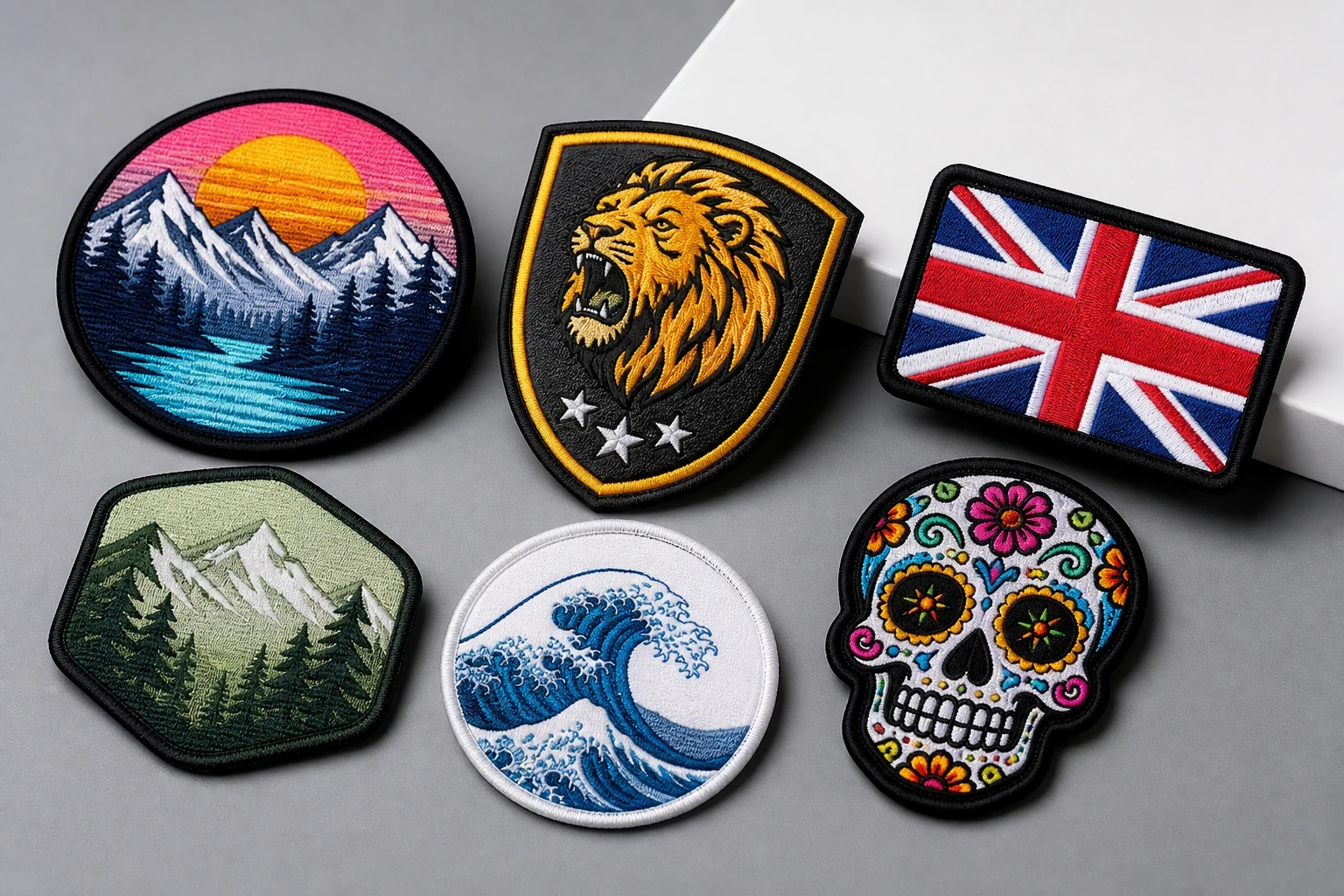
Key takeaways
- Sublimation printed patches UK are a good fit for gradients, photographs, small colour changes and artwork that needs a flat surface.
- A 5-piece minimum applies per design, not simply per order, so confirm how many versions your artwork contains.
- The Customized Patches usually sends a free digital mockup within 12 hours, and production begins only after approval.
- The garment and attachment method matter as much as the artwork: nylon shells, wool coaches, Velcro panels and school blazers need different decisions.
Sublimation printed patches UK are usually chosen for artwork with photographs, gradients, fine colour changes or a deliberately flat finish. Before ordering, check the printing method, finished size, border, backing, garment, washing routine, quantity, price, approval process and delivery date.
The Customized Patches supplies teams, brands, clubs and businesses across the United Kingdom. The minimum is 5 pieces per design, and a free digital mockup is usually sent within 12 hours. Nothing goes into production until you have approved the artwork.
1. Is sublimation printing the right finish for my artwork?
Start with the design, not the patch name. Sublimation printing is useful for artwork that would be awkward to build from thread: a sunset gradient, a sponsor logo with several colours, a detailed illustration, a team photograph or a small image with tonal shading. The printed surface stays relatively flat, so the image can retain detail without being broken into large stitched areas.
Printed is flatter; that is the point. If you want visible thread texture, a raised crest or the traditional look of a merrowed football club badge, embroidered patches may be the better choice. For a soft, high-pile lettered design, look at chenille patches. A printed patch is not a failed embroidered patch. It is a different finish with different strengths.
- Choose sublimation printing for photographs, gradients, fine lines and multi-colour artwork.
- Consider embroidery for bold lettering, simple badges and a raised thread surface.
- Consider woven patches when the design needs a flatter thread-based face with very fine text.
- Ask for a comparison if the same artwork could reasonably be made by two methods.
2. Will the artwork remain clear at the finished size?
A logo that looks sharp on a laptop can lose its small text at 2.5 inches wide. This is especially common with club mottos, telephone numbers, web addresses and circular badges that have several rings of lettering. Tell us the exact finished size rather than sending only a large file and hoping the details will scale down.
A good production check asks what the patch will look like at arm's length, not only at 400% on a monitor. Fine lines can merge, pale colours can lose contrast and tiny white type can disappear against a light background. The guide on designing artwork for sublimation printed patches UK covers file preparation, but a mockup is still the most useful final check.
What artwork should I send?
Send the highest-resolution file available, ideally a vector logo or a clean, large raster image. Include any brand colour references and tell us which parts must not be changed. If the artwork is a photograph, avoid compressing it through several messaging apps before sending it; soft edges and blocky colour can show on the final patch.
Do not redraw a logo yourself if the original brand file exists. A small change to a crest, sponsor mark or school emblem can create a problem after approval. For more detail, see Sublimation printed patches UK Best Practices for brands with photorealistic designs.
3. What finished width and height do I actually need?
Measure the space on the garment before choosing the patch size. A badge for a left chest may work at 3 inches wide, while a back panel or biker club rocker needs a different proportion. A school blazer crest often needs to sit neatly above the pocket without catching on the lapel, and a hospitality polo may need enough clear space around the logo to avoid looking cramped.
Give both dimensions if the design is not a standard circle or rectangle. If you need a shaped outline, say so. The outer border affects the final measurement, and a pointed crest can look smaller than a rectangular patch with the same maximum width.
| Common use | Typical planning point | Question to ask before approval |
|---|---|---|
| Football club shirt or training jacket | Check chest space, sponsor placement and whether the badge must sit beside existing branding. | Will the patch fit without covering a seam, zip or printed sponsor? |
| Cadet unit or school blazer | Allow for the pocket, lapel and regular handling of the garment. | Can the small lettering be read at the agreed finished width? |
| Hospitality polo | Keep the patch proportionate to the chest area and comfortable during repeated washing. | Will the attachment method suit the polo fabric? |
| Biker jacket or club vest | Measure the back panel and check the relationship between centre patch, rockers and side badges. | Is the shape and backing suitable for leather, denim or a removable panel? |
| Nylon shell or outdoor jacket | Check seams, lining, waterproof fabric and heat sensitivity before choosing attachment. | Should this be sewn rather than heat applied? |
For a wider look at dimensions and attachment choices, read Printed patches Sizing and Backing Options Explained. It is sensible to send a photograph of the garment or panel with a ruler beside it. That gives our team more useful information than a guess based on the garment label.
4. Which border and edge shape should I specify?
The border frames the printed area and gives the patch a clean edge. A merrowed edge has a rounded, overlocked appearance and suits many traditional crests. A laser-cut or shaped edge can follow a shield, mascot or irregular logo more closely. Neither option is automatically right; the design and garment decide.
Ask where the artwork ends and where the border begins. A pale design may need a darker edge for separation from a white polo, while a dark crest on a navy jacket may need a light border. Check the border colour in the mockup rather than relying on a description in an email.
5. What backing will work on my garment?
Backing is a practical decision, not decoration. Sew-on is usually the dependable choice for garments that will be washed repeatedly or exposed to pulling. Iron-on can be convenient for suitable cotton or polyester fabric, but it needs the correct heat, pressure and cooling time. An iron-on patch that is pressed onto a difficult surface can peel after a dryer cycle.
Nylon shells deserve extra care because heat can mark or distort the fabric. Wool coaches' jackets may need sewing rather than heat application, and a Velcro panel needs a hook-and-loop backing rather than a standard iron-on. For a biker jacket or vest, consider how the patch will sit beside leather, denim, studs and existing biker and motorcycle club patches.
- Sew-on: a sensible choice for long-term use, heavier garments and regular washing.
- Iron-on: convenient where the fabric and application temperature are suitable.
- Hook-and-loop: useful for removable name tabs, tactical panels and kit that changes between users.
- Adhesive: suitable for some short-term displays, samples or smooth surfaces, but check the expected handling first.
Not sure whether sublimation printing, embroidery or another finish will hold your logo best? Send the artwork and garment details for a free digital mockup, usually within 12 hours, so you can compare the proposed result before production.
GET A FREE MOCKUPName the attachment method on the quote. If you simply ask for a patch without saying how it will be used, the wrong backing can be assumed. We can show the proposed backing on the digital mockup and flag a concern before production.
6. How will the patches be washed and worn?
A patch on a display banner has an easier life than one on a football training jacket. Ask who will wear the garment, how often it will be washed and whether it will go through a tumble dryer. A school blazer may be brushed against desks and coat hooks. A hospitality polo may be washed every week. A motorcycle vest may be exposed to rain, road dust and repeated handling.
Follow the care guidance for the finished garment and backing. Avoid treating a heat-applied patch as indestructible. If the item will see hard use, sewing is often the safer attachment route, even if iron-on would be faster at the fitting stage.
The printed face and the attachment method are separate considerations. Sublimation printing can provide the image detail you want, but the wrong adhesive or a poorly prepared garment can still cause lifting at the corners. Tell us about the fabric before you select the backing.
7. Does the 5-piece minimum apply to my order?
The Customized Patches has a 5-piece minimum per design. That means five copies of one approved artwork, not one copy each of five unrelated logos. A football club ordering home, away and goalkeeper versions should count each artwork separately. The same applies to a brand ordering several colourways or a school ordering different year-group badges.
Ask for the price at the actual quantity you need. Unit pricing can change between 5, 25, 50 and larger runs because setup, handling and production time are spread differently. If you are testing a new logo, a five-piece sample run can help you inspect the finish on the real garment before committing to a larger batch.
What if I need several sizes?
Treat each size as a separate specification and confirm whether the artwork remains the same. A chest badge at 3 inches wide may use different text proportions from a 10-inch back patch. Do not assume that enlarging or reducing the file automatically gives a good result.
8. What is included in the price?
A useful quote should make the specification visible. Check the patch size, print method, border, backing, quantity, artwork handling, delivery charge and VAT position if relevant to your organisation. If you are comparing quotes, compare like with like; a sew-on patch and an iron-on patch are not the same product even if both are described as printed.
The cheapest line on a spreadsheet is not necessarily the lowest final cost. Replacing patches that lift from unsuitable nylon, correcting an unapproved colour or paying for a second delivery can outweigh a small difference in the original quote. For budgeting context, see How Much Do sublimation printed patches UK Cost in the UK?.
| Specification to confirm | Why it affects the quote | What the buyer should provide |
|---|---|---|
| Number of designs | The 5-piece minimum applies per design and different artwork may need separate handling. | List each logo, colourway and size as a separate line. |
| Finished dimensions | Larger patches use more material and may need a different application plan. | Give width and height in inches. |
| Backing | Sew-on, iron-on, hook-and-loop and other backings have different construction and use cases. | State how and where the patch will be attached. |
| Border and edge | A merrowed or shaped edge changes the appearance and production specification. | Mark the required edge on the artwork or quote request. |
| Delivery | The destination and required date affect the practical order plan. | Give the UK postcode and event or collection date. |
9. Will I see and approve a mockup before production?
You should know what is being made before it is made. The Customized Patches provides a free digital mockup usually within 12 hours. Review the spelling, proportions, border, colours, backing and any placement image carefully. A mockup is not just a sales picture; it is the point at which a small artwork problem can be corrected without remaking a production batch.
Production starts only after approval. Keep the approved version with your order records, particularly if a club committee, brand manager or procurement team signs off the artwork. If several people are involved, nominate one person to give the final approval so contradictory changes do not arrive in separate emails.
The free mockup is particularly useful for designs with small lettering, unusual borders or a garment-specific backing. Ask for a revised mockup if the first version does not show the detail you need to decide.
10. Can the delivery date be met across the UK?
Give the real deadline, not only the day you would like the patches dispatched. A tournament, product launch, trade show, graduation, parade or club presentation may leave no room for a second approval round. Include the full UK delivery address and say if the order must arrive before a particular date.
Lead time depends on the design, quantity, backing, approval speed and current production schedule. The quickest way to avoid a hold-up is to send complete artwork, answer specification questions promptly and approve the final mockup in writing. UK-wide delivery can then be planned around the agreed production schedule.
If your order is for a local event in Manchester, Birmingham, Cardiff, Glasgow, Belfast, London or elsewhere, the same specification checks still apply. Our UK city pages provide location information, but the delivery date should always be confirmed against the actual quote.
Sublimation printed patches UK compared with other patch types
A comparison is useful if you have not chosen the construction yet. Printed patches suit image-led artwork, while other methods may be stronger for texture, raised lettering or a particular uniform tradition. The right answer depends on the design and the garment rather than a general claim that one method is best.
Have a deadline or a garment that needs a particular backing? Name the sew-on, iron-on or Velcro requirement on the quote. We show the proposed result on a free digital mockup, usually within 12 hours, and produce only after approval.
GET A FREE MOCKUP| Patch type | Surface and detail | Good fit for | Main trade-off |
|---|---|---|---|
| Sublimation printed | Flat printed face with detailed colour and tonal variation. | Photographs, gradients, illustrations, sponsor artwork and complex logos. | Less raised texture than embroidery; the backing still needs to suit the garment. |
| Embroidered | Visible thread with a textured, traditional surface. | Bold crests, workwear, football badges and simple lettering. | Very small detail and smooth photographic shading can be difficult. |
| Woven | Flat woven thread surface with fine text and clean lines. | Detailed logos that need a textile finish without heavy raised stitching. | Colour and tonal effects are still more limited than a printed image. |
| PVC | Moulded rubber-like surface with a firm, graphic appearance. | Outdoor kit, tactical panels and waterproof-style applications. | Not the right visual language for every club, school or premium garment. |
| Leather | Natural or synthetic leather face with a strong material character. | Biker jackets, heritage clothing and restrained logos. | Photographic colour detail is not its main strength. |
If you are deciding between the two most common options, read Sublimation printed patches UK vs embroidered patches: Which Is Right for Your Project?. For a rubber-style alternative, see PVC patches, and for a material-led finish consider leather patches.
A practical approval checklist for UK buyers
Before you approve, read the specification as if you were handing the job to somebody who has never seen the garment. This catches the errors that are easy to overlook in a quick email exchange.
- The design name and artwork version are correct.
- The number of designs and quantity of each design are clear.
- The 5-piece minimum per design has been met.
- The finished width and height are stated in inches.
- The border colour, edge shape and overall patch shape are correct.
- Small text and fine lines are readable at the finished size.
- The backing matches the garment and expected washing routine.
- The quote includes the agreed quantity, backing and UK delivery details.
- The delivery date allows time for approval and production.
- A named person has approved the final digital mockup.
This process is useful for a one-off club order as well as a larger business run. It also prevents a common problem: a buyer approves the artwork but assumes the backing, dimensions or delivery date were understood without being written down.
Common examples from real garment types
A football club may need a bright badge with a sponsor mark and a gradient in the mascot. Sublimation printing can retain that colour movement, but the club should still check how the badge sits beside the kit manufacturer's logo and whether the chosen backing suits the training jacket.
A cadet unit or school may have a formal crest with small Latin text. The key question is not whether the file is large; it is whether the lettering remains readable at the size required for the blazer or uniform. A simplified approved version may work better than forcing every detail into a small patch.
A hospitality business may want a photographic food image or a detailed brand illustration on polo shirts and aprons. The patch needs to remain comfortable, resist frequent laundering and sit neatly on the chest. A flat printed face can be the right visual choice, but the attachment method deserves as much attention as the image.
A biker club may be ordering a back patch with rockers, a centre emblem and several side badges. Measure the vest, plan the layout and check whether the patch is being sewn to denim, leather or a removable Velcro panel. The shape, edge and backing should be agreed before production, not improvised after delivery.
Final answer: what should I ask before ordering?
Ask the ten questions in this guide and write the answers into the quote: Is the print method right? Is the artwork clear at size? What are the dimensions? Which border is required? Which backing suits the garment? How will it be washed? Does the quantity meet the minimum? What exactly is included in the price? Will a mockup be approved? Can the delivery date be met?
For sublimation printed patches UK, clear specifications save more time than hurried artwork changes. Send the design, garment details, quantity and deadline to The Customized Patches. You will receive a free digital mockup usually within 12 hours, and the order will only be produced after you approve it.
Frequently asked questions
What are sublimation printed patches UK used for?
Sublimation printed patches UK are used for detailed logos, photographs, gradients, illustrations, sponsor artwork and designs with several colours. They have a flatter printed face than embroidered patches, which helps preserve image detail. They can be made for football jackets, school blazers, hospitality polos, workwear, club vests and other garments, subject to the selected backing.
What is the minimum order for sublimation printed patches UK?
The Customized Patches has a 5-piece minimum per design. If you order three different logos or colourways, each design must meet the minimum separately. Ask for a quote that lists each artwork version, size and quantity so there is no confusion before production.
How quickly can I receive a free mockup?
The Customized Patches usually provides a free digital mockup within 12 hours. The speed can depend on receiving usable artwork and complete details, including the size, border, backing, garment and quantity. Production does not start until the customer approves the mockup.
Are sublimation printed patches suitable for nylon jackets?
They can be suitable, but nylon needs careful backing and application planning because heat may mark or distort some shells. Sew-on is often worth considering for an outdoor nylon jacket. Send a photograph or description of the fabric and explain how the jacket will be washed before choosing iron-on or another heat-applied backing.
Are sublimation printed patches better than embroidered patches?
Neither is always better. Sublimation printing is usually better for photographs, gradients, fine colour changes and a flat face. Embroidery is often better for bold crests, raised thread texture and traditional workwear or club styling. Compare the two finishes using the actual artwork, finished size and garment rather than choosing from the names alone. The difference between printed patches and embroidered patches explains the main trade-offs.
Can I order sublimation printed patches for delivery across the United Kingdom?
Yes, The Customized Patches serves customers across the United Kingdom. Provide the full postcode, required quantity, approved artwork and real deadline when requesting a quote. Delivery planning depends on the specification, production schedule and how quickly the mockup is approved, so confirm the date before placing the order.
Ready to produce custom patches for your UK team or brand?
GET A FREE MOCKUP