
How PVC patches Can Strengthen Your Brand Identity
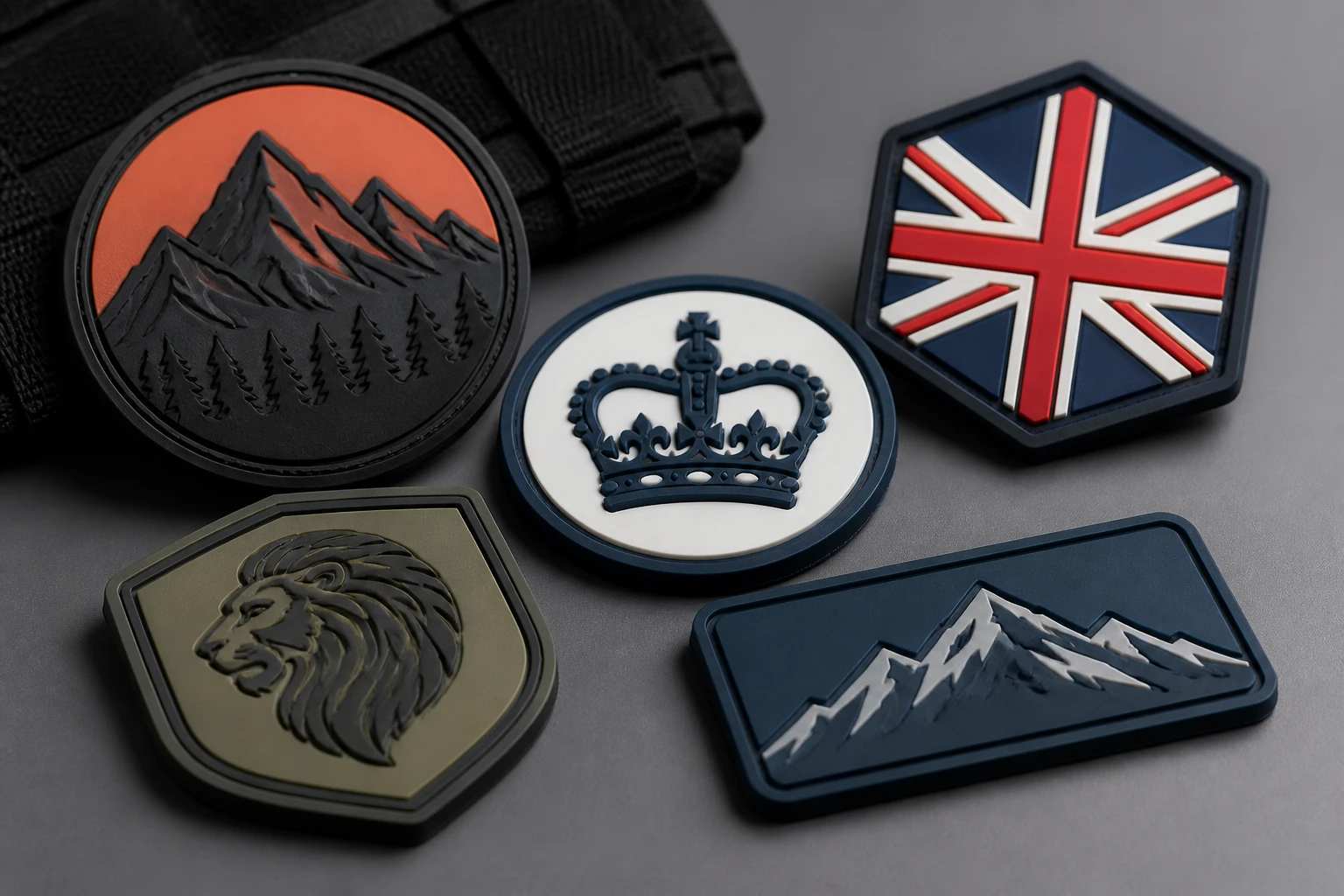
PVC patches strengthen brand identity by giving a logo a consistent, tactile and weather-resistant format across clothing, bags and equipment. Their raised details, bold colour blocks and clean edges suit outdoor brands, clubs, teams and businesses that need recognition at a glance. The right size, backing and artwork still matter.
Key takeaways
- PVC patches make logos easier to recognise through raised details, strong outlines and repeatable colour.
- A clear design usually works better than a highly detailed logo at small patch sizes.
- Backing, garment fabric and placement affect how consistently a patch represents your brand.
- The Customized Patches has a 5-piece minimum per design and supplies a free digital mockup usually within 12 hours before production.
PVC patches can strengthen your brand identity by turning a logo into a clear, tactile badge that people recognise on clothing, bags and equipment. Raised details, strong colour blocks and clean edges help a mark stay visible on a football jacket, nylon shell or workwear garment.
The Customized Patches supplies PVC patches across the United Kingdom for teams, brands, clubs and businesses. The practical starting point is simple: choose a design that will still read at the finished size, select a backing that suits the garment, and approve the free digital mockup before production. There is a 5-piece minimum per design.
Why PVC patches make a brand easier to recognise
Brand identity is not only a colour palette or a logo file. It is the repeated visual experience people have of your organisation. A patch on a jacket, rucksack or team top puts that identity in a physical place, often where a printed mark would be overlooked or where a woven label would not give enough presence.
PVC has a distinct look. The material can form raised borders, lettering and symbols rather than relying only on flat colour. That gives a badge a small amount of depth and makes it easy to identify when someone sees it from the side, under changing light or against a busy garment.
- A consistent patch gives staff, players or members the same visible brand marker.
- Raised outlines can separate a logo from a dark, patterned or textured garment.
- Solid colour areas remain clear on outdoor equipment and casual clothing.
- A shaped outer edge can echo a shield, mountain, vehicle, animal or other recognisable brand element.
- The same patch can move between jackets, bags, caps and Velcro panels when the backing is planned properly.
That consistency matters for a small independent brand just as much as it does for a larger organisation. A brewery may use a PVC badge on staff overshirts and event bags. A rugby club may use one on travel kit. A local security business may need a simple mark that remains legible on a softshell in wet weather.
The brand signals created by PVC patches
Materials communicate something before anybody reads the wording. PVC patches are usually associated with a practical, modern and hard-wearing feel. That can suit outdoor clothing, tactical equipment, cycling groups, workwear, streetwear and businesses that want their identity to look at home outside an office.
This does not mean PVC is the correct answer for every logo. A heritage hotel may prefer the texture of embroidered patches. A fashion label with fine linework may need the flatter surface of woven patches. Printed is flatter; that is the point when a design contains gradients, photographic detail or very small tonal changes.
Raised details and visual hierarchy
A good PVC design has a visual hierarchy. The main word, symbol or border should be obvious first. Secondary wording can sit behind it, but it should not compete for the same space. Raised channels work particularly well for separating a central icon from the outer border, provided those channels are not drawn too finely.
On a 3-inch badge, a long strapline may become a dark line that nobody can read. This is common with club crests supplied as small website graphics. The crest looks fine on a screen, yet the tiny lettering and narrow gaps are poor candidates for moulded PVC. Removing a line of text can make the patch more faithful to the brand, not less.
Colour discipline across different garments
A recognisable brand uses colour with discipline. PVC patches can provide bold solid colours, but the chosen colours still need to work against the garments where the patch will be used. A navy badge on a black nylon shell may disappear. A bright yellow edge on a white polo can look less controlled than the same edge on navy fabric.
Give the production team the brand colour references if you have them, such as Pantone values or a clear approved artwork file. Screen colours vary, and a web image is not a reliable production specification on its own. The mockup is useful for checking the relationship between the patch colours and the proposed garment, not just for approving the logo shape.
Choosing the right PVC patch specification
The specification should follow the job. A football club badge for a presentation jacket may have different needs from a removable morale patch for a Velcro panel. Before choosing a size, consider the viewing distance, the garment area, the amount of text and the way the patch will be attached.
| Specification | What it changes | Useful starting point | Brand identity consideration |
|---|---|---|---|
| Size | Affects legibility, visual weight and where the patch can be fitted. | Around 2.5 to 4 inches for many jacket and bag applications. | A repeatable size makes different garments look like part of one range. |
| Shape | Controls the outline and the first impression of the badge. | Use a shield, circle, rectangle or custom contour that supports the logo. | A distinctive silhouette can help people identify the brand before reading it. |
| Raised detail | Adds depth and separates key areas. | Reserve raised lines for borders, lettering or the principal symbol. | Too much fine detail can close up and weaken recognition. |
| Colour count | Changes contrast, emphasis and how closely the patch follows brand guidelines. | Prioritise the colours that identify the business or club most strongly. | A limited palette is often more consistent across different garment colours. |
| Backing | Determines how the patch is fitted and whether it can be removed. | Sew-on for permanence; Velcro for interchangeable equipment; iron-on only where suitable. | The correct backing prevents a smart brand mark becoming loose or misplaced. |
The finished size should be discussed in inches rather than judged only from a digital preview. A logo that looks comfortable at 4 inches may become crowded at 2 inches. If you are ordering a set for different garments, it can be better to use one main size and one smaller secondary badge than to force every detail into a single format.
Backing is part of the identity system too. A sew-on badge normally feels permanent and uniform, while a Velcro patch supports changing names, teams or event marks. Iron-on can be convenient on compatible cotton garments, but adhesive can peel after a dryer cycle, especially when the fabric is treated, stretchy or repeatedly washed. For guidance on the wider choice, see The Difference Between PVC patches and embroidered patches, Explained.
PVC patches compared with other patch materials
Choosing a patch material is a design decision and a use decision. The most attractive option on a screen may not be the best option for a wool coach jacket, a waterproof shell or a school blazer. We quote a mixture of materials because the garment and the identity often point in different directions.
| Patch type | Surface and appearance | Best suited to | Main trade-off |
|---|---|---|---|
| PVC patches | Tactile, moulded and often raised with clean colour blocks. | Outdoor brands, clubs, tactical kit, workwear, bags and Velcro panels. | Very fine text and detailed tonal artwork may need simplifying. |
| Embroidered patches | Thread texture with a traditional, familiar crest appearance. | Football clubs, school blazers, uniforms, heritage brands and general apparel. | Small gaps and detailed artwork can fill with thread. |
| Woven patches | Flatter surface with fine woven lettering and linework. | Labels, fashion details and logos that need more small text than embroidery allows. | Less raised and less visually rugged than PVC. |
| Printed patches | Flat printed image with scope for gradients and fine tonal transitions. | Photographic artwork, illustrated scenes and detailed colour work. | The surface does not provide the same raised, moulded feel. |
| Chenille patches | Soft, high-pile texture with a bold varsity appearance. | University, sports, music and retro-inspired clothing. | Fine details are limited and the raised pile is not suited to every brand. |
| Leather patches | Natural or finished leather surface with an understated premium feel. | Denim, workwear, craft brands and heritage products. | Colour and detail options differ from a full-colour PVC badge. |
The table is a guide, not a rule. A biker club may use a large embroidered back piece and PVC side badges. A hospitality group may use an embroidered crest on wool coats and a PVC luggage mark for staff travel. A school may prefer a traditional merrowed crest on blazers while using PVC for a sports bag.
Not sure whether the same logo should be raised, flat or simplified for the finished size? Send the artwork and garment details to The Customized Patches. Get a free digital mockup usually within 12 hours and compare the options before production.
GET A FREE MOCKUPIf the project needs both texture and fine detail, a mixed patch order can make sense, but the designs should still share a clear colour system. The 3D embroidered patches range offers another route for a raised thread effect, while printed patches may be the better fit for a full-colour illustration.
Where brand-led PVC patches work best
The strongest applications are places where people see the badge repeatedly and associate it with a group, service or product. That might be a team travelling together, a brand attending markets, or a club whose members wear similar kit at events. The patch becomes a small point of recognition rather than decoration added at the end.
- Football clubs can use a PVC travel badge on rain jackets, kit bags and coaching equipment.
- Cadet units can use clear unit identifiers on compatible uniform panels, subject to their own uniform rules.
- Outdoor companies can place a raised logo on nylon shells, fleece layers, backpacks and accessories.
- Biker clubs can use PVC side patches or removable marks alongside larger traditional pieces. See the biker and motorcycle club patches range for a different construction style.
- Hospitality businesses can put a compact identity badge on staff overshirts, aprons or equipment bags.
- Schools and colleges can use a simple activity or house badge on sports bags, outerwear and event clothing.
- Small businesses can use a consistent patch on launch merchandise without committing to a large apparel run.
Garment choice needs a practical check. Nylon shells can be slippery and difficult to stitch neatly in a curved area. Wool coaches and heavy overshirts may take a sew-on badge well, but their surface can make a stiff patch look more prominent. A Velcro panel must have enough area for the patch and should be positioned so the badge does not catch on straps or seat belts.
Placement affects how a logo is read. A left-chest patch is usually seen as an identity mark. A sleeve badge can indicate a unit, department or event. A bag patch may be larger because it is viewed at arm's length. Measure the actual area instead of relying on a standard template, particularly on children's clothing and shaped pockets.
Artwork choices that protect your identity
Start with vector artwork where possible, but do not assume that a vector file is automatically production-ready. The file can contain tiny gaps, overlapping strokes or wording that was designed for a website header rather than a 3-inch badge. The production question is not simply, “Can this be opened?” It is, “Will this still be clear when formed at the requested size?”
Keep the main mark first
Put the essential symbol or word at the centre of the design. Supporting text should be short and large enough to read. If the organisation name is long, consider using initials on the patch and keeping the full name on the garment label, swing tag or accompanying artwork.
Outlines are helpful, but an outline around every tiny feature can make the badge look busy. Use contrast to separate the important shapes. A dark border around a light central symbol is often easier to read than several narrow coloured borders competing together.
Allow for the patch edge
A border is not just a decorative frame. It gives the patch a finished edge and helps the logo stand apart from the garment. Leave enough breathing room between the artwork and the outer contour so the design does not look cut off or crowded.
For a more detailed artwork check, read How to Design Artwork for PVC patches That Production-Ready. It is especially useful if your source file contains small lettering, fine line illustrations or several layers of colour.
Ordering PVC patches in the United Kingdom
A straightforward order normally starts with the artwork, finished dimensions, quantity, backing and the garment or equipment the patch will be used on. If you have more than one design, list each design separately. The 5-piece minimum applies per design, so five versions of one badge do not normally satisfy a five-piece minimum for a different badge.
The Customized Patches produces only after approval. We send a free digital mockup usually within 12 hours, allowing you to check the shape, proportions, colours and intended placement before the order moves forward. This is the point to correct a spelling mistake, change a backing or ask whether a small detail needs simplifying.
- Send the logo or artwork, including any brand colour references you want followed.
- State the finished width or height in inches and explain where the patch will be fitted.
- Confirm the quantity for each design, remembering the 5-piece minimum per design.
- Choose sew-on, iron-on or Velcro backing after considering the garment fabric and washing routine.
- Review the free digital mockup, checking text, colours, border, size and backing.
- Approve the mockup in writing; production begins only after approval.
- Check the delivered patches against the approved design before fitting the full quantity to garments.
Lead time depends on the design, quantity, backing, current production schedule and delivery arrangements. UK-wide shipping is available, but the date you need the patches should be given at quotation stage, especially for a tournament, product launch, school event or trade show. A clear deadline lets the production team discuss realistic options rather than guess.
For a fuller ordering checklist, see PVC patches Checklist: What to Confirm Before You Order. If you are comparing a few possible specifications, How Much Do PVC patches Cost in the UK? explains why size, quantity, detail and backing can affect a quote.
Common identity problems to avoid
Most patch problems start before manufacturing. A logo is reduced too far, the chosen backing does not suit the garment, or a colour is selected without considering the background. These are preventable decisions, and a short production conversation is usually less costly than replacing a full run.
- Ordering a 2-inch patch with a long organisation name and expecting every word to remain readable.
- Using a black border on a black jacket without adding enough separation inside the design.
- Choosing iron-on for a fabric that is stretchy, coated, textured or regularly tumble-dried.
- Assuming a Velcro patch will fit every panel when the loop area is narrower than the patch.
- Approving a mockup without checking the actual finished dimensions in inches.
- Mixing several patch types across a collection without a shared colour, border or shape system.
- Sending a low-resolution screenshot and expecting tiny details to be reconstructed exactly.
- Putting a stiff badge over a curved seam, pocket opening or zip where it cannot sit flat.
- Treating a digital colour preview as a guarantee of an exact screen-to-material match.
An iron-on that peels after a dryer cycle is not only a fitting problem; it can affect how people judge the organisation behind the garment. Follow the care and application guidance for the selected backing, and sew the patch as well if the item will be washed frequently or used heavily.
Name sew-on, iron-on or Velcro on the quote and tell us which garment will carry the badge. The Customized Patches will show the proposed backing and artwork on a free digital mockup usually within 12 hours; production starts only after you approve it.
GET A FREE MOCKUPDo not hide a necessary simplification from the customer. If a club crest needs less text or a brand mark needs a wider gap, that should be discussed in the mockup stage. A clean patch that preserves the main identity is more useful than a crowded patch that technically contains every original detail.
Building a consistent patch system for a growing brand
A single badge can become a repeatable brand asset when its rules are recorded. Keep the approved artwork, dimensions, backing, colour references and placement notes together. That prevents a second order from drifting into a slightly different border or an unplanned shade.
For a team or club, the system might include a main crest, a smaller member mark and an event patch. For a business, it might include a staff logo, a removable campaign badge and a partner or location mark. Each item can have its own purpose while sharing enough visual language to look related.
- Set one main badge size for the most common garment.
- Define which designs are permanent sew-on marks and which need Velcro.
- Keep the core brand colours consistent, but test contrast against actual garment colours.
- Record the minimum clear space around lettering and symbols.
- Use the same border treatment where possible so different patch shapes still belong together.
- Order a small approved sample run before committing to a much larger quantity.
This approach is useful for UK organisations that work across seasons. A cycling group may use the same identity on summer jerseys, winter shells and kit bags. A business attending events around Manchester, Birmingham, Glasgow or Cardiff may use one patch system on staff outerwear without redesigning its identity for every venue.
Is PVC the right brand identity choice for your project?
Choose PVC patches when you want a tactile, practical badge with clean shapes, strong colour blocks and a modern outdoor or equipment-led feel. They are a good fit for repeated use on outerwear, bags, kit and Velcro panels, provided the artwork is designed for the finished size.
Choose another construction when its particular surface supports the brand better. Embroidery suits traditional crests and textured uniforms. Woven patches suit smaller lettering. Printed patches suit detailed images. Leather patches can support a restrained heritage look, while chenille patches bring a soft varsity texture.
The right answer is the one that holds together across design, garment, fitting method and use. If the badge will be worn in rain, packed into a kit bag, moved between panels or washed every week, those details should be part of the first quote rather than an afterthought.
Final buying checklist for stronger brand identity
Before approving the order, look at the patch as a customer, player, member or passer-by would see it. Is the main mark obvious from a few feet away? Does the colour contrast with the garment? Is the edge suitable for the placement? Will the backing keep it where it belongs?
- Confirm the final patch width and height in inches.
- Check the name, initials, date and any small wording carefully.
- Compare the patch against the actual garment colour, not only a white screen background.
- Choose sew-on, iron-on or Velcro for the fabric and expected care routine.
- Confirm the quantity for every design and remember the 5-piece minimum per design.
- Ask for the free digital mockup and review it before production.
- Approve the mockup only when the size, colours, shape and backing are correct.
- Keep the approved file for future UK-wide reorders.
A patch cannot repair an unclear brand strategy, but it can make a well-designed identity more visible and more consistent. With a sensible size, suitable backing and production-ready artwork, PVC patches give UK teams, clubs, brands and businesses a practical way to carry their identity into everyday use.
Frequently asked questions
How do PVC patches strengthen brand identity?
PVC patches turn a logo into a consistent physical badge that can be recognised on jackets, bags, uniforms and equipment. Raised details, strong outlines and solid colour areas help the mark stand out, while repeated use across garments gives staff, members or customers a shared visual reference.
Are PVC patches suitable for UK outdoor brands?
They can be suitable for outdoor brands because their moulded surface and clear colour blocks suit jackets, bags and equipment. The exact backing and placement still need checking, especially on coated nylon shells, curved areas and removable Velcro panels. Ask for a mockup showing the intended size and position.
What is the minimum order for PVC patches from The Customized Patches?
The minimum order is 5 pieces per design. If you need three different designs, each design should normally meet the 5-piece minimum rather than combining the quantities into one total. The team can confirm the quantity and specification on a UK quote.
Can I see a PVC patch mockup before production?
Yes. The Customized Patches provides a free digital mockup usually within 12 hours. Production takes place only after approval, giving you an opportunity to check the artwork, wording, size, colours, outline and backing. You can request a free mockup quote with the garment details.
Are PVC patches better than embroidered patches for a business logo?
Neither is automatically better. PVC suits a tactile, modern and practical identity with raised details and bold colour blocks. Embroidery suits traditional crests, school blazers, uniforms and textured garments. Compare the two against your logo, garment, washing routine and desired brand signal using PVC patches vs embroidered patches: Which Is Right for Your Project?.
Which backing should I choose for PVC patches?
Choose sew-on for a permanent attachment, Velcro for removable or interchangeable patches, and iron-on only where the garment and care routine are compatible. Nylon shells, stretchy fabrics and frequent tumble drying can make iron-on less suitable. State the garment type when requesting a quote so the proposed backing can be checked.
Ready to produce custom patches for your UK team or brand?
GET A FREE MOCKUP