
The Complete Guide to Custom rubber PVC patches UK in 2026
Custom rubber PVC patches UK are moulded, raised or recessed patches made from flexible PVC rubber, with clear edges, strong colour and practical resistance to rain and regular handling. They suit outdoor brands, clubs, uniforms, bags and Velcro panels. The Customized Patches provides a free digital mockup usually within 12 hours, with a 5-piece minimum per design.
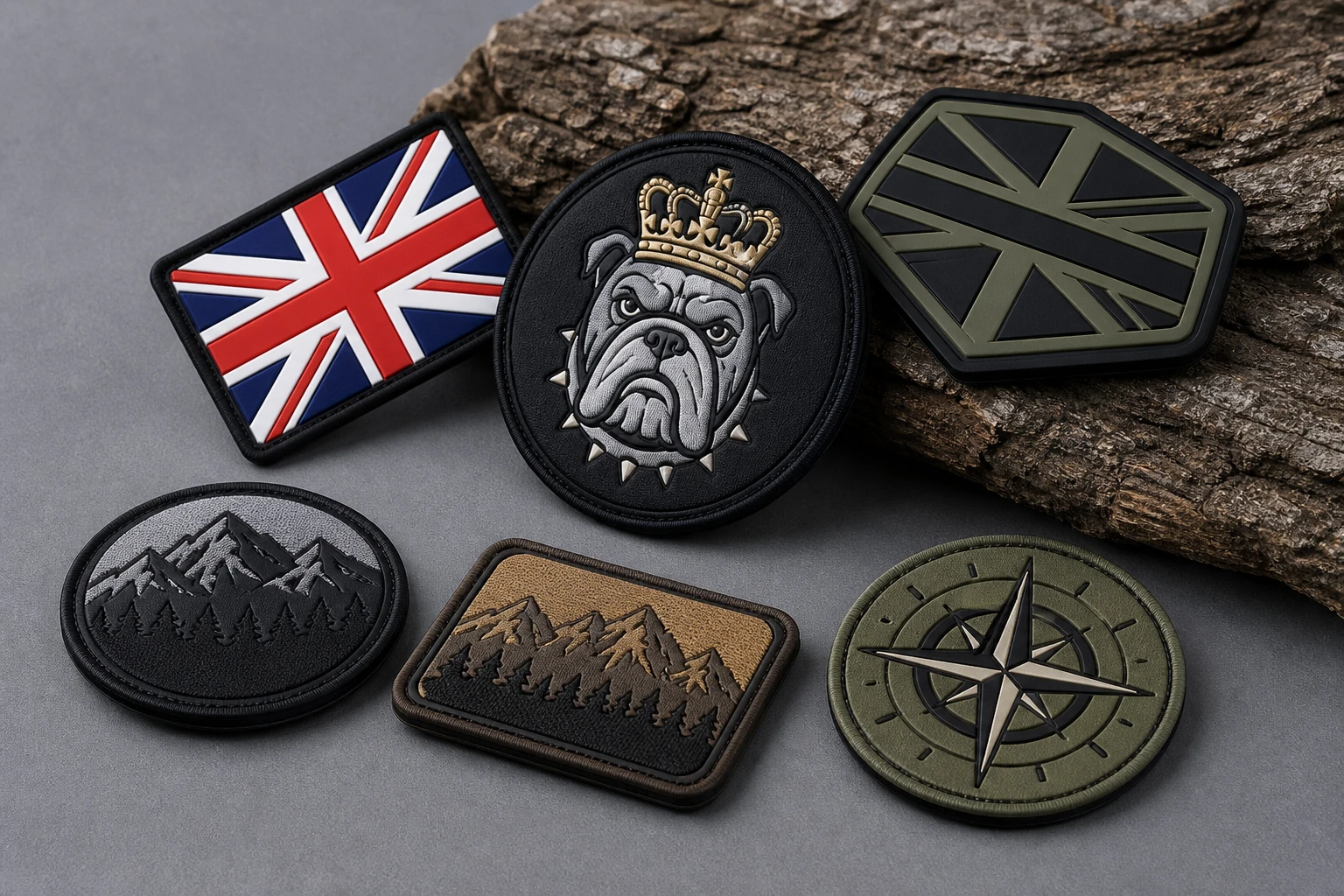
Key takeaways
- PVC patches use moulded rubber rather than thread, so they give logos a clean edge, raised detail and a wipe-clean surface.
- A 5-piece minimum applies per design, and The Customized Patches produces only after you approve the digital mockup.
- A free digital mockup is usually sent within 12 hours, allowing you to check size, colours, wording and backing before production.
- Sew-on, iron-on and Velcro backings suit different garments; the right choice depends on heat, washing, removal and the base fabric.
Custom rubber PVC patches UK are moulded patches made from flexible PVC rubber rather than stitched thread. They are a good fit for outdoor clothing, club kit, workwear, bags, uniforms and Velcro panels because the surface is neat, colourful and easy to wipe clean. The Customized Patches offers a free digital mockup usually within 12 hours, has a 5-piece minimum per design, and produces only after you approve the artwork.
The main decision is not simply PVC or embroidery. It is how the patch will be used. A football club may need a hard-wearing badge on a kit bag, a cadet unit may need removable insignia on a nylon shell, and a hospitality business may want a tidy logo on wool coaches jackets. Each job can need a different thickness, edge, finish and backing.
What custom rubber PVC patches UK actually are
PVC patches are formed in a mould. Liquid PVC is placed into the mould in selected colours and cured into a flexible rubber-like piece. The design can include a raised logo, recessed background, several levels, a defined border or a flat panel. That construction is what gives PVC patches their solid outline and consistent appearance.
The word rubber is often used by buyers because PVC feels rubbery, but the material is normally polyvinyl chloride. It is not the same as natural rubber, silicone or a printed fabric patch. For most orders, the useful questions are practical: how much detail is required, how flexible should the patch be, how will it attach, and what will it be exposed to?
- Raised PVC uses height to make lettering, symbols or borders stand out.
- Recessed PVC places selected artwork below the top surface for a more controlled, technical finish.
- Flat PVC gives a lower-profile face and can suit simple marks or patches that need to bend.
- A moulded border helps define the shape, although very fine edges may need simplifying.
- Multi-colour PVC can reproduce bold brand palettes, but tiny colour islands need enough separation to remain clear.
PVC is not automatically the best answer for every logo. A detailed photographic image, fine handwritten script or very small line drawing may need printed patches or woven patches instead. Printed is flatter; that is the point. It can preserve tonal detail that would be difficult to mould cleanly.
Why UK teams and brands choose PVC
The strongest reason is a clear, repeatable finish. A moulded badge does not rely on hundreds of thread stitches to form a small block of colour. That suits logos with broad lettering, icons, simple mascots and bold borders. It also gives a practical surface for workwear, equipment bags and garments used outside.
PVC can be wiped after use, which is useful for club kit that travels in a van, outdoor clothing exposed to drizzle, or a trade team’s branded bags. It is still a patch, not a guarantee against every type of damage. Sharp abrasion, incorrect heat, poor application and repeated stress at the edge can affect its life.
Typical enquiries cover football clubs that wanted a crest for kit bags, cadet units with removable insignia, hospitality teams using branded polos, and biker groups ordering patches for jackets. The garment decides more than many people expect. A PVC patch that works well on a structured bag may feel too heavy or stiff on a thin running top.
- Outdoor and tactical brands can use PVC for equipment labels, morale patches and modular Velcro panels.
- Football, rugby and cricket clubs can add badges to kit bags, coaches jackets and training layers.
- Biker and motorcycle clubs can use strong shapes and raised borders on leather or heavier textile garments.
- Small businesses can put a controlled logo on work jackets, caps, aprons and product packaging.
- Schools, cadet units and community groups can order small runs because the minimum is 5 pieces per design.
For a club or business testing a new logo, a 5-piece minimum is useful because it avoids committing to a large run before the design has been seen on a real item. For a larger team, the unit price may improve at higher quantities, but the final quotation depends on size, thickness, colours, backing, mould requirements and delivery.
PVC, embroidery, woven and printed: choosing the right finish
Material choice should follow the artwork and garment, not a fashion for one patch type. Embroidery brings texture and visible thread, which is often right for a school blazer, wool coaches jacket or traditional club crest. PVC gives a flatter-to-the-touch but more moulded face, with raised and recessed options.
A 3D embroidered patch can create height through raised thread, while chenille patches are deliberately soft and woolly. They are strong choices for varsity-style lettering and large simple shapes, but they do not provide the wipe-clean moulded face of PVC. A leather patch offers a different material character again, particularly on heritage clothing.
| Patch type | Surface and detail | Good UK uses | Main trade-off |
|---|---|---|---|
| PVC | Moulded, flexible, raised or recessed; bold shapes and clear colour blocks | Outdoor brands, kit bags, Velcro panels, workwear and club equipment | Very fine detail and tiny lettering may need simplifying |
| Embroidered | Visible thread, textured face and traditional stitched appearance | Football crests, school blazers, wool jackets, uniforms and heritage clothing | Dense detail can become crowded; thread can catch on rough use |
| Woven | Flat woven surface that handles finer small lettering than heavy embroidery | Brand labels, fashion garments, caps and compact designs | Less dimensional and less rubber-like than PVC |
| Printed | Flat ink or printed image with broad tonal and photographic potential | Illustrations, gradients, photos and detailed artwork | The face is flatter and may show wear differently from moulded PVC |
| Leather | Natural or synthetic leather face with a material-led finish | Biker jackets, craft brands, premium casualwear and heritage projects | Colour and fine graphic treatment follow the leather method rather than PVC |
Read the difference between PVC patches and embroidered patches before sending artwork if you are undecided. It is also worth comparing your patch against the garment in daylight. A glossy PVC face, metallic thread, matte thread and printed ink can all look different from a screen preview.
The most common mistake is asking for a raised PVC version of an artwork that depends on tiny shading. The second is choosing embroidery for a design that needs a completely flat, wipe-clean panel. A sensible mockup should show the proposed method rather than simply place a generic logo on a product photograph.
Size, thickness and shape: the specifications that matter
Measure the available area before choosing the patch size. A common club badge might be around 3 to 4 inches wide, while a small sleeve mark may need to be closer to 2 inches. Large back patches can go beyond 8 inches, but weight, flexibility and the way the garment hangs become more relevant as the patch grows.
Do not measure only the logo on your screen. Use a ruler on the actual garment, allowing room for seams, pockets, zips, hook-and-loop panels and curved areas. A patch can be technically the correct width yet look crowded when placed beside a chest zip or stitched across a jacket seam.
- Small patches: useful for sleeves, caps, chest marks and compact labels, but small lettering needs careful checking.
- Medium patches: suitable for kit bags, jackets, workwear and most club badges.
- Large patches: effective on the back of biker jackets or large bags, but they need a suitable base and secure attachment.
- Rounded and shield shapes: generally easy to read and suitable for crests.
- Irregular die-cut shapes: useful for mascots and logos, provided narrow points and small gaps are not too delicate.
Thickness affects both appearance and feel. A thin flat patch can bend more easily on a sleeve. A thicker raised patch gives stronger height and presence, but it may feel less comfortable on a flexible garment. For a Velcro morale patch, thickness also affects how it sits beside neighbouring patches on a panel.
Small text is where artwork often needs production judgement. Letters can close up when the patch is reduced, particularly with bold fonts, outlines and recessed channels. We may recommend removing a fine outline, enlarging wording or changing the layout rather than approving a design that will not read at the requested size.
Raised, recessed or flat PVC?
Raised lettering is useful when the logo needs a tactile, dimensional appearance. Recessed detail can separate the background from the mark without making every element stand proud. Flat PVC suits simpler artwork and may be the better choice where a patch needs to bend around a sleeve or sit under a strap.
There is no universal best finish. A raised crest on a structured kit bag can look excellent, while the same height on a thin nylon shell may catch against equipment. Include a photograph of the garment or panel with the quote so the specification is based on use rather than guesswork.
Backing choices for jackets, uniforms and Velcro panels
Backing determines how the patch attaches and how easily it can be moved. Sew-on is the dependable option for permanent use. Iron-on is convenient on suitable fabrics, but heat and washing conditions matter. Velcro is the practical choice for removable patches, especially on tactical clothing, kit bags and panels designed for changing identifiers.
Not sure whether moulded PVC, thread or ink will hold your logo best? Send the artwork and garment details for a free digital mockup usually within 12 hours, then compare the options before you produce.
GET A FREE MOCKUPNylon shells need particular care. They can be heat-sensitive, coated or difficult to bond to, so an iron-on specification that works on cotton may not be suitable. Wool coaches jackets, fleece, waterproof fabrics and heavily textured garments can also need stitching or a compatible attachment method rather than relying on adhesive alone.
| Backing | Best suited to | Advantages | Points to check |
|---|---|---|---|
| Sew-on | Jackets, uniforms, wool garments, bags and long-term use | Secure and versatile when stitched properly | Requires access for stitching; curved or thick areas need planning |
| Iron-on | Suitable cotton, polyester and stable fabric surfaces | Quick application without visible stitching | Heat, pressure, fabric coating and dryer cycles can affect adhesion |
| Velcro | Removable morale patches, tactical clothing and hook-and-loop panels | Easy to remove, swap and reposition | Needs a compatible loop panel and can add thickness |
| Adhesive | Temporary display, packaging or very light-use applications | Simple and fast for short-term placement | Not the first choice for repeated washing, rain or heavy abrasion |
It is common to see iron-on patches peel after a dryer cycle when the fabric and temperature were not suitable. That does not mean iron-on is useless; it means the application instructions and garment limitations matter. A sew-on patch is usually safer for a wool jacket, while Velcro is more sensible where the wearer needs to remove the badge.
Name the backing on the quote rather than assuming it is included. If you need a patch to be both removable and permanently secure, ask whether the garment should receive the loop panel and whether additional stitching around the Velcro is sensible. The PVC patches Sizing and Backing Options Explained guide covers this decision in more detail.
Artwork preparation for a clean moulded result
Vector artwork is helpful because it lets production review shapes, spacing and colour areas at the intended size. A high-resolution PNG can also be a useful starting point, particularly for a simple logo, but it may need to be redrawn or simplified before a mould is made. A screenshot from a website is rarely enough on its own.
Send the original logo if you have it, along with any brand colour references. If an exact colour match matters, say so at the start. PVC colours are selected from available material colours, and the appearance can change slightly beside a garment, thread or printed label.
- Use clear outlines and avoid hairline strokes that may disappear at finished size.
- Keep small lettering large enough to read on the actual patch, not merely on the artwork file.
- Separate adjacent colours with enough space for the moulded sections to remain distinct.
- Show the intended patch shape, including any border, tab, notch or cut-out.
- State whether the design should be raised, recessed, flat or a mixture.
- Tell the maker if a logo must remain within brand guidelines or if minor production changes are acceptable.
A good proof should show more than a logo floating on a white page. It should make the approximate dimensions, colour areas, border, surface levels and backing clear. The free digital mockup from The Customized Patches is usually supplied within 12 hours, giving you a chance to spot a crowded word, an incorrect colour or an unsuitable proportion.
Use the How to Design Artwork for PVC patches That Production-Ready guide if you are preparing a new mark. The grammar of a design changes at small sizes: a narrow gap may close, a thin border may disappear, and a complex mascot may need fewer internal lines.
How much do PVC patches cost in the UK?
There is no honest single price for every PVC patch. A quotation depends on finished size, shape, thickness, number of colours, number of design levels, backing, quantity, packaging and delivery. A five-piece order has different production economics from a larger club run, and a simple one-colour patch is different from a multi-level mould.
When comparing quotes, check what is included. Ask whether the price covers the mould, digital proof, backing, individual packaging, VAT if applicable and UK delivery. A low-looking unit price can change once a small quantity, special backing or separate setup cost is added.
- Quantity: the 5-piece minimum applies per design, while larger runs may spread setup costs over more pieces.
- Size: larger patches use more material and may need a more substantial backing.
- Detail: multiple levels, tiny lettering and several colours can require more production planning.
- Backing: sew-on, iron-on and Velcro can affect the final quotation.
- Shape: a simple round or shield is usually easier to plan than a complex cut-out edge.
- Delivery: confirm the UK delivery address and the required date before approving.
For a useful budget discussion, send the quantity, artwork, finished width and height, backing, garment type and postcode or delivery information. If you do not know the exact size, include a ruler beside the garment. The How Much Do PVC patches Cost in the UK? guide explains the factors without pretending there is one price for every brief.
Ordering custom rubber PVC patches UK in 2026
Start with the job rather than the product name. Tell us whether the patches are for football kit bags, a cadet uniform, a hospitality polo, a biker vest, a school blazer, a nylon shell or a Velcro panel. The same artwork may need a different backing or size depending on the garment.
The normal sequence is straightforward: send artwork and requirements, receive the quotation and digital mockup, request changes if needed, then approve the final version. The Customized Patches produces only after approval. That approval is the point at which size, colours, wording, shape and backing should be checked carefully.
- Count the designs separately. The minimum is 5 pieces per design, so two different logos normally mean at least 5 of each logo rather than 5 mixed pieces.
- Measure the available area in inches and identify nearby seams, zips, pockets or straps.
- Choose PVC only if the moulded surface and level of detail suit the artwork.
- Specify sew-on, iron-on or Velcro backing and describe the base fabric.
- Send clean artwork plus any colour references and application requirements.
- Review the free digital mockup, usually supplied within 12 hours.
- Request corrections before giving approval.
- Approve the final proof and confirm delivery details for the United Kingdom.
Lead time should be discussed before approval if the patches are needed for a tournament, launch, event or uniform changeover. Production timing can vary with quantity, mould complexity, approval speed and delivery. A mockup in 12 hours is a proofing service, not a promise that the finished order will arrive the next day.
If a date matters, put it in the first message. This gives our team a chance to check whether the design, quantity and requested backing fit the timetable. The A Step-by-Step Guide to Ordering PVC patches is useful if several people need to approve the same badge.
Applying and caring for PVC patches
Application starts with a clean, dry surface and a position that avoids seams and heavy folds. For sew-on patches, use thread that suits the garment and stitch through a stable border. A curved sleeve may need careful positioning so the patch does not pull or lift at the edges.
For iron-on versions, follow the supplied temperature and pressure guidance and test the fabric first where possible. Nylon shells, coated waterproofs and heat-sensitive synthetics should not be treated like a cotton T-shirt. If the garment will be washed regularly or tumble-dried, sew-on may be the more reliable choice.
- Do not drag sharp equipment across the raised face.
- Avoid placing the patch directly across a zip, seam or high-flex crease.
- Clean the surface with a damp cloth rather than harsh solvents unless the material supplier says otherwise.
- Check iron-on patches after washing, especially around corners and narrow points.
- For Velcro patches, keep the hook side covered when not attached to reduce snagging on other garments.
- Follow the garment’s washing instructions and do not assume every PVC patch is suitable for high dryer heat.
A patch that is technically durable can still fail because it was applied to the wrong place. It is common to see otherwise sound badges lift where a bag strap repeatedly rubs the edge, and iron-on patches loosen when a coated fabric prevents proper bonding. Placement and backing are part of the specification, not an afterthought.
Common mistakes UK buyers can avoid
The first mistake is approving a proof without checking the actual wording. Club names, dates and unit numbers deserve a slow read. The second is sending a tiny logo and expecting every detail to remain visible at 2 inches wide. A production-friendly simplification is usually better than a crowded patch.
Name sew-on, iron-on or Velcro on the quote and include the garment or panel. We will show the proposed backing on a free digital mockup usually within 12 hours; production begins only after you approve the final version.
GET A FREE MOCKUPAnother mistake is choosing a backing before identifying the garment. An iron-on that looks sensible for a cotton hoodie may not suit a waterproof nylon shell. A sew-on badge may be excellent for a wool coaches jacket but inconvenient for a removable Velcro panel.
- Ordering fewer than 5 pieces of one design and assuming different designs can be combined to meet the minimum.
- Giving only a rough size such as small or large rather than a measurement in inches.
- Leaving the backing blank on the quote.
- Approving colours from a phone screen without considering the garment beside them.
- Putting raised details on a very thin fabric without considering flexibility and comfort.
- Forgetting to mention a fixed event date until after artwork approval.
- Assuming a free mockup means production has already started.
- Using a low-resolution image with fine text and expecting it to become a clean mould automatically.
The PVC patches Checklist: What to Confirm Before You Order is a useful final check. For a short run, write down the exact quantity per design. For a larger order, appoint one person to approve the proof so instructions do not conflict between a club committee, marketing team or purchasing department.
Where PVC patches work best in the United Kingdom
Outdoor and tactical clothing is an obvious use because PVC handles regular handling and can work neatly with Velcro. It is also useful for brands that want a strong physical mark on rucksacks, equipment cases, caps and work jackets. The design should still be tested against the exact product because fabric weight and construction vary.
Club and team orders are often more mixed than people expect. One badge may go on a football kit bag, another on a coach’s jacket, and a third on a presentation garment. If all items need the same design, confirm whether one backing works across them. If not, specify separate variants rather than hoping one attachment method will cover every garment.
- Football and rugby clubs: kit bags, coaches jackets, travel tops and equipment cases.
- Cadet and outdoor groups: removable identifiers, morale patches and uniform accessories.
- Biker clubs: larger jacket patches, sleeve marks and supporting badges on heavy fabric or leather.
- Hospitality and trade businesses: work jackets, aprons, bags and branded staff clothing.
- Schools and colleges: club badges, house marks and activity uniforms where a moulded finish is wanted.
- Independent UK brands: product labels, packaging details, caps and repeatable logo patches.
For biker projects, compare the specialist biker and motorcycle club patches hub with the garment details before choosing the finish. For buyers outside major cities, The Customized Patches serves customers across the United Kingdom, and the UK city pages provide more local ordering information.
A practical final checklist before approval
Before approving, place the digital mockup beside the real garment or bag. Check the patch width and height with a ruler, read every letter, confirm the border and look at the backing. This takes a few minutes and can prevent a whole batch being made to the wrong proportion.
- The design quantity is at least 5 pieces per design.
- The finished size is stated in inches or clearly shown against a measurement.
- The shape, border and cut-outs are correct.
- PVC colours and raised or recessed areas are understood.
- Small lettering has been checked at finished size.
- The garment or product surface has been identified.
- The backing is confirmed as sew-on, iron-on, Velcro or another agreed option.
- The delivery address is in the United Kingdom or otherwise clearly stated.
- The required date has been mentioned before production.
- The final proof has been approved by the responsible person.
The approval stage protects both sides. We can manufacture to the agreed proof, but we cannot correct a spelling change or different size that was approved in error without treating it as a new requirement. That is why the mockup is part of the ordering process, not decoration around it.
Final answer: are PVC patches right for your project?
Choose PVC if you want a moulded, wipe-clean-looking patch with strong edges, bold colour and the option of raised or recessed detail. It is particularly practical for outdoor kit, Velcro panels, bags, workwear and club equipment. Choose embroidery, woven or printed methods when the artwork, garment or preferred texture points elsewhere.
The best order is specific: state the design, quantity, size, garment, backing and required date. The Customized Patches can provide a free digital mockup usually within 12 hours, with a 5-piece minimum per design. Production begins only after you approve the final mockup, so use that stage to check every detail.
If you are comparing finishes, see Are PVC patches Right for Your Project? A Decision Guide and the embroidered patches hub. A clear brief produces a more useful quote and gives the maker enough information to recommend a patch that fits the garment rather than merely copying the logo.
Frequently asked questions
What are custom rubber PVC patches UK?
Custom rubber PVC patches UK are moulded patches made from flexible PVC, often called rubber because of their feel. They can have flat, raised or recessed sections, clear borders and several colour areas. They are commonly used on outdoor clothing, uniforms, kit bags, workwear, caps and Velcro panels.
What is the minimum order for PVC patches?
The minimum order is 5 pieces per design. If you have two different designs, the minimum normally applies to each design separately, so you should request at least 5 of the first design and 5 of the second. State the quantities clearly when asking for a quotation.
How quickly can I receive a PVC patch mockup?
The Customized Patches usually provides a free digital mockup within 12 hours. This is the proofing stage, not the finished delivery time. Production starts only after you approve the mockup, and the final lead time depends on quantity, design complexity, backing, approval speed and delivery.
Are PVC patches suitable for nylon jackets?
They can be suitable for nylon jackets, but the backing and application method need checking first. Nylon may be heat-sensitive, coated or difficult for iron-on adhesive. Sew-on or a compatible Velcro panel may be more appropriate than iron-on for some nylon shells. Send a garment photograph or description with the quote.
Are PVC patches better than embroidered patches?
Neither is always better. PVC suits bold, moulded, wipe-clean-looking designs, raised detail, outdoor use and Velcro panels. Embroidery suits traditional stitched texture, school blazers, wool jackets and classic club crests. Printed or woven patches may be more suitable for gradients, photographs, very fine detail or a flatter finish.
Can PVC patches be made with sew-on, iron-on or Velcro backing?
Yes, the backing should be selected according to the garment and how the patch will be used. Sew-on is a dependable permanent option, iron-on can work on suitable stable fabrics, and Velcro is useful when the patch must be removed or exchanged. Confirm the backing before approving the mockup.
Ready to produce custom patches for your UK team or brand?
GET A FREE MOCKUP