
How to Choose the Right custom rubber PVC patches UK for Your Brand
Choose custom rubber PVC patches UK by matching the patch construction to the garment, artwork and working conditions. Check size, raised or recessed detail, border, backing and quantity before ordering. The Customized Patches provides a free digital mockup usually within 12 hours, has a 5-piece minimum per design and produces only after approval.
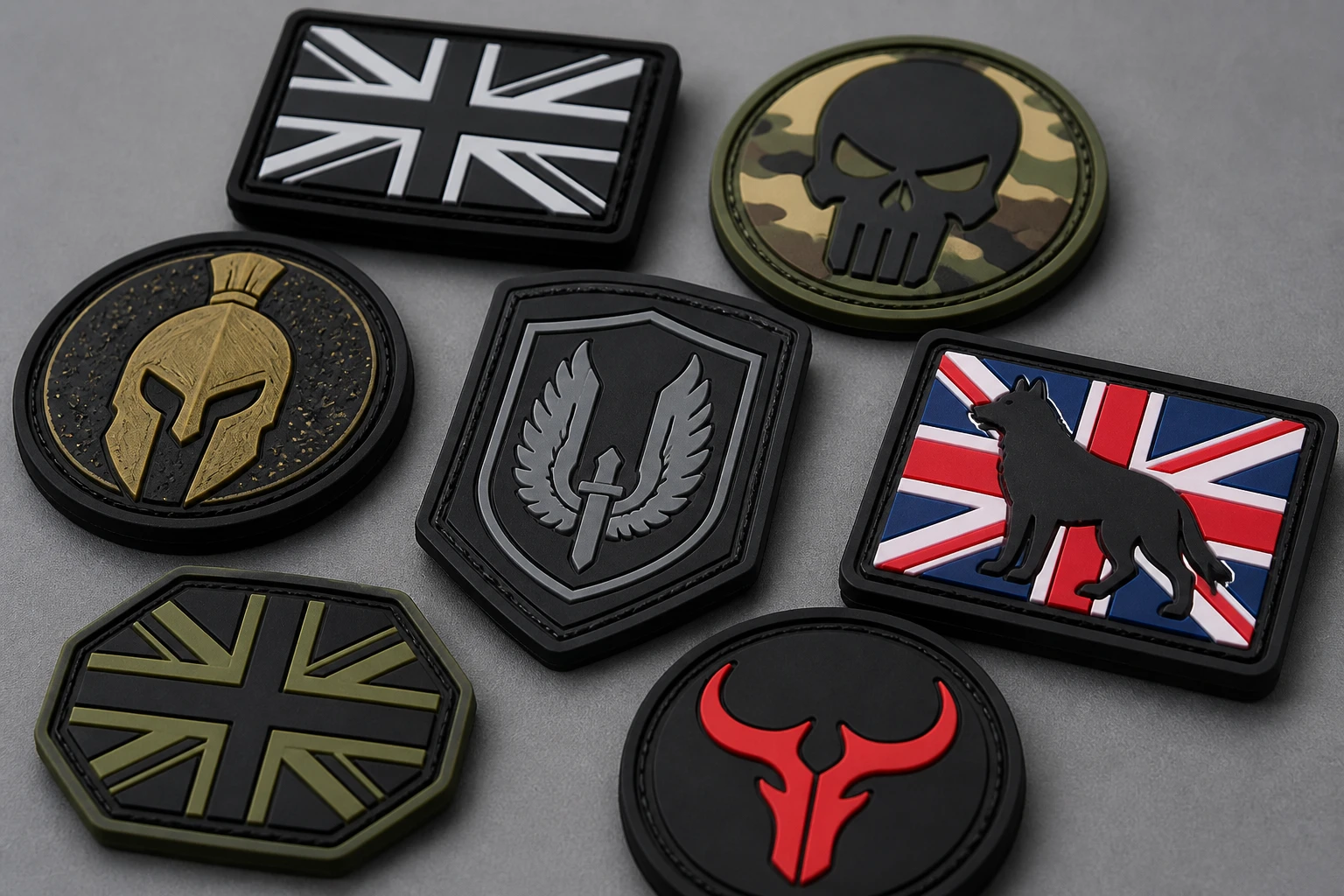
Key takeaways
- PVC is a strong choice for bold logos, outdoor clothing, workwear and designs that need a wipe-clean surface.
- Keep small lettering simple. Fine detail that works on a screen may not work at a 2-inch patch size.
- Choose sew-on, iron-on or Velcro backing from the garment and how often the patch will be removed.
- The Customized Patches has a 5-piece minimum per design, provides a free digital mockup usually within 12 hours and produces only after approval.
The right custom rubber PVC patches UK depend on three things: the garment, the artwork and the way the patch will be used. PVC suits bold logos, outdoor kit, workwear and Velcro panels particularly well, but it is not automatically the best answer for every crest or fine-detail design. Compare the material, size, profile and backing before ordering.
The Customized Patches makes patches for UK football clubs, cadet units, hospitality teams, biker groups, schools and growing brands. We provide a free digital mockup usually within 12 hours, work to a 5-piece minimum per design, and produce only after you approve the artwork and specification.
Start with the garment, not the artwork
A patch that looks right on a product page can behave differently on a real garment. Nylon shells flex and may have a coated surface. Wool coaches jackets have a softer nap. Hospitality polos are washed often and need an attachment that will not pull the fabric. A school blazer may need a formal merrowed crest rather than a thick rubber badge.
Look at the placement first. Measure the chest, sleeve, pocket, shoulder or back panel with a ruler, then leave a little breathing space around the patch. A 2-inch badge can look neat on a sleeve but cramped on a large back panel; an 8-inch back patch may overwhelm a polo shirt.
- For a nylon jacket, check whether the outer fabric is heat-safe before selecting iron-on backing.
- For a wool coach jacket, sew-on is usually the safer route because heat can mark or flatten the fabric.
- For a rucksack or tactical panel, Velcro is useful if the wearer needs to swap names, roles or morale patches.
- For a polo or work shirt, check the wash routine and the space available beside the chest logo.
- For a school blazer, compare PVC with embroidered patches if the design needs a traditional crest or a softer hand.
If you cannot identify the fabric or finish, send a clear photograph with the quote request. A photograph of the inside and outside can reveal a waterproof coating, lining, seam or existing hook-and-loop panel that affects the recommended backing.
Choose the PVC look that fits your brand
PVC is moulded rather than stitched. That gives the patch a clean edge, a firm feel and a surface that can usually be wiped clean. It also lets you build simple raised lines, recessed areas and contrasting levels into a logo. Those details are useful for outdoor brands, security teams, cycling clubs and modern workwear.
The choice is not simply raised versus flat. Consider how many layers the design needs, how thick the border should be and whether the lettering can be read at the final size. A small badge with a raised outer line and a plain centre may be clearer than a crowded multi-level design.
Raised, recessed and flat details
- Flat PVC keeps the face level and is suitable for straightforward logos, names and symbols.
- Raised PVC gives selected lines or lettering a tactile height and can help separate a mark from its background.
- Recessed areas create a lower channel or panel and can add contrast without adding more printed detail.
- Two or three clear colour areas often reproduce more successfully than many tiny colour changes.
- A wide border protects the edge visually and gives the patch a finished outline.
A brand with a simple mountain icon may benefit from a raised peak and a recessed sky. A football club badge might need a flat shield with strong lettering. A café logo with a detailed illustration may be better as printed patches if the point is a flatter image with more tonal detail. Printed is flatter; that is the point.
| Requirement | PVC approach | Main trade-off |
|---|---|---|
| Bold logo or symbol | Flat or raised PVC with a clear border | Less suitable for very fine lines |
| Tactile outdoor badge | Raised details with a firm rubber-like face | Extra detail can increase complexity and cost |
| Photographic or shaded artwork | Consider printed patches | Printed detail is flatter and may suit a different brand style |
| Traditional club crest | Compare with embroidered patches | Thread gives texture but can be less wipe-clean |
| Removable identification | Velcro-backed PVC patch | Needs a compatible loop panel on the garment |
Do not ask for every available effect simply because it is possible. The best patch normally has one clear reading order: border, symbol, wording. If the eye cannot find that order in the mockup, more layers will not solve the problem.
Get the size and lettering right
Size is one of the most common sources of disappointment. Customers often approve a logo on a large screen, then find that a line of text becomes difficult to read once the patch is reduced to 2 or 2.5 inches. PVC can give crisp edges, but it cannot make microscopic lettering physically larger.
Measure the usable area rather than the full garment. A sleeve seam, pocket flap or curved shoulder can reduce the practical width. For a chest badge, measure between the placket and the side seam. For a cap, check the crown curve and avoid making the patch so tall that it folds at the top.
A practical size check
- Print the proposed patch at its intended size on ordinary paper.
- Place it on the garment or bag from roughly the distance at which people will see it.
- Ask someone who has not seen the design to read the wording.
- Remove small text or simplify it if the message is not clear within a few seconds.
- Check that the border remains visible and that the design does not touch seams or zips.
For a football club, the badge may need to read from the touchline, but a sponsor mark on a hospitality polo may only need to work at conversation distance. A cadet unit may prefer a compact Velcro patch with a clear unit identifier. A biker club may need a large back patch with lettering that remains legible across a jacket.
There is no universal best size. The correct measurement follows the placement, viewing distance and design. For more detail on dimensions and attachment, see PVC patches Sizing and Backing Options Explained.
Compare PVC with other patch materials
The material should support the job rather than dictate the design. PVC is a good match for a firm, modern, wipe-clean badge. Embroidery brings visible thread texture and a familiar uniform appearance. Woven patches can hold smaller flat detail than conventional embroidery, while leather creates a different premium and heritage feel.
Not sure whether a raised PVC badge or a flatter printed finish will suit your logo? Send the artwork and the garment details for a free digital mockup usually within 12 hours, then compare the result before production.
GET A FREE MOCKUPA club may use PVC on rain jackets and embroidered crests on blazers. A clothing label might choose woven for small text, then use PVC for a rubberised side badge. Mixed patch programmes are often more practical than forcing one material across every garment.
| Patch type | Best suited to | Points to check |
|---|---|---|
| PVC | Outdoor jackets, workwear, tactical kit, Velcro panels and bold branding | Small text, heat sensitivity and the required profile |
| Embroidered | Sports clubs, uniforms, school blazers and traditional crests | Thread coverage, fine lettering and fabric weight |
| Woven | Small flat logos and designs with tighter detail | Less raised texture than embroidery |
| Printed | Illustrations, gradients, photographs and flatter artwork | Ink appearance, wash instructions and edge finish |
| Leather | Heritage clothing, premium bags and biker styling | Colour, thickness and the desired natural variation |
| Chenille | Varsity jackets and large collegiate lettering | Pile texture, larger size and garment weight |
You can compare PVC patches with woven patches, chenille patches and leather patches before deciding. For a traditional thread-heavy badge, 3D embroidered patches may provide the height you want without changing to moulded rubber.
Select the backing for real use
Backing is not a decorative afterthought. It determines how the patch attaches, how easily it can be moved and how much stress the garment receives. The three common choices are sew-on, iron-on and Velcro, with each requiring a different conversation about the item being patched.
- Sew-on backing is the dependable choice for permanent placement. It suits jackets, uniforms, bags and fabrics that may not tolerate heat.
- Iron-on backing is convenient on suitable cotton and other heat-safe fabrics, but it needs correct temperature, pressure and a clean surface.
- Velcro backing works for removable patches on a compatible loop panel. It is useful for role identifiers, names and interchangeable club designs.
- Adhesive-only options may suit temporary display, but they should not be treated as a substitute for a stitched attachment on hard-working clothing.
An iron-on patch that looks fine on day one can peel after a dryer cycle if the heat, pressure or fabric is wrong. Waterproof nylon, coated bags and some technical shells are common problem garments. If the patch will be washed frequently or exposed to rain, tell us that before the specification is finalised.
For biker and motorcycle club garments, placement and stitching matter because leather, denim and heavy cotton behave differently. See the guide to biker and motorcycle club patches if your project includes a back panel, rocker or sleeve arrangement.
Prepare artwork that can be manufactured
A clean vector file is helpful, but the real test is whether the artwork has been simplified for the finished size. Outlined text, transparent gaps, tiny islands of colour and very narrow strokes can all change during production. A good mockup should show more than the logo; it should show the intended patch shape, border, size and backing.
Artwork checks before sending a quote
- Supply the clearest version of the logo you have, preferably vector artwork or a high-resolution image.
- State the finished width and height in inches, or provide the available garment area.
- Name the colours or provide brand references, while accepting that screen colour and material colour may differ.
- Confirm which parts must remain raised, recessed or flat.
- Check every word, number and abbreviation before approval.
- Tell the maker if the patch must match an existing uniform badge or brand standard.
A digital mockup is the point at which design decisions become visible. It lets you spot a border that is too narrow, a letter that has disappeared or a patch that is too large for the sleeve. The Customized Patches sends a free digital mockup usually within 12 hours, and production starts only once you approve it.
For more preparation advice, read How to Design Artwork for PVC patches That Production-Ready. The wording is slightly awkward in the guide title, but the practical point is clear: artwork should be checked at its final dimensions, not only at logo size.
Plan quantity, price and lead time
Start with the number of finished patches required per design. The Customized Patches has a 5-piece minimum per design, so five identical chest badges count as one design and five different badges count as five designs. If you need several colourways, names or unit identifiers, list them separately in the quote.
Price is affected by size, construction, colours, backing, mould requirements and quantity. A larger patch uses more material and may need a more substantial border. A multi-level design takes more planning than a flat mark. Asking for a simple, comparable specification makes quotes easier to assess.
- State the patch size in inches.
- Give the total quantity and separate quantities for each artwork.
- Name the garment or item receiving the patch.
- Choose sew-on, iron-on or Velcro, or ask for a recommendation.
- Include the date the patches are needed in the United Kingdom.
- Mention UK-wide delivery requirements, events, kit issue dates or seasonal deadlines.
A sensible order process is artwork review, quotation, free digital mockup, customer approval, production and delivery. Do not treat a mockup as a production approval by assumption. The Customized Patches produces only after approval, which gives you a clear opportunity to correct spelling, size, colour, placement and backing.
Avoid the mistakes that cause rework
Most patch problems begin before manufacturing. The artwork is approved at the wrong size, the backing is chosen without checking the fabric, or several different designs are described as one quantity. These errors are avoidable with a short written specification.
Ready to check the specification? Send the artwork, quantity, garment and required date. We can show the backing and patch proportions on a free digital mockup usually within 12 hours before production begins.
GET A FREE MOCKUP- Do not rely on a low-resolution screenshot if small lettering is important.
- Do not assume iron-on works on every jacket, bag or coated technical fabric.
- Do not use a narrow border that disappears into a dark garment.
- Do not approve colour from an uncalibrated screen without checking the mockup carefully.
- Do not count different names or symbols as one identical design unless the supplier confirms the treatment.
- Do not leave the delivery date until after approval if the patches are needed for a match day, launch or uniform issue.
- Do not ask for photorealistic detail from a construction intended for bold moulded shapes.
If you are ordering for a new clothing line, order a small approved run first when the design or garment is untested. The 5-piece minimum per design gives smaller UK businesses and clubs a way to check the physical result before committing to a larger quantity.
For a broader checklist, see PVC patches Checklist: What to Confirm Before You Order and Common Mistakes to Avoid When Ordering PVC patches. Both are useful before sending a final purchase list.
Practical examples
A football club usually needs a badge that remains recognisable on training jackets, rain tops and kit bags. A flat or lightly raised PVC crest can work well on outerwear, while the match shirt may call for a lighter embroidered version. The decision depends on the fabric, wash routine and the club’s established look.
Cadet units often need removable identifiers for different roles or groups. A Velcro-backed PVC patch can make sense when the garment already has a loop panel, but the panel must be large enough and securely stitched. A sew-on patch is more suitable if the identifier is permanent.
Hospitality polos need a different test. Staff may wash them repeatedly, and the patch sits on a lighter fabric close to the body. A compact logo with a suitable backing may be better than a large, heavy badge. If the brand uses fine script, compare PVC with woven patches or a flat printed treatment.
Biker vests and back panels have their own proportions. A large central emblem needs a clear border and readable lettering, while small front identifiers should not compete with the main back design. The material may be leather, denim or a heavy textile, so attachment needs to be agreed before production.
A simple decision framework for UK buyers
Choose PVC when the design is bold, the garment can carry a firm patch and the surface needs to cope with regular handling or outdoor use. Choose another material if the main requirement is fine thread texture, a soft traditional crest, photographic shading or a very lightweight finish.
- Confirm the item, fabric and patch position.
- Measure the usable space in inches.
- Simplify the artwork for that finished size.
- Decide between flat, raised and recessed PVC detail.
- Select sew-on, iron-on or Velcro backing.
- Request a quote for each separate design and confirm the 5-piece minimum per design.
- Review the free digital mockup usually supplied within 12 hours.
- Approve the final specification before production.
That process keeps the conversation practical. It also gives a manufacturer the information needed to advise honestly rather than guessing from a logo file alone. The same approach works for a UK sports club ordering five badges, a brand launching a new range or a business rolling out workwear across several locations.
If you are still comparing materials, read Are PVC patches Right for Your Project? A Decision Guide or browse the UK city pages for UK-wide patch support. You can also request a free mockup quote with your garment details.
Frequently asked questions
What are custom rubber PVC patches UK best used for?
Custom rubber PVC patches UK are well suited to bold logos on outdoor jackets, workwear, rucksacks, tactical clothing, sports kit and Velcro panels. They have a firm moulded face and can include flat, raised or recessed details. They are less suitable for designs that depend on very fine lettering or photographic shading.
What is the minimum order for PVC patches?
The Customized Patches has a 5-piece minimum per design. Five identical patches count as one design. If the names, symbols, colours or artwork change, list those versions separately so the quotation reflects the actual order.
How quickly can I see a PVC patch mockup?
The Customized Patches usually provides a free digital mockup within 12 hours. The mockup should be checked for wording, size, border, colours, construction and backing. Production begins only after the customer approves the final mockup and specification.
Is PVC better than embroidery for a club badge?
Neither is better for every club badge. PVC gives a firm, wipe-clean and modern result that suits jackets, bags and outdoor kit. Embroidery provides visible thread texture and a traditional crest appearance, which may suit school blazers, polos and formal uniforms. Compare The Difference Between PVC patches and embroidered patches, Explained before deciding.
Should I choose sew-on, iron-on or Velcro backing?
Choose sew-on for a permanent attachment, iron-on for suitable heat-safe garments, and Velcro for removable patches on a compatible loop panel. Nylon shells, waterproof coatings, wool coaches jackets and technical bags need particular care because heat may damage the fabric or fail to bond correctly.
Can PVC patches be used on biker jackets and motorcycle club clothing?
Yes, PVC can work on biker jackets and club clothing when the size, border and attachment suit the material. Heavy leather and denim often need a secure sewn attachment, while a back panel needs enough space for readable lettering. Compare the planned placement with the advice on biker and motorcycle club patches before ordering.
Ready to produce custom patches for your UK team or brand?
GET A FREE MOCKUP