
How chenille patches Can Strengthen Your Brand Identity
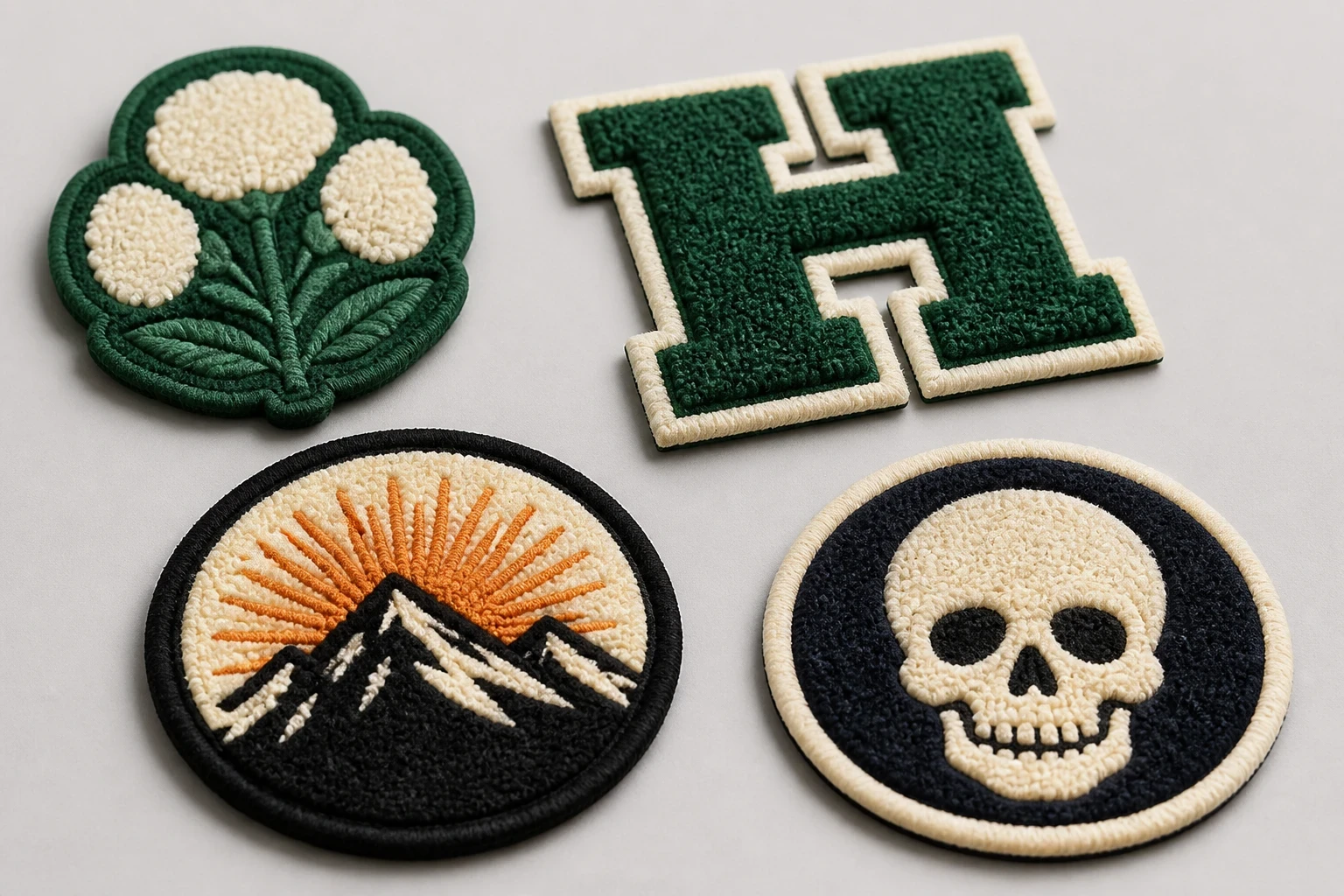
Chenille patches strengthen brand identity by giving a logo, mascot or team name a distinctive raised texture, clear colour blocking and a familiar varsity-style finish. They work especially well on jackets, hoodies, knitwear, school blazers and club garments, provided the design is simplified for the stitch format and the backing suits the garment.
Key takeaways
- Chenille patches make identity marks easier to recognise through raised pile, strong colour blocks and a tactile finish.
- A simple crest, letter or mascot normally reads better than a detailed illustration at patch size.
- The 5-piece minimum applies per design, so one approved design can be tested before a larger club or brand order.
- The Customized Patches provides a free digital mockup usually within 12 hours and produces only after approval.
Chenille patches can strengthen a brand identity by turning a logo, team name or mascot into a raised, tactile mark that people recognise at a glance. The textured pile and bold colour blocks are particularly effective on jackets, hoodies, school blazers, clubwear and branded work garments. The best results come from a simple design, a sensible size and a backing chosen for the actual fabric.
At The Customized Patches, we quote for UK teams, brands, clubs and businesses that need the patch to work on a real garment, not just look good on a screen. We can provide a free digital mockup usually within 12 hours, and production starts only after approval. The minimum is 5 pieces per design, which suits a small trial as well as a larger rollout.
Why chenille patches are memorable branding tools
A printed logo can be sharp and a flat embroidered logo can be highly detailed, but chenille has a different visual job. Its raised yarn surface catches light and creates a physical feature people can feel. That matters on a football warm-up jacket, a wool coaches jacket or a varsity-style hoodie, where a smooth transfer can look like an afterthought.
The shape also helps. A bold letter, shield, circular crest or compact mascot gives the eye a clear outline to remember. Over time, that outline becomes associated with the organisation: the school house, the five-a-side team, the independent coffee brand or the motorcycle club. It is not the texture alone that builds recognition. It is the repeat use of the same colours, shape, wording and placement.
- Raised pile gives the mark a visible and tactile difference from ordinary garment printing.
- Large colour areas remain easy to read from the sidelines, across a clubroom or on a staff jacket.
- A consistent patch can bring different garments into one identity system, even if the garments come from different suppliers.
- A sewn patch can be moved between suitable garments more easily than a directly embroidered logo.
- A distinctive border gives the artwork a finished crest or badge shape rather than leaving it as a loose graphic.
This is why chenille is often chosen for identity marks rather than long paragraphs of information. If customers need a small care instruction, social handle or detailed illustration, another patch style may be more suitable. The identity patch should make the main name or symbol clearer, not try to carry every message at once.
The design choices that make chenille patches look like your brand
Start with the part of the brand that must survive at a distance. For a football club, that may be the initials and a simple crest. For a hospitality business, it could be a compact monogram on a wool overshirt. For a school, it might be a house letter with a strong border. The patch is not the place to reproduce every fine detail from a website header.
Colour, contrast and the border
Use the strongest contrast available between the pile, lettering and border. A navy letter on black can disappear, especially on a dark nylon shell. A cream border around a burgundy field may read much better on a charcoal coach jacket. If a strict brand colour must be matched, send the relevant colour reference and review it on the mockup rather than relying on a small image viewed on a different screen.
Borders do practical work as well as visual work. A merrowed crest edge can contain the design and protect the outline from looking ragged. The border should not be so narrow that it loses definition, nor so wide that it swallows the name inside. These small decisions are easier to spot when the artwork is shown at the proposed finished size.
Lettering and artwork detail
Short words and initials are usually safer than long wording. Very small text may close up in the yarn structure, particularly if several letters share a narrow space. A mascot with five tiny facial details may need to become a cleaner silhouette. That is not a reduction in personality; it is an adjustment for the production method.
If your identity depends on fine lines, gradients or photographic detail, compare embroidered patches with woven patches and printed patches. Printed is flatter; that is the point. It can preserve an image or fine line that would become unclear in a heavily textured chenille surface.
Shape, scale and placement
Measure the garment before deciding the patch size. A chest mark on a polo may need a different proportion from a large back patch on a biker vest. A school blazer has seams, lapels and pocket positions to work around, while a Velcro panel may dictate both the width and the corner radius. Dimensions in inches are more useful than saying “medium” because they give everyone the same reference.
| Brand use | Common garment | Practical design direction | Point to check |
|---|---|---|---|
| Football or sports club | Tracksuit top, bomber jacket or hoodie | Bold initials, mascot or shield with clear contrast | Allow room around zips, pockets and sponsor marks |
| School or college identity | Wool blazer, cardigan or varsity jacket | House letter, crest or short school name | Check the fabric, lining and washing instructions before choosing heat |
| Hospitality or independent business | Polo, overshirt or coach jacket | Compact monogram or simple emblem | Keep the mark legible beside name badges and embroidery |
| Motorcycle or social club | Leather or denim vest | Large back motif with a smaller front identifier | Confirm curved placement, border width and attachment method |
| Product or streetwear brand | Cap, hoodie, tote or heavy jacket | Distinctive icon or short wordmark | Check whether texture supports the intended price and product feel |
For a closer comparison of texture, edge treatment and detail, see The Difference Between chenille patches and embroidered patches, Explained. The right answer is not always the most textured option. It is the option that presents the identity clearly on the garment your customer, player or staff member will actually wear.
Choosing the backing for the garment, not just the artwork
Backing affects how the patch feels, how it is fitted and how it behaves after washing. Sew-on is the sensible choice for many long-term uniforms, jackets and club garments because the stitching provides a secure attachment. It also avoids relying on adhesive on a surface that may be textured, coated or repeatedly flexed.
Iron-on can be convenient on suitable cotton or cotton-blend garments, but it is not a universal answer. Heat, pressure and the fabric finish all matter. It is common to see iron-on patches peel after a dryer cycle, especially where the garment care was ignored or the fabric did not accept the adhesive properly. A nylon shell, waterproof outer or heat-sensitive technical fabric needs particular caution.
Sew-on, iron-on and Velcro in plain terms
- Sew-on: the usual choice for a permanent or long-term fitting on jackets, blazers, denim, wool and many uniforms. It takes more fitting time but is dependable when stitched correctly.
- Iron-on: useful for suitable fabrics where the care label permits the required heat. It can be neat and quick, but washing, tumble drying and flexing can affect the bond.
- Velcro: suitable for removable identifiers, tactical garments, event teams and uniforms that need different role or name patches. The garment must already have a compatible panel or one must be fitted.
- Adhesive-only use: generally best treated as temporary unless the application and garment are specifically suitable. A patch that lifts at a corner quickly undermines a carefully built identity.
Tell us whether the patch is going onto a wool coaches jacket, a nylon shell, a leather vest, a school blazer or a Velcro panel. The same backing should not be assumed for all five. The biker and motorcycle club patches guide covers larger vest placements, while the leather patches hub is useful if the surface and style call for a different material altogether.
How different UK organisations use the same identity principle
A patch becomes stronger branding through repetition and context. A club may use one crest on match jackets, travel hoodies and kit bags. A business may use a small mark on staff outerwear and a larger version on event merchandise. The garment changes, but the recognisable core stays consistent.
Not sure whether chenille or a flatter embroidered finish will hold your logo best? Send the artwork and garment details to compare the direction on a free digital mockup, usually within 12 hours.
GET A FREE MOCKUPTeams, clubs and cadet units
Sports teams often need something visible from the touchline and durable enough for travel. A chenille letter or crest on a warm-up jacket gives the group a shared appearance without requiring every garment to be custom manufactured. Cadet units and community clubs may also value a patch because it can identify a group while leaving space for a name tape, rank marking or other required information.
The practical mistake is making every element compete at the same size. Put the organisation name or crest first, then treat secondary wording as optional. If the patch needs a date, branch name and slogan as well, consider separate designs or a 3D embroidered patches option for selected details rather than overcrowding one badge.
Schools, colleges and hospitality businesses
Schools often need a finish that feels part of the uniform rather than a temporary promotional sticker. A well-sized crest or house letter can suit a blazer, cardigan or team jacket, though the school should check washing and fitting requirements before selecting iron-on. Our guide to chenille patches Best Practices for schools and colleges covers the checks that usually prevent rework.
Hospitality teams have a different concern: the patch must sit neatly beside a name badge, direct embroidery or apron detail. A compact emblem on a wool overshirt or coach jacket can feel more considered than a large logo. It should still be clear to a customer standing a few feet away, so contrast and finished width matter more than adding small decorative flourishes.
Brands and product labels
For a clothing or lifestyle brand, chenille can make the mark feel like part of the product rather than an afterthought. A raised initial on a heavyweight hoodie or a small emblem on a cap can create a repeatable signature. The trade-off is that pile has a more specific visual character than a flat woven label, so it should fit the brand rather than be selected simply because it looks substantial.
If your range includes technical outerwear, consider a PVC patches option for water-resistant applications or a woven patches option for fine, compact artwork. Different products can carry related marks without forcing one patch construction onto every fabric.
Chenille compared with other patch styles
There is no single best patch material for every identity system. Chenille is distinctive because of its raised pile and varsity association. Embroidery offers a familiar stitched appearance and can handle many crest styles. Woven patches are flatter and often better for small details, while printed patches can reproduce artwork that needs tonal variation.
| Patch style | Surface and appearance | Best suited to | Main trade-off |
|---|---|---|---|
| Chenille | Raised, soft pile with bold blocks and a tactile finish | Varsity jackets, club crests, initials, school and sports identity | Small text and fine detail may need simplifying |
| Embroidered | Stitched thread surface with a familiar badge appearance | Uniforms, company marks, crests and general-purpose branding | Very detailed areas can become crowded at small sizes |
| Woven | Flat, closely woven surface with crisp small elements | Detailed logos, labels and compact wording | Less raised and less tactile than chenille |
| Printed | Flat ink or printed image with broader tonal control | Illustrations, gradients, photographs and fine artwork | Does not provide the raised stitched texture |
| PVC | Moulded, smooth or raised rubber-like surface | Outdoor, technical and water-conscious applications | A different visual language from textile pile or thread |
| Leather | Natural or synthetic leather surface with a premium material feel | Biker, heritage, workwear and understated brand marks | Colour, shape and care requirements differ from textile patches |
The important comparison is not only appearance. Ask how the patch will be washed, folded, exposed to rain, attached and removed. A design that works on a denim vest may be wrong for a nylon shell. A detailed printed badge may be ideal for a product label but less suitable for a school blazer that needs a traditional crest.
For broader decision-making, read Chenille patches vs embroidered patches: Which Is Right for Your Project? and compare the finished sample against the garment. A screen preview cannot show every effect of pile direction, fabric colour and placement.
Ordering detail: artwork, quantity and approval
A useful quote starts with more than a logo attachment. Send the artwork, finished width and height if known, quantity per design, garment type, intended position and preferred backing. A photograph of the garment is helpful, especially for curved areas, seams, pockets and existing panels.
The Customized Patches has a 5-piece minimum per design. That means a club can order five of one approved crest, but five different one-off designs would be treated as five separate designs for quoting. If you are testing a new identity, the minimum allows a small run for the committee, founders or first product batch before committing to a larger quantity.
What the mockup should settle
- The approximate finished size in inches and how it sits on the named garment.
- The shape, outer border and any merrowed edge treatment.
- The wording, initials and simplified artwork details.
- The pile, thread and border colour direction against the garment colour.
- The chosen backing and whether the garment can accept that attachment method.
- The quantity per design and any separate versions needed for different departments or teams.
A free digital mockup is usually supplied within 12 hours. It is not a substitute for checking the actual garment, but it gives you a practical approval point before production. The Customized Patches produces only after approval, so corrections can be made while the design is still on screen rather than after a batch has been made.
Timing and repeat orders
Lead time depends on the approved specification, quantity and production schedule. It is sensible to allow time for artwork questions, internal approval and delivery across the UK, especially before a school term, tournament, launch event or uniform changeover. Do not leave backing and placement until the day the garments arrive.
Keep the approved mockup, final dimensions, colour notes and backing choice with your purchase records. That makes a repeat order easier and helps prevent a later batch from drifting away from the original identity. For a fuller process, see A Step-by-Step Guide to Ordering chenille patches.
Common identity mistakes to avoid
Most disappointing results are not caused by the patch being chenille. They come from a mismatch between the artwork, size, garment or attachment method. A logo prepared for a website may contain hairline strokes that look fine in pixels but disappear in yarn. A patch sized without measuring the jacket may cover a pocket or sit too close to a zip.
Name sew-on, iron-on or Velcro on the quote and include the garment type. We show the proposed backing, scale and placement on a free digital mockup usually within 12 hours, then produce only after you approve it.
GET A FREE MOCKUP- Using too many colours without a clear main and secondary colour hierarchy.
- Keeping tiny wording that cannot be read at the proposed finished size.
- Choosing a black border on a black nylon shell without checking contrast.
- Specifying iron-on for a garment that is waterproof, heat-sensitive or regularly tumble dried.
- Ignoring the curve and available width of a biker vest or sleeve.
- Mixing several versions of the logo across garments without a clear reason.
- Approving a digital image without checking the garment photograph, position and care label.
- Ordering before confirming whether the quantity is five pieces per design or five pieces across several designs.
The Chenille patches Checklist: What to Confirm Before You Order is useful for a committee or purchasing team because it turns these choices into a shared sign-off. One person may care about brand colour, another about washing, and another about delivery. All three affect the finished result.
A practical brand test before you approve
Place the proposed patch beside the garment and ask three people who did not design it what they notice first. Can they read the main letter or name? Do they identify the organisation from the shape and colour? Does the finish suit the garment, or does it look like a separate item attached at the last minute?
Then look at the garment from the distance at which it will normally be seen. A team jacket viewed from the edge of a pitch needs different clarity from a patch on a close-up product photograph. Check the inside as well: lining, seam access and backing can affect whether the fitting is straightforward.
If the answer is clear, the design is doing its job. If people ask what a small word says or whether the badge belongs to the same brand, simplify before production. A recognisable mark repeated consistently is more valuable than a crowded patch that attempts to show the whole brand guidelines document.
Building a consistent patch system across the UK
A national business may need the same identity on garments used in London, Manchester, Birmingham, Glasgow, Cardiff and smaller towns across the UK. Consistency does not require every item to use the same patch size. It requires the core mark, colour relationship and wording to remain controlled while the garment and placement change.
For location-specific fulfilment, see the UK city pages. Keep a central approved artwork file and record which version belongs on staff polos, outerwear, kit bags and event clothing. That simple system prevents local teams from redrawing the logo or selecting a slightly different colour for every order.
A small supplier, school or club can use the same discipline. Approve one main patch, note the dimensions and backing, then create a separate version only when the garment genuinely requires it. This makes future reorders clearer and gives the identity a stable visual anchor.
Final decision: are chenille patches right for your brand?
Choose chenille if you want a raised, tactile and recognisable mark with a strong club, varsity or heritage feel. It suits bold initials, simple crests, mascots and short names particularly well. It is less suitable if your identity depends on tiny lettering, gradients, photographic detail or a very flat technical finish.
The strongest order is built around the garment and the identity together. Confirm the design, size in inches, colours, backing, quantity and position. The Customized Patches supplies a free digital mockup usually within 12 hours, keeps the 5-piece minimum per design, and produces only after approval. That gives UK customers a clear checkpoint before the patch reaches the sewing table.
If you are comparing several stitched options, visit the embroidered patches product hub or request a free mockup quote. A short conversation about the fabric and intended use can prevent the most expensive mistake: producing a good-looking patch that is wrong for the garment.
Frequently asked questions
How do chenille patches strengthen brand identity?
Chenille patches strengthen brand identity through a distinctive raised surface, bold colour blocking and a recognisable outline. Repeating the same crest, initials, mascot, colours and placement across jackets, hoodies, blazers or clubwear helps people identify the organisation quickly. The design should remain simple enough to read at its finished size.
What is the minimum order for chenille patches at The Customized Patches?
The minimum order is 5 pieces per design. If you need two different crests or two different versions, each is treated as its own design. This allows a UK club, school, brand or business to test one approved patch in a small run before ordering a larger quantity.
How quickly can I see a chenille patch mockup?
The Customized Patches usually provides a free digital mockup within 12 hours. Send the artwork, preferred dimensions, garment type, position and backing preference for a more useful visual. Production starts only after the customer approves the mockup, so changes can be made before the patches are produced.
Are chenille patches suitable for nylon jackets?
They can be suitable for nylon jackets, but the backing and fitting method need checking first. Nylon shells may be heat-sensitive or coated, so iron-on should not be assumed. Sew-on is often the safer direction for a secure fit, while the garment seams, lining, waterproof finish and care instructions should be reviewed before approval. See the chenille patches Checklist: What to Confirm Before You Order for practical checks.
Are chenille patches better than embroidered patches for branding?
Neither is universally better. Chenille provides raised pile, strong colour blocks and a varsity-style tactile finish, making it effective for bold crests, initials and club identity. Embroidery is often more flexible for detailed logos and a conventional stitched appearance. Compare the garment, artwork detail, washing needs and desired brand character before choosing; the embroidered patches hub gives more options.
Can chenille patches be used on school blazers and club clothing?
Yes, chenille patches can suit school blazers, cardigans, varsity jackets, sportswear and club garments when the size and backing match the fabric. Sew-on is commonly considered for long-term uniform use, while iron-on depends on the garment care label and heat tolerance. Measure the available area, simplify small wording and approve the mockup before production.
Ready to produce custom patches for your UK team or brand?
GET A FREE MOCKUP