
Chenille patches vs embroidered patches: Which Is Right for Your Project?
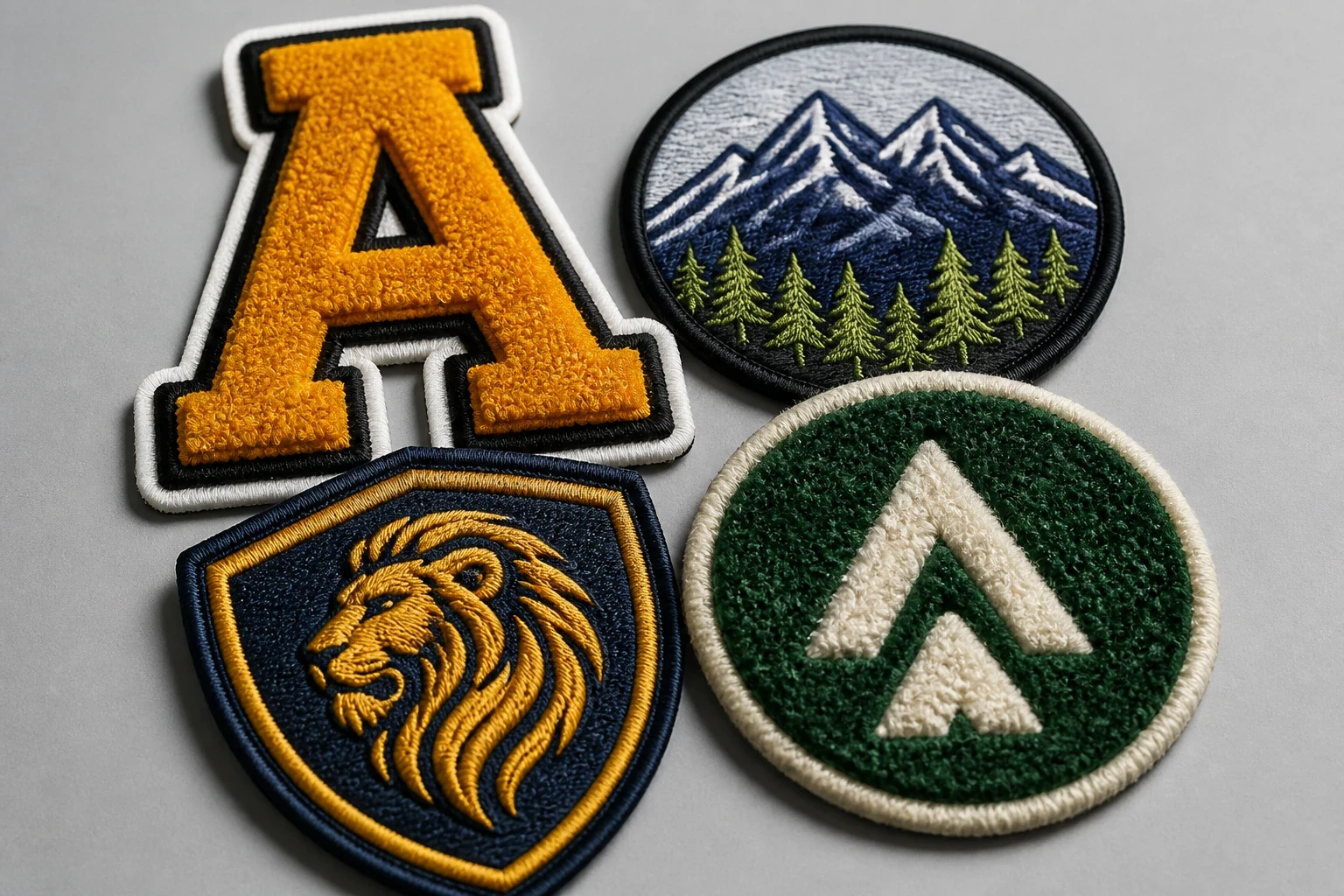
Chenille patches suit bold letters, varsity graphics and tactile club designs, while embroidered patches suit detailed crests, logos and smaller text. Chenille has a soft looped pile and a prominent raised feel; embroidery gives sharper linework and more surface detail. The right choice depends on artwork, garment, use and budget.
Key takeaways
- Chenille patches are best for bold, tactile designs such as varsity lettering, club initials and simple crests.
- Embroidered patches usually handle fine outlines, small text and detailed badges better than chenille.
- Both materials can be made with sew-on, iron-on or Velcro backing, but the garment and intended washing routine should guide the choice.
- The Customized Patches has a 5-piece minimum per design and usually supplies a free digital mockup within 12 hours before production.
Chenille patches are usually the better choice for bold, soft, raised designs, especially varsity lettering, club initials and simple team emblems. Embroidered patches are usually better for detailed crests, small text and logos that need crisp stitched linework. The correct option depends on the artwork, garment, washing routine and the way the patch will be used.
From our team, the most useful question is not which material sounds better. It is what the patch needs to do. A football club may want a traditional chenille badge on a wool coach jacket, while a cadet unit may need a compact embroidered insignia on a nylon shell. Both can be good choices, but they solve different problems.
The main difference between chenille patches and embroidered patches
Chenille uses a looped yarn surface that creates a soft, raised pile. The result is tactile and immediately visible from a short distance. It is strongly associated with varsity jackets, school teams, university societies and old-school sportswear, although it can also suit hospitality, music and lifestyle brands that want a less formal badge.
Standard embroidered patches use dense stitched thread on a fabric base. The surface is generally flatter, so it can carry finer outlines, compact lettering and more complex shapes. That does not make embroidery better in every situation. Printed is flatter; that is the point. In the same way, a flatter embroidered patch can be the right choice when the design needs accurate detail rather than a deep pile.
| Specification | Chenille patches | Embroidered patches |
|---|---|---|
| Surface | Soft, raised looped yarn pile | Stitched thread on a fabric base |
| Best visual effect | Bold, tactile, varsity-style lettering and simple motifs | Defined crests, logos, outlines and detailed badges |
| Small text | Can become difficult to read if the lettering is too fine or compact | Usually more suitable, subject to size and stitch limitations |
| Texture | High texture with a noticeably raised face | Low to medium texture, depending on stitch coverage |
| Typical garments | Wool coaches, varsity jackets, sweatshirts and heavy teamwear | Polos, shirts, blazers, jackets, workwear, uniforms and bags |
| Common backing choices | Sew-on, iron-on or Velcro, depending on the garment | Sew-on, iron-on or Velcro, depending on the garment |
| Detail handling | Strong for large shapes and broad lettering | Stronger for fine lines, compact wording and multi-part crests |
| Minimum order | 5 pieces per design | 5 pieces per design |
A useful rule is to look at the artwork at its intended finished size, not on a large computer screen. A crest that looks clear at 8 inches may lose its small inner lettering at 3 inches. If the design contains a mascot, date, sponsor name and several narrow outlines, an embroidered or woven treatment may give the artwork a better chance of staying legible.
When chenille patches are the better choice
Choose chenille when the patch needs presence. Large block initials on a football club jacket, a school house letter on a blazer or a simple motorcycle club emblem can look more convincing with a raised yarn face than with dense flat stitching. The texture is part of the design, not a fault to be removed.
Chenille also works well where people will handle the garment often. A thick wool coaches jacket, heavy hoodie or varsity jacket has enough visual weight to support the pile. On very light shirts, the same patch may feel out of proportion or pull at the fabric, so size and garment construction need checking before the order is placed.
- Varsity letters and short names with broad strokes.
- Football, rugby, basketball and American football team badges.
- School, university and college society designs.
- Simple club initials with a strong border.
- Large back or chest patches where texture should be seen from a few feet away.
- Lifestyle branding that wants a soft, heritage sportswear appearance.
There are limits. Very narrow lettering, tiny dates and fine facial features do not always translate well into a high-pile surface. A chenille letter can also have a softer edge than a tightly stitched embroidered letter. That softness is part of the look, but it should be considered before approving a small or highly detailed design.
When embroidered patches are the better choice
Embroidered patches are the safer starting point for most crests and working logos. They can combine satin stitches, fill stitches and border stitching to define separate areas of a design. This is useful for a cadet badge, hospitality logo, school emblem or company mark that must remain recognisable on a shirt or jacket.
They are also practical for mixed garment orders. A business may need the same patch on polos, fleece jackets, aprons and bags. A well-sized embroidered badge can sit comfortably across those products, whereas a large chenille badge may suit the jacket but look oversized on a polo. Our embroidered patches hub covers the main finishes and application choices.
- Detailed football, cricket and rugby crests.
- Company logos with several colour areas.
- School blazers where the badge must remain neat and proportionate.
- Hospitality polos, aprons and staff jackets.
- Workwear where small wording or role identifiers matter.
- Patches that need a conventional professional uniform appearance.
If the design only needs extra height on selected lettering, a 3D embroidered patches option may be worth comparing with standard embroidery. It uses raised foam under selected stitches rather than a full chenille pile. That can add emphasis to a short word or logo, but it still has design limits around small detail and tight spacing.
A note about printed, woven and PVC alternatives
Not every detailed design needs embroidery. Woven patches can give a flatter face and clean small shapes, while printed patches are useful for gradients, photographic artwork or artwork that depends on continuous colour. A PVC patches option may suit outdoor kit, bold moulded shapes and easy wiping.
Those materials are not substitutes for chenille in every case. A printed patch will not provide a raised varsity feel, and PVC will not look like a stitched school crest. The point is to match the production method to the visual job rather than forcing one process onto every logo.
Compare texture, detail and day-to-day wear
Texture changes how a patch behaves on a garment. Chenille has a proud face, so it catches the eye and can feel warmer and softer under the hand. Embroidery sits closer to the base fabric and is often easier to position on a shirt, polo or blazer without making the garment feel bulky.
Not sure whether the raised pile or stitched detail will suit your logo? Send the artwork and garment details for a free digital mockup, usually within 12 hours, so you can compare the finish before production.
GET A FREE MOCKUPNeither option should be described as indestructible. A patch can fail because the backing was wrong, the edge was poorly supported, the garment was unsuitable or the care routine was too harsh. It is common to see iron-on patches peel after a dryer cycle, particularly where the fabric was textured or the adhesive was not given the right conditions to bond.
| Project situation | Usually the stronger starting point | Reason |
|---|---|---|
| Large initials on a varsity jacket | Chenille | The raised pile makes broad lettering prominent and tactile. |
| A detailed school crest on a blazer | Embroidered | Stitched outlines and fills usually handle more parts of the badge. |
| A removable operations patch | Embroidered with Velcro | The backing can be removed and replaced without permanently sewing the garment. |
| A logo on a nylon shell | Embroidered, subject to backing and placement checks | A flatter patch is often easier to position, but the shell needs testing and suitable attachment. |
| A photographic or gradient design | Printed | Continuous colour and fine visual transitions are not the main strength of thread. |
| A wipe-clean outdoor badge | PVC | The moulded surface may suit equipment exposed to dirt and moisture. |
Nylon shells deserve particular care. Heat can mark or distort some nylon fabrics, and an iron-on backing is not automatically suitable just because it is convenient. For a rain shell, technical jacket or thin windbreaker, sew-on or a carefully specified Velcro panel may be the more dependable route. The same applies to lightweight bags where a heavy patch can make the panel sag.
How size and artwork affect the decision
Size is not simply a visual preference. It controls how much room each letter, border and colour separation has. A 2-inch-wide patch may be fine for a single initial, but a full club name with a date and motto may need more width. If the finished badge is too small, neither chenille nor embroidery can create space that is not there.
For a chest badge, measure the panel between seams and consider how the patch will sit when the wearer moves. For a sleeve, check the curve and the available width. For a back patch, decide if the design is a simple centrepiece or part of a larger arrangement. Biker and motorcycle club layouts often need a top rocker, central emblem and bottom rocker, so the gap between each element matters.
- Use broad, open lettering for chenille rather than narrow type with tight counters.
- Keep small embroidered text large enough to read at normal viewing distance.
- Do not add a thin outline merely because it appears in the original digital logo.
- Check whether a border will reduce the usable space inside the patch.
- Tell the maker the intended finished width and height in inches.
- Supply vector artwork if available, but include a clear reference image so proportions can be checked.
A clean artwork file helps, but it does not remove the need for a production decision. A designer may need to widen a narrow letter, simplify a tiny icon or adjust a border so the finished piece can be made consistently. Those changes should be shown on the mockup rather than made silently.
Backing and garment choice in the United Kingdom
Sew-on backing is the dependable choice for a permanent patch on a jacket, blazer, bag or thick uniform. It is particularly useful for chenille because the patch can be secured through the base rather than relying only on adhesive. A merrowed crest can look tidy on the edge, but the surrounding fabric still needs enough strength to support the stitching.
Iron-on backing is convenient for suitable cotton and blended fabrics, but it is not a universal answer. A patch placed on a garment that is regularly tumble-dried may eventually lift at the corners. A nylon shell, coated jacket or heat-sensitive fabric may also be unsuitable. If the clothing is expensive or issued as work kit, ask about sew-on or Velcro before approving an iron-on finish.
| Backing | Good fit | Points to check |
|---|---|---|
| Sew-on | Permanent teamwear, blazers, jackets, bags and heavy fabrics | Needs access for stitching and a suitable sewing thread or machine. |
| Iron-on | Suitable cotton and blended garments with moderate washing routines | Heat, fabric coating, dryer use and corner adhesion can affect performance. |
| Velcro | Removable kit, tactical-style panels and changing identifiers | The garment needs the matching loop panel and enough support for repeated removal. |
For UK clubs and businesses, the practical answer is often different across the same order. A club may use sew-on chenille for wool coaches jackets and embroidered Velcro badges for training kit. A hospitality group may use embroidered patches on polos but choose a woven version for small woven name labels. Ask for each garment to be listed on the quote instead of assuming one backing will suit everything.
Ordering chenille patches or embroidered patches
Start with five details: the artwork, finished size, quantity, garment and backing. The Customized Patches has a 5-piece minimum per design, so a small club can order a short run without committing to a large stock order. If you need two different badges, treat them as two designs for quoting purposes.
The free digital mockup is usually supplied within 12 hours. It should show the proposed shape, colours, lettering, border, backing and approximate scale. Read the wording carefully, particularly dates, initials and sponsor names. Production begins only after approval, so this is the right point to request a correction rather than relying on an assumption.
- Send the artwork or the clearest logo image available.
- State whether you prefer chenille, standard embroidery, or want both compared.
- Give the finished size in inches, or supply the garment measurement if you are unsure.
- Confirm the number of pieces for each design, with a minimum of 5 per design.
- Name the garment type, such as nylon shell, wool coach jacket, polo, blazer, hoodie or Velcro panel.
- Select sew-on, iron-on or Velcro backing after the garment has been considered.
- Check the free digital mockup and reply with approval or amendments.
- Production starts only after the approved specification is confirmed.
Lead time depends on the design, quantity, backing, current production schedule and delivery requirements. A simple repeat order may be straightforward, while a multi-colour chenille badge with a shaped border can need more preparation. UK-wide shipping can be arranged, but delivery timing should be discussed with the quote rather than guessed from a general industry estimate.
Examples from teamwear, uniforms and brand clothing
A football club ordering a large home-jacket badge may favour chenille because the raised initials are visible from the touchline and the traditional look suits a wool or heavy polyester jacket. If the same club needs a small crest on players’ polos, standard embroidery is usually easier to size and read.
Name the material, size and backing on your quote, or ask us to compare both finishes. We will show the correct version on a free digital mockup, usually within 12 hours, and produce only after approval.
GET A FREE MOCKUPA cadet unit often needs a compact insignia with several shapes and lettering. Embroidery can provide a practical balance of recognition and detail, with Velcro if the insignia needs to move between garments. On a nylon shell, the attachment method deserves as much attention as the thread choice.
Hospitality businesses usually need a neat, repeatable badge across polos, waistcoats and jackets. A flatter embroidered patch may sit better with the clean lines of a uniform. A brand selling limited-run varsity jackets may deliberately choose chenille because the texture helps the garment feel like a product rather than ordinary workwear.
Biker and motorcycle club patches often use layered layouts and strong borders. In that setting, chenille can work for broad lettering, but the final choice should account for the full back-panel arrangement, the jacket material and whether the badge will be sewn permanently. Our guide to biker and motorcycle club patches covers the wider layout considerations.
Common mistakes to avoid
The first mistake is choosing a material from a screen preview without checking the finished dimensions. Enlarged artwork hides the problems caused by tiny text and narrow gaps. Ask to see the design at the proposed size and compare it against the garment panel.
The second is treating backing as an afterthought. Iron-on can be useful, but a dryer cycle, coated fabric or constant flexing may expose its limits. A permanent jacket badge often deserves sew-on backing, while removable operational kit may need Velcro from the start.
- Ordering one large patch when the garment only has room for a smaller badge.
- Using fine serif lettering in chenille and expecting it to read like printed artwork.
- Adding too many colours without checking how they will be separated in thread or yarn.
- Assuming every jacket can take heat for iron-on application.
- Failing to state whether the patch is for a nylon shell, wool jacket, blazer, polo or bag.
- Approving a mockup without checking spelling, dates, orientation and backing.
- Expecting a small patch to carry a complete slogan, crest, mascot and sponsor line.
A good supplier should explain the compromise rather than promise that every detail will look identical to the digital file. The production method has physical limits. Clear advice before approval is more useful than a surprise when the finished patches arrive.
Chenille patches vs embroidered patches: the final decision
Choose chenille patches if the defining feature is texture: broad letters, a raised club badge, varsity styling or a soft tactile face on a substantial garment. Choose embroidered patches if the defining feature is information: a detailed crest, compact wording, a business logo or a badge that must work across several uniform types.
If the answer is still unclear, compare two mockups rather than guessing. The Customized Patches can show the same artwork as chenille and embroidery, then discuss size and backing for the actual garment. There is a 5-piece minimum per design, a free digital mockup usually within 12 hours, and production takes place only after approval.
For more background on the raised yarn finish, see Chenille patches: Everything UK Buyers Need to Know and How to Choose the Right chenille patches for Your Brand. If you already know the patch should be embroidered, the Custom embroidered patches UK Sizing and Backing Options Explained guide is a useful next step.
Frequently asked questions
Are chenille patches better than embroidered patches?
Neither is universally better. Chenille patches are usually better for bold, raised varsity lettering and simple club designs. Embroidered patches are usually better for detailed crests, small wording and logos used across polos, blazers, jackets and workwear. The garment, finished size and artwork should decide the material.
Can chenille patches be put on a nylon jacket?
They can be used on some nylon jackets, but the backing and attachment method need checking first. Nylon can be sensitive to heat, so iron-on backing may not be suitable. Sew-on or a properly specified Velcro panel may be preferable for a nylon shell, particularly if the jacket is lightweight or technical.
Are chenille patches washable?
The patch itself may withstand normal garment care, but the garment label and attachment method control the result. Sew-on patches are often a dependable option for regular-use clothing. Iron-on patches can lift after harsh heat or a dryer cycle, so follow the garment and application instructions and avoid assuming every backing has the same care requirements.
What is the minimum order for chenille patches at The Customized Patches?
The minimum order is 5 pieces per design. If you need different badges, colours or layouts, each separate design should be included separately in the quote. This allows UK clubs, teams and small businesses to order a short run without committing to a large quantity.
How quickly can I see a mockup for chenille patches?
The Customized Patches usually provides a free digital mockup within 12 hours. The mockup should be checked for wording, size, colours, border and backing. Production starts only after the customer has approved the design and specification.
Can I order chenille patches and embroidered patches together?
Yes. A team or business may choose chenille for large jacket initials and embroidery for smaller shirt crests or name badges. Ask for each design, garment, size and backing to be listed clearly on the quote. The 5-piece minimum applies per design, and each design is produced only after its specification has been approved.
Ready to produce custom patches for your UK team or brand?
GET A FREE MOCKUP