
Top 10 Uses for puff embroidery patches UK in 2026
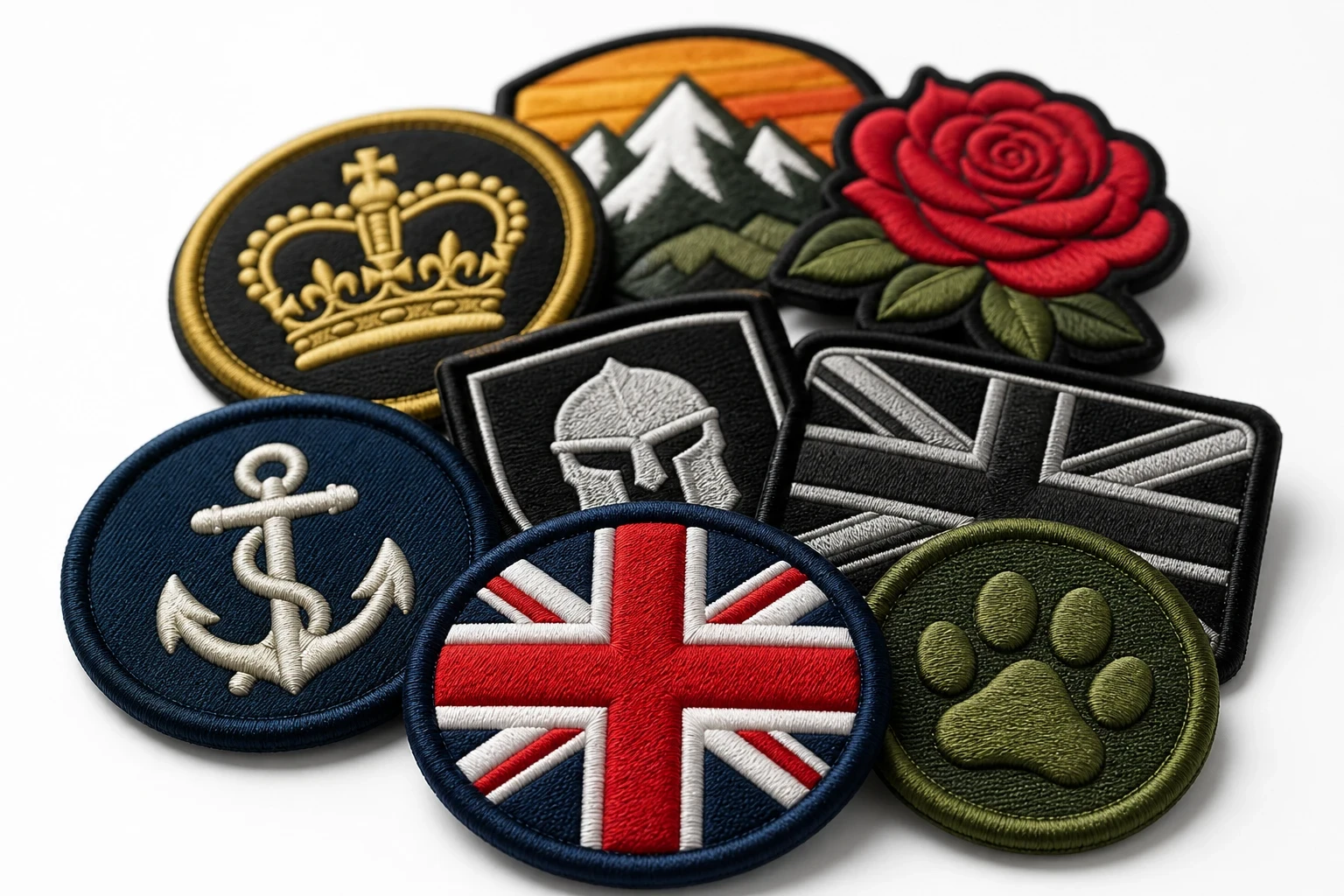
Puff embroidery patches UK are raised embroidered badges made with foam beneath selected stitched areas, giving logos, names and symbols a three-dimensional finish. In 2026, UK teams, clothing brands, clubs, schools and businesses use them on caps, jackets, polos, bags and Velcro panels. The Customized Patches provides a free digital mockup usually within 12 hours, with a 5-piece minimum per design.
Key takeaways
- Puff embroidery patches UK use foam under selected stitching to create a raised, tactile design.
- They work particularly well on caps, streetwear, team clothing, club garments, bags and Velcro panels.
- Small text and very fine details can lose clarity, so artwork should be simplified before production.
- The Customized Patches has a 5-piece minimum per design and sends a free digital mockup usually within 12 hours before production.
Puff embroidery patches UK are most useful where a logo or badge needs visible height rather than a flat stitched finish. In 2026, teams, clothing labels, motorcycle clubs, schools, hospitality businesses and workwear users are putting raised patches on caps, jackets, polos, bags and removable Velcro panels.
The Customized Patches makes these badges for customers across the United Kingdom. There is a 5-piece minimum per design, a free digital mockup usually within 12 hours, and production starts only after you approve the artwork. That approval stage matters because raised foam changes how small lettering, narrow gaps and fine outlines will look.
What makes puff embroidery patches UK different?
A puff patch is built in a similar way to an embroidered patch, but foam is placed beneath selected areas before the thread is stitched over it. The foam is then trimmed around the stitching, leaving the chosen letters, numbers or shapes standing above the patch surface. It is often called 3D embroidery, although the finished item remains a flexible textile badge rather than a hard moulded emblem.
The raised effect is usually strongest on bold lettering, block numbers, simple icons and broad sections of a logo. It is less suitable for tiny wording or an intricate crest packed with narrow lines. A football club may use raised initials and a flat stitched shield; a clothing brand may raise only the central wordmark. That mix gives the eye a clear focal point without making every part of the design bulky.
| Option | Surface and appearance | Good for | Main limitation |
|---|---|---|---|
| Puff embroidered | Raised foam-backed stitching with a tactile surface | Caps, streetwear logos, club badges and bold initials | Small text and fine detail need simplifying |
| Flat embroidered | Thread sits closer to the patch surface | Traditional crests, names, uniforms and detailed logos | Less height and visual impact |
| Woven | Fine woven threads create a flatter, sharper image | Small lettering, detailed artwork and thin lines | Does not have the raised foam effect |
| Printed | Ink sits on a smooth, flat textile surface | Photographic artwork, gradients and very fine detail | Printed is flatter; that is the point, and the surface may show wear differently |
| PVC | Rubbery, moulded and water-resistant feel | Outdoor kit, tactical bags and hard-wearing equipment | Different appearance and hand-feel from thread |
The best choice depends on the garment and the message. A raised word on a cotton cap can look excellent, while the same word squeezed onto a 2-inch school blazer badge may become difficult to read. If you are comparing options, see the guide to Puff embroidery patches UK vs flat embroidered patches: Which Is Right for Your Project? or review the wider range of embroidered patches.
1. Football, rugby and other teamwear
Sports clubs use patches to give players, coaches and supporters a shared visual mark. A raised club initial, animal mascot or founding year can sit on a cap, coach jacket, quarter-zip top or kit bag. For football and rugby teams, the patch can also distinguish a centenary range, cup squad or travel collection from standard playing kit.
The garment needs checking before the design is finalised. A thick puff patch may be comfortable on a jacket or bag but less suitable directly over a narrow shoulder seam. Nylon shells can also be awkward for some adhesive backings, especially if the surface is coated or treated. For removable staff or squad badges, a sew-on patch or Velcro backing may be more practical than iron-on.
- Use bold initials, numbers or a simplified mascot for the clearest raised effect.
- Consider a patch around 3 to 4 inches wide for jackets and kit bags.
- Use matching flat embroidery for small sponsor wording that must remain legible.
- Check whether the club wants one design or separate player, coach and supporter versions.
For a traditional full-colour crest with lots of small detail, flat embroidery or woven construction may be the safer choice. Puff embroidery works best as the visual feature rather than a way to force every detail into a small badge.
2. Caps and headwear
Caps are one of the clearest uses for puff embroidery because the raised surface catches light as the wearer moves. A simple brand name across the front panel, a bold initial on a five-panel cap or a small symbol above a peak can look substantial without needing a large patch.
There is a practical limit. The front panel of a cap is curved, and a very wide or rigid patch may not sit neatly across the crown. Rounded corners, a considered size and a design with open space usually give a better result. A 2.5-inch badge may suit a smaller cap, while a 3 to 4-inch design may work on a broad five-panel or trucker style.
- Keep the main lettering bold enough to survive the curve of the front panel.
- Avoid placing important detail right at the edge of a heavily curved cap.
- Ask for the mockup on the actual cap style if the crown shape is unusual.
- Choose a backing suited to the manufacturer or decorator who will attach the patch.
Iron-on can be convenient for some garments, but it is not automatically the best answer for headwear. Heat, curved fabric and repeated handling can weaken the bond. Sewing is often the more dependable option for a cap that will be worn regularly.
3. Streetwear, fashion labels and garment drops
Independent clothing brands use raised patches to make a hoodie, overshirt, varsity jacket or workwear-inspired piece feel like part of a collection. A puffed wordmark can sit on the chest, sleeve or back panel, while a smaller flat label handles care information or secondary branding. This creates a deliberate difference between the main badge and the supporting details.
The trade-off is design discipline. A complex logo with thin strokes may look impressive on a screen but lose its shape once foam and thread are involved. Strong contrast helps, as does a clear hierarchy between the raised area, the border and the background fabric. A brand preparing several colourways should approve the patch against each garment colour rather than assuming one thread combination will suit everything.
- Raise the wordmark or emblem, not every line in the artwork.
- Leave enough breathing room between letters so the foam does not close the gaps.
- Consider sew-on for premium jackets and overshirts that may be washed often.
- Use the same approved artwork across colours, but check thread contrast on every garment.
For a small fashion label, the 5-piece minimum per design can suit a test run, a staff sample or a limited first release. If the artwork depends on gradients, photographic shading or hairline detail, compare it with printed patches before committing to raised embroidery.
4. Biker, motorcycle and riding club clothing
Motorcycle clubs often need a badge that can be read from a short distance and recognised on a leather vest, denim cut-off, riding jacket or back panel. A raised central emblem can give a club name, wing, skull, number or location mark extra presence. A larger back patch may combine a raised centre with flatter text around it.
Leather and heavy denim need a different conversation from a cotton polo. A thick badge may require stronger stitching and careful placement so it does not sit across a pocket, zip or curved seam. Some riders also want removable badges, particularly for a jacket with several Velcro panels. The backing should be agreed before production rather than added as an afterthought.
- Measure the available panel, not just the old badge being replaced.
- Check whether the patch must sit beside a club rocker, name tab or existing crest.
- Choose sew-on for a permanent leather or denim placement where appropriate.
- Choose Velcro when the badge must be removed or swapped between garments.
You can see more examples and construction considerations in the guide to biker and motorcycle club patches. A raised finish is not a substitute for a suitable attachment method; a good design can still fail if the backing does not match the garment.
5. Workwear, trade uniforms and business clothing
Tradespeople, independent cafés, barbers, gyms, garages and events companies often use patches to brand jackets, overshirts, aprons, caps and bags. A raised company initial or simple emblem can make a uniform recognisable without covering the whole garment in printed branding. It can also make staff clothing look less disposable than a basic heat-transfer logo.
The working environment should guide the choice. A hospitality polo may be washed frequently, a warehouse jacket may face abrasion, and a nylon shell may shed heat or moisture differently from cotton. Iron-on that peels after a dryer cycle is a familiar failure on workwear. If the garment is likely to be washed hard, specify a suitable sewn attachment or confirm the care routine before choosing the backing.
- Keep business names readable at the distance customers normally see them.
- Use a high-contrast border where the patch sits on a dark jacket.
- Avoid placing a raised patch where tools, straps or seatbelts rub constantly.
- Order a sample or small run if the clothing will be used in a demanding workplace.
A raised badge can support brand recognition, but printed is flatter; that is the point when a smooth, low-profile logo is easier to clean or press under another layer. There is no advantage in choosing puff embroidery for a design whose strength depends on fine detail.
6. Schools, colleges, cadet units and uniform groups
Schools and youth organisations use patches for house teams, trips, clubs, enrichment programmes and commemorative events. A raised school initial, year group number or activity emblem can be added to a blazer bag, fleece, cap or expedition jacket. Cadet units may use a simplified activity badge for a course or event, while keeping official uniform insignia separate and subject to their own approval requirements.
Not sure whether raised thread or ink will hold your logo on a cap, hoodie or jacket? Send the artwork and garment details for a free digital mockup usually within 12 hours, so you can compare the look before producing. The minimum order is 5 pieces per design.
GET A FREE MOCKUPSmall lettering is the main issue. A school name, motto and date may all fit on a screen, but not necessarily on a 2-inch raised badge. It is often better to raise one large symbol and use flat embroidery or a separate label for the wording. Wool coaches and thick blazer fabric can take a sewn badge well, while lightweight nylon shells need more care around attachment and heat.
- Confirm the approved crest artwork and colour references before quoting.
- Separate mandatory uniform insignia from optional event or team patches.
- Use a simple shape for younger pupils so it remains recognisable at small size.
- Ask how the garment will be cleaned before choosing iron-on or sew-on.
For a school ordering several house designs, count each distinct artwork as its own design when considering the 5-piece minimum. Five red-house patches and five blue-house patches are normally separate designs, even if the layout is similar.
7. Hospitality, events and promotional staff clothing
Restaurants, bars, breweries, festivals and event teams often need clothing that identifies staff without looking like generic high-visibility workwear. A raised venue logo on a cap, chore jacket or overshirt can suit a particular launch, season or pop-up. The patch can also be removed after the event if it is attached to a Velcro panel or a garment kept for future use.
Think about movement and contact. A raised patch on a front apron may catch against tables or equipment, while a sleeve or upper chest placement may be safer. A soft cotton garment usually handles the tactile finish differently from a coated rain jacket. For temporary events, a removable system can protect the garment, but the panel must be planned into the clothing before ordering.
- Use a simple venue symbol or initials that staff can wear beyond one event.
- Check the patch against black, navy and white garments if uniforms vary.
- Avoid placing a bulky badge directly under a lanyard or apron strap.
- Plan separate designs for sponsor marks, event names and staff roles.
If the artwork includes a full-colour illustration or a fine festival schedule, a woven patch or printed patch may communicate more clearly. Puff embroidery is strongest for the part people need to notice first.
8. Bags, backpacks and equipment cases
A patch can turn a plain kit bag, rucksack, camera case or equipment pouch into something owned by a team or brand. Raised embroidery is especially effective for a large initial, a simple mountain symbol, a club number or a bold product mark. Bags also give you more freedom on size than a cap, although pockets, straps and seams still need measuring.
Many bags are made from nylon, polyester or coated fabric. These surfaces may not accept heat the same way as cotton, and some are difficult to sew without access to the lining. A sew-on badge can be strong if the decorator can reach the panel properly. Velcro is useful for interchangeable equipment labels, but it adds thickness and needs a matching loop panel.
- Measure the flat area between seams, handles and pockets.
- Check whether the bag has a waterproof coating before considering heat application.
- Use Velcro for role labels, names or swappable team identifiers.
- Choose a border that protects the artwork from looking crowded against textured fabric.
For outdoor equipment that is exposed to rain and repeated abrasion, compare PVC patches with embroidery. PVC offers a different surface and may suit some equipment better, while raised thread gives a softer textile appearance.
9. Brand merchandise, giveaways and customer loyalty
Businesses can use patches as merchandise rather than only as uniform branding. A coffee roaster might create a raised bean icon, a record label might issue a limited tour patch, or a gym might include a club badge with membership clothing. Customers can sew or attach the patch to jackets, bags and caps, extending the design beyond the original purchase.
The design should work away from the main garment. A badge that relies on a particular jacket colour may look weak when a customer places it on a backpack or denim jacket. A clear border and a self-contained emblem give the patch more uses. If the item is part of a product launch, agree whether the patch is a free extra, a retail item or a staff-only version.
- Create a design that still makes sense without the full garment or uniform.
- Consider a standard size such as 2.5 to 3.5 inches for general customer use.
- Use raised elements for the logo and flatter areas for dates or small supporting text.
- Order separate colourways as separate designs and check the minimum for each.
A 5-piece minimum per design allows a small business to test a merchandise idea without ordering a large stock run. It is still worth checking the unit price at the intended quantity, because setup, size, thread count and backing can affect the final GBP cost.
10. Clubs, societies, milestones and collector patches
Clubs and societies often want a physical marker for membership, a committee year, a charity challenge or a major anniversary. Raised initials, a founding date or a recognisable symbol can make the patch feel distinct from everyday branding. This suits hiking groups, car clubs, music societies, gaming communities, university groups and workplace networks.
Collector patches benefit from a consistent system. If a club plans a new badge each year, keep a common border shape or size and vary one central feature. That helps members display several patches together on a jacket or display panel. A design with too many tiny differences may be difficult to produce consistently, so agree the artwork and colour references before the first run.
- Use a strong central symbol for quick recognition between members.
- Keep the patch dimensions consistent across an annual or seasonal series.
- Use a year or event name only if it remains legible at the planned size.
- Choose sew-on or Velcro according to whether members will arrange the patches themselves.
For a premium club item, leather can provide a different look from thread. See the leather patches range if the group wants a smooth, stamped or heritage-style finish rather than a raised embroidered surface.
Choosing size, border, thread and backing
Size should follow the garment, not a standard number chosen in isolation. A patch for a cap may need to be compact and curved, while a back panel on a biker vest can accommodate a larger composition. Measure the usable area in inches, including the gap from seams, zips, pockets and existing badges.
Puff embroidery needs enough room for the foam and stitching to form a clean raised surface. Bold letters generally perform better than narrow script. If two lines of wording are essential, consider making one line flat or enlarging the overall patch. The mockup is the point at which these decisions can be tested before production.
| Specification | Practical starting point | What to check |
|---|---|---|
| Patch width | About 2.5 to 4 inches for many caps, polos and jackets | Available garment area and curve of the fabric |
| Raised area | Bold wordmark, initials, number or simple symbol | Foam should not be forced under tiny detail |
| Border | Merrowed or stitched edge sized to frame the artwork | Border should not close narrow gaps around letters |
| Backing | Sew-on, iron-on or Velcro according to garment and use | Heat tolerance, wash routine and whether removal is needed |
| Quantity | 5 pieces minimum per design | Each different artwork or colourway may count separately |
A merrowed crest can give a traditional edge, but the outer border must be considered with the raised centre. On a wool coaches jacket, a sewn border may sit neatly; on a thin nylon shell, the same badge may need a different attachment plan. Share a garment photograph or sample dimensions so the mockup reflects the real placement.
Backing choices are not interchangeable. Sew-on is usually the straightforward choice for a permanent badge when the garment can be accessed by a machine or hand sewing. Iron-on can be useful on suitable fabrics, but it may peel after a dryer cycle or repeated washing. Velcro is practical for removable identification, but it requires a loop surface and creates extra bulk.
You can compare more construction guidance in 3D embroidered patches Sizing and Backing Options Explained and review the broader 3D embroidered patches product information before deciding.
Name the garment, size, quantity and backing on your quote request. We will show the proposed construction on a free digital mockup usually within 12 hours, and production starts only after you approve it. The minimum is 5 pieces per design.
GET A FREE MOCKUPArtwork checks that prevent common failures
The production team can work from a logo file, but a screen-ready logo is not automatically production-ready for puff embroidery. Thin strokes, small counters inside letters, tight spacing and complex gradients all need checking. A design may need a simplified version for the patch while the original artwork remains unchanged for web or print use.
- Convert the design into a clear, high-contrast version before requesting a quote.
- Identify which areas should be raised and which should remain flat.
- Check the smallest lettering at the actual intended size in inches.
- State the garment colour, patch colour, attachment method and placement.
- Ask for a digital mockup and review the border, spacing and visual balance.
- Approve the final artwork before any production begins.
The most common disappointment is not a manufacturing fault; it is an artwork decision that looked fine when enlarged on a monitor. A 1-inch line on screen can be much less forgiving on a 3-inch badge. The free mockup gives you a chance to spot that before a production run is made.
Ordering puff embroidery patches UK in 2026
Start with the information that affects the quote: artwork, finished size, quantity, patch shape, backing, garment type, placement and required delivery date. If you have several designs, list them separately. Five pieces minimum applies per design, so a set of five club badges and five event badges should be treated as two artwork lines.
The Customized Patches sends a free digital mockup usually within 12 hours. Review the raised areas, lettering, colour contrast, border and backing shown in the artwork. Production takes place only after approval, so corrections can be made during the checking stage rather than after the patches have been manufactured.
- Send the artwork and explain the garment or item receiving the patch.
- Confirm the finished width or height in inches and state the quantity for each design.
- Choose whether the patch will be sew-on, iron-on or Velcro.
- Review the free digital mockup, paying attention to small lettering and raised sections.
- Approve the final design only when the size, colours, border and backing are correct.
- Allow for production and UK-wide shipping when planning a launch, event or uniform handover.
Lead time depends on the design, quantity, backing and the delivery requirement, so a fixed promise should not be made without reviewing the order. Event organisers should leave time for artwork approval, production, dispatch and any garment decoration. If a date is firm, state it at quotation stage rather than adding it after approval.
Customers who want to compare a raised finish with other materials can also look at chenille patches for a softer varsity look or the custom embroidered patches UK Sizing and Backing Options Explained guide for general attachment questions.
Are puff embroidery patches right for your project?
Choose the raised finish if the design is bold, the garment benefits from a tactile badge and the main message can be kept simple. Caps, club jackets, streetwear wordmarks, team bags and removable identity panels are strong starting points. The effect is visible and memorable without requiring a large printed area.
Choose another patch type if the artwork depends on tiny words, detailed shading, photographic imagery or a very flat surface. Woven construction can preserve small detail, printed patches can handle gradients, and PVC can suit equipment that needs a rubber-like finish. Printed is flatter; that is the point. Matching the material to the job is more useful than selecting a finish because it is fashionable.
- Choose puff embroidery for bold, raised logos and tactile branding.
- Choose flat embroidery for traditional crests and standard uniform names.
- Choose woven for fine lines and small lettering that need a flatter surface.
- Choose printed for gradients, illustrations and photographic-style artwork.
- Choose PVC for a moulded, rubber-like badge on some outdoor or equipment applications.
If you are still deciding, compare the artwork at its real size and on the intended garment colour. A free mockup is more useful than guessing from a large digital logo. It shows the proposed patch as a production item, not just as an abstract design.
Final advice for UK teams, brands, clubs and businesses
The ten uses above have one thing in common: the raised detail is doing a specific job. It identifies a team, gives a cap a focal point, marks a club anniversary, separates a clothing drop or helps customers recognise staff. The patch works best when the design has one clear priority.
Before ordering, measure the garment, choose the attachment method and simplify any small detail that may be lost in foam and thread. The Customized Patches supplies customers across the United Kingdom, accepts orders from 5 pieces per design and provides a free digital mockup usually within 12 hours. Production begins only after approval, giving you a defined point to check the result.
For more background, read Puff embroidery patches UK: Everything UK Buyers Need to Know or use the free mockup quote to send your artwork and garment details.
Frequently asked questions
What are puff embroidery patches UK?
Puff embroidery patches UK are textile badges with foam beneath selected stitched areas. The foam raises bold lettering, numbers or symbols above the surface, creating a tactile 3D effect. They are used on caps, jackets, sportswear, workwear, bags, club clothing and Velcro panels.
What is the minimum order for puff embroidery patches?
The minimum order is 5 pieces per design. Different artwork, wording or colourway may count as a separate design, so list each version separately when requesting a quote. A small minimum can suit a test run, club committee, event team or limited merchandise release.
How quickly can I see a mockup?
The Customized Patches provides a free digital mockup usually within 12 hours. The mockup should be checked for size, raised sections, colours, border, lettering and backing. Production starts only after the artwork has been approved.
Are puff embroidery patches suitable for caps?
Yes, caps are one of the most common uses, particularly for bold initials, simple symbols and short wordmarks. The patch must suit the curved front panel. A compact design with open spacing normally works better than a wide badge packed with small lettering.
Which backing should I choose for a jacket or bag?
Sew-on is often suitable for a permanent badge when the garment can be accessed for stitching. Iron-on may work on compatible fabrics, but heat, washing and dryer cycles can weaken the bond. Velcro suits removable badges but requires a loop panel. Nylon shells, leather, wool and coated bags should be assessed before selecting the backing.
Can small text be used on puff embroidery patches UK?
Small text can be difficult because foam and stitching reduce the open space inside and between letters. Use bold, simplified wording or raise only the main word while keeping supporting text flat. The free digital mockup is the right stage to check whether the lettering remains readable at the finished size.
Ready to produce custom patches for your UK team or brand?
GET A FREE MOCKUP