
The Complete Guide to Puff embroidery patches UK in 2026
Puff embroidery patches UK are raised embroidered badges made with foam beneath selected thread areas, giving logos and lettering a tactile 3D finish. They suit caps, jackets, workwear and branded clothing, but fine detail and small text need care. The Customized Patches has a 5-piece minimum, provides a free digital mockup usually within 12 hours, and produces only after approval.
Key takeaways
- Puff embroidery uses foam under selected stitches to create a raised surface; it is not simply thicker flat embroidery.
- Bold shapes, short words and strong contrast usually work better than tiny lettering or intricate line drawings.
- The Customized Patches accepts a 5-piece minimum per design and provides a free digital mockup usually within 12 hours.
- Production starts only after artwork, size, backing and colours have been approved.
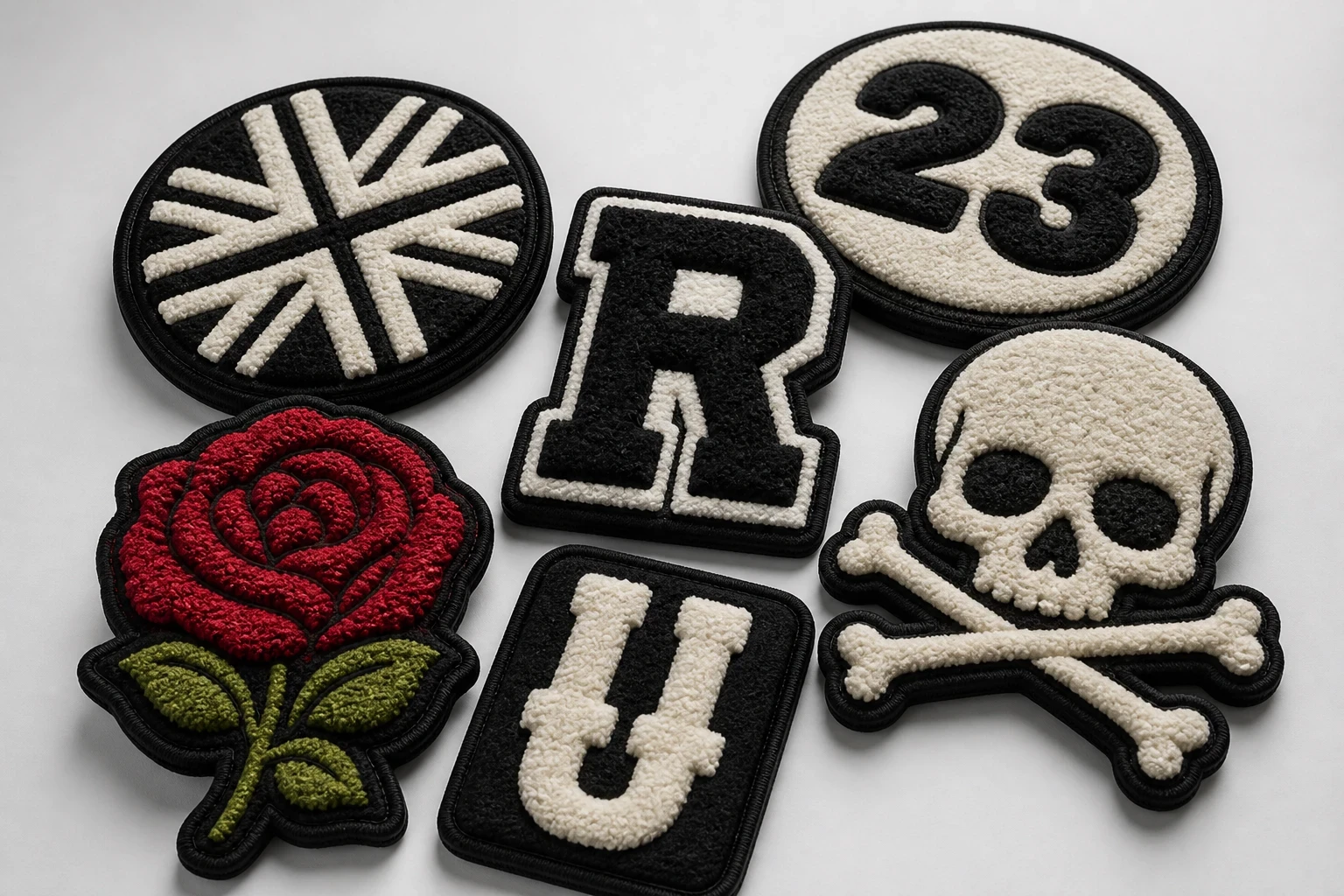
Puff embroidery patches UK are raised patches made by placing foam beneath selected embroidered areas, then stitching over it so the chosen letters or shapes stand proud from the surface. They are a good fit for bold team names, short brand marks, initials and crest details on caps, jackets, polos and workwear. The raised finish is tactile and visible, but it is not the right treatment for every logo.
The Customized Patches makes these patches for UK teams, brands, clubs and businesses. There is a 5-piece minimum per design, a free digital mockup is usually supplied within 12 hours, and production starts only after you approve the artwork. That approval stage matters: a puff design needs slightly different decisions from a standard flat embroidered patch.
What are puff embroidery patches?
Puff embroidery is a form of raised embroidery, often grouped with 3D embroidered patches. A layer of embroidery foam is placed beneath the stitches in selected areas. The needle perforates and secures the thread across the foam, and the exposed material is trimmed away around the stitched sections. The finished area rises above the base fabric instead of sitting flat.
It helps to think of the patch as having two levels. The background, border and supporting details can remain flat, while the main initials or emblem are raised. That contrast often gives a simple logo more presence than adding more colours or extra detail would.
Puff is not the same as adding a heavy amount of thread everywhere. Too much density can make the patch stiff, obscure small gaps and produce a less clean edge. A good production file identifies which parts need height and which parts should stay readable around them.
Why UK teams and brands choose a raised finish
A raised patch catches light differently as the wearer moves. That is useful on football training jackets, club caps and hospitality polos where the logo needs to be noticed at a normal viewing distance. A short wordmark can look more substantial without becoming a large, complicated badge.
Typical enquiries cover designs for football clubs, cadet units, hospitality clothing, biker vests and school blazers. The request is often straightforward: make the initials stand out, give a cap badge more depth, or turn a flat crest into something people can feel. Puff embroidery can do that, provided the design is prepared for the process rather than copied onto foam without changes.
- Sports teams can raise a squad name, player initials or a compact club emblem on jackets and caps.
- Clothing brands can use raised lettering for a stronger chest mark or limited-run accessory.
- Hospitality businesses can add a tactile logo to polos, overshirts and staff outerwear.
- Cadet units and clubs can use a bold insignia where a traditional embroidered crest would otherwise look too flat.
- Biker and motorcycle groups can combine raised lettering with a flat border or merrowed crest; see the biker and motorcycle club patches hub for related options.
There is a practical limit. A raised finish will not rescue an overcrowded design. If the original artwork contains long paragraphs, hairline details or many tiny colour changes, printed patches may be the more honest recommendation because the image can remain flatter and more precise.
Puff embroidery versus flat embroidery, woven and printed patches
The choice is not simply a question of which finish looks most premium. It depends on the logo, the garment, the viewing distance, the washing routine and the amount of information that must remain legible. Printed is flatter; that is the point. It can reproduce gradients, fine outlines and small artwork that raised thread would simplify.
Flat embroidery remains a dependable choice for traditional crests, names and workwear branding. Woven patches use a smoother, tighter surface and can hold finer lettering than standard embroidery. 3D embroidered patches are the closest related product hub for comparing raised effects, while woven patches are worth considering if a clean, level face is more important than texture.
| Patch type | Surface and appearance | Good for | Main trade-off |
|---|---|---|---|
| Puff embroidery | Raised foam-backed thread in selected areas | Bold initials, short names, caps, club and brand marks | Small text and fine gaps may need simplifying |
| Flat embroidered | Thread stitched level with the patch surface | Traditional crests, uniforms, sports badges and workwear | Less height and tactile contrast |
| Woven | Smooth, compact woven face | Fine lettering, detailed linework and flatter branded badges | Less traditional stitch texture and no raised foam effect |
| Printed | Ink or printed artwork on a flat surface | Gradients, illustrations, photographs and very fine detail | Flatter appearance and different wear behaviour from thread |
| PVC | Moulded rubber-like relief | Outdoor, utility, tactical and water-resistant applications | Different visual language from textile embroidery |
| Chenille | Soft, looped yarn with a bold collegiate surface | Varsity lettering, school teams and large sports motifs | Not suited to fine detail or compact small patches |
For a simple cap logo, puff can be the strongest option. For a detailed hospitality crest with small text, a flat embroidered or woven version may be easier to read. For an outdoor kit that gets wet and muddy, compare PVC patches before deciding. Product choice should follow the actual job, not a generic promise that one method suits every garment.
If you want a wider look at the decision, the guide to The Difference Between 3D embroidered patches and flat embroidered patches, Explained covers the visual and production differences in more detail.
Artwork rules for a clean puff patch
The most reliable puff designs are confident and uncluttered. Broad block letters, simple icons and strong outlines give the foam enough room to create a visible edge. A word such as NORTH, UNIT or a short club name can work well. A long sentence in a narrow font is likely to need a different treatment or a larger finished size.
Lettering and negative space
Letters need room for their counters and gaps. Counters are the enclosed spaces in letters such as A, B, D, O and R. If they are too small, stitches and foam can close the opening. Very thin strokes may also lose their shape once the patch is trimmed.
- Use a bold font rather than a light or hairline font.
- Keep separate raised letters from touching unless the design intends a joined shape.
- Allow enough space around the raised areas for the border and surrounding flat embroidery.
- Avoid relying on a tiny line to separate two close colours.
- Check the design at its actual finished size, not only enlarged on a monitor.
- If the logo has a fine slogan, consider making the main mark puff and the slogan flat, woven or printed.
Colour, border and shape
High contrast helps the raised areas read clearly. A dark base with light raised lettering is an obvious example, but tone-on-tone puff can also work for fashion branding where the texture is meant to be discovered up close. The border may be a standard stitched edge or a merrowed crest-style finish, depending on the shape and specification.
Send vector artwork if you have it, but do not worry if the first file is a clear PNG, JPG or PDF. The useful information is the actual logo, desired dimensions, thread colours and the parts you want raised. A mockup should show the intended construction rather than simply place a 3D-looking filter over a flat image.
For a fuller artwork checklist, see How to Design Artwork for 3D embroidered patches That Production-Ready. It is particularly useful for brands that have supplied digital artwork but have not ordered embroidered goods before.
Not sure whether your logo needs raised thread, flat embroidery or ink? Send the artwork and intended garment for a free digital mockup, usually within 12 hours, so you can compare the finish before producing the order.
GET A FREE MOCKUPChoosing the patch size and garment
Size is decided by the garment and the viewing distance. A patch on the front of a cap usually has less usable width than one on the back of a jacket. A school blazer badge may need to fit an existing chest position, while a football warm-up jacket can allow a larger back or sleeve design.
| Use case | Typical planning question | Puff design advice |
|---|---|---|
| Caps | Will the design follow the curved front panel? | Keep the shape compact and the lettering bold; check the patch does not become too tall for the panel. |
| Football or club jackets | Will players see the badge at arm's length or across a pitch? | Use a clear club mark and strong contrast; avoid packing small committee or sponsor details into the same patch. |
| Nylon shells | Will the shell flex and will heat affect the fabric? | Sew-on or hook-and-loop can be safer choices than relying on heat-sensitive adhesive. |
| Wool coaches | Does the garment already have a soft, textured surface? | A sewn patch often suits the material; confirm placement and edge shape before production. |
| School blazers | Must the badge match a formal uniform position? | Check the approved crest colours, finished width and application method with the school or supplier. |
| Velcro panels | Is the patch being removed regularly? | Specify hook backing to match the loop panel; do not assume a standard iron-on back will work. |
A practical test is to print the design at the intended width and hold it against the garment. If the lettering is already difficult to read on paper, raising it will not automatically solve the problem. The finished patch also needs room for a border, so measure the clear area rather than the whole front or sleeve.
For backing, Custom embroidered patches UK Sizing and Backing Options Explained gives a useful comparison of sew-on, iron-on and hook-and-loop choices. Backing is part of the specification, not an afterthought.
Backing options: sew-on, iron-on and Velcro
Sew-on is the dependable option for many jackets, bags, wool garments and items that will be washed regularly. It does take longer to apply, and the stitch line may be visible if the garment is thin. For nylon shells, sewing is often preferable to applying high heat directly to the fabric.
Iron-on backing is convenient for suitable cotton or cotton-blend garments, but it depends on correct temperature, pressure and a clean surface. It is common to see iron-on patches peel after a dryer cycle, especially when the application instructions were ignored or the garment was not suitable for heat. A raised puff patch can also be more vulnerable if the edge is repeatedly caught or pressed.
Hook-and-loop backing suits removable patches on loop panels, tactical clothing, bags and some club kit. State clearly that you need a hook back when requesting a quote. A standard backing cannot be treated as a substitute for a properly matched Velcro panel.
| Backing | Best suited to | Watch for |
|---|---|---|
| Sew-on | Jackets, wool coaches, bags, uniforms and frequent-wash garments | Application takes longer and needs a suitable stitch route |
| Iron-on | Suitable cotton and blended garments where quick application matters | Heat, washing and tumble drying can affect adhesion |
| Hook-and-loop | Removable patches and garments with loop panels | The garment must have a compatible loop surface |
If a customer asks for a patch that can move between several jackets, hook-and-loop is usually the sensible route. If the patch is going on a permanent uniform item, sew-on may provide the better long-term result. The correct answer depends on the garment rather than the patch alone.
How much do puff embroidery patches cost in the UK?
There is no single price for every puff patch because the quotation depends on the finished dimensions, quantity, shape, backing, number of thread colours, stitch coverage and artwork preparation. A small run of five complex patches can have a different unit price from a larger run of a simple one-colour badge.
The 5-piece minimum per design makes small team and trial orders possible, while larger quantities can change the unit economics. Ask for the price based on the final specification rather than comparing a headline figure that leaves out the backing or artwork work.
- Finished width and height: larger patches use more base material and thread.
- Raised area: a design with several separate puff sections may require more setup and careful trimming.
- Quantity: five pieces, a team order and a brand production run are quoted differently.
- Backing: sew-on, iron-on and hook-and-loop involve different materials and handling.
- Shape and edge: a simple rectangle may be more straightforward than a complicated contour or merrowed crest.
- Artwork condition: a production-ready vector file can reduce redraw work, while unclear artwork may need clarification.
Pounds sterling is the sensible basis for a UK quote, and delivery requirements should be stated at the start if the patches are needed for a match, launch, school term or event. The embroidered patches hub is the right place to compare standard embroidered options and request a specification-based quote.
Ordering puff embroidery patches from The Customized Patches
Start with the design, quantity and garment rather than asking only for a size. A useful quote request says, for example: 20 raised chest patches, 3.5 inches wide, dark base, white puff initials, sewn backing, for cotton-blend team jackets. That gives our team something practical to assess.
- Send the logo or artwork and state the finished size in inches.
- Explain which letters or shapes should be raised and which areas should remain flat.
- Name the garment: cap, polo, nylon shell, wool coach, blazer, bag or Velcro panel.
- Choose the backing and tell us if the patch must be removable.
- Confirm quantity, colours and any required delivery date within the United Kingdom.
- Review the free digital mockup, usually supplied within 12 hours.
- Request any changes, then approve the final specification.
- Production begins only after approval, followed by dispatch according to the agreed order details.
A mockup is not a decorative extra. It is the point where the size, lettering, raised areas, border, colours and backing can be checked together. If you spot that the club name is too small for the sleeve or that the hook backing is missing, it is much easier to correct before production than after the patches are finished.
The A Step-by-Step Guide to Ordering 3D embroidered patches follows a similar process and is useful if several people in a club or business need to approve the same artwork.
Lead times, approval and UK delivery planning
Allow time for artwork questions and approval before counting on production and UK-wide shipping. A straightforward logo with a confirmed size and backing is easier to move through the process than an artwork file that changes after the first mockup.
If you have a fixed date, include it in the first message. Tell us whether the patches are for a football fixture, school presentation, staff launch, trade event, club ride or clothing release. That does not remove the need for approval, but it allows the order to be assessed against the required schedule.
Do not book garment application before the patch specification is confirmed. A change from 3 inches to 4 inches, or from sew-on to hook-and-loop, can affect the layout and the application plan. Keep the approved mockup with the order details so the person receiving the patches knows what was agreed.
Name sew-on, iron-on or hook-and-loop on the quote and include the garment you are using. We show the proposed raised areas and backing on a free digital mockup, usually within 12 hours, and produce only after approval.
GET A FREE MOCKUPCare and application advice
Application instructions depend on the backing, but the garment label still comes first. For sew-on patches, use thread that suits the patch edge and garment, and stitch around the perimeter without pulling the fabric into puckers. For iron-on patches, use the recommended protective layer and pressure, then let the adhesive cool before testing the edge.
Raised embroidery should not be crushed unnecessarily. Avoid placing a hot iron directly over the puff surface, and take care with tumble drying because heat and repeated movement can affect both adhesive and foam. If a patch is going on a nylon shell, check the shell manufacturer's heat guidance before choosing iron-on.
- Wash the garment according to its care label.
- Turn garments inside out where practical to reduce rubbing on the raised surface.
- Do not pull loose thread or trim the patch edge with household scissors.
- Inspect iron-on edges after washing, particularly if the item has been tumble dried.
- Use sew-on or hook-and-loop where a removable or heat-sensitive application is required.
For high-use teamwear, a sewn patch is often easier to maintain than an adhesive-only solution. For occasional branded caps, iron-on may be perfectly practical if the cap and application instructions allow it. The right backing is a durability decision as much as a convenience decision.
Common mistakes UK buyers make
The first mistake is treating a screen-sized logo as a patch-sized logo. A design can look clear at 800 pixels on a laptop and fail at 2.5 inches on a sleeve. The second is raising every element. Selective height normally gives a cleaner result than covering the whole badge in foam.
Another common problem is choosing the backing at the end. A patch for a Velcro panel needs hook backing from the start. A patch for a nylon shell may need sewing rather than heat. A blazer badge may have a formal application requirement that rules out a casual adhesive solution.
- Ordering before checking the actual garment space.
- Using narrow fonts or tiny text because the logo looks good on screen.
- Assuming puff will reproduce gradients or photographic detail like print.
- Forgetting to specify the raised areas.
- Selecting iron-on for a fabric that cannot safely take the required heat.
- Approving the mockup without checking the backing, dimensions and colours.
- Expecting a 5-piece order to have the same unit price as a large production run.
- Changing the artwork after approval and expecting production to follow the earlier version.
The easiest safeguard is a written specification: design name, size in inches, quantity, base colour, thread colours, raised sections, border, backing, garment and deadline. That short list prevents most avoidable misunderstandings.
Are puff embroidery patches right for your project?
Choose puff if the main goal is a raised, tactile mark with bold lettering or a simple emblem. It is particularly suitable when the patch will be seen on caps, jacket fronts, chest positions or club kit at a normal distance. The best results are usually designs with one clear focal point.
Choose a different method if accurate fine detail matters more than height. A printed patches option may suit artwork with gradients or illustrations. Chenille patches can be better for large collegiate lettering, while leather patches offer a different material and appearance for heritage clothing and accessories.
You do not always need to choose one method for the entire design. A practical solution may use puff for the main initials, flat embroidery for a border and woven or printed detail for a small slogan. The mockup stage is the right place to test that combination.
Frequently asked questions about puff embroidery patches UK
Frequently asked questions
What are puff embroidery patches UK?
Puff embroidery patches UK are raised embroidered patches made with foam beneath selected stitched areas. The foam creates height under bold letters, initials or simple logo shapes, while other sections can remain flat. They are commonly used on caps, jackets, teamwear, workwear and branded clothing.
What is the minimum order for puff patches?
The Customized Patches has a 5-piece minimum per design. The quantity, finished size, backing, shape, thread colours and raised areas all affect the quotation, so send the complete specification rather than asking only for a unit price.
How quickly can I see a puff patch mockup?
The Customized Patches usually provides a free digital mockup within 12 hours. The mockup should be checked for dimensions, colours, raised areas, border, backing and garment suitability. Production starts only after the artwork has been approved.
Can puff embroidery include small text?
It can include some smaller lettering, but very fine text may lose clarity because foam and dense stitches reduce the available gaps. Bold fonts, larger finished dimensions and short words are safer. A slogan may need to stay flat, woven or printed while the main logo is raised.
Which backing is best for a nylon jacket or Velcro panel?
For a nylon jacket, sew-on is often preferable if the fabric is sensitive to heat, although the garment manufacturer's guidance should be checked. A Velcro panel needs a compatible hook backing. Standard iron-on backing is not a replacement for a hook-and-loop attachment.
Can puff patches be ironed or tumble dried?
It depends on the backing and garment. Iron-on patches require suitable heat, pressure and application conditions, while direct heat over the raised foam should be avoided. Tumble drying can affect adhesive and edges, so follow the garment and patch care guidance and consider sew-on backing for frequently washed items.
Ready to produce custom patches for your UK team or brand?
GET A FREE MOCKUP