
How to Choose the Right puff embroidery patches UK for Your Brand
Choose puff embroidery patches UK by checking the logo shape, finished size, foam depth, thread detail, border and backing against the garment it will decorate. Use raised puff embroidery for bold, compact marks on caps, jackets, polos and bags. The Customized Patches provides a free digital mockup usually within 12 hours, with production starting only after approval and a 5-piece minimum per design.
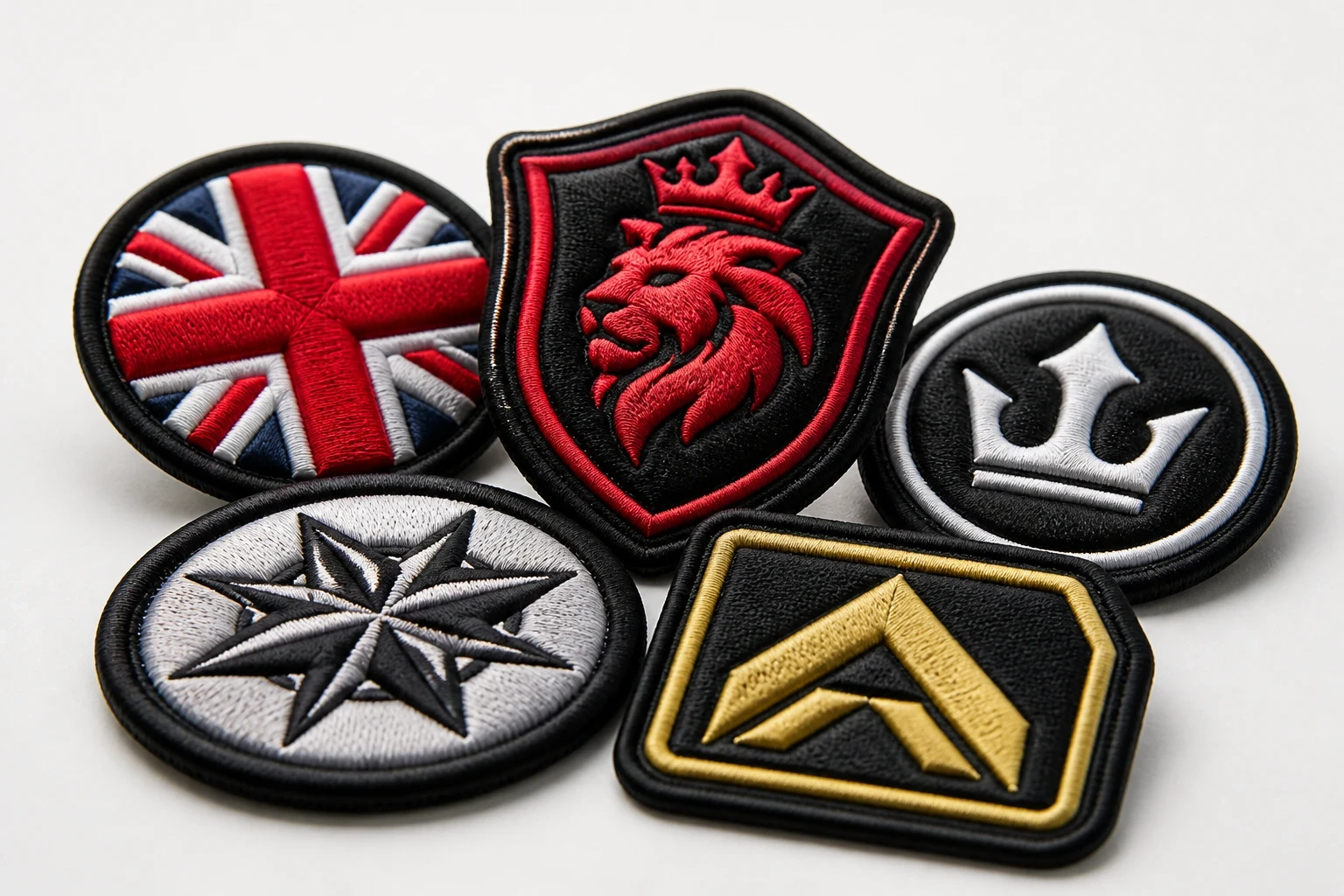
Key takeaways
- Puff embroidery works best for bold, simple logos with lettering that remains legible at the finished size.
- A free digital mockup usually arrives within 12 hours, and The Customized Patches produces only after artwork approval.
- The minimum order is 5 pieces per design, so small UK teams can test a design without ordering a large run.
- Sew-on, iron-on and Velcro backings suit different garments; the correct choice depends on the fabric, washing routine and intended use.
The best puff embroidery patches UK designs use a simple, bold logo, a suitable finished size and a backing that matches the garment. Raised foam gives the mark a three-dimensional face, so it is particularly effective on caps, varsity jackets, work polos, bags and club outerwear.
The Customized Patches checks the artwork before production and provides a free digital mockup usually within 12 hours. You approve the design first, then production begins. The minimum order is 5 pieces per design, which suits a small football squad, a new clothing label or a local business testing branded workwear.
Start with the job your patch needs to do
A patch on a football club tracksuit has a different job from one on a café apron. The tracksuit badge may need to identify a team at a distance, while the café patch may need to carry a short wordmark on a chest pocket. Both can use puff embroidery, but the artwork and dimensions should not be identical.
Before choosing thread or foam, write down where the patch will be worn, how often the garment will be washed and whether the patch needs to come off later. A biker vest, for example, may need a large sew-on back piece and smaller front crests. A Velcro panel on a nylon shell needs a different construction from a permanent badge on a wool coaches jacket.
- For caps and beanies, choose a compact symbol or short wordmark. Curved surfaces make long lettering harder to read.
- For polos and hospitality shirts, use a controlled size that sits comfortably on the chest and does not cover the garment's existing details.
- For school blazers, check the badge position and make sure the border does not look oversized beside the pocket or crest.
- For football, rugby and netball kit bags, a slightly larger design can work because the surface is flat and the item is viewed from several feet away.
- For biker and motorcycle club garments, plan the relationship between the central back piece, shoulder patches and front crests before ordering.
If the brief needs a traditional, flatter badge rather than a raised face, compare embroidered patches with printed patches. Printed is flatter; that is the point. It can hold photographic shading, very small tonal changes and long text that would be difficult to build with raised foam.
Choose artwork that survives the raised treatment
Puff embroidery is not a magic way to make every logo look better. Foam sits beneath the stitches and lifts selected areas above the patch surface. Large letters, block initials, simple animals, shield shapes and uncomplicated icons usually give the clearest result.
The usual failures are predictable. A thin script word closes up. Small counters inside an A, R or B disappear. Closely packed outlines create a dark ridge rather than separate details. A detailed mascot with tiny eyes and multiple narrow colour sections may need flat embroidery or a printed treatment instead.
Lettering, gaps and line weight
At small sizes, the inside gaps of letters need enough room for the foam and stitches to remain distinct. The exact result depends on the finished size, font, thread and production setup, so an artwork file alone is not enough to judge. That is why the digital mockup matters.
Ask for the wording to be checked at its real patch dimensions rather than enlarged on a monitor. A two-inch chest badge may look clear on screen but lose its small strapline once reduced. If the strapline is not essential, remove it. A strong main mark is usually more useful than a crowded badge.
Colour and contrast
Puff thread is most readable when the raised area contrasts with the base fabric and border. A white foam-filled letter on a pale cream twill can lose definition, while the same letter on navy may be immediately clear. Metallic, neon and very close colour matches should be checked in the mockup rather than assumed from a screen.
Keep your brand colours in the brief, but also describe the garment colour. A red logo may need a slightly different thread choice on black than on a royal-blue polo. The patch is part of a complete garment, not an isolated digital square.
Select the right size, foam height and border
Size is measured across the finished patch, including the border. If your available space is 3 inches wide, the stitched design cannot use the full 3 inches without looking cramped. Leave room for the edge and consider buttons, seams, pockets and curved panels.
For caps, widths around 2 to 4 inches are common starting points, but the cap panel and logo shape matter more than a standard number. A tall crest may need a narrower width and greater height. A horizontal wordmark may need the opposite. On jackets and bags, a larger patch can carry more visual weight, provided the fabric supports it.
| Specification | What it changes | Good starting use | Point to check |
|---|---|---|---|
| Finished width and height | Controls readability, garment balance and available detail | Caps, polos, jackets, bags and team kit | Measure the actual panel, including seams and pockets |
| Low raised foam | Adds a modest lift while keeping the design relatively restrained | Hospitality polos, schoolwear and clean brand marks | Check that small lettering remains open |
| Higher raised foam | Creates a stronger three-dimensional profile and shadow | Caps, streetwear, varsity jackets and bold club logos | Fine lines and narrow gaps may become unsuitable |
| Merrowed border | Creates a rounded stitched edge around the patch | Traditional crests, club badges and general-purpose patches | Allow for the border in the finished measurements |
| Laser-cut or stitched edge | Can suit sharper shapes or a cleaner modern outline | Geometric marks and less traditional branding | The edge should match the base material and use |
| Sew-on backing | Provides a permanent attachment when properly stitched | Biker vests, jackets, uniforms and heavy bags | Consider the fabric, access and sewing route |
| Iron-on backing | Offers quick application with heat and pressure | Suitable garments where the care routine supports it | An iron-on patch can peel after a dryer cycle if applied or washed incorrectly |
| Hook-and-loop backing | Allows the patch to be removed and replaced | Tactical-style panels, work kit and interchangeable team identifiers | The garment must already have a compatible panel |
The foam height is a visual choice and a practical one. Higher relief makes a compact logo stand out on a cap, but it can catch more easily on a rough surface. A restrained lift may be better for a polo that goes through frequent washing and regular handling.
For a deeper comparison of dimensions and attachment methods, see 3D embroidered patches Sizing and Backing Options Explained. Puff embroidery is often described as 3D embroidery, although the exact construction, height and selected areas should be confirmed in the quoted design.
Not sure whether a raised thread treatment or a flatter printed version will hold your logo? Send the artwork and garment details for a free digital mockup usually within 12 hours, then compare the finish before you produce. The Customized Patches uses a 5-piece minimum per design and starts production only after approval.
Match the backing to the UK garment
Backing is easy to overlook because customers naturally focus on the front. In practice, it decides how the patch is fitted, removed and washed. A permanent sew-on patch is sensible for a heavy wool coaches jacket, but less convenient for a work shirt that needs frequent replacement.
Not sure whether a raised thread treatment or a flatter printed version will hold your logo? Send the artwork and garment details for a free digital mockup usually within 12 hours, then compare the finish before you produce. The Customized Patches uses a 5-piece minimum per design and starts production only after approval.
GET A FREE MOCKUPSew-on is often the safest choice for biker vests, denim, canvas bags, thick jackets and uniforms that will be used hard. It needs access for a needle and thread, and the stitch line should follow the border. On a lined garment, a tailor or alterations shop may be the easiest route.
Iron-on can be useful for suitable cotton or blended garments, but it is not a substitute for checking the care label. Heat, pressure and a clean surface are required. An iron-on patch that looks fine on day one can peel after a dryer cycle if the adhesive has not bonded properly or the garment is washed too aggressively.
Hook-and-loop is useful for removable identifiers, changing names or role patches. It makes sense on an existing Velcro panel, but it adds thickness and may not suit a slim polo. A nylon shell can also need care during application because excessive heat may mark or distort the fabric.
- Choose sew-on for long-term attachment on denim, leather-look garments, wool coaches jackets, biker vests and heavy outerwear.
- Choose iron-on only after checking the fabric, application instructions and washing method.
- Choose hook-and-loop for removable patches on compatible panels, not as a general replacement for sewing.
- Tell the quote team if the garment is lined, waterproof, stretchy, ribbed or heat-sensitive.
- Order a sample or small run when the garment is unusual, expensive or difficult to replace.
Compare puff embroidery with other patch finishes
The right choice depends on the artwork and the wearing conditions, not on which finish sounds most premium. A raised patch gives a tactile face and a clear shadow, but it has limits on tiny detail. A woven patch gives a smoother, finer surface. A printed patch handles gradients and small tonal artwork more freely.
| Patch type | Best suited to | Main strength | Main limitation |
|---|---|---|---|
| Puff embroidery | Bold logos, initials, caps, varsity clothing and streetwear | Raised three-dimensional lettering and symbols | Fine detail and small text may close up |
| Flat embroidered | Traditional crests, uniforms, schoolwear and team badges | Familiar stitched texture and strong border definition | Very small detail may still need simplifying |
| Woven | Fine lettering, detailed emblems and flatter branded labels | Smooth surface with sharper small details | Does not provide the raised foam effect |
| Printed | Photographic designs, gradients and long small wording | Flat artwork reproduction with broad colour flexibility | Less tactile and may show wear differently from thread |
| PVC | Outdoor kit, workwear, utility clothing and modern badge systems | Wipe-clean surface and defined moulded shapes | Different look and feel from thread-based embroidery |
| Chenille | Varsity jackets, college clubs and large letter patches | Soft, woolly texture with strong collegiate character | Not ideal for tiny detail or a very compact logo |
| Leather | Premium accessories, work bags and heritage-style branding | Natural or structured material appearance | Artwork and edge treatment need to suit the material |
A football club may use puff embroidery for a sponsor-free initials badge on caps, flat embroidered patches for a detailed crest and woven patches for a small equipment label. That is not inconsistent branding. It is choosing the construction that keeps each application readable.
For outdoor workwear, look at PVC patches. For college-style lettering, chenille patches may be a better fit. For a leather accessory or heritage collection, compare leather patches. The finished product should support the brand use rather than force one material onto every item.
Use a mockup to catch expensive-looking mistakes
A digital mockup is not just a colour preview. It helps show the patch at a proposed size, on a proposed garment and with a proposed backing. It can reveal that the border is too wide, the lettering is too small or the raised section competes with a pocket seam.
Send the cleanest artwork available, but do not delay a quote because you only have a low-resolution file. A production desk can usually tell you what needs redrawing or simplifying. Include a vector file if available, the preferred thread colours, approximate dimensions, quantity, garment type and delivery postcode.
What to check on the proof
- Is the logo recognisable at the actual proposed size rather than enlarged on screen?
- Are letters, counters and gaps still open?
- Does the raised section cover the correct parts of the artwork?
- Is the border included in the quoted finished measurement?
- Does the thread contrast with the patch base and garment?
- Is the chosen backing shown correctly?
- Will the patch sit clear of zips, pockets, seams and Velcro panels?
- Does the mockup show the same wording and spelling you intend to order?
The Customized Patches provides a free digital mockup usually within 12 hours. Production only follows approval, so use that stage to ask direct questions. If the first version is too busy, request a simplified version. It is far better to adjust the artwork on screen than to discover the problem after a batch has been made.
Plan quantity, pricing and delivery in the UK
The minimum order is 5 pieces per design. You can therefore order five identical patches for a small club committee, or a larger run for a full team, provided each design meets the minimum. If you need three different badge versions, treat them as three designs when planning quantities.
A quote normally depends on size, shape, stitch coverage, foam treatment, border, backing, number of colours, quantity and delivery requirements. A large dense back patch uses more material and production time than a small two-inch chest mark. Changing from sew-on to hook-and-loop can also affect the specification.
Give a real deadline rather than saying the order is urgent. Tell the production team when the garments must be worn, where they are going in the United Kingdom and whether there is a fixed event such as a match, trade show, wedding, graduation or launch. Artwork approval time sits before production, so a prompt decision helps keep the order moving.
UK-wide shipping should be planned around the finished goods, not only the dispatch date. Allow time for proof approval, manufacture, packing and delivery. If you are ordering for a team, count the spare pieces you may need for late joiners or replacements before confirming the quantity.
Name sew-on, iron-on or Velcro on the quote. The correct backing should be shown on the free mockup so the production specification matches the garment. If you are still comparing options, the free mockup quote is the sensible place to include the artwork, dimensions, quantity and deadline.
Name sew-on, iron-on or Velcro on the quote. The correct backing should be shown on a free digital mockup usually within 12 hours, so production matches the garment. The Customized Patches produces only after approval, with a 5-piece minimum per design.
GET A FREE MOCKUPExamples from clubs, brands and working garments
A football club ordering caps for coaches might use a 3-inch raised initial badge with a merrowed crest and sew-on backing. The same club's detailed shield may work better as a flatter embroidered badge on a blazer, where small lettering and internal symbols matter more than height.
A cadet unit may need removable identifiers on compatible Velcro panels. In that case, hook-and-loop is more practical than iron-on. The patch should be checked against the panel width, the uniform fabric and the way the garment is laundered.
A hospitality business often needs branding on polos and aprons. A compact raised monogram can look clear on the chest, but a long restaurant name may be better as flat embroidery or a printed patch. The best result may be two treatments within the same visual identity.
Biker and motorcycle club patches usually involve several pieces and a planned layout. A large back piece, rocker shapes and front crests must be sized together, especially on leather or heavy denim. See the dedicated guide to biker and motorcycle club patches before finalising a complete vest arrangement.
For school blazers, keep the badge proportionate to the pocket and school colours. A merrowed crest with modest relief can work well, but a very high foam treatment may feel out of place beside a formal uniform. The garment's age, care instructions and replacement process should guide the backing.
A practical ordering checklist
Use the checklist below before sending the final confirmation. It covers the details that most often cause a delay or a second round of artwork. You do not need specialist terminology; clear information about the garment and intended use is more helpful than a guessed technical specification.
- State the finished patch shape and approximate width and height in inches.
- Upload the best available logo file and identify the exact wording.
- Mark which areas should be raised and which areas should remain flat.
- List the thread colours and describe the garment colour.
- Choose a border treatment or ask for a recommendation.
- Select sew-on, iron-on or hook-and-loop backing.
- Confirm the garment type, fabric, lining and washing routine.
- State the quantity for each separate design, remembering the 5-piece minimum per design.
- Give the UK delivery address or postcode and the date the patches are needed.
- Review the free digital mockup and approve it before production starts.
If you are uncertain about the construction, compare the Puff embroidery patches UK: Everything UK Buyers Need to Know guide with the more general custom embroidered patches UK Sizing and Backing Options Explained. Both questions are worth asking before the quote is approved: how will the patch be attached, and will the design still be clear at the size you can actually use?
Final decision: is puff embroidery right for your brand?
Choose puff embroidery if your brand mark is bold, your main message benefits from height and the garment can carry a tactile raised badge. It is a strong option for short names, initials, simple mascots and confident symbols on caps, jackets, polos, bags and clubwear.
Choose another finish if the artwork depends on fine lines, photographs, soft gradients or a long amount of small text. A flatter embroidered, woven or printed patch may communicate the design more accurately. Printed is flatter; that is the point, and it can be the more professional decision for the right brief.
The Customized Patches supplies UK customers with a free digital mockup usually within 12 hours. Production begins only after you approve the design, and every design has a 5-piece minimum. Send the artwork, garment, quantity and deadline so the recommendation is based on the item you will actually use.
Frequently asked questions
What are puff embroidery patches UK customers usually using?
Puff embroidery patches UK customers commonly use on caps, varsity jackets, football and rugby kit bags, branded polos, schoolwear, workwear, bags and club clothing. They suit bold logos, initials and simple lettering because selected areas are raised with foam beneath the stitches.
What is the minimum order for puff embroidery patches?
The minimum order is 5 pieces per design. If you have two different logo versions, each version is treated as a separate design. The Customized Patches can quote a larger quantity for teams, clothing brands, clubs and business workwear.
How quickly can I see a mockup?
The Customized Patches provides a free digital mockup usually within 12 hours. The timing can depend on receiving usable artwork and clear instructions about size, colours, backing and garment type. Production starts only after you approve the mockup.
Can puff embroidery go on a nylon shell or Velcro panel?
It can, but the attachment method needs checking. A nylon shell may be heat-sensitive, so iron-on should not be assumed. A Velcro panel normally requires compatible hook-and-loop backing. Send a garment photograph or product specification so the backing can be shown correctly on the mockup.
Are puff embroidery patches washable?
Washability depends on the patch construction, backing, garment and care method. Sew-on patches are often chosen for garments that receive regular use. Iron-on patches need correct heat application and care; an iron-on patch can peel after a dryer cycle if the adhesive does not suit the garment or the heat is too high.
Should I choose puff embroidery or printed patches for a detailed logo?
Choose puff embroidery for bold raised sections and short, clear wording. Choose printed patches when the logo includes gradients, photographic detail, very small tonal changes or longer fine text. The Customized Patches can show both directions in a free digital mockup usually within 12 hours before you approve production.
Ready to produce custom patches for your UK team or brand?
GET A FREE MOCKUP