
Puff embroidery patches UK: Everything UK Buyers Need to Know
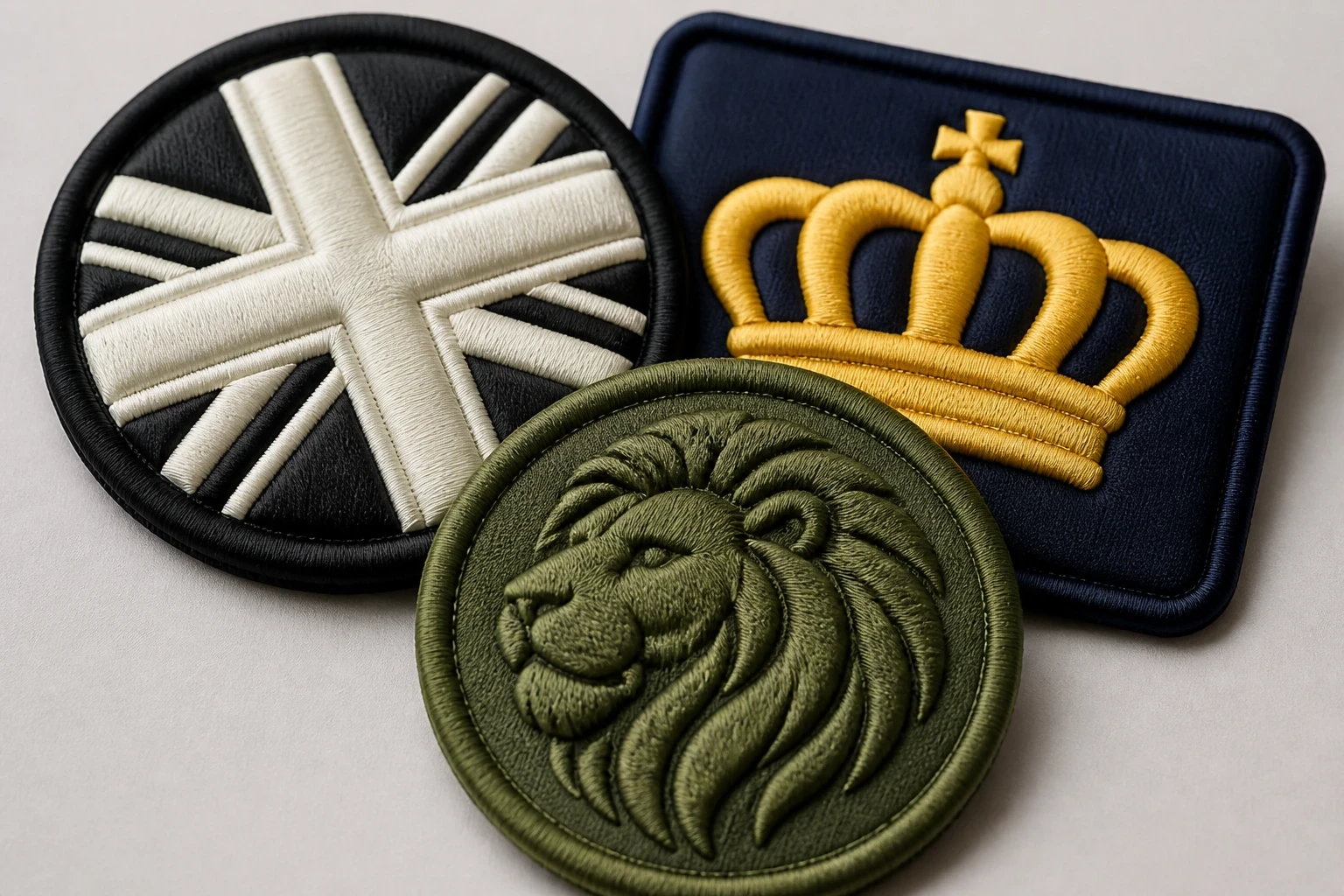
Puff embroidery patches UK are raised embroidered badges made with foam beneath selected stitching, giving logos, initials and lettering a three-dimensional finish. They suit caps, jackets, uniforms, bags and branded clothing, but fine detail is limited. The Customized Patches provides a free digital mockup usually within 12 hours, with a 5-piece minimum per design and production only after approval.
Key takeaways
- Puff embroidery patches use foam beneath selected stitches to create a raised, three-dimensional surface.
- Large lettering, bold logos and simple shapes usually work better than tiny text or intricate linework.
- The Customized Patches has a 5-piece minimum per design and sends a free digital mockup usually within 12 hours.
- Production starts only after approval, so the mockup is the right time to confirm size, thread, border and backing.
Puff embroidery patches UK are raised embroidered patches made with foam beneath selected areas of stitching. They give bold logos, initials and lettering a three-dimensional finish, particularly on caps, jackets, teamwear and branded clothing. The Customized Patches offers a 5-piece minimum per design, a free digital mockup usually within 12 hours, and production only after you approve the artwork.
The raised effect looks distinctive, but it is not the right treatment for every logo. Large shapes and bold lettering tend to hold their form; tiny text, narrow gaps and detailed illustrations can lose clarity once foam and dense thread are involved. This guide covers the practical decisions UK teams, clubs, brands and businesses need to make before ordering.
What are puff embroidery patches?
Puff embroidery is a form of three-dimensional embroidery. A layer of foam is placed over the patch fabric and stitched through. Once the embroidery is complete, the excess foam is removed, leaving the selected areas raised above the surrounding fabric. The patch may still include ordinary flat embroidery around the puffed sections.
A good example is a football club badge with raised initials across the centre and a flat merrowed crest around the edge. A clothing brand might use raised block lettering on a cap, while a hospitality company could use a small three-dimensional emblem on a heavyweight jacket. The finish is tactile rather than printed, so the light catches the thread and the foam gives the design extra depth.
Puff is often described as 3D embroidery, although not every 3D patch is made in exactly the same way. For a wider look at the construction, see 3D embroidered patches and the guide to The Difference Between 3D embroidered patches and flat embroidered patches, Explained.
Why UK buyers choose a raised finish
The main reason is visibility. A raised word or symbol can stand out on a dark cap, a team jacket or a plain workwear garment without relying on a large printed area. Puff embroidery also gives a patch a more physical, branded feel. People notice it by touch as well as sight.
That makes puff patches useful for football and rugby clubs, gym and fitness brands, independent clothing labels, biker groups, school societies and businesses issuing staff clothing. They can also give a limited run of merchandise a stronger identity, provided the design has enough space for the raised sections to read clearly.
- Caps and five-panel hats with bold front lettering.
- Varsity, bomber and coach jackets for teams, clubs and brands.
- Workwear and hospitality jackets where a simple logo needs extra presence.
- School blazers and activity clothing using large initials or a simplified crest.
- Bags, rucksacks and kit bags with a bold emblem.
- Velcro panels for removable club, security, outdoor or event identifiers.
- Biker and motorcycle club garments where large lettering and strong borders are common.
For biker clothing, compare the format with biker and motorcycle club patches. A puff treatment can work on a centre word or simple emblem, but a traditional multi-line back patch may need flat embroidery or a mixture of flat and raised stitching so every letter remains legible.
Artwork and design rules for puff embroidery
Puff embroidery rewards restraint. It is not a method for copying every fine detail from a screen logo into thread. The production file needs clear shapes, sensible gaps and lettering that remains readable at the finished size.
Use raised areas selectively
A whole patch does not need to be raised. Often the best result combines a flat embroidered base with puffed initials, a central icon or one line of lettering. This creates contrast and avoids making the surface look crowded.
Allow for readable lettering
Small text is the most common problem. Letters with narrow counters, such as the inside of an e or a, can close up when stitched. Thin strokes may not support the foam cleanly. If a club name must appear, increasing the patch width or shortening the wording is usually more useful than simply adding more thread.
Keep shapes bold
Strong outlines, block type, simple icons and generous spacing are reliable choices. Fine gradients, photographic shading and tiny internal marks are not. A designer can often simplify an existing logo without changing its identity, but that decision should be checked in the mockup rather than assumed.
- Send vector artwork if available, but a clear PNG or PDF can also be reviewed.
- State which parts should be raised and which parts should stay flat.
- Give the finished width or height in inches rather than only saying small or large.
- Mention the garment colour so thread contrast can be assessed properly.
- Ask for a flat embroidered alternative if the artwork contains small lettering.
- Check the border, corners and negative space, not just the central logo.
The How to Design Artwork for 3D embroidered patches That Production-Ready guide goes further into file preparation. The key point is simple: the digital artwork is a starting point, not a guarantee that every fine line will translate perfectly into a raised patch.
Puff embroidery patches UK: choosing size, border and backing
Size should be chosen from the garment and the viewing distance. A patch intended for the front of a cap has less usable width than a back-of-jacket design. A school blazer badge needs to sit comfortably within the chest area, while a team jacket may allow a larger crest on the back or sleeve.
Not sure whether your logo should be raised, flat, or split between both treatments? Send the artwork and the garment details. We provide a free digital mockup usually within 12 hours so you can check the size, colours and raised areas before production.
GET A FREE MOCKUPMeasure the usable panel rather than the entire garment. For example, a Velcro field might be 3 by 2 inches even though the jacket itself is much larger. If the patch will sit over a seam, pocket or zip, leave room for the garment to move and for the border to remain visible.
| Specification | Practical guidance | Common issue if overlooked |
|---|---|---|
| Finished size | Give the width and height in inches, or the maximum space available on the garment. | The patch covers a seam, sits too close to a zip or looks too small on a large jacket. |
| Raised area | Use puff for bold lettering, initials and simple symbols; keep detailed information flat where needed. | Small counters close up and fine lines become difficult to read. |
| Border | A merrowed or embroidered border helps define the patch and protects the edge visually. | The design appears unfinished or the outline is lost against the garment. |
| Sew-on backing | A dependable option for jackets, wool, canvas, bags and items that will be washed regularly. | Extra stitching time is needed, and the patch must be sewn securely around its edge. |
| Iron-on backing | Useful for suitable cotton or stable fabric when a quick application is wanted. | The adhesive can peel after a dryer cycle or fail on nylon, coated fabric or a heavily textured garment. |
| Velcro backing | Suitable for removable patches and garments already fitted with a hook-and-loop panel. | The patch may not sit correctly if the loop panel is a different size or shape. |
Backing affects the job as much as the front design. Sew-on is generally the safest choice for wool coaches, canvas bags and garments that receive hard wear. Iron-on can be convenient, but it needs a compatible fabric and correct heat. It is common to see iron-on patches peel after a dryer cycle, particularly where the garment was not pressed at the recommended temperature or had a coated surface.
Nylon shells need particular care because excess heat can mark, distort or damage the fabric. Velcro is practical for removable identifiers, but it is only useful if the garment already has a properly sized loop panel. Read the 3D embroidered patches Sizing and Backing Options Explained guide before confirming the back.
Puff versus flat embroidery, woven and printed patches
Puff is not automatically better than every other patch type. It solves a particular visual problem: making selected shapes stand proud from the surface. If the job needs tiny wording, a photographic image or a very flat finish, another construction may be more suitable.
| Patch type | Best suited to | Strengths | Trade-offs |
|---|---|---|---|
| Puff embroidery | Bold logos, initials, caps, jackets and raised brand lettering. | Tactile surface, visible depth and strong impact on simple designs. | Fine detail and small text are restricted; raised areas can be harder to clean. |
| Flat embroidered | Club crests, uniforms, workwear and designs needing traditional thread coverage. | Text and linework can be more controlled than puff, with a familiar stitched appearance. | Less height and texture than puff; very fine detail still needs checking. |
| Woven | Detailed badges, small text and smooth graphic designs. | Fine lines and compact lettering can remain clearer because the surface is flatter. | It does not provide the raised, tactile effect of puff. |
| Printed | Gradients, photographs, fine artwork and large colour areas. | Very detailed imagery and tonal changes are possible; printed is flatter, and that is the point. | Less thread texture and the finish can look different from an embroidered badge. |
| PVC | Outdoor, utility, sports and modern rubber-style branding. | Water-resistant style, strong solid shapes and a clean moulded appearance. | It is not a thread-based finish and may not suit a traditional club or school look. |
| Chenille | Varsity letters, large collegiate shapes and soft, high-pile designs. | Strong texture and a substantial school or team aesthetic. | Fine detail is limited and the pile has a different look from puff foam. |
A printed patch can be the sensible answer for a detailed illustration. That does not make it inferior; printed is flatter, and that is the point. Compare printed patches, woven patches, PVC patches and chenille patches with your garment, artwork and expected use rather than choosing from a product name alone.
For most straightforward logos, the starting point is the embroidered patches product range. A mixed order is also possible to discuss: for example, puff initials on a cap, flat embroidered club badges on jackets and woven labels for smaller accessories.
Which garments and products suit puff patches?
Caps are one of the strongest applications because the front panel naturally suits a bold, compact design. Five-panel caps, trucker caps and structured baseball caps can all work, although the available sewing area and panel shape should be checked before the size is fixed.
Bomber jackets, varsity jackets, denim jackets, heavyweight hoodies and coach jackets are also common choices. A wool coach jacket gives a softer, traditional background; a nylon shell gives a smoother technical appearance but may require sew-on application rather than heat. A hospitality polo can take a small puff emblem, although a large raised patch may feel too heavy for a lightweight shirt.
- Football, rugby and cricket teams can use raised initials or a simplified crest on jackets and kit bags.
- Cadet units can use bold unit names on outerwear, subject to their own uniform rules and approval processes.
- Hospitality businesses can add a compact brand mark to coats, aprons or structured workwear.
- Independent clothing brands can use raised front logos on caps, sweatshirts and overshirts.
- Schools and societies can use initials or activity symbols on blazers, bags and teamwear.
- Biker clubs can combine raised lettering with flat embroidery for a readable, durable layout.
Think about the garment before choosing iron-on. A cotton sweatshirt and a coated nylon jacket behave very differently under heat. If the patch will be washed frequently, sew-on is often the practical route. If it needs to move between garments, specify Velcro and provide the panel dimensions.
Quantity, cost and UK ordering details
The Customized Patches has a 5-piece minimum per design. That means a club can order five identical raised badges, while a business can test a small run before committing to a larger quantity. Different artwork counts as different designs, so list each version clearly when requesting a quote.
The final price depends on the patch dimensions, quantity, number of thread colours, border, backing, artwork complexity and whether the puff effect covers one area or much of the design. Larger patches use more material and production time. A detailed badge may also need more preparation than a simple two-colour wordmark.
- The finished width and height in inches.
- The number of pieces required for each design.
- The artwork file and the parts that should be raised.
- The base fabric and thread colours, ideally with a brand colour reference.
- The edge finish and patch shape.
- Sew-on, iron-on, Velcro or another requested backing.
- The garment type, especially if it is nylon, coated, elasticated or heat-sensitive.
- The delivery postcode and date the patches are needed.
A free digital mockup is usually supplied within 12 hours. It gives you a chance to review the proportions and treatment before anything is made. Production starts only after approval, which protects the customer from an unconfirmed size or backing being put into manufacture.
Lead times, approval and delivery across the United Kingdom
Lead time depends on the design, quantity, backing and current production schedule. A small, simple run is different from several hundred complex patches for a club or clothing launch. If you have a match, event, uniform handout or product release date, state it at quote stage rather than after approval.
The usual process is quote, artwork review, digital mockup, customer approval, production and UK-wide delivery. The approval stage is not a formality. Check that the patch says the right thing, that the dimensions fit the garment, that the raised sections are correctly identified and that the backing matches the application method.
- Send the artwork, quantity, dimensions and garment information.
- Receive the quotation and ask questions about puff, flat embroidery or an alternative construction.
- Review the free digital mockup, usually within 12 hours.
- Confirm any changes to lettering, colours, border, backing or size.
- Approve the final specification in writing.
- Allow the agreed production time, then receive the completed patches through UK-wide shipping.
Name sew-on, iron-on or Velcro on the quote and tell us the garment material. We will show the proposed backing and raised treatment on a free digital mockup usually within 12 hours, with production starting only after approval.
GET A FREE MOCKUPFor more ordering detail, read A Step-by-Step Guide to Ordering 3D embroidered patches. It is also sensible to keep the approved mockup with your club or purchasing records, especially when another person will later apply the patches to team clothing.
Common mistakes UK buyers can avoid
Most problems begin before production. The artwork may look clear on a large monitor but contain lettering that is too small for the finished patch. A buyer may also approve the front design without checking how the backing will work on a nylon shell, wool jacket or existing Velcro panel.
- Ordering a raised treatment for a logo that contains very small legal, care or product wording.
- Using an iron-on backing on a coated nylon jacket without checking heat suitability.
- Choosing the patch size from the screen image rather than measuring the garment.
- Assuming a raised finish should cover every stitch instead of using puff selectively.
- Leaving the backing undecided until the order is ready for production.
- Sending several artwork versions without labelling which design needs which quantity.
- Approving colours without viewing the mockup against the actual garment colour.
- Expecting a puff patch to reproduce gradients or photographic shading like ink.
- Forgetting that a Velcro patch needs a compatible loop panel with enough usable space.
- Ordering fewer than the 5-piece minimum for one design.
A simple check prevents most of these issues: place a paper version of the proposed patch on the garment, measure the available area, and read the wording from the distance at which people will see it. If you are undecided, compare the proposed design with Are 3D embroidered patches Right for Your Project? A Decision Guide.
Care and application advice
Application depends on the backing. Sew-on patches should be secured around the edge with thread suited to the garment. Iron-on patches need a clean, stable surface, the correct temperature and firm, even pressure. Do not assume that the heat setting suitable for cotton is safe for nylon, coated outerwear or technical fabrics.
For an iron-on patch, test an inconspicuous area of the garment first and follow the supplied application instructions. A press cloth can help protect the thread and surrounding fabric. If the item will be tumble dried regularly, ask whether sew-on is the better choice before ordering.
Puff sections can collect dust around raised edges, so avoid rough scraping or aggressive brushing. Follow the garment's washing instructions and turn decorated clothing inside out where practical. A patch that is sewn securely to a suitable garment should remain useful for regular club, workwear or brand use, but no backing removes the need for sensible care.
A practical decision for teams, brands and businesses
Choose puff embroidery if the important part of the design is bold, raised and easy to recognise. It is particularly effective for a short word, initials, a simple emblem or a strong outline on a cap or jacket. Use a flat embroidered, woven or printed alternative if the design depends on small wording, fine linework, gradients or a completely smooth surface.
The right order is not based on appearance alone. The garment, application method, size, washing routine, artwork and quantity all matter. The Customized Patches can review those details with you, provide the free digital mockup usually within 12 hours, and begin production only after you approve the final specification.
For wider options, visit the UK city pages or review the Custom embroidered patches Sizing and Backing Options Explained guide. If you are ready to send artwork and request a quote, use the free mockup quote.
Frequently asked questions
What are puff embroidery patches UK used for?
Puff embroidery patches UK are used for bold logos, initials and simple lettering on caps, jackets, uniforms, bags, teamwear and branded clothing. They are popular with football clubs, schools, cadet units, biker groups, hospitality businesses and independent clothing brands. The raised finish is most effective where the design can be read clearly without tiny detail.
What is the minimum order for puff embroidery patches?
The minimum is 5 pieces per design. If you need two different logos or artwork versions, each design is treated separately for quantity purposes. This allows a small club, team or business to order a short run while still using a custom raised finish.
How quickly can I see a puff embroidery patch mockup?
The Customized Patches usually provides a free digital mockup within 12 hours. The mockup should be checked for finished size, lettering, thread colours, raised sections, border and backing. Production starts only after you approve the final artwork and specification.
Are puff patches suitable for nylon jackets?
They can be suitable for nylon jackets, but the application method needs care. Sew-on is often safer than iron-on because nylon and coated outerwear can be damaged or marked by heat. Tell the manufacturer that the garment is nylon and provide a photograph or product detail so the backing can be reviewed before production.
Can small text be used on puff embroidery patches UK?
Small text may not remain clear in a raised finish because narrow strokes and enclosed spaces can close during stitching. Increase the patch size, simplify the wording, use flat embroidery for that section or consider a woven or printed patch. The free mockup is the right stage to test readability before production.
Should I choose puff embroidery, flat embroidery or printed patches?
Choose puff embroidery for bold, tactile lettering and simple symbols. Choose flat embroidery for a traditional stitched badge with more controlled lettering, woven for compact detailed graphics, and printed for gradients, photographs or fine artwork. Printed is flatter, and that is useful when a smooth detailed image is the priority.
Ready to produce custom patches for your UK team or brand?
GET A FREE MOCKUP