
Sublimation printed patches UK for Small Businesses: A Practical Guide
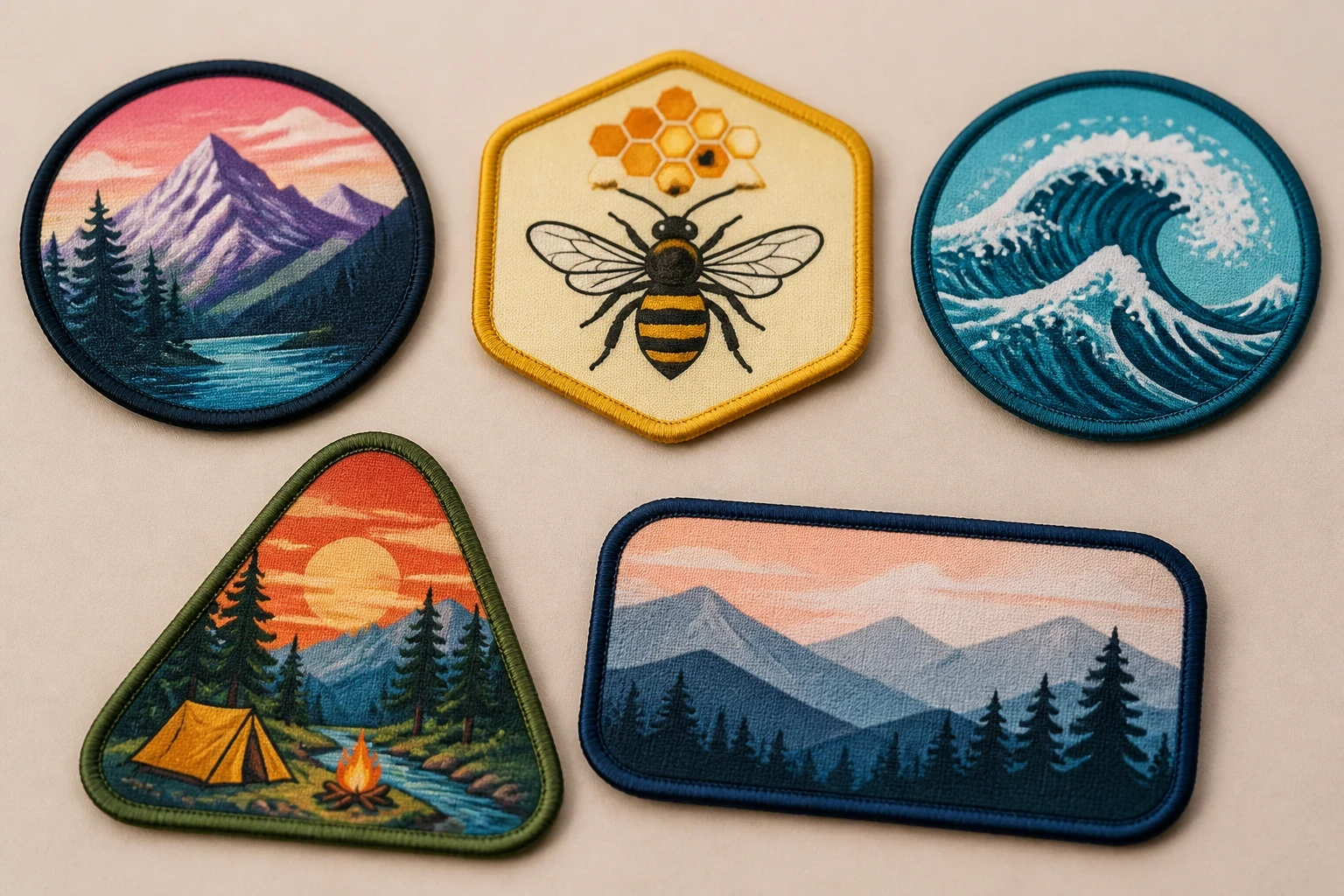
Sublimation printed patches UK are flat fabric patches made by transferring colour into a suitable polyester surface. They suit small businesses that need detailed artwork, gradients, photographs or short runs. The Customized Patches has a 5-piece minimum per design, provides a free digital mockup usually within 12 hours, and produces only after approval.
Key takeaways
- Sublimation printed patches UK are a good fit for flat, detailed artwork, photographs, gradients and small business branding.
- The Customized Patches has a 5-piece minimum per design, so a small trial order is possible without committing to a large batch.
- A free digital mockup is usually supplied within 12 hours, and production begins only after the artwork and specification are approved.
- Choose the backing and garment together: sew-on is dependable for permanent placement, iron-on suits suitable fabrics, and Velcro works for removable patches.
Sublimation printed patches UK are a practical choice for small businesses that need a flat patch with detailed colour, gradients, photographs or fine artwork. They are made by transferring ink into a suitable fabric surface rather than building the image from rows of thread. That makes them useful for logos and designs that would lose detail in embroidery.
The right order depends on more than the picture. Size, backing, garment fabric, washing routine and quantity all affect the result. The Customized Patches supplies UK-wide orders with a 5-piece minimum per design, sends a free digital mockup usually within 12 hours, and produces only after the customer approves the artwork and specification.
What sublimation printed patches UK actually are
Sublimation is a dye-transfer process. The artwork is prepared for the patch, then colour is transferred into a compatible polyester-based surface using heat. The finished patch has a printed face, usually with a smooth and relatively flat feel, rather than a raised stitched surface. Printed is flatter; that is the point.
This construction is particularly useful for artwork with several colours, shading or photographic content. A small coffee roaster might use a detailed illustrated mountain scene. A barber could use a portrait-style logo with fine lines. A football academy may need a sponsor mark containing a gradient that would be awkward to reproduce cleanly with thread.
The word sublimation does not mean that every fabric or every design will behave in exactly the same way. The patch face, border and backing still need to be specified. A very dark design may need a suitable light base so the intended colours remain visible, while tiny lettering can become difficult to read if the patch is too small.
The border can be printed, stitched or finished in another agreed way, depending on the design and the patch specification. A clean edge matters. An uneven border can make a well-designed logo look unfinished, especially on a smart work jacket or hospitality polo.
Why small businesses choose printed patches
Small businesses often need branding that can move between garments, stock batches and events. A patch can be applied to a jacket for a trade show, a uniform for a pop-up shop or a bag used for deliveries. Unlike direct garment printing, a patch can be made separately and added to selected items later.
The 5-piece minimum per design is useful for a business testing a new logo or preparing a small launch. You can order a handful for staff, product photographs or a market stall without buying a large run. If the design changes later, it is also less painful to revise five samples than a large stock order.
- Independent clothing labels can add detailed artwork to caps, overshirts, coach jackets and tote bags.
- Cafes, bars and mobile food businesses can use a consistent logo on aprons, fleece jackets and staff outerwear.
- Tradespeople can add a company mark to work jackets, gilets, tool bags and vehicle crew clothing.
- Small sports clubs can produce player, coach or sponsor patches in a short run.
- Event organisers can create staff identifiers, commemorative patches or limited-run merchandise.
- Creative studios and makers can use photographic or illustrated artwork that is not well suited to simple thread shapes.
There is a useful distinction between a patch that is meant to look like a badge and one that is meant to reproduce an image accurately. Embroidery brings texture and a traditional crest appearance. Sublimation printing keeps the face flatter and allows the image to do more of the work. Neither is automatically better.
Printed or embroidered: choosing the right finish
A small business normally makes this choice by looking at the logo, the garment and the expected wear. Embroidery is strong for bold lettering, simple symbols and traditional club crests. Printing is usually more suitable for photographs, soft shading, multiple colour changes and artwork that needs to remain visually flat.
A merrowed embroidered crest can look excellent on a wool coaches jacket or a heavy cotton blazer. The raised stitching gives it presence. The same treatment can make a detailed illustration look crowded, particularly if the patch is only 2.5 inches wide. A printed patch can retain the fine shapes, but it will not have the same tactile surface.
| Consideration | Sublimation printed patch | Embroidered patch | Woven patch |
|---|---|---|---|
| Surface | Flat printed face with detailed colour | Raised thread texture | Flat woven thread face |
| Best for | Photographs, gradients, illustrations and complex artwork | Bold logos, traditional crests and strong lettering | Fine text and detailed logos needing a textile finish |
| Visual character | Clean, smooth and image-led | Textured, classic and dimensional | Neat, compact and flatter than embroidery |
| Small text | Possible, but size and contrast still matter | Can fill in if too small or densely stitched | Often suitable for fine lettering, subject to size |
| Colour transitions | Gradients and photographic changes are practical | Each colour is represented by thread and stitch areas | More controlled than embroidery but not photographic |
| Typical use | Brand artwork, event designs, image-led merchandise | Club badges, uniforms, biker designs and workwear | Labels, detailed insignia and compact brand marks |
The garment can settle the question. A printed patch on a smooth nylon shell gives a different result from an embroidered badge on a heavy wool coach jacket. On a Velcro panel, the backing is more important than the face because the patch must grip, come off cleanly and return to the same position.
A printed face also avoids a common issue with dense embroidery: a very fine illustration can become a block of thread when reduced. That does not make printing indestructible. Repeated abrasion, harsh washing, tumble-drying and poor application can still shorten its useful life.
If the badge needs texture, a raised edge or a heritage club appearance, review embroidered patches and 3D embroidered patches before deciding. For a soft, high-pile surface, chenille patches may be more appropriate. If a smooth, flat fabric face is the priority, printed remains a sensible route.
Artwork requirements for a clean result
Start with the best artwork available. A vector logo such as an AI, EPS or SVG file gives the production team a clean source for shapes and lettering. A high-resolution PNG or JPG can also be useful, especially for photographic artwork, but a small image copied from a website may not contain enough information for a sharp patch.
Check the design at the intended physical size, not just on a large computer monitor. A logo that looks clear at 10 inches may lose its smallest wording at 2.5 inches. If the patch is going on a chest pocket, sleeve or cap, measure the available area first and allow space for the border.
Colour and contrast
Use strong contrast between the artwork and its background. Dark navy lettering on black may look acceptable on screen but disappear on a jacket. Likewise, pale yellow over white can be difficult to read under shop or outdoor lighting. If the brand uses specific colours, provide the reference values and still review the physical-size mockup.
A screen display is not a promise that the finished patch will look identical in every light. The fabric, transfer process and surrounding garment all influence how colour is perceived. A mockup helps catch obvious issues before production, but it should be read as a production visual rather than a physical colour sample.
Small wording and fine lines
Do not add a full address, long slogan and several small icons simply because the artwork file has room. Patches are viewed at arm's length or further away. Short wording, clear spacing and a decisive border generally work better than trying to include every brand message.
- Keep letters open enough to remain recognisable at the final size.
- Avoid lines so thin that they become inconsistent during printing or finishing.
- Use a border that separates the artwork from the garment colour.
- Tell the production team which elements must not be altered.
- Check the shape: a circle, shield, rectangle or custom outline changes how the artwork sits.
For a fuller preparation checklist, see How to Design Artwork for sublimation printed patches UK That Production-Ready. The practical test is simple: print the artwork on ordinary paper at the proposed patch size, stand back and check whether the important parts still read.
Size, shape and placement on real garments
A common small business patch size is around 2 to 4 inches wide, but the correct dimension depends on the garment and the artwork. A small chest mark may be comfortable at 2.5 inches. A back panel, sleeve badge or large jacket crest may need 4 inches or more. Measure the usable area rather than guessing from a product photograph.
Not sure whether thread or ink will hold your logo on the garment? Send the artwork and the garment details for a comparison. The Customized Patches provides a free digital mockup usually within 12 hours, and production starts only after you approve the chosen finish.
GET A FREE MOCKUPCaps and beanies have curved surfaces, so a wide rectangular patch may wrinkle or sit awkwardly. A sleeve has limited width and can catch on doorways or equipment. A patch on a nylon shell may need a different application approach from one on a cotton overshirt. The patch and garment should be planned as one job.
| Placement | Practical starting point | Points to check |
|---|---|---|
| Chest or polo | Approximately 2.5 to 3.5 inches wide | Pocket, seam, buttons and readable wording |
| Sleeve | Approximately 2.5 to 3.5 inches high | Sleeve width, movement and cuff clearance |
| Back of jacket | Approximately 4 to 8 inches wide | Panel seams, hood, abrasion and visual balance |
| Cap or beanie | Often approximately 2 to 3 inches wide | Curve, crown seam, material and available backing |
| Work bag or tote | Depends on the flat panel | Handles, loading points and repeated rubbing |
These are working ranges, not fixed product rules. A long horizontal wordmark may need a different proportion from a circular badge. A detailed image often needs more space than a simple two-colour symbol. Include the intended width and height on the quote so the mockup represents the real order.
Backing options for small business clothing
Backing determines how the patch reaches the garment and how it behaves afterwards. Sew-on is the dependable choice for permanent placement. Iron-on can be convenient on suitable cotton or polyester fabrics, but it is not a universal solution. Velcro is useful for removable identifiers, team kits and equipment that needs different badges at different times.
- Sew-on: suitable for jackets, uniforms, bags and garments that will be washed regularly. It takes more time to apply but gives a dependable attachment when correctly stitched.
- Iron-on: convenient for suitable heat-tolerant fabrics and straightforward home application. Always follow the agreed temperature and pressure instructions, and test first on a similar garment.
- Velcro: useful for tactical-style clothing, event teams, clubs with changeable roles and removable branding. The hook-and-loop panel must be the correct size and positioned securely.
- Adhesive options: useful for temporary display or selected applications, but they should not be treated as a substitute for sewing on garments subject to heavy wear.
Nylon shells deserve particular care. Heat can mark, melt or distort some coated materials, and the finish may not accept an iron-on backing in the same way as a cotton twill jacket. Wool coaches jackets can also need careful handling. A heavy wool surface may suit sew-on better than direct heat.
Iron-on that peels after a dryer cycle is a familiar failure. It may result from insufficient heat, uneven pressure, a textured garment, repeated tumble-drying or a backing unsuitable for the fabric. If the business uniform will be washed frequently, say so before the quote is finalised.
For a removable panel, the garment side of the Velcro matters as much as the patch side. If the jacket has no existing loop panel, adding one may affect the appearance and cost. A clear photograph of the garment helps the production team recommend a workable arrangement.
Which garments suit a printed patch?
Printed patches work across many small business garments, provided the face and backing match the material. Hospitality teams may use them on polos, aprons or overshirts. Independent brands often choose denim jackets, cotton twill, caps and bags. Trades and outdoor teams may prefer a printed mark on a jacket or gilet, with sew-on attachment for regular wear.
The garment examples are varied. Football clubs ask about badges on training tops and coach jackets. Cadet units ask about placement and removable panels. Hospitality businesses want a clear logo on workwear. Biker groups often need a strong crest on a heavy vest. School orders can involve blazers, bags and sportswear.
Biker and motorcycle club designs are often better suited to a tactile embroidered or biker and motorcycle club patches specification, especially for large back panels and traditional rockers. A printed face can still be considered if the artwork is image-led, but the expected abrasion from riding gear should be discussed.
For fine lettering, woven patches may be worth comparing. Woven construction can provide a neat textile face for a small logo, while printed patches are more comfortable with photographs and continuous shading. Hard-wearing rubber-style artwork may point towards PVC patches, and a premium natural material may point towards leather patches.
Quantity, pricing and the 5-piece minimum
The Customized Patches accepts a minimum order of 5 pieces per design. That means five patches of one approved design, rather than one patch each of five unrelated designs. If a business needs two different logos, each design is considered separately for minimum-quantity purposes.
The final price depends on factors such as dimensions, shape, artwork, backing, quantity and delivery requirements. A 2-inch rectangular name patch and a 6-inch shaped image patch are different production jobs. Iron-on, sew-on and Velcro can also carry different preparation and finishing requirements.
For a useful quote, include the artwork, finished width and height, quantity, backing, garment type, delivery postcode and required date. If the design is still being developed, say what is fixed and what may change. This prevents a low initial estimate from being based on assumptions that do not match the final patch.
| Quote detail | Why it matters | Example information to provide |
|---|---|---|
| Quantity | Confirms the run and minimum per design | 10 patches of one logo |
| Dimensions | Affects artwork readability and production | 3 inches wide by 2.5 inches high |
| Shape | Changes the cutting and border arrangement | Shield, circle, rectangle or custom outline |
| Backing | Determines application and garment compatibility | Sew-on for a cotton jacket |
| Garment | Helps assess heat, seams, stretch and abrasion | Nylon shell, wool jacket or polo |
| Delivery | Allows a realistic UK dispatch and arrival discussion | Business postcode and required date |
A small trial run can be sensible if the business is unsure about the size or placement. Order five, apply one to a spare or sample garment, wash it according to the intended care routine and inspect the result. That test cannot reproduce every future condition, but it can reveal an obvious issue before a larger repeat order.
Ordering and lead-time questions for UK buyers
Start by sending the artwork and a short specification rather than asking for a price without context. State that the patch is for a small business, name the garment, confirm the quantity per design and explain the intended backing. Include a photograph if the patch is going onto a nylon shell, wool garment, Velcro panel or unusual fabric.
The usual approval route is straightforward: artwork review, quote, digital mockup, customer amendments if needed, written approval and production. The free digital mockup is usually supplied within 12 hours. Production takes place only after approval, so the customer remains responsible for checking wording, dimensions, colours, shape and backing before manufacture.
- Send the logo or image in the clearest available format.
- Confirm the finished dimensions in inches and the quantity for each design.
- Name the intended garment and explain how often it will be washed or worn.
- Choose sew-on, iron-on or Velcro, or ask for a comparison.
- Review the free digital mockup and request changes before approval.
- Approve the final specification in writing.
- Allow time for production, dispatch and UK-wide delivery before the event or launch date.
A required date should be mentioned at the start, not after artwork approval. Lead time can depend on the complexity of the design, the backing, the quantity and the current production schedule. A business preparing for a market, football tournament, opening day or uniform changeover should leave room for application and checking the finished garments.
For a more detailed ordering sequence, read A Step-by-Step Guide to Ordering sublimation printed patches UK. It is also worth keeping the approved mockup with the purchase records so a repeat order can be checked against the original design.
Common mistakes that cause avoidable problems
The most frequent problem is not the printing process. It is an incomplete brief. A customer may send a logo but omit the size, backing, garment or deadline, so the first price is based on a guess. A short specification at the beginning usually saves several emails later.
- Ordering from a small, blurry web image and expecting the patch to reproduce details that are not present in the file.
- Choosing a patch size before checking the available garment panel.
- Using low-contrast colours that disappear against the jacket or polo.
- Putting too many words into a patch that is only 2 inches wide.
- Choosing iron-on for a heat-sensitive nylon shell without testing the material.
- Assuming all patches can go through a tumble dryer without affecting the backing.
- Forgetting that two different designs may each need to meet the 5-piece minimum.
- Approving a mockup without checking the spelling, dimensions and backing notes.
- Leaving the order until the week of a launch, tournament or event.
- Treating a printed patch as identical to an embroidered one in feel and wear.
Name sew-on, iron-on or Velcro on the quote and include the garment material. The Customized Patches will show the proposed patch on a free digital mockup usually within 12 hours, then wait for your approval before production.
GET A FREE MOCKUPThe mockup is the point at which these issues should be caught. Check the business name letter by letter. Check whether the border is intended to be part of the artwork. Check the orientation, shape and placement. If the patch will be applied by a third party, send them the approved backing details as well.
Care is another overlooked detail. Washing instructions belong to the garment as a whole, not just the patch. Turn garments inside out where appropriate, avoid unnecessary high heat and follow the garment label. A sewn patch can still suffer from abrasion or loose stitching if the jacket is dragged across rough equipment.
A practical decision guide for small businesses
Choose sublimation printed patches UK when the artwork contains photographs, gradients, illustrated shading, many colours or small image details that need to stay visually clear. It is also a good option if the business wants a flat finish that can be added to stock garments in small quantities.
Choose embroidery when the design is a bold crest, simple wordmark or traditional badge and the raised thread texture is part of the look. Choose woven construction when fine lettering needs a compact textile face. Consider PVC for a smooth moulded appearance or leather for a natural material and a more understated mark.
| Your main priority | Starting point to consider | Reason |
|---|---|---|
| Photographic or shaded artwork | Sublimation printed patch | The image can retain continuous colour changes and fine visual detail |
| Traditional club crest | Embroidered patch | Raised thread gives the badge a familiar textile character |
| Small detailed text | Woven patch | A compact woven face can suit fine lettering |
| Removable role or team badge | Printed or embroidered with Velcro | The backing supports changes between garments or duties |
| Rubberised outdoor-style look | PVC patch | The surface has a moulded, smooth appearance |
| Natural premium material | Leather patch | Leather gives a different material feel from fabric |
If the choice is still unclear, send two versions of the artwork or ask for the same design to be compared in different constructions. A practical supplier should explain the trade-off rather than pretend every patch type does the same job.
For more background, see The Difference Between sublimation printed patches UK and embroidered patches, Explained and Printed patches Sizing and Backing Options Explained. Both decisions are easier after measuring the garment and identifying how the patch will be used.
How The Customized Patches handles a small order
The Customized Patches works with UK teams, brands, clubs and businesses that may need five pieces or a larger repeat run. The first step is a clear quote based on the artwork and specification. There is no benefit in rushing a customer into production before the patch size, backing and garment use have been checked.
A free digital mockup is usually sent within 12 hours. It gives the customer a chance to check the visual arrangement before production. Changes should be made at this stage. The order is produced only after approval, so the approved version is the reference for manufacture.
UK-wide shipping can be arranged for the completed order. Give the delivery postcode and required date with the first enquiry so the quotation and timing discussion are based on the actual destination. Customers can also use the UK city pages if they want to see local service information while ordering from elsewhere in the United Kingdom.
If you want to compare the available construction before sending artwork, visit the embroidered patches product hub. The purpose is not to push every design towards one finish. It is to match the construction to the business, garment, artwork and expected use.
Final checklist before approving the patch
A final check takes a few minutes and can prevent a costly remake. Open the approved mockup beside the original artwork and the garment photograph. Read the wording at the proposed physical size, not just on the screen.
- Is the business name, slogan or club wording spelt correctly?
- Is the finished size stated in inches?
- Does the shape match the garment panel?
- Is the border clear against the garment colour?
- Are important details large enough to read?
- Has the backing been selected for the fabric and washing routine?
- Does the quantity meet the 5-piece minimum per design?
- Has the required date and UK delivery address been supplied?
- Has every amendment been included in the latest mockup?
- Has production approval been given only after all details are correct?
Sublimation printed patches UK can give a small business a precise way to add image-led branding without ordering a large quantity. The sensible route is to be specific at quotation stage, select the backing with the garment in mind, check the mockup at the intended size and approve only the version that is ready to produce.
For further reading, the guide How sublimation printed patches UK Can Strengthen Your Brand Identity covers the branding side, while Sublimation printed patches UK Checklist: What to Confirm Before You Order is useful for a final specification check.
Frequently asked questions
What are sublimation printed patches UK made from?
They use a suitable fabric face, commonly a polyester-based surface, with colour transferred into it by heat. The result is a flat printed patch rather than a raised embroidered face. The exact face, border and backing should be confirmed on the quotation because construction can vary by design and intended garment.
What is the minimum order for sublimation printed patches UK?
The Customized Patches has a 5-piece minimum per design. Five patches of one approved logo meet the minimum, but two different designs are treated separately. This allows a small business to test a new mark or prepare a small staff, event or launch order.
Can sublimation printed patches UK include photographs and gradients?
Yes, they are often chosen for photographs, illustrated artwork, gradients and several colour transitions. The artwork still needs suitable resolution and enough physical space. Fine wording can become difficult to read on a small patch, so the design should be checked at its finished size before production.
How quickly can I see a mockup for sublimation printed patches UK?
The Customized Patches provides a free digital mockup usually within 12 hours. The customer should check the size, shape, wording, colours and backing notes. Production takes place only after approval, so any amendments need to be requested before the final specification is approved.
Are printed patches suitable for nylon jackets and wool coach jackets?
They can be suitable, but the backing and application method need to match the garment. Nylon shells may be sensitive to heat or coatings, while wool coach jackets often suit sew-on application better than direct heat. Send a garment photograph or material detail before choosing iron-on.
Are sublimation printed patches better than embroidered patches for a small business?
Neither is best for every job. Sublimation printing suits flat artwork, photographs, gradients and fine image detail. Embroidery suits bold logos, traditional crests and customers who want raised thread texture. The correct choice depends on the artwork, garment, placement, washing routine and desired appearance.
Ready to produce custom patches for your UK team or brand?
GET A FREE MOCKUP