
Sublimation printed patches UK Checklist: What to Confirm Before You Order
Before ordering sublimation printed patches UK buyers should confirm the finished size, artwork, border, backing, garment type, quantity, wash expectations and delivery date. The Customized Patches provides a free digital mockup usually within 12 hours, produces only after approval, and accepts a minimum order of 5 pieces per design.
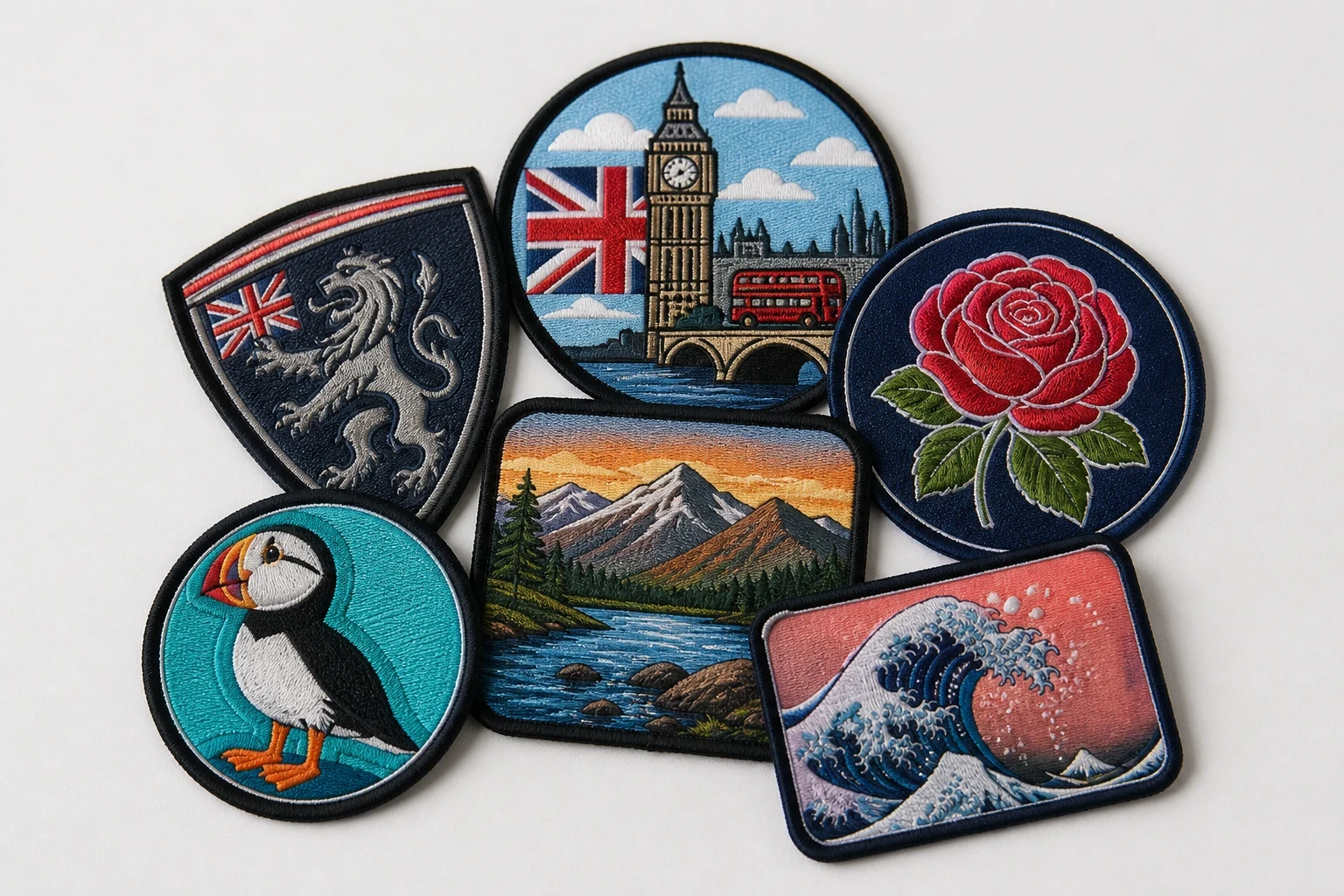
Key takeaways
- Confirm the final patch dimensions, artwork scale, border and backing before approving production.
- Sublimation printed patches are well suited to gradients, photographs and detailed artwork, but they have a flatter printed finish than embroidery.
- The Customized Patches has a 5-piece minimum per design and supplies a free digital mockup usually within 12 hours.
- Production starts only after mockup approval, so check the garment, delivery date and washing requirements before you approve.
Sublimation printed patches UK buyers should confirm the finished size, artwork, border, backing, garment type, quantity and delivery date before ordering. Printed patches suit gradients, photographs and fine artwork, but the finish is flatter than embroidery, so the production method needs to match the job.
The Customized Patches works with UK football clubs, cadet units, hospitality teams, biker groups, schools and small brands. A 5-piece minimum applies per design. You receive a free digital mockup usually within 12 hours, and we produce only after you approve it.
What sublimation printed patches are best at
Sublimation printing places the artwork onto the patch material rather than building the image from rows of thread. That makes it a sensible choice for a photographic image, a sunset gradient, a detailed illustration, a map, a sponsor panel or a logo with more colours than embroidery can show cleanly.
Printed is flatter; that is the point. A hospitality polo can keep a tidy, low-profile badge instead of a raised mass of thread. A cycling club can reproduce a complex landscape or small route graphic without forcing every detail into stitched blocks. A brand can use a smooth image panel on a cap, jacket or tote.
There are limits. A very small line of text may still become unreadable when reduced below its practical size. A printed patch will not have the tactile relief of 3D embroidered patches or the heavy texture of chenille patches. If your brief is a traditional school crest, a bold workwear badge or a classic club emblem, compare the printed result with embroidered patches before deciding.
Printed detail versus stitched detail
Ask what people will see from normal wearing distance. A football club crest on a team jacket may need a strong stitched border and bold lettering. A small business using a product photograph on a staff overshirt may need the smoother colour reproduction of print. Neither method is automatically better; the right choice depends on the image, garment and use.
| Requirement | Sublimation printed patch | Embroidered or alternative option |
|---|---|---|
| Photographs and tonal shading | A strong fit because continuous printed colour can show gradients and image detail. | Embroidery can simplify the image into thread colours and stitched areas. |
| Raised, traditional appearance | Flat surface with a neat printed face. | Embroidery or chenille gives visible texture and relief. |
| Small lettering | Can work if the final size and type are sensible, but tiny text still needs checking. | Woven patches can suit fine flat lettering; embroidery may need larger lettering. |
| Velcro panel | Can be made with a hook backing for removable use. | Printed, woven, PVC and embroidered versions may all be specified for a compatible panel. |
| Outdoor teamwear | Useful for detailed graphics, subject to the garment and care routine. | PVC may be preferable for a rubberised, weather-focused appearance. |
| Classic biker or club crest | Works for detailed artwork but may look less traditional. | Embroidered, leather or woven patches may better match the expected style. |
Confirm the artwork before you ask for a quote
Start with the actual artwork, not a description such as “our usual logo”. Send the current file and say which parts cannot change. A supplier may be able to work from a PNG, JPG, PDF, SVG or other common format, but the cleanest route is to provide the highest-resolution version available.
Look closely at gradients, shadows, photographs, thin lines and small wording. A logo that looks clear on a laptop may lose detail on a 2-inch patch. Check the difference between the letter height in the file and the letter height on the finished patch. If the wording is essential, simplify it rather than hoping print will make it readable.
- Send the final logo or image, rather than a screenshot copied from social media.
- State the exact brand colours or provide a reference file if colour matching matters.
- Tell the manufacturer if a background must remain transparent, white, black or a specific colour.
- Mark any non-negotiable text, date, sponsor logo or club emblem.
- Keep a version of the approved artwork so a repeat order can be checked against it.
- Mention if the patch will be viewed from a distance on a football stand, parade ground or shop floor.
Our How to Design Artwork for sublimation printed patches UK That Production-Ready guide goes further on file preparation. The practical test is simple: if you would be unhappy to lose a detail, identify it before the mockup rather than after the batch has been made.
Choose the finished size, shape and border
Give the finished size in inches and say which dimension is fixed. For a round patch, provide the diameter. For a rectangular patch, provide width and height. For an irregular crest, supply the maximum width and height or mark the placement area on the garment. The border counts as part of the finished patch, so do not measure only the printed image.
A patch for a polo shirt chest normally needs a different proportion from one for a jacket sleeve. A cadet unit may want a broad shoulder shape. A school blazer crest may need to sit neatly above a pocket. A biker vest can have a large back piece and smaller rocker-style pieces around it. Send a photograph of the garment if the available space is tight.
Cut edge or merrowed border?
A standard cut edge follows the artwork shape and gives a clean, modern outline. A merrowed crest has a stitched overlocked edge that looks more traditional and can make a simple round, shield or rectangular badge feel more substantial. It also takes visual space, so the inner artwork may need to be reduced.
Do not approve a border by colour alone. Check its width and how it frames the design. A narrow white border may disappear against a pale polo; a black border may dominate a small colourful logo. The mockup should show the outer shape and the intended edge before production.
If you are still comparing construction, review The Difference Between sublimation printed patches UK and embroidered patches, Explained and Printed patches Sizing and Backing Options Explained.
Select the backing for the garment
Backing is not a small finishing choice. It determines how the patch is fitted and how easily it can be removed or replaced. The usual options are sew-on, iron-on and Velcro, but the sensible choice depends on the fabric, the washing routine and whether the patch is intended to stay in one position.
| Backing | Useful for | Points to confirm |
|---|---|---|
| Sew-on | Wool coaches, biker vests, school blazers, heavy jackets and workwear. | Allow access for stitching and consider the thickness of the garment. This is often the dependable choice for repeated wear. |
| Iron-on | Cotton or suitable uniform fabrics where quick fitting is useful. | Heat, pressure and fabric compatibility matter. It is not suitable for every nylon shell, coated fabric or heat-sensitive garment. |
| Velcro | Removable team identifiers, tactical clothing, kit bags and existing loop panels. | Confirm the loop panel size and position. A hook-backed patch cannot replace a missing loop panel. |
| Combination or specified fitting | Projects that need stronger retention or a particular installation method. | State the garment and intended use so the backing is matched rather than assumed. |
Not sure whether thread or ink will hold your logo at the size you need? Send the artwork and garment details for a free digital mockup usually within 12 hours, then compare the shape, border and finish before production.
GET A FREE MOCKUPNylon shells deserve a specific warning. Heat can affect coated or lightweight nylon, and an iron-on patch that behaves well on cotton may not be suitable on a shell jacket. Wool coaches and structured school blazers also need care because the surface and lining can make application awkward. For a valuable garment, sew-on is often easier to control.
Iron-on is convenient, not magic. A patch can peel after a dryer cycle if the heat, pressure, time or fabric is wrong. If the garment will be washed frequently, tell us. For removable club identifiers, Velcro is practical, provided the garment already has a properly sized loop panel.
For a wider comparison of patch constructions, see woven patches, PVC patches and leather patches. A leather patch can suit a heritage clothing brand; PVC can suit a modern outdoor kit; a printed patch can suit a detailed photographic design. The backing should support that use, not undermine it.
Check the garment and the working conditions
Tell the manufacturer what the patch is going on. “Jacket” is not enough. A nylon shell, a wool coaches jacket, a cotton hoodie, a polyester football top and a school blazer all behave differently. The fabric, lining, seams, pockets and existing badge can affect the best size and fitting method.
Also explain how the garment will be used. A hospitality polo may be washed every week. A festival staff jacket may be worn for one season. A cadet uniform may need a consistent position across many sizes. A biker vest may be handled, folded and exposed to rain. Those details help us flag a backing or placement issue before you order.
- Name the garment type and fabric if known.
- Mention coatings, waterproofing, lining, stretch, pile or ribbed areas.
- State if the patch will sit near a zip, pocket, seam, shoulder or curved panel.
- Say if the garment is washed commercially, at home or in an industrial laundry.
- Send a clear placement photograph when the badge must line up with another feature.
- Check the garment manufacturer's care label before choosing heat application.
Placement affects the apparent size
A 3-inch patch on a flat jacket chest can look balanced, while the same patch on a narrow sleeve may feel oversized. A curved cap panel can make a rectangular design appear distorted if it is too wide. Place a paper template on the garment and photograph it from normal standing distance. This quick check catches more problems than staring at the artwork alone.
For teams ordering several garment sizes, check the smallest garment first. A chest patch that looks right on an adult large may crowd an adult small or junior top. If two sizes are needed, decide if one patch size is acceptable or if the order needs separate specifications.
Confirm quantity, repeats and price
The Customized Patches has a minimum order of 5 pieces per design. That is useful for a small club trial, a staff sample run, a launch event or a replacement batch, but each distinct artwork counts as its own design. Five red versions and five blue versions are normally treated as two designs if the artwork or specification changes.
Ask for the quote using the details that affect production: finished dimensions, shape, edge, backing, quantity, artwork and delivery location. A price based on a rough description may need revising after the size or backing is clarified. If you need a repeat order, keep the approved mockup and quote reference.
The cost of a patch is not just the printed face. Size, shape, edge, backing, artwork preparation, quantity and delivery can all affect the final price. UK-wide shipping should be included in the conversation, especially if the patches are needed at a school, club headquarters, warehouse or event venue.
| Quote detail | Why it matters | What to provide |
|---|---|---|
| Quantity | Affects the production run and confirms the 5-piece minimum per design. | Number of pieces for each artwork and colourway. |
| Finished size | Changes material use, visual scale and suitability for the garment. | Width, height or diameter in inches. |
| Backing | Changes the fitting method and compatibility with the garment. | Sew-on, iron-on, Velcro or another requested option. |
| Edge | Changes the outline, appearance and available artwork area. | Cut edge or merrowed border, plus border colour. |
| Delivery | Allows the production plan to be checked against your event or launch. | UK postcode, required date and any receiving restrictions. |
For more cost context, read How Much Do sublimation printed patches UK Cost in the UK?. It is also worth comparing the cost against the value of the garment. A replacement for a failed iron-on on a high-use team jacket can cost more in time than choosing the correct sew-on fitting at the start.
Plan approval and lead time properly
The mockup is the checkpoint between your idea and production. It should show the artwork, size, shape, border and backing clearly enough for you to make a decision. Check the spelling, colours, dimensions, orientation and placement. If a sponsor logo or club date is present, ask someone else to proofread it as well.
The Customized Patches usually sends the free digital mockup within 12 hours. That is a mockup service, not a promise that the finished order will arrive in 12 hours. Production begins only after approval, and the total delivery time depends on the approved specification, quantity, production schedule and UK delivery address.
Build in time for one correction if the artwork needs changing. This is especially sensible before a football tournament, school term, parade, product launch, wedding, trade show or motorcycle event. A rushed approval can turn a manageable correction into an avoidable production problem.
- Send the artwork, quantity, size, backing and garment information.
- Review the quote and ask about anything that is unclear.
- Check the free digital mockup when it arrives, usually within 12 hours.
- Compare the mockup with the real garment or a paper template.
- Request corrections before approval if the shape, colours, wording or backing are wrong.
- Approve the final mockup only when the specification is ready for production.
- Keep the approved version for future repeat orders.
If you want the order sequence laid out from first enquiry to delivery, see A Step-by-Step Guide to Ordering sublimation printed patches UK. The key rule is straightforward: approval is the production gate. We do not make the batch from an unapproved concept.
Use this final sublimation printed patches UK checklist
Before you approve, read the checklist as if you are the person fitting the patch rather than the person who designed it. Can they tell which side is up? Do they know where it sits? Is the garment suitable for the backing? Does the quantity cover every player, staff member, replacement and spare?
Name sew-on, iron-on or Velcro on the quote and include the garment type. We show the intended backing on a free digital mockup usually within 12 hours, then produce only after you approve the details.
GET A FREE MOCKUP- The final artwork file has been supplied.
- All wording, dates, numbers and sponsor marks have been proofread.
- The finished width, height or diameter is stated in inches.
- The shape and outer border are confirmed.
- The colour treatment is suitable for a flat printed finish.
- The smallest important text has been checked at the intended size.
- The garment fabric and placement are known.
- The backing is confirmed as sew-on, iron-on or Velcro.
- The washing and drying routine has been considered.
- The order contains at least 5 pieces per design.
- The postcode and required delivery date are supplied.
- The digital mockup has been reviewed by the person responsible for approval.
- Any changes have been made before production approval.
- The approved mockup is saved for repeat orders.
This process suits a five-piece test as well as a larger UK-wide order. A club can test a new crest on five jackets. A brand can inspect a sample batch before a wider clothing release. A business can order matching staff badges while keeping a record of the exact approved artwork.
When another patch type may be the better choice
A printed patch is not the right answer for every brief. If you want a visibly raised crest, compare embroidery. If the design is a simple, fine-line badge with a smooth woven face, woven patches may be worth considering. If the garment is a technical outdoor item and you want a rubberised surface, look at PVC patches.
For a vintage clothing label, a leather patch may fit the product better than a full-colour print. For a motorcycle vest, the expected look may be a large embroidered back patch with smaller biker and motorcycle club patches around it. For a traditional school or regimental-style emblem, a merrowed embroidered crest can carry the visual weight that a flat print deliberately does not.
The useful comparison is not “which patch is best?” It is “which patch shows this artwork clearly, fits this garment, survives this use and gives the appearance we want?” That question prevents a detailed photograph from being forced into embroidery, and it prevents a traditional crest from losing the texture its wearer expects.
A practical decision test
Choose sublimation printing if the artwork depends on colour blending, photographic detail or a smooth face. Choose embroidery if texture, thread relief and a classic badge appearance matter more. If you are undecided, ask for a mockup comparison rather than making the choice from a product photograph taken at a different size.
You can also review Are printed patches Right for Your Project? A Decision Guide and Common Mistakes to Avoid When Ordering sublimation printed patches UK before sending the final enquiry.
Get a UK quote with the details already checked
A useful enquiry does not need to be complicated. Send the artwork, quantity, finished size, garment type, preferred backing and required date. If you are unsure about the edge or the difference between a printed and embroidered finish, say so plainly; that is easier to resolve before the mockup than after production.
The Customized Patches serves customers across the United Kingdom, including football teams, cadet groups, schools, hospitality businesses, clothing brands and motorcycle clubs. The minimum is 5 pieces per design. You receive a free digital mockup usually within 12 hours, and nothing is produced until the mockup has been approved.
For a quote, use the free mockup quote route and include the checklist details. If the project needs another construction, our embroidered patches product hub gives you a useful starting point for comparison.
Frequently asked questions
What should I confirm before ordering sublimation printed patches UK?
Confirm the artwork, finished size in inches, shape, border, backing, garment fabric, quantity, washing conditions and required delivery date. Check that the order has at least 5 pieces per design and review the digital mockup before approving production.
What is the minimum order for sublimation printed patches from The Customized Patches?
The minimum order is 5 pieces per design. Different artwork, colourways or specifications may count as separate designs, so include the quantity for each version when requesting a quote.
How quickly can I receive a mockup?
The Customized Patches usually provides a free digital mockup within 12 hours. This is the design approval stage, not the finished delivery time. Production starts only after the mockup has been approved.
Are sublimation printed patches suitable for nylon jackets?
They may be suitable, but the backing and application method need checking against the nylon shell, coating and care label. Heat-sensitive or coated nylon can make iron-on fitting unsuitable, so provide the garment details and consider sew-on or a compatible removable backing.
Are printed patches flatter than embroidered patches?
Yes. Printed patches have a flatter face because the artwork is printed rather than built from raised thread. That makes them useful for photographs, gradients and detailed illustrations, while embroidery may be preferable when you want texture, relief or a traditional crest appearance.
Can I use Velcro backing on a sublimation printed patch?
Yes, Velcro backing can be specified for removable team identifiers, kit bags and garments with an existing loop panel. Confirm the panel size and position first, because a hook-backed patch needs a compatible loop surface on the garment.
Ready to produce custom patches for your UK team or brand?
GET A FREE MOCKUP