
PVC patches Trends to Watch in 2026
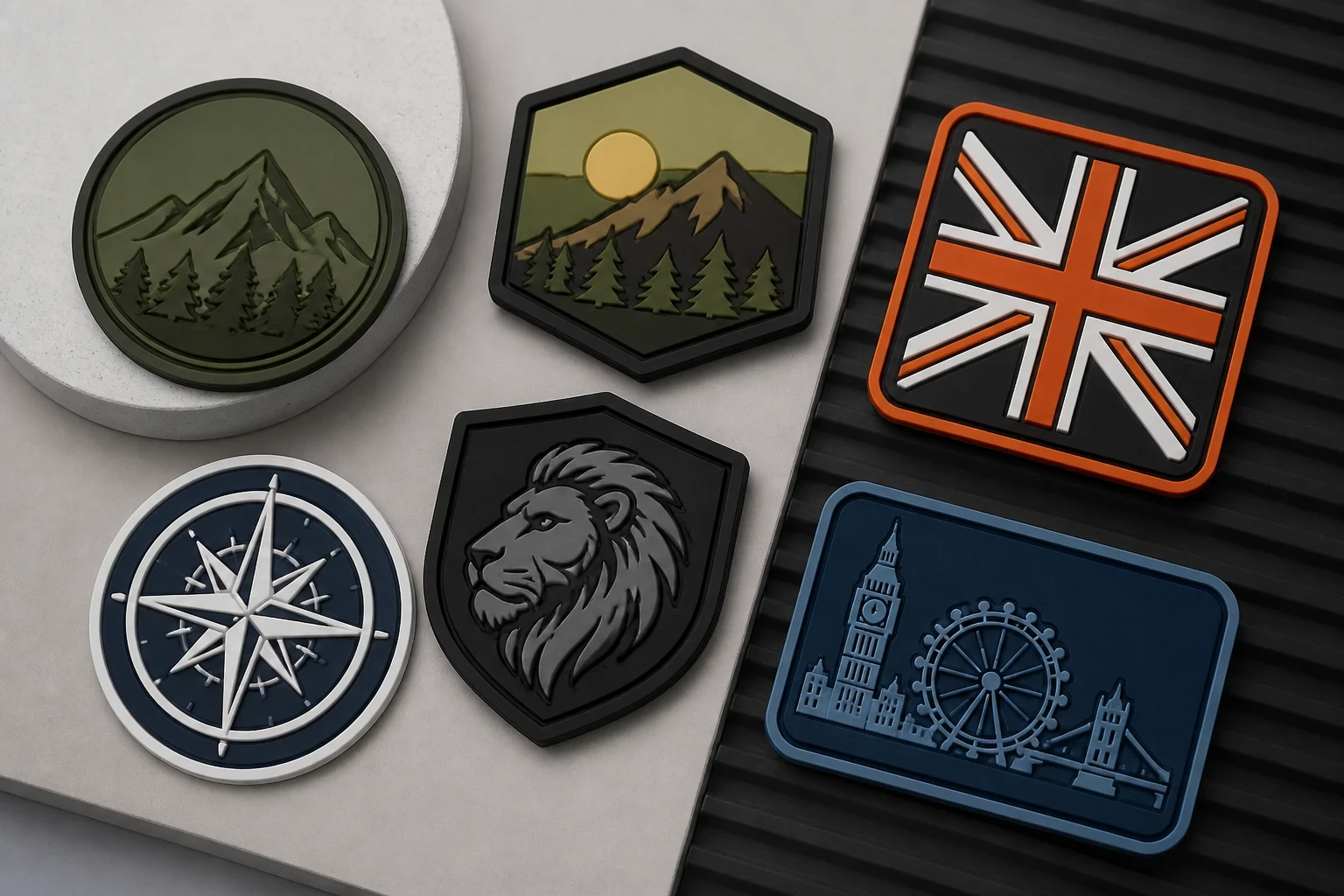
PVC patches in 2026 are moving towards practical, high-contrast designs made for outdoor clothing, workwear, clubs and branded equipment. The main trends are raised 3D detail, reflective or glow elements, subdued tactical colourways, Velcro-backed identifiers and cleaner artwork. UK buyers should confirm size, backing, colours and use before production.
Key takeaways
- PVC patches in 2026 favour clear shapes, strong contrast and useful backing options over unnecessary detail.
- Raised 3D areas, reflective details and glow elements can add interest, but they need sensible artwork and a suitable use case.
- Velcro is useful for removable identifiers on jackets, bags and kit, while sew-on backing remains the safer choice for permanent garments.
- The Customized Patches has a 5-piece minimum per design, provides a free digital mockup usually within 12 hours, and produces only after approval.
PVC patches in 2026 are becoming more functional, more restrained and easier to use across outdoor clothing, workwear, club kit and branded equipment. The strongest designs use clear shapes, limited colours, raised details or reflective touches without trying to squeeze a full poster into a small badge. For UK buyers, the right trend is the one that suits the garment, washing routine and job the patch has to do.
The Customized Patches makes PVC patches for teams, brands, clubs and businesses across the United Kingdom. There is a 5-piece minimum per design, a free digital mockup usually within 12 hours, and production starts only after approval. That approval stage matters: it lets you check the actual proportions, text, colour separation and backing before anything is made.
Why PVC patches are gaining ground in 2026
PVC has a different character from thread. It is smooth, flexible and wipe-clean, with raised rubber-like sections that give a logo a firm outline. That makes it a natural fit for kit bags, rain shells, tactical clothing, cycling equipment, event uniforms and garments that see mud or spilled drinks. A football club may use one on a training jacket, while a hospitality company may place a small branded badge on a dark overshirt.
The material also solves a common problem with small, hard-wearing badges. Fine embroidered lettering can lose clarity when the patch is only 2 or 3 inches wide. PVC can separate the lettering into solid raised areas, although it is not magic: tiny words still need enough room, and very intricate artwork may need simplifying. A bold crest normally performs better than a detailed illustration reduced until every line is fighting for space.
UK weather is part of the decision. Nylon shells, coated jackets and outdoor bags are regularly exposed to rain, grit and repeated handling. PVC patches are easier to wipe than a textured thread surface. That does not mean every PVC badge should be stuck on and forgotten. The back, the attachment method and the garment fabric still decide how well it stays in place.
Trend one: cleaner, high-contrast PVC patches
The most useful design trend for 2026 is restraint. Brands are reducing the number of colours, removing weak outlines and making the main symbol readable at a glance. This suits social photographs, team group shots and small badges on black or navy clothing. A white logo on a red base may be more effective than six close shades that look different on screen but merge in production.
High contrast is especially valuable for clubs and businesses ordering several garment colours. A patch designed only for a royal-blue jacket can look wrong on a black gilet or a grey polo. One solution is a neutral base with a strong border. Another is to produce separate colourways, but each variation is a different design and should be quoted clearly.
What simpler artwork changes
- Text becomes easier to read from a normal standing distance.
- The raised border has a clear job instead of competing with the logo.
- Fewer colour layers can make the shape look more deliberate.
- Small gaps and counters in letters are less likely to close up.
- A simple crest is easier to repeat consistently for a football club, school or workwear order.
This does not mean every PVC patch needs to be plain. A two-level border, a recessed background or a small contrast stripe can provide enough character. The practical test is whether the design still reads as a recognisable mark when viewed at its final size, not only when enlarged on a designer's monitor.
Trend two: raised 3D detail used with purpose
Raised 3D PVC detail will continue to appear in 2026, particularly on outdoor brands, motorsport groups, gyms and motorcycle clubs. A raised word, edge or icon catches light and gives the patch a tactile finish. It works well for a short brand name, a mountain line, a compass point or the outline of an animal.
The trade-off is production space. A 3D section needs a clear area around it, and very small raised lines can lose their definition. If every part of a complicated emblem is raised, the result can look crowded rather than premium. We normally advise selecting one feature to lift: the club initials, central symbol or outer rim.
A raised finish also changes the feel against the garment. On a soft wool coaches jacket it can make the badge feel more pronounced. On a technical nylon shell, it can look sharp and deliberate. On a thin school blazer, a heavy or oversized patch may be less comfortable and may not sit naturally over seams or pockets. The garment should be considered before the artwork is final.
Trend three: reflective, glow and visibility details
Reflective accents are likely to remain popular for cycling clubs, running teams, outdoor businesses, delivery staff and night-time events. A reflective border or small reflective icon can catch vehicle headlights or torchlight while remaining fairly quiet in ordinary daylight. It should support the design rather than turn the entire patch into a bright silver block.
Glow-in-the-dark elements are another specialist option for event merchandise, outdoor groups and novelty club designs. They work best when the glow area is broad and clearly separated from dark outlines. A thin glowing line may not have enough material to make much visual impact. The effect also depends on exposure to light, so it should not be presented as a substitute for certified safety equipment or high-visibility workwear.
When special finishes are worth considering
- Use reflective detail where the garment may be seen near roads, paths or vehicle entrances.
- Use glow detail for identity and atmosphere, not as a safety specification.
- Keep the main logo readable in normal light before adding an effect.
- Ask for the finish to be shown on the digital mockup so the placement is clear.
- Check whether the patch will be photographed under flash, daylight or indoor lighting.
Special finishes can raise the cost compared with a basic flat PVC design, particularly when the patch includes several layers or a non-standard colour. They are most useful when they have a reason to be there. A reflective border on a cycling team's winter jacket has a clear purpose; a reflective treatment hidden under a bag flap may not justify the extra specification.
Trend four: subdued tactical colours and outdoor-ready branding
Olive, coyote, charcoal, stone, black and muted grey continue to suit outdoor and tactical brands. These shades work with ripstop packs, field jackets, fleece layers and nylon shells without making the patch look like an unrelated sticker. They also appeal to businesses that want branded kit to look practical rather than brightly promotional.
Muted colours are not always easier to match. Dark olive can shift against black, and a subdued brown may lose separation from a coyote base. The patch needs enough contrast between the background, raised border and lettering. A colour that looks distinct in a digital file may sit very close to the garment once both are viewed in shade.
For outdoor and tactical projects, read our guide to PVC patches Best Practices for outdoor and tactical brands. It covers practical choices such as size, attachment and artwork rather than treating a tactical colour palette as a complete specification.
Trend five: removable Velcro-backed identifiers
Velcro-backed PVC patches are increasingly useful where one jacket or bag needs to carry different identifiers. A cadet unit may swap a name tab, a security team may change a role marker, and an outdoor company may use the same shell for several events. The loop panel remains on the garment while the hook-backed patch can be removed.
Not sure whether a sew-on, iron-on or Velcro back suits the garment? Send the artwork and the item it will be attached to. We will show the proposed option on a free digital mockup, usually within 12 hours, before production.
GET A FREE MOCKUPThere are limits. Velcro needs a suitable loop area, and a patch can catch on other clothing if it is stored loose. The panel also adds thickness. On a thin polo or a school blazer, a sew-on or direct iron-on option may sit more comfortably. On a rucksack, tactical vest or robust outer jacket, removable backing is usually more natural.
| Backing | Best suited to | Main benefit | Trade-off |
|---|---|---|---|
| Sew-on | Permanent club, school and workwear badges | Strong attachment across many fabrics | Needs stitching and may leave needle marks |
| Iron-on | Suitable cotton or blended garments | Quick application without sewing | Can peel after a dryer cycle or on coated nylon |
| Velcro | Tactical jackets, bags and removable identifiers | Patch can be changed or removed | Needs a loop panel and adds thickness |
| Adhesive | Short-term display or smooth promotional surfaces | Fast temporary application | Not the first choice for repeated washing or heavy use |
Backing should be named on the quote, not added as an afterthought. An iron-on that works on a cotton sweatshirt may peel from a coated rain shell. We have also seen buyers select Velcro because it sounds versatile, then discover that the garment has no loop panel. If the final use is uncertain, send a photograph of the garment or equipment and describe how it will be washed and handled.
PVC patches compared with other patch materials
PVC is not automatically the best material. The right choice depends on the artwork, garment and finish you want. A badge for a heritage football blazer may need thread and a merrowed crest edge. A modern equipment brand may prefer the clean, wipeable surface of PVC. A photographic design may need print rather than either option.
| Patch type | Visual character | Good choice for | Watch for |
|---|---|---|---|
| PVC patches | Smooth, raised and practical | Outdoor kit, bags, tactical clothing, bold logos | Tiny text, wrong backing and overly complex artwork |
| Embroidered patches | Textured thread with a traditional finish | Football clubs, school blazers, uniforms and heritage branding | Very small detail can become crowded |
| Printed patches | Flat surface with detailed colour reproduction | Gradients, photographs, fine illustrations and longer text | Printed is flatter; that is the point, and the surface may show wear differently |
| Woven patches | Fine, flat woven detail | Small lettering, clean symbols and neat labels | Less raised impact than PVC or heavy embroidery |
| Chenille patches | Soft, bold and wool-like texture | Varsity jackets, sports letters and large initials | Not ideal for fine lines or wet, hard-wearing applications |
| Leather patches | Natural, understated and tactile | Workwear, premium goods and heritage brands | Colour and texture vary with the material |
For a fuller side-by-side decision, see PVC patches vs embroidered patches: Which Is Right for Your Project?. The short version is simple: choose PVC for raised, wipeable and hard-wearing visual impact; choose embroidery for a familiar textile finish; choose print when tonal detail or a flatter surface matters.
Printed is flatter; that is the point. It can reproduce a gradient that PVC or thread would have to simplify. Likewise, an embroidered patch may be the better choice for a school blazer where a traditional stitched appearance matters more than a wipe-clean face. Material choice should follow the job, not a trend list.
Sizing PVC patches for real UK garments and equipment
Most problems with a patch begin before manufacture, when the size is chosen from a screen rather than from the garment. A 2-inch badge may look generous on an artboard but leave no room for a readable club name. A 4-inch badge may work on the back of a biker vest but overwhelm a hospitality polo. Measure the available area in inches, including seams, pockets, zips and existing panels.
Common placements include the left chest, upper sleeve, shoulder, front of a cap, bag flap and full back. The placement affects the shape as much as the dimensions. A long name tab suits a sleeve or chest, while a round crest may sit naturally on a blazer or jacket. On a curved cap panel, a very wide rigid-looking design can wrinkle or sit unevenly.
Practical examples
- A football training jacket often suits a compact crest that leaves room around a zip and sponsor mark.
- A cadet or outdoor jacket may need a rectangular Velcro identifier rather than a decorative round badge.
- A biker vest can carry a large back PVC design, but the leather or denim panel should be measured first.
- A hospitality polo usually benefits from a smaller, restrained badge so it does not pull the fabric.
- A school blazer may be better served by a sewn embroidered crest if the brief calls for a traditional uniform appearance.
- A kit bag can take a larger PVC badge because it has more space and benefits from a wipe-clean surface.
If you are unsure, show the proposed patch size against a ruler or a photograph of the garment. A mockup is useful for visual proportion, but it cannot know whether a seam will interfere unless the garment details are supplied. This is one reason approval should be treated as a checking stage, not a formality.
Artwork decisions that will matter in 2026
Trend-led artwork still has to work at production size. Use a clean vector logo where possible, keep important text away from the outer edge and avoid relying on hairline strokes. If the artwork contains a detailed mascot, decide which features must remain and which can be removed. A recognisable eye, beak or helmet may be more valuable than ten tiny internal marks.
Colour names should be clear. If a brand has official colours, provide the reference and explain which areas must match closely. If the brief is more flexible, describe the intended result: dark olive base, warm white border and orange centre, for example. The digital mockup helps show the arrangement, but screen colour is not a substitute for approving the proposed production version.
Avoid placing a long sentence into a small PVC badge. For a business uniform, a short name or symbol is normally more legible than a slogan. For a club, initials and a founding year may work better than a full mission statement. If more information is essential, consider a larger back design or a separate woven or printed label.
The guide How to Choose the Right PVC patches for Your Brand is useful when the design has to serve several audiences. It is also worth checking Common Mistakes to Avoid When Ordering PVC patches before sending final artwork.
Ordering PVC patches in the UK: quantity, timing and approval
The Customized Patches accepts a 5-piece minimum per design. That works for a small club test, a new clothing label, a staff pilot or a short event run, while larger quantities can be quoted separately. If you want three different colourways, names or backings, list them clearly because they may count as separate designs rather than one mixed order.
Start by sending the artwork, finished size in inches, quantity, preferred backing, garment or equipment type and delivery postcode. Mention any fixed deadline, but do not assume that the date on a poster is the date the patches need to arrive. It is safer to include time for checking the mockup, approving revisions and applying the patches to the garments.
A free digital mockup is usually provided within 12 hours. It shows the proposed shape, colours, placement of raised areas and backing where relevant. Production begins only after approval, so review spelling, dimensions, colour layout, border thickness and attachment method before confirming.
Lead time depends on the design, quantity, backing, finish and current production schedule. A straightforward flat PVC badge is not the same job as a multi-layer reflective design with individual Velcro backs. UK-wide shipping also needs to be allowed for after production. If the patches are needed for a match, launch, festival or trade event, share the event date at quotation stage.
For a pricing explanation rather than a guessed figure, read How Much Do PVC patches Cost in the UK?. The important point is that size, mould or detail level, quantity, backing and special finishes all influence the quote.
Have a launch date or team kit deadline? Name the size, quantity, backing and delivery date on the quote. We will provide a free digital mockup, usually within 12 hours, and make the patches only after you approve it.
GET A FREE MOCKUPCare, application and common failure points
The most common failure is choosing an attachment method that does not match the fabric. Iron-on backing may appear secure on a cotton hoodie, then peel after a dryer cycle. It can also struggle on water-resistant nylon, coated shells and textured wool. Sew-on attachment is slower but gives a dependable permanent result on many garments.
A Velcro patch needs the loop panel sewn or bonded correctly to the garment. If the panel is too small, the patch may lift at the corners. If the garment is washed with the patch attached, lint and other fibres can collect in the hook side. Removing the patch before washing is often sensible, particularly for jackets and bags used outdoors.
PVC itself is easy to wipe, but the garment beneath it still needs care. Follow the garment manufacturer's washing instructions, avoid excessive heat where the backing is adhesive, and do not assume a patch makes a delicate fabric suitable for industrial laundering. For a large team order, test one finished garment before applying every patch.
A short pre-production check
- Confirm the finished width and height in inches.
- Check that the smallest text is readable at normal size.
- Confirm the patch will fit around seams, zips, pockets and existing logos.
- Name the backing and explain whether the patch must be removable.
- Check special effects such as reflective or glow areas on the mockup.
- Approve the final mockup before production begins.
- Apply one sample to the actual garment if the order is large or the fabric is unusual.
This checking habit prevents most avoidable surprises. It is particularly useful for teams ordering mixed garments: a badge that sits neatly on a cotton sweatshirt may land across a seam on a nylon shell. If the same design is going on a football jacket, a school blazer and a kit bag, consider whether one size and backing really suit all three.
Which 2026 PVC patches trends are worth following?
Follow the trends that improve the result: clearer contrast, useful removable backs, sensible raised detail and special finishes with a defined purpose. These choices can help a badge remain readable and practical after it leaves the screen. Avoid adding reflective, glow or 3D effects simply because they are available.
For a heritage club, thread may still be the right answer. For a brand selling technical bags, PVC may be the more natural surface. For a design with a photograph, gradient or very fine tonal shading, a printed patch may be more honest. The best 2026 order is not necessarily the most fashionable one; it is the one that survives the garment, use and audience you described.
If you are comparing finishes, you can also review woven patches, printed patches and 3D embroidered patches. Businesses with several branches across the UK may find the UK city pages useful when planning delivery and local team orders.
Final buying advice for UK teams, brands and clubs
Bring the practical information to the first quote. Tell us what the patch is for, where it will sit, how large it should be, how many you need and whether it must come off. A football club, cadet unit, biker group and hospitality business may all ask for PVC patches, but they do not have the same garment, washing routine or visual brief.
The Customized Patches can help compare the material and backing before production. The 5-piece minimum per design keeps small UK orders possible, the free digital mockup is usually sent within 12 hours, and patches are produced only after approval. That gives you a clear point to correct a spelling issue, change a border or choose a different attachment method.
For a broader reference, see PVC patches: Everything UK Buyers Need to Know. If the project is still at the material-selection stage, compare the available patch product options rather than forcing every logo into PVC.
Frequently asked questions
What PVC patches trends should UK buyers watch in 2026?
The most practical trends are cleaner high-contrast artwork, raised 3D detail, reflective accents, glow elements, subdued outdoor colourways and Velcro-backed identifiers. The right option depends on the garment, placement and use. A simple PVC design with the correct backing is usually more useful than a crowded badge with every available effect.
What is the minimum order for PVC patches from The Customized Patches?
The minimum is 5 pieces per design. Different names, colourways, sizes or backing specifications may need to be treated as separate designs, so list each version when requesting a quote. This helps the quote reflect the actual production requirement.
How quickly can I receive a PVC patches mockup?
The Customized Patches provides a free digital mockup usually within 12 hours. The mockup is for checking the design, size, colours, raised areas and backing. Production begins only after the customer approves the mockup, so include any deadline when you send the quote request.
Are PVC patches suitable for nylon shells and outdoor jackets?
They can be suitable, but the backing must match the garment. Nylon shells, coated jackets and water-resistant fabrics may not hold an iron-on back reliably, especially through heat and washing. Sew-on or Velcro is often more appropriate, depending on whether the patch is permanent or removable. A garment photograph helps confirm the sensible option.
Are PVC patches better than embroidered patches?
Neither is always better. PVC suits raised, wipeable and practical designs for outdoor kit, bags and tactical clothing. Embroidery gives a textured thread finish that often suits football clubs, school blazers and traditional uniforms. For a detailed comparison, read PVC patches vs embroidered patches: Which Is Right for Your Project?.
Can PVC patches include reflective or glow-in-the-dark details?
Reflective and glow details may be available for suitable designs, but they should be specified before production and shown on the mockup. Reflective material can help a design catch light, while glow is mainly a visual effect. Neither should be treated as a replacement for certified high-visibility or safety equipment. Broad, simple effect areas normally read better than very thin lines.
Ready to produce custom patches for your UK team or brand?
GET A FREE MOCKUP