
PVC patches: Everything UK Buyers Need to Know
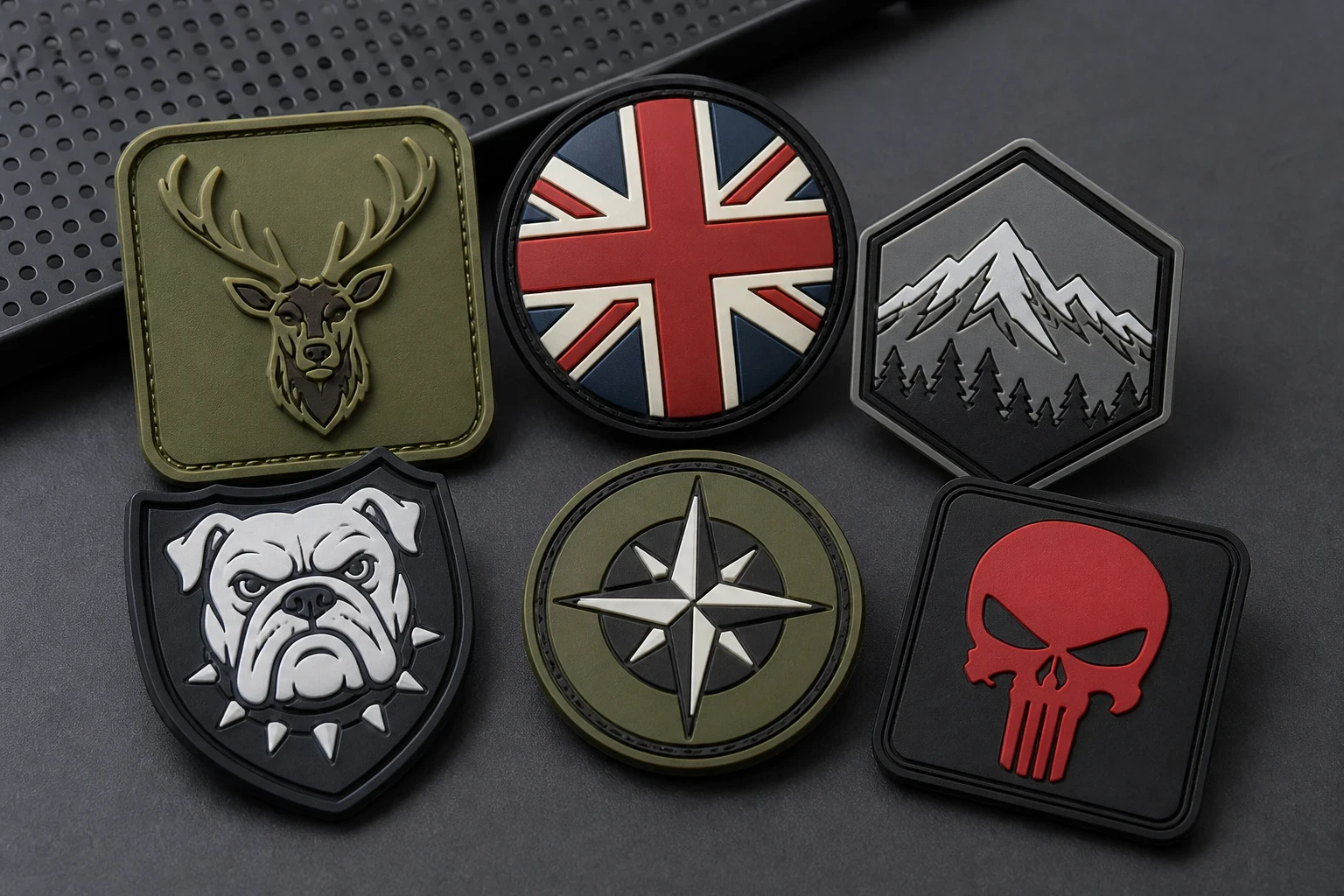
PVC patches are moulded rubber-style badges made from flexible polyvinyl chloride, with raised or recessed details that suit outdoor kit, workwear, uniforms and Velcro panels. The Customized Patches supplies UK customers with a 5-piece minimum per design, a free digital mockup usually within 12 hours, and production only after approval.
Key takeaways
- PVC patches use moulded flexible PVC to create raised, recessed or flat badge details that suit outdoor clothing and Velcro panels.
- The Customized Patches has a 5-piece minimum per design for UK orders, so a small club or trial run does not need to commit to a large batch.
- A free digital mockup is usually supplied within 12 hours, and production starts only after the artwork and specifications are approved.
- Sew-on, iron-on and Velcro backings suit different garments; the right choice depends on nylon, wool, cotton, storage, washing and how often the patch will be moved.
PVC patches are moulded badges made from flexible polyvinyl chloride, usually known as PVC. They are a good fit for outdoor kit, workwear, uniforms, bags and Velcro panels because the material gives a clean surface, defined raised detail and straightforward cleaning. The Customized Patches supplies PVC patches across the United Kingdom with a 5-piece minimum per design.
The practical buying decision is not simply PVC versus embroidery. You need to choose the patch size, number of layers, colour arrangement, edge, backing and garment. A football club may need a sew-on crest for a nylon shell, a cadet unit may need removable Velcro badges, while a hospitality business may prefer a flatter embroidered mark on a polo. A free digital mockup is usually sent within 12 hours, and production starts only after you approve it.
What are PVC patches?
PVC patches are made by placing coloured PVC into a mould to form the shape and surface of the badge. The finished patch can have a flat base, raised lettering, recessed channels, textured areas or several levels. That construction is why a small logo can look more like a manufactured emblem than a stitched badge.
The material is flexible rather than rigid, but it has more body than fabric. It will bend around a sleeve or bag without behaving like a loose piece of cloth. Edges can be made clean and practical for uniforms, outdoor clothing and kit that sees regular handling.
A PVC patch is not the same as a rubber stamp, silicone badge or printed fabric patch. Specifications vary between suppliers, so ask what the proposed material and finish are before ordering. At The Customized Patches, the mockup is used to confirm the visual treatment, including which parts are raised and how small lettering is handled.
Why UK teams and businesses choose PVC patches
The strongest reason is the appearance. Raised borders and lettering can make a simple two-colour mark easier to read on a jacket or bag. A hiking group might use a dark base with a raised mountain outline; a workshop may use a block logo with recessed channels; a motorcycle club may want a substantial badge that feels different from a standard thread crest.
PVC also makes sense where the garment is likely to meet rain, mud or frequent handling. It is commonly considered for nylon shells, rucksacks, work jackets, outdoor equipment and removable identification panels. It can be wiped rather than treated like delicate embroidery, although the garment care label still matters.
- Football clubs can use PVC badges on training bags, rain jackets and staff outerwear.
- Cadet units can use removable Velcro-backed identifiers on field clothing and kit bags.
- Biker and motorcycle clubs can use custom shapes, bold borders and high-contrast lettering.
- Hospitality businesses can place a compact logo on jackets, aprons or equipment bags.
- Schools and youth organisations can use smaller badges for activity clothing, provided the backing suits the fabric.
- Brands can use PVC patches as merchandise details on caps, overshirts, packs and technical clothing.
For a softer, more traditional crest, compare embroidered patches. If you need a tactile pile rather than a moulded surface, 3D embroidered patches and chenille patches are different routes with different production limits.
PVC patch specifications that affect the result
Size and shape
Measure the actual area on the garment, not only the artwork on a screen. A badge that looks comfortable at 3 inches wide can crowd a small chest panel once the border and backing are included. For a sleeve, a narrow vertical shape may sit better than a wide rectangle. For a bag, the available panel and zip placement often set the limit.
Common shapes include circles, shields, rectangles, squares and custom outlines. A custom outline can follow a mascot, tool, landmark or brand symbol, but very complicated edges may add visual noise. A strong outer border usually gives small lettering a cleaner stopping point.
Flat, raised and recessed detail
Raised PVC detail is useful for short words, borders and simple symbols. Recessed detail can separate colour areas or create a useful background texture. Fine lines and tiny lettering need care because the mould must leave enough material between features.
Ask for the smallest text to be shown at the final patch size in the mockup. A design that is readable on a desktop screen may not be readable on a 2-inch badge. If the wording is essential, shorten it, increase the patch size or simplify the typeface.
Colour and contrast
PVC gives strong solid colour areas, but a screen colour is not a promise of an exact physical match under every light. Send brand references where colour consistency matters and identify the most important colour in the design. Contrast normally matters more than using many shades.
A black base with dark-grey raised text may look subtle but can lose clarity at a distance. White on navy, yellow on black or a bright border around a dark centre is easier to check on a pitch, worksite or outdoor jacket. The free mockup helps you judge the relationship before production.
Edge finish
PVC edges are formed as part of the mould rather than finished with thread. This produces a neat continuous outline that suits modern logos and equipment badges. An embroidered patch may use a merrowed crest edge, which has a visibly stitched rolled border. Neither is automatically better; they are different visual choices.
| Specification | What it changes | Useful question before ordering |
|---|---|---|
| Patch width and height | Controls readability, garment fit and overall presence | What is the usable space in inches on the garment? |
| Number of PVC levels | Changes the depth and separation of raised or recessed details | Which lettering or symbols need to stand proud? |
| Border | Frames the artwork and helps define the cut shape | Will the border still read clearly at the chosen size? |
| Colour count | Affects the visual hierarchy and moulded colour areas | Which colours are essential to the logo? |
| Backing | Determines how the patch attaches and whether it can be moved | Is the garment suitable for sew-on, iron-on or Velcro? |
| Quantity | Affects the quote and how many spare pieces you have | Do you need exactly five, or should you cover replacements too? |
If your design depends on gradients, photographs or very fine continuous shading, compare printed patches. Printed is flatter; that is the point. It can reproduce image-like artwork more directly, while PVC is usually stronger visually when the design is built from bold shapes, lines and layers.
Choosing the right backing for the garment
Backing is a practical decision, not a small add-on. The same PVC front can behave very differently on a thin nylon shell, a wool coaches jacket, a cotton hoodie or a structured equipment bag. Tell us what the patch will be attached to and how it will be used.
Sew-on PVC patches
Sew-on is the dependable choice for a permanent attachment. It suits jackets, bags, uniforms and heavier garments where a needle can pass through the material. A sewing machine may handle a straightforward edge, while a hand stitch can be more practical for a thick seam or a one-off repair.
On a nylon shell, use care around waterproof construction and existing seam tape. Do not assume a needle will leave the original weatherproofing unchanged. For a wool coaches jacket or a lined blazer, check the inside access before positioning the badge.
Not sure whether a raised PVC finish or a flatter printed or stitched treatment will hold your logo best? Send the artwork and the garment details for a free digital mockup, usually within 12 hours, so you can compare the proposed result before production.
GET A FREE MOCKUPIron-on PVC patches
Iron-on is convenient on suitable heat-safe fabrics, but it is not suitable for every garment. Heat, pressure and the fabric surface all matter. Nylon shells can be damaged or distorted, and coated outdoor materials may not bond as expected.
A common failure is treating iron-on as permanent on a garment that goes through a hot dryer. An iron-on patch can lift at the edge after repeated washing and drying, especially if the original application was too cool or the fabric was unsuitable. If the badge is important, sew around the edge after bonding or choose sew-on from the start.
Velcro-backed PVC patches
Velcro is useful for tactical clothing, cadet kit, event uniforms, bags and any panel where the badge needs to be removed. It lets a team swap a role identifier, a name panel or a seasonal design without replacing the garment.
Check the loop panel size and position before ordering. A badge that overhangs the panel can catch on other clothing or detach at the corners. A badge that is too small may not engage enough of the hook-and-loop surface for active use.
| Backing | Best suited to | Main caution |
|---|---|---|
| Sew-on | Permanent use on jackets, bags, uniforms and heavier fabrics | Needle access, lining and waterproof construction must be considered |
| Iron-on | Suitable cotton and heat-safe fabric where quick application matters | Heat-sensitive nylon, coatings and dryer cycles can cause lifting or damage |
| Velcro | Removable badges, cadet kit, technical clothing and interchangeable identifiers | The garment needs a correctly sized loop panel |
For a softer badge with familiar thread texture, see the woven patches range. For a classic hide-like surface on selected garments and accessories, leather patches may suit the design better than PVC.
PVC patches compared with embroidered and printed options
The right material follows the artwork and the garment. Embroidery gives thread texture and a traditional uniform appearance, but dense detail can become crowded at a small size. PVC gives a smooth, moulded face and raised detail, while printed patches handle continuous artwork and photographic effects more naturally.
There is also a question of brand character. A heritage football crest may look right with stitched thread and a merrowed edge. A technical clothing brand may prefer PVC on a black shell. A café or hotel with a small chest logo may want the flatter finish of print because it sits quietly on a polo.
| Feature | PVC patches | Embroidered patches | Printed patches | Woven patches |
|---|---|---|---|---|
| Surface | Smooth, flexible and moulded | Raised thread texture | Flat printed image | Flat woven thread surface |
| Raised detail | Strong option for borders, lettering and symbols | Possible through thread density or 3D treatment | Usually not raised | Limited compared with PVC |
| Fine text | Needs careful sizing and spacing | Can close up if too small or dense | Good for fine artwork when the size is suitable | Often good for fine lines and small lettering |
| Photographic artwork | Not usually the natural choice | Not usually the natural choice | Most suitable of these four | Better for simplified artwork than photographs |
| Typical visual character | Technical, bold and modern | Traditional, tactile and uniform-led | Clean, flat and image-led | Fine, crisp and fabric-based |
| Good garment examples | Nylon shells, kit bags, Velcro panels and outdoor clothing | Blazers, polos, jackets, clubwear and heritage garments | Polos, merchandise, eventwear and image-led designs | Small logos, labels and detailed fabric badges |
You can read more about the wider choice in The Difference Between printed patches and embroidered patches, Explained. If you are ordering for a motorcycle club, the guide to biker and motorcycle club patches covers the badge shapes, placement and garment considerations that often matter for that use.
Artwork preparation for PVC patches
Start with the parts of the design that must survive at the final size. A club name in a narrow script, a tiny sponsor line or a detailed mascot can look impressive on a large screen but lose definition in a small moulded badge. Simplify before production rather than hoping the material will solve an artwork problem.
- Use clear outlines around important symbols and lettering.
- Avoid relying on very thin gaps between similar dark colours.
- Keep essential wording short and check it at the intended patch width.
- Provide a clean vector file where possible, but send the clearest available file if not.
- State any non-negotiable brand colours and identify colours that may be adjusted for contrast.
- Show the patch on the actual garment or panel if placement is difficult to judge.
A photograph of an existing badge is still useful. It tells our team what you are trying to preserve, even if the photograph has shadows or a curved surface. We can use that reference to discuss a cleaner PVC interpretation rather than copying every tiny mark.
Do not approve only from a zoomed-in artwork file. Check the complete badge at the intended size, including border, shape and backing. A mockup is a practical checkpoint, not just a presentation image.
How much do PVC patches cost in the UK?
There is no single price for PVC patches because the quote depends on size, quantity, shape, colours, number of raised levels, backing and delivery requirements. A simple small badge made in one shape is a different job from a large multi-level crest with a custom outline and a Velcro back.
The Customized Patches has a 5-piece minimum per design. That allows a small club, business or product team to test a badge without ordering a large stock holding. If you need five patches for a launch team, ask for five; if the patches are for a full squad, include sensible spares for replacements and future garments.
- The finished width and height in inches.
- The number of colours and whether a colour is used as a raised feature.
- The complexity of the outer shape and border.
- The preferred sew-on, iron-on or Velcro backing.
- The total number of pieces per design.
- The delivery address and any date linked to a match, event, launch or uniform issue.
UK-wide delivery can be arranged once the order details are confirmed. A quote is more useful when it includes the garment type, backing and quantity rather than only a logo file. If the same design will be used in two sizes, treat those as separate specifications when asking for pricing.
Ordering PVC patches: mockup, approval and lead time
The simplest route is to send the artwork, quantity, size, backing and garment information together. If you are unsure about any of these, send the logo and a photograph of the garment first. Our team can then identify the questions that affect the result instead of guessing from a small image.
- Send the artwork or a clear description of the badge.
- Confirm the intended width and height in inches, or provide the available garment space.
- Choose sew-on, iron-on or Velcro backing based on the actual fabric and use.
- Confirm the quantity, remembering that the minimum is 5 pieces per design.
- Review the free digital mockup, usually supplied within 12 hours.
- Check wording, colour, shape, raised detail, size and backing.
- Approve the final specification before production begins.
- Allow time for manufacture and UK-wide shipping, particularly before a fixed event date.
Production only starts after approval. This protects both sides from a wrong spelling, an incorrect badge shape or a backing that does not match the garment. It is worth checking the mockup with the person who will wear or issue the kit, especially if the patch includes a club name, rank, department or sponsor wording.
Lead time depends on the specification and order size, so give the required date at the quotation stage rather than after approval. A small simple badge and a multi-level custom crest do not take the same route. If the patches are for a football fixture, school term, trade show or product launch, build in time for review and delivery.
Care, washing and common failure points
PVC itself is generally straightforward to wipe, but the attachment and garment are still the weak points to consider. Follow the garment care label, avoid unnecessary heat and do not treat an iron-on badge as immune to repeated tumble drying. A patch may remain intact while its adhesive edge starts to lift.
Name sew-on, iron-on or Velcro on the quote and tell us what the patch will attach to. We will show the proposed PVC face and backing on a free digital mockup, usually within 12 hours, then produce only after you approve the specification.
GET A FREE MOCKUPFor sew-on badges, inspect the stitching after heavy use and repair a loose edge before it catches on equipment. For Velcro, keep fluff and thread away from the hook-and-loop surface so the badge continues to engage properly. On a nylon shell, remember that stitching can affect the fabric's original weather resistance.
- Do not apply heat to a fabric unless the garment and backing are confirmed as heat-safe.
- Do not fold a PVC patch sharply for storage if the design has tall raised details.
- Do not use harsh solvents on the badge without checking the material first.
- Do not sew through a waterproof seam or coated panel without considering the construction.
- Do check the patch after the first wash and before a long trip, match or event.
- Do keep spare patches if the design is used on frequently handled workwear or team kit.
An iron-on that peels after a dryer cycle is usually a backing, heat or care mismatch rather than proof that every PVC patch is unsuitable. Tell us about the washing routine and garment before the quote. For hard-used clothing, sew-on is often the safer permanent route.
PVC patches for different UK projects
Football and sports clubs often need a badge that stands out on training bags, rain jackets and staff clothing. A PVC crest can work well where the design is simplified and the garment is technical. If the match kit is washed often, check the attachment method rather than relying on the face material alone.
Cadet units, outdoor groups and event crews may value Velcro because roles and identifiers change. The loop panel must be measured first. For a permanent unit emblem on a heavier jacket, sew-on may be more practical.
Biker clubs and motorcycle groups often need bold lettering and a badge that reads from a short distance. PVC can suit a modern technical look, while embroidered or leather options may better match a traditional vest. The leather patches and biker and motorcycle club patches pages can help compare those directions.
Businesses using PVC patches should think about placement and customer contact. A compact badge on a jacket or equipment bag may be more practical than a large chest emblem. Hospitality polos, warehouse outerwear, security kit and branded merchandise all have different washing and comfort requirements.
For UK organisations outside major cities, UK-wide shipping means the order can be handled without needing a local production visit. You can also browse the UK city pages if you want to see location-specific ordering information.
PVC patch buying checklist
Before requesting a quote, gather the information below. It reduces back-and-forth and makes the mockup more useful. If you do not know the size or backing yet, say so; a clear question is better than an incorrect assumption.
- What is the finished patch design and wording?
- Where will it be attached: nylon shell, wool jacket, cotton polo, blazer, bag or Velcro panel?
- What width and height do you need in inches?
- Should the shape be circular, shield-shaped, rectangular or custom cut?
- Which details should be raised, recessed or left flat?
- Which colours are essential and which can change for contrast?
- Do you need sew-on, iron-on or Velcro backing?
- How many pieces are required, bearing in mind the 5-piece minimum per design?
- Is there a date for a match, launch, event, uniform issue or gift shipment?
- Who will approve the spelling, colours, size and backing?
You can request a free mockup quote with the artwork and these details. The mockup is normally supplied within 12 hours, and the order is not produced until the approved version is confirmed.
Final advice for UK PVC patch buyers
Choose PVC because its moulded surface and raised detail suit the design, not simply because it is different from embroidery. Check the garment first, particularly if it is a nylon shell, a coated outdoor fabric, a wool coaches jacket or a removable Velcro system. The backing can decide the success of the order as much as the front design.
The Customized Patches works with UK teams, brands, clubs and businesses on small and larger runs. The minimum is 5 pieces per design, the free digital mockup is usually supplied within 12 hours, and production begins only after approval. Send the artwork, garment details and required date so the quote reflects the job you actually need.
Frequently asked questions
What are PVC patches used for?
PVC patches are used on outdoor jackets, workwear, uniforms, bags, caps, technical clothing and Velcro panels. They suit bold logos, raised lettering, simple symbols and designs that need a flexible moulded surface. Football clubs, cadet units, motorcycle clubs, hospitality teams and businesses all use them for different garment and equipment applications.
What is the minimum order for PVC patches in the UK?
The Customized Patches has a 5-piece minimum per design for UK orders. If you need two different sizes or two different backings, ask for them as separate specifications because they may be treated as separate designs. Small teams can therefore order a limited trial quantity without committing to a large batch.
How quickly can I receive a PVC patch mockup?
The Customized Patches usually sends a free digital mockup within 12 hours. The timing can depend on receiving usable artwork and clear instructions, so include the desired size, shape, backing and garment where possible. Production only begins after the customer approves the mockup and specification.
Are PVC patches waterproof?
PVC is commonly selected for outdoor and wet-weather applications because the moulded face can be wiped and does not behave like stitched fabric. However, the full garment system is not automatically waterproof. Needle holes from sew-on attachment, seams, coatings and the garment's care instructions still matter, so describe the application before choosing the backing.
Can PVC patches be ironed onto a nylon jacket?
Do not assume that an iron-on PVC patch is suitable for a nylon jacket. Nylon can be heat-sensitive, and a coated or waterproof shell may not bond reliably. Sew-on may be the safer option, although stitching can affect weather resistance. The garment construction should be checked before the backing is confirmed.
Are PVC patches better than embroidered patches?
Neither is better for every project. PVC patches suit raised detail, bold shapes, technical clothing and Velcro panels. Embroidered patches suit thread texture, traditional crests, club badges and garments where a softer fabric appearance is wanted. Printed patches may be the better choice for flat gradients, photographs or image-led artwork.
Ready to produce custom patches for your UK team or brand?
GET A FREE MOCKUP