
Puff embroidery patches UK Trends to Watch in 2026
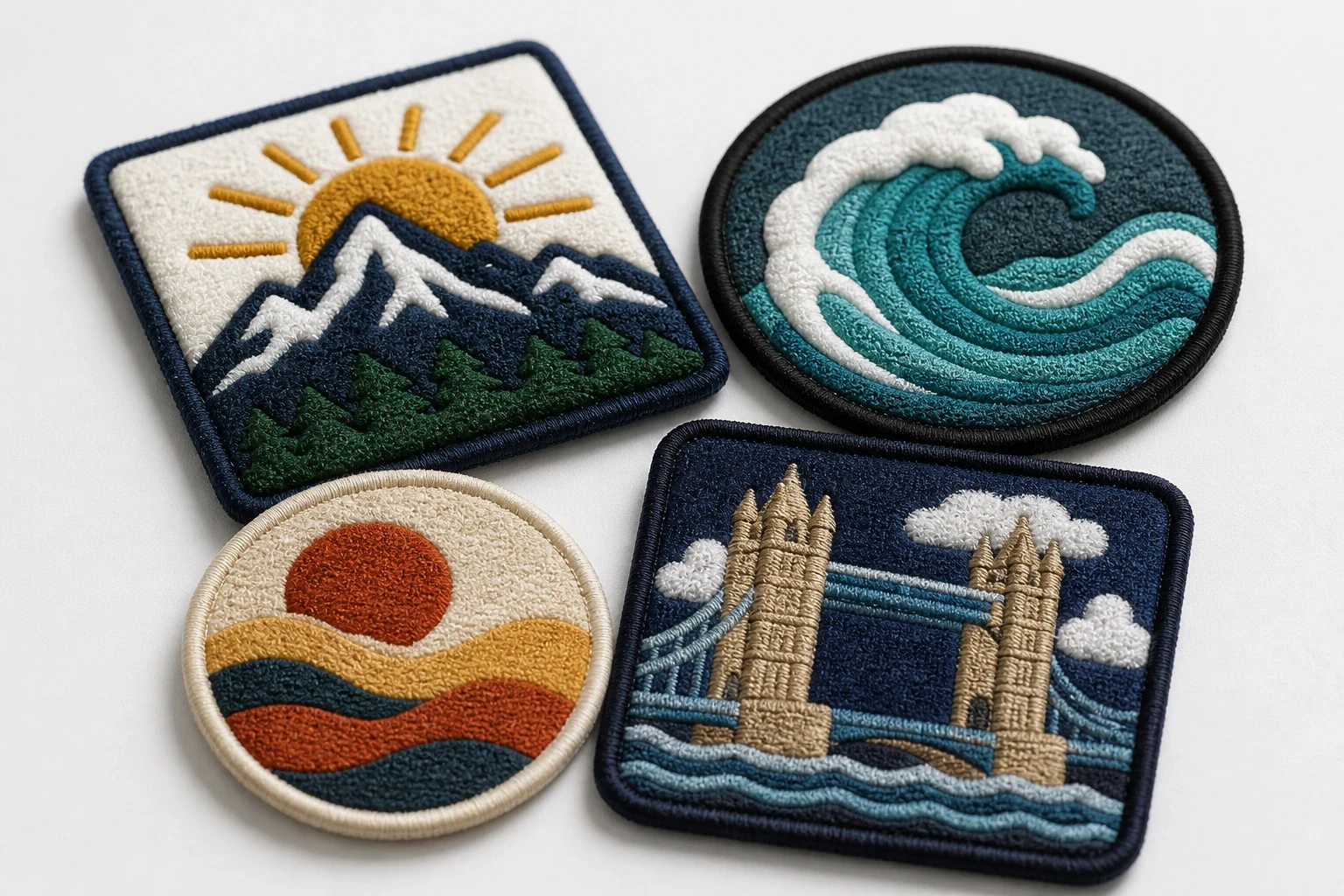
Puff embroidery patches UK are raised embroidered badges made with foam beneath selected stitched areas, giving logos, lettering and crests a noticeable 3D profile. In 2026, UK buyers are favouring controlled raised details, practical sew-on or Velcro backings, smaller test runs and artwork designed specifically for readable stitching.
Key takeaways
- Puff embroidery adds height to selected design areas rather than raising every thread on the patch.
- The strongest 2026 designs use bold shapes, short lettering and controlled contrast instead of fine detail packed into a small badge.
- A 5-piece minimum applies per design at The Customized Patches, making small club, team and brand trials practical.
- A free digital mockup is usually supplied within 12 hours, and production starts only after approval.
Puff embroidery patches UK are raised embroidered badges designed to make selected lettering, logos or symbols stand proud from the patch surface. The 2026 direction is not simply “make everything bigger”: the best results use foam-backed areas carefully, with bold artwork that stays readable on jackets, polos, bags and uniforms.
The Customized Patches makes these patches for UK teams, brands, clubs and businesses, with a 5-piece minimum per design. You receive a free digital mockup usually within 12 hours, and production starts only after you have checked and approved the design, size, colours and backing.
What will shape puff embroidery patches UK in 2026?
The main change is a move towards purposeful height. A raised word, mascot face, tyre tread, crown or central monogram can give a patch its character. Raising every small line in a complicated crest often does the opposite. It can crowd the outline, hide fine details and make the patch harder to read from normal standing distance.
We expect UK orders to keep splitting into two camps. Sports clubs and streetwear-led brands often want a strong raised centre that photographs well. Schools, cadet units, hospitality businesses and workwear buyers tend to use puff as an accent, then keep borders and smaller information flat for cleaner stitching and easier washing.
- Raised initials and short names on teamwear, coaches’ jackets and training tops.
- Puff-filled mascot heads or single symbols on merchandise and club clothing.
- Two-level patches with a raised centre and a flat merrowed border.
- Dark base fabrics with a lighter raised thread for clear contrast.
- Sew-on patches for permanent uniforms and Velcro patches for changing kit.
- Small first runs that let a club or independent brand inspect the physical result before a larger repeat.
This is part of the wider interest in 3D embroidered patches rather than a replacement for every other decoration method. A patch still needs to suit the garment, washing routine, artwork and budget. Printed is flatter; that is the point when a photograph, gradient or long message matters more than surface relief.
The 2026 design trend: raised detail with less clutter
Puff embroidery works by placing foam beneath selected stitch areas before the excess is removed. That process favours confident shapes. Thick block lettering, simple outlines and solid fills generally hold their form better than hairline strokes, tiny gaps or intricate shading.
A football club might raise the initials in its badge while leaving the ball seams flat. A biker club may raise one central word but keep the outer merrowed crest and smaller location text flat. A hospitality group may use a raised monogram on a black polo, with the company name embroidered conventionally beneath it.
Lettering that survives the first glance
Short lettering is usually the safer choice. Large initials, a three- or four-letter team abbreviation, or one bold word gives the foam enough room to show. Long department names and small dates need careful checking because the finished stitch width may be less forgiving than the screen artwork suggests.
Do not judge a design only at full monitor size. Ask how it will look at its finished width in inches, on the actual garment and from several feet away. A detailed crest that looks impressive at 8 inches can become muddy at 3 inches. Our guide to designing for 3D embroidered patches covers the same issue in more detail.
Borders, edges and merrowed crests
The border does practical work. It frames the raised centre, helps the patch keep its outline and gives the eye somewhere to stop. A merrowed crest has a rounded stitched edge, while a laser-cut edge can suit a more modern silhouette or a shape with internal points.
A heavy raised edge is not always the best choice. On a small patch it can take up room needed for the name or emblem. For football shirts and school blazers, a neat flat border with a controlled puff centre is often easier to read and easier to sew accurately.
Choosing the right puff specification
The right specification depends on more than the artwork. We ask what the patch is going on, how often the garment will be washed, whether the wearer needs to remove it, and how much of the design should stand proud. Nylon shells, wool coaches’ jackets, cotton polos and school blazers all behave differently under a patch.
Backing is one of the first decisions. Sew-on is dependable for a permanent club or uniform application. Iron-on is convenient for some cotton garments, but heat and repeated tumble-drying can cause an iron-on patch to peel after a dryer cycle. Velcro is useful for kit that changes between roles, but the garment needs a matching loop panel and enough clear space.
| Specification | Best suited to | Main advantage | Trade-off to check |
|---|---|---|---|
| Raised puff centre with flat border | Club crests, workwear logos and team jackets | Shows height without overcrowding the edge | Small text may still need simplifying |
| Raised lettering | Initials, short names, streetwear and merchandise | Strong visibility and tactile character | Long words can become too wide or difficult to read |
| Flat embroidery with selected puff accents | Detailed emblems and mixed logos | Keeps fine information clearer | The contrast between raised and flat areas must be planned |
| Sew-on backing | Uniforms, biker vests and permanent garments | Secure attachment for long-term use | Needs stitching through the garment and can take longer to fit |
| Iron-on backing | Suitable cotton garments and one-off clothing | Quick application without sewing | Heat, washing and fabric choice affect adhesion |
| Velcro backing | Cadet kit, tactical clothing and interchangeable team panels | Patch can be removed or swapped | Requires a correctly positioned loop panel on the garment |
Size also changes the result. A 2-inch badge has limited room for raised letters, while a 4-inch or 5-inch back patch can give a bold word much more breathing space. There is no universal best size. The placement, garment and viewing distance matter more than a nominal standard.
If you are comparing options, look at custom embroidered patches sizing and backing options and the guide to puff embroidery patches UK versus flat embroidered patches. They explain why a flat stitch field can be the sensible choice for fine maps, gradients and small information.
Which UK garments suit raised embroidery?
Football clubs often choose puff for initials, a mascot or a simplified crest on coaches’ jackets, hoodies and travel tops. The patch may need to sit over a seam, so measure the usable panel rather than the garment’s full chest area. A raised design can look sharp on a smooth polyester jacket, but too much height near a zip may catch or rub.
Not sure which areas should be raised, or whether sew-on, iron-on or Velcro will suit the garment? Send the artwork and placement details for a free digital mockup, usually within 12 hours, so you can compare the specification before production.
GET A FREE MOCKUPBiker vests are another familiar application. Leather and heavy denim can take a sewn patch well, especially for a large back design or a small front rocker. Check the curved panel before finalising the shape. A straight rectangle designed on screen may not sit naturally across a shoulder or curved back.
Wool coaches’ jackets and nylon shells need more care. Nylon can pucker if the patch is pulled too tightly, while wool can show the edge of a dense backing. On lightweight shells, a lighter patch construction and careful sewing position may be preferable to a large, heavy raised badge.
Hospitality polos and work shirts often benefit from a modest raised monogram or company symbol. Large areas of foam may feel too casual for a front-of-house uniform, whereas a small raised mark can add distinction without making the shirt difficult to press. For very fine brand details, consider woven patches or printed patches instead.
- Football and rugby: coach jackets, kit bags, hoodies and travel tops.
- Cadet and outdoor units: removable Velcro panels and durable outer layers.
- Schools: blazers, house clothing, bags and leavers’ garments.
- Biker clubs: leather vests, denim jackets and large back patches.
- Hospitality: polos, overshirts, aprons and staff jackets.
- Independent brands: caps, sweatshirts, work jackets and limited merchandise runs.
Puff, flat embroidery, woven, printed or PVC?
There is no prize for choosing the most raised finish. The useful comparison is how each method handles the artwork and the garment. Puff gives a tactile, shadowed effect. Flat embroidery gives more control over small stitched information. Woven construction produces a smoother face with fine lines, while print handles photographic detail and broad colour transitions.
PVC is worth considering for outdoor kit, bags and designs that need a rubberised surface. Leather can suit premium workwear or a simple stamped mark. Chenille patches are a different option again, with a soft, varsity-style pile that can work well for large letters and school or sports clothing.
| Patch type | Visual finish | Good choice for | Less suitable for |
|---|---|---|---|
| Puff embroidery | Raised stitched sections with visible depth | Bold initials, mascots, short words and statement logos | Tiny lettering, dense fine linework and photographic artwork |
| Flat embroidery | Traditional stitched surface | Crests, borders, names and detailed line-based logos | Designs specifically needing a strong three-dimensional effect |
| Woven | Smooth, tightly woven face | Fine lettering, small details and clean flat graphics | Projects where a raised tactile surface is central to the look |
| Printed | Flat ink or printed image | Gradients, photographs, long copy and highly detailed artwork | Garments where a textured stitched finish is required |
| PVC | Rubberised, moulded surface | Outdoor gear, bags and modern utility branding | Traditional textile appearance or soft stitched crests |
| Leather | Natural or synthetic leather face | Simple premium marks and selected workwear | Large multi-colour artwork with complex tiny details |
Printed is flatter; that is the point. If the design contains a detailed illustrated skyline, a long sponsor list or a smooth colour fade, a printed patch may communicate it more faithfully than forcing it into raised thread. You can compare embroidered patches with printed patches before asking for a quote.
Ordering puff embroidery patches in the UK
A good order starts with the garment, not just the logo file. Tell us the intended width and height in inches, the placement, the number of pieces, the backing and the type of clothing. A chest patch for a polo needs a different conversation from a 12-inch back patch for a biker vest.
Send the cleanest artwork available, preferably a vector file or a large, sharp image. We can work from other formats, but a low-resolution screenshot may hide the real line widths and colours. Include any brand colour references and say which parts must be raised. If you are unsure, mark the priority areas and we can suggest a production-friendly version.
- Confirm the finished patch width, height, shape and intended garment.
- Choose the raised areas and identify any details that must remain flat.
- Select sew-on, iron-on, Velcro or another suitable backing.
- Request the free digital mockup and review the lettering, colours, border and placement.
- Approve the mockup only after checking the design at its intended finished size.
- Confirm the quantity, with a 5-piece minimum per design.
- Production begins after approval, followed by UK-wide shipping to the supplied address.
The mockup is not a decorative extra. It is where a crowded word, overly thin border or unsuitable backing can be spotted before manufacture. It also gives a team committee, brand owner or club organiser something clear to circulate for approval rather than relying on a verbal description.
Lead times, quantities and repeat orders
The free digital mockup is usually sent within 12 hours, although artwork complexity and the details supplied can affect the response time. That is separate from production and delivery. We do not make the physical patches until the mockup has been approved.
The minimum is 5 pieces per design. This suits a school house, a small business trial, a five-person club committee or a new merchandise test. If you need several colourways, confirm whether each is a separate design because the minimum is assessed per design rather than simply added across unrelated artwork.
For a repeat order, keep the approved artwork and specification. Mention the previous order reference if available, then check whether the garment, size, backing or colour has changed. A repeat made for a different jacket should not be assumed to need exactly the same dimensions.
Common mistakes we expect to see in 2026
The most common mistake is treating puff embroidery like a filter that can be applied to every logo. A detailed badge may need a simplified production version. That is not a failure of the artwork; it is a normal translation from screen pixels or fine print into thread, foam, backing and fabric.
- Raising every letter in a long name until the words lose their counters and spacing.
- Choosing a finished size before measuring the actual garment panel.
- Using iron-on on a nylon shell or a garment that will be tumble-dried regularly.
- Adding Velcro without confirming that a loop panel is already present.
- Placing a thick patch across a jacket zip, pocket opening or heavy seam.
- Assuming a dark thread will show clearly on a black base without testing contrast.
- Approving a screen design without checking the final inch measurements.
- Ordering several colourways without confirming each design’s quantity and specification.
- Expecting a raised patch to reproduce a photograph, fine gradient or tiny sponsor list.
- Sewing through delicate fabric without considering backing support and stitch tension.
A dryer cycle deserves particular attention. Heat and repeated movement can test an iron-on bond, especially on garments that are washed often or dried on a high setting. For hard-working uniforms, sewn attachment is usually the more dependable conversation, but the final choice still depends on the fabric and how the garment is used.
Read the guide to common mistakes when ordering puff embroidery patches UK before sending artwork. It is also worth comparing biker and motorcycle club patches if your design will sit on leather or denim and needs a shaped back patch rather than a small chest badge.
Name the garment, finished size, backing and quantity on the quote. We will show the raised areas and the correct back on a free digital mockup usually within 12 hours, then wait for your approval before production.
GET A FREE MOCKUPHow UK brands can use the 2026 trend without losing consistency
Use puff as part of a system. A brand may use one raised monogram on jackets, a flat embroidered logo on polos, a woven label on smaller merchandise and a printed patch for an illustrated campaign. Keeping the colours, border treatment and logo proportions consistent matters more than using the same patch construction everywhere.
For a sports club, define which marks are permanent and which are seasonal. The main club crest might be sew-on and flat or partly raised, while a tournament panel might use Velcro so it can be replaced. A business can take a similar approach with a core company patch and removable event or department badges.
Small businesses should also think about stock risk. Five pieces per design lets you test a patch on real garments, photograph it, gather internal feedback and see how customers respond. You do not need to commit to a large batch before learning whether the raised lettering is the right fit.
For location-based work across England, Scotland, Wales and Northern Ireland, keep the master artwork organised. If you order UK city pages or regional versions, save each approved mockup with its exact wording and size. That prevents a Birmingham, Glasgow or Cardiff variant from being produced with an outdated border or incorrect date.
What should you ask before approving a puff patch?
Ask to see the complete specification, not just a front image. The approval should make clear the finished size, shape, base colour, thread colours, raised areas, border, backing and quantity. If the patch is going onto a garment with a zip, pocket, seam or curved panel, include that placement in the discussion.
- Which exact parts of the artwork will be raised?
- Will the smallest lettering remain readable at the finished size?
- Is the border flat, raised, merrowed or laser cut?
- Does the backing suit nylon, wool, cotton, leather or denim?
- Will the garment be washed and tumble-dried regularly?
- Does the patch need to be removed or exchanged?
- Are all colourways being treated as separate designs?
- Has the five-piece minimum been applied to each design?
- Has the final digital mockup been approved by the person responsible for the order?
If you want the tactile look but are not sure that foam is suitable, compare it with the difference between 3D and flat embroidered patches. A practical decision is usually clearer once the garment, washing routine and viewing distance are written down.
Our practical forecast for puff embroidery patches UK in 2026
The trend should settle into better-designed restraint: a raised word here, a mascot feature there, and flat stitching where precision matters. UK buyers are becoming more specific about backings and garment compatibility because a patch is not judged in isolation; it is judged after being worn, washed, handled and photographed.
For teams and clubs, that means choosing a design that can be produced consistently across kit bags, jackets and uniforms. For brands, it means using height as one part of a recognisable identity rather than as a substitute for clear artwork. For businesses, it means specifying the attachment method before the order reaches production.
The most reliable route is straightforward: start with the garment and placement, simplify the artwork where needed, choose the backing, review the free mockup and approve only when the finished size makes sense. The Customized Patches applies a 5-piece minimum per design, supplies a free digital mockup usually within 12 hours and produces only after approval.
For more background, see Puff embroidery patches UK: Everything UK Buyers Need to Know and The Complete Guide to Puff embroidery patches UK in 2026. If the project is a wider embroidered range, start at the embroidered patches product hub.
Frequently asked questions
What are puff embroidery patches UK?
Puff embroidery patches UK are embroidered patches with foam placed beneath selected stitched areas. The foam creates a raised profile on lettering, logos or symbols, while other parts of the design can remain flat. They are used on teamwear, branded clothing, bags, uniforms, biker vests and merchandise.
What is the minimum order for puff embroidery patches?
The Customized Patches has a minimum of 5 pieces per design. If you order different colourways, wording or artwork versions, ask for the quantity to be confirmed for each design before approval.
How quickly can I see a puff patch mockup?
The Customized Patches usually supplies a free digital mockup within 12 hours. The mockup shows the proposed appearance and specification for review. Physical production starts only after the customer approves the mockup.
Are puff patches suitable for football clubs and school blazers?
They can be suitable for football clubs, school blazers and other uniforms when the design, size and backing match the garment. Short lettering and bold symbols tend to work well. Check seams, pockets and washing requirements, and consider sew-on attachment for clothing that will be used regularly.
Is sew-on or iron-on better for a raised embroidered patch?
Sew-on is generally the safer option for permanent, frequently washed garments because it does not rely on an adhesive bond. Iron-on can be convenient on suitable fabrics, but heat, washing and tumble-drying may affect adhesion. Nylon shells, wool garments, leather and delicate fabrics need specific advice before choosing a backing.
Are puff embroidery patches better than flat embroidered patches?
Neither is automatically better. Puff embroidery suits bold lettering, initials and selected raised details. Flat embroidery usually handles finer lines, detailed crests and smaller information with more control. Many effective designs combine a raised centre with a flat border and flat supporting details.
Ready to produce custom patches for your UK team or brand?
GET A FREE MOCKUP