
Custom embroidered patches Trends to Watch in 2026
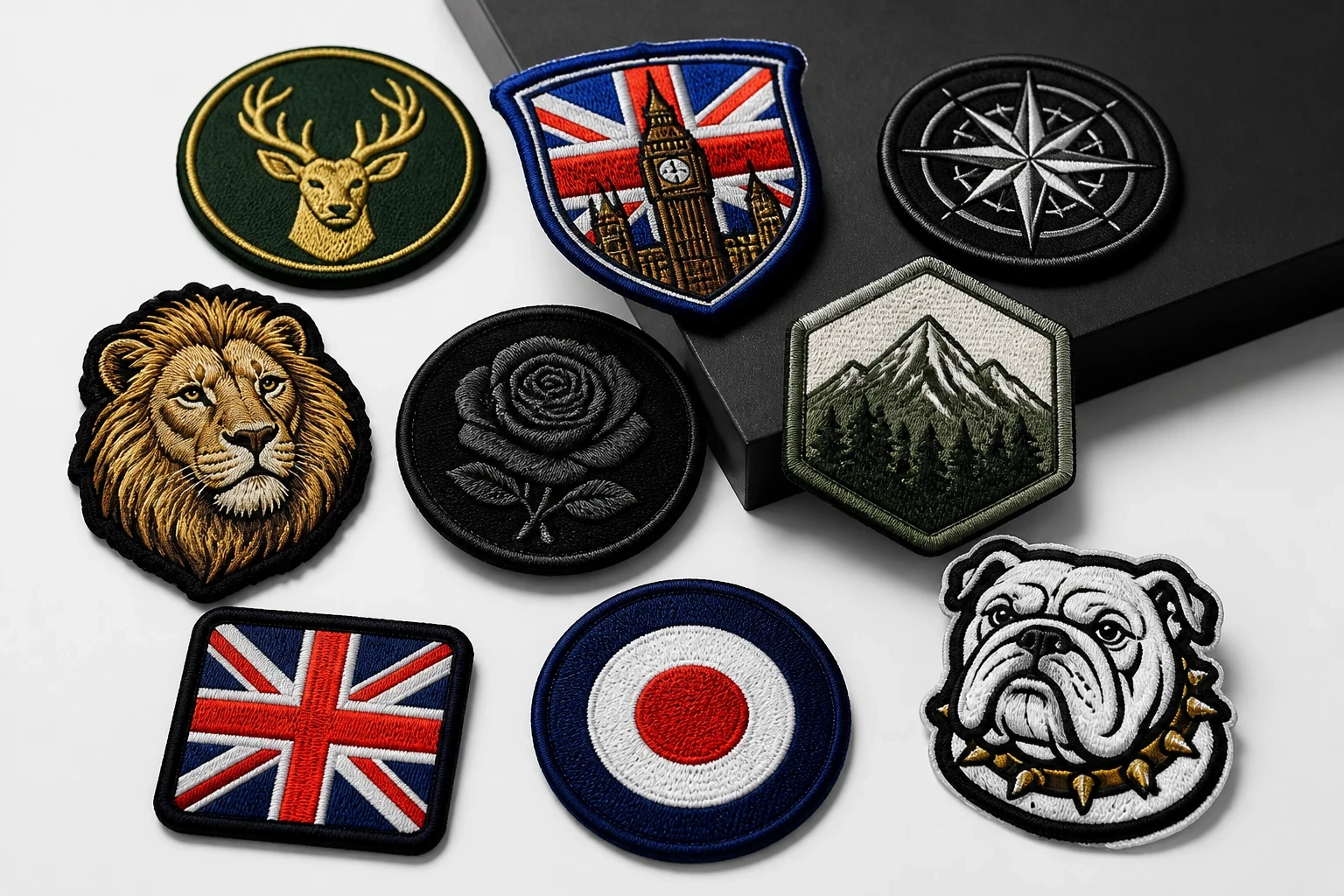
The main custom embroidered patches trends for 2026 are cleaner low-detail artwork, selective 3D thread, recycled and textured fabrics, removable Velcro backs, smaller chest and cap patches, and mixed patch sets for uniforms and merchandise. UK buyers should approve a digital mockup first; The Customized Patches offers one usually within 12 hours, with a 5-piece minimum per design.
Key takeaways
- Readable artwork is more useful than adding tiny detail that embroidery cannot hold.
- 3D embroidery works best as a controlled accent on lettering, mascots and selected logo areas.
- Sew-on remains the safest general backing for heavy-use garments; Velcro suits removable identifiers and iron-on needs a compatible fabric and careful application.
- The Customized Patches accepts 5 pieces per design and usually sends a free digital mockup within 12 hours before production.
The biggest custom embroidered patches trends for 2026 are cleaner artwork, useful texture, smaller garment-specific sizes and backing chosen for the job. UK teams and brands are asking for patches that look considered on a polo, jacket, cap or Velcro panel, rather than simply making a logo larger and denser.
The Customized Patches supplies across the United Kingdom with a 5-piece minimum per design. A free digital mockup is usually sent within 12 hours, and production starts only after you approve the design, size, colours and backing.
Why patch design is becoming more selective in 2026
There is a practical reason for the shift. A patch is often seen from a few feet away, not studied on a design screen at 400% zoom. Fine text, thin outlines and several similar thread colours can turn into a muddy shape once stitched onto fabric. A cleaner mark usually survives washing, movement and distance better.
This does not mean every patch needs to be plain. Football clubs still want crests, cadet units need clear insignia, hospitality teams use branded badges on polos, and biker clubs often require strong lettering and a merrowed edge. The useful question is which details help recognition and which details only exist in the source artwork.
The move from screen-perfect artwork to stitch-ready artwork
A designer can create a perfect gradient or a one-pixel outline on a screen. Thread does not behave like a screen. Embroidery uses stitch direction, density, underlay and thread thickness, so a small adjustment to lettering or spacing may be needed to keep the result legible.
Ask to see a proper mockup at the intended patch size. A large crest may look excellent at 4 inches wide but lose its small shield details at 2.5 inches. The mockup is where you can decide to remove a line, enlarge a word or simplify a border before a production file is made.
Trend one: cleaner artwork and stronger contrast
High-contrast patch designs are becoming more common because they work across more garments. White lettering on navy, gold on black, or a bright club colour on a dark wool jacket can be read quickly. A busy dark-on-dark design may look subtle, but it can disappear under indoor lighting or on a black nylon shell.
The best colour choice is not always the one that matches a brand guideline exactly. A thread chart may contain a close substitute that separates more clearly from the base fabric. That matters on workwear, school blazers and sports kit, where the patch and garment can be viewed together rather than as an isolated logo.
Small lettering needs a realistic test
Small text is one of the most common sources of disappointment. If the wording is essential, give it enough height and spacing. If it is decorative or secondary, consider removing it. A patch that says the right thing but cannot be read from arm's length has not solved the branding problem.
For very fine detail, compare woven patches or printed patches with embroidery. Printed is flatter; that is the point. It can reproduce gradients, small illustrations and photographic-style artwork more easily, while embroidery gives a raised, tactile surface and a familiar uniform or club look.
Trend two: selective 3D embroidery instead of all-over height
3D embroidery, also called puff embroidery, is being used more carefully in 2026. Raised foam under selected lettering can make a short word, initials or a mascot feature stand out. Covering the entire design with height can make small gaps close up and may create a bulky patch that does not sit well on a cap or curved garment.
This is particularly useful for streetwear labels, gym identities, motorsport groups and club merchandise. It is less suitable for tiny text, highly detailed crests or designs that must fold flat into a pocket. See the separate range of 3D embroidered patches if the raised effect is central to the design.
Where 3D thread works, and where it does not
- Works well for bold initials, short names, simple numbers and selected mascot features.
- Works well on caps, structured hats and fashion jackets where the raised surface is part of the look.
- Needs care on small lettering because foam can reduce the open space between characters.
- Is usually a poor fit for long club names, detailed heraldry and fine internal lines.
- Should be shown on a mockup before production so the raised sections are clearly marked.
A mixed design can be the sensible answer: flat embroidered borders and fine features, with 3D thread only on the main word. That gives contrast without asking every part of the artwork to perform the same job.
| Patch approach | Best for | Main benefit | Trade-off |
|---|---|---|---|
| Standard embroidery | Club crests, uniforms, workwear and general branding | Tactile stitched finish with clear thread texture | Very fine detail and gradients need simplifying |
| Selective 3D embroidery | Caps, streetwear, initials and bold lettering | Raised focal detail that catches light | Not ideal for tiny text or dense artwork |
| Woven construction | Fine lettering, small symbols and flat badges | Sharper small detail with a smooth surface | Less raised texture than standard embroidery |
| Printed construction | Gradients, illustrations and photographic detail | Accurate colour areas and a flat finish | Does not provide the traditional stitched relief |
| PVC construction | Outdoor kit, airsoft and wet-use equipment | Easy-clean surface with strong dimensional shape | Different visual character from thread and fabric |
The table is a starting point, not a promise that one material suits every logo. Garment, artwork, washing routine and expected use all affect the recommendation. A school blazer and a rainproof tactical bag may carry the same emblem but need different patch specifications.
Trend three: patch size is being planned around the garment
A common ordering mistake is choosing one size before deciding where the patch will go. A chest badge on a football jacket, a sleeve patch on a nylon shell and a front patch on a cap all need different proportions. The patch should sit comfortably without covering a zip, seam, pocket or curved edge.
Small chest patches between roughly 2 and 3.5 inches are popular for staff polos, club jackets and independent brands. Larger back patches remain relevant for biker groups, event merchandise and statement outerwear. The right size depends on the longest dimension, not only the height, so a wide wordmark may need more space than a compact crest.
Examples from real UK garments
- Nylon shells: use a patch and backing that can cope with a thin, slippery outer fabric; test the placement away from a seam.
- Wool coaches and varsity-style jackets: a larger embroidered or chenille design can suit the fabric, but check weight and stitching before committing.
- Velcro panels: specify the hook or loop side required, as the wrong side will not attach to the garment panel.
- School blazers: a compact crest with readable lettering usually looks neater than an oversized badge on the chest.
- Caps: curved placement favours simpler shapes and may suit selective 3D embroidery or a small flat design.
- Biker vests: plan the back panel, rocker wording and edge treatment together rather than ordering each element as an afterthought.
Not sure whether standard thread, 3D detail or a flatter construction will hold your logo best? Send the artwork and intended garment for a free digital mockup, usually within 12 hours, so you can compare the result before production.
GET A FREE MOCKUPFor jackets, the backing and edge deserve as much attention as the artwork. A merrowed vs heat-cut vs laser-cut patch guide explains why a thick merrowed edge can suit a traditional crest, while a heat-cut edge may be cleaner for a detailed outline.
Trend four: backing is being specified by use, not habit
Sew-on, iron-on and Velcro are not interchangeable finishes. Sew-on is usually the dependable choice for garments that are washed regularly or exposed to pulling. Iron-on can be convenient, but it depends on heat, pressure, fabric compatibility and correct application; an iron-on patch that peels after a dryer cycle is a familiar failure.
Velcro makes sense for removable identifiers, tactical equipment, event crews and uniforms that need different role patches. It adds thickness and should be included in the size and placement check. On a soft polo, it may feel too stiff; on a prepared panel, it can be exactly right.
Backing choice in plain terms
| Backing | Good fit | Watch for |
|---|---|---|
| Sew-on | Football clubs, school blazers, biker vests, workwear and long-term use | Requires stitching skill or a tailor; placement should be checked first |
| Iron-on | Suitable cotton or blended garments, merchandise and simple home application | Heat-sensitive nylon, waterproof coatings and tumble drying can cause failure |
| Hook-and-loop Velcro | Removable unit badges, bags, tactical kit and event staff identifiers | The hook or loop side must match the garment panel |
| Adhesive | Short-term display, packaging or temporary use | Not normally the first choice for repeated washing or heavy wear |
The Sew-On vs Iron-On vs Velcro guide covers the decision in more detail. Tell the manufacturer what the patch will be attached to, how often it will be washed and whether it must be removed. Those three details often change the recommendation.
Trend five: mixed patch sets for teams, brands and events
Rather than producing one identical badge for every item, organisations are ordering coordinated sets. A sports club might use a crest on jackets, a smaller sponsor mark on bags and a player-number patch on a Velcro panel. A clothing brand might pair a main embroidered badge with a woven care mark or a flat printed label.
This approach can make the range feel connected without forcing one patch to do everything. It also helps with different garment sizes. A 4-inch back patch may suit an adult jacket but look oversized on a youth hoodie, while a 2-inch chest badge can work across several sizes.
Keep the set consistent
- Use the same core colour references across the designs.
- Keep the border treatment related, even if the shapes differ.
- Decide whether the brand wants a traditional raised stitch or a flatter modern finish.
- Name each design clearly on the quote so the quantity applies to the correct artwork.
- Check that each patch has a real placement before adding it to the order.
The 5-piece minimum applies per design, not merely to the total number of patches across unrelated artworks. That is useful for a small club ordering five replacement crests, but it matters if a brand wants several different designs at one piece each.
Trend six: texture is being balanced with practical care
Texture remains one of the reasons people choose embroidery. Raised thread catches the light, gives a crest depth and feels more substantial than a flat transfer. Chenille adds a soft, bold pile that suits varsity jackets and large lettering, while standard embroidery gives more control over outlines and smaller shapes.
The drawback is that textured surfaces need sensible care. Loose thread, aggressive heat and repeated high-temperature drying are not good friends. Turn garments inside out where possible, follow the garment's care label and avoid treating a patch as indestructible simply because it looks thick.
For a large varsity letter or a soft school sports jacket, compare chenille patches with embroidery. For a flat, fine-detail badge, compare woven patches or printed patches. The finish should follow the garment and the artwork, not just the trend.
Trend seven: alternative materials for the right brief
Embroidery will remain the natural choice for many club crests and uniform badges, but 2026 orders are increasingly mixed across materials. A brand may use leather for a cap, woven for small text, PVC for outdoor equipment and embroidery for its main jacket mark.
Leather gives a stamped heritage appearance, although it cannot reproduce every fine colour detail. PVC handles rain, mud and repeated wiping well, making it practical for airsoft, outdoor groups and equipment bags. Neither should be described as a direct replacement for embroidery; they solve different problems.
- Leather patches suit caps, heritage branding and simple stamped marks.
- PVC patches suit outdoor, tactical and wet-use equipment where cleanability matters.
- Woven patches suit small lettering and a flatter badge surface.
- 3D embroidered patches suit bold raised initials and selected lettering.
- Biker and motorcycle club patches often combine large back designs with rocker text and strong edge choices.
The useful comparison is not which material is fashionable. It is which surface will still look right after the garment has been worn, packed, washed and viewed from normal working distance.
What UK buyers should check before ordering in 2026
Start with the garment, location and quantity. A manufacturer can quote more accurately when you state the patch dimensions in inches, the number of designs, quantity per design, backing, border and delivery destination. A sketch is helpful, but a vector file or clear high-resolution artwork makes approval easier.
- Confirm the finished width and height, including the border.
- State whether the patch is for a cap, polo, blazer, football jacket, nylon shell, wool coach jacket, bag or Velcro panel.
- List thread colours or provide brand references, while accepting that thread may need a close practical match.
- Choose sew-on, iron-on, Velcro or another backing before the mockup is approved.
- Confirm the edge: merrowed, heat-cut or another suitable finish.
- Separate each artwork and quantity clearly; the 5-piece minimum applies to each design.
- Review the digital mockup at the intended size, not only as a large screen image.
- Approve the final mockup before production begins.
Name sew-on, iron-on or Velcro on the quote and tell us the garment. We will show the proposed backing and patch treatment on a free digital mockup, usually within 12 hours, before production starts.
GET A FREE MOCKUPThere can be a difference between the artwork approval stage and the delivery date. Digitising, patch construction, quantity, backing and UK shipping all affect the schedule. If a club needs patches for a fixture or a business needs them for an event, mention the date at quotation stage rather than assuming a standard turnaround.
The Customized Patches sends a free digital mockup usually within 12 hours. The team produces only after approval, so the mockup is a working checkpoint for size, colour, stitch treatment and backing, not a decorative extra.
How much should a 2026 patch order cost?
There is no single price for custom embroidered patches because size, stitch coverage, backing, edge, number of designs and quantity all matter. Five small simple patches will be assessed differently from 250 large, dense back patches with Velcro. The same applies to a set containing several artworks rather than one repeated design.
For a useful quote, avoid saying only “a logo patch”. Give the approximate size in inches, the number of pieces, the garment, the backing and the deadline. If you are comparing suppliers, make sure the quotes describe the same specification; a sew-on patch and a Velcro patch are not like-for-like.
Small runs are possible because The Customized Patches has a 5-piece minimum per design. Larger quantities can make sense for schools, leagues, workwear programmes and merchandise, but do not order hundreds before checking that the approved size works on the actual garment.
Common 2026 mistakes to avoid
The first mistake is approving a design without checking its physical size. The second is choosing iron-on for a fabric that cannot take the required heat. The third is treating a Velcro panel as a universal fit without confirming whether the patch needs hook or loop.
Another mistake is squeezing too many words into a small crest. If the club name, location, year, motto and mascot all have to fit inside 2 inches, something will usually lose clarity. Split the information across a main patch and a secondary design, or consider a flatter construction for the fine text.
- Do not assume a screen colour will look identical in thread.
- Do not place a patch over a zip, pocket opening or curved seam without checking the fit.
- Do not use an iron-on finish on a coated nylon shell without confirming compatibility.
- Do not approve only the front view if the backing or edge changes the final thickness.
- Do not combine several unrelated artworks and assume the minimum applies to the overall total.
- Do not skip the mockup when the patch contains small lettering or a detailed crest.
Which 2026 trend is right for your project?
Choose cleaner high-contrast embroidery if the patch is for a team, school, club or uniform and must be recognised quickly. Choose selective 3D embroidery if the main purpose is a bold fashion or merchandise detail. Choose woven or printed construction if small detail is more important than a raised stitch surface.
Choose sew-on for long-term attachment to jackets, blazers, vests and workwear. Choose Velcro for removable identifiers. Choose iron-on only after checking the fabric, application instructions and expected washing routine. A sensible specification usually outlasts a fashionable one.
For further planning, see Custom embroidered patches Best Practices for sports teams, Custom embroidered patches: Everything UK Buyers Need to Know and Custom embroidered patches vs printed patches: Which Is Right for Your Project?. You can also browse the embroidered patches hub for the main product options.
Frequently asked questions
Frequently asked questions
What are the main custom embroidered patches trends for 2026?
The main trends are cleaner artwork, stronger contrast, selective 3D embroidery, garment-specific sizing, removable Velcro backs, coordinated patch sets and more comparison between embroidery, woven, printed, PVC and leather finishes. The practical aim is a patch that remains readable and suitable for its garment.
What is the minimum order for custom embroidered patches in the UK?
The Customized Patches has a 5-piece minimum per design. If you order five different designs, each design normally needs to meet the minimum separately. State the artwork and quantity for each design when requesting a quote.
How quickly can I see a mockup?
The Customized Patches provides a free digital mockup usually within 12 hours. Production only starts after you approve the mockup, so you can check the size, colours, edge, stitch treatment and backing before the order is made.
Are custom embroidered patches better than printed patches?
Neither is always better. Embroidery provides raised thread texture and suits crests, uniforms and club branding. Printed patches are flatter and can reproduce gradients, illustrations and small colour detail more easily. The best choice depends on the artwork, garment, surface and intended use.
Which backing should I choose for a football jacket or school blazer?
Sew-on is normally the dependable choice for football jackets and school blazers because it handles regular wear and washing well when attached correctly. Iron-on may suit some compatible fabrics, while Velcro is better where the badge needs to be removed or swapped.
Can custom embroidered patches go on nylon shells and waterproof jackets?
They can, but the fabric and backing need checking first. Nylon shells may be thin, slippery or heat-sensitive, so iron-on is not automatically suitable. Sew-on or another appropriate attachment method may be safer, with placement kept clear of seams, coatings and pockets.
Ready to produce custom patches for your UK team or brand?
GET A FREE MOCKUP