
Chenille patches: A Worked Example for a UK Brand
In this illustrative worked example, a UK lifestyle brand used chenille patches to give its heavyweight overshirts and wool coaches a raised, tactile identity. The successful order used simplified artwork, a merrowed edge, sew-on backing and a size suited to the garment. The Customized Patches supplies a free digital mockup within 12 hours and produces only after approval.
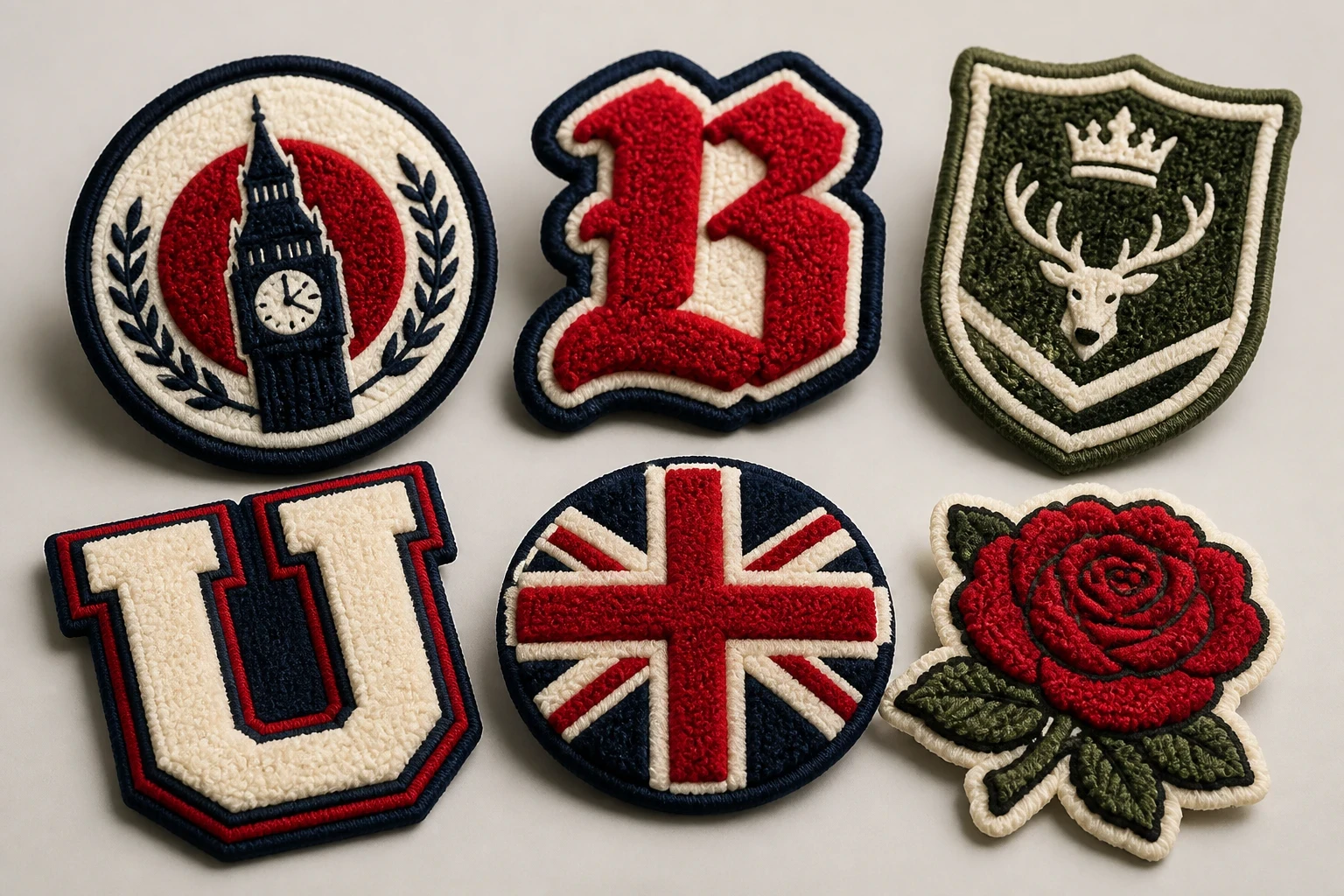
Key takeaways
- Chenille patches work well for bold, simple marks on heavyweight overshirts, wool coaches, varsity jackets and selected workwear.
- The UK brand in this worked example improved the result by simplifying fine artwork before production rather than trying to reproduce every small detail.
- Sew-on backing suited the brand's heavier garments; iron-on and Velcro each have useful applications but need the right fabric and use case.
- The Customized Patches has a 5-piece minimum per design, supplies a free digital mockup usually within 12 hours and produces only after approval.
Please note: this is an illustrative worked example, not a report on a real customer. The brand, garments and decisions below are a hypothetical scenario based on common UK patch briefs, written to show the questions worth asking and the choices involved. No customer results, sales figures or reviews are claimed.
Chenille patches can help a hypothetical UK lifestyle brand make its heavyweight overshirts and wool coaches look like part of one recognisable range. The successful order used bold artwork, a size matched to the garment and sew-on backing rather than trying to force a small, detailed logo into a fuzzy surface. This is a practical worked example of the decisions behind that result.
The Customized Patches supplies a free digital mockup usually within 12 hours, then produced only after the brand approved it. The order had to meet the 5-piece minimum per design. Those facts matter because a patch can look right on a screen but sit badly over a pocket, disappear against a dark jacket or become difficult to read once the design is made at its actual size.
The brand brief: a patch that felt part of the garment
The brand was building a small UK clothing range around heavyweight overshirts, wool coaches and casual outer layers. Its logo was already used digitally, but the team wanted a physical badge with a soft raised face rather than a flat printed mark. The patch needed to feel substantial on the garment, work in product photography and remain recognisable when customers saw it from a few feet away.
The first conversation was not simply about colour. We asked where the patch would sit, how often the garments would be worn, whether the items would go through a commercial laundry and if the brand wanted a permanent or removable badge. A logo that suits a website header may need fewer details on chenille, particularly if it contains fine lines, small lettering or several close shades.
Why chenille suited this application
Chenille has a textured, tufted face that gives simple lettering and strong shapes a visible raised finish. It is often associated with varsity clothing, but that is not its only use. Typical enquiries cover it for club jackets, school and college garments, hospitality uniforms, independent labels and brand merchandise where the patch itself needs to be part of the product design.
The brand did not want a highly detailed embroidered crest. A traditional embroidered patch would have been a sensible alternative for smaller text and sharper line work, but its flatter stitched surface was not the visual aim here. The brand wanted a tactile badge with a clean block shape, so chenille was a better match for this particular garment range.
The artwork decisions that made the chenille patches work
The original artwork contained more detail than the finished patch needed. There were narrow internal gaps, a small line of supporting text and a fine outline around the main symbol. None of those details was wrong for print, but they would have competed with the pile and reduced clarity at the proposed size.
- The supporting text was enlarged or removed where it could not be read comfortably at the finished size.
- The main symbol was given more open space so the tufted surface did not close up the shape.
- The colour count was kept under control, with contrast checked against the dark overshirt and navy wool jacket.
- The patch outline was made clear enough to support a merrowed edge without crowding the artwork.
- The final dimensions were discussed in inches, based on the usable garment area rather than the logo file.
This is the point where a mockup earns its place. A digital file may show a neat logo at a large zoom level, while a patch measuring 3.5 by 3.5 inches has very different limits. Our artwork guide for chenille patches covers the same checks in more detail, including spacing, text and contrast.
A soft surface does not rescue unclear artwork
Chenille is forgiving in one sense: it gives a logo warmth and texture. It is not a cure for every artwork problem. A narrow white line next to a pale yellow area can still disappear. Tiny lettering can still become a fuzzy block. A design with too many small colour changes can become harder to inspect than the original screen version.
For brands, the practical test is simple. Print or view the proposed patch at its actual size, place it over a photograph of the garment and step back. If the main mark is not clear from normal viewing distance, change the artwork before ordering. This is usually quicker and less expensive than discovering the issue after production.
Choosing the size, edge and backing
The brand initially considered a patch just under 3 inches wide. That would have worked on a cap or small chest position, but it looked lost on the front of a heavyweight overshirt. The final size was increased so the patch held its own beside the placket and pocket while leaving enough room for the seam and the garment's movement.
| Option | Best suited to | Advantages | Points to check |
|---|---|---|---|
| Chenille patch | Bold logos, varsity-style marks, overshirts, wool coaches and jackets | Raised texture, strong visual presence and a soft tactile face | Fine text and narrow details may need simplifying |
| Flat embroidered patch | Crests, names, detailed badges and general uniforms | Sharper stitched detail and a familiar formal appearance | Less raised and less plush than chenille |
| Printed patch | Photographic artwork, gradients and very fine flat detail | Flatter surface with more freedom for complex artwork | Printed is flatter; that is the point, and it will not give the chenille texture |
| Woven patch | Small lettering, clean lines and compact brand marks | Fine detail in a flatter, tightly woven surface | Less depth and pile than chenille |
| PVC patch | Outdoor kit, bags and utility garments needing a rubber-like finish | Water-resistant feel and a clearly moulded surface | Different appearance and hand feel from a fabric patch |
The edge was another practical choice. A merrowed crest-style border gave the brand a finished outline and helped separate the badge from a dark garment. It also meant the artwork needed enough clearance from the outside edge. Crowding the border is a common mistake; the patch can look cramped even when the logo file appears balanced.
For this order, sew-on backing was the sensible option. The garments were heavyweight and expected to be worn repeatedly, so a permanent attachment made more sense than relying only on adhesive. Iron-on can be useful on suitable cotton and blended fabrics, but an iron-on that peels after a dryer cycle is not a production success. Nylon shells need particular care because heat can mark or distort the fabric.
Velcro was discussed for a separate use case rather than this collection. It is useful for removable unit identifiers, event staff labels and tactical-style garments with an existing loop panel. It is not automatically better simply because it allows removal. The hook side can catch knitwear, and the patch needs to match the dimensions of the loop area.
Not sure whether chenille, flat embroidery or print will hold your logo clearly? Send the artwork and garment details for a free digital mockup, usually within 12 hours, so you can compare the finished direction before production.
GET A FREE MOCKUPIf you are comparing surfaces, our guide to chenille patches versus embroidered patches sets out the trade-offs. The short version is that chenille gives more pile and presence, while ordinary embroidery is often better for fine detail and smaller formal badges.
How the mockup changed the order before production
The first mockup showed the patch at the intended position on the overshirt. It looked attractive at the proposed size, but the lower line of text was too close to the border and the patch sat nearer the pocket than the brand had expected. That is exactly the kind of detail a mockup should expose. The design was adjusted before any patches were produced.
The second version opened the lower spacing, increased the patch slightly and showed the merrowed border more clearly. The brand also checked the colours against the actual navy and charcoal garments rather than judging them from a white digital background. A mockup is not a physical sample, so it cannot show every fibre or final colour variation, but it is a useful approval record for proportions, text, layout and backing.
What to check on a digital mockup
- Read every letter at the displayed finished size, not only when zoomed in.
- Check the patch width and height against the garment with a ruler.
- Look for enough space around the logo and inside any merrowed edge.
- Confirm that the background and lettering contrast with the actual fabric colour.
- Check the application position around pockets, collars, zips, seams and buttons.
- Confirm sew-on, iron-on or Velcro backing before giving approval.
- Check the quantity per design, because the 5-piece minimum applies to each design.
This stage also prevents a quiet but costly misunderstanding: a customer may think a patch is 4 inches wide because the artwork board was 4 inches, while the production request was never stated clearly. Put the dimensions, quantity, backing and garment position in the quote conversation. It gives everyone one reference point.
The garment test: wool coaches, overshirts and nylon shells
The brand's main garments were forgiving because the overshirts and wool coaches had enough body to support a substantial patch. The surface was still checked for seams and lining. A patch can be correctly made but awkwardly placed if it crosses a pocket opening or sits on a fold that is constantly flexed.
Nylon shells are a different conversation. They are light, can pucker under stitching and may be damaged by excessive heat. Iron-on backing should not be treated as a universal answer for nylon. For a shell, we would normally discuss the fabric, lining, washing routine and whether a sew-on or Velcro solution is more suitable.
The same caution applies to school blazers and hospitality polos. A chenille badge may suit a college varsity garment, but a small blazer crest often needs sharper detail and a more restrained profile. On a polo, weight and wash routine matter. On a biker vest, the available space, leather thickness and border style deserve their own check; our guide to biker and motorcycle club patches covers that category separately.
Why placement is part of the design
The brand photographed garments with the patch on the upper chest, but the final production position was checked against the actual cut of each overshirt. Some pieces had a pocket, some had a slightly different seam and some were cut in a way that made a centred badge look off-centre when worn. Measuring the garment flat was useful; checking it on a person was better.
For a club or business ordering at scale, create a placement guide. Mark the distance from the collar, pocket and side seam in inches, then give it to whoever applies the patches. This matters for football clubs, cadet units and hospitality teams where several people may be preparing garments. Consistency makes the finished kit look intentional.
Ordering details, quantity and UK lead times
The order began with the artwork, garment description, size, backing, quantity and delivery details. The Customized Patches has a 5-piece minimum per design. That means a brand can test a new mark with a small run, but five pieces are required for each separate design rather than five pieces spread across unrelated artwork.
A free digital mockup is usually supplied within 12 hours. The timing can depend on the clarity of the artwork and the information provided, so send the logo, preferred dimensions, garment type, colours, backing and postcode together where possible. The mockup is then checked by the customer. Production starts only after approval.
- Send the artwork and explain what the patch will be used on.
- State the preferred size in inches, or send a garment photograph with a measurement.
- Confirm the number of pieces required for each design.
- Choose sew-on, iron-on or Velcro backing after considering fabric and use.
- Review the digital mockup for spelling, size, edge, colours and placement.
- Approve the final mockup in writing.
- Allow production and UK-wide shipping time based on the confirmed quote.
The most useful lead-time question is not simply, “How fast can these be made?” Ask what happens after approval, whether several designs share a quantity or each have their own minimum, and when the delivery date is calculated from. If a school awards night, product launch or club fixture is fixed, provide that date at the start rather than after the artwork is approved.
For more detail on the sequence, see A Step-by-Step Guide to Ordering chenille patches. It is also worth reading the guide to chenille patches cost in the UK because size, quantity, backing, artwork complexity and finishing choices can all affect a quote.
What the brand would repeat, and what it would change
The brand would repeat the decision to simplify the artwork and increase the patch slightly for the heavyweight garments. It would also keep the sew-on backing for the wool coaches and overshirts. Those choices matched the garment rather than following a generic rule about what every patch should use.
Name sew-on, iron-on or Velcro on the quote and include the garment type. We will show the proposed backing and layout on a free digital mockup, usually within 12 hours, before the order goes into production.
GET A FREE MOCKUPThe main improvement for a future order would be to finalise the garment range earlier. A badge that works on a 26-inch-wide overshirt may need a different position or size on a narrower jacket. The team would also prepare one placement sheet for its fulfilment and photography teams so every item looked consistent.
What this worked example does not claim
This is not a claim that chenille is the right material for every UK brand. Printed is flatter; that is the point, and it can be the correct choice for gradients, photographic artwork or a very low-profile finish. Woven patches can be better for small lettering, PVC suits utility applications and flat embroidery often handles detailed crests more comfortably.
Nor does a digital mockup replace checking the actual garment. It helps confirm the design direction, but fabric thickness, seam position, washing conditions and application method still need to be considered. Honest ordering advice includes the limitations as well as the attractive parts of the finish.
Chenille patches for UK teams, clubs and businesses
The same process works beyond fashion brands. A football club may use a bold chenille crest on a coach jacket, while a college may choose one for a varsity-style sweatshirt. A hospitality business might prefer a smaller embroidered badge on a polo, particularly if the garment is washed frequently and the mark contains small text.
Cadet units and event teams often need removable identification, making Velcro worth discussing. Biker clubs may need large back patches with different edge and attachment requirements. A business ordering branded workwear may need to compare woven patches, printed patches and PVC patches before committing to the raised texture of chenille.
Customers across England, Scotland, Wales and Northern Ireland can request UK-wide shipping. If you are ordering from a local branch, school, club or company with several delivery points, state that at quotation stage. Our UK city pages provide location-specific information, but the production decisions remain the same: artwork, dimensions, quantity, backing, garment and approval.
A practical checklist before you approve
- Is the main shape clear without zooming into the artwork?
- Has small text been removed, enlarged or changed to a more suitable treatment?
- Does the chosen size work beside pockets, seams, collars and zips?
- Will the chenille pile contrast with the garment rather than blend into it?
- Is the merrowed edge spaced properly from the artwork?
- Does sew-on, iron-on or Velcro suit the fabric and washing routine?
- Does the quantity meet the 5-piece minimum for each design?
- Has the delivery date been discussed before approval?
- Has one person checked spelling, colours and placement?
- Has production been authorised only after the final mockup is approved?
If you can answer those questions, the order is in a much better position. The brand in this case did not rely on the material alone to create a successful result. It matched the patch to the garment, simplified the artwork, checked the real placement and used approval to catch a spacing problem before production.
For a wider overview, see Chenille patches: Everything UK Buyers Need to Know. If the project is still at the comparison stage, the embroidered patches hub is a useful starting point for checking alternatives and backing choices.
Frequently asked questions
Why did the UK brand choose chenille patches?
The brand wanted a raised, tactile badge for heavyweight overshirts and wool coaches. Chenille patches gave the simple logo more visual presence than a flat printed mark, while the bold artwork suited the tufted surface. The choice was specific to the garment and brand style, not a claim that chenille is best for every project.
What is the minimum order for chenille patches at The Customized Patches?
The minimum is 5 pieces per design. If you need three different logos, each design must meet the 5-piece minimum. This allows a small test run while keeping the artwork and quantities clear on the quote.
How quickly can I receive a mockup for chenille patches?
The Customized Patches usually supplies a free digital mockup within 12 hours. Send the artwork, dimensions, garment type, colours, backing and quantity together where possible. The patch is produced only after you approve the mockup.
Is sew-on or iron-on backing better for chenille patches?
Sew-on backing is generally the safer choice for heavyweight jackets, wool coaches and garments that will be worn repeatedly. Iron-on can suit compatible fabrics and care routines, but it may peel after a dryer cycle or fail on unsuitable nylon. Velcro is useful when the patch needs to be removed and the garment has a matching loop panel.
Can chenille patches be used on nylon shells?
They can be considered for nylon shells, but the fabric, lining, heat tolerance and attachment method need checking first. Nylon can pucker under stitching and may be marked by heat, so iron-on should not be selected automatically. A mockup can show the design, but it does not replace checking the physical garment.
Are chenille patches suitable for small lettering?
Small lettering can be difficult because the raised pile softens fine detail. If the text is important, enlarge it, simplify it or compare a flat embroidered or woven patch. The finished size in inches matters more than how clear the lettering looks in a large digital artwork file.
Ready to produce custom patches for your UK team or brand?
GET A FREE MOCKUP