
Chenille patches: Everything UK Buyers Need to Know
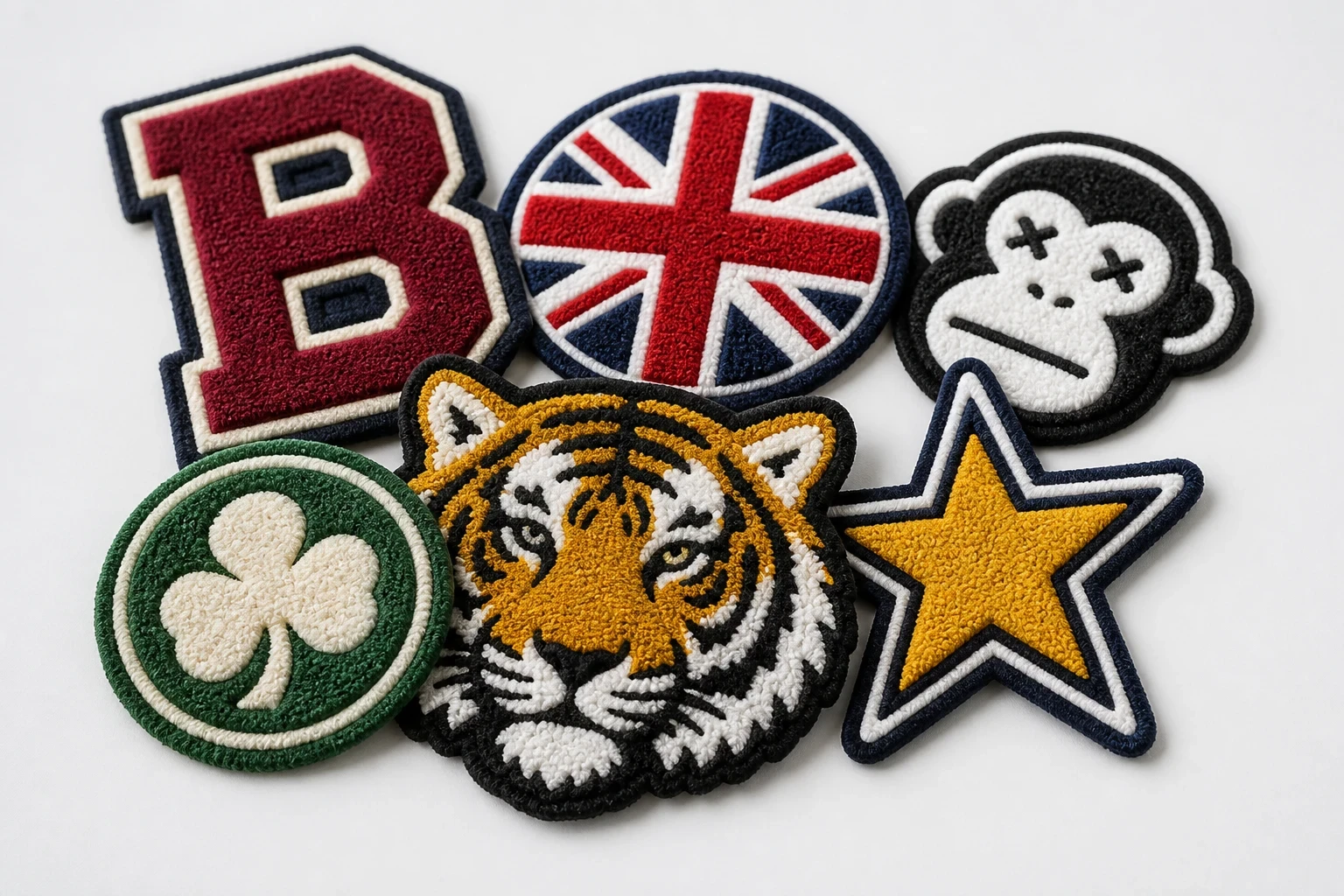
Chenille patches are soft, raised fabric badges made with looped yarn, usually finished with a merrowed edge. They suit varsity jackets, football clubs, school blazers, biker garments and branded workwear where texture matters. The Customized Patches offers a 5-piece minimum, a free digital mockup usually within 12 hours, and produces only after approval.
Key takeaways
- Chenille patches use looped yarn to create a soft, raised surface; they are strongest for bold shapes and lettering rather than tiny detail.
- A 5-piece minimum applies per design, so a club can order a small first run without committing to hundreds of identical badges.
- A free digital mockup is usually sent within 12 hours, showing the proposed size, colours, border and backing before production.
- Choose the backing around the garment: sew-on is dependable, iron-on is convenient on suitable fabrics, and Velcro is useful for removable team or workwear badges.
Chenille patches are raised fabric badges made with looped yarn, giving them a soft, textured face rather than the flat stitched surface of a standard embroidered patch. In the UK they are especially popular on varsity jackets, football club kit bags, school blazers, biker garments and branded workwear. The best designs use bold lettering, initials, simple crests or strong blocks of colour.
The Customized Patches supplies chenille patches across the United Kingdom with a 5-piece minimum per design. A free digital mockup is usually provided within 12 hours, and we produce only after you approve the artwork, size, border, colours and backing. That approval stage matters because chenille changes the look of fine lines and small text.
What are chenille patches?
Chenille is a yarn construction with a fuzzy, looped pile. The loops are packed into areas of colour to create a raised letter, number, shape or emblem. A patch may use one chenille colour for a traditional varsity look, or combine chenille with flat embroidery for outlines and smaller details.
Most chenille patches have a firm base, a stitched or merrowed outer edge and a backing selected for the garment. The merrowed edge is the rounded overlocked border around the outside. It protects the patch edge and gives a finished look, although the border takes up a little space inside the overall dimensions.
The surface is not meant to reproduce a detailed photograph. Looped yarn works best for large initials, club names, mascots with simple shapes, school year groups and bold numbers. If your artwork contains tiny wording, gradients or a detailed line drawing, embroidered patches or printed patches may preserve more of the original artwork.
Why UK clubs and brands choose chenille patches
Texture is the main reason. A chenille letter catches light differently from a flat stitched letter, so a simple chest badge can look substantial without using a complicated design. That is why they keep appearing on varsity jackets, wool coaches and heavyweight teamwear.
A football club might use a chenille initial on a travel jacket, while a hospitality company may use a bold venue name on staff outerwear. Cadet units often need clear, durable-looking identifiers, and schools use chenille for house letters, leavers’ badges and sports teams. We have also quoted biker and motorcycle club patches where a thick border and readable back patch matter more than tiny detail.
- Varsity and letterman jackets with large initials, mascots or graduation years.
- Football, rugby and cricket clubs needing player numbers, club initials or supporter merchandise.
- School blazers and sixth-form clothing where a traditional raised badge suits wool or woven fabric.
- Biker vests and jackets requiring a strong, legible crest with a clear outer border.
- Hospitality polos, coaches’ jackets and event garments where a tactile logo feels more substantial than a printed mark.
- Small business merchandise, especially caps, jackets and limited-run clothing drops.
They are not the right answer for every logo. A detailed municipal crest, fine sponsor wording or photographic artwork may need flat embroidery, woven construction or print. Woven patches keep small lettering cleaner because the surface is flat and tightly woven; printed patches are flatter still, and that is the point when a smooth image is more important than texture.
Chenille patches compared with other patch types
The practical choice comes down to surface, detail, garment and handling. Chenille gives you height and a soft pile. Flat embroidery gives you stitched definition. Woven construction suits small letters, while print handles gradients and very detailed artwork. PVC and leather solve different garment and style requirements.
| Patch type | Surface and appearance | Best for | Main limitation |
|---|---|---|---|
| Chenille patches | Raised, soft looped yarn with a bold varsity feel and usually a merrowed edge. | Initials, large letters, simple mascots, school badges, teamwear and statement jackets. | Very fine lines, tiny text and photographic detail are difficult to represent clearly. |
| Flat embroidered patches | Thread stitched closely into a flatter fabric surface with defined outlines. | Club crests, workwear logos, uniforms and designs needing traditional stitched detail. | Large solid areas may not have the soft raised effect associated with chenille. |
| Woven patches | Smooth, flat woven surface with fine lines and compact lettering. | Small labels, brand marks, care-style badges and detailed text. | They do not provide chenille’s deep pile or tactile varsity finish. |
| Printed patches | Flat printed artwork with smooth colour transitions and image detail. | Gradients, illustrations, photographs and logos with many tonal changes. | The surface is flatter and may not have the dimensional character wanted on a jacket. |
| PVC patches | Raised rubber-like surface with clean moulded levels and strong colour blocks. | Outdoor clothing, tactical-style garments, cycling kit and designs needing wipe-clean handling. | The appearance is more modern and technical than traditional wool-and-yarn chenille. |
| Leather patches | Natural or synthetic leather face with stamped, debossed or printed branding. | Denim, workwear, heritage clothing, bags and premium-looking merchandise. | Fine coloured detail and soft varsity texture are not its strengths. |
For a design that sits between the two styles, ask about combining chenille and embroidery. A chenille letter can form the main body while flat stitching adds an outline, small year number or narrow wording. This is often a better solution than forcing every part of a complex crest into looped yarn.
Chenille or 3D embroidery?
Chenille and 3D embroidery are both raised, but they do not look the same. Chenille has a soft, fuzzy looped face and a broad textile appearance. 3D embroidery uses foam beneath the stitching, normally creating a firmer, more sculpted surface with thread covering the raised area.
Use chenille for a classic sports, school or varsity look. Use 3D embroidered patches when a sharper, more defined logo with raised stitched edges suits a cap, jacket or branded garment. The final decision depends on the artwork and the fabric, not just which sample looks tallest.
Choosing the size, shape and border
Start with the garment, not the artwork file. A chest patch on a polo may need to stay compact, while a back piece on a biker jacket can be much larger. Measure the usable panel in inches, allowing for seams, pockets, zips and curved areas. A patch that looks fine on a screen can feel crowded once it is placed above a breast pocket.
Common sizes vary by application rather than by a fixed rule. A small left-chest badge might be around 2.5 to 3.5 inches wide. A school blazer badge may sit around 3 to 4 inches, while a varsity back design or large club crest may be 8 to 12 inches or more. The right size is the one that keeps the lettering readable without making the garment look unbalanced.
- Use a simple shield, circle, arch, rectangle or custom silhouette when the design needs a clear outer shape.
- Allow enough width for the merrowed border; the border is part of the finished measurement.
- Keep short lettering large and bold. Long club names may need an arched layout or a separate line.
- Avoid narrow gaps between chenille areas because the pile can visually close them up.
- Check how the patch will sit on a curved sleeve, pocket or shoulder rather than viewing it only front-on.
- If the design is intended for both adult and junior garments, confirm whether one size will work across the range.
A mockup should show more than the patch by itself. It should make the proportions clear against the intended garment or at least against a measured outline. If your club is ordering several shapes, ask for each design to be named and measured separately. This avoids a common mistake where a 3-inch-wide chest badge is confused with a 10-inch back piece at approval stage.
Not sure whether chenille, flat embroidery or print will hold your logo best? Send the artwork and garment details for a free digital mockup usually within 12 hours, so you can compare the proposed construction before production.
GET A FREE MOCKUPArtwork and colour decisions that affect chenille
The cleaner the artwork, the easier it is to turn into chenille. Start with a high-resolution logo, vector file or clear image. We can work from common formats, but a low-resolution screenshot may hide whether a letter has a counter, whether two lines overlap or whether a thin outline will survive conversion.
Chenille colours are read as blocks rather than smooth gradients. A navy letter on royal blue may not separate enough once the yarn catches the light. Strong contrast usually works better: cream on burgundy, white on black, gold on navy or a bright club colour against a dark jacket.
Text, outlines and small details
Short words and initials are a safe starting point. Long phrases need careful sizing because the total width may become impractical. Tiny sponsor names, narrow serifs and fine internal lines can lose clarity, especially after washing and everyday wear.
If the wording must remain small, a hybrid chenille and embroidery design may help. Alternatively, choose woven patches for the text and reserve chenille for the large central letter. The correct answer is not always the most raised option; it is the option that keeps the information readable on the finished garment.
Matching an existing kit or brand colour
Screen colours are not a reliable production reference by themselves. Tell us the thread or garment colour you are trying to match, and include a photograph if the patch must sit beside existing embroidery. A school may need a badge to sit alongside a blazer trim, while a hospitality brand may need the patch to work with a particular navy polo.
We will confirm the proposed colour placement in the digital mockup. Review the background, raised yarn, flat embroidery, border and garment together. A colour that looks strong on white may appear muted on black wool or a dark nylon shell.
Backing choices for jackets, polos and Velcro panels
Backing is part of the specification, not an afterthought. Tell us whether the patch is staying on one garment permanently, moving between garments, or being applied to a material that should not be exposed to high heat. We can then recommend sew-on, iron-on, adhesive or Velcro-style options where suitable.
| Backing | Where it usually works | What to check first |
|---|---|---|
| Sew-on | Wool coaches, varsity jackets, denim, biker vests, school blazers and workwear that will be used regularly. | Allow access for stitching and check whether the garment lining or waterproof layer makes sewing difficult. |
| Iron-on | Suitable cotton or stable fabric where a quicker application is wanted and the care label permits heat. | Nylon shells, coated fabrics and heat-sensitive materials can mark, distort or fail to bond. |
| Velcro | Removable team badges, tactical-style garments, bags and uniforms with a loop panel already fitted. | The garment needs a compatible loop panel, and the hook side must be specified correctly. |
| Adhesive | Short-term displays, packaging or selected light-duty uses. | Adhesive is not a substitute for stitching on a garment that will be washed, stretched or worn outdoors. |
Iron-on that peels after a dryer cycle is a familiar failure, and it usually begins with a mismatch between backing and fabric or with excessive heat during care. Nylon shells, coated rain jackets and some technical fabrics should not be treated like a cotton sweatshirt. For hard-wearing club kit, sewing is often the sensible choice even if application takes longer.
A Velcro panel needs its own conversation. A badge made for direct sewing will not automatically work on a loop panel, and a removable patch may need a separate hook backing. Send a photograph of the panel with the quote so the proposed back is clear before the order is approved.
How to order chenille patches from a UK manufacturer
The quickest quotes include the artwork, finished size, quantity, garment type, backing preference, delivery postcode and required date. Tell us if the order contains several designs. The 5-piece minimum applies per design, so five football initials and five coach badges count as separate designs rather than one combined quantity.
- Send the artwork or a clear description of the wording, crest, initials or mascot.
- State the finished dimensions in inches, or provide the available garment space if you need sizing advice.
- Explain the garment: wool coach, nylon shell, denim vest, polo, school blazer, cap, bag or Velcro panel.
- Choose the preferred construction, such as chenille only, chenille with flat embroidery, or a different patch type.
- Confirm colours, border style, shape and backing.
- Review the free digital mockup, usually sent within 12 hours.
- Request any changes before approving the final version.
- Approve the mockup; production begins only after approval.
The mockup is not a decoration added after quoting. It is where practical issues are caught: a sponsor line that is too small, a border that reduces the usable letter area, a patch that covers a jacket seam, or a backing that does not suit the fabric. Name sew-on, iron-on or Velcro on the quote, and include the garment photograph where possible.
The Customized Patches ships across the UK. Timing depends on the design, quantity, backing, approval date and delivery requirement, so a fixed deadline should be mentioned at the start. If a football club needs badges before a tournament or a school needs blazers before term, send the date with the first enquiry rather than after artwork approval.
Quantity, pricing and the 5-piece minimum
The minimum order is 5 pieces per design. That suits a small business testing a jacket badge, a five-person club committee, a school sample run or a team that wants to approve one design before placing a larger repeat order. If you need 20 patches across four different names, each name or artwork version may be treated as its own design.
Pricing is affected by more than the number of patches. Size, shape, number of colours, amount of embroidery, mixed chenille construction, backing and the number of separate designs all influence the quote. A large back patch with a simple letter may be more straightforward than a smaller badge with multiple outlines and tiny wording.
For a useful comparison, ask for the same artwork and dimensions to be quoted as chenille, flat embroidery and print. This shows the cost and visual trade-off without comparing unrelated specifications. The cheapest-looking surface may be wrong for a wool jacket, while the most detailed option may not deliver the raised finish your team wants.
Ready to check the size and backing against the garment? Send the design, quantity and delivery date for a free digital mockup usually within 12 hours. We produce only after you approve the final specification.
GET A FREE MOCKUPCare, washing and expected wear
Chenille has a raised pile, so it should be treated more carefully than a flat printed label. Follow the garment care label first. Where possible, wash the garment inside out on a suitable cool cycle, avoid aggressive chemicals and keep high heat away from the patch.
Do not assume every patch should go through a tumble dryer. Heat can affect iron-on adhesive, shrink or distort the garment beneath it, and flatten the raised yarn. Sew-on patches generally give the most dependable attachment for jackets and regular teamwear, but the patch can still be damaged by rough washing or snagging.
- Keep chenille away from direct ironing; use a pressing cloth only if the garment instructions allow it.
- Do not pull loose loops or brush the pile aggressively.
- Store jackets and patches away from damp conditions.
- Check the edge after heavy use, especially on biker vests, kit bags and garments that rub against straps.
- Repair a loose stitch early rather than allowing the edge to lift further.
For outdoor workwear or clothing exposed to rain, grit and repeated abrasion, ask whether chenille is the right material before ordering. PVC patches may be easier to wipe clean, while a flat embroidered badge may be more appropriate where a traditional stitched appearance is needed.
Common mistakes UK buyers can avoid
The first mistake is choosing a patch from a screen image without measuring the garment. The second is approving wording that is technically present but too small to read. A chenille badge can look impressive at 12 inches on a jacket and crowded at 3 inches on a polo.
- Ordering one large quantity before checking a physical garment area or digital mockup.
- Using a detailed crest without accepting that some fine elements may need flat embroidery.
- Selecting iron-on backing for a nylon shell or coated technical fabric without checking heat suitability.
- Forgetting that the 5-piece minimum applies to each design, not just the total order.
- Sending several artwork versions without naming the approved file.
- Leaving the delivery date until after approval.
- Assuming a Velcro panel can accept any backing.
- Matching a screen colour to a garment without supplying a colour reference or photograph.
- Using a tumble dryer on an iron-on patch and then treating the peeling as an artwork problem.
A clear approval trail prevents most of these problems. Keep the final mockup, confirmed dimensions, backing and quantity together in the same email thread. If the design changes later, request a new mockup rather than relying on an old screenshot.
Where chenille fits in a wider patch programme
Many clubs and brands use more than one patch type. A football club may use chenille initials on travel jackets, flat embroidered crests on polos and woven sponsor labels on bags. A clothing brand may use a chenille front badge for a limited varsity drop, then use leather patches on denim and printed patches for illustrated packaging.
A biker club may need a large back design with a readable border, smaller chest identifiers and removable badges for different garments. Our guide to biker and motorcycle club patches covers that wider use case. Customers ordering across several UK locations can also review the UK city pages for regional ordering information.
If you are still comparing constructions, start with the complete guide to chenille patches in 2026, then compare the proposed design with custom embroidered patches UK sizing and backing options explained. The useful question is not simply which patch looks best in isolation. It is which surface, backing and size will behave properly on the garment you actually plan to use.
Frequently asked questions
What are chenille patches used for in the UK?
Chenille patches are commonly used on varsity jackets, school blazers, football and rugby club clothing, wool coaches, biker vests, kit bags and branded workwear. They suit bold initials, simple crests, mascots, numbers and short lettering. Their raised looped yarn gives a traditional sports and school badge appearance.
What is the minimum order for chenille patches?
The minimum order is 5 pieces per design. If you order several different names, initials or artwork versions, each may count as a separate design. Send the full list with the quote so the quantity and pricing can be checked correctly.
How quickly can I receive a chenille patch mockup?
The Customized Patches usually provides a free digital mockup within 12 hours. The mockup shows the proposed size, shape, colour placement, lettering, border and backing. Production starts only after you approve the final version.
Can chenille patches go on nylon jackets?
They can be suitable for some nylon jackets, but the backing and application method must be checked first. Nylon shells and coated technical fabrics can be damaged by high heat, so iron-on backing may not be appropriate. Sew-on or a suitable removable backing may be safer.
Are chenille patches washable?
Chenille patches can be washed as part of a suitable garment care routine, but the raised yarn needs gentle handling. Follow the garment label, avoid harsh chemicals and high heat, and be cautious with tumble drying. Sew-on patches are often better for regular teamwear than relying only on adhesive.
Are chenille patches better than embroidered patches?
Neither is always better. Chenille is better for a soft, raised varsity appearance and bold shapes. Flat embroidered patches are better for fine outlines, detailed crests and smaller text. A hybrid design can use chenille for the main letter and embroidery for narrow wording or internal detail.
Ready to produce custom patches for your UK team or brand?
GET A FREE MOCKUP