
Why schools and colleges Are Choosing varsity chenille patches UK
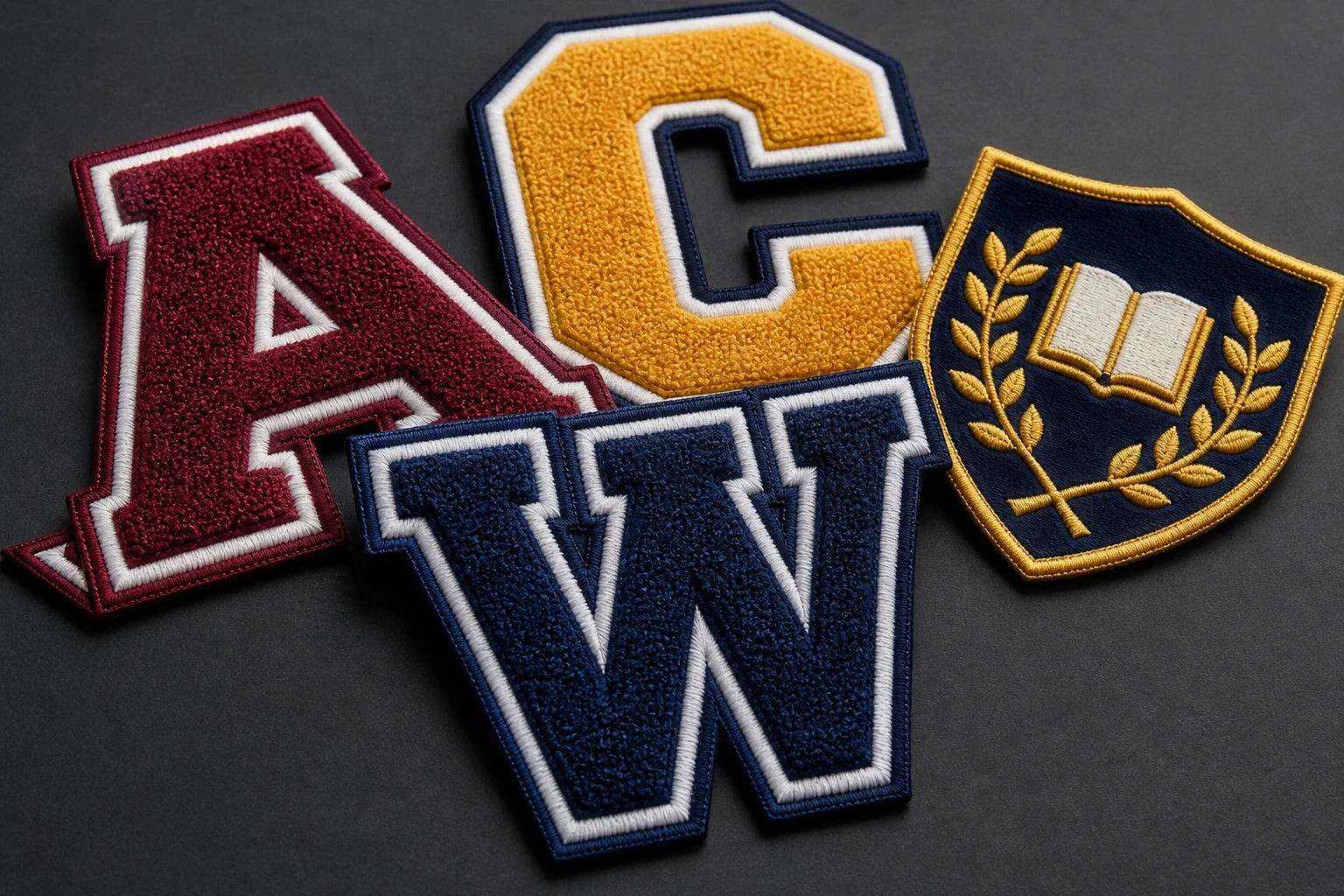
Schools and colleges choose varsity chenille patches UK because chenille gives blazers, varsity jackets, hoodies and team clothing a raised, tactile crest that is easy to recognise. They suit house badges, sports awards, societies and graduation wear. The Customized Patches supplies a free digital mockup, usually within 12 hours, with a five-piece minimum per design.
Key takeaways
- Chenille creates a raised, soft-textured school or college crest that stands out on jackets, sweatshirts and bags.
- A five-piece minimum per design makes small club, house, society and pilot orders possible.
- A free digital mockup is usually supplied within 12 hours, and production starts only after approval.
- Sew-on, iron-on and Velcro backings suit different garments, so the backing should be chosen before the quote is confirmed.
Schools and colleges choose varsity chenille patches UK because chenille gives a raised, tactile finish to sportswear, blazers, hoodies and varsity jackets. The thick yarn makes a house letter, team name or college crest easy to spot from a distance, while the stitched edge keeps the shape tidy.
The choice is not only about appearance. A school may need five patches for a small society, fifty for a rugby squad or several hundred for a full intake, and each order has different garment, washing and fitting requirements. The Customized Patches provides a free digital mockup usually within 12 hours, then produces only after the artwork, size, colours and backing have been approved.
Why varsity chenille patches suit school and college clothing
Chenille has a long association with American-style varsity clothing, but the format works just as well on UK school and college garments. It gives a plain wool coach jacket, cotton hoodie or heavyweight sweatshirt a clear identity without printing directly on the fabric. A large initial, shield or simple wordmark can be read quickly on a touchline, at an open day or across a busy student union.
The surface is made from looped yarn rather than a flat layer of ink. That difference is visible and physical: a chenille letter has height, softness and a slight shadow around its edge. It is a useful choice for a school that wants a traditional feel, especially for a first team jacket, house garment, alumni item or end-of-year presentation.
- Sports teams can use a large initial, mascot or team name on jackets and warm-up tops.
- Schools can identify houses with different chenille letters or colour combinations.
- Colleges can mark societies, student unions, departments and course cohorts.
- Sixth forms can create graduation or leavers' clothing with a more substantial finish than a small print.
- Alumni groups can order a recognisable crest for reunion jackets, bags and knitwear.
- Cadet units and youth organisations can use simple badges where a raised textile finish suits the uniform or outer layer.
The five-piece minimum per design is helpful here. A school does not need to commit to a full warehouse quantity before testing a new crest or checking how pupils respond to it. A small pilot can also reveal whether the chosen backing works on the actual garment before a larger team order is placed.
The material and construction choices that affect the result
A chenille patch normally combines a yarn-filled face, a firm base and a border that defines the outside edge. The border may be a merrowed edge or a stitched finish, depending on the shape and specification. A simple block letter gives the yarn room to show properly; a very detailed crest can become crowded because small text and thin lines do not translate well into thick loops.
Size and artwork
For a chest patch on a school jacket, many buyers start around 3 to 4 inches wide, although the correct measurement depends on the garment and artwork. A larger back design may be 8 to 12 inches wide. These are starting points, not fixed rules. A narrow sleeve or blazer pocket needs a different proportion from the back of a wool coaches jacket.
Short words and broad initials are usually the safest artwork. Long college names may need a separate small line, a larger patch or a different technique. If the crest contains a motto, tiny dates or fine heraldic detail, embroidered patches may hold those elements more clearly than chenille. That is a design decision, not a failure of the chenille method.
Colour and contrast
School colours should be checked against the garment, not considered in isolation. Navy yarn on a black jacket can disappear, while gold on burgundy may read strongly. White borders can make a dark crest clearer, but they may show dirt sooner on clothing that is worn outdoors.
Send the closest available colour references with the quote. A digital mockup shows the planned relationship between yarn, border and garment, but screens vary, so the production discussion should still record the selected colours in writing. If a design needs several fine colour areas, compare it with woven patches or printed work before committing.
Backing for blazers, jackets and removable panels
Sew-on backing is generally the sensible option for wool coaches jackets, blazers and garments that will be worn for a long period. It gives the patch a dependable attachment and allows a caretaker or alterations service to position it accurately. Iron-on backing is quicker for some cotton garments, but heat, repeated washing and tumble drying can weaken the bond.
Velcro is useful when the same jacket has to carry different team or event patches. It is common on removable panels and some club outerwear, but it adds bulk and needs a properly fitted loop panel on the garment. A patch can be beautifully made and still feel wrong if the backing does not suit the fabric.
| Patch choice | Best suited to | Main advantage | Trade-off to consider |
|---|---|---|---|
| Chenille | Varsity jackets, hoodies, sportswear, house letters and bold crests | Raised yarn texture with strong visual presence | Small text and fine detail are limited |
| Flat embroidered | Blazers, polos, workwear and detailed school badges | Crisp stitched detail and familiar crest finish | Less plush and less visibly raised than chenille |
| Woven | Small lettering, labels and flatter badge designs | Fine detail in a thin, smooth patch | Does not have chenille's deep texture |
| Printed | Photographic artwork, gradients and very fine colour changes | Flat surface and broad artwork flexibility | Printed is flatter; that is the point, and it will not give a raised varsity effect |
| PVC | Outdoor clubs, technical kit and hard-wearing bags | Water-resistant, moulded and easy to wipe | Can look too industrial for a traditional school blazer |
For a classic college jacket, chenille is often the strongest visual match. For a blazer badge with a detailed coat of arms, flat embroidery can be more practical. For a nylon shell, think carefully about stitching access and heat: an iron-on bond may not be the right answer for a coated fabric.
Where schools and colleges are using chenille patches
The most effective school patches have a clear job. They identify a group, mark an achievement or help a garment feel connected to the institution. A patch that tries to do all three with a long name, a crest, a date and several tiny symbols may become difficult to read.
Not sure whether chenille, flat embroidery or ink will hold the school crest best? Send the artwork and garment details for a free digital mockup, usually within 12 hours, so you can compare the finish before production.
GET A FREE MOCKUPSports teams and athletic awards
A large initial on a rugby, football, basketball or hockey jacket is the familiar example. Some teams add smaller bars, stars or year marks later, but the first patch should carry the main identity on its own. A sports department may also use different yarn colours for senior teams, captains or tournament winners.
The garment matters. A cotton hoodie may accept a sew-on or iron-on patch depending on its construction, while a nylon training shell needs more care. A heavy chenille patch can pull on thin fabric, so check the garment weight and intended position rather than copying a design made for a thick wool jacket.
House systems, societies and student groups
House letters are a natural fit because they are bold, simple and easy to vary. A school might keep one patch shape and change the yarn colour for each house, making the order easier to manage while keeping the range consistent. College societies can use initials, a short name or a recognisable symbol on sweatshirts and bags.
For a small society, five pieces per design means the group can order a modest first batch. If each society needs a different patch, each design should be counted separately when checking the minimum. A quote should list those variants clearly so the organiser knows what is being produced.
Leavers, alumni and special events
Graduation and leavers' clothing often needs a design that will still make sense after the event. A simple year, initial or institution mark tends to age better than a crowded one-off graphic. Chenille can give a commemorative hoodie or jacket a keepsake feel, particularly when the patch is sewn on rather than bonded permanently.
Alumni groups may also prefer a separate badge that can move between garments. In that case, sew-on is normally more adaptable than iron-on. If the item is a bag, consider the thickness of the panel and whether a needle can pass through it without damaging the lining.
Chenille compared with other school patch styles
There is no single best patch for every school order. The right choice depends on the detail in the artwork, the fabric, the washing routine and the expected life of the garment. A detailed blazer crest and a bold varsity letter may belong to the same school but need different treatments.
The simplest comparison is texture against detail. Chenille wins when the raised surface is part of the brief. Embroidery, woven and printed options are often better when the design relies on small lettering, narrow outlines, gradients or a flatter badge. Our guide to varsity chenille patches UK vs embroidered patches: Which Is Right for Your Project? covers that choice in more detail.
- Choose chenille for bold initials, short names, mascots and a traditional varsity appearance.
- Choose flat embroidery for detailed crests, staff polos, blazers and compact badges.
- Choose woven construction for fine text in a low-profile patch.
- Choose printed patches when artwork needs gradients, photographs or a very flat finish.
- Choose PVC for practical outdoor kit, technical clothing and wipe-clean applications.
- Choose leather when a restrained, premium badge suits a jacket or heritage garment.
Printed is flatter; that is the point. It may be the more honest recommendation for artwork that depends on smooth shading or a full-colour illustration. A manufacturer should not force every school logo into chenille simply because the product is fashionable.
Ordering varsity chenille patches UK: what the school needs to confirm
A good quote starts with the garment and the finished position, not just a logo file. Tell us whether the patch is for a wool coaches jacket, cotton hoodie, polyester sports top, blazer, kit bag or nylon shell. Include the approximate width in inches, quantity per design, preferred backing and the date the patches are needed.
The Customized Patches has a five-piece minimum per design. Different colours or words may count as separate designs, so list each version when requesting a price. This avoids a late change where a house system, team name or society variant turns out to be a separate production run.
Artwork approval and mockup checks
Artwork can start as a vector logo, high-resolution image or even a clear sketch for an initial discussion. The production team will need to consider letter height, border width, colour contrast and whether the patch shape follows the artwork or uses a standard shield, circle or rectangle.
A free digital mockup is usually supplied within 12 hours. Check the spelling, school name, year, colours, patch size, garment position and backing shown on the mockup. Production begins only after approval, which gives the school a clear point to confirm the final specification before materials are committed.
Lead times, delivery and school purchasing
Allow time for artwork discussion, approval, manufacture, dispatch and UK-wide delivery. The exact production time depends on the design, quantity, backing and current schedule, so ask for a written estimate against your event date rather than relying on a generic number. School holidays, sports fixtures and graduation dates can create tight deadlines.
Name sew-on, iron-on or Velcro on the quote and include the garment type. We show the proposed backing on a free digital mockup, usually within 12 hours, and production starts only after the school approves the details.
GET A FREE MOCKUPFor a school purchase order, it helps to nominate one person who can approve the mockup and one person who can check the finished items. Keep the approved artwork, quote and garment instructions together. If a supplier, embroiderer or uniform shop will apply the patches, tell them whether the order is sew-on, iron-on or Velcro before dispatch.
Cost, quantity and value for school budgets
Patch pricing is affected by size, stitch or yarn coverage, number of colours, backing, artwork complexity and quantity. A five-piece order will not usually have the same unit price as a large sports department order because setup and handling are spread across fewer pieces. That does not make a small order unsuitable; it means the quote should reflect the actual specification.
Schools can manage budgets by using one well-designed base shape across several teams or houses, then changing only a letter or colour where appropriate. Another option is to order the first five or ten pieces as a fit and finish check before placing the wider run. Do not reduce the patch until the lettering becomes unreadable just to reach a target price.
Ask whether the quoted price includes artwork preparation, the selected backing and UK delivery. Confirm if each colourway is priced as a separate design. Our guide, How Much Do varsity chenille patches UK Cost in the UK?, explains the main factors without pretending there is one price for every crest.
Care, application and common failures
A patch lasts best when the attachment matches the garment and the garment is cared for properly. Sew-on patches should be secured through a suitable part of the garment, with thread that complements the border. Iron-on patches need the correct temperature, pressure and surface; some coated nylon shells should not be treated with direct heat at all.
The common failure is not always the patch itself. It is common to see iron-on patches peel after a dryer cycle, edges lift when bonded to a textured fleece and stitching pull when a heavy badge is placed on thin fabric. A Velcro panel can also catch on other garments if it is left exposed. These are application and garment issues that should be discussed before ordering.
- Follow the garment maker's washing instructions and avoid assuming every patch can go through a hot tumble dryer.
- Turn patched garments inside out where practical to reduce rubbing during washing.
- Do not iron directly over chenille unless the approved care instruction specifically allows it.
- Check a sample garment before applying a large batch to all team clothing.
- Use a professional alterations service for expensive wool jackets, blazers and lined garments.
- Keep spare patches from the same run if the school expects garments to be replaced during the year.
A sensible decision for your school or college
Varsity chenille patches UK are a strong option when the brief calls for a bold, raised and recognisable badge. They work particularly well for initials, mascots, short names, house letters and sports awards on jackets, hoodies and bags. Their limits are equally clear: very small text, fine heraldic detail and smooth gradients may be better handled by embroidery, woven construction or print.
Start with the garment, the position and the artwork. Decide whether the patch needs to be permanent or removable, confirm the quantity for each design, and ask for a mockup before manufacture. The Customized Patches supplies UK-wide orders, has a five-piece minimum per design, and produces only after approval, giving schools and colleges a practical checkpoint before they spend on the full batch.
For a broader introduction, see Varsity chenille patches UK: Everything UK Buyers Need to Know. If the project is a detailed crest rather than a varsity letter, compare the finish with 3D embroidered patches or standard embroidered patches before settling on the final route.
Frequently asked questions
What are varsity chenille patches UK used for in schools?
They are used for school and college sports teams, house letters, student societies, leavers' clothing, alumni jackets, cadet groups and award garments. Their raised yarn surface suits bold initials, mascots and short names on varsity jackets, hoodies, bags and some blazers.
What is the minimum order for a school patch design?
The Customized Patches has a five-piece minimum per design. Different wording, artwork or colour versions may be treated as separate designs, so list each variant when asking for a quote.
How quickly can a school receive a varsity chenille patch mockup?
A free digital mockup is usually supplied within 12 hours. It should be checked for spelling, size, colours, garment position and backing. Production starts only after the school or college approves the details.
Should a school choose sew-on, iron-on or Velcro backing?
Sew-on is usually the dependable choice for wool jackets, blazers and long-term garments. Iron-on can suit some cotton items but may peel after heat or repeated washing. Velcro is useful for removable team or event badges when the garment already has a suitable loop panel.
Are chenille patches suitable for detailed school crests?
They can suit a simplified crest, but thick chenille yarn is not ideal for tiny text, thin lines or many small elements. Ask for a mockup. Flat embroidery or woven construction may preserve detailed artwork more clearly, while print may be better for gradients.
Can UK schools order only a small quantity of chenille patches?
Yes. The five-piece minimum per design allows a small society, house or pilot order to be considered. The unit price may differ from a large team run because setup and handling are spread across fewer pieces, so request a quote for the actual quantity and specification.
Ready to produce custom patches for your UK team or brand?
GET A FREE MOCKUP