
What Is a PVC Patch? Moulded Rubber Patches Explained
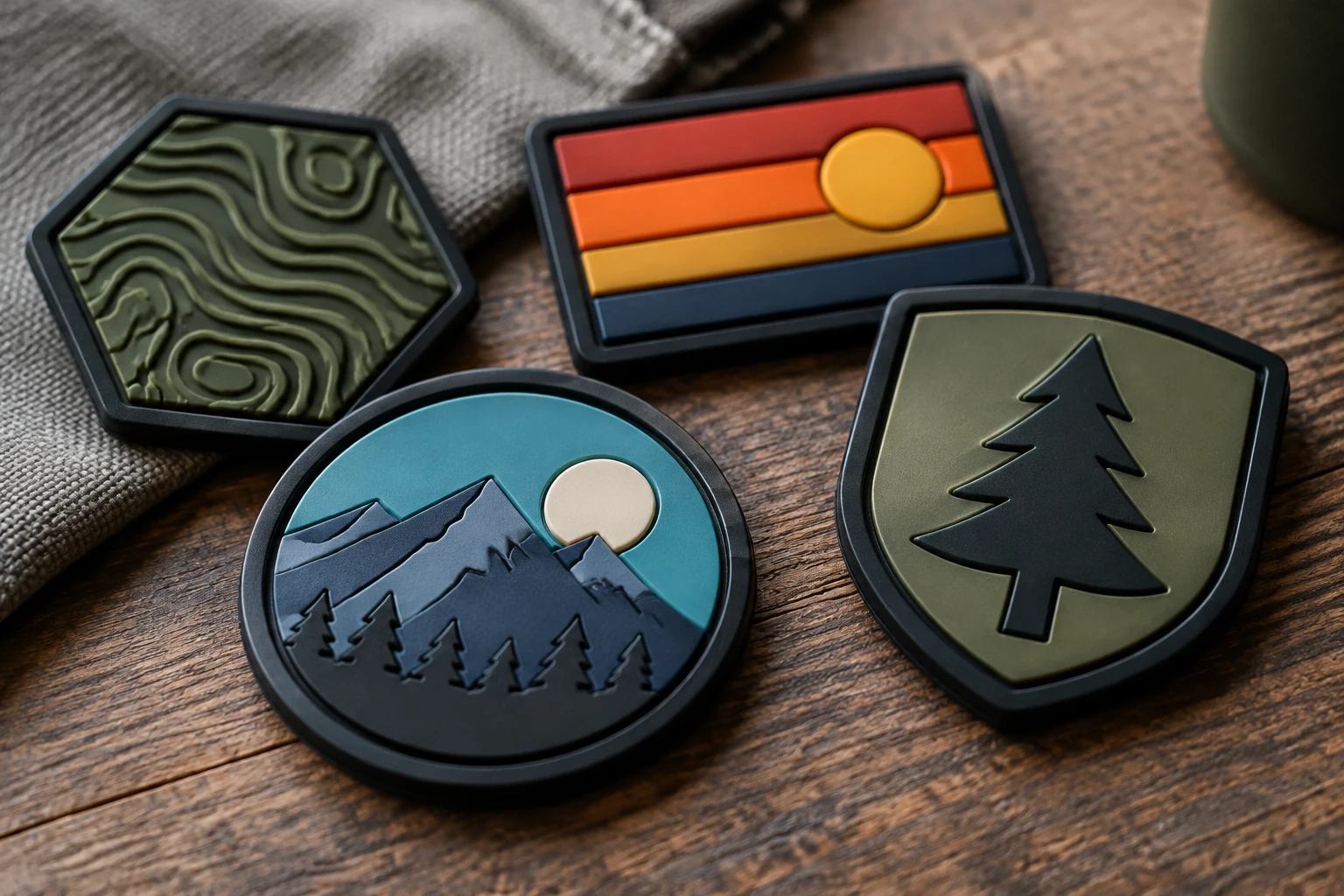
A PVC patch is a flexible badge made from polyvinyl chloride, moulded into a design with coloured areas and raised or recessed details. Often called a rubber patch, it is plastic rather than natural rubber. Its water-resistant, wipe-clean surface suits outdoor equipment, workwear and removable identification patches.
Key takeaways
- PVC patches are moulded from flexible polyvinyl chloride, not natural rubber.
- Solid colours and bold lettering suit moulded PVC better than photographs or gradients.
- A water-resistant patch does not make its stitching or the garment underneath waterproof.
- The Customized Patches has a 5-piece minimum per design and produces only after approval.
What is a PVC patch? It is a flexible badge made from polyvinyl chloride, moulded into coloured shapes with raised or recessed detail. Often sold as a rubber patch, it has a smooth, wipe-clean surface rather than the stitched face of a fabric badge.
PVC patches suit bold logos on rucksacks, workwear and outdoor kit. They resist water and mud well, but they are usually thicker than woven badges, and their attachment needs as much thought as the design.
What is a PVC patch made from, and how is it moulded?
The material is soft, flexible PVC: a plastic formulated to bend rather than behave like rigid pipework. “Rubber patch” describes its feel, not its precise composition; silicone and natural rubber are different materials.
In general, production starts with a mould based on the artwork. Coloured PVC compound is dispensed into separate areas, then heated to gel and fuse into a solid shape. After cooling, the patch is removed and the specified backing is added.
Flat layers versus sculpted detail
A design described as 2D typically uses flat surfaces at different heights, such as raised letters over a recessed background. A 3D design adds rounded or sculpted contours. More relief can strengthen a simple symbol, but it will not rescue tiny lettering or a crowded crest.
How should you specify size, colours and detail?
Start with the available space on the garment, not the size of the artwork on screen. A hypothetical badge measuring 70 × 40 mm (2.76 × 1.57 inches) might suit a rucksack panel but feel bulky on a lightweight polo.
PVC works best with distinct, solid colour areas. Fine gaps and narrow strokes can become difficult to mould cleanly, so ask for an artwork check at the intended size. There is no universal minimum lettering size: the font, contrast and moulded relief all matter.
| Specification | What to provide | Why it matters |
|---|---|---|
| Finished size | Width and height in millimetres | Controls fit, lettering space and how much the patch bends with the garment. |
| Shape and edge | Outer outline and any stitch channel | Narrow projections can catch; an inset channel gives sewing a defined route. |
| Colours | Solid colour references, preferably with recognised colour codes | Screen colours vary; references make the intended palette clearer. |
| Relief | Which elements are raised, recessed or rounded | Prevents the logo and background being interpreted at the wrong height. |
| Thickness | Ask for the proposed base thickness and maximum height | Extra depth adds bulk and can make small garments feel stiff. |
| Backing | Permanent stitching or removable hook-and-loop | Determines attachment and whether a matching garment panel is needed. |
Send your logo, intended size and garment so the proposed colours and relief can be reviewed together. Get a free digital mockup, usually within 12 hours.
GET A FREE MOCKUPAvoid expecting moulded colour areas to reproduce a photograph or smooth gradient. Consider printed patches for those effects. For lettering, Best Fonts for Patch Lettering: Readability at Small Sizes explains why open shapes and clear spacing matter.
How durable are PVC patches outdoors?
The moulded face does not absorb rain like a textile surface and has no exposed embroidery threads to snag. Mud can usually be removed with a damp cloth and mild soap; deep recesses may need a soft brush.
That does not make PVC indestructible. Raised details can scuff, thin sections can tear, and backing or stitching can fail before the face does. Long exposure to sunlight can change colour or flexibility, depending on the formulation and conditions.
- Follow both patch and garment care instructions rather than assuming machine washing is suitable.
- Remove detachable patches before washing where practical.
- Avoid direct ironing, harsh solvents and unnecessary high heat.
- Ask about relevant testing if colour retention or repeated industrial laundering is essential.
Which backing works for outdoor and tactical kit?
Hook-and-loop suits removable identifiers on bags, jackets and tactical-style kit that already has a compatible panel. Specify whether you need the hook-backed patch alone or a matching loop piece too; the patch cannot grip ordinary fabric securely by itself.
Sew-on attachment suits a permanent badge on a canvas bag or suitable workwear. Request a stitch channel and leave space between the stitching route and raised artwork. On thin fabric, a large PVC badge can pull or pucker the surrounding material.
A waterproof face does not mean a waterproof installation
Stitching through a waterproof nylon shell punctures its barrier, even if the patch face sheds rain. Do not assume iron-on attachment is suitable for PVC or a coated garment. Read Patches on Waterproof Jackets: How to Add One Without Leaks before choosing the fixing method.
For outdoor or tactical designs, choose contrast deliberately. Muted colours make identification less conspicuous, while contrasting lettering is easier to read. Ordinary PVC is not automatically reflective, glow-in-the-dark or infrared-compatible; any specialist requirement needs separate confirmation.
Include your required date and backing choice in the [free mockup quote](#quote) request. We provide a free digital mockup, usually within 12 hours, so you can review the design before approving production.
GET A FREE MOCKUPWhen is a textile patch the better choice?
Choose woven patches when fine lettering and a thinner profile matter more than raised detail. Choose embroidered patches for a traditional thread texture on a wool jacket, club badge or heavier uniform. Neither gives the same smooth, moulded face as PVC.
PVC earns its place where wipe-clean surfaces and bold shapes are useful, not simply because a product is used outdoors. A soft running top may carry a lightweight textile patch more comfortably. PVC vs Woven Patches: Waterproof Rubber Against Fine Weave compares that choice in more detail.
What should you send, and when does production start?
The Customized Patches makes patches to order from your artwork, with a 5-piece minimum per design and free shipping across the United Kingdom. Our free 12-hour digital mockup service usually provides your visual within that window; it is not a production or delivery promise.
- Send the artwork, quantity and finished dimensions through our quote form.
- Name the garment or equipment, backing, colour references and preferred relief.
- Check the mockup for spelling, outline, size, colours and raised areas.
- Confirm the quoted specification and ask for production and UK delivery estimates against your required date.
We produce only after approval. A digital mockup shows the proposed design, not the physical feel or an exact screen-to-material colour match, so resolve those requirements before approving. For file preparation, see Which Artwork File Formats Work for Custom Patches? (AI, EPS, PDF, PNG).
Frequently asked questions
What is a PVC patch, and is it actually rubber?
A PVC patch is a moulded badge made from flexible polyvinyl chloride. It is often called a rubber patch because of its feel, but PVC is plastic, not natural rubber or silicone.
Are PVC patches waterproof?
The PVC face does not soak up water like fabric. However, stitching holes, backing and the garment underneath are separate parts of the installation and may allow water through.
Can you iron a PVC patch onto clothing?
Do not iron a PVC patch unless its supplied backing and application instructions explicitly allow it. Direct heat can distort PVC or damage the garment; sew-on and hook-and-loop attachment avoid that assumption.
Can a PVC patch reproduce small text and gradients?
Bold text and solid colours suit moulded PVC. Very fine text needs checking at finished size, while photographs and smooth gradients generally suit printed patches better.
Do PVC patches need a stitched border?
No. A moulded PVC edge does not need a merrowed thread border to stop fabric fraying. A stitch channel is different: it provides a route for attaching a sew-on patch.
What is the minimum order, and how quickly can I see a mockup?
The minimum is 5 pieces per design. The Customized Patches provides a free digital mockup usually within 12 hours and produces only after approval; production and delivery timings must be confirmed separately.
Ready to produce custom patches for your UK team or brand?
GET A FREE MOCKUP