
Varsity chenille patches UK Trends to Watch in 2026
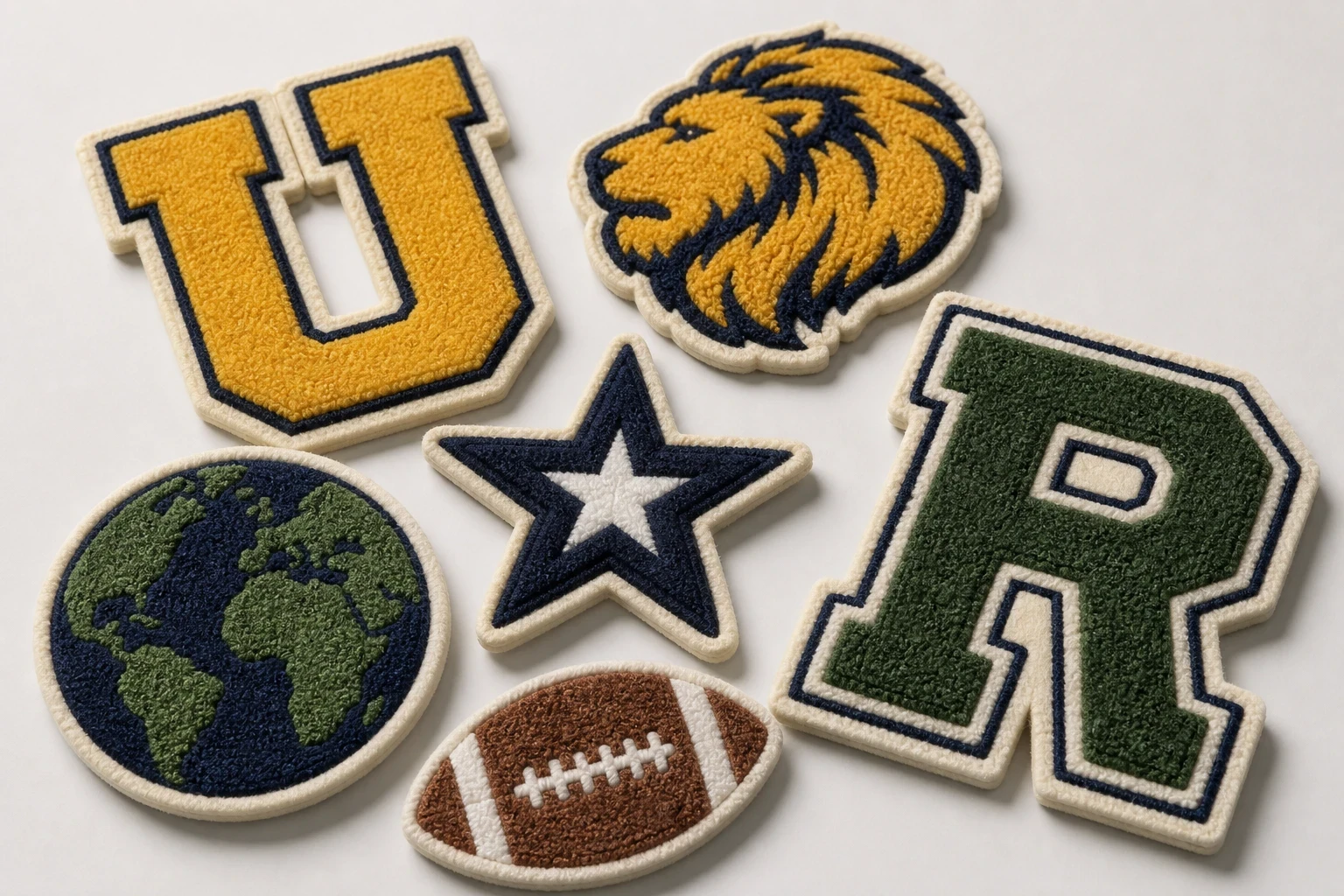
Varsity chenille patches UK buyers are choosing in 2026 are larger, cleaner and more adaptable, with bold lettering, restrained colour palettes and sew-on or Velcro backings for different garments. The Customized Patches provides a free digital mockup usually within 12 hours, accepts orders from 5 pieces per design, and produces only after artwork approval.
Key takeaways
- The strongest 2026 varsity chenille patches UK designs use fewer colours, larger lettering and clear contrast.
- A 5-piece minimum applies per design, making chenille practical for small school groups, club committees and test runs.
- A free digital mockup is usually available within 12 hours, and production starts only after approval.
- Sew-on, iron-on and Velcro backings suit different garments; the backing should be chosen before the artwork is finalised.
Varsity chenille patches UK buyers are watching in 2026 are moving towards larger lettering, simpler layouts and more useful backing choices. The look is still tactile and traditional, but the applications now include football club travelwear, hospitality uniforms, small clothing labels, school blazers and branded workwear. The best designs are made around the garment rather than placed on it as an afterthought.
The Customized Patches makes these patches for customers across the United Kingdom, from schools and universities to independent brands, cadet units and motorcycle clubs. A free digital mockup is usually supplied within 12 hours. The minimum order is 5 pieces per design, and production starts only after the customer has approved the artwork.
Why varsity chenille patches UK buyers are choosing are changing
Chenille has always had a recognisable feel: a raised, fuzzy surface, a firm merrowed edge and a strong connection with American varsity jackets. In the UK, that association is being used more broadly. A football academy may place a chenille crest on a wool coaches jacket, while a café brand may use a small chenille emblem on overshirts for staff and pop-up events.
The change is not simply a colour trend. Customers are asking more carefully how a patch will be worn, cleaned and attached. Nylon shells need a different approach from wool, a Velcro panel needs a hook-compatible backing, and an iron-on patch that looks fine on day one may peel after a dryer cycle if the garment and application method are unsuitable.
- School and university groups are using chenille for initials, house letters, year groups and society emblems.
- Sports teams are pairing raised lettering with embroidered details on jackets, bags and warm-up clothing.
- Clothing brands are using chenille as a limited-run trim rather than a full front graphic.
- Businesses are choosing compact crests for uniforms where a flat, quiet mark would be overlooked.
- Clubs and associations are using sew-on patches so members can move them between garments.
This makes 2026 a practical design year rather than a year of novelty. Buyers still want the classic texture, but they want it to work on a real jacket, in a real laundry routine and within a sensible production quantity.
Trend one: bold lettering with fewer design elements
Large initials and short words remain the safest direction for a varsity chenille patch. Two or three letters can be read from a distance and give the chenille pile room to show its texture. Long club names, narrow script and small internal details are harder to reproduce clearly, especially once a patch is reduced to three or four inches.
The current preference is for a dominant letter, a compact border and one supporting line of text. A school might use a large H for a house, with the house name beneath it. A football club could use its initials inside a shield, while a hospitality company might use one large monogram on a navy overshirt.
Letter spacing matters more than people expect
Chenille letters need breathing room. If neighbouring characters touch, the raised pile can make the word look crowded. A digital mockup is useful here because it shows the relationship between the letter height, border width and available garment space before any material is produced.
For detailed names, a woven patch or embroidered patch may be the better choice. Woven construction is flatter and can hold small lettering more neatly. That does not make it better in every case; it simply matches a different visual requirement. Chenille is chosen for texture and presence, not for tiny text.
Trend two: restrained colour palettes with one strong contrast
The louder colour combinations associated with old varsity garments are not disappearing, but many UK buyers are reducing the palette. Navy with cream, black with off-white, forest green with gold and burgundy with white are proving easier to place on modern clothing. One strong contrast often reads better than six competing thread and felt colours.
This also helps brands keep a patch connected to their existing identity. A company with a black and orange logo may not want a bright red and royal blue chenille badge simply because those colours look traditional. The patch can retain the varsity character through its raised pile, border and proportions while using the brand palette.
Vintage shades and deliberate contrast
Cream, oatmeal, faded red, bottle green and muted yellow are appearing more often in 2026 briefs. They sit comfortably on wool coaches jackets and washed cotton. Bright colours still have a place for youth teams and event clothing, but the contrast should be checked against the actual garment, not just a white artwork background.
| Design direction | Works well for | Main benefit | Watch for |
|---|---|---|---|
| Navy, cream and burgundy | Schools, colleges and heritage-style clubs | Traditional appearance with clear contrast | Cream can show dirt sooner on frequently worn jackets |
| Black with one bright accent | Streetwear, music projects and modern teams | Strong visibility without a busy palette | The accent colour should match the wider garment range |
| Forest green, gold and white | Sports clubs, cadet groups and outdoor organisations | Distinctive crest-like appearance | Fine gold details may need simplifying |
| Muted vintage shades | Independent brands and lifestyle clothing | Works with washed cotton and wool | Low contrast can reduce readability at small sizes |
If the design needs gradients, photographic shading or very fine colour transitions, printed patches are usually more suitable. Printed is flatter; that is the point. It can reproduce artwork that raised chenille cannot, while chenille gives a physical surface that print will not provide.
Trend three: patches designed around the garment
A patch that looks balanced on a screen can feel oversized on a polo shirt or lost on a winter coat. In 2026, more customers are sending a photograph or measurement of the placement area before choosing the final size. This is particularly useful for left-chest logos, school blazers, sleeve panels and the upper back of a coaches jacket.
Wool coaches jackets and varsity-style outerwear can usually carry a larger patch because the fabric has visual weight. A lightweight nylon shell needs more caution. Large chenille can pull on a thin shell, while a small patch with a firm edge can look more deliberate. The patch should not cover a pocket opening, seam, zip or existing Velcro panel.
Common UK garment placements
- Left chest: usually suits compact crests, initials and simple brand marks.
- Full front: gives large lettering room but needs a garment with enough flat area.
- Upper back: works for team names and large club identifiers on coaches jackets.
- Sleeve: suits narrow emblems, though curved areas can make thick patches harder to position.
- School blazer pocket or chest: benefits from a moderate size and a secure sew-on finish.
- Bag flap or equipment case: useful for teams, cadet units and event staff.
A useful starting point is to measure the clear space in inches, then allow room around the patch for stitching or handling. Do not measure only the existing logo if the garment has seams nearby. The Chenille patches Sizing and Backing Options Explained guide covers the practical choices in more detail.
Not sure whether your lettering needs chenille, embroidery or print? Send the artwork and the garment measurements. The Customized Patches can prepare a free digital mockup usually within 12 hours so you can compare the proportion before production.
GET A FREE MOCKUPTrend four: backing selected for use, not appearance
Backing is becoming a more considered part of the order. Sew-on remains the dependable choice for wool jackets, thick cotton, school blazers and garments that will be worn regularly. It takes more time to attach, but it avoids relying on adhesive alone and can be repaired if a section of stitching is damaged.
Iron-on backing is convenient for straightforward application on suitable fabrics. It is not a universal substitute for sewing. Heat, pressure and the fabric itself all matter, and repeated washing or tumble drying can weaken an adhesive bond. It is common to see iron-on patches peel after a dryer cycle, particularly where the garment was nylon or the patch had not been pressed evenly.
Sew-on, iron-on or Velcro?
| Backing | Best suited to | Advantages | Trade-offs |
|---|---|---|---|
| Sew-on | Wool coaches jackets, blazers, denim and heavy cotton | Strong long-term attachment and easy to understand | Needs stitching and may be slower to remove |
| Iron-on | Suitable cotton garments and simple one-time applications | Quick application with no visible hand stitching | Heat and washing can affect the bond; not ideal for every nylon shell |
| Velcro | Team kit, tactical clothing, bags and removable identity panels | Patch can be moved or changed | Requires a compatible loop panel on the garment |
| Adhesive temporary use | Displays, samples and short-term events | Fast for temporary placement | Not a dependable long-term garment finish |
A backing decision should be included in the quote rather than added at the end. A Velcro patch needs the correct hook side, while a sew-on patch may need a border that can be stitched cleanly. If you are comparing materials, chenille patches explain the raised construction, while 3D embroidered patches offer height through embroidery rather than a chenille pile.
Trend five: mixed textures and controlled contrast
Some of the strongest briefs now combine a chenille letter with a flatter embroidered border or a small embroidered symbol. The contrast is useful because it gives the eye a clear main feature without asking every part of the design to carry the same texture. A raised C with a stitched crown, football or year number can feel more considered than an entire patch covered in competing details.
Mixed construction is not automatically the right answer. It can add cost and production decisions, and very small elements may still need simplifying. The aim is to make the main idea clearer, not to add decoration because the patch has available space.
Chenille compared with other patch materials
| Patch type | Surface | Good choice for | Less suitable for |
|---|---|---|---|
| Chenille | Raised, soft and tactile | Varsity lettering, bold initials and traditional crests | Tiny text, detailed gradients and very fine linework |
| Flat embroidery | Thread-filled and textured but flatter | Detailed logos, uniforms and compact branding | Large soft varsity lettering where pile is central to the look |
| Woven | Flat and smooth | Small text, clean labels and fine line detail | A thick retro varsity effect |
| Printed | Flat ink surface | Photographic artwork, gradients and subtle shading | A raised tactile finish |
| PVC | Smooth, moulded and rubber-like | Outdoor kit, sports bags and modern utility branding | Traditional wool varsity styling |
The right comparison is not about which material is universally superior. A PVC patch may be easier to wipe clean on an equipment bag, while a leather patch may suit a premium casualwear range. A chenille patch earns its place where texture, boldness and a traditional club or varsity reference matter.
Where the 2026 trend is appearing across the UK
Schools and colleges remain a major use case. House letters, graduation groups, student societies and sports teams can order a modest quantity without committing to a large factory run. The 5-piece minimum per design is useful for a small committee testing a badge, although separate names or colours may count as separate designs.
Football clubs and rugby teams are using chenille on travelwear rather than match shirts. A raised crest on a jacket or kit bag gives the squad a clear identity without interfering with performance fabric. Cadet units often need a practical attachment method and a restrained design that can sit alongside existing uniform marks.
- Hospitality polos and overshirts: small, simple chest patches can make staff clothing feel more individual, although the fabric and washing routine need checking.
- Biker and motorcycle clubs: larger back pieces and compact front identifiers can work on leather, denim or heavy cotton; see the guide to biker and motorcycle club patches.
- Independent clothing brands: chenille works well as a limited-run detail on heavyweight hoodies, wool jackets and overshirts.
- Corporate events: removable Velcro patches can identify teams, departments or short-term event crews.
- Local clubs and associations: a clear crest can be produced in a small run for committee members and early supporters.
The same brief may need different versions for different garments. A sew-on patch for a wool jacket is not automatically the best patch for a nylon travel shell. Customers in Manchester, Birmingham, Glasgow, Cardiff, London and elsewhere in the UK can use the same core artwork, but the size and backing may change by garment.
How to order varsity chenille patches UK customers can actually use
Start with the use rather than the colour. Tell us what the patch will go on, where it will sit, how many pieces you need and whether it will be removed or washed often. A photograph, a rough measurement in inches and the original artwork are more useful than a long description of the intended mood.
- Send the artwork, preferred dimensions and a photograph or description of the garment.
- Confirm the patch shape, chenille colours, border and backing type.
- Review the free digital mockup, usually supplied within 12 hours.
- Request any sensible changes to scale, spacing, colours or wording.
- Approve the final artwork in writing.
- Production begins only after approval, followed by UK-wide delivery once the order is complete.
The mockup is not just a sales image. It is the point at which a crowded letter, weak contrast or unsuitable backing can be spotted. It also gives a school committee, club treasurer or brand owner something clear to approve before money is committed to production.
Lead time depends on the design, quantity, backing and production schedule. A simple five-piece initial order is not the same job as a multi-colour crest with several backing types. Ask for the expected timing with the quote, especially if the patches are needed for a new term, kit launch, tournament or clothing drop.
For cost planning, quantity, size, number of colours, edge treatment and backing all matter. A small run can carry a higher per-piece price than a larger repeat order because preparation is spread across fewer patches. The guide How Much Do varsity chenille patches UK Cost in the UK? explains the main pricing factors without reducing the decision to a single headline figure.
Care, washing and wear in everyday use
Chenille has a pile, so it should not be treated like a smooth printed label. Follow the garment care instructions, avoid unnecessary high heat and do not assume a patch can tolerate a tumble dryer simply because the jacket itself can. If an iron-on finish is used, the first application should be made with suitable heat, pressure and protection for the fabric.
Name sew-on, iron-on or Velcro on the quote and include the garment type. We will show the proposed backing on a free digital mockup usually within 12 hours, then produce only after you approve the final design.
GET A FREE MOCKUPFor a frequently worn team jacket, sew-on is often the safer long-term choice. Check the stitching occasionally, particularly around corners and on areas that flex. A Velcro patch should be removed before washing where the garment instructions require it, and the loop panel should be kept free from lint.
Common failures to avoid
- Using iron-on backing on a heat-sensitive nylon shell without checking suitability.
- Putting a large patch over a seam, pocket or curved zip area.
- Ordering a detailed crest at a size that makes the inner wording unreadable.
- Choosing low contrast because the colours look good on a bright digital screen.
- Assuming a removable Velcro patch will work without a properly fitted loop panel.
- Sending production artwork before the final size and backing have been approved.
The Common Mistakes to Avoid When Ordering varsity chenille patches UK guide is worth reading before a school order, club run or product launch. It covers the small decisions that are easy to ignore until the patches arrive.
What to expect from varsity chenille patches UK trends after 2026
The strongest direction is likely to remain practical personalisation: one recognisable letter, a clear crest, a controlled palette and a backing that matches the garment. Customers are becoming less interested in decorative complexity that cannot be read or maintained. That is good news for small organisations because a carefully simplified design can work at a sensible quantity.
There will still be room for oversized back patches, brighter colours and mixed materials, particularly in streetwear and music clothing. The important distinction is intent. A large chenille back piece on a denim jacket is meant to be noticed; a small patch on a hospitality polo needs to remain tidy after repeated use.
For a broader comparison before you brief a supplier, read Varsity chenille patches UK vs embroidered patches: Which Is Right for Your Project?. If your design is still at the idea stage, the How to Choose the Right varsity chenille patches UK for Your Brand guide can help narrow the size, material and placement.
A straightforward 2026 buying checklist
Before requesting a quote, write down the answers to these questions. It reduces back-and-forth and gives our team enough information to suggest a sensible construction rather than simply reproducing a file at an unsuitable size.
- What is the exact garment: wool coaches jacket, school blazer, denim, leather, cotton, nylon shell or kit bag?
- Where will the patch sit, and what is the clear space in inches?
- Will the patch be permanent or moved between garments?
- Is the order 5 pieces, a small team run or a larger repeat quantity?
- Which lettering must remain readable from a distance?
- Are the brand or club colours fixed, or can they be adjusted for contrast?
- Will the garment be washed frequently or exposed to rain and outdoor use?
- Is sew-on, iron-on or Velcro the most suitable attachment?
- Does the artwork contain gradients, tiny text or fine outlines better suited to another material?
- Who will approve the digital mockup before production begins?
A clear brief does not need to be technical. A sentence such as “five 3-inch navy and cream chenille initials for wool school jackets, sewn on permanently” gives us a much better starting point than “make it varsity style”. We can then prepare the mockup, flag any limitations and confirm the next step.
Final view from our team
Varsity chenille patches UK buyers are ordering in 2026 are not defined by one colour or one jacket style. They are defined by a clearer relationship between artwork, garment, backing and use. Bold lettering and tactile texture remain the attraction, but the order succeeds only if the patch fits, attaches securely and survives the way the garment is treated.
The Customized Patches supports UK-wide orders with a 5-piece minimum per design. Send the artwork and the garment details for a free digital mockup usually within 12 hours. Nothing is produced until the final design has been approved.
Frequently asked questions
What are the main varsity chenille patches UK trends for 2026?
The main trends are larger readable initials, simpler crests, restrained colour palettes, vintage shades and backing chosen around the garment. Customers are also combining chenille lettering with small embroidered details, particularly for school jackets, sports travelwear, independent clothing brands and club clothing.
What is the minimum order for varsity chenille patches UK customers?
The Customized Patches has a minimum order of 5 pieces per design. If you need different names, colours, sizes or layouts, ask us to confirm whether those versions count as separate designs before placing the order.
How quickly can I see a varsity chenille patch mockup?
A free digital mockup is usually provided within 12 hours after the artwork and basic requirements have been received. The mockup can show the approximate size, colours, layout and proposed backing. Production begins only after the customer approves the final artwork.
Are chenille patches suitable for nylon shells?
They can be suitable, but the patch size, weight and backing need to be considered carefully. A thin nylon shell may not support a large heavy patch in the same way as a wool coaches jacket. Sew-on or another agreed attachment may be more appropriate than relying on iron-on adhesive.
Should I choose chenille or embroidered patches for a detailed logo?
Choose chenille for a raised, soft varsity surface and bold shapes. Choose flat embroidery or woven construction if the logo depends on small lettering, fine lines or compact detail. A embroidered patches option may reproduce a detailed mark more clearly, while chenille gives stronger physical texture.
Can varsity chenille patches be made with Velcro backing?
Yes, Velcro can suit team kit, tactical clothing, bags and removable identity panels. The garment needs a compatible loop panel, and the patch should be specified as Velcro at the quoting stage. For permanent use on wool, denim or a school blazer, sew-on is often the more straightforward choice.
Ready to produce custom patches for your UK team or brand?
GET A FREE MOCKUP