
Top 10 Uses for woven patches in 2026
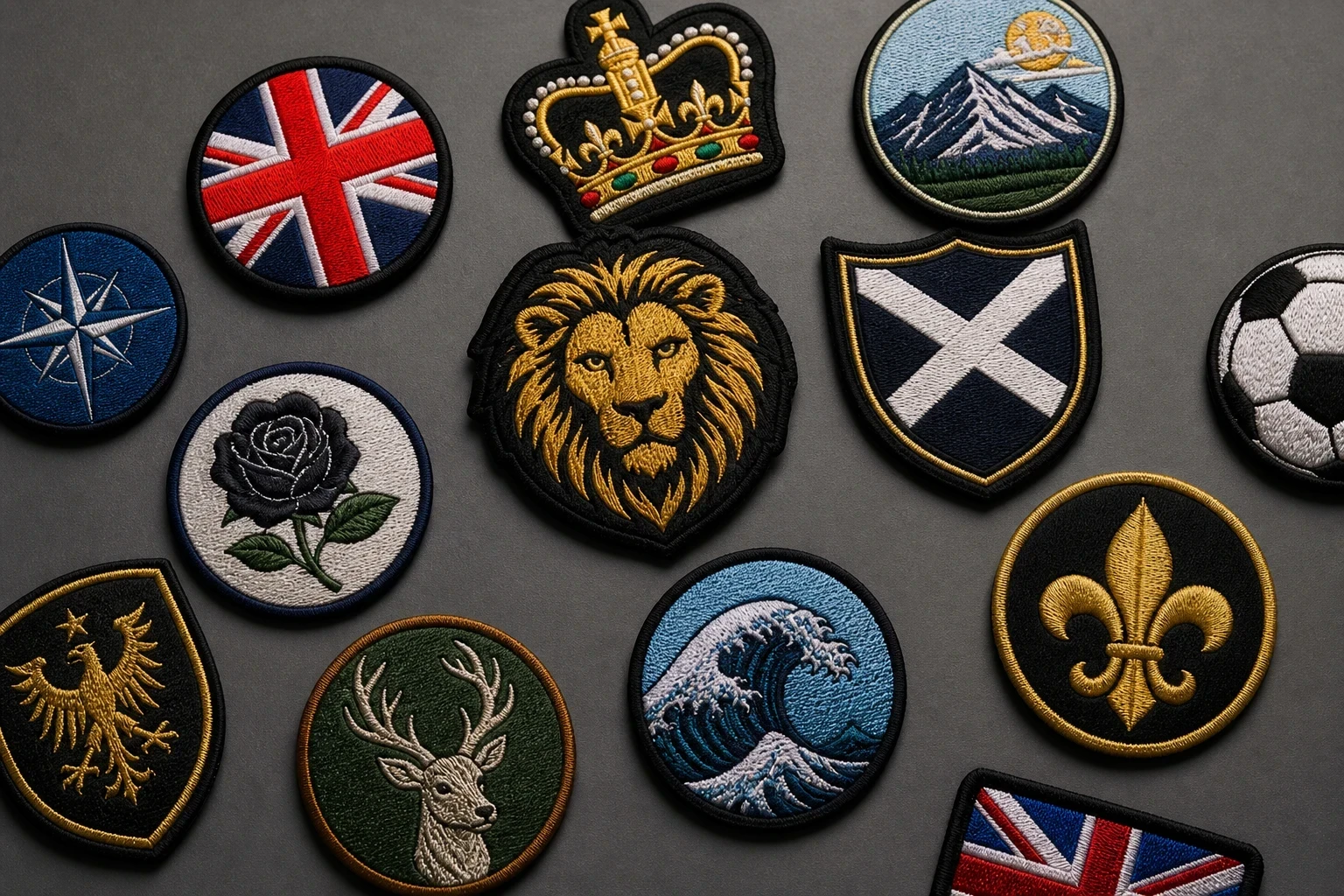
Woven patches are used for team kits, workwear, uniforms, branded clothing, school blazers, club merchandise, bags, jackets, caps and event apparel. They suit detailed logos and small lettering because their tightly woven surface gives a flatter, sharper finish than raised embroidery. The Customized Patches offers a free digital mockup usually within 12 hours, with a 5-piece minimum per design.
Key takeaways
- Woven patches give detailed logos and small text a flatter, cleaner surface than standard raised embroidery.
- They work particularly well on football kit bags, nylon jackets, workwear, school blazers, caps and branded merchandise.
- The Customized Patches has a 5-piece minimum per design and produces only after the artwork and mockup are approved.
- A free digital mockup is usually supplied within 12 hours, so you can check size, colours, lettering and backing before ordering.
The top uses for woven patches in 2026 are team kit bags, workwear, uniforms, school clothing, branded merchandise, caps, jackets, event clothing, club gear and removable identity panels. They are a sensible choice where a logo includes small lettering or fine detail that needs to stay readable without a thick, raised surface.
The Customized Patches supplies woven patches across the United Kingdom for teams, brands, clubs and businesses. You can request a free digital mockup, usually within 12 hours, and production starts only after approval. The minimum is 5 pieces per design, which suits a small club run as well as a larger uniform order.
Why woven patches suit so many UK garments
A woven patch is made with finer threads packed closely together, rather than relying on the heavier stitch coverage associated with a traditional embroidered badge. That construction gives the face a relatively flat finish. It is useful for a slogan, web address, narrow lettering or a logo with several small internal shapes.
That does not make woven the best answer for every job. Printed is flatter; that is the point, especially for photographic artwork or a very fine gradient. Chenille is thicker and more tactile, so it is often a stronger fit for varsity lettering. Woven sits between those choices: more structured than a print, but generally flatter and more detailed than raised embroidery.
| Patch type | Best suited to | Surface and detail | Common UK garment use | Main trade-off |
|---|---|---|---|---|
| Woven patches | Logos, small text, labels and detailed club designs | Flat to lightly textured face with clean detail | Nylon shells, kit bags, polos, caps and jackets | Less raised texture than standard embroidery |
| Embroidered patches | Traditional crests, bold lettering and badges | Raised thread texture with a classic appearance | Football jackets, uniforms, blazers and workwear | Very small details may need simplifying |
| Printed patches | Photographic artwork, gradients and very fine artwork | Flat inked surface | Promotional clothing, bags and event merchandise | Can look less tactile and may show wear differently |
| Chenille patches | Varsity letters, large initials and statement badges | Soft, thick pile with strong texture | College sweatshirts, varsity jackets and sportswear | Fine lettering and tiny details are not its strength |
| PVC patches | Outdoor branding, utility gear and waterproof-style applications | Moulded, rubber-like surface | Rucksacks, work equipment and outdoor clothing | Less traditional fabric appearance |
For a closer look at construction, sizing and backing, see our guide to woven patches. If you are comparing the two most common fabric options, our guide to woven patches vs embroidered patches: Which Is Right for Your Project? covers the practical differences rather than treating one finish as universally better.
1. Football clubs, five-a-side teams and kit bags
Football clubs often need more than a badge on a shirt. A woven patch can go on a kit bag, rain jacket, coach’s coat or training top, giving the squad a consistent mark away from match shirts. It works well for a club crest with a season name, sponsor line or short team motto.
For a local Sunday league side, five pieces may be enough to cover coaches and captains. Larger clubs can use the same artwork across kit bags and staff outerwear. Check the fabric before choosing iron-on: some nylon shells can mark, pucker or resist heat, while a sew-on finish is often the safer choice for a hard-used bag.
2. Workwear for trades, services and site teams
Builders, electricians, landscapers, mechanics, security firms and facilities teams use patches to add a company identity without replacing every garment when a logo changes. A patch can be fitted to a jacket, fleece, gilet, work shirt or tool bag, depending on the fabric and the intended laundering routine.
A woven logo is a good fit for names and telephone details that need to remain legible at a small chest size. Think carefully about long web addresses. If the lettering cannot be read at the finished size on the mockup, shorten the wording rather than hoping the production version will rescue it.
3. Hospitality uniforms and staff clothing
Cafés, restaurants, hotels, wedding venues and event caterers often need branding that looks tidy on polos, aprons, overshirts and jackets. A woven patch can carry a restaurant mark, venue initials or a department label without the heavier feel of a large embroidered logo.
A patch is also useful when the uniform changes seasonally. The same design can be applied to a hospitality polo in summer and a wool coach jacket in winter, provided the chosen backing and attachment method suit both fabrics. For a garment that is washed frequently, sew-on is usually worth considering over an adhesive-only option.
4. School blazers, colleges and youth organisations
Schools and colleges can use woven patches for house colours, enrichment groups, trips, sports squads and temporary programmes. They are especially useful when a design contains a small school name around a crest and needs to stay readable on a blazer pocket or club hoodie.
For school clothing, ask who will attach the badge and how long it needs to remain in place. A sew-on crest is a dependable option for blazers that will be worn throughout the academic year. Iron-on that peels after a dryer cycle creates extra work for families and staff, so the garment’s care label and expected washing routine should guide the choice.
5. Cadet units, scouts, guides and uniformed groups
Cadet units, scouts, guides and other uniformed groups often need clear identifiers for activities, expeditions and local units. Woven patches can carry a unit name, district, activity or event mark while keeping fine lettering more controlled than a coarse, heavily stitched design.
Nylon shells and waterproof-style outer layers need particular care. A hot iron can damage the fabric or leave a shiny patch around the badge. For these garments, a sew-on edge or a Velcro panel may be more practical, especially if the clothing is used for several activities and the identifier needs to be removed.
6. Biker jackets and motorcycle club clothing
Biker jackets remain one of the clearest uses for patches. A club back panel, chest badge, ride-out marker or regional identifier can be arranged as a set, with the main design supported by smaller arm or front patches. Woven construction is useful for detailed lettering and compact supporting badges.
Leather and heavy cotton behave differently, so do not assume the same backing will suit every item. A permanent sew-on application is common for leather jackets because it avoids relying on adhesive through a thick, frequently worn material. Our biker and motorcycle club patches hub covers the larger back-panel and club clothing considerations.
7. Brand merchandise and small business packaging
Independent clothing labels, breweries, record shops, barbers and makers can use woven patches as a lower-commitment way to add their mark to blank garments. They can be sold as merchandise, included with an order, or attached to caps and overshirts as a repeatable brand detail.
Not sure whether woven or embroidered will hold your logo better? Send the artwork and garment details for a free digital mockup, usually within 12 hours, so you can compare the finished proportions before production.
GET A FREE MOCKUPThe 5-piece minimum per design is useful for a small business testing two or three logo treatments. Rather than ordering one large run before seeing the patch in hand, a business can approve a small quantity, check the finish on the intended garment, then decide which version deserves a larger follow-up order.
8. Caps, beanies, bags and accessories
Hats and accessories have limited space, which is where the flatter face of woven patches can help. A short wordmark, badge, initials or compact emblem can sit on a five-panel cap, beanie, rucksack, tote or wash bag without the bulky profile of a large textured badge.
Measure the curved area rather than copying the dimensions from a flat T-shirt logo. A patch that looks balanced on a jacket may wrap around a cap or interfere with a front seam. Small shapes also need a border with enough width to be finished neatly; very narrow outer lines can disappear into the edge.
9. Events, festivals and temporary teams
Event organisers use patches for volunteer teams, production crews, charity challenges, alumni weekends and short-term communities. A woven patch can mark a role such as crew, media, steward or organiser while still looking like a piece of merchandise rather than a disposable printed label.
For a one-weekend event, the attachment method matters. Sew-on gives a lasting result but takes longer to fit. Velcro is useful where people may reuse the garment for another event or need to change roles. Iron-on can be convenient on suitable cotton garments, but the user should follow the application and washing instructions rather than treating it as suitable for every fabric.
10. Internal teams, clubs and identity systems
Businesses can use patches to distinguish departments, training groups, apprenticeship cohorts or project teams. A base brand mark can stay consistent while small colour or text variations identify a role. Clubs can use the same approach for committee members, competition squads, instructors and founding-year badges.
This system works best when the design rules are agreed before ordering. Fix the typeface, border width, patch shape and approximate size, then vary only the detail that needs to change. If every department uses a different shape and backing, the clothing can look assembled rather than planned.
Choosing the right size, shape and edge
Start with the garment, not an abstract logo file. A chest patch may be around 2.5 to 4 inches wide, while a bag badge or jacket back design may need more room. These are working ranges rather than fixed rules: a long horizontal wordmark needs a different proportion from a round club crest.
Common shapes include circles, shields, rectangles, arches and custom outlines. A merrowed crest gives a traditional raised edge, while a clean cut edge can suit a more modern label-style design. The edge should support the artwork rather than consume the area needed for the lettering.
Artwork checks that prevent avoidable problems
- Check the smallest text at the actual proposed size, not only on a large computer screen.
- Avoid placing fine lines directly against a similar-coloured border.
- Send vector artwork if available, but include a clear PNG so the intended appearance is understood.
- Identify colours that must stay close to a brand guide or club palette.
- Tell the manufacturer if the patch will be attached to nylon, leather, wool, fleece, cotton or a Velcro panel.
- Ask to see the finished proportions on the intended garment before production.
A mockup is more useful when it shows the patch at its proposed size rather than only as a large standalone graphic. It gives you a chance to catch a crowded border, a word that is too small, or a shape that will sit awkwardly beside a zip or pocket.
Backing and attachment: sew-on, iron-on or Velcro
Backing should be selected from the garment and the way it will be used. Sew-on is the dependable general-purpose option for jackets, bags, uniforms and items that will be washed repeatedly. It takes more fitting time, but it does not depend on an adhesive bond alone.
Iron-on is convenient on suitable cotton or cotton-blend clothing, provided the fabric can tolerate the required heat and pressure. It is not a universal solution for nylon shells, coated outdoor fabrics, leather or garments that spend their life in a hot tumble dryer. Velcro is useful for removable identifiers, tactical-style panels, club roles and event teams.
| Backing | Good fit | Check before ordering | Typical example |
|---|---|---|---|
| Sew-on | Long-term use and regular washing | Allow time for attachment and check the edge can be stitched | Football jacket, school blazer or leather biker jacket |
| Iron-on | Suitable cotton and some stable blended fabrics | Review the care label, heat tolerance and washing routine | Cotton hoodie, tote bag or casual work shirt |
| Velcro | Removable identity and interchangeable badges | Confirm the garment has a matching panel or plan how it will be fitted | Cadet shell, event crew jacket or club equipment bag |
If you are replacing a badge or adding a second layer of identity, check the existing garment hardware. A Velcro panel can be mistaken for a standard fabric area, and a jacket with a lining may be difficult to stitch without opening a seam. These details are worth mentioning at quote stage.
Ordering woven patches in the UK
A useful quote includes the artwork, finished width and height in inches, quantity per design, shape, edge, backing, garment type and delivery postcode. If there are several versions, label each one clearly. For example, “Blue House”, “Red House” and “Staff” are easier to approve than three files named final-logo-new2.
The Customized Patches has a 5-piece minimum per design. That means five of one approved artwork is acceptable, but five mixed designs are not normally counted as one design run. If you need different names, colours or role labels, list each variation so the quotation reflects the actual production.
Name sew-on, iron-on or Velcro on the quote and include the garment photograph. We will show the proposed back and placement on a free digital mockup, usually within 12 hours, before the 5-piece-per-design order goes into production.
GET A FREE MOCKUPA free digital mockup is usually supplied within 12 hours. Review the lettering, patch size, colours, border, backing and placement before approving it. The Customized Patches produces only after approval, so changes are best made at the mockup stage rather than after the order has entered production.
- Send the artwork and describe the garment or product.
- Confirm the approximate finished dimensions in inches.
- Choose the backing and explain if the patch must be removable.
- Review the free digital mockup, usually within 12 hours.
- Approve the exact version and confirm quantity per design.
- Arrange UK-wide delivery details and allow time for attachment to the garment.
Lead time can depend on the artwork, quantity, backing, approval speed and production schedule, so ask for a current estimate rather than relying on a generic number. If the patches are needed for a match, opening night, school term or trade event, mention the date in the first message.
Common mistakes with woven patches
The most common problem is scaling a logo down without simplifying it. A detailed crest designed for a website header may contain tiny text, thin outlines and several close colours. At 2.5 inches wide, some of those features may need adjusting so the badge remains readable.
Another mistake is choosing the backing after the patches arrive. A badge intended for a nylon jacket may be ordered with iron-on simply because it sounds convenient, then fail to bond safely to the shell. Garment composition, lining, care instructions and the expected use should be part of the original quote.
- Ordering from a low-resolution screenshot and assuming the edges will become sharp in production.
- Using a long slogan at a size intended for a short name.
- Forgetting to allow space around a zip, pocket, seam or curved cap panel.
- Treating all iron-on backings as suitable for dryers, nylon or coated outerwear.
- Combining several colourways under one quantity when each is a separate design.
- Approving a mockup without checking the patch at the intended finished dimensions.
Which alternative should you choose?
Choose woven when your priority is a neat, detailed fabric badge with small lettering and a fairly flat face. Choose traditional embroidered patches when raised thread texture and a familiar crest appearance matter more than tiny detail. Choose printed patches for gradients, photographs or artwork that depends on very fine tonal changes.
For varsity jackets and large initials, chenille patches provide a soft, heavy pile that woven cannot replicate. For outdoor equipment and a moulded rubber-like finish, look at PVC patches. For a leather label or a restrained heritage finish, leather patches may make more sense.
There is no useful rule that one patch type wins every project. The garment, artwork, washing routine, attachment method, quantity and budget all affect the sensible choice. A side-by-side mockup usually makes the decision easier than discussing materials in the abstract.
Final checklist before approval
Before approving woven patches, place the mockup beside the actual garment or product. Check the size against a ruler, read the smallest text, confirm the border colour and make sure the chosen backing matches the fabric. If the badge is part of a set, compare all versions together so the proportions feel consistent.
- Finished width and height confirmed in inches.
- Correct artwork version attached to the quote.
- Quantity confirmed for each separate design.
- Backing selected for the actual garment.
- Colours and lettering checked at finished size.
- Placement checked against seams, pockets, zips and panels.
- Delivery date discussed for UK-wide shipping.
- Mockup approved before production begins.
For more planning advice, read How to Choose the Right woven patches for Your Brand or use the embroidered patches product hub to compare fabric finishes. If you need help with a location-based order, The Customized Patches also serves customers across the UK through its UK city pages.
Frequently asked questions
What are woven patches used for?
Woven patches are used for football clubs, workwear, hospitality polos, school blazers, cadet uniforms, biker jackets, caps, bags, event clothing and branded merchandise. They are particularly useful for logos with small lettering or fine detail because the face is flatter and more closely woven than many raised embroidered designs.
Are woven patches better than embroidered patches?
Neither is automatically better. Woven patches usually suit small text, fine lines and a flatter finish. Embroidered patches suit traditional crests, bold lettering and visible raised thread texture. The right choice depends on the artwork, garment, backing, washing routine and appearance you want.
What is the minimum order for woven patches from The Customized Patches?
The minimum order is 5 pieces per design. Separate colourways, names or role labels may count as separate designs, so list each version when requesting a quote. This minimum is suitable for small clubs, staff samples, school groups and small business merchandise.
How quickly can I see a woven patch mockup in the UK?
The Customized Patches usually provides a free digital mockup within 12 hours. The mockup should be checked for size, lettering, colours, border, backing and placement. Production starts only after the artwork and mockup have been approved.
Can woven patches go on nylon jackets or Velcro panels?
Yes, but the attachment method needs to match the garment. Nylon jackets may be better suited to sew-on or a properly fitted Velcro solution than heat-based application. If the garment already has a Velcro panel, include a photograph and its measurements so the patch can be specified correctly.
Are woven patches suitable for school uniforms and workwear?
Yes. Woven patches can work well on school blazers, polos, fleeces, jackets and workwear when the size, backing and care routine are considered together. For frequent washing, sew-on is often the practical choice. Iron-on may suit some cotton garments, but it can peel after a dryer cycle or fail on unsuitable fabrics.
Ready to produce custom patches for your UK team or brand?
GET A FREE MOCKUP