
The Complete Guide to Woven patches in 2026
Woven patches are made by weaving thinner threads closely together, creating a flatter surface that holds small lettering and fine logo details better than many embroidered patches. They suit teamwear, branded clothing, uniforms, caps and Velcro panels. The Customized Patches offers a 5-piece minimum, with a free digital mockup usually provided within 12 hours before production.
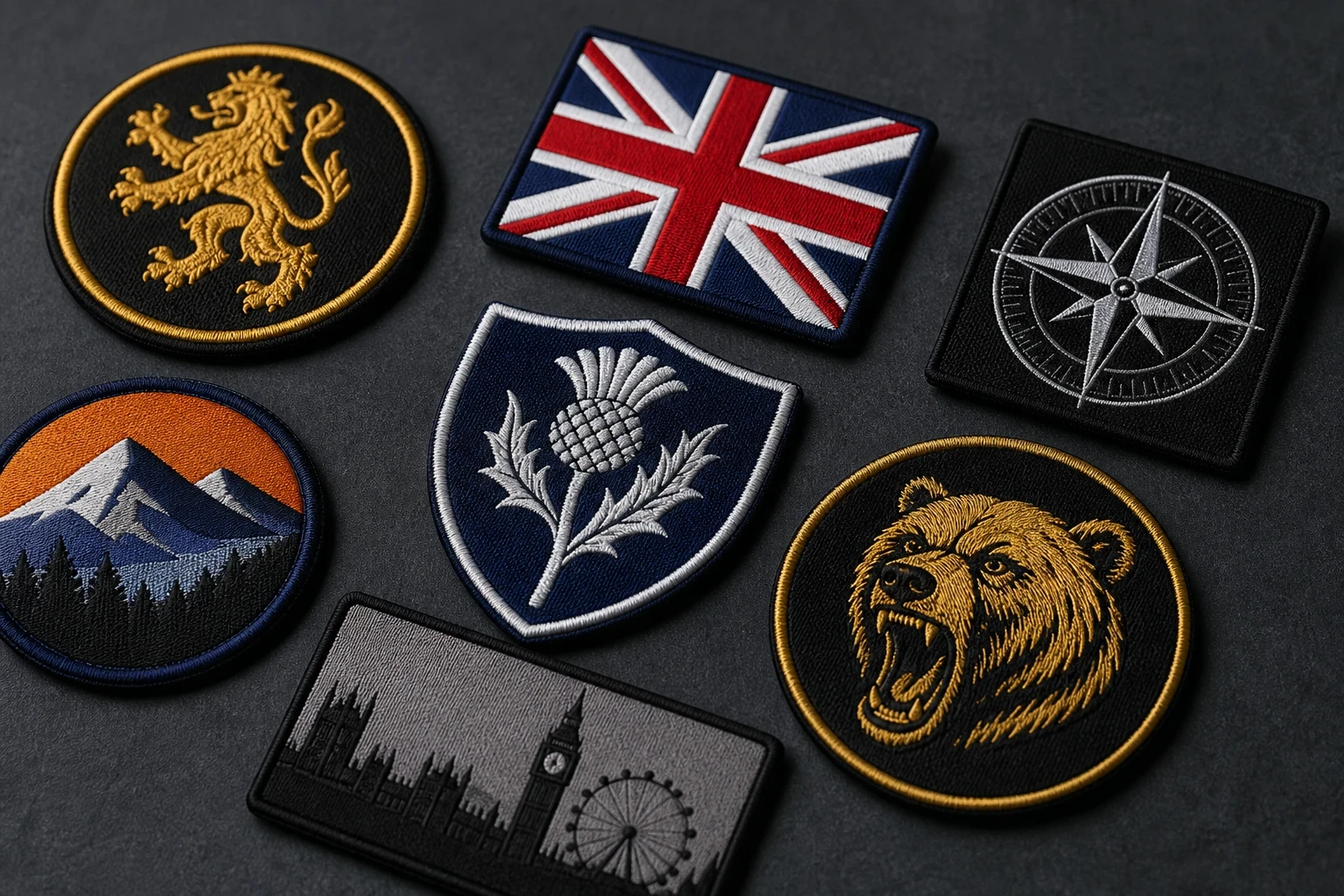
Key takeaways
- Woven patches use closely packed, thinner threads for a flatter finish and clearer small details.
- They are usually a good fit for logos, names, coordinates, short slogans and uniform badges, but very tiny text still needs enough patch width.
- The Customized Patches has a 5-piece minimum per design and normally sends a free digital mockup within 12 hours.
- Production starts only after mockup approval, so the approved size, colours, border and backing should be checked carefully.
Woven patches are flat fabric badges made by weaving fine threads into a dense design. They are a strong choice when a club crest, company mark, surname or short line of text needs to stay legible without the raised texture of standard embroidery. For most UK orders, the useful decisions are finished size, thread colours, edge, backing and the garment receiving the patch.
The Customized Patches supplies woven patches across the United Kingdom for teams, brands, clubs and businesses. The minimum is 5 pieces per design. A free digital mockup is usually sent within 12 hours, and production starts only after the customer approves the artwork and specifications.
What are woven patches?
A woven patch is formed from thinner threads woven closely together rather than using heavy embroidery stitches across a fabric base. That construction gives the front a relatively smooth, flat face. It is useful for fine outlines, small symbols, clean blocks of colour and lettering that would look crowded in a thick embroidered stitch.
The surface is still a textile product, not a printed sticker. The design is built into the woven face, then finished with an edge and a backing selected for the garment. A merrowed border can give the patch a traditional badge outline, while a laser-cut edge can suit a more detailed shape. The right choice depends on the artwork rather than a universal rule.
How the flat construction affects detail
Thin thread helps small details, but it does not make unlimited detail possible. A word that is readable on a laptop may close up on a 2-inch patch. Letters need height, spacing and contrast. Fine white text on a pale grey background is also harder to read than white on navy, even if both colours appear attractive on screen.
Gradients and photographic shading need special care. Woven production works best with defined colour areas and a controlled thread palette. If a logo contains a smooth fade from orange to red, the mockup may simplify that transition into separate thread colours. This is not a fault in the finished badge; it is part of converting digital artwork into woven material.
Woven patches compared with other patch types
There is no single best patch for every garment. A football club may want a traditional embroidered crest on a tracksuit, while a hospitality company may prefer a flatter woven name badge on a polo. A biker club may prioritise a large sew-on back patch, whereas a bag maker may need a small Velcro identifier.
| Patch type | Surface and detail | Good uses | Points to check |
|---|---|---|---|
| Woven patches | Flat, closely woven face with clear small shapes and lettering | Brand marks, names, uniform badges, caps, bags and detailed club designs | Very small text still needs enough finished width and contrast |
| Embroidered patches | Raised thread texture with a traditional stitched appearance | Football crests, school blazers, workwear, jackets and heritage-style badges | Dense fill can make tiny details or long wording look crowded |
| Printed patches | Flat printed artwork with broad colour and tonal possibilities | Photographic artwork, gradients, illustrations and very fine continuous detail | Printed is flatter; that is the point, but colour and surface wear need consideration |
| PVC patches | Rubber-like raised or flat surface with strong graphic edges | Outdoor kit, tactical equipment, rainwear and removable Velcro panels | Less suited to a soft textile look or fine woven lettering |
| Chenille patches | Soft, high-pile yarn with a bold varsity texture | School, college, sports and large initial designs | Small wording and fine linework are not its strongest use |
| Leather patches | Natural or synthetic leather face with stamped, engraved or printed marking | Bags, aprons, workwear, caps and premium casual garments | The material changes the look and may need different cleaning care |
For a direct comparison, see the range of embroidered patches and the separate options for printed patches. If you need a raised waterproof-style badge for equipment, PVC patches may be more suitable. The practical question is not which material sounds most impressive; it is which surface matches the artwork, garment and expected use.
Where woven patches usually win
- Small names, initials and short slogans that need a tidy, flat appearance.
- Logos containing fine outlines, narrow shapes or several defined colour areas.
- Caps and lightweight jackets where a very heavy raised badge would feel out of proportion.
- Work polos, hospitality clothing and school or club garments that need a neat identity mark.
- Removable Velcro identifiers where the patch must sit flat on a panel.
They are less suitable where the main appeal is thick texture. A large varsity letter, soft chenille surface or high raised effect may be better handled by chenille patches or 3D embroidered patches. Choosing woven simply because the artwork is detailed can be a mistake if the customer actually wants a visibly raised finish.
Choosing the size, shape and border
Start with the placement rather than choosing a size from a catalogue. Measure the usable area in inches and check the seams, pocket opening, zip and button line. A chest badge on a polo may sit comfortably around 3 to 4 inches wide, while a cap front often needs a shorter height and a shape that follows the panel.
Large back patches have different requirements from sleeve badges. A football club may place a crest around 3 to 4 inches high on a jacket, while a biker or motorcycle club may order much larger pieces for a leather or denim back panel. For ideas on larger club applications, see the guide to biker and motorcycle club patches.
Common shapes and edge choices
- Rectangle: useful for names, web addresses, department labels and horizontal logos.
- Circle: suits badges, seals, club marks and compact emblems.
- Shield: works well for football, cadet, school and security-style crests.
- Custom outline: follows a mascot, object or distinctive logo shape.
- Merrowed edge: gives a rounded stitched border and a familiar badge appearance.
- Laser-cut edge: allows more precise external shapes and can reduce the visual weight of a border.
The border is part of the finished size. If a 3-inch badge includes a thick border, the central artwork has less room than a 3-inch badge with a narrow edge. This is why the digital mockup matters: it shows the relationship between the outer measurement, the border and the actual readable design.
Selecting the backing for real UK garments
Sew-on backing is the safest general option for long-term use. It suits denim, cotton twill, wool coaches, school blazers and many jackets because the patch is secured through the garment rather than relying on adhesive alone. It takes longer to attach, but a few lines of matching thread around the edge can make a major difference on clothing that is washed often.
Iron-on backing is convenient for suitable heat-safe fabrics. It can work well on cotton garments, team jackets and some bags, but the application temperature, pressure and cooling time matter. Nylon shells can be damaged or may not accept heat reliably. A patch that looks secure after pressing can start lifting at a corner after a dryer cycle if the garment and application method are wrong.
Not sure whether woven, embroidered or printed will hold your logo best? Send the artwork and garment details for a free digital mockup in 12 hours so you can compare the finished direction before production.
GET A FREE MOCKUP| Backing | Best suited to | Advantages | Cautions |
|---|---|---|---|
| Sew-on | Denim, wool, cotton, blazers, jackets and high-use workwear | Reliable permanent attachment and suitable for repeated washing | Needs a needle, thread and access to the garment |
| Iron-on | Heat-safe cotton clothing and selected teamwear | Quick fitting with no visible stitching if applied correctly | Not ideal for every nylon shell; heat, pressure and washing affect the bond |
| Velcro hook backing | Tactical clothing, bags, equipment and removable identity panels | Allows the patch to be removed, swapped or washed separately | Needs a matching loop panel and can catch on other fabrics |
| Adhesive backing | Short-term display, packaging or temporary placement | Simple application for limited-use situations | Usually less dependable for repeated washing, abrasion or outdoor wear |
Velcro is especially useful for cadet units, event teams and businesses that change a role or location label. The patch can be removed from a loop panel without unpicking the garment. If it will be worn on a waterproof jacket, confirm the panel size and position before ordering; a backing cannot correct a panel that is too small or placed across a curved seam.
Consider the garment fabric honestly. A soft wool coaches jacket may take a sew-on patch well, but the stitching should not pull the cloth. A nylon shell needs care around heat. A school blazer may benefit from sew-on attachment even if iron-on is available, because the badge is likely to be worn and washed throughout the school year.
Preparing artwork that survives conversion to thread
Send the cleanest artwork available, ideally a vector logo or a high-resolution image. Include the correct wording, colour references and any instruction about which elements must stay prominent. If the design contains a thin outline, check whether it is decorative or essential; a line that is only a fraction of the final width may need to be thickened for production.
Details to check before approving
- Spelling, punctuation and capital letters in every name or slogan.
- The finished width and height in inches, including the border.
- The background colour and whether it provides enough contrast.
- The number of thread colours and any required brand colour reference.
- The shape of the outside edge and whether a merrowed border is wanted.
- The position of the design if it is going on a cap, sleeve, chest or pocket.
- Whether the backing matches the garment and whether the patch must be removable.
Do not judge a mockup only by viewing it at full screen. Zoom out to roughly the size it will appear on the garment. A line of text can look clear at 200 percent and disappear at actual size. Conversely, a simple icon may look plain on the screen but read very well once woven with a strong contrast.
The Customized Patches provides a free digital mockup usually within 12 hours. That mockup is the point at which wording, proportions, colours, border and backing should be corrected. Production begins only after approval, so the customer has a defined opportunity to catch a spelling error or an unsuitable size.
How woven patches work on different garments
A patch for a football tracksuit is not specified in the same way as one for a café apron. Teams often need a recognisable crest that stands up to regular washing. Hospitality businesses may want a flat name or logo badge on a polo, where a bulky surface catches less naturally under an apron or jacket.
- Football clubs: use a woven or embroidered crest on jackets, training tops and kit bags, depending on the desired texture.
- Cadet units: use sew-on or Velcro badges where identity and removability matter.
- Hospitality polos: choose a flat woven logo or name badge that sits neatly on the chest.
- School blazers: check the badge size against the blazer pocket and consider sew-on attachment for frequent use.
- Biker vests: use a suitable sew-on construction and confirm the back-panel dimensions before approving a large design.
- Brand merchandise: use woven patches on caps, overshirts, tote bags and work jackets where fine logo detail is valuable.
For a manufacturer, the garment photograph is useful because placement changes the quote and the recommendation. A patch across a curved cap front behaves differently from one on a flat canvas bag. A Velcro patch on a tactical panel also needs the loop area measured, not guessed.
If you are comparing a soft raised badge with a flat logo, review the options in embroidered patches and leather patches. A brand that wants a natural material look may prefer leather, while a club that wants a familiar stitched crest may prefer embroidery. Woven patches sit between those choices in appearance: detailed and textile-based, but generally flatter.
Ordering woven patches in the United Kingdom
A useful quote request includes the artwork, quantity, finished size, shape, backing, garment or placement, delivery postcode and required date. The minimum order is 5 pieces per design, so a small club can test a badge without committing to a large run. If you need three different names or logos, ask how each design is counted; the minimum applies per design rather than to a mixed pile of unrelated artwork.
Send any deadline at the first enquiry, especially for a tournament, school term, product launch or event. Production time can depend on artwork approval, quantity, backing, stock and delivery requirements. UK-wide shipping is available, but a delivery date should be discussed rather than assumed from the day a quote is requested.
A sensible approval sequence
- Explain what the patch is for and show the garment or attachment panel.
- State the quantity for each design and the approximate finished size in inches.
- Send the artwork and identify any wording or brand colours that must not change.
- Choose sew-on, iron-on, Velcro or another requested backing.
- Review the free digital mockup, checking spelling, proportions, border, colour and backing.
- Approve the mockup in writing once all specifications are correct.
- Allow production and UK delivery time agreed in the quote.
The mockup is not a substitute for checking the garment. It shows the proposed patch, not the exact stretch, seam position or surface texture of every jacket. If a patch will be fitted by a school, club volunteer or uniform supplier, pass on the backing instructions with the order so the person attaching it knows whether to sew, press or use the Velcro panel.
Care, attachment and common failures
A well-designed patch can still fail if it is fitted badly. Iron-on patches often lift when the fabric is unsuitable, the press is not hot enough, the pressure is uneven or the garment is put through a dryer before the adhesive has bonded properly. Heat-sensitive nylon shells are a particular warning sign. If there is any doubt, sew the patch or use a designed Velcro panel.
For sew-on patches, use thread that matches the border where possible and stitch through the outer edge without cutting into the woven face. Corners and curved sections deserve attention because they can lift first. On thick leather or a lined jacket, attachment may need a professional repair or alterations service rather than a quick hand stitch.
Name sew-on, iron-on or Velcro on the quote and include the garment type. We show the proposed backing on a free digital mockup usually within 12 hours, then produce only after you approve the details.
GET A FREE MOCKUP- Follow the garment label before choosing a washing temperature.
- Turn patched clothing inside out where practical.
- Avoid high-heat drying if the patch uses an adhesive backing.
- Do not iron directly over the woven face without a protective cloth.
- Check the corners after washing and reinforce early if a thread loosens.
- For Velcro patches, close the hook side during washing so it does not catch other clothing.
Woven patches are durable textile components, not indestructible labels. Abrasion from rucksacks, repeated rubbing under a seat belt, outdoor rain and industrial washing can affect both the patch and the garment. The best specification is the one that reflects the actual use rather than the ideal use.
Costs, quantities and value in 2026
Patch pricing is normally affected by finished size, quantity, number of colours, edge, backing and artwork complexity. A small run of 5 pieces may have a different unit price from a school order of 100, because setup and handling are spread across fewer items in the smaller run. A larger patch also uses more material and may require more production time.
Ask for a quote based on the real specification rather than comparing a bare unit price. A price for a small sew-on rectangle cannot be compared fairly with a large custom shape carrying Velcro, several thread colours and a detailed crest. Include delivery needs and the postcode so the quotation reflects the order you will actually receive.
For small businesses, a 5-piece minimum per design can be useful when testing staff uniforms or preparing a limited merchandise run. For clubs and schools, it is worth checking whether spare pieces are needed for new members, replacements or lost garments. Ordering the exact number may create another setup and delivery request later.
Woven patches checklist before you approve
Before approval, place the mockup beside the real garment and read it at the intended size. Check the outer measurement with a ruler, not only the proportions on screen. If the patch is for a team or business, have another person check the spelling; a second pair of eyes often catches a missing letter that the designer has stopped seeing.
- The design is the correct version and contains no old contact details.
- Every word is spelt correctly and remains readable at finished size.
- The patch dimensions fit the chest, sleeve, cap, bag or back panel.
- The border is the intended width and shape.
- The background and lettering have enough contrast.
- The chosen backing suits the fabric and washing routine.
- The quantity is at least 5 pieces for each separate design.
- The delivery address is in the United Kingdom and the required date is stated.
- The approved mockup is saved with the quote for reference.
If you are still deciding between a flat woven face and a traditional raised badge, compare the garment first. A smooth logo on a hospitality polo may benefit from woven construction. A bold crest on a heavy varsity jacket may call for embroidery or chenille patches. The correct answer is the one that gives the wearer the finish, attachment and service life they actually need.
Final advice for UK buyers
Woven patches are a practical middle ground for detailed textile branding. They offer a flatter face than many embroidered badges, handle defined lettering and symbols well, and can be supplied with sew-on, iron-on or Velcro attachment. They are not a replacement for every material: printed is flatter and better for some continuous imagery, while PVC and chenille solve different garment problems.
The safest order is based on the finished garment, not just the logo file. State the size in inches, explain where it will be fitted, select the backing for the fabric and check the mockup at real scale. The Customized Patches has a 5-piece minimum per design, normally provides a free digital mockup within 12 hours and produces only after approval.
For customers who want to compare city-based service information across the country, the UK city pages provide a useful starting point. For a quote, use the free mockup quote route and include the artwork, quantity, garment and deadline so our team can answer with the right specification.
Frequently asked questions
What are woven patches used for?
Woven patches are used for team crests, business logos, names, school and cadet badges, caps, jackets, bags, workwear and Velcro panels. Their flat face is useful for defined lettering and fine logo shapes. The finished size still needs to be large enough for the smallest wording to remain readable.
Are woven patches better than embroidered patches?
Neither is automatically better. Woven patches generally give a flatter face and can show small details clearly, while embroidered patches provide a raised stitched texture that suits football crests, school blazers and traditional badges. Compare the artwork, garment, required texture and washing routine before choosing.
What is the minimum order for woven patches?
The Customized Patches has a minimum order of 5 pieces per design. Different logos, names or artwork versions may count as separate designs, so include the quantity for each one when requesting a quote.
Can woven patches go on nylon jackets?
They can be used on some nylon jackets, but the backing and attachment method need care. Iron-on heat may damage or fail to bond to a nylon shell, and a sew-on or Velcro option may be more suitable. Send a garment photograph or fabric detail with the enquiry so the backing can be assessed.
How quickly can I see a woven patch mockup in the UK?
The Customized Patches usually provides a free digital mockup within 12 hours. This is a mockup for checking the proposed design, size, colours and backing. Production starts only after approval, and the full delivery time should be confirmed in the quote for the required quantity and UK address.
Are woven patches suitable for small text?
They can be suitable for small text when the patch is wide enough, the letters have adequate height and the contrast is strong. Very small wording can close up at production size. Check the text on the mockup at the intended physical size and consider increasing the patch dimensions or shortening the wording.
Ready to produce custom patches for your UK team or brand?
GET A FREE MOCKUP