
Woven patches vs embroidered patches: Which Is Right for Your Project?
Woven patches suit detailed logos, small lettering and flat branding because their threads create a smooth, closely packed surface. Embroidered patches use raised thread and offer stronger texture, depth and a traditional crest appearance. Choose woven for fine detail and embroidered for texture, heavy visual impact and classic uniform styling.
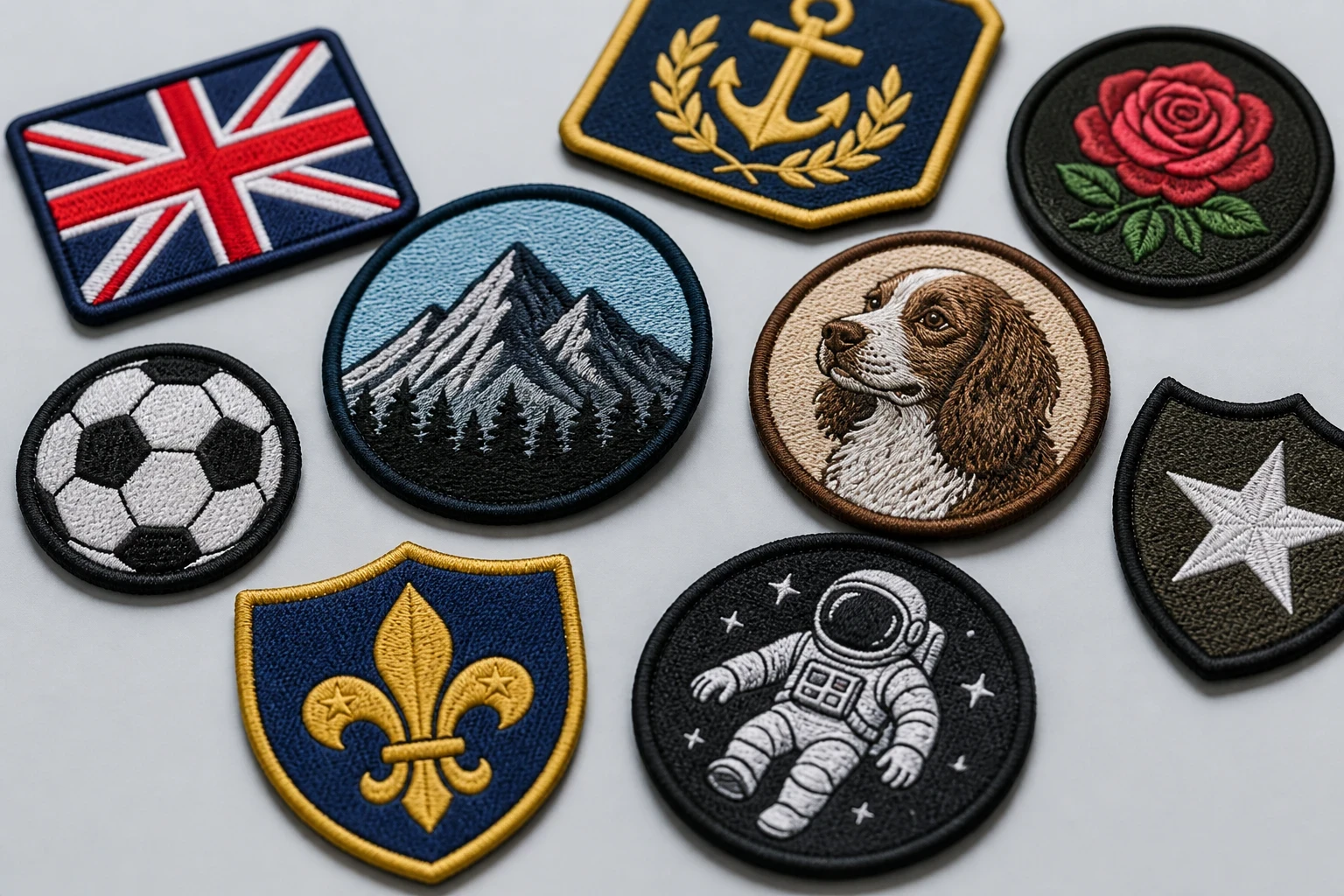
Key takeaways
- Woven patches have a flatter, smoother face and are usually the better choice for small lettering, fine outlines and detailed brand marks.
- Embroidered patches have raised thread, visible stitch direction and more texture, making them a strong fit for crests, club badges and traditional uniforms.
- Both types can use sew-on, iron-on or Velcro backing, but the correct choice depends on the garment, washing routine and whether the patch will be removed.
- The Customized Patches has a 5-piece minimum per design and sends a free digital mockup usually within 12 hours; production begins only after approval.
Woven patches are usually the right choice for small logos, fine lettering and a smooth, flatter finish. Embroidered patches are usually better for raised texture, bold crests and the traditional stitched look seen on club jackets and uniforms. The best option depends on the artwork, garment, size, backing and how the patch will be used.
At The Customized Patches, we quote for football clubs, cadet units, hospitality polos, biker vests, school blazers and business workwear across the United Kingdom. Each design has a 5-piece minimum. You receive a free digital mockup usually within 12 hours, and we produce only after you approve the details.
Woven patches and embroidered patches at a glance
The simplest distinction is surface finish. Woven patches are made by weaving finer threads closely together, so the face looks more even and can hold small details clearly. Embroidered patches are built with stitched thread over a base, creating a more visible, raised surface with a recognisable badge texture.
Neither construction is automatically better. A small hospitality logo may look untidy if it is forced into heavy embroidery, while a large football crest can look underwhelming if it loses the depth and stitch character people expect from an embroidered badge. The table below gives a sensible starting point rather than a fixed rule.
| Feature | Woven patches | Embroidered patches |
|---|---|---|
| Surface | Flat or lightly textured, with a smooth woven face | Raised thread with visible stitch direction and texture |
| Fine detail | Strong choice for small letters, narrow lines and detailed symbols | Works best with simplified shapes and lettering that has room to breathe |
| Visual character | Clean, precise and similar to a high-detail fabric label | Traditional, bold and tactile, with a classic crest appearance |
| Large solid areas | Even and controlled, though less dimensional | Rich and textured, especially on broad lettering or bold shapes |
| Typical uses | Brand marks, event badges, small logos, labels and detailed artwork | Sports crests, school badges, club emblems, uniforms and statement patches |
| Backing choices | Sew-on, iron-on or Velcro can be specified | Sew-on, iron-on or Velcro can be specified |
| Main trade-off | Less raised texture and a flatter appearance | Less suitable for very small details and dense tiny lettering |
How the two patch constructions differ
Woven construction uses fine threads interlaced across the patch face. That gives the design a compact surface, which is why small text and close colour changes often remain easier to read. The result is not printed ink, but it can look more like a fabric label than a heavily stitched badge.
Embroidered construction uses thread stitched into a base fabric. Depending on the coverage and design, the thread can sit visibly above the ground, giving the patch its familiar raised finish. You can see stitch direction in broad areas, and that is part of the character rather than a fault.
Why small details can favour woven construction
A woven patch can be useful when a logo includes a thin outline, compact wording or a small icon inside a larger mark. The close weave leaves fewer obvious gaps between stitches, so the eye reads the design as a more continuous surface. This does not mean every tiny design will reproduce perfectly; size and artwork still matter.
If your artwork has text below about 0.15 inches high, narrow gaps or several colours meeting in one small area, the mockup is the point at which those risks should be checked. We may recommend enlarging a word, thickening a line or removing a detail rather than promising a result the finished patch cannot hold.
Why embroidery still suits bold badges
Embroidery gives a football club crest, cadet insignia or biker emblem a physical presence. Merrowed borders can frame a traditional shape, and raised thread helps the badge stand out on a dark jacket or heavy fleece. The stitch direction can also add visual movement to lettering and symbols.
The compromise is that very fine artwork may need simplifying. A detailed illustration with tiny facial features, narrow internal lines and several small words can become crowded in embroidery. For a large back patch, however, that same construction may be exactly what gives the design the weight it needs.
Which option suits your project?
Start with the job the patch needs to do, not the name of the material. A woven patch can make sense for a company logo on a polo, a production label on a bag or a detailed event emblem. Embroidery is often the natural fit for a school blazer badge, team crest or club jacket where texture is part of the expected appearance.
- Choose woven construction if the design contains small lettering, fine linework, close colour changes or a compact logo.
- Choose embroidered construction if the patch needs raised texture, visible stitch character or a traditional uniform finish.
- Consider woven for a small chest patch where a heavy raised surface could overpower the garment.
- Consider embroidery for a large sleeve, chest or back crest where depth helps the design read from a distance.
- Ask about a different construction if the design needs a genuinely flat, photographic or full-colour surface; printed patches may be more suitable.
- Use 3D embroidered patches only when raised foam lettering is a deliberate part of the design rather than a substitute for readable small detail.
The garment can change the answer. A woven badge may sit neatly on a lightweight nylon shell, while a heavy embroidered crest may suit a wool coaches jacket. On a Velcro panel, either construction can work, but the hook backing, patch edge and panel dimensions need to be checked together.
Detail, colour and readability at real patch sizes
A logo that looks clear on a laptop can become difficult to read at 2.5 inches wide. This is particularly common with sponsor marks, school mottos and club names placed around a crest. Woven patches generally give the designer more room to retain small detail, but the lettering still needs enough physical height to reproduce.
Colour choice matters too. Two shades that look distinct on an illuminated screen can appear close when converted to thread. A dark navy outline on black fabric may lose contrast, while a pale yellow thread can look different against white, royal blue or red. The mockup should show the intended contrast and not just the artwork placed on a blank page.
Borders and edges
A border gives the patch a defined edge and helps it sit neatly on the garment. A merrowed crest has a rounded overlocked edge and is familiar on many traditional embroidered badges. Woven patches can also have a stitched edge, but their flatter face often creates a cleaner label-like profile.
Not sure whether thread density or woven detail will hold your logo? Send the artwork and garment information to compare both directions on a free digital mockup usually supplied within 12 hours.
GET A FREE MOCKUPIrregular shapes need more care than simple circles or rectangles. Deep notches, narrow points and tiny cut-outs can affect the border and the way the patch is finished. If the outline is essential to the brand mark, show it clearly in the original artwork rather than relying on a low-resolution screenshot.
Garments, backing and real-world wear
The backing is not a minor extra. It decides how the patch is attached and how easy it is to replace. Sew-on is the most dependable option for long-term use, especially on jackets, workwear and garments that go through regular washing. Iron-on can be convenient, but it needs a suitable heat-tolerant fabric and correct application.
- Nylon shells can be sensitive to heat, so do not assume an iron-on backing is suitable without checking the garment care label.
- Wool coaches jackets and heavy varsity-style garments usually suit sew-on attachment, especially for larger badges.
- Velcro panels work well for removable unit identifiers, event roles and kit that needs to be changed between users.
- School blazers often need a secure sew-on badge because the garment may be worn and washed repeatedly throughout term.
- Hospitality polos may suit a smaller woven or embroidered chest patch, with size kept modest so the garment still hangs naturally.
- Biker vests and leather jackets need a strong attachment plan; see the biker and motorcycle club patches hub for project-specific considerations.
An iron-on patch that peels after a dryer cycle is usually not evidence that one patch type is useless. It may point to unsuitable fabric, incorrect heat, insufficient pressure or repeated washing conditions. If the garment will be tumble-dried, exposed to rain or worn during physical work, say so before the backing is selected.
Artwork preparation for woven and embroidered patches
Vector artwork is helpful because it keeps edges and lettering clear while the design is sized. A high-resolution PNG can also work if it is clean, but a photograph of an existing badge or a small social media image may hide the details needed for production. Send the original logo where possible, along with any brand colour references.
- Remove unnecessary shadows, gradients and tiny decorative marks unless they are central to the identity.
- Check the smallest text and decide if it must remain in the patch or can be removed at production size.
- Make outlines thick enough to remain visible after the design is converted into thread.
- Confirm the finished width and height in inches, including the border if the shape is irregular.
- State whether the patch will be sewn, ironed or attached to Velcro.
- Review the mockup on both a light and dark garment if the patch may be used on more than one colour.
If your design is primarily a detailed label, the woven patches hub gives a useful starting point. If you want a traditional raised badge, compare the options through embroidered patches before settling on size and backing. For a smooth image-led finish, printed patches may be the more honest answer; printed is flatter, and that is the point.
Ordering, quantities and UK lead times
A good quote needs more than a logo attachment. Include the quantity per design, finished size, shape, backing, garment type, preferred construction and any required date. If you have several designs, list them separately because each design is assessed and produced as its own patch.
The Customized Patches has a 5-piece minimum per design. That works for a small test run, a five-person club committee or a new brand checking how a badge looks before ordering a larger batch. The minimum applies to each design, so five of one crest and five of another are normally treated as two separate designs.
- Send the artwork and explain where the patch will be used.
- Confirm the required size in inches and whether the measurements include the border.
- Choose woven or embroidered construction, or ask for both to be shown on the mockup.
- Specify sew-on, iron-on or Velcro backing.
- Check the free digital mockup, usually returned within 12 hours.
- Approve the final artwork before production begins.
- Allow time for making, quality checking and UK-wide shipping rather than planning around the mockup time alone.
A free digital mockup usually arrives within 12 hours, but that is not the same as the complete production lead time. The actual schedule depends on the quantity, design complexity, backing and current production queue. If the patches are for a match, launch, school term or event, give the date at the first quote rather than after approval.
Care, durability and common failure points
Both woven and embroidered patches can provide long service when they are matched to the garment and attached correctly. The thread construction itself is only one part of the result. Washing, drying, abrasion, sunlight, adhesive, heat and the quality of the attachment all affect how the patch looks over time.
For regular washing, follow the garment instructions and avoid assuming that a patch should be treated like loose fabric. Turn the garment inside out if appropriate, use a suitable wash temperature and be cautious with tumble drying. A sewn patch is normally easier to trust for demanding workwear than an iron-on patch on a fabric that flexes or sheds heat.
Problems we ask about before production
- Will the patch be washed every week or only used for occasional events?
- Will it be exposed to rain, outdoor work, motorcycle travel or heavy rubbing?
- Is the garment stretchy, waterproof, coated or heat-sensitive?
- Does the patch need to be moved between jackets or kit bags?
- Will the badge sit over a seam, pocket, zip or curved section?
- Does the customer expect a flat logo, or is a raised traditional finish required?
A patch placed across a seam can lift at the edge because the garment does not lie flat. A small iron-on badge can also fail if it is applied over a water-resistant finish. These are placement and application issues, not reasons to select woven or embroidered construction without checking the actual garment.
Cost and value for UK buyers
The price of a custom patch depends on more than whether it is woven or embroidered. Quantity, finished size, number of designs, backing, border, artwork complexity and production requirements all affect the quote. A larger embroidered back patch uses more material and work than a small woven chest label, while five pieces usually have a different unit cost from a larger run.
Name sew-on, iron-on or Velcro on the quote and tell us whether the garment is nylon, wool, leather or standard cotton. We will show the proposed construction and backing on a free digital mockup usually within 12 hours, with production starting only after approval.
GET A FREE MOCKUPIt is sensible to compare the result rather than chasing the lowest initial figure. A cheap-looking patch can create extra cost if the lettering has to be remade, the backing fails on the garment or a club needs to replace badges after one season. Ask for the full specification in writing: construction, size, backing, quantity, mockup and delivery arrangement.
Examples from clubs, uniforms and businesses
For a football club, an embroidered crest on a jacket can give the traditional depth supporters expect. If the same club has a sponsor logo with narrow lettering for a small training top, a woven version may preserve the wording more clearly. Some organisations choose both, using embroidery for the main crest and woven patches for smaller identifiers.
Cadet units often need clear identifiers that can be attached to different kit. Velcro-backed patches may be more useful than a permanent sew-on badge, particularly where the panel is already built into the garment. A school may prefer sewn embroidered badges for blazers, while a trip or house event might use smaller woven patches on bags.
Hospitality businesses usually need branding that looks tidy on a polo, apron or overshirt without becoming too heavy. A modest woven logo can suit a compact chest position, while an embroidered emblem can work on a thicker jacket. For biker clubs, the size and edge finish often matter as much as the thread type because the patch must sit properly on a vest or leather jacket.
Brands selling merchandise should also think about customer expectations. A woven patch can resemble a detailed label and pack neatly on caps, bags and lighter garments. An embroidered patch gives customers a more tactile badge that can feel right for outdoor clothing, workwear and heritage-style products. Other material routes, such as PVC patches or leather patches, may suit a technical or premium product better.
A practical decision checklist
If you are still undecided, answer the questions below before requesting a quote. There is no need to choose from a product name alone. A clear brief lets the production team identify the construction that gives the artwork and garment the best chance of working together.
- Is the artwork detailed enough that small text and narrow lines must remain visible?
- Do you want a smooth fabric-label appearance or raised stitched texture?
- What is the finished size in inches?
- Will the badge be worn on cotton, polyester, nylon, wool, leather or a coated technical fabric?
- Will it be sewn permanently, ironed on or removed with Velcro?
- How often will the garment be washed or dried?
- Is there a fixed UK delivery date?
- Do you need one design or several designs, each with at least five pieces?
- Would comparing a woven and embroidered mockup make the decision easier?
For more detail on selecting a woven construction, read How to Choose the Right woven patches for Your Brand and The Complete Guide to Woven patches in 2026. If your brief is mainly about the difference between raised badge types, the related guide on The Difference Between varsity chenille patches UK and embroidered patches, Explained covers a separate textured option.
The straightforward answer
Choose woven patches for fine detail, compact logos, small lettering and a flatter finish. Choose embroidered patches for raised thread, bold crests, traditional uniforms and a visibly textured badge. If the design sits between the two, request both versions on a mockup and judge them at the actual size on the intended garment.
The Customized Patches serves customers across the United Kingdom with a 5-piece minimum per design. A free digital mockup is usually supplied within 12 hours, and production begins only after the artwork and specifications have been approved.
Frequently asked questions
Are woven patches better than embroidered patches?
Neither is always better. Woven patches are usually better for small lettering, fine lines and smooth detailed logos. Embroidered patches are usually better for raised texture, bold crests and traditional uniform styling. The garment, size, backing and washing conditions should be considered before choosing.
What are woven patches used for?
Woven patches are used for brand logos, event badges, labels, club identifiers, bags, caps, workwear and garments where small details need to remain clear. Their flatter, closely woven face suits compact artwork. The Customized Patches can produce them from a 5-piece minimum per design.
Do woven patches last as long as embroidered patches?
Both can last well when the construction and backing suit the garment. Long-term performance depends on attachment, washing, heat, abrasion and the fabric itself. Sew-on backing is often the safer choice for demanding use. An iron-on patch can peel after a dryer cycle if heat, pressure or the garment fabric is unsuitable.
Can woven and embroidered patches use Velcro backing?
Yes, either construction can be specified with Velcro backing where the patch needs to be removed or exchanged. This is useful for some cadet, security, event and outdoor kit applications. The hook-and-loop panel must match the patch dimensions and the garment should have enough flat space for secure attachment.
How small can lettering be on woven patches?
There is no single safe size for every typeface, colour combination or finished patch. Small lettering generally has a better chance in woven construction than in heavy embroidery, but it still needs enough physical height and contrast. The free digital mockup, usually supplied within 12 hours, is used to check the proposed size before production.
What is the minimum order for custom patches in the UK?
The Customized Patches has a 5-piece minimum per design. Five pieces of one logo and five pieces of a different logo are treated as separate designs. You receive a free digital mockup usually within 12 hours, and production starts only after approval of the artwork, size, construction and backing.
Ready to produce custom patches for your UK team or brand?
GET A FREE MOCKUP