
How to Choose the Right woven patches for Your Brand
Choose woven patches by checking four things first: the detail in your artwork, the finished size, the garment they will go on and the backing you need. Woven patches suit small lettering and clean logos better than raised embroidery. The Customized Patches offers a free digital mockup, usually within 12 hours, with a 5-piece minimum per design.
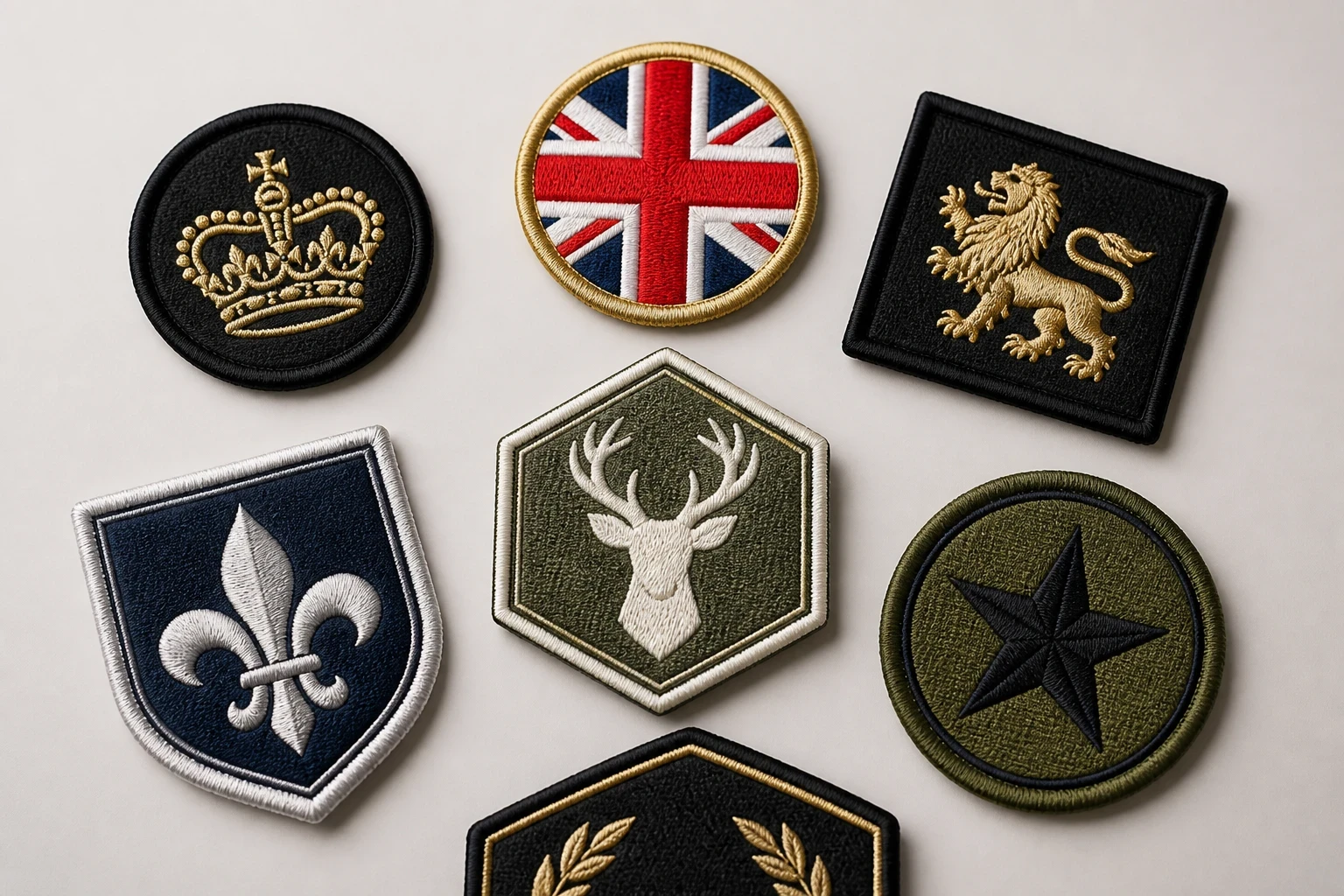
Key takeaways
- Woven patches are a strong choice for clean logos, fine lines and small lettering because their surface is flatter and more tightly detailed than standard embroidery.
- Choose the finished size from the smallest important detail, not from the outside shape alone. Tiny type can still become unreadable on a patch under 2 inches wide.
- Backing should match the garment and how often it will be washed: sew-on is dependable, iron-on is convenient, and Velcro is best for removable identification.
- The Customized Patches has a 5-piece minimum per design and normally supplies a free digital mockup within 12 hours before production begins.
The right woven patches depend on your artwork, the garment, the finished size and the way the patch will be used. Pick woven patches for clean logos, fine lettering and a flatter face; choose standard embroidery when you want visible thread texture and a more traditional raised finish.
The Customized Patches supplies UK customers with a free digital mockup, usually within 12 hours. There is a 5-piece minimum per design, and production starts only after you have checked and approved the artwork, colours, size and backing.
What makes woven patches different?
Woven patches are made by weaving fine threads tightly across a backing material. The result is a relatively smooth patch face where lettering and narrow shapes can sit neatly. That makes them useful for brand marks, department names, club identifiers and designs that would look crowded in thicker embroidery.
The finish is not the same as embroidery. Embroidered patches use stitched thread to create texture and height, while woven patches are flatter and more graphic. Printed patches are flatter still; that is the point when a photograph, tonal gradient or very fine image matters more than a textile texture.
I have quoted patches for football clubs, cadet units, hospitality polos, biker vests and school blazers. The common mistake is choosing from a screen image alone. A logo that looks clear at 8 inches wide may lose its smallest letters at 2.5 inches, especially once it is attached to a dark or textured garment.
When woven construction is a good fit
- Small business logos on workwear, caps and bags.
- Club badges with compact lettering and simple symbols.
- Department or role patches for teams and organisations.
- Brand marks that need a clean, relatively flat appearance.
- Short production runs where you need 5 or more pieces per design rather than a large bulk order.
A woven patch is often a sensible middle ground. It can show finer lettering than a heavily stitched design, while still giving the garment a proper textile badge rather than a flat transfer. If you are comparing surface finishes, the guides on woven patches: Everything UK Buyers Need to Know and The Complete Guide to Woven patches in 2026 are useful next steps.
Match the patch to the artwork, not the other way round
Start with the parts of the logo that must remain readable. That might be a club name, a two-letter monogram, a thin mountain outline or a small mascot eye. If the patch is being worn at arm's length, detail that only works when enlarged is not doing useful work.
Woven patches can handle fine lines well, but there is still a practical limit. Lettering needs enough height to hold its shape, and narrow gaps can close when the artwork is reduced. A production-ready vector file helps, but a vector file does not make an unsuitable layout physically larger.
Colours and contrast
Use contrast that survives the real garment. Navy text on black fabric may be part of a brand palette, but it is difficult to read under indoor lighting. A strong light-and-dark relationship usually works better than adding many near-identical shades.
Thread colours are not the same as colours on a phone display or in a CMYK proof. Send the preferred colour references with the artwork and check the digital mockup carefully. If exact photographic shading is the priority, compare printed patches as well; a printed finish can reproduce tonal detail more directly, although it has a different surface and wear profile.
Shape, border and edge finish
The outer shape affects how the patch sits on clothing. A simple rectangle is efficient for names and role identifiers. A shield suits many sports and school badges. A circular patch can work well for clubs, but small text around a curve needs enough room to avoid looking pinched.
Ask whether the border should be part of the artwork or a separate edge treatment. A merrowed crest has a raised stitched edge that gives a classic badge appearance, but it also adds visual weight and may not suit a very modern flat logo. The border colour should normally contrast with the garment, especially on nylon shells where a dark edge can disappear.
| Requirement | Woven patches | Embroidered patches | Printed patches |
|---|---|---|---|
| Surface | Flatter woven face with fine thread detail | Raised stitched texture and visible thread coverage | Smooth printed face with the least textile texture |
| Small lettering | Often a strong choice when the lettering is designed for the finished size | Can work, but thick thread may crowd very small type | Can reproduce small detail, subject to artwork and print quality |
| Best visual style | Clean, compact and graphic | Traditional, tactile and bold | Illustrative, tonal or photographic |
| Good garment examples | Polos, jackets, caps, bags and uniforms | Football shirts, school blazers, biker vests and workwear | Promotional clothing, detailed illustrations and event merchandise |
| Main trade-off | Less raised texture than embroidery | Less suitable for very fine detail at small sizes | Flatter appearance and different long-term wear behaviour |
There is no universal winner in that table. Printed is flatter; that is the point. Embroidery is more textured; that is often why a football club or school chooses it. Woven patches are useful when you need a neat textile badge with detail that remains controlled rather than bulky.
Choose the finished size from the garment
Measure the area available on the actual garment rather than estimating from a digital preview. A chest badge on a polo may be around 3 to 4 inches wide, while a small sleeve identifier may need to be closer to 2 inches. A back patch, bag panel or large club crest can go considerably wider.
The smallest important detail should guide the size. If the club name is the key information, make sure it can be read without holding the garment close to the face. If the main purpose is recognition from a distance, simplify the text and give the symbol more room instead of forcing every part of the original logo into a small patch.
Common size decisions in real orders
- A hospitality company may use a compact 3-inch logo on a polo so it does not compete with a name badge.
- A cadet unit may need a wider rectangular identifier so several words remain readable on a uniform sleeve.
- A school blazer crest often needs enough width for the outer border and badge lettering without making the centre emblem too small.
- A biker vest may use a large back design and separate smaller front or rocker patches, each planned for its own position.
- A Velcro panel may need a measured patch size rather than a standard nominal size, because the usable hook-and-loop area can be smaller than the panel itself.
Do not forget that the border and backing add to the finished footprint. A patch that is specified as 3 inches wide may need a little more surrounding clearance on a seam or curved pocket. If the patch is going on a narrow nylon sleeve, measure across the sleeve while it is laid flat and consider how the fabric bends.
Pick the backing for the garment and the wash routine
Backing is not a minor option to leave until the final line of the quote. It determines how the patch is attached and how easy it is to remove or replace. The same woven design may need sew-on backing for a long-term uniform, iron-on backing for a suitable promotional garment, or Velcro for a role patch that changes.
Not sure whether woven, embroidered or printed will hold your logo at the intended size? Send the artwork and garment details for a free digital mockup, usually within 12 hours, so you can compare the result before production.
GET A FREE MOCKUPSew-on backing
Sew-on is the dependable choice for regular use. It suits school blazers, work jackets, football kit bags and biker vests where the patch is expected to stay in place. Stitch around the border with a matching or contrasting thread, depending on the look you want.
Sew-on is especially useful for nylon shells and textured wool coaches jackets, where heat may be risky or unreliable. It takes more time than applying an adhesive-backed patch, but that extra step is often worthwhile for garments that will be washed, pulled on and off, or exposed to rain.
Iron-on backing
Iron-on backing is convenient on compatible cotton or polycotton garments with a firm, smooth area. Follow the application instructions and allow the adhesive to cool fully. Even then, iron-on is not suitable for every nylon shell, waterproof finish or heat-sensitive fabric.
The familiar failure is a patch that looks fine on day one and peels after a dryer cycle. Heat, steam, repeated washing and flexing can weaken the bond. For a uniform or garment that must stay presentable over a long period, sew around an iron-on patch as well, or choose sew-on from the start.
Velcro backing
Velcro is the practical option for removable identification. It is common on tactical-style clothing, event crews, security clothing, outdoor equipment and team panels where the same garment may carry different names or roles. The patch needs to match the hook-and-loop area accurately.
Allow for the way the panel is stitched to the garment. A patch that overhangs a curved Velcro panel can catch on other clothing or lift at the corners. Tell us the panel's usable width and height rather than only saying that it is a standard panel.
Think about the garment before approving the design
A patch is part of a garment system. A woven badge on a smooth hospitality polo will read differently from the same badge on a heavy wool jacket. Texture, stretch, seams, pockets, zips and lining all affect placement and attachment.
Nylon shells deserve particular care. They can be slippery, lightweight and heat-sensitive, and a waterproof finish may not welcome an iron-on adhesive. Sew-on backing is usually the safer discussion for this type of garment, but the final choice should consider the specific jacket and how it is cleaned.
Placement checks
- Keep the patch clear of a zip, pocket opening or heavy seam where possible.
- Check that the badge does not sit across a fold that will distort the lettering.
- Leave enough room around a chest logo for the garment to be worn with a name badge or lanyard.
- For caps, confirm the crown shape and avoid placing important text across a curved seam.
- For school blazers, check the placement against the existing school badge, tie and pocket position.
- For biker vests, measure both the back panel and front chest area because leather thickness and seams can affect sewing.
If you want more surface texture, compare the design with embroidered patches. For a raised letter or athletic look, 3D embroidered patches may be worth considering. A chenille badge has a different, softer varsity character; see chenille patches if that is closer to the identity you want.
Order quantity, pricing and lead time in the UK
The Customized Patches has a 5-piece minimum per design. That means five identical patches count as one design run; changing the wording, shape, colour layout or backing can make it a separate design. This matters for clubs ordering several role badges or businesses ordering different department names.
Pricing depends on the design, size, quantity, backing and finish rather than the word 'patch' alone. A simple 2-inch woven logo and a large multi-colour back patch are different production jobs. Send the quantity you genuinely need, plus any likely repeat order, so the quote reflects the project rather than a guess.
What to send with a quote request
- The logo or artwork file, ideally as vector artwork or the clearest high-resolution file available.
- The finished width and height in inches, or a photograph showing the available garment area beside a ruler.
- The garment type, such as polo, football shirt, school blazer, nylon shell, wool jacket, cap, bag or Velcro panel.
- The preferred backing: sew-on, iron-on, Velcro or another stated requirement.
- The quantity for each design, with separate quantities listed for separate versions.
- Any colour references, spelling requirements, border preferences and delivery postcode in the United Kingdom.
A free digital mockup is usually supplied within 12 hours. Check the design at the intended size, not only as a large screen image. The mockup is the point where you can spot a missing letter, weak contrast, a crowded border or a backing that does not suit the garment.
Approval comes before production
Production begins only after approval. That protects both sides: you have a chance to confirm the artwork, and the production team has a clear reference for the finished patch. Do not approve from memory or from an earlier email if the size, backing or wording has changed.
For UK-wide shipping, give the delivery address and any date the patches are needed by at the quotation stage. A school presentation, football tournament, trade event or club launch may leave little room for a remake if the design is approved late. It is better to discuss the date early than to assume every order has the same turnaround.
A simple decision process for your brand
The following process works for a small business ordering five logo patches and for a club ordering several dozen. It keeps the conversation practical and prevents the usual late change from 'embroidered' to 'woven' after the artwork has already been prepared.
- Define the job: write down the garment, wearer, use, wash routine and whether the patch must be removable.
- Check the artwork: identify the smallest text, narrowest line and most important symbol. Remove detail that cannot remain clear at the intended size.
- Measure the position: use the real chest, sleeve, pocket, cap or panel rather than estimating from a web image.
- Compare the finish: choose woven for a flatter detailed badge, embroidery for raised texture, or printed for very fine tonal imagery.
- Choose the backing: use sew-on for dependable long-term attachment, iron-on only on compatible garments, and Velcro for removable patches.
- Request the mockup: provide the artwork, dimensions, garment information, colours, quantity and delivery details.
- Proofread and approve: check spelling, colour contrast, border, size and backing. Production starts only after approval.
- Plan application and care: follow the attachment instructions and avoid assuming an iron-on patch can tolerate every dryer, wash cycle or fabric.
Name sew-on, iron-on or Velcro on the quote and include the garment type. We will show the proposed backing on a free digital mockup, usually within 12 hours, and production will follow only after your approval.
GET A FREE MOCKUPThis is also where a supplier's questions are useful. If someone asks about the garment, placement and backing rather than quoting from the logo alone, they are checking whether the finished patch will work in use. That conversation can prevent the iron-on-on-nylon problem, the unreadable small type problem and the patch-that-covers-the-pocket problem before production.
Examples by customer type
For a football club, woven patches can suit a clean sponsor mark, staff identifier or supporter merchandise badge. A large traditional crest may look better with embroidery, particularly if the club wants visible thread texture. Consider the playing kit fabric separately from the club shop garment; the right backing for a shirt is not automatically right for a heavy jacket.
For a cadet unit or outdoor team, readability and attachment usually matter more than decorative texture. A rectangular woven patch with clear lettering and sew-on or Velcro backing may be practical, especially where garments are washed frequently or identifiers change between activities.
For hospitality polos, a relatively flat woven logo can sit neatly on the chest without catching on aprons or lanyards. Keep the design compact and check the contrast against the shirt colour. A dark logo on a dark polo may technically match the brand guide but fail the everyday visibility test.
For a biker vest, the choice is often more traditional. Large embroidered or merrowed crests can provide the weight and texture expected on leather, while smaller woven patches may work for a clean front identifier or a detailed side design. Measure around seams, studs and existing patches before deciding.
For school blazers, check the badge size against the pocket and blazer colour. A neat woven crest can show small wording, but the design still needs breathing room. If the school wants a soft varsity appearance rather than a compact woven badge, compare Varsity chenille patches UK Sizing and Backing Options Explained.
Common mistakes to avoid
The first mistake is treating the supplied logo as finished patch artwork. Brand files are often designed for websites, invoices or large signage, not for a 2-inch textile badge. A production version may need simplified wording, thicker lines or a better contrast while keeping the recognisable brand elements.
The second is choosing backing after the garment has been bought. An iron-on adhesive that works on a cotton tote may not be suitable for a waterproof nylon shell. A sew-on patch that is perfect for a blazer may not be convenient for a role badge that needs to be swapped weekly.
- Ordering several designs at the 5-piece minimum without listing them separately.
- Approving a mockup without checking the spelling at the finished size.
- Assuming screen colours are an exact match for woven thread colours.
- Putting a patch across a seam, zip, pocket or curved panel.
- Using an iron-on patch on a heat-sensitive garment without checking the fabric.
- Expecting a detailed photographic image from a woven construction.
- Leaving the delivery date until after artwork approval.
If you are unsure which construction suits the job, compare the options rather than forcing the original logo into one method. The embroidered patches product hub covers the more textured route, while PVC patches and leather patches offer very different surfaces for outdoor, workwear and lifestyle projects.
How to make the final choice
Choose woven patches when your priority is a clean, relatively flat textile badge with controlled detail, compact lettering and a professional finish across uniforms, polos, bags or club clothing. Make the decision from the garment and finished size, not from the logo file in isolation.
Then confirm the backing, quantity and delivery date. The Customized Patches can prepare a free digital mockup, usually within 12 hours, for UK customers. The order minimum is 5 pieces per design, and nothing is produced until the mockup and specifications have been approved.
If you already know the design but need a quote, use the free mockup quote. If you are comparing different patch types for a club or clothing range, the biker and motorcycle club patches hub and UK city pages can help you find a suitable route for the garment and delivery requirements.
Frequently asked questions
What are woven patches best used for?
Woven patches are best for clean logos, fine lettering, compact club badges, uniforms, polos, caps, bags and removable identifiers. Their relatively flat face suits designs where controlled detail matters more than raised thread texture. They are not the best choice for photographic shading or a deliberately thick chenille finish.
What is the minimum order for woven patches?
The Customized Patches has a 5-piece minimum per design. Five identical patches count as one design. If the wording, artwork, dimensions, shape or colour layout changes, it may need to be treated as a separate design, so list each version clearly when requesting a quote.
How quickly can I see a woven patch mockup in the UK?
The Customized Patches usually supplies a free digital mockup within 12 hours. Send the artwork, preferred dimensions in inches, garment type, backing, quantity and any colour information. Production starts only after the mockup and specifications have been approved.
Are woven patches better than embroidered patches?
Neither is automatically better. Woven patches are generally suited to a flatter appearance and fine, controlled detail. Embroidered patches provide visible stitched texture and can suit traditional football crests, school blazers and biker vests. Compare the surface, size, garment and intended use before choosing; see The Difference Between varsity chenille patches UK and embroidered patches, Explained for a related comparison.
Which backing should I choose for woven patches?
Choose sew-on backing for a dependable long-term attachment, particularly on nylon shells, wool coaches jackets, school blazers and garments washed regularly. Choose iron-on only where the fabric and care routine are suitable. Choose Velcro when the patch must be removed or exchanged, such as a role identifier on a compatible panel.
Can woven patches go on nylon jackets?
They can, but the backing and application method need care. Nylon shells may be slippery, lightweight or heat-sensitive, and a waterproof finish can make iron-on attachment unreliable. Sew-on is often the safer option, subject to the specific garment. Supply a photograph or garment details so the backing can be discussed before approval.
Ready to produce custom patches for your UK team or brand?
GET A FREE MOCKUP