
Sublimation printed patches UK: A Worked Example for a UK Brand
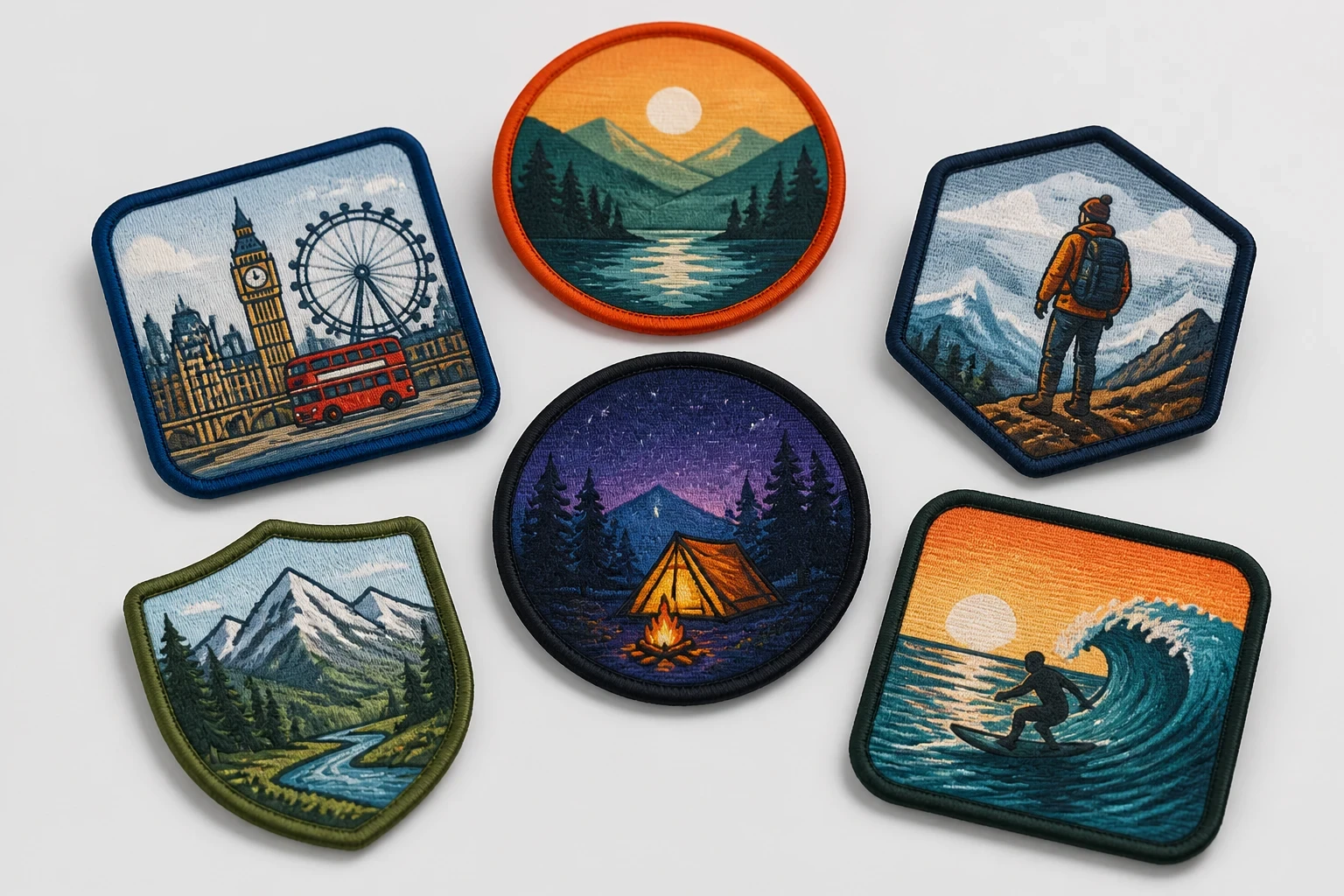
In this illustrative worked example, a UK lifestyle brand used sublimation printed patches to reproduce a detailed illustrated logo on work jackets and event garments. The flatter printed surface suited small text, gradients and photographic detail better than heavy thread. The Customized Patches supplies a free digital mockup usually within 12 hours, produced only after approval, with a 5-piece minimum per design.
Key takeaways
- Sublimation printed patches suit gradients, illustrated scenes, small lettering and other artwork that can lose detail in dense thread.
- The worked example brand used a flatter printed face because the patch needed to sit neatly on jackets, event bags and lighter garments.
- A free digital mockup from The Customized Patches is usually supplied within 12 hours, and production starts only after approval.
- The minimum order is 5 pieces per design, so a small UK brand can test a patch without committing to a large run.
Please note: this is an illustrative worked example, not a report on a real customer. The brand, garments and decisions below are a hypothetical scenario based on common UK patch briefs, written to show the questions worth asking and the choices involved. No customer results, sales figures or reviews are claimed.
This sublimation printed patches UK worked example follows a UK lifestyle brand that needed a detailed logo patch for jackets, bags and event clothing. It chose sublimation printing because the artwork contained gradients, fine outlines and small lettering that would have been harder to reproduce cleanly in thread. The result was a flatter patch with a crisp, full-colour face that matched the brand's artwork more closely.
The order was handled by The Customized Patches for delivery across the United Kingdom. The brand sent its artwork and garment details, received a free digital mockup usually within 12 hours, checked the size and backing, and approved the design before production began. The minimum was 5 pieces per design, which made the first run realistic for a small business rather than a bulk-only purchase.
The brief: a recognisable patch for a growing UK brand
The customer was a small UK clothing and events brand with a hand-drawn badge as its main mark. The badge showed a landscape illustration, a two-colour border, a short name and a date line used for seasonal releases. It was not a simple block logo. There were thin lines around the illustration, several colour changes and a small amount of shading.
The first application was a lightweight nylon shell used by staff at outdoor events. The brand also wanted to put the same design on cotton overshirts and canvas tote bags. That mix mattered. A thick, heavily textured crest could have looked out of place on the nylon shell, while a paper-flat transfer would not have given the garment the separate identity the customer wanted.
- The patch needed to reproduce a detailed illustrated mark rather than a basic monogram.
- The finished size had to stay close to 3.5 inches wide so it would not dominate a jacket chest.
- The design had to work on a dark navy nylon shell, an off-white overshirt and a natural canvas bag.
- The customer wanted a backing that could be sewn onto several garment types.
- The first run needed to be small enough to test at events before placing a larger repeat order.
This is the sort of brief UK teams, clubs, hospitality businesses and independent brands often have. A football club may need a printed sponsor panel with a gradient. A cadet unit may ask for a detailed location badge. A hospitality group may want a discreet chest mark on polos. The correct construction depends on the artwork, garment and use, not simply on which finish looks attractive in a product photograph.
Why sublimation printed patches UK suited the artwork
Sublimation printing puts the artwork onto the patch face rather than building the image from individual thread areas. That gives the designer more freedom with gradients, fine lines, illustrated detail and photographic-style colour changes. It also keeps the face relatively flat. Printed is flatter; that is the point when the patch needs to sit neatly on a windproof or a lightweight shirt.
For this brand, a stitched finish would have changed the appearance of the badge. Thread adds texture and a visible raised surface, which can be exactly right for a traditional club crest or a merrowed crest on a wool coaches jacket. It is less suitable if a thin line, tiny letter or shaded illustration needs to remain visually close to the supplied artwork.
| Requirement | Choice for the worked example | Reason |
|---|---|---|
| Artwork | Sublimation printed face | Handled gradients, thin outlines and small details without converting every area into heavy thread. |
| Finished width | About 3.5 inches | Large enough for the illustration and lettering, while staying proportionate on a jacket chest. |
| Shape | Rounded rectangle with a defined border | Followed the supplied badge artwork and gave the edge a clean visual boundary. |
| Backing | Sew-on | Worked across nylon shells, cotton overshirts and canvas bags, with the application method controlled by the customer. |
| Initial quantity | 5 pieces per design minimum | Allowed the brand to test placement and customer response before a larger order. |
The choice was not a claim that sublimation is always superior. A biker club wanting a traditional back panel may prefer a dense embroidered construction, while a streetwear label may want a tactile 3D embroidered patch. A café with a simple one-colour mark might choose standard embroidery. The worked example works because the production method matched the specific artwork and clothing.
Brands comparing finishes can also review printed patches alongside woven patches. Woven construction can give very fine lettering a tidy, textile surface, while sublimation is often more flexible for continuous colour and image-like artwork. For a raised rubber effect, PVC patches are a different route again, with a more solid and weather-tolerant feel.
Artwork decisions that made the finished patch work
The original logo arrived as a high-resolution digital file, but the first file was not automatically ready for patch production. It included a very fine outline and a date line that would have become difficult to read below 3 inches. The main illustration stays, the spacing around the lettering increases, and the design is checked at its proposed finished size rather than judged only on a large monitor.
Small type needs breathing room
Tiny text is a common source of disappointment. A name that looks clear at 10 inches may merge into its border at 3 inches. For this order, the customer shortened one line and made the lettering slightly bolder. That was a better solution than simply asking for more ink. Printing can reproduce detail, but the detail still needs enough physical space to remain legible on a moving garment.
Dark garments need a clear contrast plan
The navy nylon shell was the most demanding application. The patch artwork had a dark outer line, so the mockup included a light edge and a defined patch border to prevent the design disappearing against the jacket. The same face also had to look sensible on natural canvas, where too much white space would have made the mark feel weaker.
The brand approved one artwork version rather than trying to force one colour treatment across every garment. That is a useful lesson for businesses ordering teamwear. A single patch design can work on different clothing, but the contrast, edge and backing still need checking against each base fabric.
- Supply vector artwork where possible, or the largest clean image available.
- State the intended finished width in inches rather than saying only 'small' or 'large'.
- Identify text that must remain readable at the final size.
- Show the patch against the actual garment colour if the clothing is dark, patterned or textured.
- Tell our team if the patch will be washed frequently, fitted to a removable panel or used outdoors.
Not sure whether thread or ink will hold your logo best? Send the artwork and the garment details for a free digital mockup usually within 12 hours, so you can compare the face, size and border before production. A 5-piece minimum applies per design, and we produce only after approval.
GET A FREE MOCKUPOur guide to designing artwork for sublimation printed patches UK covers file preparation, line weight and colour checks in more detail. It is worth reading before a quote if several people are passing artwork around, because an old low-resolution logo can create avoidable amendments.
Backing and garment fit: the part buyers often overlook
The patch face gets most of the attention, but the backing controls how the item is attached. This customer chose sew-on because the patches were going onto nylon shells, overshirts and bags that might be worn or handled regularly. Sew-on also allowed the brand to place the patch precisely without relying on a heat press setting that could vary between garments.
Iron-on can be useful for some cotton garments and straightforward short-term applications, but it is not a universal answer. Heat, repeated washing and a tumble dryer can weaken an adhesive bond. It is common to see an iron-on patch peel after a dryer cycle when the garment was not suitable for the application. Velcro is a sensible choice for removable team identifiers or tactical-style panels, but it adds bulk and requires the garment to have a compatible loop area.
| Backing | Good fit | Points to check |
|---|---|---|
| Sew-on | Jackets, bags, wool coaches jackets, uniforms and garments used often | Allow room for stitching around the edge and check the fabric can accept a needle. |
| Iron-on | Suitable cotton or blended garments where a press or careful heat application is available | Check the care label, heat tolerance and washing routine; do not assume every nylon shell is suitable. |
| Velcro | Removable identifiers, club panels and garments already fitted with loop fabric | The loop panel must be large enough, and the finished patch will feel thicker than sew-on. |
For traditional clubwear, buyers sometimes compare a printed patch with a leather patch or an embroidered option. Leather brings a different material character and usually works best with restrained marks. Embroidery gives depth and visible stitch texture. The brand in this case wanted its artwork to remain the main feature, so the flatter printed face was the more honest fit.
What the UK brand approved before production
The approval stage covered more than a quick look at the logo. The customer checked the displayed finished size, the outside border, the backing, the intended garment colours and the position of the wording. The mockup also helped the team decide that 3.5 inches was preferable to 2.5 inches, even though the smaller size would have taken less room on the chest.
- The brand sent the artwork, preferred size and a photograph of the navy shell.
- The production team reviewed the design for small text, thin outlines and contrast.
- A free digital mockup was prepared, usually within 12 hours.
- The customer requested a slightly stronger border and a larger date line.
- The revised mockup showed the proposed face and sew-on backing against the garment.
- The customer approved the final mockup in writing.
- Production started only after approval, followed by dispatch to the UK delivery address.
That approval record matters for repeat orders. If the brand later orders the same patch for a new jacket colour, the approved mockup gives both sides a reference point. It also reduces the risk of a verbal change being missed between a marketing contact, a garment supplier and the patch manufacturer.
Customers who prefer a checklist can use 10 Questions to Ask Before Ordering sublimation printed patches UK. The useful questions are practical: what is the finished size, which backing is included, how will small lettering be handled, what happens after approval, and what quantity is needed per design?
Ordering, quantity and UK lead-time planning
The order was planned around an event date rather than placed at the last possible moment. That gave the brand time to review the mockup, confirm the garment colours and decide where the first five patches would be used. The 5-piece minimum per design made it possible to put samples on two jackets, one tote bag and two spare garments without ordering a large batch.
A mockup is not the same as a finished production sample. It is a digital representation used to agree the artwork, size, border and backing. Once the customer approves it, production can be scheduled. Lead time depends on the construction, quantity, artwork response and delivery requirements, so a UK buyer should give the event or launch date at the quotation stage rather than assuming every order follows the same timetable.
- Tell us the number of designs, not only the total number of patches.
- Confirm whether each design needs the same size and backing.
- State the UK delivery postcode and the date the patches are needed.
- Mention if the order is for nylon, wool, cotton, polyester or a Velcro panel.
- Keep enough time for artwork amendments and customer approval.
- Do not send the order to production until the displayed mockup is correct.
The brand later considered a second version for a seasonal event. Instead of quietly changing the colours, it treated that version as a separate design and requested a new mockup. That is the safer route where a colour change affects the identity of the mark. A different event date or a new sponsor line can also make a design materially different.
The result: a practical patch the brand could use again
The finished patches gave the brand a consistent mark across staff jackets, event bags and overshirts without making the clothing look like heavy workwear. The illustrated face remained clear at the chosen size, and the border separated it from the navy shell. The customer had also avoided a common ordering problem: approving a design on a white screen without seeing how the edge would sit on the actual garment.
The patch was not chosen because printed products solve every branding problem. It worked because the customer valued image detail, a flatter face, a small first order and flexibility across several garment types. A brand wanting a raised crest, a traditional thread texture or a highly tactile finish should compare alternatives before deciding.
| If your priority is... | Start by considering... | Why |
|---|---|---|
| Gradients and illustrated detail | Sublimation printed patch | The printed face can reproduce continuous colour changes and image-like artwork. |
| Visible thread texture and a classic badge feel | Embroidered patches | Thread builds a raised textile surface and suits many club, uniform and workwear marks. |
| Very fine text with a woven appearance | Woven patch | A tighter woven face can be appropriate for detailed lettering and flatter textile branding. |
| A removable identifier | Velcro-backed patch | The patch can be changed when the garment has a compatible loop panel. |
| A natural material look | Leather patch | Leather creates a distinct surface and works well for selected lifestyle and heritage designs. |
The wider lesson is simple: specify the garment and the job before choosing the finish. A football club badge on a polyester tracksuit, a hospitality logo on a polo and a biker back panel on a heavy denim or leather vest have different demands. Our biker and motorcycle club patches range explains why larger panels and traditional constructions need separate planning.
Name sew-on, iron-on or Velcro on the quote and tell us what garment the patch will use. We will show the proposed back and face on a free digital mockup usually within 12 hours; production starts only after you approve it.
GET A FREE MOCKUPCommon mistakes this worked example helped avoid
The most expensive mistake is often not the patch itself. It is ordering the wrong construction for the garment, approving an unreadable size or leaving no time to correct artwork. A patch can be made accurately and still be the wrong choice if nobody confirms how it will be fitted.
- Choosing a size from a screen without measuring the garment area in inches.
- Assuming a dark base fabric will not affect the appearance of a dark border.
- Using a low-resolution logo and expecting small wording to sharpen during production.
- Ordering iron-on for a nylon shell without checking heat and care requirements.
- Treating two colourways as the same design when they need separate approval.
- Forgetting that the 5-piece minimum applies to each design, not the total number of pieces across unrelated designs.
- Approving a mockup before checking the backing and application method.
- Leaving a launch date out of the quote request.
Our guide to common mistakes when ordering sublimation printed patches UK expands on these points. It is especially useful for teams where one person supplies artwork, another orders garments and a third person handles the finished clothing.
Is this the right patch style for your project?
Sublimation printed patches are a strong candidate if the design contains gradients, illustrated detail, small tonal changes or a photographic feel. They also suit customers who want the patch face to remain relatively flat. That was the deciding factor for the brand in this worked example, along with the option to start with five pieces per design.
Choose another construction if the main requirement is raised thread, a thick traditional crest, a flexible removable panel or a natural leather surface. There is no value in selecting printed merely because the artwork is colourful. The garment, washing routine, attachment method, finished size and expected handling should all be part of the decision.
For a side-by-side view, read Sublimation printed patches UK vs embroidered patches: Which Is Right for Your Project?. If you already know the patch will be printed and want a broader starting point, Sublimation printed patches UK: Everything UK Buyers Need to Know covers the main specifications, applications and quote questions.
What to send with your quote request
A useful quote request does not need to be complicated. Send the artwork, quantity per design, finished size if known, preferred backing, garment type, garment colour and delivery postcode. If the design is going on a team kit or a branded range, include a photograph or product link to the garment so the border and attachment method can be discussed properly.
- Artwork file, preferably vector or a clear high-resolution image.
- The number of pieces for each separate design.
- Approximate finished width and height in inches.
- Backing preference: sew-on, iron-on or Velcro.
- The fabric and colour of the garment or bag.
- The date the patches need to arrive in the United Kingdom.
- Any wording that must remain readable.
- A note explaining how often the garment will be washed or handled.
The Customized Patches can then prepare a free digital mockup usually within 12 hours. The mockup is there to make the production decision clear: face, border, size and backing can be checked before money is committed to manufacture. We produce only after approval, and the order minimum is 5 pieces per design.
If you are comparing options for a club, business or small brand, start with the free mockup quote. You can also review UK city pages if you want information arranged around delivery and patch orders across different parts of the United Kingdom.
Frequently asked questions
What are sublimation printed patches UK best used for?
Sublimation printed patches UK are well suited to illustrated logos, gradients, photographic-style artwork, fine colour changes and designs that need a flatter face. They can work on jackets, shirts, bags, teamwear and promotional garments, provided the size, backing and garment material are checked before production.
How did the UK brand in this worked example choose its patch?
The brand compared the artwork with the intended garments and chose a sublimation printed face because its logo contained gradients, thin outlines and small lettering. It selected a sew-on backing for use on a nylon shell, cotton overshirts and canvas bags, then approved the digital mockup before production.
What is the minimum order for sublimation printed patches?
The Customized Patches has a minimum order of 5 pieces per design. If you have three different designs, the minimum applies to each design rather than treating all unrelated artwork as one combined design.
How quickly can I see a mockup for a UK patch order?
The Customized Patches usually provides a free digital mockup within 12 hours. The timing can depend on receiving usable artwork and clear specifications. Production starts only after the customer has checked and approved the mockup.
Are printed patches better than embroidered patches for detailed logos?
Printed patches can be better for gradients, image-like artwork and continuous colour changes, while embroidered patches provide raised thread texture and a traditional textile appearance. Neither is automatically best. The right choice depends on the artwork, finished size, garment, washing routine and preferred surface.
Can sublimation printed patches be fitted to nylon jackets?
They can be considered for nylon jackets, but the backing and application method must be confirmed before ordering. Sew-on is often a practical option where heat could damage the shell. Iron-on should not be assumed suitable without checking the garment's care label, material and heat tolerance.
Ready to produce custom patches for your UK team or brand?
GET A FREE MOCKUP