
Puff embroidery patches UK for Small Businesses: A Practical Guide
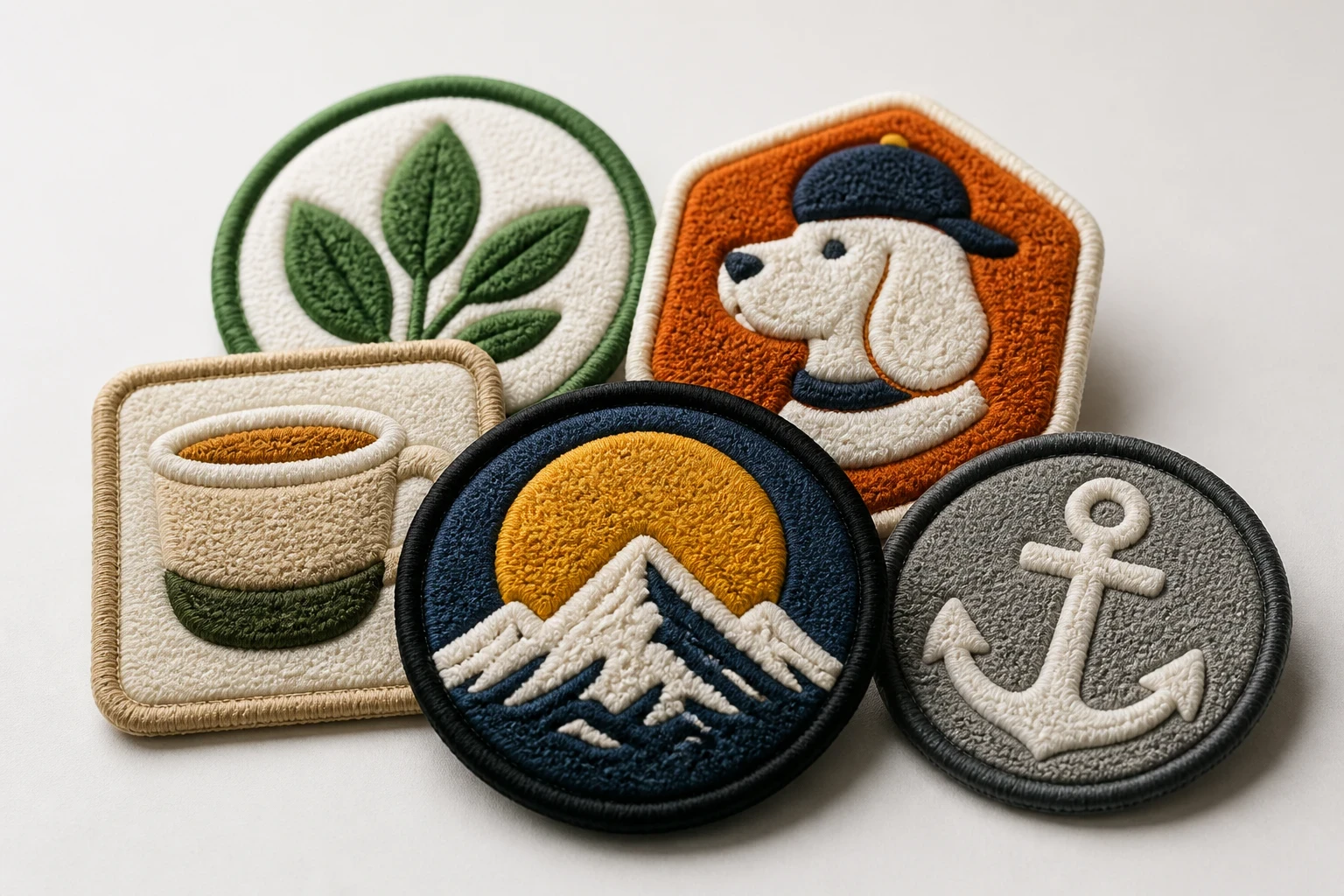
Puff embroidery patches UK use foam beneath selected embroidered areas to create a raised, three-dimensional logo or badge. They suit small business caps, workwear, club clothing and branded outerwear, but fine detail and very small lettering can be difficult. The Customized Patches offers a free digital mockup usually within 12 hours, with a 5-piece minimum per design.
Key takeaways
- Puff embroidery creates a raised foam effect under selected stitched areas, making simple logos stand out on caps, jackets and workwear.
- A 5-piece minimum applies per design, so small businesses can test a new badge without ordering hundreds.
- Small lettering, narrow gaps and intricate linework may lose clarity in foam; a flatter embroidered, woven or printed patch can be more suitable.
- The Customized Patches usually sends a free digital mockup within 12 hours and produces only after the customer has approved the design.
Puff embroidery patches UK are raised embroidered badges made with foam beneath selected parts of a design. They give a logo extra height and shadow, which can make a simple mark stand out on caps, jackets, polos and workwear. For a small business, the sensible starting point is a clear logo, a measured patch size and a backing that suits the garment.
The Customized Patches supplies these patches across the United Kingdom with a 5-piece minimum per design. A free digital mockup is usually sent within 12 hours, and production starts only after approval. That proof matters because raised embroidery is not the right treatment for every logo: printed is flatter; that is the point when a design contains tiny lettering, gradients or a detailed photograph.
What puff embroidery patches actually do
A standard embroidered patch builds a design with thread stitched into a flat surface. Puff embroidery adds a foam layer underneath selected sections before the thread is finished over the top. The foam lifts those areas, creating a visible raised profile that catches light differently from the rest of the patch.
The effect is strongest on uncomplicated shapes: a bold initial, a block word, a thick outline, a sports emblem or a simple icon. A coffee roaster might use a raised bean symbol on an apron patch. A barbershop might raise its initials on a black cap. A five-a-side team could use a raised crest on tracksuit tops, provided the small wording around the crest is not expected to remain needle-sharp.
Puff embroidery is not the same as making every part of a patch tall. Some areas normally remain flat so the design has contrast and the border can be finished cleanly. A useful mockup should show which parts are raised rather than leaving the customer to guess from a flat logo file.
Why small UK businesses choose a raised patch
Small businesses often need branding that can move between products. A stitched patch can go on a cap for a market stall, a jacket for a delivery team, a canvas bag for a customer order or a garment used at a trade show. Unlike printing directly onto one garment, a patch gives the owner a separate branded item that can be applied to several compatible products.
The raised surface also gives a modest logo more presence from a short distance. This is useful for hospitality polos, independent clothing labels, barbers, gyms, outdoor instructors, breweries and makers who want a badge rather than a large printed panel. The patch should still be proportionate. A tall, dense badge on a lightweight nylon shell can look bulky and may not sit neatly over a seam.
- Caps and five-panel hats, where bold raised initials or icons are easy to see from the front.
- Work jackets and overshirts, where the patch can identify staff without covering the whole garment.
- Football, rugby and social club clothing, particularly for a crest or sponsor-free team mark.
- Independent brand packaging, including fabric bags, aprons and heavy cotton merchandise.
- Biker and motorcycle clothing, where a raised emblem can work alongside larger back and rocker patches.
- Event and hospitality uniforms, provided the patch is sized for the garment and the washing instructions are followed.
For larger club layouts, see the biker and motorcycle club patches range. A puff chest badge may work well with a flatter back design; making every panel raised can add unnecessary bulk and cost.
Puff embroidery, flat embroidery or print: the practical choice
The best finish depends on what the artwork needs to communicate. Puff embroidery gives height and texture, but it asks for a simpler design. Flat embroidery handles more small detail and conventional crests. Printed patches reproduce fine lines, tonal changes and gradients more easily, with a smooth face that may be preferable for a modern illustration.
| Patch type | Surface and appearance | Best suited to | Main limitation |
|---|---|---|---|
| Puff embroidery | Raised foam-backed stitched areas with a tactile profile | Bold logos, initials, icons, caps, jackets and branded workwear | Fine lettering and very narrow details may not reproduce clearly |
| Flat embroidery | Traditional stitched surface with a textured but mostly even face | Crests, uniforms, club badges and designs with moderate detail | Very small or photographic detail can still need simplification |
| Printed patch | Smooth printed face with no raised stitching | Gradients, fine illustrations, small text and detailed artwork | Less tactile and may not provide the traditional stitched badge appearance |
| Woven patch | Fine, flat woven threads with clean small lettering | Detailed labels, fashion marks and narrow text | Does not provide the foam height of puff embroidery |
| PVC patch | Moulded rubber-like surface with clear solid shapes | Outdoor, utility and hard-wearing visual styles | Different look and feel from a thread-based embroidered badge |
You can compare the wider range through embroidered patches, woven patches, printed patches and PVC patches. Choosing a flatter finish is not a downgrade if it protects the clarity of the logo. A printed patch can be the more professional answer for a detailed brand illustration, just as puff embroidery can be the better answer for a bold mark intended to catch the light.
A simple decision test
Look at the logo at the size you intend to order, not on a large monitor. If it still reads clearly in one colour and has solid shapes that can take a raised section, puff embroidery is worth considering. If the design relies on hairline strokes, small contact details, a photographic face or subtle colour changes, start with flat, woven or printed options instead.
A useful compromise is a hybrid-looking layout: a raised main symbol with flat lettering around it. The raised symbol receives the attention, while the surrounding text remains easier to stitch and read. The mockup should make that division clear before you commit.
Artwork rules that prevent avoidable problems
Our team sees the same artwork problems repeatedly: a logo supplied as a tiny screenshot, lettering designed for a website rather than thread, and outlines so narrow that they disappear when stitched. A clean vector file is helpful, but a good raster file can still be assessed. What matters is that the artwork shows the intended shape, colours and wording clearly.
- Use bold shapes for the raised areas. Thick initials and filled icons are safer than hairline outlines.
- Keep small text to a practical size. If a business name must be included, consider using the main name on the patch and leaving a long strapline off it.
- Avoid asking foam to reproduce narrow gaps. Tight counters inside letters such as A, R, P and B may close visually when raised.
- Choose thread colours with enough contrast against the patch base and the garment.
- Tell the maker which areas should be raised. Do not assume the whole logo will automatically be treated as puff.
- Supply the exact wording and check spelling before approval. A perfect stitch file cannot correct an incorrect source file.
A white logo on a dark base is usually straightforward, but colours can look different beside a navy nylon shell than beside a black wool coach jacket. If the patch is part of a wider brand system, provide the closest colour references available and say where the patch will be used. Our guide on how to design artwork for puff embroidery patches covers the preparation stage in more detail.
Sizing puff embroidery patches for real garments
Measure the area where the patch will sit and leave room for the border and application method. A chest patch that looks comfortable at 3 inches wide may feel crowded on a narrow polo pocket, while a 2-inch badge can disappear on the back of a heavy jacket. Caps also have curved panels, so a very wide or tall patch may crease instead of following the shape.
| Garment or use | Common starting point | What to check |
|---|---|---|
| Front of a cap | Approximately 2 to 4 inches wide | Panel curve, crown height, seam position and whether the raised foam will flex comfortably |
| Polo or work shirt chest | Approximately 2.5 to 4 inches wide | Pocket, buttons, seams, staff visibility and washing method |
| Jacket sleeve | Approximately 2.5 to 4 inches wide | Sleeve width, zip placement, Velcro panel and movement at the elbow |
| Front of a heavy jacket | Approximately 3 to 5 inches wide | Fabric weight, pocket position, border proportion and whether the badge will catch on equipment |
| Canvas bag or apron | Approximately 3 to 5 inches wide | Available flat area, handle position, lining and the selected application method |
Not sure whether your logo will work better as raised embroidery or a flatter finish? Send the artwork and garment details for a free digital mockup, usually within 12 hours, so you can compare the treatment before production.
GET A FREE MOCKUPThese are starting points rather than fixed specifications. Put a paper version of the intended size on the garment and view it from the distance people will normally see it. For curved caps, test the width across the front panel rather than relying on a product photograph. The custom embroidered patches UK sizing and backing guide is useful if you are comparing several garment types.
Backing choices for small business clothing
Backing changes how a patch is fitted and how easily it can be moved later. Sew-on backing is the dependable option for valuable jackets, thick workwear and garments that will be washed repeatedly. It takes longer to apply, but the stitching can be repaired and the patch is less dependent on adhesive.
Iron-on backing is convenient for cotton garments and straightforward merchandise, but it needs the right heat, pressure and surface. It is not a substitute for sewing on a slippery nylon shell. An iron-on badge can peel after a dryer cycle if the garment care and application method are ignored, and some heat-sensitive fabrics should not be pressed at all.
- Choose sew-on for heavy jackets, wool coaches, workwear, motorcycle clothing and garments exposed to regular abrasion.
- Choose iron-on for suitable cotton or blended garments when a quick application is useful and the care label allows it.
- Choose Velcro for removable team identifiers, tactical-style clothing, equipment bags and garments with existing Velcro panels.
- State the backing requirement on the quote rather than deciding after production. The backing affects the finished use case and application plan.
Velcro is particularly useful for businesses that issue the same jacket to different staff members or teams that change names and roles. It can look untidy if fitted to a garment without a properly positioned loop panel, so check the receiving surface first. For leather or specialist motorcycle clothing, review the material before selecting heat or adhesive; leather patches may be a better visual match for some projects.
How puff patches behave on common UK garments
Caps are one of the clearest uses because the front panel places the logo at eye level. The design should account for the curve and avoid putting an important raised detail directly over a centre seam. Cotton twill caps are usually easier to decorate than thin performance caps, where the fabric can pucker under dense stitching.
Nylon shells need more care. They are light, slippery and often treated with coatings that do not welcome heat. A sew-on patch is generally more sensible than relying on iron-on adhesive, particularly for outdoor instructors, delivery teams and event crews who wear the same jacket in wet conditions.
Wool coaches and heavy overshirts have enough body to support a substantial badge, but the nap and thickness can affect how a border sits. A football club or brewery may prefer a raised chest emblem on this type of jacket, while smaller text can be kept flat or omitted. On school blazers, check the school’s uniform policy and the position of the existing crest before ordering a second badge.
Velcro panels solve the removal problem but add a second layer behind the patch. That extra height may be welcome on utility clothing and less welcome on a fitted polo. A sample or paper placement check is worthwhile if the badge will sit under a seat belt, backpack strap or apron tie.
Minimum quantities, pricing and order planning
The minimum order is 5 pieces per design. That makes puff embroidery practical for a new café uniform, a small barber team, a limited merchandise run or a club that wants to test a badge before committing to a larger batch. If you need two different logos, treat them as two designs when planning quantities rather than assuming five pieces covers both.
A quotation normally depends on the patch dimensions, number of designs, quantity, thread coverage, raised areas, border, backing and delivery requirements. Larger patches use more material and stitching time. A detailed crest with several thread colours may need more production work than a simple raised initial, even if both patches measure the same width.
- Prepare the final artwork before requesting a firm quotation.
- Give the finished dimensions in inches, or provide the garment area to be measured from.
- List the quantity for each separate design.
- Name the backing: sew-on, iron-on or Velcro.
- Explain the garment and how often it will be washed or exposed to abrasion.
- Say if the order has a launch date, trade show date, match day or uniform handover date.
- Check whether the quote includes UK delivery and whether several designs need separate approvals.
Price should not be judged by the patch alone. A patch that is cheap to order but wrong for the nylon garment can create reapplication work, damaged clothing and a second order. The mockup and the written specification are there to reduce that risk.
Ordering and approval: what happens next
Start by sending the logo, intended size, quantity per design, garment type and preferred backing. If you are unsure, say so. A production conversation is more useful when the maker knows whether the patch is for a cotton cap, a nylon shell, a wool coach jacket, a Velcro panel or a school blazer.
The Customized Patches usually provides a free digital mockup within 12 hours. Review the shape, dimensions, border, thread colours, spelling, raised sections and backing. Ask for a change at this stage rather than after the order has entered production.
- Send the artwork and practical requirements.
- Confirm the quotation, quantity and backing.
- Review the free digital mockup, usually within 12 hours.
- Request corrections if the size, colour, wording or raised treatment is not right.
- Approve the final mockup in writing.
- Production begins only after approval.
- Receive the patches and check them before applying the full batch to garments.
Lead time depends on the design, quantity, approval speed and production schedule, so give a real deadline rather than a vague hope that the order will arrive soon. If the patches are for a UK event, match day or uniform issue, allow time to inspect one and apply it before the whole batch is fitted.
Common mistakes small businesses can avoid
The first mistake is choosing puff embroidery because it sounds more noticeable, then sending a logo that needs fine print to explain the business. Raised does not automatically mean clearer. If the main message is a long company name or a detailed illustration, a flat or printed treatment may do the job better.
The second mistake is ordering by eye without measuring the garment. A badge that works on a large work jacket can dominate a fitted polo. A patch placed too close to a zip, pocket or seam may be difficult to sew and uncomfortable to wear.
Name sew-on, iron-on or Velcro on the quote and tell us which garment will carry the badge. We will show the proposed backing and raised treatment on a free digital mockup, usually within 12 hours, and production will begin only after you approve it.
GET A FREE MOCKUPThe third is assuming all backings behave alike. Iron-on that peels after a dryer cycle is a familiar failure, especially when the fabric was unsuitable or the application temperature was wrong. A sew-on patch takes more effort but can be the safer choice for nylon shells, wool coaches and frequently washed uniforms.
Other avoidable issues include approving a mockup without checking spelling, splitting a small order into several unclear designs, failing to mention a Velcro panel and waiting until the event week to raise a deadline. The puff embroidery patches UK checklist is useful for a final pre-production check.
When another patch style is the better answer
A raised patch is one option, not a rule. 3D embroidered patches can suit larger raised designs and sportswear projects, while chenille patches offer a soft, looped texture associated with varsity and club clothing. A traditional merrowed crest may be the right fit for a school, cadet unit or established team identity.
Choose a woven patch when small lettering and a clean flat face matter more than height. Choose print for gradients and detailed artwork. Choose PVC for a moulded utility appearance. The useful question is not which method sounds most impressive; it is which construction keeps the logo readable, secure and appropriate for the garment.
For a business that sells premium clothing, the patch should also match the rest of the product. A raised badge on a structured cap can feel considered. The same badge on a lightweight gym vest may feel too heavy or visually crowded. The material, fit, care instructions and intended customer all matter.
A sensible specification for your first order
A clear specification does not need technical jargon. Write down the design name, finished width and height in inches, base colour, thread colours, raised areas, border, backing, garment type, quantity and deadline. Attach the logo and mention any wording that must remain exactly as supplied.
- Design: one named logo or badge per order line.
- Size: finished dimensions in inches, not just an approximate visual size.
- Raised areas: identify the symbol, initials or lettering intended to stand above the patch face.
- Base and border: state the preferred colours and whether the border should be prominent.
- Backing: sew-on, iron-on or Velcro.
- Quantity: at least 5 pieces per design.
- Garment: cap, polo, nylon jacket, wool coach jacket, blazer, bag or another item.
- Deadline: include the date you need the patches in hand across the UK.
Once those points are agreed, the free digital mockup gives both sides a shared reference. Keep the approved version with the quote. That simple record helps prevent a later mix-up between two colourways or between a sew-on badge and a Velcro badge.
Final advice for UK small businesses
Puff embroidery patches UK work best when the design is bold, the raised areas are intentional and the garment can support the finished badge. Start with the real use case rather than the artwork alone. A cap, polo, nylon shell, wool jacket, Velcro panel and school blazer each bring different practical limits.
The Customized Patches can assess the artwork, discuss the backing and prepare a free digital mockup usually within 12 hours. The minimum is 5 pieces per design, and production begins only after approval. That gives a small business a manageable way to test its branding while keeping the final patch tied to the garment it must serve.
For further planning, read the step-by-step guide to ordering puff embroidery patches UK and review the 10 questions to ask before ordering puff embroidery patches UK. If you are ready to discuss a design, use the free mockup quote and include the logo, garment, size and quantity.
Frequently asked questions
What are puff embroidery patches UK?
Puff embroidery patches UK are raised embroidered badges made with foam beneath selected stitched areas. The foam creates height and shadow, making bold logos, initials and simple icons stand out on caps, jackets, polos, bags and other garments.
What is the minimum order for puff embroidery patches?
The minimum order is 5 pieces per design. If you need two different logos or colourways, each should be counted as a separate design when planning the order quantity.
How quickly can I see a mockup?
The Customized Patches usually provides a free digital mockup within 12 hours. The mockup should be checked for size, spelling, colours, raised areas and backing. Production begins only after the customer approves the final design.
Are puff patches suitable for small lettering?
They can work with some lettering, but very small text, narrow gaps and thin strokes may lose clarity when raised over foam. If the wording is the main part of the logo, flat embroidery, woven construction or print may be more suitable.
Which backing should I choose for a nylon jacket?
Sew-on backing is often the sensible starting point for a nylon shell because heat and adhesive may not suit the fabric or its coating. Iron-on backing can be unsuitable for heat-sensitive garments. Velcro is useful if the jacket already has a properly positioned loop panel.
Can puff embroidery patches be used on caps and workwear?
Yes. Caps, work jackets, polos, overshirts, bags and workwear are common uses, provided the patch size suits the available area. Curved cap panels, pockets, seams and lightweight nylon should be checked before the final size and backing are approved.
Ready to produce custom patches for your UK team or brand?
GET A FREE MOCKUP