
Puff embroidery patches UK Sizing and Backing Options Explained
Puff embroidery patches UK use raised foam beneath selected stitched areas to create a three-dimensional finish. Size depends on the garment, lettering and viewing distance, while backing determines how the patch is attached. The Customized Patches supplies sew-on, iron-on and Velcro options, with a 5-piece minimum and a free digital mockup usually within 12 hours before production.
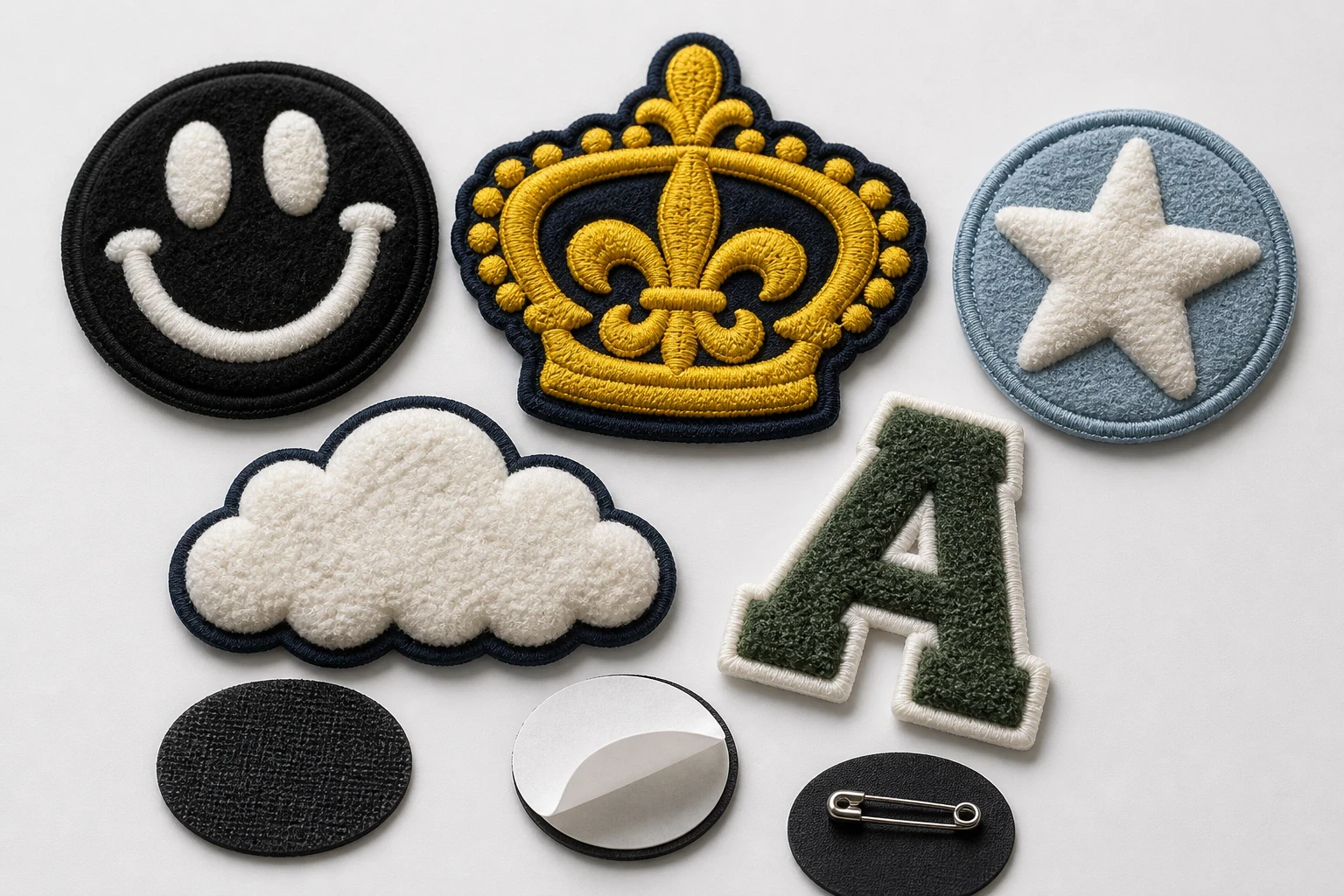
Key takeaways
- Puff embroidery normally works best on bold shapes and lettering with enough room for the foam and satin stitching.
- Measure the usable garment area rather than choosing a size from the patch alone; a 3.5-inch crest can sit well on a jacket but look oversized on a polo.
- Sew-on backing suits long-term use, iron-on is convenient on suitable fabrics, and Velcro is best for removable identifiers or interchangeable team panels.
- The Customized Patches has a 5-piece minimum per design, supplies a free digital mockup usually within 12 hours, and produces only after approval.
Puff embroidery patches UK are raised embroidered badges made with foam beneath selected stitched areas. The foam gives lettering, initials and bold symbols a lifted profile, while the surrounding embroidery keeps the edge and supporting detail defined. For most UK orders, the right choice comes down to the usable garment area, the size of the lettering and the backing needed for wear and washing.
The Customized Patches supplies these patches for football clubs, cadet units, hospitality polos, biker jackets, school blazers and business clothing across the United Kingdom. There is a 5-piece minimum per design. A free digital mockup is usually supplied within 12 hours, and production starts only after you approve the artwork, size, colours and backing.
What makes puff embroidery different from flat embroidery?
Traditional flat embroidery sits close to the base fabric. Its strength is clarity across a wide range of artwork: thin outlines, small symbols, fine lettering and detailed crests can all be interpreted without adding height. Puff embroidery adds a layer of foam beneath selected areas, then stitches over it and trims around the raised sections. The result is a shadowed, tactile finish that is especially noticeable on bold type.
That extra height is useful, but it is not a free improvement to every logo. A football club badge with a large initial can look excellent in puff, while a detailed school crest with tiny Latin text may need flat embroidery around the fine elements. Printed is flatter; that is the point. A printed patch can reproduce a small photograph, gradient or highly detailed illustration where puff would need the artwork simplified.
Puff and flat techniques can also be combined. For example, a streetwear brand might use raised initials in the centre, flat stitching around the border and a merrowed edge for a clean finish. A hospitality business may prefer a flat embroidered name above a raised emblem so the staff member's name remains easy to read at close range. See the comparison in our guide to the difference between puff and flat embroidered patches.
How to choose the right size for puff embroidery patches UK
Start with the garment, not a standard patch measurement. Lay the jacket, polo or blazer flat and measure the usable area between seams, pockets, zips and existing badges. A patch may technically fit within a 4-inch space but still look awkward if its border touches a zip or the curved edge of a pocket.
Common size ranges by garment
| Use | Typical working size | What to check |
|---|---|---|
| Left-chest logo on a polo or shirt | 2.5 to 3.5 inches wide | Keep lettering readable without covering the placket or pocket. |
| Football, rugby or sports jacket crest | 3 to 4.5 inches wide | Check the curved chest area, zip position and room for a name or sponsor. |
| Sleeve identifier | 2.5 to 3.5 inches tall | Measure the sleeve width and avoid seams that make sewing difficult. |
| Back-of-jacket club design | 8 to 12 inches wide | Check the panel width, shoulder seams and the weight of the finished patch. |
| Cap or beanie badge | 2 to 3 inches wide | The curved surface may limit both the patch shape and attachment method. |
| School blazer badge | 2.5 to 3.5 inches wide | Check the badge position and the fabric's heat tolerance before choosing iron-on. |
| Bag, workwear or equipment panel | 3 to 5 inches wide | Leave room for handles, straps, pockets and repeated handling. |
These are practical starting points rather than fixed rules. A simple two-letter mark can work at 2.5 inches because the shapes are open and bold. A longer club name may need 4 inches or more, or it may need the wording split between a raised initial and flat surrounding text. The digital mockup is where this becomes clear: you can see the proposed patch beside the garment area before anything is made.
Size is also about viewing distance
A patch on a bar staff polo is usually read from a few feet away, across a counter or dining room. A badge on a school blazer may be seen at closer range. A back patch on a biker jacket has to carry its design across a car park or club meet, so it can take more width and stronger contrast.
Do not judge the design only as a file on a phone screen. Print it at the intended dimensions or cut a paper shape and place it on the actual garment. This catches common problems such as a 3.5-inch logo that looks too large on a small polo, or a 2-inch mark whose inner letters disappear once the raised stitching and border are added.
Puff artwork: what can be raised and what should stay flat?
Puff embroidery works best with bold, separated forms. Block capitals, athletic numbers, monograms, simple animals, stars, flames and broad geometric marks normally give the foam enough room to form a clean raised surface. Strong contrast between the thread and the base fabric also helps the shape read from a distance.
- Raise the main initial, number or icon when it is the part people need to notice first.
- Keep very small text flat or remove it if it cannot be read at the chosen size.
- Leave visible gaps between raised letters so the foam does not merge into one uneven block.
- Use a clear border to protect the design and define the outside edge.
- Avoid relying on thin outlines to create the whole design; they may not hold the same raised profile as a broad filled shape.
- Tell us if a particular section must be raised and which details can remain flat.
A common mistake is sending a detailed crest and asking for every part to be raised. That can make the artwork look crowded. On a cadet unit badge, for example, a large unit number may be raised while the motto and small internal symbols remain flat. On a hospitality logo, a bold icon can be raised while a small website address is omitted or embroidered flat.
Artwork does not need to be perfect before you ask for help, but a clear vector file or high-resolution image gives the production team more to work with. If you are preparing a logo yourself, use our guide to design artwork for puff embroidery patches that is production-ready.
Backing options: sew-on, iron-on and Velcro
Backing is not a minor detail to add at the end of a quote. It affects the garment, the washing routine, how often the patch will be removed and how much handling it will receive. A puff patch can have the right size and attractive artwork yet still be the wrong order if an iron-on backing is selected for a nylon shell that cannot take the required heat.
| Backing | Best suited to | Advantages | Points to consider |
|---|---|---|---|
| Sew-on | Biker jackets, wool coaches, uniforms, school blazers and long-term clubwear | Reliable attachment and suitable for many fabrics, including garments where heat is unsuitable | Takes longer to attach and needs a suitable needle, thread and stitching path. |
| Iron-on | Heat-safe cotton, polyester and selected smooth garments | Quick attachment without visible hand stitching when applied correctly | Can peel after a dryer cycle or repeated washing if the fabric, temperature or pressure is unsuitable. |
| Hook and loop / Velcro | Removable team identifiers, tactical kit, workwear panels and interchangeable branding | Allows the patch to be removed, swapped or washed separately | The garment needs a matching loop panel, and the patch may sit slightly further off the fabric. |
| Self-adhesive for temporary use | Short-term displays, samples and non-washable presentation use | Useful for positioning or temporary demonstrations | Not a substitute for sewn attachment on clothing that will be washed or worn regularly. |
When sew-on is the safer choice
Sew-on backing is the dependable option for a biker vest, wool coaches jacket or school blazer. It avoids the heat issue and can be reinforced around the edge. It is also sensible for garments that will be washed often or passed between players, such as a club's match-day jackets.
A merrowed crest on a heavy jacket may need stitching through the border rather than only across the centre. On thick wool, leather-look material or layered nylon, the person applying the badge should check needle access and avoid forcing stitches through hardware. We can show the intended attachment in the mockup notes, but the garment owner should still confirm that the fabric can be stitched without damage.
When iron-on is convenient, and when it is not
Iron-on is convenient for a suitable cotton shirt, plain workwear or a school blazer that can accept the heat. It gives a tidy result when the surface is clean, flat and pressed with the correct temperature and pressure. Follow the garment manufacturer's care label and test an inconspicuous area if there is any doubt.
Not sure whether sew-on, iron-on or Velcro will suit the garment? Send the logo and a photograph of the jacket, polo, blazer or kit panel. We will prepare a free digital mockup, usually within 12 hours, so you can compare the raised areas, size and backing before production.
GET A FREE MOCKUPThe most common failure is an iron-on patch that peels after a dryer cycle. Heat, moisture, flexible fabric and repeated washing can weaken the adhesive. Nylon shells, waterproof coatings, fleece, heavily textured knits and some performance fabrics are poor candidates for a simple iron-on application. For those garments, sew-on or Velcro is usually a better starting point.
Why Velcro suits removable patch systems
Velcro makes sense for security, events, tactical-style clothing, team kit and workwear where the identifier changes. A club may use one base jacket with player names, squad numbers or sponsor patches swapped between fixtures. A business may remove branding before laundering or assign one garment to different staff members.
The garment needs a compatible loop panel in the correct position. A patch with Velcro cannot attach to a plain nylon shell or cotton polo without that receiving panel. Add the panel to the specification, especially if you are ordering new clothing at the same time.
Choosing a backing for real UK garments
The same patch can need different backing depending on the clothing supplied by the customer. A football club ordering a chest badge for polyester tracksuit tops may choose one option, while the same badge for a heavy winter jacket may be better sewn on. Tell us what the patch is going onto rather than only saying that it is for a team.
- Nylon shells: check the care label and coating. Sew-on is often the safer route where heat could mark or distort the shell.
- Wool coaches jackets: sew-on usually avoids adhesive and heat issues, though the stitching position should avoid lining seams.
- Cotton polos: iron-on may work if the fabric and care instructions allow it, but frequent commercial laundering may favour sew-on.
- Polyester sportswear: check the manufacturer's heat guidance. A smooth fabric may accept iron-on, but performance finishes can be affected by heat.
- School blazers: sew-on is familiar and secure; iron-on is only sensible if the blazer maker permits the application method.
- Biker leather or leather-look vests: sew-on is commonly selected, with the attachment planned around pockets, zips and lining.
- Velcro panels: specify both the patch-side hook and the garment-side loop panel so the system works as intended.
The garment's care routine matters as much as its material. A café polo washed every day has a different requirement from a presentation jacket worn once a month. Ask who will apply the patches, how often the garment is washed and whether it goes through a commercial dryer. Those answers usually narrow the backing choice quickly.
If your main concern is attachment rather than raised thread, compare the broader range of custom embroidered patches UK options. For removable sports or work identifiers, the biker and motorcycle club patches product area also gives useful examples of larger designs and attachment considerations.
Ordering puff embroidery patches UK: quantity, mockup and lead time
A useful quote needs more than a logo attachment. Send the approximate width or height, quantity, garment type, preferred backing, base fabric colour and any deadline. If the shape is unusual, include a photograph or a rough outline. This helps us judge the border, the available sewing area and whether the proposed size is realistic.
The minimum order is 5 pieces per design. That is useful for a small business testing a new uniform mark, a school ordering a handful of prefect badges, or a club replacing a few worn patches. If you need several colourways or names, list each version separately because a change in text, shape or raised area can count as a different design.
The Customized Patches normally provides a free digital mockup within 12 hours. The mockup is the point at which you check the dimensions, thread colours, border, raised sections and backing. Production starts only after approval, so read the notes rather than treating the image as a rough formality.
What to approve before production
- Overall width and height in inches.
- Which letters, numbers or symbols are raised with puff foam.
- Which details remain flat or are simplified.
- Border style and edge finish.
- Base fabric and thread colours.
- Sew-on, iron-on or Velcro backing.
- Quantity per design, including any separate colourways.
- The garment type and intended placement.
- Any required delivery date within the United Kingdom.
Lead time depends on the quantity, artwork, backing, current production schedule and whether several versions are being made. It is better to state the real date the patches are needed than to work backwards from an assumed production promise. If the patches are for a tournament, launch, school presentation or club event, mention that date with the first enquiry.
Examples from club, uniform and brand orders
A football club may want a raised initial on a 3.5-inch chest crest for tracksuit tops. The design can use a bold puff letter in the centre, flat club wording around it and a sew-on backing if the tops will be washed frequently. If the sponsor detail is very small, it may need to remain flat or be left off the patch altogether.
A cadet unit often needs a compact badge for a sleeve or shirt. Here, a clear number or unit mark can be raised, while the small wording is kept flat for legibility. Sew-on is usually practical for uniform fabric, but the exact choice depends on the garment supplier and care instructions.
For hospitality polos, a 2.5 to 3.5-inch left-chest patch can work well if the logo is simple. A raised icon gives the uniform some texture, while a staff name may be handled separately in flat embroidery. Iron-on can be convenient for a small trial run on heat-safe polos, but daily laundering makes sew-on worth considering.
Biker clubs and motorcycle groups often have more space to work with, particularly on the back of a vest or jacket. A large design can combine raised lettering with flat fine detail, but the patch must be planned around seams, leather thickness and the weight of the finished piece. For club applications, explore the biker and motorcycle club patches hub alongside the 3D embroidered patches range.
A small clothing brand may use puff initials on caps, overshirts and heavyweight hoodies. The cap has the tightest size limit and strongest curve, while the back of a jacket gives more room for a larger design. Ordering one family of artwork in two sizes can work, but each size should be mocked up separately rather than assumed to scale perfectly.
Puff embroidery compared with other patch types
| Patch type | Main visual effect | Good fit for | Main trade-off |
|---|---|---|---|
| Puff embroidery | Raised foam-backed stitching on selected areas | Bold logos, initials, sports numbers, streetwear and statement club designs | Fine detail and very small text may need simplification. |
| Flat embroidered | Textured stitched surface close to the fabric | Crests, uniforms, names, badges and detailed but still stitch-friendly logos | Does not create the raised profile of puff. |
| Woven | Tight, flatter woven detail | Small lettering, clean line work and designs needing a smoother surface | Less depth and thread texture than embroidery. |
| Printed | Flat ink or printed image | Gradients, photographs, tiny detail and artwork with many colours | Does not provide a raised tactile finish and may show wear differently. |
| PVC | Moulded rubber-like relief | Outdoor kit, bags, technical clothing and bold waterproof-style badges | Different look and feel from thread-based embroidery. |
| Chenille | Soft, high-pile letter or mascot effect | Varsity jackets, school teams and large collegiate-style designs | Usually needs more space and has a distinct fluffy finish. |
| Leather | Clean branded leather or leather-look surface | Biker wear, premium goods, bags and heritage-style branding | Not the same stitch detail or raised foam effect as puff embroidery. |
Ready to check a size and backing before ordering? Send the artwork, quantity and garment details for a free digital mockup, usually within 12 hours. We confirm the specification with you and produce only after the mockup is approved.
GET A FREE MOCKUPThere is no single best patch type for every brief. A printed patch may be the sensible choice for a detailed illustration; that is not a failure of puff embroidery. A woven patch may read more cleanly on a small label, while PVC patches can suit equipment exposed to rain and heavy handling. If you want a softer varsity finish, compare chenille patches.
The key question is what the patch must communicate and how it will be used. If the answer is a bold mark that should stand proud on a jacket, puff is worth considering. If the answer is small detailed text, a flatter process may protect readability.
Common sizing and backing mistakes to avoid
- Choosing the patch size before measuring the garment.
- Using puff on every line of a detailed crest instead of selecting one or two raised features.
- Assuming iron-on will work on nylon, coated fabric or a garment that enters a commercial dryer.
- Forgetting that Velcro needs a loop panel on the garment.
- Approving a design on a monitor without checking a print or mockup at actual size.
- Leaving small wording in the artwork when it will not be legible at the finished dimensions.
- Ordering several colourways without separating the quantities and design instructions.
- Placing a large patch over a seam, pocket, zip or curved panel.
- Not telling the supplier whether the patch will be worn on a blazer, polo, shell jacket, leather vest or bag.
- Treating a backing choice as reversible after production rather than confirming it at the mockup stage.
One especially avoidable problem is approving a patch that fits the garment but does not suit the way it moves. A rigid raised badge on a small curved cap can pucker. A wide back patch on a lightweight nylon shell can pull at the fabric. A heavy merrowed crest on a thin polo may need a smaller size or lighter construction.
The practical fix is to give the production team the garment information early. A photograph beside a ruler, a note about washing and a clear intended position can prevent several rounds of revision. Our puff embroidery patches UK checklist covers the details worth confirming before approval.
A simple specification to send with your enquiry
If you want a quicker, more useful quote, copy the following details into your enquiry. You do not need specialist terminology. Plain information about the patch, garment and deadline is enough for us to start.
- Design name or reference.
- Artwork file or a clear image.
- Finished width and height, or the measured garment area.
- Quantity, with each colourway or wording version listed.
- Which elements should be raised with puff foam.
- Base fabric and thread colours.
- Backing: sew-on, iron-on or Velcro.
- Garment type: nylon shell, wool jacket, cotton polo, blazer, leather vest, cap, bag or another item.
- How the garment will be washed and dried.
- Required delivery date and UK delivery address.
The Customized Patches can then prepare the free digital mockup, usually within 12 hours. Check the size against the garment, confirm that the raised areas are the right ones and make sure the backing suits the care routine. Once you approve the mockup, production can proceed against the agreed specification.
For broader product choices, start with embroidered patches. If you are still comparing a raised thread effect with other finishes, the printed patches and leather patches hubs may help you decide before requesting a quote. UK-wide delivery can be discussed with the order details.
Final buying advice for UK teams, brands and clubs
Choose puff embroidery for the parts of a design that benefit from height, not simply because a raised finish sounds impressive. Keep the lettering bold, measure the garment and decide whether the patch will be permanent, removable or heat-applied. Those three decisions usually determine the size, construction and backing.
For a long-term uniform or club garment, sew-on is often the most forgiving option. For a suitable cotton or polyester item used less aggressively, iron-on may be convenient. For interchangeable kit, Velcro is practical provided the garment has the correct loop panel. If you are unsure, send the garment details and let the mockup stage settle the choice.
The Customized Patches works with UK teams, brands, clubs and businesses from small five-piece orders upwards. You receive a free digital mockup usually within 12 hours, and we produce only after approval. That gives you a clear opportunity to check the size, raised sections and backing before the order enters production.
Frequently asked questions
What are puff embroidery patches UK?
Puff embroidery patches UK are embroidered patches with foam beneath selected stitched areas, creating a raised three-dimensional finish. They suit bold initials, numbers, symbols and simple logos. Fine detail and very small text may need flat embroidery or simplification. The Customized Patches supplies these patches with a 5-piece minimum per design.
What is the best size for a puff embroidered patch?
The best size depends on the garment and artwork. A left-chest patch is often around 2.5 to 3.5 inches wide, a sports crest around 3 to 4.5 inches, and a large back design around 8 to 12 inches. Measure the usable area and check the proposed size on the actual garment before approval.
Is sew-on or iron-on backing better for puff embroidery?
Sew-on backing is usually better for long-term use, heavy garments, wool, leather-look material, nylon shells and clothing washed frequently. Iron-on can be convenient on suitable heat-safe fabrics, but an iron-on patch may peel after a dryer cycle or repeated washing. The garment care label should guide the decision.
Can puff embroidery patches go on nylon jackets?
They can, but the backing and application method need care. Nylon shells may have coatings that react badly to heat, making sew-on or Velcro more suitable than iron-on. Send a photograph or the garment details with the quote so the backing can be considered before the mockup is approved.
How quickly can I receive a mockup for puff embroidery patches UK?
The Customized Patches usually supplies a free digital mockup within 12 hours. The mockup should be checked for size, colours, raised sections, border and backing. Production starts only after approval. The final production and delivery time depends on quantity, artwork, backing and the required date.
What is the minimum order for puff embroidery patches?
The minimum order is 5 pieces per design. If you need different names, colourways, shapes or raised areas, list them separately because they may be treated as different designs. The minimum makes small club, school, team and business runs possible without ordering a large batch.
Ready to produce custom patches for your UK team or brand?
GET A FREE MOCKUP