
How puff embroidery patches UK Can Strengthen Your Brand Identity
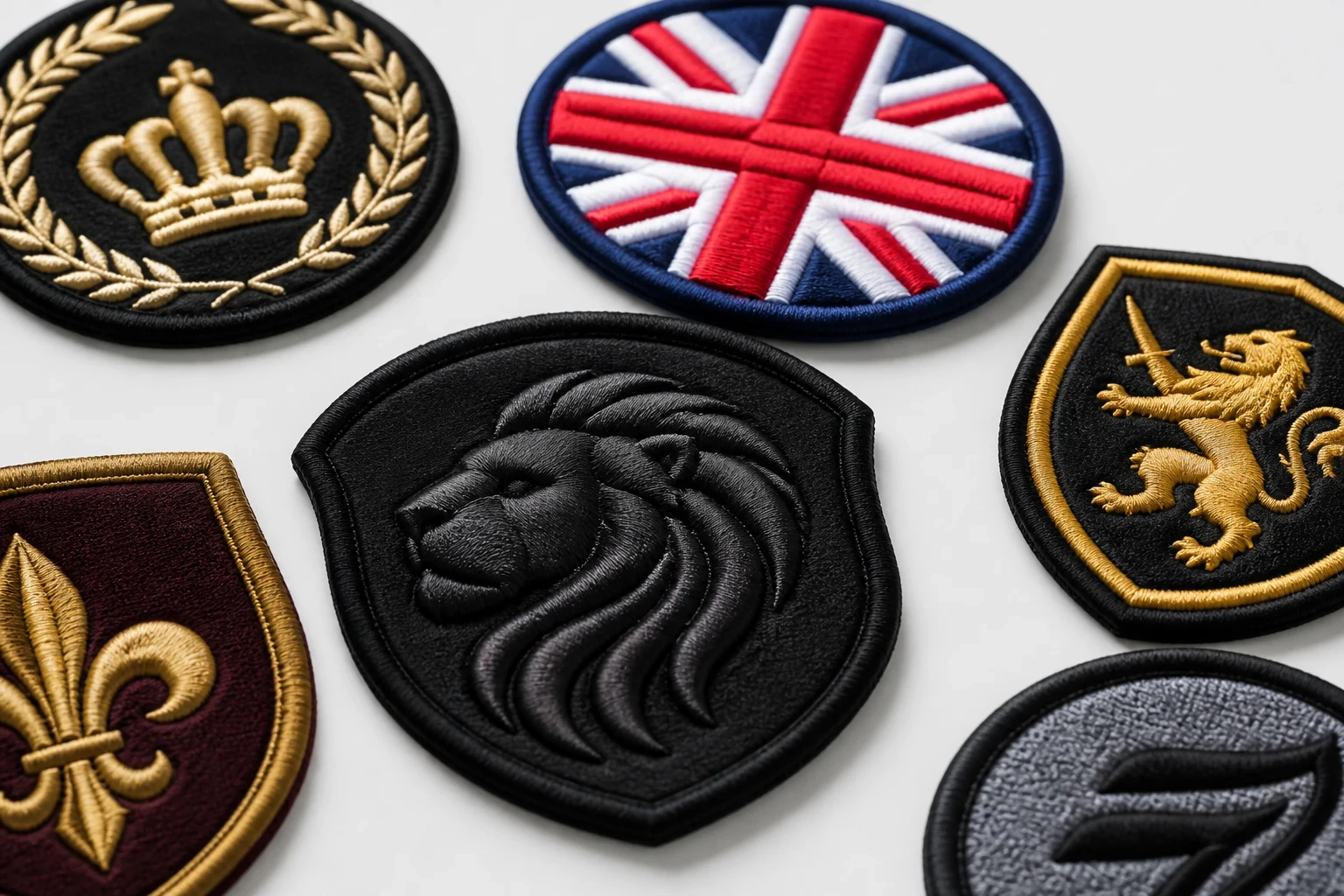
Puff embroidery patches UK strengthen brand identity by giving selected logo areas a raised, tactile finish that stands out on garments, bags and teamwear. The effect works best on bold, simple artwork with enough space between details. The Customized Patches provides a free digital mockup usually within 12 hours, with production starting only after approval and a 5-piece minimum per design.
Key takeaways
- Puff embroidery creates height and texture, so a simple logo can become more noticeable without changing its core colours.
- Raised thread suits bold lettering, mascots, initials and compact crests better than tiny text or detailed artwork.
- Puff embroidery is not the right answer for every logo: printed patches remain flatter and can reproduce fine detail more clearly.
- The Customized Patches requires a 5-piece minimum per design and normally sends a free digital mockup within 12 hours before production.
Puff embroidery patches UK can strengthen a brand identity by giving selected parts of a logo a raised, tactile finish. That extra height makes a crest, wordmark, mascot or monogram easier to notice on teamwear, workwear, bags and merchandise. The best results come from simple artwork, sensible sizing and a backing chosen for the garment.
The Customized Patches makes these patches for UK teams, brands, clubs and businesses, with a 5-piece minimum per design. You receive a free digital mockup usually within 12 hours, and production starts only after you approve the artwork. That approval stage matters because a flat screen image cannot show every practical issue, such as crowded lettering, a narrow merrowed edge or a finish that will rub against a Velcro panel.
What makes puff embroidery patches UK different?
Puff embroidery uses foam beneath selected stitched areas. The thread covers the foam, creating a raised section rather than the level surface associated with standard flat embroidery. It is often called 3D embroidery, although the effect is controlled rather than sculpted in every direction. A good patch still needs a clean outline, readable shapes and a sensible relationship between the raised and flat parts.
That physical texture gives the wearer a different experience. A club member can feel a raised initial on a tracksuit. A customer picking up a branded cap can recognise the mark by touch as well as sight. On a hospitality polo, a small raised crest can look more considered than a large printed panel, provided the logo has enough room to breathe.
Puff is most effective as a design decision, not as a substitute for clear artwork. It can lift a bold letter, outline, stripe or central emblem. It cannot reliably rescue tiny copy, thin lines or a photograph-like illustration. If the identity depends on fine detail, compare it with woven patches or printed patches before choosing the raised finish.
How raised texture supports recognition
Brand recognition is partly about repetition. The same mark appears on a jacket, a social photograph, a delivery bag, a club noticeboard and a website. A raised patch gives that repeated mark another visual cue: light catches the height differently as the garment moves. The result is not a new logo, but a more noticeable version of the one you already use.
This can be useful for organisations with a strong community element. A football club may put a raised initial or mascot on training tops, travel jackets and kit bags. A cadet unit may use a compact crest on a formal garment while keeping the colours consistent across different clothing. A biker club may reserve the technique for a front chest emblem while using larger traditional panels on the back.
- A raised centre can make a simple monogram easier to spot from a short distance.
- Puff lettering can give a retail or streetwear mark a more physical, merchandise-led character.
- A raised mascot can separate the main symbol from a flat background field.
- A mixed flat-and-raised design can create hierarchy without adding extra colours.
- Texture can help a small patch feel deliberate on a cap, sleeve or chest area.
The important point is consistency. If one garment uses a tall raised wordmark and another uses a crowded flat version, the range may look disconnected. Decide which parts of the identity should remain fixed: the main colours, border shape, lettering style and the area that receives the puff treatment.
Choosing artwork that works with a raised finish
A production-ready file does not need to be complicated, but it does need to be honest about size. A logo that looks clear on a monitor at 12 inches may become cramped on a 2-inch chest patch. We check the artwork against the intended finished dimensions, then use the mockup to show where detail may need simplifying.
Lettering, outlines and spacing
Bold sans-serif lettering, block initials and short words are generally easier to translate than narrow scripts. Leave enough space between raised letters and the outer border so the stitching does not visually merge. A line that is too close to the merrowed edge may lose its definition, particularly on a small round or shield-shaped crest.
Long names often need a different treatment. A school, hospitality group or local sports side may have a full name that works on a wide back patch but not on a sleeve badge. Consider using the full name in a flat area and raising only the initials or central symbol. This keeps the identity recognisable without forcing every element into the same treatment.
Colour and contrast
Puff embroidery does not remove the need for contrast. A dark navy raised thread on a black jacket can disappear in low light, even if the texture is obvious by touch. White, gold, red or another contrasting colour may provide a stronger visual separation, but the choice should follow the existing brand palette rather than introduce an unrelated colour.
Think about the garment as well as the artwork. Nylon shells can reflect light and crease around a patch. Wool coaches jackets have a softer surface that may need a firm attachment. A school blazer may need an understated crest, while a retail cap can carry stronger height and contrast. The same design should not automatically be used at every size.
The mockup is part of the design decision
A digital mockup lets you check the patch shape, approximate proportions, thread colours and the garment context before production. It is particularly useful for puff work because you can decide whether the raised area should be the whole wordmark, one letter, the centre of a crest or a small accent.
Send the clearest artwork available and state the intended finished size in inches if you know it. Include a photograph or description of the garment where possible. A mockup cannot replace a physical sample in every situation, but it gives the production team a practical brief and gives you a chance to correct the design before the order is made.
Puff embroidery compared with other patch finishes
There is no single best patch method for every brand. Puff embroidery is chosen for height and texture, while other constructions solve different problems. Printed is flatter; that is the point. Woven can hold small lettering more neatly, and PVC can provide a rubber-like finish that suits outdoor or utility styling.
| Patch type | Surface and appearance | Good fit for | Main trade-off |
|---|---|---|---|
| Puff embroidery | Raised stitched areas with a tactile foam-supported finish | Bold logos, initials, mascots, caps, teamwear and merchandise | Fine text and very narrow lines may need simplifying |
| Flat embroidered | Level thread surface with a traditional stitched look | Crests, uniforms, school blazers and detailed embroidered marks | Less height and tactile impact |
| Woven | Flat, tightly woven surface with clean small details | Small lettering, badges and designs where fine lines matter | Does not provide the same raised thread effect |
| Printed | Smooth printed surface with no stitched height | Gradients, photographs, fine illustrations and large colour areas | Can look less tactile and may not suit a traditional club crest |
| PVC | Raised rubber-like moulded surface | Outdoor brands, workwear, utility clothing and bold simplified marks | Different visual character from thread and may not suit heritage branding |
| Chenille | Soft, tufted yarn with a substantial varsity appearance | University, school, sports and collegiate-style lettering | Usually needs larger shapes and has a more specific visual style |
For a heritage football crest, flat embroidery may feel more familiar. For a clean retail monogram on a cap, puff can provide the stronger shelf and social-media presence. For a detailed hospitality logo with a thin script, woven or printed may protect readability. You can compare the wider range through embroidered patches, PVC patches and chenille patches before committing.
Not sure which part of your logo should be raised? Send the artwork, preferred size and garment details. We will prepare a free digital mockup usually within 12 hours so you can compare the visual balance before production.
GET A FREE MOCKUPThe practical choice also depends on where the patch will be used. A Velcro panel on a nylon shell has different demands from a sewn badge on a wool coaches jacket. A removable morale patch may need hook-and-loop backing, while a school blazer will usually call for a sewn-on finish. The front design and the back attachment should be discussed together.
Where UK teams, clubs and businesses use puff patches
Puff embroidery works across several brand settings, but the surrounding garment should guide the scale. A patch on a cap is viewed close up and can use a compact raised mark. A back patch on a jacket needs stronger proportions and enough negative space to remain readable from across a room. The production choice should follow the viewing distance rather than a standard size.
Sports clubs and teamwear
Football, rugby and cycling clubs often have several garments in circulation: match kit, warm-up tops, travel jackets and staff polos. A raised initial or mascot can act as a secondary identity mark while the official crest stays in its established form. This gives supporters another piece of club merchandise without changing the badge that members already recognise.
Check the fabric before ordering. Stretchy performance polyester may need careful positioning, while a heavy tracksuit or woven jacket gives the patch a more stable base. For removable training kit, ask about Velcro. For a permanent club jacket, sew-on backing may provide the more appropriate result.
Businesses and workwear
A raised logo can add a clear focal point to work jackets, hospitality polos, barber uniforms, event crew clothing and branded bags. A small business does not need a complicated patch to look established. A two-colour monogram with a clean border may be more effective than a full logo packed into a small circle.
Consider how the clothing is washed and used. An iron-on patch that looks fine on a product photograph can peel after a dryer cycle if the garment, heat and attachment are not suitable. For staff clothing that will be washed regularly, discuss sewn attachment or a suitable alternative rather than treating iron-on as an automatic answer.
Schools, cadet units and community groups
School blazers and formal uniforms usually benefit from restraint. A raised detail may work on a house emblem, activity badge or optional merchandise, but a very tall finish can feel out of place on a formal wool garment. Cadet units and community groups may prefer a clear crest with a modest raised centre, particularly where the badge must sit alongside existing insignia.
Retail, streetwear and biker clothing
Retail labels often use puff embroidery for a tactile logo on caps, sweatshirts, overshirts and bags. The extra height can help a small collection feel connected, especially if the mark appears in the same position and colourway across several items. A biker club may use puff for a front emblem or a limited-run piece while keeping the main back design larger and more traditional.
For larger club layouts, review the options under biker and motorcycle club patches. Large back patches, front rockers and smaller chest marks may need different construction even if they share the same colours. Matching every panel with the same height is not always the best visual result.
Backing, attachment and garment compatibility
A strong front design can still disappoint if the backing is wrong for the garment. Sew-on backing is a dependable choice for permanent placement on jackets, shirts, bags and uniforms, but it requires access to the garment and a suitable sewing route. Iron-on backing can be convenient for certain fabrics and short-term applications, but it should not be treated as suitable for every wash routine.
Velcro is useful for removable patches on compatible panels, including some tactical, outdoor and club garments. The hook side and loop side need to match the garment, and the patch should be large enough for the attachment to hold without catching on surrounding fabric. A narrow, heavily raised patch may need particular care because the physical height can affect how it sits on the panel.
- State the garment fabric: nylon shell, cotton sweatshirt, polyester teamwear, wool jacket or canvas bag.
- Confirm whether the patch is permanent or needs to move between garments.
- Give the intended finished width and height in inches, not only the artwork dimensions on screen.
- Mention washing, tumble-drying, outdoor exposure or frequent handling.
- Ask for the backing to be shown on the mockup or quote so the production brief is complete.
A merrowed border can give a patch a defined edge, especially on simple shields, circles and rectangles. It also takes up some visual space. If your design has a thin outer line or lettering close to the perimeter, allow for that border in the layout. A cleaner inner margin usually produces a more dependable result than squeezing the artwork to the edge.
Ordering puff embroidery patches UK without surprises
Start with the design purpose rather than a guessed patch size. Tell us if the mark is for a cap, sleeve, chest, back panel, blazer, kit bag or Velcro area. A useful brief includes the artwork, approximate dimensions, quantity, garment type, backing preference and any deadline connected to an event or product launch.
The Customized Patches has a 5-piece minimum per design. That makes small club runs, pilot merchandise and staff samples possible, while larger quantities can be discussed from the same approved artwork. If you need several versions, list them clearly: changing the shape, wording, colours or raised area may count as a separate design.
A free digital mockup is usually supplied within 12 hours. Review the dimensions, patch shape, colour placement, spelling, border and backing before approval. Production starts only after approval, so this is the point to ask for a change rather than waiting until the finished patches arrive.
Lead time depends on the design, quantity, backing, order queue and delivery requirements. A simple five-piece run is not automatically identical to a large multi-size order. If the patches are needed for a tournament, launch, wedding, graduation or club event, give the date at quotation stage so the schedule can be discussed properly.
- Send the logo or artwork and explain which area, if any, should be raised.
- State the garment, approximate finished size in inches, quantity and preferred backing.
- Review the free digital mockup usually sent within 12 hours.
- Request any changes to lettering, spacing, colours, border or attachment.
- Approve the final mockup before production begins.
- Check the delivered patches against the approved design before distributing them across the garments.
If you are comparing options, our guide to The Difference Between puff embroidery patches UK and flat embroidered patches, Explained covers the visual and practical distinction. For a broader ordering checklist, see Puff embroidery patches UK Checklist: What to Confirm Before You Order.
Name the garment, backing and intended size on your quote request. We will show the proposed attachment and raised areas on a free digital mockup usually within 12 hours, and production will wait for your approval.
GET A FREE MOCKUPHow to keep a raised patch consistent across your brand
Create one approved master version of the patch and record its finished size, thread colours, border style, raised areas and backing. This avoids a common problem: a logo being redrawn slightly for every garment until the letters, spacing and proportions no longer match. The master artwork should be the reference for repeat orders.
Use a size system if the identity appears in several places. A cap badge, chest patch and large jacket panel may need different proportions, but they should still share the same visual rules. You might raise the central initial at every size while simplifying the supporting text on the smallest version.
- Keep the same core thread colours across the range unless there is a planned seasonal colourway.
- Use one agreed border shape for the main identity mark.
- Record whether the patch is sew-on, iron-on or Velcro.
- Avoid changing the raised area simply to fill spare space.
- Review repeat orders against the last approved mockup rather than memory.
- Keep a note of which garments have already been tested.
You can also build a mixed patch range. A flat embroidered crest may remain the official uniform badge, while a puff monogram appears on merchandise. A woven name patch may serve staff clothing, and a printed patch may carry a detailed campaign illustration. The brand feels coherent when the colour palette and placement rules connect the range, not because every item uses the same construction.
Common mistakes that weaken the result
The most frequent problem is trying to make a small patch carry too much information. A full address, long slogan, several outlines and a detailed mascot may be legible in a large digital file but not at the finished size. Puff embroidery makes this more noticeable because raised elements need enough space around them.
Another mistake is choosing the backing after the patch has been designed. A removable Velcro badge, a sewn school crest and an iron-on promotional patch have different practical requirements. The garment, use and washing routine should be part of the initial quote, not an afterthought.
Some buyers also judge the result only against a flat image. The patch will be worn on a curved sleeve, folded cap or moving jacket, not displayed perfectly square on a screen. Look at the mockup at the intended size and ask whether the mark still reads from the distance at which people will see it.
Finally, do not assume that a raised finish is automatically more premium or more suitable. The right choice is the one that serves the identity. If your logo depends on tiny copy, gradients or photographic shading, a printed patches design may communicate it more accurately. If you want a heavier rubberised outdoor look, PVC patches may be worth comparing.
A practical decision for your brand
Choose puff embroidery when the identity has a bold feature that benefits from height: a large initial, compact wordmark, mascot, stripe or central badge. It is particularly useful for caps, teamwear, club merchandise, jackets and branded bags where people can see or feel the patch at close range.
Choose another construction when the design depends on tiny detail, a smooth photograph-like image, very small wording or a completely flat surface. 3D embroidered patches and puff embroidery are closely related in everyday use, but the final appearance still depends on the artwork, dimensions and selected raised areas.
For UK orders, the sensible route is to provide the real brief early: garment, size, quantity, backing, artwork and deadline. The Customized Patches can then show a digital mockup usually within 12 hours. With a 5-piece minimum per design and production only after approval, you can correct the identity and attachment details before the patches move into production.
If you are still comparing methods, browse the embroidered patches hub or ask for a quote through the free mockup quote. A clear mockup is often the quickest way to decide whether the raised finish strengthens your mark or simply adds texture where it is not needed.
Frequently asked questions
What are puff embroidery patches UK?
Puff embroidery patches UK are custom stitched patches made with foam beneath selected embroidered areas, creating a raised finish. They are used for bold logos, initials, mascots and lettering on caps, teamwear, jackets, bags and club clothing. The effect is tactile and dimensional, but tiny details may need simplifying.
How can puff embroidery strengthen a brand identity?
The raised surface gives a logo another recognition cue alongside colour, shape and wording. Light catches the stitched height as the garment moves, while the wearer can feel the texture. This can make a simple mark more noticeable on teamwear, merchandise, workwear and branded accessories without changing the core identity.
What is the minimum order for puff embroidery patches?
The Customized Patches has a 5-piece minimum per design. If you need several different logos, colourways or shapes, confirm how each version will be treated for quoting. A small run can suit a club trial, staff samples, a product launch or limited merchandise.
How quickly can I see a mockup for puff embroidery patches UK?
The Customized Patches usually provides a free digital mockup within 12 hours. Send the artwork, intended size, garment and backing details for a more useful visual. Production starts only after you approve the mockup, giving you an opportunity to correct spelling, spacing, colours, border details and attachment.
Are puff patches suitable for nylon shells and Velcro panels?
They can be suitable, but the backing and attachment must match the garment. Nylon shells, removable Velcro panels and permanent sewn placements have different requirements. State the fabric and whether the patch must be removed or washed frequently. The proposed backing should be confirmed before production.
Should I choose puff, flat embroidery or printed patches for my logo?
Choose puff for bold shapes and tactile height, flat embroidery for a traditional stitched crest, and printed patches for fine detail, gradients or photographic artwork. Printed is flatter; that is the point. The best option depends on the logo, finished size, garment, washing routine and visual character you want.
Ready to produce custom patches for your UK team or brand?
GET A FREE MOCKUP