
Fine-detail woven patches UK Trends to Watch in 2026
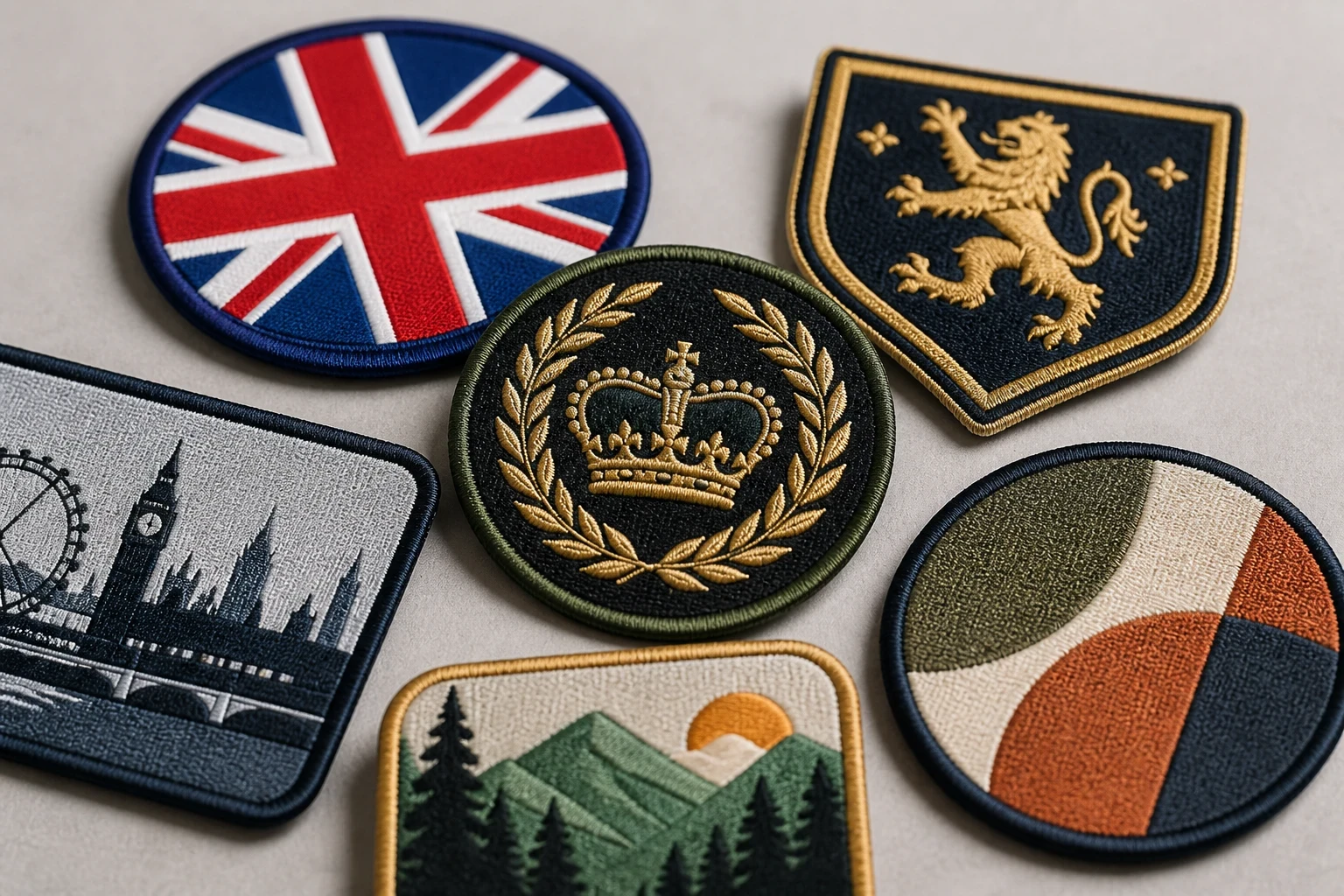
Fine-detail woven patches UK are a practical choice for logos, lettering and small artwork that need a flatter finish than traditional embroidery. The main 2026 trends are cleaner miniature branding, shaped badges, subdued colour palettes, Velcro-backed team identifiers and mixed patch programmes. The Customized Patches provides a free digital mockup usually within 12 hours, has a 5-piece minimum per design, and produces only after approval.
Key takeaways
- Fine-detail woven patches are suited to small lettering, line work and flatter logos that may lose clarity in dense embroidery.
- The strongest 2026 direction is useful, repeatable branding rather than detail for its own sake: clear shapes, controlled colours and readable artwork.
- The Customized Patches has a 5-piece minimum per design, supplies UK-wide and sends a free digital mockup usually within 12 hours.
- Production begins only after approval, so check size, colours, border, backing and garment use before confirming the order.
Fine-detail woven patches UK are likely to grow in use through 2026 because they keep small logos, lettering and line work flatter and clearer than many heavily embroidered designs. They suit teamwear, work uniforms, branded outerwear, school clothing and merchandise where a neat badge must sit close to the garment.
The main change is not a new thread or a novelty finish. Buyers are becoming more precise about the job a patch must do: identify a unit, carry a logo, mark a product range or add a controlled design detail without making a jacket look bulky. The Customized Patches supplies customers across the United Kingdom, with a 5-piece minimum per design and a free digital mockup usually within 12 hours. Production starts only after approval.
Why fine-detail woven patches UK are on the 2026 shortlist
Woven patches use tightly arranged threads to create a relatively flat face. That construction is useful where a design contains small words, narrow outlines, fine map lines, tiny symbols or several colour areas that would become crowded with raised embroidery. The surface still has texture, but it does not have the high pile associated with a classic embroidered crest.
It is common to see this most often on football training tops, cadet jackets, hospitality polos and branded workwear. A club may need a sponsor mark and small founding date. A streetwear label may want a woven neck or sleeve badge that sits cleanly against nylon. A business may need the same mark on softshell jackets and cotton overshirts without changing the visual language.
That does not mean woven is automatically better. Printed is flatter; that is the point. It may be the sensible choice for a very large tonal image or artwork with photographic shading. Traditional embroidery can have more physical presence and a stronger heritage feel. The decision depends on viewing distance, garment, handling and the character you want.
The first trend: smaller branding that still reads
In 2026, many UK buyers will continue moving away from oversized front badges. A compact sleeve mark, chest tab or detachable identifier can do the work without taking over the garment. This is particularly useful for hospitality groups, independent retailers and businesses issuing the same clothing to front-of-house and back-of-house staff.
Small does not mean microscopic. A patch measuring 2 by 2 inches has less room for lettering than a 3 by 3 inch patch, even if the artwork file looks crisp on a screen. Thin strokes can close up, counters in letters can fill, and pale colours can lose contrast against the base fabric. The mockup should show the design at its intended physical size, not only enlarged on a monitor.
What to simplify before production
- Remove decorative lines that are not needed to identify the logo.
- Increase the spacing between small words rather than squeezing in another line.
- Use a heavier version of a very light typeface.
- Keep tiny symbols simple enough to survive the chosen finished size.
- Specify whether a border is part of the artwork or an added edge treatment.
A good production file is not necessarily the most detailed file. It is the file that keeps its priorities when reduced to cloth. Our How to Design Artwork for woven patches That Production-Ready guide covers the practical checks, including line weight, contrast and artwork format.
The second trend: restrained colours and deliberate contrast
Muted olive, stone, navy, charcoal, cream and rust are appearing frequently in brand and club briefs. These colours work well on outerwear and avoid the look of a bright promotional badge. They also suit the current interest in workwear-inspired clothing, heritage sportswear and understated staff uniforms.
A restrained palette still needs contrast. A charcoal logo on black fabric may look tasteful in a digital preview but disappear at arm's length. The same applies to navy thread on a dark blue shell. Ask for the patch face, border and garment colour to be shown together. A patch colour that works on a white artboard may not work on a waxed cotton jacket or a black nylon shell.
Colour matching is also a practical conversation, not just a brand-guideline exercise. Thread and fabric can appear different under daylight, shop lighting and indoor LEDs. If an exact corporate colour matters, send the brand reference and state which areas are most important. The approved mockup records the intended direction, while the finished patch remains a textile product rather than a printed colour swatch.
The third trend: shaped badges and purposeful borders
Round and rectangular patches remain common, but shaped outlines are being used more thoughtfully. A mountain silhouette, shield, bottle shape, tool outline or custom contour can make a badge feel specific to a club or product. The shape should support recognition rather than create a difficult edge around an ordinary rectangle.
Borders are doing more work too. A clean woven border can separate a dark patch face from a dark jacket, contain irregular artwork and make a small badge look finished. Merrowed crests, on the other hand, have a rolled edge associated with traditional embroidered patches. They can be right for a football club or school blazer, but they are not the same visual treatment as a flat woven edge.
If the design has points, cut-ins or narrow corners, check how the outside edge will behave at the final size. A very intricate outline can become visually noisy. Our guide to Woven patches Sizing and Backing Options Explained is useful when the shape and attachment method are being decided together.
| Patch type | Best suited to | Surface character | Main limitation | Typical UK use |
|---|---|---|---|---|
| Fine-detail woven | Small lettering, line work and compact logos | Flat to lightly textured | Very tiny detail still needs simplification | Brand badges, team identifiers, sleeves and workwear |
| Embroidered | Bold crests, large lettering and raised traditional designs | Raised thread with visible texture | Dense small detail can merge | Football clubs, school blazers, uniforms and biker vests |
| Printed | Large artwork, gradients and photographic or tonal designs | Smooth and flat | Less dimensional and may show wear differently | Promotional clothing, event runs and detailed illustrations |
| PVC | Outdoor, utility and high-contrast graphic marks | Rubbery and dimensional | Less suitable for a soft textile or heritage look | Tactical clothing, bags and outdoor equipment |
| Chenille | Large varsity letters and bold collegiate shapes | High pile and tactile | Fine lines and small words are not its strength | Varsity jackets, school teams and club clothing |
The table is a starting point, not a quality ranking. For a detailed logo on a polo, woven may be more legible. For a large school letter on a wool coaches jacket, chenille may be the correct material. For a photographic event graphic, printed patches may give a cleaner result because printed is flatter; that is the point.
For a wider material comparison, see Fine-detail woven patches UK vs embroidered patches: Which Is Right for Your Project? and compare the garment before choosing the patch rather than selecting a product from the artwork alone.
The fourth trend: backing chosen around real garment use
Backing is becoming a more deliberate part of the brief. A sew-on patch is usually the dependable choice for a permanent badge on a jacket, blazer, heavy overshirt or canvas bag. Iron-on can be convenient for some garments, but heat, washing and tumble drying all matter. It is common to see iron-on patches peel after a dryer cycle when the garment and care method were not suitable.
Velcro is useful when the wearer needs to change identifiers. It suits tactical clothing, event crews, security-style kit, outdoor groups and team systems with a fixed loop panel. It is not automatically the neatest answer for a thin polo or a soft nylon shell, where the hook side can feel harsh and the added height may look out of place.
Not sure whether woven, embroidered or printed will hold your logo at the intended size? Send the artwork and garment details for a free digital mockup usually within 12 hours, then review the options before production.
GET A FREE MOCKUPBacking questions to answer before quoting
- Will the patch stay on one garment for its full life, or be moved between garments?
- Does the clothing already have a loop panel?
- Will the patch be washed frequently or exposed to rain and abrasion?
- Can the garment take the required heat if an iron-on option is considered?
- Will stitching be possible through a nylon shell, lining or waterproof layer?
- Does the customer want a removable patch that can be replaced later?
A football club may want sew-on for a permanent crest but Velcro for match-day role identifiers. A cadet unit may need removable name or rank patches. A hospitality business may prefer a discreet sew-on badge that will not catch on aprons. These are different jobs, even if the artwork is similar.
Read Common Mistakes to Avoid When Ordering fine-detail woven patches UK before confirming the backing. It is easier to change the specification on the quote than to discover that the finished patch does not suit the garment.
The fifth trend: patches planned as a system
Brands and organisations are increasingly ordering a small family of patches rather than one isolated badge. The main logo may sit on a jacket, a location patch may identify a branch, and a removable role patch may change by wearer. Keeping the border treatment, type style and colour logic consistent makes the group look intentional.
This is useful for UK businesses with several sites. A London, Manchester or Glasgow location badge can share the same dimensions while the text changes. The UK city pages can help teams consider how location-specific patches fit into a wider regional programme. The 5-piece minimum applies per design, so a multi-design order should be planned around the quantities required for each version.
Do not force every design into one size if the words vary significantly. A short branch name may look balanced on a small patch while a longer location name needs more width. Consistency can come from the same height, border and backing rather than identical proportions in every case.
The sixth trend: mixing patch materials without mixing messages
A 2026 collection may use woven for detailed product marks, embroidered for a raised club crest and PVC for a waterproof equipment label. That can work if each material has a reason. It becomes confusing when a brand uses different surfaces for the same logo without a clear application rule.
For example, a motorcycle club might use an embroidered back patch for the main identity, a woven sleeve badge for a small chapter detail and a leather patch for a premium merchandise line. A school could use chenille for a large sports letter and woven for a compact department emblem. See the biker and motorcycle club patches hub for the demands of large back designs and vest placement.
The same principle applies to 3D embroidered patches and chenille patches. Raised surfaces bring attention and touch, while woven surfaces carry smaller information more cleanly. The strongest programme gives each patch a job instead of making every mark compete.
Garments that change the recommendation
A patch is only as good as the garment application allows. Nylon shells can be thin, slippery and lined, making sewing awkward in some areas. Waterproof jackets may need particular care around needle holes. Wool coaches jackets and varsity-style garments have enough body for a substantial badge, but a dense embroidered design may feel heavy on a lightweight layer.
School blazers usually call for a smart, durable crest with a clean edge and suitable sewing access. Hospitality polos need a low-profile mark that does not snag during service. Biker vests can take larger, heavier designs, but the position, surrounding seams and existing badges need checking first.
Ask how the garment will be washed. Frequent industrial laundering is different from occasional home washing. A detachable Velcro patch may be practical for one team but irritating for another. If the garment has a lining, pocket, seam or zip behind the proposed position, mention it on the quote so the attachment method is not chosen in isolation.
Artwork checks for detailed logos in 2026
Send vector artwork where possible, along with a clear raster preview if the file contains effects or unusual type. Include the intended finished width and height in inches. If the patch needs to be 2.5 inches wide, say so; “small” can mean different things to a designer, a production team and the person sewing the badge on a garment.
- Check the smallest lettering at the proposed physical size.
- Confirm whether the design needs a separate border colour.
- Remove transparency effects, soft shadows and very fine gradients unless a printed option is being considered.
- Identify the background fabric or patch-face colour.
- State whether the shape is standard, custom-cut or part of a larger badge.
- Tell the manufacturer if the logo must match an existing uniform or merchandise range.
We often receive a logo that looks excellent at 1,000 pixels wide but contains hairline strokes that cannot be retained at 2 inches. That is not a reason to reject the brand mark. It is a reason to make a production version with sensible line weights and spacing. The customer receives a mockup to review before manufacturing.
The guide Fine-detail woven patches UK Best Practices for brands with detailed logos explains how to prepare the artwork without losing the recognisable parts of the identity.
Ordering, approval and UK lead-time planning
Start with the artwork, finished size, quantity, garment, backing and required date. The quantity matters because The Customized Patches has a 5-piece minimum per design. If you need three different badges, treat them as three designs when planning quantities rather than assuming the total number of patches can be split without checking.
A free digital mockup is usually provided within 12 hours. Use that stage to check the wording, spelling, dimensions, border, colours, shape and backing. Production starts only after approval, which gives the customer a clear point to correct a wrong date, an outdated logo or a patch shown on the wrong garment.
Lead time depends on the design, quantity, backing, finishing and the production schedule at the time of order. UK-wide delivery still needs to be planned around the date the patches are required, not only the date the order is placed. Teams preparing for a fixture, launch, induction week or event should send the deadline with the first enquiry.
Do not leave the backing decision until the parcel is nearly due. A sewn patch may need access to the inside of a jacket. A Velcro system may require loop panels on the garments. An iron-on option may be unsuitable for a coated fabric. Confirming these details early avoids a patch that is technically finished but awkward to use.
Name sew-on, iron-on or Velcro on the quote and include the garment type. We will show the proposed backing on a free digital mockup usually within 12 hours, and production begins only after you approve the details.
GET A FREE MOCKUPWhat affects the cost of fine-detail woven patches UK
The finished price is shaped by size, quantity, number of designs, edge treatment, backing, artwork preparation and delivery requirements. A small order with several separate designs may not behave like one larger run of a single design. The 5-piece minimum per design is therefore useful for sampling, pilot teams and small brands, but each design still needs its own preparation.
Larger patches use more material and may need a different construction approach. Intricate custom shapes can require more checking than a straightforward rectangle. Velcro adds a second attachment component, while special finishing may affect the quotation. Ask for the complete specification rather than comparing a headline price that excludes the backing or artwork work.
For a fuller cost discussion, see How Much Do fine-detail woven patches UK Cost in the UK?. The useful comparison is not simply the lowest figure. It is whether the quoted patch is the right size, has the required backing, includes the agreed edge and can be supplied before the garments are needed.
Common 2026 mistakes to avoid
The most expensive mistake is usually not choosing the wrong trend. It is approving a design without checking how it will be used. A badge can look right on a screen and still be too small for a sleeve, too dark for a black jacket or too heavy for a thin polo.
- Ordering before confirming the finished size in inches.
- Assuming an iron-on backing will suit a coated nylon shell or frequent dryer use.
- Using a fine font that has not been tested at the actual patch size.
- Approving a mockup with the wrong garment colour behind it.
- Splitting one design into several colour versions without checking the minimum per design.
- Forgetting that removable patches need a loop panel or suitable attachment surface.
- Comparing woven with embroidery only by appearance instead of considering thickness, handling and wash routine.
- Leaving the required event or launch date out of the first quotation request.
A production desk would rather receive one clear brief than make assumptions from a logo file. Tell us the garment, position, size, quantity, backing, deadline and any colour reference. That gives the mockup a useful purpose and makes the approval stage easier to follow.
Which 2026 direction is right for your project?
Choose fine-detail woven patches when the design needs a low-profile face, compact lettering or several clean colour areas. They are a sensible option for brand badges, branch identifiers, product labels, staff clothing and team marks that need to stay legible without a raised surface.
Choose embroidered when the point is texture, heritage or a bold crest. Choose printed when the artwork needs a smooth image, gradients or broad tonal detail. Choose PVC when the badge needs a rubber-like surface and a utility feel. Choose leather when the material itself is part of the product story; the leather patches hub covers that different finish.
If you are still comparing options, our Fine-detail woven patches UK: Everything UK Buyers Need to Know guide gives a wider starting point. The right patch is the one that survives the real brief: the garment, the attachment method, the washing routine, the viewing distance and the identity it needs to carry.
Final production-desk view
The 2026 fine-detail woven patches UK trend is really a move towards better specification. Buyers want detail, but they also want the badge to sit properly, read at normal distance and make sense on the garment. Smaller logos, shaped borders, subdued colours, removable identifiers and planned patch families all work when the design has a clear job.
Send the artwork before committing to a material. The Customized Patches can review the intended use, prepare a free digital mockup usually within 12 hours and wait for approval before production. With a 5-piece minimum per design and UK-wide shipping, the process can suit a small club trial as well as a broader business or team order.
Frequently asked questions
What are fine-detail woven patches UK best used for?
Fine-detail woven patches UK are best used for compact logos, small lettering, line work, branch identifiers, product badges and team marks that need a flatter surface than traditional embroidery. They work on many jackets, polos, bags, uniforms and merchandise items, provided the artwork is simplified enough for the finished size.
What is the minimum order for fine-detail woven patches?
The Customized Patches has a 5-piece minimum per design. If you order several different logos, names or location badges, each version should be treated as a separate design when planning quantities. Send the full list with the quote request so the required quantities can be checked.
How quickly can I see a woven patch mockup in the UK?
The Customized Patches provides a free digital mockup usually within 12 hours. The mockup should be checked for wording, size, colour, border, shape and backing. Production begins only after the customer approves the details, so corrections can be made before manufacturing.
Are woven patches better than embroidered patches for detailed logos?
Woven patches can be better for small lettering, narrow lines and a flatter logo because the face is made from tightly arranged threads. Embroidery can be better for bold crests, raised texture and traditional club or school styling. The correct choice depends on the artwork, finished size, garment and desired surface.
Which backing should I choose for a nylon jacket or team garment?
Sew-on is commonly considered for a permanent patch, but a nylon jacket may have a lining, coating or waterproof construction that affects sewing. Velcro suits removable identifiers when a loop panel is available. Iron-on should be checked carefully against the fabric, heat tolerance, washing routine and dryer use before selection.
Can I order fine-detail woven patches for a small UK business or club?
Yes. The 5-piece minimum per design makes a small trial, pilot team or initial merchandise run possible, subject to the final quotation. The Customized Patches supplies customers across the United Kingdom, offers a free digital mockup usually within 12 hours and produces only after approval of the design and specification.
Ready to produce custom patches for your UK team or brand?
GET A FREE MOCKUP