
How Much Do fine-detail woven patches UK Cost in the UK?
Fine-detail woven patches UK commonly cost more per patch for small runs and less per patch at higher quantities. The final GBP price depends on size, shape, thread colours, border, backing, artwork and delivery. The Customized Patches has a 5-piece minimum, supplies a free digital mockup usually within 12 hours, and produces only after approval.
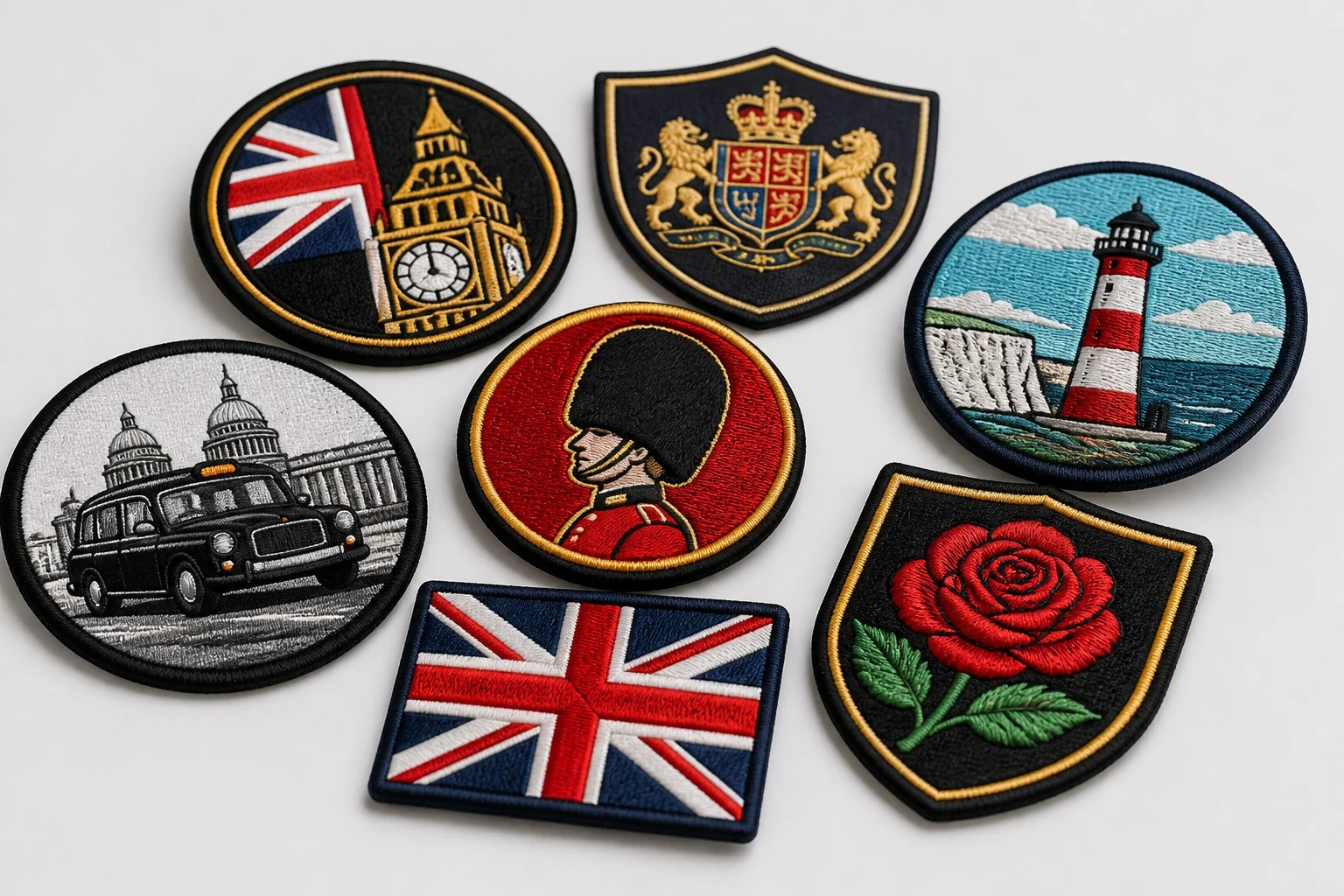
Key takeaways
- Fine-detail woven patches UK prices are shaped by quantity, finished size, artwork, border, backing and delivery rather than by the logo alone.
- A 5-piece minimum applies to each design, so a small test order has a higher unit cost than a larger club or business run.
- A free digital mockup is usually supplied within 12 hours, and The Customized Patches produces only after the artwork and specifications are approved.
- Printed patches are flatter, embroidered patches have more texture, and woven patches suit small lettering and close linework when the design is prepared properly.
Fine-detail woven patches UK generally cost more per patch on a small order and less per patch as the quantity rises. The exact GBP price depends on finished size, design detail, thread colours, border, backing and delivery, so a logo and quantity are needed for a reliable quote.
The Customized Patches supplies custom patches across the United Kingdom with a 5-piece minimum per design. You receive a free digital mockup usually within 12 hours, and production starts only after you approve the artwork and specifications.
What affects the cost of fine-detail woven patches UK?
The biggest pricing mistake is treating a patch as a flat product with one universal price. A 2-inch name badge with a simple border is not the same job as a 4-inch club crest with tiny lettering, several colour changes and a Velcro back. Both may be called woven patches, but the production requirements are different.
Quantity usually has the clearest effect on the unit price. Setup, artwork preparation and handling are spread across the order, so five patches normally cost more each than 50 or 100 patches. That does not mean a larger order is automatically better; it only means the per-patch figure often improves when the design stays the same.
- Finished size: larger patches use more material and may need more production time.
- Quantity: each separate design is counted separately, with a minimum of 5 pieces per design.
- Artwork: small lettering, fine outlines and many colour changes need careful checking.
- Border: a standard stitched border and a raised or merrowed crest can have different requirements.
- Backing: sew-on is generally straightforward, while iron-on and Velcro change the construction.
- Shape: a simple circle or rectangle is easier to quote than a complex cut shape.
- Delivery: the destination and requested speed can affect the delivered total.
Typical UK price bands and why a quote may differ
It is safer to use price bands as a planning guide rather than publish a pretend fixed tariff. A small run of five detailed patches will have a different unit price from a school ordering 80 blazer badges or a clothing brand ordering 500 woven labels. The artwork also needs to be seen before anyone can judge whether a tiny feature will hold at the requested size.
| Order example | Likely price behaviour | What tends to change the quote |
|---|---|---|
| 5–10 patches, around 2–3 inches | Highest unit cost because setup is spread across very few pieces | Complex lettering, backing choice, individual names and delivery |
| 25–75 patches, around 2–4 inches | Often a more practical balance for clubs, teams and small businesses | Exact dimensions, number of colours, border and application method |
| 100–250 patches | Usually a lower unit cost when one approved design is repeated | Multiple sizes, separate designs, packaging and deadline |
| 250+ patches or repeat production | Best suited to established brand or uniform programmes | Colour matching, repeat artwork, stock planning and delivery schedule |
These bands are not a substitute for a quote. A five-piece order can still be sensible if the patches are for a limited team, a sample garment or a launch run. It is better to order the right size and backing than to save a small amount on a patch that will not sit correctly on the garment.
For a first estimate, send the quantity, maximum width or height in inches, artwork, preferred backing and delivery postcode. If you are comparing products, the How Much Do woven patches Cost in the UK? guide gives useful context, but fine-detail designs still need an artwork check.
Why woven construction suits detailed logos
Woven patches are made with finer threads worked closely into a flatter surface. That makes them a useful option for small words, narrow outlines, badges with compact detail and logos that would look crowded if built from thick embroidery stitches. They work well on football training tops, hospitality polos, school blazers, retail garments and branded workwear.
There is a trade-off. Woven patches do not have the raised, textured pile people associate with traditional embroidered crests. If the whole point of the design is a thick tactile border, compare embroidered patches instead. If the logo needs tiny text and a smooth face, woven construction may be the more sensible starting point.
Printed, embroidered and woven: a practical comparison
| Patch type | Best suited to | Main advantage | Main trade-off |
|---|---|---|---|
| Woven | Small lettering, detailed logos and flat badges | Fine linework on a relatively smooth face | Less raised texture than embroidery |
| Embroidered | Traditional crests, bold shapes and textured uniforms | Visible thread texture and a familiar premium crest appearance | Very small details may need simplifying |
| Printed | Photographic artwork, gradients and very fine tonal detail | The surface is flatter; that is the point | Ink can look less tactile and may not suit every uniform |
| PVC | Outdoor, sports, tactical and wipe-clean applications | Rubbery surface and strong visual separation | Not the right feel for every blazer, polo or fashion garment |
For a fuller choice between the two common textile options, read Fine-detail woven patches UK vs embroidered patches: Which Is Right for Your Project?. A football club may prefer embroidery for a bold home-kit crest, while a hospitality group may choose woven patches for a compact wordmark on a polo sleeve.
Printed is flatter; that is the point. It can be the correct answer for gradients or artwork that behaves more like a label than a crest. Conversely, PVC can be practical on outdoor kit but may feel out of place on a wool coaches jacket or school blazer.
Size, border and backing: the details people miss
Measure the garment, not just the digital logo. A patch that looks balanced at 4 inches on a screen may overpower a small chest area. On a football top, sleeve badge or school blazer, measure the available panel and allow room for seams, pockets, buttons and the movement of the fabric.
Not sure whether woven, embroidered or printed construction will suit the logo and garment? Send the artwork and application details for a free digital mockup usually within 12 hours, so you can compare the result before production.
GET A FREE MOCKUP- Sew-on backing is a reliable choice for nylon shells, wool coaches jackets, bags and garments that will be washed regularly. It requires stitching through the patch and the fabric.
- Iron-on backing can be convenient for suitable cotton or blended garments, but heat, washing instructions and fabric finish matter. An iron-on patch that peels after a dryer cycle is usually a garment or application mismatch, not a reason to ignore the backing specification.
- Velcro backing suits removable identifiers, security clothing, cadet kit and panels designed for hook-and-loop attachment. The mating panel may need to be supplied or fitted separately.
- A merrowed crest has a wrapped edge that gives a traditional finish. A cut edge may suit a thin label or a detailed shape where a heavy edge would cover part of the artwork.
The border is not just decoration. It protects the edge, affects the apparent size and can reduce the space available for small text. A narrow line of lettering may be readable in the artwork file but too cramped once the border and edge finish are included. This is why a digital mockup should show the whole patch rather than only the central logo.
Name the application in your enquiry. Saying 'for a jacket' is less useful than saying 'for a nylon shell with a 3-inch left-chest space' or 'for a removable Velcro panel on cadet clothing'. Our team can then flag a poor match before you place the order.
Artwork detail can raise or reduce the final price
A clean vector logo is the easiest starting point, but a clear high-resolution PNG can also be useful. The important point is that the artwork must show the intended proportions, colours and lettering. A screenshot from a social media profile may be enough to identify the logo but not enough to reproduce a small woven badge accurately.
Small text is the common failure point. A football club asking for a sponsor line, a cadet unit adding a motto or a brand placing a website address on a 2-inch patch may have more words than the available area can support. The solution may be a larger patch, fewer words, heavier letterforms or a different product.
- Keep fine lettering large enough to remain legible at the finished size.
- Avoid relying on hairline strokes that disappear beside a dense border.
- Identify colours by reference where an exact brand match matters.
- Do not assume a gradient will reproduce as separate woven shades without checking the mockup.
- Send each design separately if a club or business needs several different badges.
- Check the patch at its real printed or displayed dimensions, not only zoomed in on a monitor.
Artwork preparation is not an excuse to alter a brand without permission. The mockup should make proposed changes visible: simplified lettering, a wider outline, adjusted spacing or a different border. The Customized Patches produces only after approval, so the customer has the opportunity to correct the design before manufacturing.
For practical file advice, see How to Design Artwork for woven patches That Production-Ready and Common Mistakes to Avoid When Ordering fine-detail woven patches UK. Both are useful before asking for a final quote.
Examples from UK orders and garments
A football club often needs a repeatable crest for tracksuits, training jackets and kit bags. If the crest contains a ball, initials and a founding year, a woven patch can keep the small elements clearer than heavy embroidery. The quote will still depend on whether the club wants one 3-inch crest or several sizes for different garments.
Cadet units commonly ask about removable identifiers. A Velcro back may be appropriate for kit designed around panels, but it is not automatically the best answer for every jacket. Check the hook-and-loop area, the weight of the patch and whether the garment manufacturer permits the chosen attachment.
Hospitality polos and work shirts usually need a neat chest or sleeve badge that does not feel bulky. A woven wordmark can work well, particularly if the text is small but must remain clear from a short distance. The design should be tested against the shirt colour because a fine dark outline can lose contrast on navy or charcoal fabric.
Biker vests and club jackets often use larger, more tactile pieces with strong borders and separate back panels. A traditional embroidered or chenille treatment may suit that look better than a very flat woven badge. See the biker and motorcycle club patches hub if the project involves a back patch, rocker or multiple garment pieces.
School blazers bring a different set of practical questions. The badge needs to sit neatly over wool or mixed fabric, survive regular wear and look consistent across a year group. Ask about sew-on construction rather than assuming an iron-on finish will behave well on every blazer.
Ordering, mockup approval and lead time
Start with the information that changes the quote: the number of pieces per design, finished size in inches, artwork, border, backing and delivery location. Include a photograph of the garment or panel if the patch must fit around a seam, pocket, zip or existing Velcro.
- Send the logo and state the exact quantity for each design.
- Give the intended width and height, or the maximum space available in inches.
- Explain the garment: nylon shell, wool coach jacket, polo, blazer, bag, vest or Velcro panel.
- Choose sew-on, iron-on or Velcro backing, or ask for a recommendation based on the application.
- Review the free digital mockup, usually within 12 hours.
- Request any changes to text, colour, border, dimensions or backing before approval.
- Approve the final mockup and quote so production can begin.
The 5-piece minimum applies to each design, not to a mixed basket of five unrelated badges. If a team needs four player initials plus a club crest, confirm how each design will be counted. Grouping identical patches is straightforward; changing the name, number or artwork can make each version a separate design.
Lead time depends on the confirmed specification, quantity and current production schedule. A rush request may be possible, but it should be discussed before approval rather than assumed. UK-wide delivery also needs to be allowed for after production, particularly if the patches are required for a match, launch, school term or trade event.
Name sew-on, iron-on or Velcro on the quote and include the garment. We show the proposed back and front on a free digital mockup usually within 12 hours, then produce only after you approve it.
GET A FREE MOCKUPA mockup is not production approval by itself. Check that the final version shows the correct spelling, dimensions, colours, border and backing. The Customized Patches produces only after approval, which gives you a clear point to stop an incorrect name or unsuitable attachment method from reaching manufacture.
How to compare quotes fairly
A low-looking unit price may exclude delivery, setup, backing, artwork work or a minimum order. Compare like for like: same finished size, same quantity, same number of designs, same border, same backing and the same delivery requirement. Otherwise you are comparing different products under similar names.
| Quote question | Why it matters |
|---|---|
| Is the 5-piece minimum per design? | Five different logos are not necessarily the same as five copies of one logo. |
| Is the stated size the finished patch size? | A border or edge can affect how much space remains for the logo. |
| Is backing included? | Sew-on, iron-on and Velcro are different specifications, not interchangeable extras. |
| Has the artwork been checked at final size? | Fine lettering can need adjustment before production. |
| Is delivery to the UK included or separate? | The delivered GBP total is the figure to budget against. |
| Will production wait for approval? | A clear approval stage reduces the risk of manufacturing the wrong version. |
If you are commissioning a brand identity programme, keep an approved artwork file and specification for repeat orders. Record the finished size, colour references, border, backing and garment use. This avoids a later reorder being made slightly wider, with a different blue or with the wrong attachment method.
Choosing the right patch instead of chasing the lowest cost
The best value is the patch that performs its intended job. A cheaper iron-on option is poor value if the garment is a nylon shell that cannot take the required heat. A highly textured embroidered crest is poor value if the design depends on tiny text that becomes blocked by the thread.
Look at the whole use case: how often the garment is washed, how much handling the patch receives, whether it needs to be removed, how visible it is from a normal distance and whether the artwork will be reused. The Woven patches Sizing and Backing Options Explained guide is useful for narrowing down the specification.
Some projects may be better served by 3D embroidered patches, chenille patches, printed patches or PVC patches. A leather label can suit a denim or premium accessories range, while a woven badge may suit a detailed uniform logo. The product should follow the garment and artwork, not the other way round.
For most buyers, the next useful step is not guessing a price from a generic chart. Send the finished size, quantity and artwork so our team can identify the real cost drivers. UK-wide customers can request a quote and mockup before committing to manufacture.
Frequently asked questions about fine-detail woven patches UK
The answers below cover the questions UK clubs, brands, schools and businesses ask most often. If the design has unusually small text, multiple versions or a non-standard backing, include that information in the first enquiry.
Frequently asked questions
How much do fine-detail woven patches UK cost?
There is no single price because quantity, size, artwork, border, backing and delivery all affect the total. Small orders usually have a higher price per patch, while larger runs of the same approved design often reduce the unit cost. Send the artwork and specifications for an accurate GBP quote.
What is the minimum order for fine-detail woven patches UK?
The minimum is 5 pieces per design. If you need several different names, badges or logos, each design may be counted separately, so list the quantities clearly when requesting a quote.
How quickly can I receive a mockup?
The Customized Patches usually provides a free digital mockup within 12 hours. Review the dimensions, spelling, colours, border and backing carefully. Production begins only after you approve the mockup and quote.
Are woven patches better than embroidered patches for small lettering?
Woven patches can be better suited to small lettering and close linework because their surface is flatter and uses finer woven detail. Embroidery offers more visible texture and can be the stronger choice for bold crests. The correct option depends on the artwork, finished size and garment.
Which backing should I choose for a nylon jacket or school blazer?
Sew-on backing is often the safer starting point for nylon jackets and wool or mixed-fabric blazers because it does not rely on heat adhesion. Iron-on backing may suit compatible garments, but application temperature and washing instructions must be checked. Velcro is appropriate when the garment already has a hook-and-loop panel.
Can I order different patch designs together to reach five pieces?
The 5-piece minimum applies per design, so five unrelated designs may not meet the minimum for each one. Identical copies of one approved design count together. State the number of pieces for every design so the quote reflects the actual order.
Ready to produce custom patches for your UK team or brand?
GET A FREE MOCKUP