
Chenille patches Trends to Watch in 2026
Chenille patches in 2026 are moving towards cleaner varsity lettering, fewer stronger colours, mixed textures and practical backings for modern garments. UK buyers are also asking for smaller runs, clearer digital proofs and patches suited to nylon shells, wool jackets, polos, blazers and Velcro panels. The Customized Patches offers a free digital mockup usually within 12 hours, with a 5-piece minimum per design.
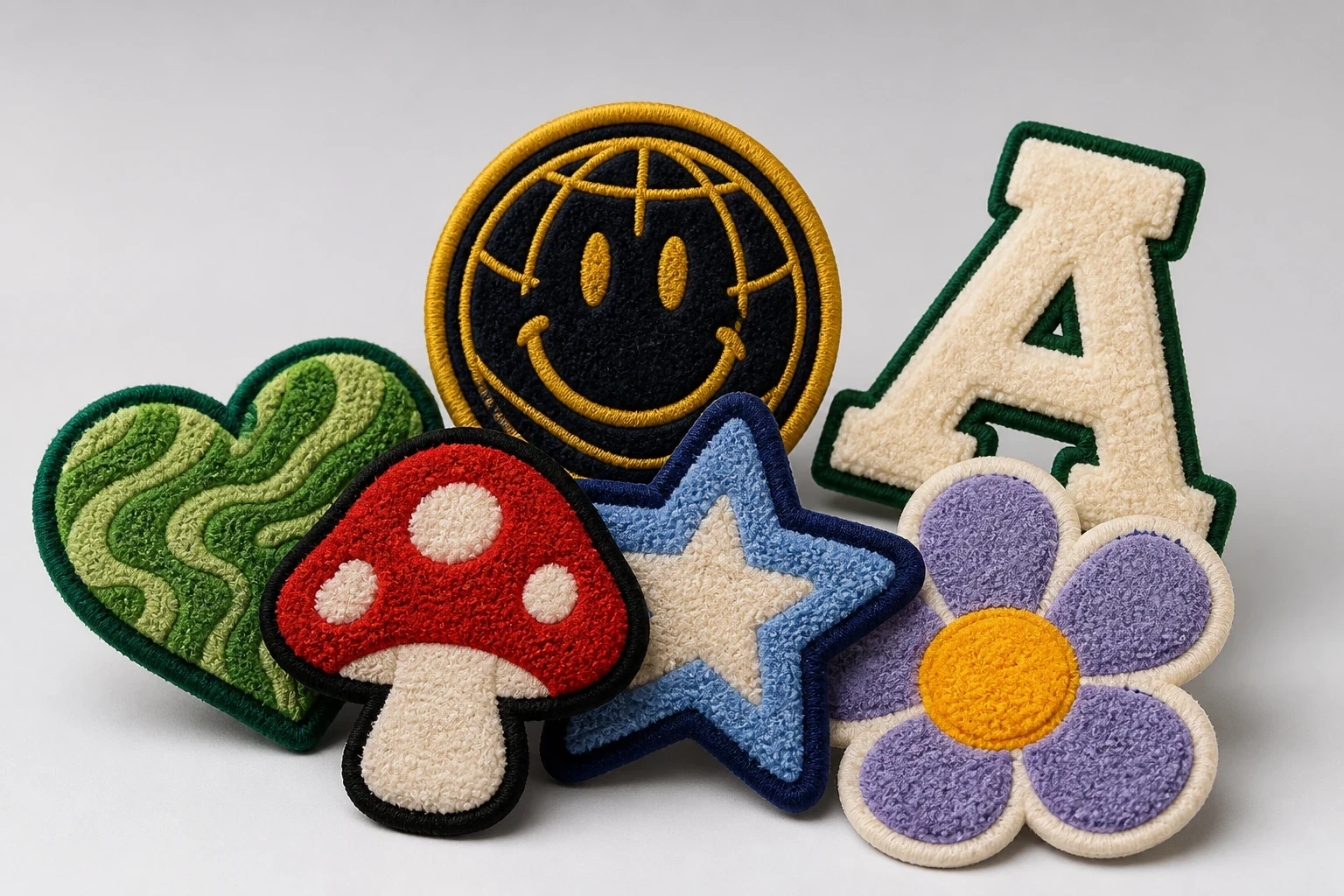
Key takeaways
- The strongest 2026 chenille patches designs use clear lettering, strong contrast and fewer colours rather than squeezing detail into a small badge.
- A 5-piece minimum applies per design, making chenille practical for small clubs, pilot merchandise runs, school groups and team orders.
- Backing should be chosen around the garment: sew-on suits permanent use, iron-on suits suitable fabrics and Velcro suits removable kit.
- The Customized Patches provides a free digital mockup usually within 12 hours and produces only after the artwork and specifications are approved.
The main chenille patches trends for 2026 are bold varsity lettering, restrained colour palettes, mixed chenille and embroidery, and backings selected for the garment rather than added as an afterthought. UK teams, clubs, brands and businesses are also asking for patches that work on real clothing, from nylon shells and wool coaches to school blazers, hospitality polos and Velcro panels.
The Customized Patches supplies custom patches across the United Kingdom with a 5-piece minimum per design. You receive a free digital mockup usually within 12 hours, and we produce only after you have approved the artwork, size, colours, border and backing.
What is changing in chenille patches for 2026?
Chenille has always had a recognisable feel: raised yarn, a soft pile and a varsity or collegiate character. The change in 2026 is not that the material has become something else. It is that buyers are using it with more restraint. A large letter, short word or simple crest often looks stronger than a crowded badge with tiny text and five different stitch treatments.
We are seeing more requests from UK football clubs, university societies, cadet units, independent clothing labels and hospitality groups that want a tactile mark without covering an entire garment in decoration. The patch has to look intentional on a jacket or polo, survive normal handling and be easy for the wearer to position.
- Large varsity initials and short names with a merrowed crest or border.
- Two-tone and three-tone designs with one dominant pile colour.
- Chenille lettering combined with a flatter embroidered edge or small embroidered detail.
- Patches designed around chest panels, sleeves, jacket backs and removable Velcro areas.
- Small trial orders before a school, club or clothing range commits to a larger run.
- More attention to how the patch will be washed, dried, stored and applied.
This does not mean every 2026 design needs to follow a fashion direction. A club badge can stay traditional. A brand can use a deliberately plain cream-and-navy letter patch. The useful trend is better decision-making: the artwork, patch construction and garment should agree with one another.
Trend 1: cleaner varsity lettering and stronger silhouettes
Varsity lettering remains the safest starting point for chenille patches because the raised yarn gives simple characters visual weight. Block capitals, arched names, outlined initials and compact mascots read well from a short distance. This is why the format continues to suit football squads, American football teams, university societies, school leavers and streetwear capsules.
The practical limit is small internal detail. A narrow gap inside an R, A or B may close once the yarn and border are produced. Thin script can lose its identity too. If a badge is under roughly 3 inches wide, we usually recommend cutting unnecessary lines, enlarging the main letter or moving fine detail into flat embroidery.
Short wording usually beats a full slogan
A two-to-eight-character word is easier to read than a full sentence, especially on a sleeve or left chest. Think squad initials, a year, a town name, a role such as COACH, or a compact club nickname. If the wording must be longer, an arched layout may work, but the letter height needs checking before the quote is final.
A merrowed crest can frame the lettering and give a finished edge, but it also takes space. On a 3-inch patch, a thick border can leave too little room for the central design. We check the balance in the mockup rather than assuming the original logo will scale perfectly.
Trend 2: fewer colours, better contrast
Colour requests are becoming more controlled. Navy with cream, burgundy with white, forest green with gold and black with a single bright accent are common combinations because the contrast remains clear on jackets and knitwear. A limited palette also helps a team order match existing kit, rather than creating a patch that looks unrelated to the garment.
The colour on a phone screen is not a production specification by itself. Fabric, yarn and surrounding clothing affect how a shade is perceived. If your brand has an established colour, send the reference or explain the target clearly. We can then show the intended combination on the digital mockup before production.
| Design choice | Where it works | Main benefit | Trade-off to check |
|---|---|---|---|
| Two-colour chenille lettering | Team jackets, school blazers and simple merchandise | Very clear from a distance and easy to match | Less room for subtle shading |
| Three-colour varsity patch | Club crests, society clothing and limited-edition apparel | Adds separation between letters, border and background | Can look busy if every area is equally bright |
| Chenille with flat embroidery | Brand marks, mascots and detailed crests | Combines raised impact with sharper small detail | The two textures need a clear hierarchy |
| Printed detail beside chenille | Large artwork with gradients or fine imagery | Keeps the chenille element while allowing flatter artwork | Printed is flatter; that is the point, so it will not feel like yarn |
If the logo includes a gradient, photograph or fine linework, a chenille-only build may not be the right answer. A flatter embroidered patch can hold more structured detail, while printed patches are useful when a smooth image or tonal transition matters. Neither option is automatically better; it depends on what people need to see and feel on the garment.
Contrast matters more than the number of colours
A cream pile on a pale beige jacket can disappear even if the colour selection looks attractive on screen. A bright yellow border around white lettering may also lack separation. Ask how the patch will look against the actual garment, under indoor lighting, outdoors and after normal wear. A mockup placed on the garment image is more useful than a patch floating on a white artboard.
Trend 3: mixed texture instead of chenille everywhere
One of the most useful developments for 2026 is the deliberate pairing of raised chenille with flatter embroidery. A large pile letter can carry the main visual message, while an embroidered outline, small date or narrow internal mark adds control. This is particularly helpful for logos that need some fine detail but still want the soft varsity character.
The same principle applies when comparing product types. 3D embroidered patches add raised thread rather than chenille yarn, so they can suit logos that need a more stitched, dimensional finish. Woven patches are flatter and sharper for small lettering. PVC patches can be a better fit for outdoor kit or technical clothing where a rubberised surface is preferred.
Do not mix textures simply to make a design look busy. The main element should still be obvious at a glance. If every line is raised, outlined, printed and bordered, the patch may lose the calm, confident appearance that made the design attractive in the first place.
Not sure whether a chenille-only design or a mixed thread-and-pile version will hold your logo best? Send the artwork and garment details for a free digital mockup usually within 12 hours, then approve the version that works before production.
GET A FREE MOCKUPTrend 4: patches designed for the garment they will actually use
A patch that looks right on a sample board can fail on the clothing. Nylon shells are slippery and often need careful positioning. Wool coaches and heavy varsity jackets can carry a larger sew-on patch, but a small iron-on may look lost. A school blazer has a more formal proportion than a biker vest, and a hospitality polo usually needs a restrained chest mark rather than a large back badge.
For removable team kit, a hook-and-loop backing can be sensible. It lets a club move a role patch between garments or replace a sponsor panel. The hook side can be uncomfortable if it is exposed inside a jacket, so the placement and matching loop panel need discussing. A permanent sew-on finish is often the safer choice for clothing that will be washed regularly.
| Garment or use | Commonly suitable backing | What to check before ordering |
|---|---|---|
| Nylon shell or rain jacket | Sew-on or carefully tested iron-on | Heat tolerance, slippery fabric and edge stitching |
| Wool coach or varsity jacket | Sew-on | Patch weight, position and whether the border sits flat |
| School blazer | Sew-on or suitable iron-on | Formal size, wash routine and school colour matching |
| Football or training kit | Sew-on, iron-on or Velcro depending on the fabric | Movement, repeated washing and whether the badge must be removable |
| Biker vest or motorcycle jacket | Sew-on, often with a strong border | Leather or denim thickness, curved placement and surrounding patches |
| Hospitality polo | Sew-on or tested iron-on | Small chest scale, comfort and laundering instructions |
For club members using leather or denim, see the biker and motorcycle club patches product page for the broader layout considerations. A traditional back panel has different needs from a left-chest patch on a polo, even if both use the same logo.
The most common backing mistake
People sometimes choose iron-on because it sounds quick, then apply it to a fabric that flexes, has a coating or cannot take enough heat. The result may look fine on day one and peel after a dryer cycle. Iron-on can be useful, but it is not universal. Ask about the fabric, care label and application method before committing.
If the garment is valuable, difficult to replace or worn during demanding activity, sew-on is usually the more dependable route. It takes longer to apply, but a neat line of stitching around the edge is easier to repair than an adhesive bond that has lifted.
Trend 5: smaller first runs and more considered quantities
Teams and independent labels are testing designs before ordering a large batch. That makes sense when a club is changing its crest, a school is trialling a leavers patch, or a brand is checking which colourway sells. The Customized Patches has a 5-piece minimum per design, so a small first run is possible without requiring hundreds of identical pieces.
The minimum is per design. Five navy-and-cream patches with one shape is different from five navy-and-cream, five burgundy-and-white and five black-and-gold designs. If you need several colourways, list each one separately so the quote and artwork approval are clear.
For a team, it is worth counting spare garments and replacements rather than ordering only the exact player total. For a business, consider whether the patch will be used on staff clothing, event stock, online orders or future uniforms. A slightly larger first order may reduce the need to reopen the artwork and arrange another production run, but only if the design is already approved and the use case is clear.
Trend 6: clearer proofs before anything is made
A digital mockup is now a normal part of a sensible patch order, not a decorative extra. It should show the patch shape, approximate size, colours, border, backing and position on the proposed garment where possible. It will not reproduce the exact physical pile height, but it can expose a spelling error, crowded letter, poor contrast or oversized border before production.
The Customized Patches usually sends a free digital mockup within 12 hours. We produce only after approval, so the customer has a clear point at which to check the specification. Read every word in the proof, not just the overall shape. Confirm the patch width and height in inches, the number of pieces, the backing and whether the design is one-sided or part of a matching set.
- Check the spelling of team names, towns, dates and initials.
- Compare the patch size with the garment panel, not only the screen preview.
- Check whether a curved top line still reads after the design is reduced.
- Confirm that the border is intentional and not hiding a cropped part of the artwork.
- Make sure the requested backing is written on the quote.
- Approve colour changes in writing so there is one agreed version for production.
Our guide to Common Mistakes to Avoid When Ordering chenille patches covers the checks that are easy to skip when an order is needed for a match, launch or presentation. A few minutes on the proof can save a much more awkward conversation after the patches have been made.
How UK buyers should compare chenille with other patch types
Chenille is chosen for texture and presence. It feels soft and raised, which makes it attractive on varsity jackets, school clothing, clubwear and statement merchandise. It is not the best format for every logo. Fine maps, tiny wording, photographic artwork and very narrow lines may need another construction.
| Patch type | Best suited to | Surface and detail | Key limitation |
|---|---|---|---|
| Chenille | Varsity letters, bold crests and tactile club designs | Soft raised yarn with a strong textile feel | Fine detail and tiny lettering need simplifying |
| Flat embroidered | General logos, uniforms and detailed stitched marks | Thread-based texture with more control over small features | Less soft pile and less of the classic chenille character |
| Woven | Small text, narrow outlines and flatter fashion labels | Smooth, tight surface with clean detail | Does not have the deep raised feel of chenille |
| Printed | Gradients, photographs and smooth tonal artwork | Flat surface with broad graphic flexibility | Printed is flatter; that is the point, and it will age differently from yarn |
| PVC | Outdoor kit, technical clothing and bold rubberised marks | Raised moulded surface, often easy to wipe clean | Less traditional for school, varsity and wool garments |
| Leather | Premium-feel labels, biker gear and restrained branding | Natural or synthetic leather surface | Fine detail, colour and care depend on the leather choice |
Our guide to chenille patches vs embroidered patches: Which Is Right for Your Project? gives a closer comparison. You can also review leather patches if the garment is a motorcycle jacket, denim vest or premium workwear piece. The right choice is the one that remains legible, comfortable and appropriate after it leaves the sample image.
Ordering chenille patches in the UK: what to send first
A useful first message does not need to be a polished design brief. Send the logo or sketch, the intended wording, an approximate patch size in inches, the quantity, the garment type and the preferred backing. If there are several versions, label them clearly. A photograph of the garment or an existing badge can help us judge scale and placement.
Name sew-on, iron-on or Velcro on the quote and include the garment type. We will show the proposed backing and placement on a free digital mockup usually within 12 hours, with production starting only after you approve the details.
GET A FREE MOCKUP- Send the artwork in the clearest format available, along with any brand colour references.
- State the finished patch width and height, or explain where it will sit so a sensible size can be suggested.
- Confirm the quantity for each separate design, remembering the 5-piece minimum per design.
- Name the garment: nylon shell, wool coach, blazer, polo, denim, leather or Velcro panel.
- Choose a preferred backing, but mention any uncertainty so the material can be checked.
- Review the free digital mockup, request changes if needed and approve the final version in writing.
- Only after approval should the patch move into production.
UK-wide delivery should also be discussed at quote stage if the patches are needed for a fixed date. A football tournament, college presentation, retail drop or club AGM leaves less room for a late artwork change than a general stock order. Keep the delivery address, contact details and required date together with the approved design.
For costs, quantity and size usually matter more than a vague idea of what a patch should cost. Larger dimensions, more complex artwork, multiple versions and special backings can affect the quote. The guide How Much Do chenille patches Cost in the UK? explains the main variables without pretending that one price fits every order.
What will probably stay important beyond the trend cycle?
The best chenille patches in 2026 will still be the ones that fit the wearer, the garment and the reason for the order. A school may need a traditional crest that is easy to identify. A club may want a large back design with a memorable nickname. A business may need a small, quiet mark on a polo. The trend does not remove those practical differences.
Durability will remain tied to construction and care. A well-sized sew-on patch applied neatly to a suitable garment can serve for a long time, while a poorly chosen iron-on may lift quickly. Follow the garment's care label, avoid assuming every dryer is safe and inspect the edge after washing. If a patch starts to lift, repair it early rather than letting the loose edge catch on equipment or bags.
The other lasting point is clarity. Good artwork gives the manufacturer room to build a clean border, readable lettering and an even surface. A free mockup is useful because it turns a discussion about an image file into a discussion about the finished patch on real clothing.
Final checklist for a 2026 chenille patch order
Before approving, treat the patch like a small manufactured product rather than an image being printed on demand. Check the visual result, but also check how someone will apply it, wash it, wear it and replace it. This is especially important when one design is being issued across different sizes of jacket, blazer or polo.
- The wording, initials and date are correct.
- The artwork remains readable at the finished size.
- The chosen colours contrast with the actual garment.
- The border, merrowed edge and shape are intentional.
- The size is stated in inches and suits the placement.
- The backing matches the fabric and care routine.
- The quantity is correct for every design, with at least 5 pieces per design.
- The delivery address and required date are recorded.
- The digital mockup has been approved.
- No production begins before that approval.
If you are still comparing formats, the Complete Guide to Chenille patches in 2026 is a useful next read. For a wider selection, the embroidered patches hub covers alternative constructions and ordering routes for UK teams, brands, clubs and businesses.
Frequently asked questions about 2026 chenille patches
A good order usually comes down to a few straightforward decisions: what the patch needs to say, where it will sit, how it will be attached and how many versions are required. The answers below cover the questions buyers ask most often.
Frequently asked questions
What are the main chenille patches trends for 2026?
The main trends are bold varsity lettering, reduced colour palettes, mixed chenille and embroidery, garment-specific sizing and more removable Velcro options for team kit. UK buyers are also placing greater value on digital proofs that show the patch before production.
What is the minimum order for chenille patches?
The minimum is 5 pieces per design. If you order three different colourways or layouts, each version is treated as a separate design for the minimum. Ask for the quote to list each design separately.
How quickly can I receive a chenille patch mockup?
The Customized Patches provides a free digital mockup usually within 12 hours. The mockup is sent for checking and approval; production starts only after the artwork and specifications have been approved.
Are chenille patches suitable for school blazers?
Yes, they can suit school blazers when the size, colour and backing are appropriate. Keep the lettering readable, avoid making the patch too large for the chest or sleeve and check whether the blazer should be sewn on rather than heat-applied.
Is sew-on or iron-on better for chenille patches?
Sew-on is usually the safer choice for valuable garments, regular washing, wool, leather, denim and fabrics that cannot take high heat. Iron-on can be convenient on suitable materials, but it may peel after a dryer cycle or fail on coated nylon, so the fabric and care label should be checked first.
Can chenille patches include detailed logos?
They can include some detail, but tiny text, narrow lines and complex gradients may need simplifying. A mixed construction or another format, such as woven patches or printed patches, may hold fine artwork more clearly. The mockup will show where changes are needed.
Ready to produce custom patches for your UK team or brand?
GET A FREE MOCKUP