
Common Mistakes to Avoid When Ordering chenille patches
The main mistakes when ordering chenille patches are choosing artwork with details that are too fine, failing to confirm the finished size, selecting the wrong backing, overlooking the garment fabric and approving a mockup without checking it at actual scale. Confirm these points before production, and order only after reviewing the approved design.
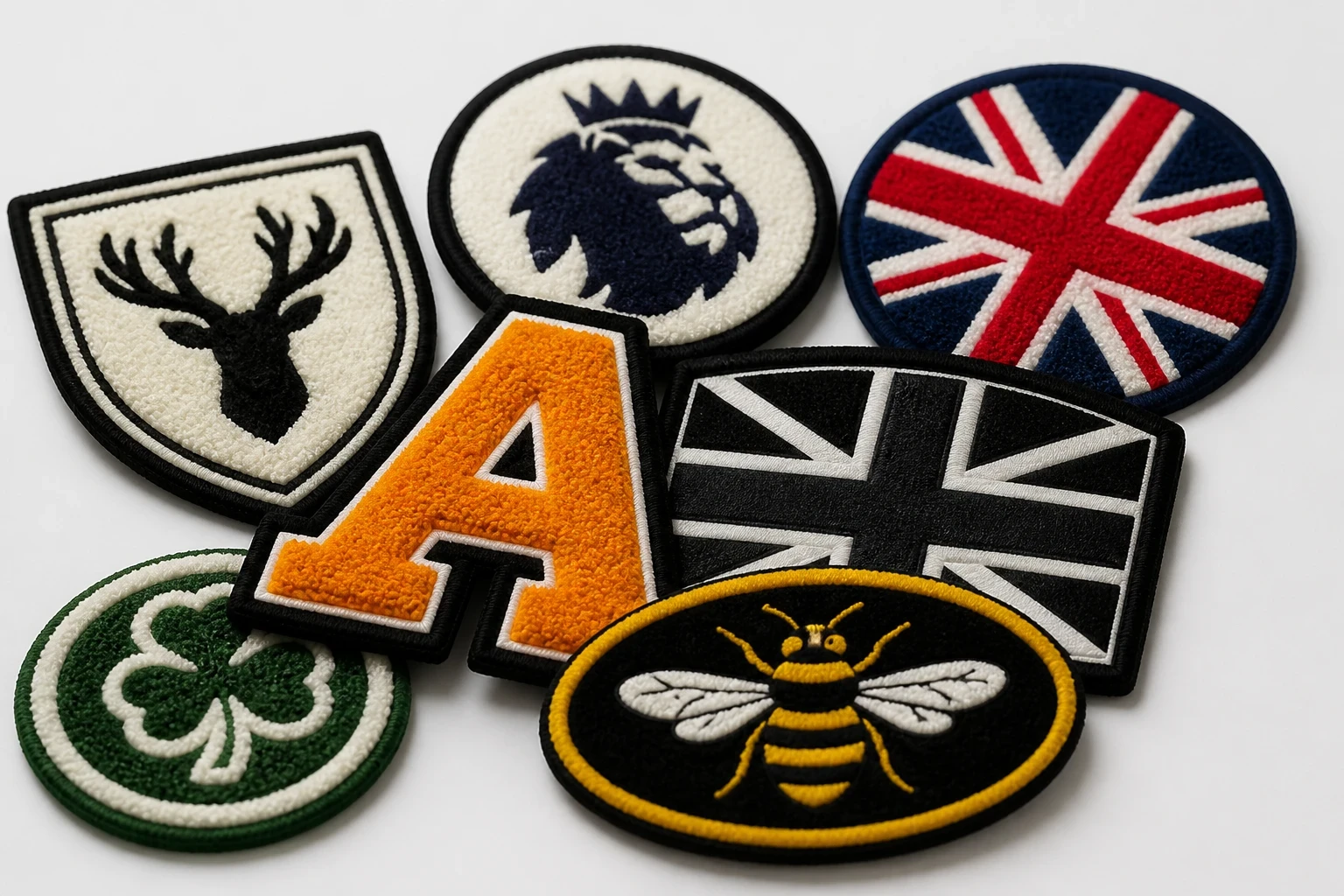
Key takeaways
- Chenille patches need bold artwork; tiny text, narrow gaps and intricate outlines can lose clarity in high-pile yarn.
- Confirm the finished size in inches and check the design at its real size, not only on a large computer screen.
- Choose sew-on, iron-on or Velcro backing for the actual garment and use, not simply for the lowest quoted price.
- The Customized Patches has a 5-piece minimum per design, supplies a free digital mockup usually within 12 hours and produces only after approval.
The most common chenille patches mistakes are using artwork that is too detailed, choosing the wrong finished size, overlooking the garment fabric and approving the design without checking it at actual scale. A patch can look excellent on a screen and still lose small lettering or sit awkwardly on a jacket. Check the artwork, dimensions, backing and garment before production.
That is the short answer from our team. Typical enquiries cover patches for football clubs, cadet units, hospitality polos, school blazers, biker vests and wool coaches, and the problems tend to repeat. A strong-looking crest is not automatically a practical patch, particularly if the badge has small text, narrow outlines or a backing that does not suit the garment.
Mistake 1: Treating chenille patches like printed artwork
Chenille is made to give a design a soft, raised yarn surface. That texture is the appeal, but it also means the artwork needs to be designed for the process. Fine lines, tiny gaps and very small lettering cannot always be reproduced with the same sharpness as ink on a flat surface.
A football club may send a detailed crest containing a founding year, a motto, two rings and a small central symbol. At 3 inches wide, some of those elements may have nowhere to sit clearly. The better solution is often to remove the least important detail, enlarge the key wording or make the badge wider. It is better to have three readable elements than seven muddy ones.
What to simplify before requesting a quote
- Remove hairline outlines and replace them with shapes that have enough width to remain visible.
- Keep lettering short and bold. Long club names may need a wider patch or a separate text layout.
- Avoid placing similar colours directly beside one another if the edge between them is important.
- Tell us which part of the artwork matters most if the design needs simplifying.
- Send the original logo where possible rather than a screenshot copied from a social media page.
This does not mean every chenille design must be plain. A large varsity letter, broad shield, mascot, number or simple wordmark generally suits the material well. If your logo depends on fine detail, compare it with embroidered patches, woven patches or printed patches. Printed is flatter; that is the point, and it can be the sensible choice for small text or a photographic-style image.
Mistake 2: Choosing the size by eye
A patch that looks balanced in a digital file may be too large for a polo chest or too small for the back of a biker vest. Always measure the garment area first. Mark the proposed width with masking tape or paper, then stand back and check how it looks on the actual item.
Use inches when confirming the finished size. Say, for example, 3.5 inches wide by 3 inches high, or 10 inches wide across the back. Do not rely on phrases such as ‘standard badge size’ because a cadet unit, school blazer and hospitality polo will not have the same available space.
Allow for the border and the garment panel
The visible artwork is not the only measurement. A merrowed crest has an outer edge, and that edge needs to sit fully on the garment. On a narrow sleeve or chest panel, the border can make the usable design area smaller than expected. Curved seams, pockets, zips and ribbed sections also affect placement.
| Typical use | Useful starting size | Points to check |
|---|---|---|
| Football or rugby shirt chest badge | Approximately 3 to 4 inches wide | Check the sponsor, club crest, buttons and fabric stretch. |
| School blazer or cadet unit chest patch | Approximately 3 to 3.5 inches wide | Make sure the patch does not cover a pocket, badge or seam. |
| Hospitality polo or workwear sleeve | Approximately 2.5 to 3.5 inches wide | Check the sleeve width and washing routine before choosing backing. |
| Biker vest back panel | Often 8 to 12 inches wide, depending on the panel | Measure between seams and allow room for rocker patches or other badges. |
| Wool coach jacket front | Often 3.5 to 5 inches wide | Check the nap, lining, zip and whether sewing access is available. |
These are starting points rather than fixed rules. The correct measurement depends on the garment and the artwork. If you are comparing raised yarn with flatter decoration, our guide to Chenille patches vs embroidered patches: Which Is Right for Your Project? explains the practical differences.
Mistake 3: Selecting backing without naming the garment
Backing is not a minor add-on. It determines how the patch is attached and how well it suits the garment. Sew-on backing is usually the most flexible option for heavier items and regular wear. Iron-on backing can be convenient on suitable fabrics, but it is not a universal answer.
A nylon shell, coated rain jacket or stretchy performance top may not behave like a cotton sweatshirt. Heat can be unsuitable for some synthetics, and a curved or textured surface may not give iron-on adhesive a reliable bond. On a wool coach jacket, sewing may be the safer route, especially if the patch is large or will be handled often.
Backing choices in plain terms
- Sew-on: a dependable choice for jackets, blazers, uniforms, workwear and heavier fabrics. It takes more fitting time but can be repaired or repositioned by a competent needleworker.
- Iron-on: useful for suitable, heat-tolerant fabrics when the application instructions are followed. It may peel after a dryer cycle if the garment, heat or washing routine is unsuitable.
- Velcro: practical for removable identification, tactical clothing, event teams and garments with an existing loop panel. Confirm the hook-and-loop panel dimensions before ordering.
- Adhesive options: suitable only for specific short-term uses and clean, smooth surfaces. They are not the same as a sewn attachment for a frequently washed jacket.
Tell the quote desk where the patch will go, what the garment is made from and whether it will be washed or removed regularly. A badge for a school blazer has different needs from one fitted to a removable Velcro panel. For a wider look at attachment choices, see Chenille patches: Everything UK Buyers Need to Know.
Mistake 4: Sending an image without explaining the colour brief
A JPEG logo alone may not answer the questions production needs. The file may contain a colour that changes between screens, a gradient that needs converting into solid areas or an outline that is intended to match the garment. Tell us which colours are essential and which can be adjusted for clarity.
Not sure whether the artwork needs a wider layout or a simpler shape? Send the design and the garment details. The Customized Patches provides a free digital mockup usually within 12 hours, so you can check the proportion before production.
GET A FREE MOCKUPChenille yarn has its own surface and colour response. A deep navy can look different from smooth printed ink because the pile catches light. Strong contrast between the background, lettering and border helps the design read. A black-on-charcoal badge may be deliberately subtle, but it should be approved with that result in mind.
Check names, dates and numbers twice
The most avoidable production problem is a spelling error that survives approval. Check club names, initials, founding dates, squad numbers and regional wording before confirming the artwork. If several teams are ordering different names, label each design clearly and keep a written list of quantities.
The Customized Patches produces only after approval. That means the approved mockup is the reference for the finished order. If a spelling, colour or shape is wrong in the approved version, it is much harder to correct later than it is during the mockup stage.
Mistake 5: Comparing quotes without comparing the specification
Two prices are not directly comparable unless they describe the same patch. Check the width, height, shape, border, backing, number of designs, quantity and delivery requirement. A quote for one 4-inch chenille badge with sew-on backing is not equivalent to a quote for a 3-inch badge with a different attachment method.
The Customized Patches has a 5-piece minimum per design. If a club needs three versions of a crest, that normally means at least five pieces of each version rather than five pieces shared across all artwork. Confirm this early, particularly for a school ordering several house colours or a business testing several logo layouts.
| Specification to confirm | Why it affects the order | Question to ask |
|---|---|---|
| Finished width and height | Changes visual impact, material use and garment fit. | What will the finished patch measure in inches? |
| Number of separate designs | Different artwork is usually treated as a separate design quantity. | Does the 5-piece minimum apply to each version? |
| Backing | Changes attachment, application and suitability for the garment. | Is the quote for sew-on, iron-on or Velcro? |
| Border and edge | A merrowed edge changes the final outline and available design area. | Is the border included in the stated dimensions? |
| Mockup and approval | Prevents production from starting with unresolved details. | Will I see a digital mockup before manufacture? |
| Delivery location and timing | A UK-wide order may need to arrive before a match, launch or event. | What lead time applies after approval? |
If the raised surface is not essential, compare 3D embroidered patches or standard embroidered patches. If you need a more industrial surface for outdoor equipment, PVC patches may be worth considering. The right material is the one that fits the garment, artwork and use—not automatically the one with the most texture.
Mistake 6: Leaving the order until the week of the event
A match, trade show, induction week or product launch creates a fixed deadline, but production cannot sensibly begin until the design is settled. Allow time for artwork questions, mockup changes, approval, manufacture and UK delivery. If the order contains multiple versions, build in extra checking time.
A free digital mockup is usually supplied within 12 hours, but that is not the same as a promise that a finished order will arrive in 12 hours. The mockup is the approval stage. Production and delivery follow after the details have been confirmed, so send the artwork early and state the date the patches are needed.
A sensible ordering sequence
- Measure the garment and decide the approximate finished width and height.
- Choose the artwork version that contains only the details you need to keep.
- State the material, colour preferences, border, backing and quantity for each design.
- Request the quote and free digital mockup.
- Check the mockup at actual size, including spelling, colours, border and backing.
- Reply with approval or changes in one clear message.
- Allow production and UK-wide shipping time before the event or fitting date.
- Apply the patches according to the selected backing and garment requirements.
For a football club, this may mean ordering before the new kit is distributed. For a hospitality business, it may mean checking the polo fabric before staff uniforms arrive. For a biker club, it often means measuring the back panel alongside existing rockers and support patches. The earlier these details are known, the fewer compromises are needed.
Mistake 7: Ignoring how the patch will be washed and worn
A patch for occasional display has different demands from one used on a work jacket every day. Ask how the garment will be cleaned, whether it will go through a tumble dryer, and whether the patch will be pulled, folded or exposed to rain. The answer may change the backing and the size.
Iron-on that peels after a dryer cycle is a familiar failure on unsuitable garments or where application instructions were not followed. Sew-on attachment can be more appropriate for school blazers, nylon shells and heavy jackets. Velcro is convenient for removable panels, but the loop side must be present and large enough for the patch.
Fit the patch to the garment, not only the logo
Nylon shells can be slippery and may need careful stitching. Wool coaches have a visible nap and may need placement away from seams. A polo shirt stretches more than a rigid jacket, while a biker vest may already have a dense arrangement of badges. Photographing the garment with a ruler beside the proposed area gives the quote desk useful information.
Name sew-on, iron-on or Velcro on the quote, and include a photo or description of the garment. We show the proposed backing and layout on a free digital mockup usually within 12 hours, then produce only after you approve it.
GET A FREE MOCKUPDo not assume that a patch that works on a cotton hoodie will work identically on a coated rain jacket. For alternative materials, you can also compare leather patches, woven patches or biker and motorcycle club patches, depending on the look and construction you need.
Mistake 8: Approving a mockup without checking the final details
A mockup is not decorative paperwork. It is the point at which you check the finished proportions, wording, border, colour order, backing and quantity. View it on a phone and a larger screen, then compare it with the garment. If the badge includes text, zooming out is useful because it shows whether the words still read at the intended size.
- Is every word, initial, date and number correct?
- Are the width and height stated clearly in inches?
- Does the outer border fit the available garment panel?
- Are the main colours distinct enough from one another?
- Is the chosen backing shown or named correctly?
- Are separate designs and quantities listed without confusion?
- Does the patch look right beside existing badges, pockets, zips or seams?
- Has someone other than the artwork creator checked it?
Approval should be specific. A reply such as ‘looks good’ can be unclear if several files are being discussed. Say which design is approved, confirm the quantity and name any final instruction. The production team can then work from one agreed reference rather than a trail of conflicting messages.
A final chenille patches checklist for UK orders
Before placing the order, bring the practical information into one message. This is especially useful for clubs and businesses where the person requesting the quote is not the person fitting the patches. A clear brief reduces back-and-forth and makes it easier to spot a missing decision.
- Purpose: state the club, team, brand, school, unit or business use.
- Garment: name the item, such as a nylon shell, wool coach jacket, polo, blazer, vest or Velcro panel.
- Artwork: attach the best available file and identify the essential wording or symbol.
- Size: provide the desired finished width and height in inches, or include a measured garment photograph.
- Colours: list the main colours and mention any required brand match.
- Backing: request sew-on, iron-on or Velcro and explain how the item will be washed or removed.
- Quantity: remember the 5-piece minimum per design and separate different versions.
- Deadline: give the date the patches need to be in the United Kingdom.
- Approval: check the free digital mockup and approve only when every detail is correct.
For more planning help, read How to Choose the Right chenille patches for Your Brand. You can also browse our UK city pages if you want to see the service information relevant to your area. The same checking process applies across the United Kingdom, from a school order in Manchester to a club order in Glasgow or a business uniform order in London.
When another patch type may be the better choice
Chenille patches are a strong fit for bold, tactile lettering, varsity-style numbers, club crests and designs where the raised yarn is part of the look. They are not automatically the best choice for every logo. If the artwork contains tiny product information, a detailed illustration or a colour blend, another construction may communicate it more clearly.
For a flatter raised effect, consider 3D embroidered patches. For a smooth, detailed surface, printed patches can be more suitable. For a classic stitched badge, embroidered patches remain a practical option. The choice should follow the artwork and garment, rather than a trend or a vague assumption that one material suits every order.
If you are ready to compare the options, send the artwork, garment type, approximate size, backing preference and quantity. The Customized Patches serves teams, brands, clubs and businesses across the UK, with a 5-piece minimum per design, a free digital mockup usually within 12 hours and production only after approval.
Frequently asked questions
What are the most common mistakes when ordering chenille patches?
The most common mistakes are using artwork with tiny details, failing to confirm the finished size, choosing backing without checking the garment, overlooking washing conditions, comparing unlike specifications and approving a mockup without checking spelling. Measure the garment, simplify the artwork where needed and confirm every production detail before approval.
What is the minimum order for chenille patches from The Customized Patches?
The minimum order is 5 pieces per design. If you need three different club names, colours or artwork versions, confirm whether each is counted as a separate design. This matters for schools, teams and businesses ordering several variations.
Can chenille patches go on a nylon shell or wool coach jacket?
They can be suitable, but the backing and attachment method need checking first. A nylon shell may not suit heat application, while a wool coach jacket may need careful sewing around the nap, lining and seams. Provide the garment type and a photograph or measurements before confirming the specification.
Are iron-on chenille patches suitable for regular washing?
Iron-on backing can work on suitable, heat-tolerant fabrics when applied correctly, but it is not suitable for every garment or washing routine. Heat, coated nylon, stretch fabric and tumble drying can affect adhesion. For heavy or frequently washed items, sew-on backing may be the more dependable choice.
How quickly can I see a chenille patches mockup in the UK?
The Customized Patches usually supplies a free digital mockup within 12 hours. This is the design-checking stage, not the finished delivery time. Production starts only after approval, so allow additional time for manufacture and UK-wide shipping, particularly before a match, launch or event.
Should I choose chenille, embroidered or printed patches for small lettering?
Small lettering may be clearer with printed or finely embroidered construction, depending on the exact size and artwork. Chenille has a raised yarn surface that suits bold, larger lettering but may not retain very fine detail. Ask for a mockup at the intended finished size before deciding; our free mockup quote can help compare the layout.
Ready to produce custom patches for your UK team or brand?
GET A FREE MOCKUP