
Are woven patches Right for Your Project? A Decision Guide
Woven patches are a good choice for detailed logos, small lettering and a flatter, tidy finish on uniforms, bags and branded clothing. They suit teams, clubs and businesses that need more detail than standard embroidery can provide. Choose another patch type if you need raised texture, a soft chenille surface or a printed photographic image.
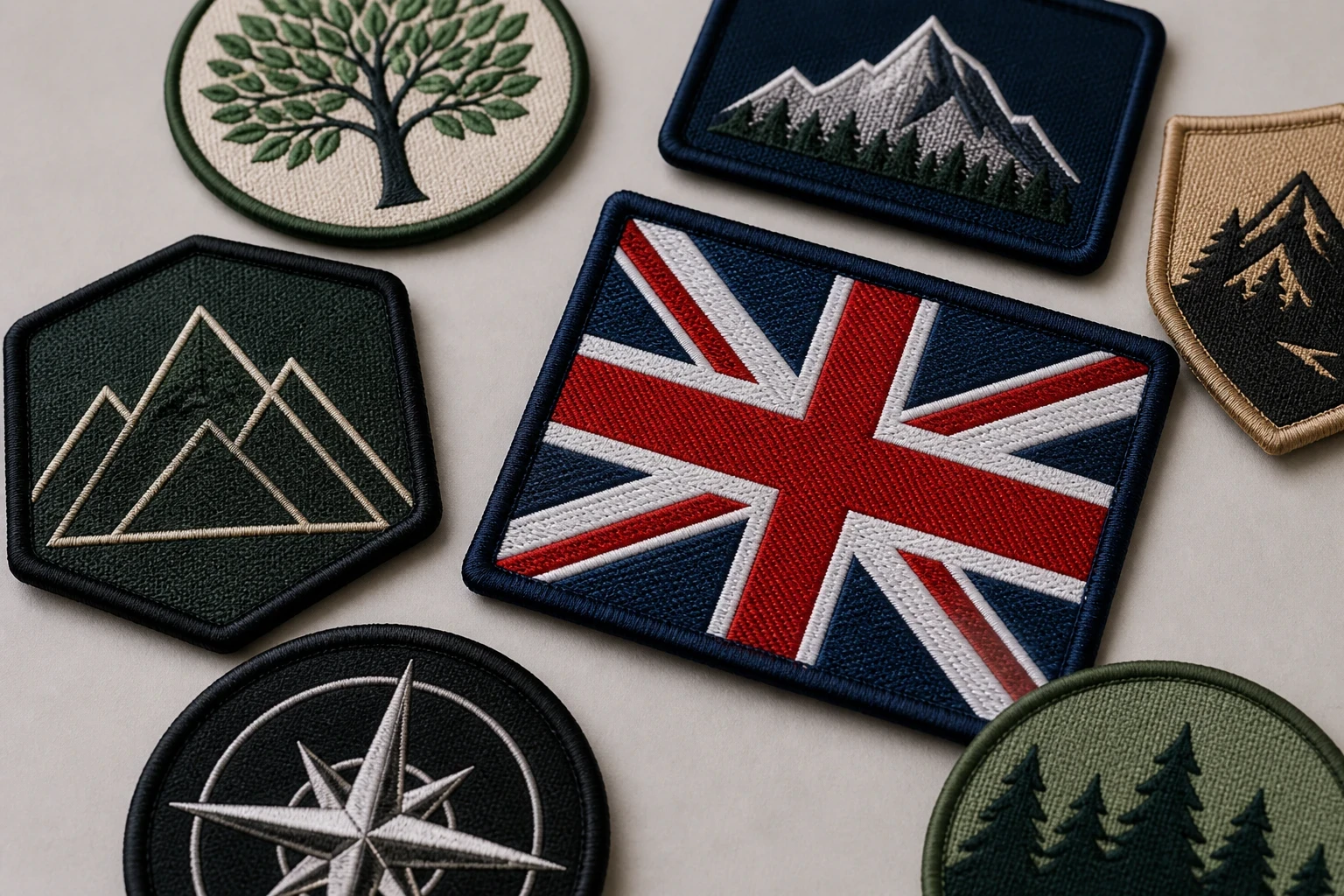
Key takeaways
- Woven patches are usually the better option for small lettering, fine outlines and logos with several colour areas.
- They have a flatter face than embroidered patches, so they suit polos, nylon shells, bags and compact branding where bulk matters.
- A 5-piece minimum applies per design, and production begins only after the artwork and digital mockup have been approved.
- Backing affects how the patch is fitted: sew-on is dependable, iron-on is convenient, and Velcro is useful for removable badges.
Woven patches are right for your project if you need a neat, flat badge that can hold small lettering and detailed artwork. They work well on teamwear, uniforms, bags, jackets and branded clothing, particularly where ordinary embroidery would lose fine lines. If you want a raised, textured surface or a photographic image, another patch construction may suit you better.
The Customized Patches supplies customers across the United Kingdom, from football clubs and cadet units to hospitality businesses, biker groups and school departments. Every design has a 5-piece minimum, and we usually send a free digital mockup within 12 hours. We produce only after you have approved the mockup, so the quoted patch is based on an agreed design rather than guesswork.
What woven patches are made for
A woven patch is made by weaving fine threads closely together rather than building the design from thick raised embroidery stitches. The result is a smooth face with crisp colour boundaries. You can still have a border, backing and shaped edge, but the decoration itself sits relatively close to the surface.
That construction makes woven patches useful for designs that are visually busy at a small size. A club crest containing a shield, initials, a date and a narrow ring of text may read more cleanly in woven form than in heavy embroidery. The same applies to a business logo with thin strokes or a product label that needs a compact, tidy appearance.
They are not magic miniature printing. Very tiny lettering can still close up, and a complex image may need simplifying before production. We check those points in the artwork and mockup stage. If a line is too narrow to reproduce reliably, it is better to discuss that before the order is made than to discover it on a finished batch.
The main reasons to choose woven patches
- Fine detail: closely woven threads can represent small lettering, narrow outlines and several colour blocks with more definition than thick embroidery.
- A flat profile: the face is less bulky, which helps on polos, work shirts, nylon shells and bags where a high surface would catch or feel awkward.
- A tidy professional finish: the surface suits company marks, hospitality uniforms, school badges and club branding that need a clean rather than fuzzy appearance.
- Flexible shapes: round, rectangular, shield, crest and custom-cut designs can all be considered during the quotation and mockup stage.
- Useful small quantities: the minimum is 5 pieces per design, which can suit a new club, small business or pilot run without ordering a large stock quantity.
- Clear brand reproduction: woven construction can be a sensible middle ground between the texture of embroidery and the completely flat appearance of a printed patch.
Printed is flatter; that is the point. A printed patch can be the better answer for a continuous-tone illustration, a photograph or artwork with shading that threads cannot reproduce in the same way. Woven patches are strongest when the artwork is made from defined lines, solid areas and readable type.
Examples from real UK garment orders
A football club may use a woven crest on training tops when the badge includes small sponsor-style wording and a detailed central emblem. A cadet unit might prefer a compact woven identifier on a sleeve because it sits neatly on a nylon shell. A hospitality group can use a flat logo patch on polos without adding the thicker feel of a heavily stitched badge.
For a biker vest, the decision can go either way. Large back artwork often benefits from the visible stitch texture and merrowed border of an embroidered patch, while a smaller rocker, club support badge or equipment label may work well as woven. The garment, patch size and visual role matter more than choosing one material for every badge.
Woven patches compared with other patch types
There is no single best patch for every logo. The right construction depends on the artwork, the garment, the amount of handling and the finish you want people to notice. The table below gives a practical starting point; the final recommendation should be checked against the actual artwork and size.
| Patch type | Best suited to | Surface and detail | Main trade-off |
|---|---|---|---|
| Woven patches | Small logos, detailed crests, compact labels and fine lettering | Flat or low-profile face with crisp woven detail | Less raised texture than embroidery and not ideal for photographic shading |
| Embroidered patches | Traditional club badges, bold logos, jackets and uniforms | Raised thread texture with a familiar stitched appearance | Very small lettering and narrow lines may lose clarity |
| Printed patches | Photographs, gradients, illustrations and artwork with continuous tones | Flat printed image with broad graphic freedom | Does not have the tactile thread texture of woven or embroidered work |
| PVC patches | Outdoor equipment, work bags, tactical clothing and designs needing a rubber-like face | Raised, moulded surface with strong block shapes | Less suitable for fine woven-style detail or a traditional cloth appearance |
| Chenille patches | Varsity lettering, school and college wear, large initials and bold emblems | Soft, high pile with a distinctive textured finish | Needs enough space for the texture to read and is not suited to tiny detail |
| Leather patches | Heritage branding, workwear, caps, denim and premium-looking labels | Solid leather surface with stamped, embossed or engraved branding | The material has a different visual character and may not suit colourful artwork |
You can compare the construction in more detail in our guide to the difference between woven patches and embroidered patches. It is also worth looking at printed patches and PVC patches if your artwork depends on gradients, a rubberised finish or outdoor equipment use.
Artwork, size and lettering: the practical choice
Size is often the decision that settles the material. A patch that looks clear on a laptop screen may be too small once it is fitted to a sleeve or chest. Measure the available area on the garment in inches, then consider how far away the wearer will normally be seen. A small chest badge, a sleeve identifier and a large back emblem have different requirements.
Woven patches can retain more small detail than standard embroidery, but there is still a sensible limit. Narrow gaps may close, very light text may lose contrast, and fine outlines need enough room to remain distinct. We may recommend enlarging lettering, removing a minor detail or making a border slightly wider. Those are production decisions, not changes made to the design without approval.
- For small chest logos, prioritise one clear symbol or wordmark rather than trying to include every line from a full brand lock-up.
- For club crests, check that the date, motto and outer ring text can be read at the finished width.
- For sleeve patches, allow for the curve of the arm and avoid putting the key lettering too close to the edge.
- For bags and Velcro panels, measure the panel itself rather than relying on the advertised bag size.
- For school blazers and polos, check the available space below the pocket or on the upper sleeve before selecting the final dimensions.
Colour contrast matters as much as thread count. Dark lettering on a dark background can disappear even if the file looks technically correct. A clear mockup lets you compare the border, background and text before committing to production. Our guide on how to design artwork for woven patches that is production-ready covers file preparation and common artwork adjustments.
If the logo has soft shadows, gradients or a photographic subject, do not force it into a woven construction simply because the shape is attractive. A printed patch may preserve that artwork more honestly. If the requirement is a strong raised emblem, embroidered patches or 3D embroidered patches may give the right visual weight.
Choosing the right backing for the garment
The patch face gets most of the attention, but the backing determines how it is attached. Sew-on is the dependable choice for garments that will be washed regularly or exposed to pulling. It suits football jackets, wool coaches, biker vests, school blazers and workwear where a permanent fitting is expected.
Iron-on is convenient for a quick application, particularly on cotton garments and merchandise handled carefully. It is not a substitute for sewing in every situation. Heat, repeated washing and tumble drying can weaken the adhesive; an iron-on badge that looks secure on day one may start lifting after a dryer cycle. If the garment is valuable, stretchy, textured or frequently washed, sewing is usually the safer plan.
Not sure whether woven detail or stitched texture will hold your logo? Send the artwork and the intended size. We provide a free digital mockup usually within 12 hours so you can compare the finish before production.
GET A FREE MOCKUPVelcro is useful when the badge needs to be removed or exchanged. Tactical clothing, event crew jackets, equipment bags and some cadet garments may already have hook-and-loop panels. The patch must be sized to the panel, and the hook or loop side needs to be specified clearly on the quote. A patch that is made with the wrong side will not attach as intended.
| Backing | Good fit | Check before ordering |
|---|---|---|
| Sew-on | Permanent club, uniform, school and workwear applications | Confirm the edge can be stitched and allow access for a needle on lined garments |
| Iron-on | Quick application to suitable, heat-safe fabric | Follow the application instructions and avoid assuming it will survive repeated tumble drying |
| Velcro | Removable badges, equipment and garments with existing panels | Measure the panel and specify whether hook or loop is required |
Nylon shells need particular care because heat can mark or distort the fabric. Wool coaches and older wool garments may also need sewing rather than heat application. For a lined jacket, tell us where the patch will go so the attachment method can be considered properly rather than selected from a dropdown without seeing the garment.
When embroidered patches may be the better answer
Choose embroidery when the texture is part of the identity. A traditional football crest, a large biker back patch, a military-style emblem or a bold jacket badge often looks right with raised thread and a visible stitched face. The tactile surface helps the badge read as a sewn piece rather than a flat label.
Embroidered patches can also be effective where the artwork has broad shapes and strong lettering. The trade-off is that small details may not remain open at compact sizes. A narrow inner line in a shield, a tiny sponsor name or a fine map outline may need simplification. That is where woven patches often earn their place.
Chenille is another specialist choice. Its soft pile works for varsity jackets, school and college clothing and large initials, but it needs enough area for the texture to look intentional. You can see more options in our guide to chenille patches and our explanation of varsity chenille patches UK sizing and backing options.
Where woven patches work especially well
Small businesses often choose woven patches for branded aprons, work jackets, tote bags and staff polos. The flat profile keeps the logo tidy and avoids making a simple uniform look overly decorative. A start-up can order 5 pieces per design, test the badge on its garments and then reorder once the placement is confirmed.
Sports clubs can use them for training kit, staff jackets, kit bags and supporter merchandise. They are particularly useful when the crest contains detail that becomes crowded in thick embroidery. For a football or rugby club, consider ordering one sample design for the main kit and a second version for bags or outerwear if the sizes and backing requirements differ.
Schools and cadet organisations may use woven patches for compact identifiers, house badges and activity groups. Check the policy for placement, colour and attachment before ordering. A school blazer may need a sewn badge, while a removable Velcro identifier may be more suitable for an activity jacket.
Hospitality and event teams often need a logo that remains legible on a small chest area. Woven patches can keep a restaurant mark, hotel emblem or event name readable without the raised bulk of a large embroidered piece. For aprons and polos, confirm the fabric composition and washing routine before choosing iron-on.
Biker and motorcycle club projects need a more careful conversation because a back patch, rocker and small front badge do different jobs. Large back pieces may be better embroidered, while woven patches can suit a compact supporting badge or a detailed equipment label. Our biker and motorcycle club patches hub covers the wider range of club applications.
Quantities, pricing and the UK ordering process
The minimum order is 5 pieces per design. That means five of one approved design, not one each of five unrelated logos. If a club wants a crest, a sponsor badge and a committee identifier, each design may need to meet the minimum separately. We can explain how the quantity affects the quote once we know the sizes, shapes, backing and artwork.
Patch pricing depends on more than the material name. Size, quantity, number of designs, edge treatment, backing and the amount of detail all affect the production specification. A small five-piece order is assessed differently from a larger run of one design, so a general price per patch can be misleading without those details.
- Send the artwork, approximate finished size in inches, quantity and the garment or item the patch will be fitted to.
- Tell us whether the badge will be sewn on, ironed on or attached with Velcro. Include a photograph or measurement of an existing Velcro panel if relevant.
- We review the design and prepare a free digital mockup, usually within 12 hours.
- Check the spelling, colours, dimensions, border, backing and placement shown in the mockup.
- Approve the mockup only when the specification is correct. Production starts after approval.
- Receive the finished patches through UK-wide shipping, ready for fitting to the intended garments or equipment.
If you want a fuller ordering checklist, read 10 questions to ask before ordering woven patches and a step-by-step guide to ordering woven patches. Those guides cover the information that usually prevents avoidable delays, such as missing dimensions, unclear backing instructions or artwork supplied without usable text.
Lead time depends on the design, quantity, approval timing and production schedule. The free mockup is usually sent within 12 hours, but that is the artwork approval stage rather than a promise that the finished patches will arrive twelve hours later. If the patches are needed for a match, launch, school event or trade show, give us the date when requesting the quote so the timing can be discussed honestly.
Care, fitting and common failures
A well-designed patch can still fail if it is fitted to the wrong fabric or washed carelessly. Sew-on patches should be attached around the edge and, where appropriate, through stronger points in the design. The stitches need to hold the border without puckering the garment. On a lined jacket, a professional alteration or experienced needleworker may be the sensible route.
Iron-on patches need a clean, heat-safe surface and firm pressure according to the application instructions. Avoid applying them over a seam, waterproof coating or fabric that cannot take heat. Do not assume that an iron-on badge is permanent because it held after the first press. A dryer cycle, repeated high-temperature washing or regular flexing can cause the adhesive to peel.
Velcro patches should be removed before washing if the garment manufacturer recommends it. Keep the hook side covered so it does not catch on other clothing. If the patch is going on a bag or equipment panel, check that the loop material is firmly stitched to the item and that the patch will not be dragged across rough surfaces.
- Check the care label on the garment before choosing heat-applied backing.
- Wash and dry according to the garment instructions, avoiding unnecessary high heat.
- Do not fold a patch sharply while the garment is wet.
- Inspect sewn edges after heavy use and repair a loose thread before it becomes a larger problem.
- Keep spare patches in a dry place, flat and away from direct heat.
Name sew-on, iron-on or Velcro on the quote and include the garment details. We will show the proposed backing on a free digital mockup usually within 12 hours, then produce only after you approve the design.
GET A FREE MOCKUPA simple decision test
Start with the artwork, not the product name. If the design has small type, several clean colour areas and a requirement for a flat face, woven patches are a strong candidate. If the main attraction is raised thread, choose embroidery. If the artwork is photographic or gradient-heavy, ask about printing. If the garment needs a moulded, weather-resistant feel, consider PVC.
Next, inspect the garment. A nylon shell, wool coach jacket, cotton polo, school blazer and Velcro equipment panel do not behave in the same way. The correct backing can matter more than the patch face. Finally, decide how many you need now, remembering that each design has a 5-piece minimum.
| If your priority is... | Start by considering... | Ask before approval |
|---|---|---|
| Small readable lettering | Woven patches | Will the words remain legible at the finished width? |
| Raised traditional badge texture | Embroidered patches | Does the artwork have enough space for the thread detail? |
| A photograph or smooth shading | Printed patches | Will the colours and image be reproduced at the intended size? |
| A removable equipment badge | Woven or PVC with Velcro | Does the backing match the hook-and-loop panel? |
| Varsity lettering and soft pile | Chenille patches | Is the patch large enough for the pile and lettering to read? |
| Heritage branding on denim or workwear | Leather patches | Does the colour and surface suit the rest of the garment? |
For a second opinion, compare woven patches versus embroidered patches and review how to choose the right woven patches for your brand. A good supplier should be willing to explain why a construction may not suit the artwork, rather than accepting a file that is likely to produce an unclear result.
What to send for an accurate quote
The more precise the first message, the quicker the quote can be checked. Send a vector file if available, but a clear PNG or JPG is still useful for the initial review. Include the intended width and height in inches, even if those measurements are approximate. Tell us whether the shape follows the artwork or uses a regular circle, rectangle, shield or crest.
List the number of pieces for each design and say where they will be fitted. A woven badge for a cotton polo is a different request from one for a waterproof jacket or an existing Velcro panel. Include a photograph of the garment if the placement is unusual. This helps us flag heat, access or curvature issues before the mockup is approved.
- Artwork file and any required brand colour references.
- Finished patch dimensions in inches.
- Quantity per design, with the 5-piece minimum in mind.
- Sew-on, iron-on or Velcro backing.
- Garment or product type, such as polo, blazer, nylon shell, wool jacket, bag or vest.
- Required delivery date and UK delivery address.
- Any wording that must be checked letter by letter.
The digital mockup is your checking point. Look at the spelling, proportions, border width, thread colours, backing and how the patch sits on the suggested garment. Ask for changes before approval if something is not right. Once approved, the production specification is fixed so the finished order follows the version you accepted.
Final recommendation for UK teams and businesses
Choose woven patches when detail and a low-profile finish matter more than raised texture. They are especially practical for compact logos, fine lettering, school and club identifiers, staff clothing, bags and branded merchandise. They are not automatically the right answer for every design, and a good decision may be to use different patch types for different parts of the same range.
The Customized Patches can review the artwork, garment and backing requirement before production. The order minimum is 5 pieces per design, the free digital mockup is usually provided within 12 hours, and production begins only after approval. UK-wide shipping is available, so include your required date and location when asking for the quote.
If you are ready to compare the options, start with the woven patches hub or send the details through the free mockup quote. A clear conversation about size, material and attachment is usually more useful than choosing from a product photograph alone.
Frequently asked questions
Are woven patches better than embroidered patches?
Neither is always better. Woven patches are usually better for small lettering, fine outlines and a flatter face. Embroidered patches are usually better when you want raised thread texture, a traditional club crest or a bold jacket badge. The artwork size and garment should decide the construction.
What are woven patches used for?
Woven patches are used for football and rugby club badges, school and cadet identifiers, hospitality polos, workwear, bags, uniforms, branded merchandise and compact labels. They are useful when a design contains more detail than standard embroidery can show clearly at the same size.
What is the minimum order for woven patches?
The minimum is 5 pieces per design. If you order several different logos, each design is considered separately. The quote can also vary according to patch size, quantity, backing, shape, border and artwork detail.
Can woven patches be ironed on?
Woven patches can be made with an iron-on backing where the garment is suitable for heat application. Check the fabric care label first, and do not assume the adhesive will withstand repeated tumble drying. Sew-on backing is normally the safer choice for valuable, textured, stretchy or frequently washed garments.
How quickly can I see woven patches artwork?
The Customized Patches usually provides a free digital mockup within 12 hours. This is the design approval stage, not a promise that the finished patches will arrive within 12 hours. Production starts only after the mockup and specification have been approved.
Are woven patches suitable for small logos and text?
They are often suitable for small logos and text because the woven surface can show fine lines more clearly than thick embroidery. The artwork still needs enough space and contrast. Very narrow lettering, tight gaps and low-contrast colours may need adjustment before production.
Ready to produce custom patches for your UK team or brand?
GET A FREE MOCKUP